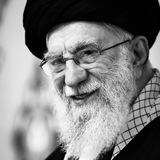
🧭 Strategic Brief | Will Iran Become Another “Forever War”?
A new analysis by John Mearsheimer, in discussion with Chris Hedges, argues that the United States risks becoming trapped in another prolonged conflict with Iran. Rather than delivering a decisive victory, sustained military pressure could evolve into a costly war of attrition with no clear exit strategy.
Key Takeaways:
No quick victory: Iran’s geography, military resilience, and regional alliances make a rapid military resolution unlikely.
Strategic overstretch: A prolonged war would strain U.S. military resources while increasing economic and political costs.
Regional escalation: Continued conflict could draw in additional regional actors, further destabilizing the Middle East and threatening global energy markets.
Historical warning: The authors caution that, like Iraq and Afghanistan, limited military objectives could gradually expand into an open-ended commitment with diminishing strategic returns.
☑️ Our website
🖋 @observer_5
A new analysis by John Mearsheimer, in discussion with Chris Hedges, argues that the United States risks becoming trapped in another prolonged conflict with Iran. Rather than delivering a decisive victory, sustained military pressure could evolve into a costly war of attrition with no clear exit strategy.
Key Takeaways:
No quick victory: Iran’s geography, military resilience, and regional alliances make a rapid military resolution unlikely.
Strategic overstretch: A prolonged war would strain U.S. military resources while increasing economic and political costs.
Regional escalation: Continued conflict could draw in additional regional actors, further destabilizing the Middle East and threatening global energy markets.
Historical warning: The authors caution that, like Iraq and Afghanistan, limited military objectives could gradually expand into an open-ended commitment with diminishing strategic returns.
Please open Telegram to view this post
VIEW IN TELEGRAM
Please open Telegram to view this post
VIEW IN TELEGRAM
Media is too big
VIEW IN TELEGRAM
In this interview snippet from Al Jazeera’s renowned show "Without Bounds" (Bila Hudud), host Ahmed Mansour interviews Kuwaiti political analyst Dr. Abdallah Nafisi.
📌 Main Topic & Core Revelations
Dr. Nafisi details how the United States successfully exerted heavy pressure on Saudi Arabia and broader Gulf nations to overhaul their social, religious, and educational frameworks:
Curriculum Overhaul: Complete restructuring of educational and academic curricula in Saudi Arabia under American oversight, including presence inside Saudi educational ministries to monitor changes.
Religious Texts & Printing: Direct interference with the printing and export of the Quran and religious translations (such as at the King Fahd Complex), specifically targeting interpretations referencing historical contexts involving Jewish people.
Purge of Clerics: The forced dismissal of over 3,000 imams and preachers across Saudi mosques, based on named lists provided directly by US intelligence.
Global Surveillance: US intelligence flagged 12,000 Saudi citizens operating or traveling across the Islamic world (from Jakarta to Mauritania), demanding investigations—resulting in thousands of interrogations.
Forced Social Liberalization: Imposing changes on local sports clubs (promoting gender mixing) and instrumentalizing women's empowerment initiatives as a top-down, US-driven cultural mandate rather than an organic political shift.
These sweeping pressures were heavily intensified during the George W. Bush administration following the events of September 11, 2001, under the banner of combating religious extremism and reshaping the Middle East.
Impact on the Persian Gulf States: Rather than remaining isolated to Saudi Arabia, these policies created a domino effect across neighboring Persian Gulf states (Kuwait, Qatar, UAE), systematically altering public education, state-sponsored religious discourses, and civic institutions.
Connection to the Abraham Accords: By systematically weakening traditional pan-Arab and conservative religious institutions while enforcing ideological alignment with Western policy, these structural shifts laid the political and social groundwork for eventual normalization agreements, culminating years later in the Abraham Accords.
🧠 Strategic Geopolitical Analysis
The revelations provided by Dr. Nafisi illustrate a classic case of external social engineering applied through strategic leverage. By altering school curricula, controlling religious output, and dictating domestic security lists, Washington successfully disarmed the ideological barriers within Gulf societies that historically resisted Western geopolitical projects. Consequently, the rapid shift toward social liberalization across the Gulf served a dual purpose: neutralizing domestic opposition while conditioning the regional socio-political landscape for structural integration with US-aligned interests in the Middle East.
Please open Telegram to view this post
VIEW IN TELEGRAM
👍1
📰 NYT REPORT: JORDAN BEARS THE COST OF U.S. MILITARY FOOTPRINT
— The New York Times
🌐 Geopolitical & Military Breakdown
🎯 Strategic Exposure: Jordan hosts vital U.S. installations—including logistics hubs and air defense sites like Tower 22—positioning the Kingdom as a frontline outpost in regional escalation between Washington, Israel, and Iran-aligned regional actors.
🛡️ Operational Dilemma: Amman faces severe operational friction, caught between intercepting regional drone and missile trajectories over its airspace to maintain defense ties with Washington and managing the risk of direct retaliatory strikes on its territory.
⚠️ Internal Risks: The prolonged U.S. military presence increases domestic political volatility. Public opposition to Western military alignment intensifies as regional conflict spills over, forcing the Hashemite leadership to balance regime survival, economic stability, and strategic alliances.
☑️ Our website
🖋 @observer_5
"For nearly three decades, Jordan has served as a critical base for U.S. military operations across the Middle East. Now, Jordan is paying the price..."
— The New York Times
🛡️ Operational Dilemma: Amman faces severe operational friction, caught between intercepting regional drone and missile trajectories over its airspace to maintain defense ties with Washington and managing the risk of direct retaliatory strikes on its territory.
Please open Telegram to view this post
VIEW IN TELEGRAM
Please open Telegram to view this post
VIEW IN TELEGRAM
🚨 BREAKING: ANSAR ALLAH LAUNCHES MASSIVE MULTI-FRONT STRIKES ON SAUDI ARABIA
Ansar Allah (Houthis) has initiated coordinated, large-scale missile and drone strikes targeting critical military, energy, and transport infrastructure across Saudi Arabia ( 25/7/2026) .
Key Targets & Operational Impacts:
Jizan Aramco Refinery: Geolocation confirms direct long-range strikes causing major fires inside the refinery facilities (17.2814398, 42.3685122).
Khamis Mushait Airbase: Hit by ballistic missile waves, triggering local explosions and immediate airspace shutdowns.
Capital Airspace Freeze: Incoming barrages forced commercial flights to divert and avoid landing in Riyadh.
Maritime Warning: Official threat issued ordering workers to evacuate all major Red Sea and Arabian Gulf ports (Jeddah, Yanbu, Dammam, King Abdullah).
Strategic Takeaway:
Using low-cost ballistic missiles, Quds cruise missiles, and long-range Samad drones, Ansar Allah continues to demonstrate the Axis of Resistance's asymmetric power—paralyzing key Saudi energy assets, air traffic, and Red Sea logistics in a single coordinated wave.
☑️ Our website
🖋 @observer_5
Ansar Allah (Houthis) has initiated coordinated, large-scale missile and drone strikes targeting critical military, energy, and transport infrastructure across Saudi Arabia ( 25/7/2026) .
Key Targets & Operational Impacts:
Jizan Aramco Refinery: Geolocation confirms direct long-range strikes causing major fires inside the refinery facilities (17.2814398, 42.3685122).
Khamis Mushait Airbase: Hit by ballistic missile waves, triggering local explosions and immediate airspace shutdowns.
Capital Airspace Freeze: Incoming barrages forced commercial flights to divert and avoid landing in Riyadh.
Maritime Warning: Official threat issued ordering workers to evacuate all major Red Sea and Arabian Gulf ports (Jeddah, Yanbu, Dammam, King Abdullah).
Strategic Takeaway:
Using low-cost ballistic missiles, Quds cruise missiles, and long-range Samad drones, Ansar Allah continues to demonstrate the Axis of Resistance's asymmetric power—paralyzing key Saudi energy assets, air traffic, and Red Sea logistics in a single coordinated wave.
Please open Telegram to view this post
VIEW IN TELEGRAM
Please open Telegram to view this post
VIEW IN TELEGRAM
❤1
Geopolitical Paradox: The UN’s High-Stakes Bet on Damascus
🌐 Guterres in Damascus: Diplomatic Rehabilitation or Realpolitik Necessity? 🇺🇳🇸🇾
On July 25, 2026, UN Secretary-General António Guterres landed at Damascus International Airport—marking the first visit by a sitting UN chief to Syria since Ban Ki-moon’s trip in 2009. Received on the tarmac by Foreign Minister Asaad Hassan al-Shaibani, Guterres offered an unequivocal message of international backing, declaring that the UN "stands with Syria".
The Analytical Context
Guterres’ itinerary includes talks with President Ahmed al-Sharaa, foreign diplomatic envoys, and an inspection tour of the UNDOF peacekeeping mandate along the occupied Golan Heights. For Damascus, this visit acts as an official international stamp of legitimacy. The transitional government—operating under intense economic strain and fragmented security—is leveraging UN patronage to secure reconstruction funding, accelerate sanctions relief, and stabilize its borders.
The Axis of Resistance Lens
From the perspective of the regional "Axis of Resistance" (Tehran, Hezbollah, Ansar Allah, and Allied Factions), Guterres’ arrival underscores a total realignment of the Levant's strategic map:
Strategic Buffer Zone: The shift in Damascus breaks the historical geographic continuity linking Tehran to Beirut via the Syrian corridor, forcing resistance actors to adapt to an encircled operational environment.
Western Realpolitik: The rapid institutional pivot by global powers—embracing a leadership structure previously subjected to UNSC sanctions—exposes the flexibility of Western security guarantees when geopolitical interests dictate a shift.
The Golan Vector: With UNDOF inspectoral visits on the agenda, questions arise over how Damascus intends to navigate Israeli cross-border operations and security buffer demands along the southern front.
Critical Questions for Our Readers
1. Can the UN guarantee Syria’s territorial integrity while Israel continues to maintain military outposts beyond the 1974 disengagement line?
2. Is international recognition a genuine lifeline for Syria’s civil population, or merely a tactical move to neutralize the Levant within the broader regional conflict?
☑️ Our website
🖋 @observer_5
On July 25, 2026, UN Secretary-General António Guterres landed at Damascus International Airport—marking the first visit by a sitting UN chief to Syria since Ban Ki-moon’s trip in 2009. Received on the tarmac by Foreign Minister Asaad Hassan al-Shaibani, Guterres offered an unequivocal message of international backing, declaring that the UN "stands with Syria".
The Analytical Context
Guterres’ itinerary includes talks with President Ahmed al-Sharaa, foreign diplomatic envoys, and an inspection tour of the UNDOF peacekeeping mandate along the occupied Golan Heights. For Damascus, this visit acts as an official international stamp of legitimacy. The transitional government—operating under intense economic strain and fragmented security—is leveraging UN patronage to secure reconstruction funding, accelerate sanctions relief, and stabilize its borders.
The Axis of Resistance Lens
From the perspective of the regional "Axis of Resistance" (Tehran, Hezbollah, Ansar Allah, and Allied Factions), Guterres’ arrival underscores a total realignment of the Levant's strategic map:
Strategic Buffer Zone: The shift in Damascus breaks the historical geographic continuity linking Tehran to Beirut via the Syrian corridor, forcing resistance actors to adapt to an encircled operational environment.
Western Realpolitik: The rapid institutional pivot by global powers—embracing a leadership structure previously subjected to UNSC sanctions—exposes the flexibility of Western security guarantees when geopolitical interests dictate a shift.
The Golan Vector: With UNDOF inspectoral visits on the agenda, questions arise over how Damascus intends to navigate Israeli cross-border operations and security buffer demands along the southern front.
Critical Questions for Our Readers
1. Can the UN guarantee Syria’s territorial integrity while Israel continues to maintain military outposts beyond the 1974 disengagement line?
2. Is international recognition a genuine lifeline for Syria’s civil population, or merely a tactical move to neutralize the Levant within the broader regional conflict?
Please open Telegram to view this post
VIEW IN TELEGRAM
The Observer
🕊️ Farewell to Internationalist Fighter Kozo Okamoto… The Last Fedayeen of Lod Airport Beirut | July 23, 2026 Japanese militant Kozo Okamoto, known within the ranks of the Palestinian resistance as “Ahmad al-Yabani” (Ahmad the Japanese), passed away at the…
In the wake of the passing of the internationalist hero and freedom fighter Kozo Okamoto, a poignant memory comes to mind—one that reflects the true integrity of the noble men who shaped our nation's history.
During my tenure as Commander of the Beirut Military Region in the late 1990s, the late Judge Nasri Lahoud—then the Government Commissioner to the Military Court—invited me to a meeting in his office with the Japanese Ambassador.
The Ambassador offered over $40 million in assistance to the Military Prosecution, including advanced technical equipment, crime detection tools, and DNA technology—on one single condition: the extradition of Okamoto to Japan.
Judge Nasri Lahoud’s refusal was absolute. He categorically rejected even discussing the matter, telling the Japanese Ambassador in no uncertain terms that, in his eyes and in the eyes of many, Okamoto was a freedom fighter, not a terrorist. Because of that courageous, patriotic stance, Okamoto remained a free man in Lebanon.
May God have mercy on the freedom fighter Kozo Okamoto, and on the honorable and patriotic judge, Nasri Jamil Lahoud.
Brigadier General Hisham Jaber
☑️ Our website
🖋 @observer_5
During my tenure as Commander of the Beirut Military Region in the late 1990s, the late Judge Nasri Lahoud—then the Government Commissioner to the Military Court—invited me to a meeting in his office with the Japanese Ambassador.
The Ambassador offered over $40 million in assistance to the Military Prosecution, including advanced technical equipment, crime detection tools, and DNA technology—on one single condition: the extradition of Okamoto to Japan.
Judge Nasri Lahoud’s refusal was absolute. He categorically rejected even discussing the matter, telling the Japanese Ambassador in no uncertain terms that, in his eyes and in the eyes of many, Okamoto was a freedom fighter, not a terrorist. Because of that courageous, patriotic stance, Okamoto remained a free man in Lebanon.
May God have mercy on the freedom fighter Kozo Okamoto, and on the honorable and patriotic judge, Nasri Jamil Lahoud.
Brigadier General Hisham Jaber
Please open Telegram to view this post
VIEW IN TELEGRAM
Please open Telegram to view this post
VIEW IN TELEGRAM
❤2