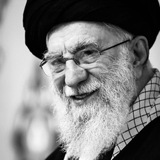
🔴 FLASH | Statement Issued by the Islamic Revolutionary Guard Corps (IRGC)
The General Command of the Islamic Revolutionary Guard Corps announces the continuation of Operation "Disciplining the Aggressors" against hostile targets, emphasizing that strikes will persist until all objectives are achieved.
"And victory comes only from Allah, the Almighty, the All-Wise."
@observer_5
The General Command of the Islamic Revolutionary Guard Corps announces the continuation of Operation "Disciplining the Aggressors" against hostile targets, emphasizing that strikes will persist until all objectives are achieved.
"And victory comes only from Allah, the Almighty, the All-Wise."
@observer_5
🔴 FLASH | Massive US-Saudi Civil Nuclear Deal Approved
The News:
The Trump administration has approved a 30-year civilian nuclear cooperation agreement with Saudi Arabia worth tens of billions of dollars, according to The Wall Street Journal.
Key Points:
🔹 Upcoming Signing: Expected to be signed by U.S. Energy Secretary Chris Wright and Saudi Energy Minister Prince Abdulaziz bin Salman. ( Wednesday)
🔹 U.S. Market Dominance: Grants American firms a leading role in developing the kingdom's nuclear infrastructure while largely excluding foreign rivals.
🔹 Uranium Enrichment Option: Paves the way for U.S. companies to build an enrichment facility in Saudi Arabia if a joint feasibility study warrants it.
🔹 Legislative Hurdle: The deal goes to Congress for review shortly, where it faces likely resistance from key lawmakers.
@observer_5
The News:
The Trump administration has approved a 30-year civilian nuclear cooperation agreement with Saudi Arabia worth tens of billions of dollars, according to The Wall Street Journal.
Key Points:
🔹 Upcoming Signing: Expected to be signed by U.S. Energy Secretary Chris Wright and Saudi Energy Minister Prince Abdulaziz bin Salman. ( Wednesday)
🔹 U.S. Market Dominance: Grants American firms a leading role in developing the kingdom's nuclear infrastructure while largely excluding foreign rivals.
🔹 Uranium Enrichment Option: Paves the way for U.S. companies to build an enrichment facility in Saudi Arabia if a joint feasibility study warrants it.
🔹 Legislative Hurdle: The deal goes to Congress for review shortly, where it faces likely resistance from key lawmakers.
@observer_5
🔴 More than 500 US military personnel were injured during the US unprovoked military aggression against Iran. This was reported by Associated Press citing a source.
@observer_5
@observer_5
👍1
🔴 Pakistan Seeks a Price for Its Mediation: Requests $10 Billion in U.S. Financial Support
▪️Pakistan has requested $10 billion in exchange-rate stabilization facilities from the United States to strengthen its foreign exchange reserves, stabilize the Pakistani rupee, and reduce its reliance on International Monetary Fund (IMF) loans.
▪️The request comes in the wake of Islamabad’s role in mediating talks related to the conflict with Iran. The Pakistani government hopes its diplomatic role will translate into stronger economic ties with Washington.
▪️If approved, this rare form of U.S. financial support would significantly ease Pakistan’s severe financing pressures. So far, however, the U.S. Treasury has not commented, and no official decision has been announced.
📌Linking political mediation to massive financial demands transforms mediation from a diplomatic effort aimed at regional stability into a transactional bargain vulnerable to accusations of political extortion. Such an approach undermines the mediator’s neutrality and raises questions about whether crises are being leveraged for domestic economic gain and the rescue of a struggling political system.
@observer_5
▪️Pakistan has requested $10 billion in exchange-rate stabilization facilities from the United States to strengthen its foreign exchange reserves, stabilize the Pakistani rupee, and reduce its reliance on International Monetary Fund (IMF) loans.
▪️The request comes in the wake of Islamabad’s role in mediating talks related to the conflict with Iran. The Pakistani government hopes its diplomatic role will translate into stronger economic ties with Washington.
▪️If approved, this rare form of U.S. financial support would significantly ease Pakistan’s severe financing pressures. So far, however, the U.S. Treasury has not commented, and no official decision has been announced.
📌Linking political mediation to massive financial demands transforms mediation from a diplomatic effort aimed at regional stability into a transactional bargain vulnerable to accusations of political extortion. Such an approach undermines the mediator’s neutrality and raises questions about whether crises are being leveraged for domestic economic gain and the rescue of a struggling political system.
@observer_5
🇺🇸 Washington Conditions Support for 🇱🇧 Lebanon on Hezbollah's Disarmament: A Decisive Test for Aoun
Key Highlights:
South Lebanon as a "Test Zone": US military sources are evaluating the Lebanese Army's capacity to secure borders and prevent Hezbollah's return through a trial-zone model.
💰 Financial and Military Aid Conditional: Additional aid is strictly tied to concrete actions: military deployment, border control, preventing weapons smuggling, and establishing civilian accountability.
🚨 Warnings Against "Old Tricks": Washington rejects past stalling tactics and places the "burden of proof" entirely on President Joseph Aoun, with US Central Command (CENTCOM) closely monitoring ground operations.
🇮🇷 Iran and Regional Instability: The US maintains that Iran uses Hezbollah as a tool to destabilize the Levant and threaten Israel.
We believe that :
These strict conditions and direct military oversight reveal how Washington has completely pulled the sovereignty mat from under the Lebanese state—turning Hezbollah's disarmament and state authority into an external checklist dictated from abroad, where national credibility is put on trial.
@observer_5
Key Highlights:
South Lebanon as a "Test Zone": US military sources are evaluating the Lebanese Army's capacity to secure borders and prevent Hezbollah's return through a trial-zone model.
🇮🇷 Iran and Regional Instability: The US maintains that Iran uses Hezbollah as a tool to destabilize the Levant and threaten Israel.
We believe that :
These strict conditions and direct military oversight reveal how Washington has completely pulled the sovereignty mat from under the Lebanese state—turning Hezbollah's disarmament and state authority into an external checklist dictated from abroad, where national credibility is put on trial.
@observer_5
Please open Telegram to view this post
VIEW IN TELEGRAM
Israel-Lebanon 🇱🇧Operational Brief: Strikes, Incursions, and Air Violations (July 22, 2026)
Nabatieh al-Fawqa / Ali al-Taher Hill:
Artillery: Intermittent heavy artillery shelling targeted the outskirts of Nabatieh al-Fawqa, specifically concentrating on Ali al-Taher hill.
Drone Strike: An Israeli unmanned aerial vehicle (UAV) executed a targeted air strike directly within the town of Nabatieh al-Fawqa.
Zawtar al-Gharbiyeh:
Direct/Warning🔥 : Israeli ground units opened direct small-arms and warning fire in close proximity to deploying Lebanese Armed Forces (LAF) units.
Baraachit and Hadatha:
Demolitions/Explosives 🧨 : Overnight controlled engineering detonations and structural demolitions were carried out inside both towns.
Sarbin:
Ground Incursion & Direct Fire🔥 : An Israeli infantry unit advanced into the border town, supported by heavy machine-gun fire.
Burj al-Muluk / Tall al-Nahhas Axis:
Ground Raid: Israeli motorized units advanced along the main road from Tall al-Nahhas to the outskirts of Burj al-Muluk, conducted a raid on a local residential home, interrogated the occupant, inspected cellular devices, and confiscated identification documents before falling back.
Airspace Violations & Surveillance Drones
Beirut & Dahieh (Southern Suburbs): Medium-to-low altitude surveillance and reconnaissance drone overflights were logged across greater Beirut and its southern suburbs.
Akkar & Hermel: Israeli fighter jets and UAVs conducted high-altitude reconnaissance operations and simulated mock air raids over the mountainous sectors of Akkar in northern Lebanon and Hermel in the Beqaa/eastern region.
@observer_5
Nabatieh al-Fawqa / Ali al-Taher Hill:
Artillery: Intermittent heavy artillery shelling targeted the outskirts of Nabatieh al-Fawqa, specifically concentrating on Ali al-Taher hill.
Drone Strike: An Israeli unmanned aerial vehicle (UAV) executed a targeted air strike directly within the town of Nabatieh al-Fawqa.
Zawtar al-Gharbiyeh:
Direct/Warning
Baraachit and Hadatha:
Demolitions/Explosives 🧨 : Overnight controlled engineering detonations and structural demolitions were carried out inside both towns.
Sarbin:
Ground Incursion & Direct Fire
Burj al-Muluk / Tall al-Nahhas Axis:
Ground Raid: Israeli motorized units advanced along the main road from Tall al-Nahhas to the outskirts of Burj al-Muluk, conducted a raid on a local residential home, interrogated the occupant, inspected cellular devices, and confiscated identification documents before falling back.
Airspace Violations & Surveillance Drones
Beirut & Dahieh (Southern Suburbs): Medium-to-low altitude surveillance and reconnaissance drone overflights were logged across greater Beirut and its southern suburbs.
Akkar & Hermel: Israeli fighter jets and UAVs conducted high-altitude reconnaissance operations and simulated mock air raids over the mountainous sectors of Akkar in northern Lebanon and Hermel in the Beqaa/eastern region.
@observer_5
Please open Telegram to view this post
VIEW IN TELEGRAM
Please open Telegram to view this post
VIEW IN TELEGRAM
🔥 WASHINGTON SETS THE STAGE: ARE CIA SITES THE NEW FRONT IN THE US-RUSSIA PROXY WAR?
The Story Behind the News
According to Reuters, Washington is investigating whether Moscow helped Iran execute precision drone strikes on CIA facilities across the Gulf in March. Intelligence indicates Tehran may have used Russian-enhanced Shahed drones equipped with Kometa-M anti-jamming tech alongside Russian satellite targeting data to hit secured locations, including the CIA station inside the U.S. Embassy in Riyadh.
Consequences of Russian Assistance
Direct Nuclear Power Escalation: Moves the conflict past indirect proxy warfare into near-direct aggression against intelligence doctrine.
Exposed Covert Networks: Signal that U.S. regional infrastructure is no longer protected by standard electronic warfare countermeasures.
Hardened Defense Axis: Proves Moscow-Tehran ties have shifted from simple arms sales to synchronized intelligence operations.
Analysis
This investigation bears all the hallmarks of a orchestrated media campaign designed to manufacture a pretext for wider escalation. By blaming Moscow for Iranian tactical hits, Washington covers its own regional air-defense failures while building a narrative to justify direct hostile action against Russia. This represents another chapter in an unconscionable U.S. foreign policy playbook that uses external scapegoats to hide operational flaws, deliberately dragging global powers toward confrontation.
☑️ Our website
🖋 @observer_5
The Story Behind the News
According to Reuters, Washington is investigating whether Moscow helped Iran execute precision drone strikes on CIA facilities across the Gulf in March. Intelligence indicates Tehran may have used Russian-enhanced Shahed drones equipped with Kometa-M anti-jamming tech alongside Russian satellite targeting data to hit secured locations, including the CIA station inside the U.S. Embassy in Riyadh.
Consequences of Russian Assistance
Direct Nuclear Power Escalation: Moves the conflict past indirect proxy warfare into near-direct aggression against intelligence doctrine.
Exposed Covert Networks: Signal that U.S. regional infrastructure is no longer protected by standard electronic warfare countermeasures.
Hardened Defense Axis: Proves Moscow-Tehran ties have shifted from simple arms sales to synchronized intelligence operations.
Analysis
This investigation bears all the hallmarks of a orchestrated media campaign designed to manufacture a pretext for wider escalation. By blaming Moscow for Iranian tactical hits, Washington covers its own regional air-defense failures while building a narrative to justify direct hostile action against Russia. This represents another chapter in an unconscionable U.S. foreign policy playbook that uses external scapegoats to hide operational flaws, deliberately dragging global powers toward confrontation.
Please open Telegram to view this post
VIEW IN TELEGRAM
Please open Telegram to view this post
VIEW IN TELEGRAM
The Observer
🔥 WASHINGTON SETS THE STAGE: ARE CIA SITES THE NEW FRONT IN THE US-RUSSIA PROXY WAR? The Story Behind the News According to Reuters, Washington is investigating whether Moscow helped Iran execute precision drone strikes on CIA facilities across the Gulf…
More details 👇
🔥 WASHINGTON SETS THE STAGE: ARE CIA SITES THE NEW FRONT IN THE US-RUSSIA PROXY WAR?
The Story Behind the News
According to a report by Reuters, U.S. intelligence agencies have launched an investigation into whether Russia assisted Iran in executing high-precision drone strikes against CIA facilities across the Gulf region.
The investigation centers on strikes conducted in March, which hit highly sensitive locations—including a CIA station inside the U.S. Embassy in Riyadh, Saudi Arabia, and a facility in eastern Iraq. Intelligence assessments cited by Reuters and The Wall Street Journal suggest that Iran may have used Russian-enhanced versions of Shahed drones equipped with Moscow’s advanced Kometa-M anti-jamming satellite navigation systems, alongside potential real-time satellite targeting data provided by Russian intelligence.
What Are the Consequences If Russia Aided Iran?
Direct Escalation Between Nuclear Powers:
If Washington officially accuses Moscow of directly enabling lethal or structural attacks on CIA personnel and covert stations, it removes the thin veneer of indirect proxy conflict and borders on a direct act of war under U.S. intelligence doctrine.
Collapse of Regional Intelligence Security:
Russian involvement would mean U.S. covert infrastructure in the Middle East—long considered secure behind advanced electronic warfare countermeasures—is fully exposed to precision disruption.
A Hardened Russia-Iran Defense Axis:
Such cooperation demonstrates that the military partnership between Moscow and Tehran has evolved from equipment transfers into synchronized, high-tier intelligence sharing aimed at dismantling American strategic infrastructure.
Analysis & Closing Remark
This investigation bears all the hallmarks of a orchestrated media campaign designed to manufacture a pretext for wider escalation. By framing Iranian tactical successes as the product of Russian intervention, Washington achieves two distinct objectives: it masks its own intelligence and air-defense failures in the region, while simultaneously building a narrative to justify direct hostile action or expanded sanctions against Russian military targets.
This represents yet another chapter in an unconscionable U.S. foreign policy playbook that relies on external scapegoats to cover operational vulnerabilities, continuously pushing global powers toward irreversible confrontation.
☑️ Our website
🖋 @observer_5
🔥 WASHINGTON SETS THE STAGE: ARE CIA SITES THE NEW FRONT IN THE US-RUSSIA PROXY WAR?
The Story Behind the News
According to a report by Reuters, U.S. intelligence agencies have launched an investigation into whether Russia assisted Iran in executing high-precision drone strikes against CIA facilities across the Gulf region.
The investigation centers on strikes conducted in March, which hit highly sensitive locations—including a CIA station inside the U.S. Embassy in Riyadh, Saudi Arabia, and a facility in eastern Iraq. Intelligence assessments cited by Reuters and The Wall Street Journal suggest that Iran may have used Russian-enhanced versions of Shahed drones equipped with Moscow’s advanced Kometa-M anti-jamming satellite navigation systems, alongside potential real-time satellite targeting data provided by Russian intelligence.
What Are the Consequences If Russia Aided Iran?
Direct Escalation Between Nuclear Powers:
If Washington officially accuses Moscow of directly enabling lethal or structural attacks on CIA personnel and covert stations, it removes the thin veneer of indirect proxy conflict and borders on a direct act of war under U.S. intelligence doctrine.
Collapse of Regional Intelligence Security:
Russian involvement would mean U.S. covert infrastructure in the Middle East—long considered secure behind advanced electronic warfare countermeasures—is fully exposed to precision disruption.
A Hardened Russia-Iran Defense Axis:
Such cooperation demonstrates that the military partnership between Moscow and Tehran has evolved from equipment transfers into synchronized, high-tier intelligence sharing aimed at dismantling American strategic infrastructure.
Analysis & Closing Remark
This investigation bears all the hallmarks of a orchestrated media campaign designed to manufacture a pretext for wider escalation. By framing Iranian tactical successes as the product of Russian intervention, Washington achieves two distinct objectives: it masks its own intelligence and air-defense failures in the region, while simultaneously building a narrative to justify direct hostile action or expanded sanctions against Russian military targets.
This represents yet another chapter in an unconscionable U.S. foreign policy playbook that relies on external scapegoats to cover operational vulnerabilities, continuously pushing global powers toward irreversible confrontation.
Please open Telegram to view this post
VIEW IN TELEGRAM
Al-Muraqeb
The Observer | Geopolitical Intelligence & Analysis
In-depth geopolitical analysis, military intelligence, and strategic assessments.
💥 ESCALATION DIRECTORY: U.S.-IRAN EXCHANGES (JULY 23, 2026 | 00:00 - 15:00 TIMEFRAME)
1. U.S. AIR CAMPAIGN — 12TH NIGHT STRIKES (00:00 – 05:00 UTC)
Targets: Iranian coastal surveillance, air defense networks, maritime capabilities, and missile/drone storage facilities.
Assets / Ordnance: U.S. CENTCOM precision-guided munitions (PGMs), stand-off strike missiles.
Casualties: 2 confirmed killed in Shalamcheh (border zone). Strikes also reported near Bushehr.
2. IRGC / IRANIAN ARMY RETALIATORY BARRAGE (02:00 – 07:00 UTC)
Targets: U.S. regional installations in Kuwait (Ali Al Salem Air Base, Camp Udairi, Camp Doha, Camp Arifjan) & air defense corridors over Jordan.
Assets / Ordnance: Medium-Range Ballistic Missiles (MRBMs) & Shahed-type loitering munitions.
Casualties: No direct U.S. fatalities reported in this window (Total conflict U.S. KIA remains at 18; ~100 wounded since early July). Jordan/Kuwait reported successful interceptions.
3. RED SEA AUXILIARY FRONT (04:00 – 06:00 UTC)
Action: Iranian-aligned Houthis struck two Saudi oil tankers (Encelia & Layla) enforcing a maritime blockade in coordination with Tehran's Strait of Hormuz posture.
☑️ Our website
🖋 @observer_5
1. U.S. AIR CAMPAIGN — 12TH NIGHT STRIKES (00:00 – 05:00 UTC)
Targets: Iranian coastal surveillance, air defense networks, maritime capabilities, and missile/drone storage facilities.
Assets / Ordnance: U.S. CENTCOM precision-guided munitions (PGMs), stand-off strike missiles.
Casualties: 2 confirmed killed in Shalamcheh (border zone). Strikes also reported near Bushehr.
2. IRGC / IRANIAN ARMY RETALIATORY BARRAGE (02:00 – 07:00 UTC)
Targets: U.S. regional installations in Kuwait (Ali Al Salem Air Base, Camp Udairi, Camp Doha, Camp Arifjan) & air defense corridors over Jordan.
Assets / Ordnance: Medium-Range Ballistic Missiles (MRBMs) & Shahed-type loitering munitions.
Casualties: No direct U.S. fatalities reported in this window (Total conflict U.S. KIA remains at 18; ~100 wounded since early July). Jordan/Kuwait reported successful interceptions.
3. RED SEA AUXILIARY FRONT (04:00 – 06:00 UTC)
Action: Iranian-aligned Houthis struck two Saudi oil tankers (Encelia & Layla) enforcing a maritime blockade in coordination with Tehran's Strait of Hormuz posture.
Please open Telegram to view this post
VIEW IN TELEGRAM
Please open Telegram to view this post
VIEW IN TELEGRAM
Military Briefing: Operational Activity in Southern Lebanon (July 23, 2026)
1. Israeli Military Attacks in Lebanon
Targeted Towns & Locations:
Ibl al-Saqi / Nabaa Ibl Area (Marjayoun District, South Lebanon): Main focus of overnight and early morning operations.
Zawtar al-Gharbiyeh / Border Sector Perimeter: Peripheral monitoring and machine-gun fire near the pilot zone deployment corridor.
Assets & Weaponry Used:
Heavy Machine-Gun Fire & Armored Sweeps: Sustained heavy automatic weaponry fire from armored combat vehicles patrolling the spring area of Nabaa Ibl.
Demolition Charges / Combat Engineering: Controlled explosive detonations used to dismantle local infrastructure and facilities.
Casualties & Material Damage:
Casualties: One civilian wounded (Munzer al-Balloul, a Syrian worker shot by Israeli forces in Nabaa Ibl; transferred by the Lebanese Red Cross to Marjayoun Governmental Hospital).
Infrastructure Damage: Destruction of two private chalets, one stone-cutting facility, and one residential home in the spring area.
2. Hezbollah Response & Retaliatory Status
Retaliation Assessment: No direct, large-scale offensive rocket or drone retaliation was reported from Hezbollah specifically linked to the localized morning engagement in the Nabaa Ibl/Marjayoun sector.
Operational Context:
The localized confrontation occurred amidst the Lebanese Armed Forces' (LAF) deployment into designated "pilot zones" (including Zawtar al-Gharbiyeh) under the ongoing trilateral framework discussions. While Hezbollah continues to reject the US-brokered arrangement and demands unconditional Israeli withdrawal, its tactical stance in this specific sector during this window remained defensive and monitoring without launching a fresh artillery barrage.
☑️ Our website
🖋 @observer_5
1. Israeli Military Attacks in Lebanon
Targeted Towns & Locations:
Ibl al-Saqi / Nabaa Ibl Area (Marjayoun District, South Lebanon): Main focus of overnight and early morning operations.
Zawtar al-Gharbiyeh / Border Sector Perimeter: Peripheral monitoring and machine-gun fire near the pilot zone deployment corridor.
Assets & Weaponry Used:
Heavy Machine-Gun Fire & Armored Sweeps: Sustained heavy automatic weaponry fire from armored combat vehicles patrolling the spring area of Nabaa Ibl.
Demolition Charges / Combat Engineering: Controlled explosive detonations used to dismantle local infrastructure and facilities.
Casualties & Material Damage:
Casualties: One civilian wounded (Munzer al-Balloul, a Syrian worker shot by Israeli forces in Nabaa Ibl; transferred by the Lebanese Red Cross to Marjayoun Governmental Hospital).
Infrastructure Damage: Destruction of two private chalets, one stone-cutting facility, and one residential home in the spring area.
2. Hezbollah Response & Retaliatory Status
Retaliation Assessment: No direct, large-scale offensive rocket or drone retaliation was reported from Hezbollah specifically linked to the localized morning engagement in the Nabaa Ibl/Marjayoun sector.
Operational Context:
The localized confrontation occurred amidst the Lebanese Armed Forces' (LAF) deployment into designated "pilot zones" (including Zawtar al-Gharbiyeh) under the ongoing trilateral framework discussions. While Hezbollah continues to reject the US-brokered arrangement and demands unconditional Israeli withdrawal, its tactical stance in this specific sector during this window remained defensive and monitoring without launching a fresh artillery barrage.
Please open Telegram to view this post
VIEW IN TELEGRAM
Please open Telegram to view this post
VIEW IN TELEGRAM
Helium is the lifeblood of several high-precision industries:
🏥 Medical Sector: Cooling MRI (Magnetic Resonance Imaging) machines.
💻 Technology Industry: Manufacturing semiconductors and advanced electronic chips.
Helium cannot be manufactured independently or easily stockpiled. It is a byproduct extracted exclusively during the processing of natural gas.
🌍 Supply Concentration & Market Vulnerability
🇺🇸🇶🇦 Concentrated Supply: The United States and Qatar account for more than 75% of global helium production.
Recent developments demonstrate that tensions in the Strait of Hormuz threaten far more than oil and gas shipments. They also elevate helium into a strategic commodity—and a potential geopolitical weapon—at the heart of the global technological and economic competition among major powers.
Please open Telegram to view this post
VIEW IN TELEGRAM
The image speaks louder than decades of official press releases: different Iraqi prime ministers—from Nouri al-Maliki to Mohammed Shia’ al-Sudani, and now Prime Minister Ali Al-Zaidi—stand frozen in time while corporate executives sign the exact same non-binding MoUs. Over 23 years post-invasion, Iraq’s electricity remains a perpetual crisis, while Washington’s energy giants treat Baghdad’s treasury like a revolving credit facility.
$80+ Billion Expended: Total public capital allocated to the Iraqi electricity sector since 2003, with negligible structural grid stability to show for it.
Persistent Supply Deficit: National demand routinely sits between 32,000–35,000 MW, while stable domestic generation struggles to maintain 17,000–22,000 MW during peak summer heatwaves exceeding 50°C.
The GE Monopoly Under Al-Zaidi:
On July 17–18, 2026, Prime Minister Ali Al-Zaidi oversaw the signing of 48 agreements and MoUs worth over $60 billion at the U.S.-Iraq Business Summit in Washington, including new framework deals for GE Vernova alongside ExxonMobil and Shell. This follows previous MoUs signed by his predecessors for 24,000 MW expansions that never materialized into grid independence.
Zero Infrastructure Sovereignty:
After more than two decades, Iraq remains entirely dependent on foreign corporate technicians for turbine maintenance, spare parts, and operating software.
1- If multi-billion dollar agreements with General Electric have been signed consistently by every single Prime Minister from Maliki to Ali Al-Zaidi, why does the Iraqi citizen still rely on neighborhood private generators for 12 hours a day?
2- Why do successive cabinets refuse to build sovereign, state-owned engineering capabilities, preferring to hand foreign corporations billions in perpetuity for basic maintenance?
3- How long will Iraqi political leaders allow foreign corporations to use the country's national grid as leverage for Western geopolitical influence?
Please open Telegram to view this post
VIEW IN TELEGRAM