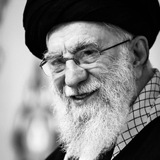
🔴 Washington Imposes Conditions on Baghdad in Exchange for Resuming Dollar Shipments
📍 Washington — Baghdad
Press reports published by The Wall Street Journal have revealed details of a new agreement between the US administration and the Iraqi government, under which Washington will resume cash dollar shipments to Baghdad after a four-month suspension.
Key Points of the US-Iraqi Understandings:
▪️ Baghdad has committed to implementing strict regulatory measures to prevent US dollars from reaching Iranian-backed armed factions. This will be achieved through rigorous monitoring of exchange companies and cutting off financing routes previously used to pay the salaries of these groups' members.
▪️ This resumption comes after Iraq agreed to a series of US demands aimed at curbing Iranian influence within the state apparatus.
▪️ The US demands were not limited to the financial aspect, but extended to sensitive political and security files, most notably:
• Significantly reducing Iranian influence.
• Excluding armed factions from participating in the government.
• Working toward disarming these factions and placing them completely under state authority.
📌 "The state of economic guardianship imposed by Washington under the pretext of financial pressure must be brought to an end."
📍 Washington — Baghdad
Press reports published by The Wall Street Journal have revealed details of a new agreement between the US administration and the Iraqi government, under which Washington will resume cash dollar shipments to Baghdad after a four-month suspension.
Key Points of the US-Iraqi Understandings:
▪️ Baghdad has committed to implementing strict regulatory measures to prevent US dollars from reaching Iranian-backed armed factions. This will be achieved through rigorous monitoring of exchange companies and cutting off financing routes previously used to pay the salaries of these groups' members.
▪️ This resumption comes after Iraq agreed to a series of US demands aimed at curbing Iranian influence within the state apparatus.
▪️ The US demands were not limited to the financial aspect, but extended to sensitive political and security files, most notably:
• Significantly reducing Iranian influence.
• Excluding armed factions from participating in the government.
• Working toward disarming these factions and placing them completely under state authority.
📌 "The state of economic guardianship imposed by Washington under the pretext of financial pressure must be brought to an end."
👍3
⚡️ Political Earthquake in Tel Aviv: Eisenkot Overtakes Netanyahu by 10% in July 2026 Polls
The Context:
Amidst the ongoing war of attrition on the Lebanese and Iranian fronts in July 2026, a new poll by Israel's Channel 13 reveals a sharp shift in public sentiment. The poll places former IDF Chief of Staff Gadi Eisenkot in the lead with 46% for prime ministerial suitability, compared to 36% for incumbent Benjamin Netanyahu, reflecting a massive erosion of support for the ruling right-wing coalition due to military and economic exhaustion.
Statistical Analysis & Forecasting:
A Significant Gap: Eisenkot’s 10-point lead thoroughly exceeds the standard statistical margin of error (typically 3.5%). This demonstrates a clear desire among centrist voters and a fraction of independents to transition from political maneuvering to a rigorous military-centric leadership to manage the current multi-front crisis.
The Decay of Netanyahu’s Base: These figures confirm the failure of Netanyahu’s survival strategy of prolonging conflicts in Gaza and Lebanon to maintain power. The Israeli public is increasingly favoring Eisenkot’s perceived institutional pragmatism over Netanyahu’s polarization.
Geopolitical Scenarios & Middle East Impact:
Scenario A: Gadi Eisenkot Wins (The Centrist Coalition):
Regional Effect: This would lead to a more pragmatic, calculated defense policy closely aligned with Washington's current administration. Eisenkot would likely de-escalate active fronts, prioritize a hostage-prisoner swap, and potentially accept the Litani River withdrawal framework in southern Lebanon to consolidate an exhausted military and stabilize the home front.
Scenario B: Benjamin Netanyahu Retains Power (The Right-Wing Bloc):
Regional Effect: Continued total war and structural friction with both Washington and Tehran. Netanyahu will persist in rejecting withdrawals from southern Lebanon or concessions in Gaza, significantly increasing the probability of a broader regional war and permanent disruptions to global maritime traffic in the Strait of Hormuz and Bab al-Mandab.
The Context:
Amidst the ongoing war of attrition on the Lebanese and Iranian fronts in July 2026, a new poll by Israel's Channel 13 reveals a sharp shift in public sentiment. The poll places former IDF Chief of Staff Gadi Eisenkot in the lead with 46% for prime ministerial suitability, compared to 36% for incumbent Benjamin Netanyahu, reflecting a massive erosion of support for the ruling right-wing coalition due to military and economic exhaustion.
Statistical Analysis & Forecasting:
A Significant Gap: Eisenkot’s 10-point lead thoroughly exceeds the standard statistical margin of error (typically 3.5%). This demonstrates a clear desire among centrist voters and a fraction of independents to transition from political maneuvering to a rigorous military-centric leadership to manage the current multi-front crisis.
The Decay of Netanyahu’s Base: These figures confirm the failure of Netanyahu’s survival strategy of prolonging conflicts in Gaza and Lebanon to maintain power. The Israeli public is increasingly favoring Eisenkot’s perceived institutional pragmatism over Netanyahu’s polarization.
Geopolitical Scenarios & Middle East Impact:
Scenario A: Gadi Eisenkot Wins (The Centrist Coalition):
Regional Effect: This would lead to a more pragmatic, calculated defense policy closely aligned with Washington's current administration. Eisenkot would likely de-escalate active fronts, prioritize a hostage-prisoner swap, and potentially accept the Litani River withdrawal framework in southern Lebanon to consolidate an exhausted military and stabilize the home front.
Scenario B: Benjamin Netanyahu Retains Power (The Right-Wing Bloc):
Regional Effect: Continued total war and structural friction with both Washington and Tehran. Netanyahu will persist in rejecting withdrawals from southern Lebanon or concessions in Gaza, significantly increasing the probability of a broader regional war and permanent disruptions to global maritime traffic in the Strait of Hormuz and Bab al-Mandab.
👍3
📊 The Farewell of Two Leaders: The "Khamenei" Legacy Endures and Sovereignty is a Red Line
During massive public gatherings coinciding with the funeral of the martyred Leader Ayatollah Seyyed Ali Khamenei, Hezbollah Secretary-General Sheikh Naim Qassem and Grand Jaafari Mufti Sheikh Ahmad Qabalan defined the parameters of the upcoming phase:
A Historic Event (The Million-Strong Farewell): Both scholars emphasized that the historic funeral proved the vitality of the Islamic system, marking the birth of the "Khamenei School" which solidified a regional power capable of crushing enemy strongholds and shifting regional balances.
Allegiance to the Future: A clear declaration to continue the path of leadership under Ayatollah Seyyed Mojtaba Khamenei with the same resilience and strength.
Lebanese Sovereignty & Rejecting Directives:
Calling for the elimination of American hegemony and rejecting the current constitutionally and publicly flawed "framework agreement."
No compromise with the Israeli occupation except through full withdrawal and adherence to the Five Points (army deployment to the borders, halting violations, and reconstruction).
The Partnership Equation: Sheikh Qabalan stressed that while maintaining historical commitment to the path of the martyred leader—who always prioritized Lebanon—this alliance will never come at the expense of Lebanon's multi-confessional framework or national partnership.
During massive public gatherings coinciding with the funeral of the martyred Leader Ayatollah Seyyed Ali Khamenei, Hezbollah Secretary-General Sheikh Naim Qassem and Grand Jaafari Mufti Sheikh Ahmad Qabalan defined the parameters of the upcoming phase:
A Historic Event (The Million-Strong Farewell): Both scholars emphasized that the historic funeral proved the vitality of the Islamic system, marking the birth of the "Khamenei School" which solidified a regional power capable of crushing enemy strongholds and shifting regional balances.
Allegiance to the Future: A clear declaration to continue the path of leadership under Ayatollah Seyyed Mojtaba Khamenei with the same resilience and strength.
Lebanese Sovereignty & Rejecting Directives:
Calling for the elimination of American hegemony and rejecting the current constitutionally and publicly flawed "framework agreement."
No compromise with the Israeli occupation except through full withdrawal and adherence to the Five Points (army deployment to the borders, halting violations, and reconstruction).
The Partnership Equation: Sheikh Qabalan stressed that while maintaining historical commitment to the path of the martyred leader—who always prioritized Lebanon—this alliance will never come at the expense of Lebanon's multi-confessional framework or national partnership.
👍3
⚡️ Tel Aviv's Defiance: Gallant Rejects Trump's Push and Refuses Lebanon Withdrawal
Context:
Israeli Defense Minister Yoav Gallant’s remarks serve as a direct rebuke to US President Donald Trump’s recent statement at the NATO summit, where Trump asserted that Israel
from southern Lebanon in accordance with the broader US-Iran regional understandings. This public friction underscores a widening rift between a US administration intent on enforcing a regional truce and a hawkish Israeli security establishment resisting external dictates.
Geopolitical Analysis & Critique:
Defiance Under a Deficit: Gallant’s claim that Israel
to occupy or remain in Lebanese territory is largely rhetorical bluster meant for domestic political consumption. Operationally, Israel cannot sustain a prolonged ground occupation or weather a multi-front war of attrition without absolute US diplomatic cover and continuous logistical reinforcement.
The Attrition Trap: By explicitly defying the parameters of the US-mediated framework, Israel risks overplaying its hand. Maintaining physical presence inside southern Lebanon transforms the occupied zones into highly volatile targets for ongoing operations, exposing the Israeli military to deep tactical fatigue.
Diverging Strategic Horizons: Washington is actively attempting to stabilize critical maritime corridors (like the Strait of Hormuz) and scale back regional conflicts. Conversely, Tel Aviv views any withdrawal lacking the complete dismantlement of Hezbollah's infrastructure as an unacceptable strategic defeat, sacrificing long-term geopolitical alignment for immediate domestic political survival.
Context:
Israeli Defense Minister Yoav Gallant’s remarks serve as a direct rebuke to US President Donald Trump’s recent statement at the NATO summit, where Trump asserted that Israel
"wants to and will withdraw"
from southern Lebanon in accordance with the broader US-Iran regional understandings. This public friction underscores a widening rift between a US administration intent on enforcing a regional truce and a hawkish Israeli security establishment resisting external dictates.
Geopolitical Analysis & Critique:
Defiance Under a Deficit: Gallant’s claim that Israel
"does not need permission"
to occupy or remain in Lebanese territory is largely rhetorical bluster meant for domestic political consumption. Operationally, Israel cannot sustain a prolonged ground occupation or weather a multi-front war of attrition without absolute US diplomatic cover and continuous logistical reinforcement.
The Attrition Trap: By explicitly defying the parameters of the US-mediated framework, Israel risks overplaying its hand. Maintaining physical presence inside southern Lebanon transforms the occupied zones into highly volatile targets for ongoing operations, exposing the Israeli military to deep tactical fatigue.
Diverging Strategic Horizons: Washington is actively attempting to stabilize critical maritime corridors (like the Strait of Hormuz) and scale back regional conflicts. Conversely, Tel Aviv views any withdrawal lacking the complete dismantlement of Hezbollah's infrastructure as an unacceptable strategic defeat, sacrificing long-term geopolitical alignment for immediate domestic political survival.
😢2🤬1
The Observer
On the sidelines of the NATO summit: Meeting brings together Trump and al-Julani in Ankara 📍 Ankara The corridors of the NATO summit in the Turkish capital, Ankara, witnessed a meeting between US President Donald Trump and Abu Mohammad al-Julani. This meeting…
The Jolani Model or the Iranian Model?
✍🏼 Dr. Foad Izadi
Trump’s promise to Jolani in their meeting yesterday was:
Trump had previously stated that Jolani is
adding that he is considering using him to confront Lebanese Hezbollah.
The US Secretary of State also stated yesterday:
This means:
• After a year and a half of being enabled in power by America.
• Four personal meetings with Trump.
• Accepting the Israeli occupation of a large part of Syrian territory.
• Formal readiness to act as mercenaries for America...
Jolani has only just received a promise to remove Syria from the State Sponsors of Terrorism list.
❗️To the honorable official in the Islamic Republic,
To lift US sanctions in the long term, you must become like "Jolani."
Are you ready for that?
Lifting US sanctions on the Islamic Republic of Iran in the long term is an illusion, an illusion, an illusion.
📌 The Solution:
1. Experience has proven that concessions and negotiations do not ward off the specter of war, because as the Martyr Imam said:
This means that concessions, no matter how large, are not enough for it. In the past four months, we have found no evidence to refute this analysis by the Martyr Imam.
1. In principle, the country's top priority must be to break the cycle of: attack, ceasefire, negotiation, then attack again. Not waiting to obtain genetically modified soybeans (American or otherwise), which is questionable to begin with.
2. The correct way to keep the specter of war away from the country is "military deterrence." Please publish a list of water desalination and oil facilities in the region that constitute targets for Iran. In the event of a new attack on Iran, these facilities must be destroyed in a way that makes rebuilding them take at least two years. Attacks on Iran must not be allowed to become normalized.
Limited destruction does not create the required deterrence; Trump views the limited destruction of these facilities as a "reconstruction project" for his American companies. Widespread destruction, however, will keep global oil and gas prices high for at least two years, and that is what will create the necessary deterrence. Alternative routes to the Strait of Hormuz must be at the top of the Iranian target list.
If the Americans know that Iran will truly respond in this manner, they will not dare to attack it.
3. Please effectively close the Strait of Hormuz for at least two months. America has not yet paid the economic cost necessary for attacking Iran. The ability to afford the cost of attacking Iran means a new attack will happen.
Country officials have stated that in recent months they sold all the oil anchored in the waters and more at high prices, and the money was received. The country possesses the necessary liquidity to cover costs for the next two months.
4. Please do not waste the country's time on the illusions of "long-term sanctions removal" or promised investments of $300 billion.
5. Please do not forget to collect transit fees (tolls) after the partial reopening of the Strait of Hormuz.
If Iran does not collect fees in the Strait of Hormuz, America and English insurance companies will. Trump said a few days ago:
📌 International Estimates Regarding the Revenue Capacity of the Strait of Hormuz:
▪️ Reuters: $110 billion.
▪️ "Oxford Process" Research Center: $80 billion.
▪️ JPMorgan (the largest US financial and banking services company): Between $70 to $90 billion... meaning twice the amount of oil sales.
Collecting these fees does not violate any international law. Iran is not a member of the Law of the Sea Convention. Collecting customary fees will not isolate Iran from the world.
✍🏼 Dr. Foad Izadi
Trump’s promise to Jolani in their meeting yesterday was:
"We will remove Syria from the State Sponsors of Terrorism list."
Trump had previously stated that Jolani is
"fully coordinated with America,"
adding that he is considering using him to confront Lebanese Hezbollah.
The US Secretary of State also stated yesterday:
"Lifting sanctions on Syria will free up international trade and investment, and give Syria an opportunity for reconstruction."
This means:
• After a year and a half of being enabled in power by America.
• Four personal meetings with Trump.
• Accepting the Israeli occupation of a large part of Syrian territory.
• Formal readiness to act as mercenaries for America...
Jolani has only just received a promise to remove Syria from the State Sponsors of Terrorism list.
❗️To the honorable official in the Islamic Republic,
To lift US sanctions in the long term, you must become like "Jolani."
Are you ready for that?
Lifting US sanctions on the Islamic Republic of Iran in the long term is an illusion, an illusion, an illusion.
📌 The Solution:
1. Experience has proven that concessions and negotiations do not ward off the specter of war, because as the Martyr Imam said:
"America wants to swallow Iran."
This means that concessions, no matter how large, are not enough for it. In the past four months, we have found no evidence to refute this analysis by the Martyr Imam.
1. In principle, the country's top priority must be to break the cycle of: attack, ceasefire, negotiation, then attack again. Not waiting to obtain genetically modified soybeans (American or otherwise), which is questionable to begin with.
2. The correct way to keep the specter of war away from the country is "military deterrence." Please publish a list of water desalination and oil facilities in the region that constitute targets for Iran. In the event of a new attack on Iran, these facilities must be destroyed in a way that makes rebuilding them take at least two years. Attacks on Iran must not be allowed to become normalized.
Limited destruction does not create the required deterrence; Trump views the limited destruction of these facilities as a "reconstruction project" for his American companies. Widespread destruction, however, will keep global oil and gas prices high for at least two years, and that is what will create the necessary deterrence. Alternative routes to the Strait of Hormuz must be at the top of the Iranian target list.
If the Americans know that Iran will truly respond in this manner, they will not dare to attack it.
3. Please effectively close the Strait of Hormuz for at least two months. America has not yet paid the economic cost necessary for attacking Iran. The ability to afford the cost of attacking Iran means a new attack will happen.
Country officials have stated that in recent months they sold all the oil anchored in the waters and more at high prices, and the money was received. The country possesses the necessary liquidity to cover costs for the next two months.
4. Please do not waste the country's time on the illusions of "long-term sanctions removal" or promised investments of $300 billion.
5. Please do not forget to collect transit fees (tolls) after the partial reopening of the Strait of Hormuz.
If Iran does not collect fees in the Strait of Hormuz, America and English insurance companies will. Trump said a few days ago:
"The Strait of Hormuz is a money printing machine."
📌 International Estimates Regarding the Revenue Capacity of the Strait of Hormuz:
▪️ Reuters: $110 billion.
▪️ "Oxford Process" Research Center: $80 billion.
▪️ JPMorgan (the largest US financial and banking services company): Between $70 to $90 billion... meaning twice the amount of oil sales.
Collecting these fees does not violate any international law. Iran is not a member of the Law of the Sea Convention. Collecting customary fees will not isolate Iran from the world.
Strategic Blow: US Strike Targets Key Hub in Iran’s North-South Corridor
Channel 15 (Israel) reports that the US strike on the Ak Tepe Khan bridge—located on the Incheh Borun–Turkmenistan railway line west of Akala—represents a significant operational hit.
The targeted site serves as a vital transit node within the International North-South Transport Corridor (INSTC). As one of Iran's most critical overland logistics routes, this corridor links the country directly to Central Asia, Russia, and increasingly, China.
Channel 15 (Israel) reports that the US strike on the Ak Tepe Khan bridge—located on the Incheh Borun–Turkmenistan railway line west of Akala—represents a significant operational hit.
The targeted site serves as a vital transit node within the International North-South Transport Corridor (INSTC). As one of Iran's most critical overland logistics routes, this corridor links the country directly to Central Asia, Russia, and increasingly, China.
🤬2
The Observer
A short while ago : Takeoff of fighter jets, refueling aircraft, and Airborne Early Warning and Control (AWACS) aircraft belonging to the US Air Force from their bases in Jordan, Qatar, Bahrain, Saudi Arabia, and the UAE."
🚨 US Air Force Mass Takeoff Across the Gulf & Levant: What it Means
Geopolitical Context:
Collapse of the Ceasefire: The previous US-Iran memorandum of understanding is officially dead. Following renewed US strikes on Iranian targets and subsequent Iranian missile/drone barrages against US bases and GCC hosts (including Bahrain, Kuwait, and Jordan), the conflict has escalated into a direct state-on-state confrontation.
Host State Vulnerability: By launching these assets from bases in Jordan, Qatar, Bahrain, Saudi Arabia, and the UAE, the US is fully utilizing its regional basing network. This puts Gulf nations directly in the crosshairs, as Iran's IRGC has already threatened to target any regional base used for aggression.
Military Implications:
Preparation for Complex, Deep-Strike Operations: High-end aerial warfare cannot function without the specific combination mentioned in the report:
AWACS: Provides long-range radar, battle management, and tracking of incoming hostile cruise/ballistic missiles.
Refueling Tankers (KC-135/KC-46): Dramatically extend the loiter time and range of US and Israeli fighter jets, allowing for continuous combat air patrols or deep-penetration strikes inside Iran.
Active Air Defense & Strike Packages: A simultaneous takeoff of this scale indicates the US is either establishing a theater-wide defensive umbrella to intercept another wave of Iranian missiles, or setting up the necessary aerial infrastructure to support massive retaliatory strike packages against Iranian territory.
Bottom Line: This is not a routine patrol. The synchronized mobilization of support assets (tankers and radar) alongside combat jets across five nations signals that the US military is preparing for a sustained, high-intensity air campaign or braced for an imminent regional escalatory wave.
Geopolitical Context:
Collapse of the Ceasefire: The previous US-Iran memorandum of understanding is officially dead. Following renewed US strikes on Iranian targets and subsequent Iranian missile/drone barrages against US bases and GCC hosts (including Bahrain, Kuwait, and Jordan), the conflict has escalated into a direct state-on-state confrontation.
Host State Vulnerability: By launching these assets from bases in Jordan, Qatar, Bahrain, Saudi Arabia, and the UAE, the US is fully utilizing its regional basing network. This puts Gulf nations directly in the crosshairs, as Iran's IRGC has already threatened to target any regional base used for aggression.
Military Implications:
Preparation for Complex, Deep-Strike Operations: High-end aerial warfare cannot function without the specific combination mentioned in the report:
AWACS: Provides long-range radar, battle management, and tracking of incoming hostile cruise/ballistic missiles.
Refueling Tankers (KC-135/KC-46): Dramatically extend the loiter time and range of US and Israeli fighter jets, allowing for continuous combat air patrols or deep-penetration strikes inside Iran.
Active Air Defense & Strike Packages: A simultaneous takeoff of this scale indicates the US is either establishing a theater-wide defensive umbrella to intercept another wave of Iranian missiles, or setting up the necessary aerial infrastructure to support massive retaliatory strike packages against Iranian territory.
Bottom Line: This is not a routine patrol. The synchronized mobilization of support assets (tankers and radar) alongside combat jets across five nations signals that the US military is preparing for a sustained, high-intensity air campaign or braced for an imminent regional escalatory wave.
Smotrich Reveals Annexation Plans While the Field Explodes: The Truth Behind the "Pilot Zones" and the Rome Boycott
📌 THE DEVELOPMENTS:
The Zionist Finance Minister, Bezalel Smotrich, dropped all diplomatic pretenses by explicitly stating:
He declared that the only way to exact a price from Lebanon is through permanent land confiscation.
🔥 THE FIELD ESCALATION:
Simultaneously, the occupation is using an earth-scorching policy to make the border area uninhabitable.
Major military operations today included:
💥 Massive Controlled Detonations: Targeted destructions leveled residential blocks in Khiyam, Hadatha, Houla, Al-Tiri, and Beit Yahoun.
🔫 Heavy Machine-Gun Sweeps: Intense firing from Al-Bayyadah toward Buyut al-Siyad, and from Beit Yahoun toward Braachit, severely damaging civilian homes.
🚁 Drone & Flare Activity: Reconnaissance and strikes targeted the vicinity of Harsh Ali al-Taher (Al-Khardali side), coupled with illumination flares over the central sector.
💼 THE DIPLOMATIC STANDOFF (AXIOS LEAKS):
🇺🇸 The American Plan: US officials claim the first "pilot zone" for a gradual Israeli redeployment (targeting Zawtar al-Gharbiyeh and Froun) will launch within days under CENTCOM coordination.
❌ The Lebanese Rejection: Beirut has officially refused to participate in the upcoming technical rounds in Rome (scheduled for July 15-16) until a real, verifiable Israeli military withdrawal begins on the ground.
👁️ ANALYTICAL INSIGHT (AL-MURAQEB):
The Axis of Resistance views the U.S.-brokered "Framework Agreement" as a dangerous political maneuver. While Washington tries to transition the file to technical committees in Rome to ease pressure on Tel Aviv, the occupation army is physically carving out an unpopulated buffer zone through explosions and demographic displacement. Beirut’s belated refusal to negotiate before an actual pullback disrupts this trap, proving that the resistance and the state recognize that security guarantees are won on the terrain, not in European hotels.
📌 THE DEVELOPMENTS:
The Zionist Finance Minister, Bezalel Smotrich, dropped all diplomatic pretenses by explicitly stating:
"We must establish a security zone for many years in Lebanon... it must be an integral part of the State of Israel."
He declared that the only way to exact a price from Lebanon is through permanent land confiscation.
🔥 THE FIELD ESCALATION:
Simultaneously, the occupation is using an earth-scorching policy to make the border area uninhabitable.
Major military operations today included:
💥 Massive Controlled Detonations: Targeted destructions leveled residential blocks in Khiyam, Hadatha, Houla, Al-Tiri, and Beit Yahoun.
🔫 Heavy Machine-Gun Sweeps: Intense firing from Al-Bayyadah toward Buyut al-Siyad, and from Beit Yahoun toward Braachit, severely damaging civilian homes.
🚁 Drone & Flare Activity: Reconnaissance and strikes targeted the vicinity of Harsh Ali al-Taher (Al-Khardali side), coupled with illumination flares over the central sector.
💼 THE DIPLOMATIC STANDOFF (AXIOS LEAKS):
🇺🇸 The American Plan: US officials claim the first "pilot zone" for a gradual Israeli redeployment (targeting Zawtar al-Gharbiyeh and Froun) will launch within days under CENTCOM coordination.
❌ The Lebanese Rejection: Beirut has officially refused to participate in the upcoming technical rounds in Rome (scheduled for July 15-16) until a real, verifiable Israeli military withdrawal begins on the ground.
👁️ ANALYTICAL INSIGHT (AL-MURAQEB):
The Axis of Resistance views the U.S.-brokered "Framework Agreement" as a dangerous political maneuver. While Washington tries to transition the file to technical committees in Rome to ease pressure on Tel Aviv, the occupation army is physically carving out an unpopulated buffer zone through explosions and demographic displacement. Beirut’s belated refusal to negotiate before an actual pullback disrupts this trap, proving that the resistance and the state recognize that security guarantees are won on the terrain, not in European hotels.
This media is not supported in your browser
VIEW IN TELEGRAM
⚠️ Iraqi MP Dr. Hiyam Al-Yasiri Urges Iraqis to Stay Vigilant Over a Pending Oil Agreement with Washington
📍Baghdad
▪️Iraqi Member of Parliament Dr. Hiyam Al-Yasiri has issued an urgent appeal to all segments of the Iraqi people, calling for close scrutiny and public vigilance regarding a planned oil agreement that is reportedly expected to be signed during the Iraqi Prime Minister’s upcoming visit to Washington.
▪️Al-Yasiri’s concerns center on reports suggesting that Iraq may commit to exporting 500,000 barrels of oil per day to help replenish the United States’ Strategic Petroleum Reserve (SPR).
▪️She called for full transparency regarding the matter, stressing the need to safeguard the Iraqi people’s natural wealth and to ensure that any international agreements serve the interests of Iraq’s national economy above all else.
📌 For more details and to review our previous coverage of this issue, follow the ongoing updates under the hashtag: #Oil_Coup on our channel.
📍Baghdad
▪️Iraqi Member of Parliament Dr. Hiyam Al-Yasiri has issued an urgent appeal to all segments of the Iraqi people, calling for close scrutiny and public vigilance regarding a planned oil agreement that is reportedly expected to be signed during the Iraqi Prime Minister’s upcoming visit to Washington.
▪️Al-Yasiri’s concerns center on reports suggesting that Iraq may commit to exporting 500,000 barrels of oil per day to help replenish the United States’ Strategic Petroleum Reserve (SPR).
▪️She called for full transparency regarding the matter, stressing the need to safeguard the Iraqi people’s natural wealth and to ensure that any international agreements serve the interests of Iraq’s national economy above all else.
📌 For more details and to review our previous coverage of this issue, follow the ongoing updates under the hashtag: #Oil_Coup on our channel.
U.S. Skepticism Meets Israeli Warnings of Iranian Plot Against Trump
The Development: Tel Aviv passed intelligence to Washington alleging a highly specific Iranian operational plan to assassinate Donald Trump, prompting the U.S. Secret Service to alter Trump’s aircraft mid-travel during a recent NATO summit.
U.S. Intelligence Response: Deeply skeptical. Washington is treating the data strictly "for monitoring only," viewing the threat as aspirational rather than an active, imminent, or organized tactical plot.
The Context: The warning follows a massive 6-day state funeral across Iraq and Iran for Supreme Leader Ayatollah Sayyed Ali Khamenei, who was assassinated in a joint U.S.-Israeli strike on February 28, 2026. Mass crowds displayed "We Will Kill Trump" posters, optics that Israeli networks packaged to fuel Trump's personal security fears.
The Development: Tel Aviv passed intelligence to Washington alleging a highly specific Iranian operational plan to assassinate Donald Trump, prompting the U.S. Secret Service to alter Trump’s aircraft mid-travel during a recent NATO summit.
U.S. Intelligence Response: Deeply skeptical. Washington is treating the data strictly "for monitoring only," viewing the threat as aspirational rather than an active, imminent, or organized tactical plot.
The Context: The warning follows a massive 6-day state funeral across Iraq and Iran for Supreme Leader Ayatollah Sayyed Ali Khamenei, who was assassinated in a joint U.S.-Israeli strike on February 28, 2026. Mass crowds displayed "We Will Kill Trump" posters, optics that Israeli networks packaged to fuel Trump's personal security fears.
Strategic Motives:
Israel: Prime Minister Netanyahu is leveraging the funeral optics to repair a brief political rift with Trump, position Israel as an indispensable security partner, and lock in an aggressive U.S. posture against Tehran.
United States: The U.S. intelligence community is deliberately downplaying the threat to avoid being dragged into a direct regional war, balancing high-stakes defense with backchannel diplomacy regarding the Strait of Hormuz and the nuclear file.
Iran: Tehran officially denies the plot, framing the leak as a coordinated U.S.-Israeli information operation meant to justify ongoing sanctions and military strikes.
@observer_5
Israel: Prime Minister Netanyahu is leveraging the funeral optics to repair a brief political rift with Trump, position Israel as an indispensable security partner, and lock in an aggressive U.S. posture against Tehran.
United States: The U.S. intelligence community is deliberately downplaying the threat to avoid being dragged into a direct regional war, balancing high-stakes defense with backchannel diplomacy regarding the Strait of Hormuz and the nuclear file.
Iran: Tehran officially denies the plot, framing the leak as a coordinated U.S.-Israeli information operation meant to justify ongoing sanctions and military strikes.
@observer_5
Sanaa Leverages Vision 2030 in Strategic Deterrence Shift
The Development:
The Ministry of Foreign Affairs in Sanaa (Ansar Allah/Houthi) announced an expanded military target bank in Saudi Arabia, explicitly including "Vision 2030" projects like NEOM, the Saudi Stock Exchange (Tadawul), Aramco facilities, airports, and vital maritime hubs like Yanbu port.
The Catalyst: This escalation is conditioned on the continued air and naval blockade and was triggered by political friction following an Iranian aircraft's landing at Sanaa International Airport, which broke previous understandings and led to tightened coalition restrictions.
Status Updates:
Military: Saudi-led coalition forces raised readiness levels, warning of unprecedented measures to protect national infrastructure.
Diplomatic: Omani mediators are actively attempting to de-escalate the crisis and prevent kinetic strikes.
The Development:
The Ministry of Foreign Affairs in Sanaa (Ansar Allah/Houthi) announced an expanded military target bank in Saudi Arabia, explicitly including "Vision 2030" projects like NEOM, the Saudi Stock Exchange (Tadawul), Aramco facilities, airports, and vital maritime hubs like Yanbu port.
The Catalyst: This escalation is conditioned on the continued air and naval blockade and was triggered by political friction following an Iranian aircraft's landing at Sanaa International Airport, which broke previous understandings and led to tightened coalition restrictions.
Status Updates:
Military: Saudi-led coalition forces raised readiness levels, warning of unprecedented measures to protect national infrastructure.
Diplomatic: Omani mediators are actively attempting to de-escalate the crisis and prevent kinetic strikes.
Economic: No physical disruptions yet, but analysts warn targeting Yanbu could spike global oil prices and shipping insurance premiums.
Geopolitical Analysis:
Strategic Shift: Sanaa is moving from targeting energy infrastructure to threatening Saudi Arabia's economic narrative and "image of stability," which is critical for attracting FDI for Vision 2030.
Leverage: Sanaa is exploiting Riyadh's need for a secure environment for its economic pivot to force concessions on the blockade and civil servant salaries.
Axis of Resistance: Tehran and the Axis view Sanaa's capabilities as a vital tool to counter Western containment and deter Riyadh from aligning with Western security frameworks or normalizing relations with Israel.
@observer_5
Geopolitical Analysis:
Strategic Shift: Sanaa is moving from targeting energy infrastructure to threatening Saudi Arabia's economic narrative and "image of stability," which is critical for attracting FDI for Vision 2030.
Leverage: Sanaa is exploiting Riyadh's need for a secure environment for its economic pivot to force concessions on the blockade and civil servant salaries.
Axis of Resistance: Tehran and the Axis view Sanaa's capabilities as a vital tool to counter Western containment and deter Riyadh from aligning with Western security frameworks or normalizing relations with Israel.
@observer_5
This media is not supported in your browser
VIEW IN TELEGRAM
"We gathered the remains of the soldiers before nightfall so that animals wouldn't eat them, and you don't even recognize our injuries... A psychologically traumatized soldier speaks before a Knesset committee!"
Watch the video
@observer_5