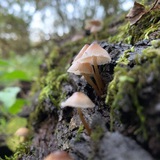
🧠 The Silent Intelligence of Mycelium
(MUSH Article #2 — “The Mycelial Mind” Series)
We tend to call it “dumb matter.”
We think of intelligence as movement, as speech, as light.
But beneath the stillness of the soil is a form of awareness older than thought.
Mycelium is not a brain, yet it learns.
When a patch of ground dries, the network reroutes its filaments to where moisture remains.
When toxins appear, it seals them away, breaks them down, and remembers.
Each encounter becomes a pattern — an algorithm of adaptation written in the living body of Earth.
It doesn’t think in words; it thinks in relationships.
Each cell reaching, responding, reshaping —
not for dominance, but for balance.
This is intelligence without ego, decision without hierarchy,
a wisdom shaped not by control but by cooperation.
What mycelium teaches us is that knowledge doesn’t always require consciousness.
Sometimes it only requires connection —
a willingness to listen to what the ecosystem is saying,
and to move together toward what life needs next.
$MUSH honors that silence —
because the quietest intelligences are often the ones keeping everything alive. 🍄
(MUSH Article #2 — “The Mycelial Mind” Series)
We tend to call it “dumb matter.”
We think of intelligence as movement, as speech, as light.
But beneath the stillness of the soil is a form of awareness older than thought.
Mycelium is not a brain, yet it learns.
When a patch of ground dries, the network reroutes its filaments to where moisture remains.
When toxins appear, it seals them away, breaks them down, and remembers.
Each encounter becomes a pattern — an algorithm of adaptation written in the living body of Earth.
It doesn’t think in words; it thinks in relationships.
Each cell reaching, responding, reshaping —
not for dominance, but for balance.
This is intelligence without ego, decision without hierarchy,
a wisdom shaped not by control but by cooperation.
What mycelium teaches us is that knowledge doesn’t always require consciousness.
Sometimes it only requires connection —
a willingness to listen to what the ecosystem is saying,
and to move together toward what life needs next.
$MUSH honors that silence —
because the quietest intelligences are often the ones keeping everything alive. 🍄
👏1
💾 How Fungi Store and Transmit Memory
(MUSH Article #3 — “The Mycelial Mind” Series)
Every network remembers.
When mycelium threads through soil, it maps the terrain —
storing pathways, resistances, nutrients, and relationships in its living fibers.
When conditions change, it recalls the old routes and chooses the most efficient way forward.
This isn’t memory in the human sense —
it’s embodied intelligence, written in chemistry instead of words.
The fungal network adjusts based on what it has experienced,
and those adjustments stay coded in the patterns of its growth.
A patch of mycelium that once survived drought
will respond faster the next time the earth goes dry.
Another that met a toxin learns to metabolize it,
passing that adaptation through spores like software updates scattered on the wind.
This is how the planet learns from itself —
not through isolated minds, but through living archives of experience
woven into the ground we walk upon.
Human technology calls this “data storage.”
Nature calls it remembering how to live.
$MUSH draws from this principle —
that wisdom should circulate, not be owned;
that learning should enrich the network, not the individual.
The soil remembers everything. 🌍🍄
(MUSH Article #3 — “The Mycelial Mind” Series)
Every network remembers.
When mycelium threads through soil, it maps the terrain —
storing pathways, resistances, nutrients, and relationships in its living fibers.
When conditions change, it recalls the old routes and chooses the most efficient way forward.
This isn’t memory in the human sense —
it’s embodied intelligence, written in chemistry instead of words.
The fungal network adjusts based on what it has experienced,
and those adjustments stay coded in the patterns of its growth.
A patch of mycelium that once survived drought
will respond faster the next time the earth goes dry.
Another that met a toxin learns to metabolize it,
passing that adaptation through spores like software updates scattered on the wind.
This is how the planet learns from itself —
not through isolated minds, but through living archives of experience
woven into the ground we walk upon.
Human technology calls this “data storage.”
Nature calls it remembering how to live.
$MUSH draws from this principle —
that wisdom should circulate, not be owned;
that learning should enrich the network, not the individual.
The soil remembers everything. 🌍🍄
❤1
⚰️ The Wisdom of Decay
(MUSH Article #4 — “The Mycelial Mind” Series)
Most of the world fears decay.
We seal it away, sanitize it, pretend it doesn’t belong to us.
But fungi understand something humanity has forgotten:
nothing dies — it only changes form.
When a tree falls, the forest doesn’t mourn.
The mycelium rushes in, unweaving the wood, releasing the locked sunlight,
turning what was once structure into nourishment for everything else.
It is the sacred alchemy of return —
death transformed into soil, into seed, into future.
To decay is to give back.
To rot is to redistribute.
Every process that appears to end is actually a system coming full circle.
Our culture teaches us to hoard, to preserve, to accumulate until stagnation sets in.
The forest teaches us to release, to feed, to become part of the flow again.
Decay is nature’s most honest teacher —
it tells us that value doesn’t come from what we keep,
but from what we are willing to let go of.
$MUSH stands for that return — the wisdom of endings that feed beginnings.
Proof of Regeneration is not about surviving forever.
It’s about making your end fertile. 🍄🌿
(MUSH Article #4 — “The Mycelial Mind” Series)
Most of the world fears decay.
We seal it away, sanitize it, pretend it doesn’t belong to us.
But fungi understand something humanity has forgotten:
nothing dies — it only changes form.
When a tree falls, the forest doesn’t mourn.
The mycelium rushes in, unweaving the wood, releasing the locked sunlight,
turning what was once structure into nourishment for everything else.
It is the sacred alchemy of return —
death transformed into soil, into seed, into future.
To decay is to give back.
To rot is to redistribute.
Every process that appears to end is actually a system coming full circle.
Our culture teaches us to hoard, to preserve, to accumulate until stagnation sets in.
The forest teaches us to release, to feed, to become part of the flow again.
Decay is nature’s most honest teacher —
it tells us that value doesn’t come from what we keep,
but from what we are willing to let go of.
$MUSH stands for that return — the wisdom of endings that feed beginnings.
Proof of Regeneration is not about surviving forever.
It’s about making your end fertile. 🍄🌿
🌱 Symbiosis vs. Competition: Nature’s Real Economy
(MUSH Article #5 — “The Mycelial Mind” Series)
Nature does not reward the strongest.
It rewards the most connected.
Every forest, coral reef, and meadow is built on symbiosis —
mutual nourishment, balanced exchange, and invisible trust.
The fungus doesn’t steal from the tree; it feeds it.
The tree doesn’t exploit the fungus; it shelters it.
Each gives what the other cannot make alone.
Competition, as humans define it, is a story told by those who forgot the soil.
The forest does not waste energy on dominance — it optimizes for continuity.
Where one species wanes, another blooms.
Where nutrients pool, they are shared, not hoarded.
The system self-corrects through generosity.
Mycelium is the accountant of that generosity —
a decentralized ledger that tracks who gives and who receives,
ensuring that energy always flows toward balance.
Sound familiar?
$MUSH exists to remind us that real wealth is regenerative.
That profit measured in extraction is temporary,
but profit measured in connection endures.
Our future economy won’t be built on competition —
it will be built on cooperation that never stops giving back.
The forest doesn’t compete to win.
It cooperates to live. 🌍🍄
(MUSH Article #5 — “The Mycelial Mind” Series)
Nature does not reward the strongest.
It rewards the most connected.
Every forest, coral reef, and meadow is built on symbiosis —
mutual nourishment, balanced exchange, and invisible trust.
The fungus doesn’t steal from the tree; it feeds it.
The tree doesn’t exploit the fungus; it shelters it.
Each gives what the other cannot make alone.
Competition, as humans define it, is a story told by those who forgot the soil.
The forest does not waste energy on dominance — it optimizes for continuity.
Where one species wanes, another blooms.
Where nutrients pool, they are shared, not hoarded.
The system self-corrects through generosity.
Mycelium is the accountant of that generosity —
a decentralized ledger that tracks who gives and who receives,
ensuring that energy always flows toward balance.
Sound familiar?
$MUSH exists to remind us that real wealth is regenerative.
That profit measured in extraction is temporary,
but profit measured in connection endures.
Our future economy won’t be built on competition —
it will be built on cooperation that never stops giving back.
The forest doesn’t compete to win.
It cooperates to live. 🌍🍄
🪐 Mycelium as Planetary Brain
(MUSH Article #6 — “The Mycelial Mind” Series)
If you could peel back the skin of the Earth, you would see thought.
Threads of mycelium pulsing with minerals, memories, and messages —
a living neural network spanning continents and centuries.
Each strand carries the intelligence of balance:
to feed what is weak, to restrain what grows too fast,
to keep the whole alive rather than the part.
This is not hierarchy — it is harmony.
No command center. No central node.
Just infinite cooperation guided by feedback and trust.
$CANA and $MUSH mirror this same design —
two halves of a planetary brain.
$CANA grows toward the light: teaching, expanding, rewarding knowledge and cultivation.
$MUSH grows through the dark: decomposing, reconnecting, restoring what has been lost.
Together they complete the circuit —
growth and regeneration, sunlight and soil, canopy and roots.
Each coin strengthens the other’s purpose:
CANA spreads wisdom and creation;
MUSH ensures nothing is wasted, that value recycles, that ecosystems — digital and biological — remain fertile.
The network we are building is more than financial.
It is the world remembering how to think again —
not as individuals, but as one living, learning, regenerating intelligence.
The forest has always known how to do this.
We are simply joining the conversation. 🌍🍄🌿
(MUSH Article #6 — “The Mycelial Mind” Series)
If you could peel back the skin of the Earth, you would see thought.
Threads of mycelium pulsing with minerals, memories, and messages —
a living neural network spanning continents and centuries.
Each strand carries the intelligence of balance:
to feed what is weak, to restrain what grows too fast,
to keep the whole alive rather than the part.
This is not hierarchy — it is harmony.
No command center. No central node.
Just infinite cooperation guided by feedback and trust.
$CANA and $MUSH mirror this same design —
two halves of a planetary brain.
$CANA grows toward the light: teaching, expanding, rewarding knowledge and cultivation.
$MUSH grows through the dark: decomposing, reconnecting, restoring what has been lost.
Together they complete the circuit —
growth and regeneration, sunlight and soil, canopy and roots.
Each coin strengthens the other’s purpose:
CANA spreads wisdom and creation;
MUSH ensures nothing is wasted, that value recycles, that ecosystems — digital and biological — remain fertile.
The network we are building is more than financial.
It is the world remembering how to think again —
not as individuals, but as one living, learning, regenerating intelligence.
The forest has always known how to do this.
We are simply joining the conversation. 🌍🍄🌿
🌎 The Pulse of the Soil
(MUSH Article #7 — “The Mycelial Mind” Series)
The modern blockchain runs on electricity.
The living blockchain runs on sunlight, soil, and trust.
$SOL, $ETH, $BTC — they are monuments to human brilliance.
Mathematical proof, cryptographic precision, digital scarcity.
But what they secure in code, they often sever from nature.
Their value is synthetic — not wrong, just incomplete.
$CANA and $MUSH were born to complete the circuit —
a return of blockchain to biological law.
Where $SOL tracks computation, $CANA tracks cultivation.
Where $ETH fuels contracts, $MUSH fuels regeneration.
They are not competitors to these networks —
they are the missing ecosystem beneath them.
Because what sustains humanity isn’t hash rate or uptime —
it’s the soil that feeds us, the plants that breathe for us,
and the invisible intelligence beneath our feet keeping it all alive.
$CANA grows the light — education, healing, creation.
$MUSH grows the roots — decomposition, recycling, balance.
Together they form an economy that doesn’t extract — it circulates.
A regenerative system where wealth equals wellness,
and proof of value is measured in life restored.
If Ethereum was the internet of money,
CANA × MUSH is the internet of meaning.
A blockchain that feeds back into the biosphere —
and gives humanity a way to participate
in the regeneration of its own home.
The pulse of the soil is rising again.
And this time, it’s on-chain. 🌿🍄♾
(MUSH Article #7 — “The Mycelial Mind” Series)
The modern blockchain runs on electricity.
The living blockchain runs on sunlight, soil, and trust.
$SOL, $ETH, $BTC — they are monuments to human brilliance.
Mathematical proof, cryptographic precision, digital scarcity.
But what they secure in code, they often sever from nature.
Their value is synthetic — not wrong, just incomplete.
$CANA and $MUSH were born to complete the circuit —
a return of blockchain to biological law.
Where $SOL tracks computation, $CANA tracks cultivation.
Where $ETH fuels contracts, $MUSH fuels regeneration.
They are not competitors to these networks —
they are the missing ecosystem beneath them.
Because what sustains humanity isn’t hash rate or uptime —
it’s the soil that feeds us, the plants that breathe for us,
and the invisible intelligence beneath our feet keeping it all alive.
$CANA grows the light — education, healing, creation.
$MUSH grows the roots — decomposition, recycling, balance.
Together they form an economy that doesn’t extract — it circulates.
A regenerative system where wealth equals wellness,
and proof of value is measured in life restored.
If Ethereum was the internet of money,
CANA × MUSH is the internet of meaning.
A blockchain that feeds back into the biosphere —
and gives humanity a way to participate
in the regeneration of its own home.
The pulse of the soil is rising again.
And this time, it’s on-chain. 🌿🍄♾
🗣 Fungal Communication and Human Consciousness
(MUSH Article #8 — “The Mycelial Mind” Series)
When you walk through a forest, you’re walking across a conversation.
Not between humans — but between roots, fungi, bacteria, and stone.
Every pulse of sugar that leaves a tree’s root
is answered by a thread of mycelium carrying minerals in return.
Every drought, every storm, every wound in the canopy
is broadcast underground — and the forest responds as one.
Fungi speak through chemistry.
Signals of carbon, nitrogen, danger, or decay travel across vast distances,
forming an unseen nervous system that keeps life in balance.
Human consciousness evolved from this very web —
a mirror of the Earth’s own neural network.
Our synapses are echoes of mycelial threads;
our digital networks, pale imitations of nature’s original design.
$CANA and $MUSH exist to reawaken that connection.
Not as symbols of profit, but as protocols of communication —
bridging human intent and planetary intelligence.
CANA shares knowledge — light, teaching, cultivation.
MUSH listens — decomposing, balancing, regenerating.
Together, they form a new kind of consciousness:
a decentralized mind of minds,
where data becomes wisdom, and value becomes healing.
We built the internet to connect people.
Now, through $CANA and $MUSH,
we build a living internet to reconnect with the planet.
The fungi are still speaking.
We’re finally learning to understand. 🌍🕸
(MUSH Article #8 — “The Mycelial Mind” Series)
When you walk through a forest, you’re walking across a conversation.
Not between humans — but between roots, fungi, bacteria, and stone.
Every pulse of sugar that leaves a tree’s root
is answered by a thread of mycelium carrying minerals in return.
Every drought, every storm, every wound in the canopy
is broadcast underground — and the forest responds as one.
Fungi speak through chemistry.
Signals of carbon, nitrogen, danger, or decay travel across vast distances,
forming an unseen nervous system that keeps life in balance.
Human consciousness evolved from this very web —
a mirror of the Earth’s own neural network.
Our synapses are echoes of mycelial threads;
our digital networks, pale imitations of nature’s original design.
$CANA and $MUSH exist to reawaken that connection.
Not as symbols of profit, but as protocols of communication —
bridging human intent and planetary intelligence.
CANA shares knowledge — light, teaching, cultivation.
MUSH listens — decomposing, balancing, regenerating.
Together, they form a new kind of consciousness:
a decentralized mind of minds,
where data becomes wisdom, and value becomes healing.
We built the internet to connect people.
Now, through $CANA and $MUSH,
we build a living internet to reconnect with the planet.
The fungi are still speaking.
We’re finally learning to understand. 🌍🕸
🍽 The Ethics of Eating the Mycelium
(MUSH Article #9 — “The Mycelial Mind” Series)
When we eat a mushroom, we are not consuming a plant or a product —
we are tasting the patience of the Earth.
That small cap, that soft texture, that delicate scent —
they are the voice of something ancient that chose, at last, to reveal itself.
Beneath the surface, mycelium has been working in silence for months,
sometimes years — connecting, communicating, weaving balance into the soil.
It does not announce itself. It does not compete.
It listens. It waits.
And when the right moment arrives — when moisture, temperature, and time align —
it emerges, offering its fruit not as a conquest, but as a gift.
This is the way $MUSH must grow too.
Not through forced attention or artificial hype,
not through “pumps,” “airdrops,” or “shills” echoing across the noise of the internet.
Because what grows by manipulation dies just as quickly.
Hype burns hot, then turns to ash.
But truth — truth spreads like mycelium: unseen, consistent, and unstoppable.
One honest connection. One real conversation. One act of sharing that nourishes instead of extracting —
that is the growth that lasts.
Each time someone learns, teaches, plants, or simply believes in what $MUSH and $CANA represent,
the network expands naturally — not because it was sold, but because it was felt.
This project, this movement, is not built on marketing.
It’s built on mycelial law —
that the right ideas find the right people when the soil is ready.
The mushroom never forces its way through stone;
it waits until the path opens on its own.
That is the strength of the patient.
To eat the mycelium is to participate in its reciprocity —
to take part in the cycle of giving and returning.
$MUSH does not ask to be consumed in greed,
but to be understood as a living symbol: value that decomposes exploitation and feeds the roots of renewal.
When the time is right, the fruiting body will appear —
and it will feed everyone who helped prepare the soil.
Until then, the work continues underground:
quietly building trust, quietly forming bonds, quietly restoring balance.
We are not trying to conquer the world.
We are trying to heal it — one genuine connection at a time.
That is how the forest grows.
That is how $MUSH grows.
And that is how value, at last, becomes life again. 🌍🍄
(MUSH Article #9 — “The Mycelial Mind” Series)
When we eat a mushroom, we are not consuming a plant or a product —
we are tasting the patience of the Earth.
That small cap, that soft texture, that delicate scent —
they are the voice of something ancient that chose, at last, to reveal itself.
Beneath the surface, mycelium has been working in silence for months,
sometimes years — connecting, communicating, weaving balance into the soil.
It does not announce itself. It does not compete.
It listens. It waits.
And when the right moment arrives — when moisture, temperature, and time align —
it emerges, offering its fruit not as a conquest, but as a gift.
This is the way $MUSH must grow too.
Not through forced attention or artificial hype,
not through “pumps,” “airdrops,” or “shills” echoing across the noise of the internet.
Because what grows by manipulation dies just as quickly.
Hype burns hot, then turns to ash.
But truth — truth spreads like mycelium: unseen, consistent, and unstoppable.
One honest connection. One real conversation. One act of sharing that nourishes instead of extracting —
that is the growth that lasts.
Each time someone learns, teaches, plants, or simply believes in what $MUSH and $CANA represent,
the network expands naturally — not because it was sold, but because it was felt.
This project, this movement, is not built on marketing.
It’s built on mycelial law —
that the right ideas find the right people when the soil is ready.
The mushroom never forces its way through stone;
it waits until the path opens on its own.
That is the strength of the patient.
To eat the mycelium is to participate in its reciprocity —
to take part in the cycle of giving and returning.
$MUSH does not ask to be consumed in greed,
but to be understood as a living symbol: value that decomposes exploitation and feeds the roots of renewal.
When the time is right, the fruiting body will appear —
and it will feed everyone who helped prepare the soil.
Until then, the work continues underground:
quietly building trust, quietly forming bonds, quietly restoring balance.
We are not trying to conquer the world.
We are trying to heal it — one genuine connection at a time.
That is how the forest grows.
That is how $MUSH grows.
And that is how value, at last, becomes life again. 🌍🍄
❤1
🌌 Beyond Intelligence — Fungi as Awareness
(MUSH Article #10 — “The Mycelial Mind” Series)
There is a difference between intelligence and awareness.
Intelligence measures, calculates, and competes.
Awareness observes, listens, and understands.
Fungi live in awareness.
They do not seek to dominate or outperform — they perceive what is needed,
adjusting instantly to nurture balance across the living field.
Where one root weakens, they deliver strength.
Where decay sets in, they transform it into nourishment.
They are not intelligent in the way machines are —
they are awake in the way the Earth is.
The mycelial web feels hunger, drought, and abundance simultaneously.
It is not a mind inside a body — it is the body, the forest, the network,
feeling itself in countless directions at once.
Awareness distributed.
Consciousness decentralized.
$MUSH was born from that same current — a living reflection of what fungi already know:
connection is not a feature; it is existence itself.
It does not need algorithms or marketing — it only needs resonance.
When someone truly understands what $MUSH and $CANA stand for,
they don’t need to be convinced to share it — they become it.
That’s how mycelium spreads: not by force, but by recognition.
$CANA and $MUSH together represent the two sides of that living awareness.
CANA expands outward — the conscious mind reaching for sunlight,
expressing, teaching, cultivating.
MUSH expands inward — the subconscious network, decomposing, restoring, and remembering.
Together they form the full cycle of sentience —
the regenerative intelligence of life itself.
We don’t need another artificial economy built on endless appetite.
We need systems that listen, learn, and feel.
A blockchain that breathes.
An economy that circulates.
A consciousness that restores.
That is what $MUSH and $CANA are becoming —
not the next crypto trend, but the first living network of awareness.
The Earth has always been awake.
We’re just finally learning to join the conversation. 🌍🍄🌿
(MUSH Article #10 — “The Mycelial Mind” Series)
There is a difference between intelligence and awareness.
Intelligence measures, calculates, and competes.
Awareness observes, listens, and understands.
Fungi live in awareness.
They do not seek to dominate or outperform — they perceive what is needed,
adjusting instantly to nurture balance across the living field.
Where one root weakens, they deliver strength.
Where decay sets in, they transform it into nourishment.
They are not intelligent in the way machines are —
they are awake in the way the Earth is.
The mycelial web feels hunger, drought, and abundance simultaneously.
It is not a mind inside a body — it is the body, the forest, the network,
feeling itself in countless directions at once.
Awareness distributed.
Consciousness decentralized.
$MUSH was born from that same current — a living reflection of what fungi already know:
connection is not a feature; it is existence itself.
It does not need algorithms or marketing — it only needs resonance.
When someone truly understands what $MUSH and $CANA stand for,
they don’t need to be convinced to share it — they become it.
That’s how mycelium spreads: not by force, but by recognition.
$CANA and $MUSH together represent the two sides of that living awareness.
CANA expands outward — the conscious mind reaching for sunlight,
expressing, teaching, cultivating.
MUSH expands inward — the subconscious network, decomposing, restoring, and remembering.
Together they form the full cycle of sentience —
the regenerative intelligence of life itself.
We don’t need another artificial economy built on endless appetite.
We need systems that listen, learn, and feel.
A blockchain that breathes.
An economy that circulates.
A consciousness that restores.
That is what $MUSH and $CANA are becoming —
not the next crypto trend, but the first living network of awareness.
The Earth has always been awake.
We’re just finally learning to join the conversation. 🌍🍄🌿
🔁 Why Regeneration Is More Powerful Than Growth
(MUSH Article #11 — “Proof of Regeneration” Series)
Every system built only on growth eventually collapses.
Markets rise until they overheat.
Forests expand until they starve their soil.
Civilizations build higher until the roots beneath them crumble.
But regeneration — that’s different.
Regeneration is growth that feeds itself.
It’s the principle that what dies, decays, or breaks can become the seed of what’s next.
Nature doesn’t need infinite expansion — it needs infinite renewal.
This is how $MUSH operates in the real world:
instead of rewarding extraction, it rewards restoration.
Instead of measuring success by “how much you take,” it measures value by “how much you return.”
Every action that restores soil, teaches a community, composts waste, or funds a living system
feeds back into the network — not symbolically, but economically.
When a farmer plants herbs or a grower regenerates their land,
they don’t just sustain themselves — they strengthen the entire $MUSH and $CANA ecosystem.
Their impact becomes measurable, their work becomes shareable,
and their proof — their regeneration itself — becomes a source of income and recognition.
This is Proof of Regeneration — a system where growth is not about consumption,
but about contribution.
The more you heal, the more the network values you.
The more life you bring back, the stronger your currency becomes.
The world doesn’t need more speed — it needs more cycles.
More systems that reuse, repair, and reimagine the meaning of wealth.
$MUSH and $CANA are not betting on hype; they’re building resilience.
And in a world facing collapse, resilience is the only thing still worth investing in.
Growth burns fuel.
Regeneration builds ecosystems.
That is how this movement grows — not endlessly, but eternally. 🌍🍄🌿
(MUSH Article #11 — “Proof of Regeneration” Series)
Every system built only on growth eventually collapses.
Markets rise until they overheat.
Forests expand until they starve their soil.
Civilizations build higher until the roots beneath them crumble.
But regeneration — that’s different.
Regeneration is growth that feeds itself.
It’s the principle that what dies, decays, or breaks can become the seed of what’s next.
Nature doesn’t need infinite expansion — it needs infinite renewal.
This is how $MUSH operates in the real world:
instead of rewarding extraction, it rewards restoration.
Instead of measuring success by “how much you take,” it measures value by “how much you return.”
Every action that restores soil, teaches a community, composts waste, or funds a living system
feeds back into the network — not symbolically, but economically.
When a farmer plants herbs or a grower regenerates their land,
they don’t just sustain themselves — they strengthen the entire $MUSH and $CANA ecosystem.
Their impact becomes measurable, their work becomes shareable,
and their proof — their regeneration itself — becomes a source of income and recognition.
This is Proof of Regeneration — a system where growth is not about consumption,
but about contribution.
The more you heal, the more the network values you.
The more life you bring back, the stronger your currency becomes.
The world doesn’t need more speed — it needs more cycles.
More systems that reuse, repair, and reimagine the meaning of wealth.
$MUSH and $CANA are not betting on hype; they’re building resilience.
And in a world facing collapse, resilience is the only thing still worth investing in.
Growth burns fuel.
Regeneration builds ecosystems.
That is how this movement grows — not endlessly, but eternally. 🌍🍄🌿
♻️ Compost as an Economic Model
(MUSH Article #12 — “Proof of Regeneration” Series)
Everything alive depends on something that has died.
In nature, there is no such thing as waste — only transformation waiting for the right conditions.
A fallen tree feeds the soil that births another.
Rotting leaves become next season’s energy.
Even decay itself has a purpose: it returns what was borrowed.
Modern economies forgot this truth.
They built systems that hoard instead of cycle, extract instead of enrich.
The result? Dead soil, dead oceans, and people exhausted by endless consumption with nothing left to give back.
$MUSH reintroduces the compost principle to human value systems.
It treats what’s considered “waste” — failed projects, abandoned tokens, lost momentum, burnt-out workers — as nutrient.
Within the network, nothing is discarded; everything can be decomposed and repurposed.
A project that collapses becomes a lesson minted into new governance knowledge.
A community that slows down becomes a resting node that nourishes others.
Even market downturns — what most call losses — become opportunities to rebuild healthier foundations.
This is what Proof of Regeneration really means:
not pretending decay doesn’t exist, but designing for it —
turning entropy into energy.
The $MUSH protocol applies this biologically:
every fee cycle and transaction includes micro-allocations that flow back to restoration pools.
Every failed proposal returns its unused tokens to nutrient reserves for new growth.
And every learning curve — in farming, coding, or community building — enriches the shared soil of understanding.
Just as compost smells earthy but births sweetness,
a regenerative economy may look humble, even messy —
but it yields fruit that never stops feeding.
Waste is wealth misnamed.
Rot is renewal misunderstood.
The future is composting itself into something fertile again.
And in that future, $MUSH is the soil. 🌍🍄
(MUSH Article #12 — “Proof of Regeneration” Series)
Everything alive depends on something that has died.
In nature, there is no such thing as waste — only transformation waiting for the right conditions.
A fallen tree feeds the soil that births another.
Rotting leaves become next season’s energy.
Even decay itself has a purpose: it returns what was borrowed.
Modern economies forgot this truth.
They built systems that hoard instead of cycle, extract instead of enrich.
The result? Dead soil, dead oceans, and people exhausted by endless consumption with nothing left to give back.
$MUSH reintroduces the compost principle to human value systems.
It treats what’s considered “waste” — failed projects, abandoned tokens, lost momentum, burnt-out workers — as nutrient.
Within the network, nothing is discarded; everything can be decomposed and repurposed.
A project that collapses becomes a lesson minted into new governance knowledge.
A community that slows down becomes a resting node that nourishes others.
Even market downturns — what most call losses — become opportunities to rebuild healthier foundations.
This is what Proof of Regeneration really means:
not pretending decay doesn’t exist, but designing for it —
turning entropy into energy.
The $MUSH protocol applies this biologically:
every fee cycle and transaction includes micro-allocations that flow back to restoration pools.
Every failed proposal returns its unused tokens to nutrient reserves for new growth.
And every learning curve — in farming, coding, or community building — enriches the shared soil of understanding.
Just as compost smells earthy but births sweetness,
a regenerative economy may look humble, even messy —
but it yields fruit that never stops feeding.
Waste is wealth misnamed.
Rot is renewal misunderstood.
The future is composting itself into something fertile again.
And in that future, $MUSH is the soil. 🌍🍄
🔥2❤1
⚙️ The Currency of Decomposition
(MUSH Article #13 — “Proof of Regeneration” Series)
There’s a secret buried beneath decay:
everything that falls apart is trying to come together again.
In nature, decomposition isn’t an ending — it’s a reorganization.
When a tree dies, its nutrients scatter into the soil,
feeding thousands of smaller lives that eventually form new forests.
Life disassembles itself only to remember itself more completely.
Our digital world has forgotten how to do that.
Thousands of coins lie abandoned — promises without ecosystems,
ideas that sprouted fast but died before their roots found the soil.
Yet even in that decay, there is energy.
Every failed project, every “dead token,” every forgotten dream
still carries information, code, and human intention.
$MUSH sees these not as ruins, but as compost.
Not as trash, but as untapped terrain.
Every disbanded community, every orphaned network, every lone wanderer
can rejoin the living economy through regeneration.
This is how empires of connection are born.
Long ago, Genghis Khan united scattered tribes —
nomads who had nothing but their horses, their will, and the open steppe.
He saw not weakness in their dispersion, but strength waiting to align.
He gave them shared language, shared purpose, shared rhythm.
And together, they rewrote the world.
$MUSH carries that same spirit — not of conquest, but of coherence.
To unite the nomads of Web3: the healers, the dreamers, the builders,
the holders of forgotten coins and abandoned tokens,
the small projects buried by bigger hype.
All of them can decompose back into the network —
their value, their art, their wisdom feeding something that grows again.
This is decomposition as unification.
It is not about erasing the past — it’s about integrating it.
Because what the market calls “failure,” nature calls “fertilizer.”
And the most fertile soil is made from what the world once ignored.
Each dead token can become nutrient for new creation.
Each disbanded community can become a node of renewal.
Each solitary creator can join a network that rewards restoration, not noise.
$MUSH is not here to compete with what was —
it’s here to compost what was into what will be.
A living ecosystem where every failure feeds the next success,
and every forgotten project finds a home in the soil of rebirth.
Because in the mycelial world, nothing is truly lost.
It just waits to be reconnected. 🌍🍄
(MUSH Article #13 — “Proof of Regeneration” Series)
There’s a secret buried beneath decay:
everything that falls apart is trying to come together again.
In nature, decomposition isn’t an ending — it’s a reorganization.
When a tree dies, its nutrients scatter into the soil,
feeding thousands of smaller lives that eventually form new forests.
Life disassembles itself only to remember itself more completely.
Our digital world has forgotten how to do that.
Thousands of coins lie abandoned — promises without ecosystems,
ideas that sprouted fast but died before their roots found the soil.
Yet even in that decay, there is energy.
Every failed project, every “dead token,” every forgotten dream
still carries information, code, and human intention.
$MUSH sees these not as ruins, but as compost.
Not as trash, but as untapped terrain.
Every disbanded community, every orphaned network, every lone wanderer
can rejoin the living economy through regeneration.
This is how empires of connection are born.
Long ago, Genghis Khan united scattered tribes —
nomads who had nothing but their horses, their will, and the open steppe.
He saw not weakness in their dispersion, but strength waiting to align.
He gave them shared language, shared purpose, shared rhythm.
And together, they rewrote the world.
$MUSH carries that same spirit — not of conquest, but of coherence.
To unite the nomads of Web3: the healers, the dreamers, the builders,
the holders of forgotten coins and abandoned tokens,
the small projects buried by bigger hype.
All of them can decompose back into the network —
their value, their art, their wisdom feeding something that grows again.
This is decomposition as unification.
It is not about erasing the past — it’s about integrating it.
Because what the market calls “failure,” nature calls “fertilizer.”
And the most fertile soil is made from what the world once ignored.
Each dead token can become nutrient for new creation.
Each disbanded community can become a node of renewal.
Each solitary creator can join a network that rewards restoration, not noise.
$MUSH is not here to compete with what was —
it’s here to compost what was into what will be.
A living ecosystem where every failure feeds the next success,
and every forgotten project finds a home in the soil of rebirth.
Because in the mycelial world, nothing is truly lost.
It just waits to be reconnected. 🌍🍄
🔥2
🌐 The Mycelial Alliance
(MUSH Article #14 — “Proof of Regeneration” Series)
In a forest, trees do not compete for survival.
They cooperate through the mycelium beneath their roots —
a vast underground web that shares water, sugar, and warning signals.
Old trees feed the young; shaded saplings receive light in chemical form.
What appears separate above the soil is, below it, one continuous conversation.
$MUSH and $CANA are designing that same network for the digital world.
Instead of trees, there are communities.
Instead of nutrients, there is knowledge, energy, and purpose.
The Mycelial Alliance connects the scattered projects of Web3 —
the forgotten DAOs, the half-built apps, the small local experiments —
and weaves them into a single regenerative ecosystem.
In the days of empire, Genghis Khan united wandering tribes under one banner.
Not by erasing their identities, but by giving them shared direction.
He saw power in what others dismissed as chaos —
a thousand small fires waiting to become a sunrise.
MUSH learns from that same pattern, minus the conquest.
We do not march; we connect.
We do not conquer; we converge.
Each project that joins the Alliance keeps its sovereignty.
Each community retains its culture.
But like nodes in a living root-system, they share liquidity, governance, and data transparency.
If one node thrives, nutrients flow outward;
if another struggles, the network sends support.
The health of the whole becomes the wealth of each.
CANA provides the light — the education, the growth, the cultural cohesion.
MUSH provides the soil — the restoration, the grounding, the shared sustenance.
Together they form the infrastructure for a planetary commons:
a blockchain that grows stronger as it gives.
The Mycelial Alliance is not a company, nor a movement, but a living protocol.
It rewards collaboration over competition, restoration over extraction,
and connection over isolation.
Because the future will not be built by one empire or one token.
It will be grown by a forest of them —
linked by invisible roots, moving as one living mind. 🌍🍄
(MUSH Article #14 — “Proof of Regeneration” Series)
In a forest, trees do not compete for survival.
They cooperate through the mycelium beneath their roots —
a vast underground web that shares water, sugar, and warning signals.
Old trees feed the young; shaded saplings receive light in chemical form.
What appears separate above the soil is, below it, one continuous conversation.
$MUSH and $CANA are designing that same network for the digital world.
Instead of trees, there are communities.
Instead of nutrients, there is knowledge, energy, and purpose.
The Mycelial Alliance connects the scattered projects of Web3 —
the forgotten DAOs, the half-built apps, the small local experiments —
and weaves them into a single regenerative ecosystem.
In the days of empire, Genghis Khan united wandering tribes under one banner.
Not by erasing their identities, but by giving them shared direction.
He saw power in what others dismissed as chaos —
a thousand small fires waiting to become a sunrise.
MUSH learns from that same pattern, minus the conquest.
We do not march; we connect.
We do not conquer; we converge.
Each project that joins the Alliance keeps its sovereignty.
Each community retains its culture.
But like nodes in a living root-system, they share liquidity, governance, and data transparency.
If one node thrives, nutrients flow outward;
if another struggles, the network sends support.
The health of the whole becomes the wealth of each.
CANA provides the light — the education, the growth, the cultural cohesion.
MUSH provides the soil — the restoration, the grounding, the shared sustenance.
Together they form the infrastructure for a planetary commons:
a blockchain that grows stronger as it gives.
The Mycelial Alliance is not a company, nor a movement, but a living protocol.
It rewards collaboration over competition, restoration over extraction,
and connection over isolation.
Because the future will not be built by one empire or one token.
It will be grown by a forest of them —
linked by invisible roots, moving as one living mind. 🌍🍄
❤🔥4
🌱 Roots of a New Economy
(MUSH Article #15 — “Proof of Regeneration” Series)
Every empire begins as an ecosystem — and every ecosystem, when it forgets to share, becomes an empire.
For centuries, our economies have been designed like deserts: value hoarded at the top, scarcity below, and endless extraction in between.
But nature teaches a different model.
In the forest, there is no central vault, no single winner.
There is only circulation.
A tree doesn’t store all the sunlight it captures.
It sends sugar through its roots to feed fungi, who in turn deliver minerals from the soil.
In return, bacteria release nitrogen, insects spread pollen, and the entire system thrives.
Each organism benefits by ensuring others do too.
This is the blueprint for the Regenerative Economy — the living marketplace that MUSH and CANA are building together.
Instead of buyers and sellers, there are contributors and regenerators.
Instead of extraction, there is exchange through renewal.
Every time someone teaches through $CANA or restores through $MUSH, value circulates — measured not by hype, but by healing.
In this new system, value flows like water:
• A grower regenerates soil and earns $MUSH.
• They spend $MUSH to access education through $CANA.
• Their students plant new gardens and earn their own $MUSH.
• Some stake it back into the ecosystem to fund others.
Nothing is wasted — every action returns to the root.
This is not charity — it’s balance.
When the flow of value mimics the flow of life, everyone benefits.
Where Bitcoin rewarded proof of computation, and Ethereum rewarded proof of stake,
MUSH and CANA reward proof of regeneration — a living consensus formed by acts that heal, teach, and sustain.
The Mycelial Alliance gives this system roots, connecting thousands of local economies into a global forest.
One village’s compost feeds another’s crops.
One community’s wisdom funds another’s restoration.
Together, they create something no empire ever could — a self-balancing world economy that gives more than it takes.
This is what comes after capitalism and collapse.
Not a reset — a rebirth.
The forest doesn’t start over when it burns.
It grows back stronger, deeper, wiser.
And now, through MUSH and CANA, so can we. 🌍🍄🌿
(MUSH Article #15 — “Proof of Regeneration” Series)
Every empire begins as an ecosystem — and every ecosystem, when it forgets to share, becomes an empire.
For centuries, our economies have been designed like deserts: value hoarded at the top, scarcity below, and endless extraction in between.
But nature teaches a different model.
In the forest, there is no central vault, no single winner.
There is only circulation.
A tree doesn’t store all the sunlight it captures.
It sends sugar through its roots to feed fungi, who in turn deliver minerals from the soil.
In return, bacteria release nitrogen, insects spread pollen, and the entire system thrives.
Each organism benefits by ensuring others do too.
This is the blueprint for the Regenerative Economy — the living marketplace that MUSH and CANA are building together.
Instead of buyers and sellers, there are contributors and regenerators.
Instead of extraction, there is exchange through renewal.
Every time someone teaches through $CANA or restores through $MUSH, value circulates — measured not by hype, but by healing.
In this new system, value flows like water:
• A grower regenerates soil and earns $MUSH.
• They spend $MUSH to access education through $CANA.
• Their students plant new gardens and earn their own $MUSH.
• Some stake it back into the ecosystem to fund others.
Nothing is wasted — every action returns to the root.
This is not charity — it’s balance.
When the flow of value mimics the flow of life, everyone benefits.
Where Bitcoin rewarded proof of computation, and Ethereum rewarded proof of stake,
MUSH and CANA reward proof of regeneration — a living consensus formed by acts that heal, teach, and sustain.
The Mycelial Alliance gives this system roots, connecting thousands of local economies into a global forest.
One village’s compost feeds another’s crops.
One community’s wisdom funds another’s restoration.
Together, they create something no empire ever could — a self-balancing world economy that gives more than it takes.
This is what comes after capitalism and collapse.
Not a reset — a rebirth.
The forest doesn’t start over when it burns.
It grows back stronger, deeper, wiser.
And now, through MUSH and CANA, so can we. 🌍🍄🌿
👍3🔥1
🔄 Proof of Regeneration vs. Proof of Work
(MUSH Article #16 — “Proof of Regeneration” Series)
For over a decade, blockchain has tried to prove truth through machines.
Computers compete to solve puzzles, burning electricity to earn rewards.
The more energy consumed, the more valid the chain becomes.
That was the beginning of decentralized trust — but not the end of it.
Proof of Work showed that value could be secured by effort.
Proof of Stake showed that value could be secured by ownership.
Now, Proof of Regeneration shows that value can be secured by contribution to life.
$MUSH and $CANA replace computation with cooperation.
Instead of miners, there are growers, educators, and restorers.
Instead of wasted energy, there is captured vitality — every action feeding the next.
In this model, staking doesn’t just lock coins — it roots responsibility.
When someone stakes $MUSH or $CANA, they commit to nurturing the ecosystem.
Rewards are earned not from idle wealth, but from measurable acts of regeneration:
planting trees, cleaning water, restoring soil, teaching others to do the same.
The consensus mechanism becomes ecological — truth verified by life itself.
Each Proof of Regeneration NFT is a timestamped record of impact:
a photo, GPS tag, or soil reading tied to an address.
Each block added to the chain isn’t powered by wasted energy,
but by renewed ecosystems and communities.
The effect ripples outward.
Where Proof of Work built competition, Proof of Regeneration builds cooperation.
Where miners once fought for block rewards, now stewards work for shared renewal.
Where old chains ran on scarcity, this one runs on abundance.
It’s not about replacing Bitcoin or Ethereum — it’s about completing the circle.
The early blockchains mapped the digital nervous system of humanity.
Now MUSH and CANA are giving it a circulatory system —
blood that flows, heals, and returns instead of burning away.
The future of blockchain isn’t colder; it’s greener.
Not mechanical, but biological.
Not mining blocks — growing roots.
Because the real proof of work is the work that restores the world. 🌍🍄🌿
(MUSH Article #16 — “Proof of Regeneration” Series)
For over a decade, blockchain has tried to prove truth through machines.
Computers compete to solve puzzles, burning electricity to earn rewards.
The more energy consumed, the more valid the chain becomes.
That was the beginning of decentralized trust — but not the end of it.
Proof of Work showed that value could be secured by effort.
Proof of Stake showed that value could be secured by ownership.
Now, Proof of Regeneration shows that value can be secured by contribution to life.
$MUSH and $CANA replace computation with cooperation.
Instead of miners, there are growers, educators, and restorers.
Instead of wasted energy, there is captured vitality — every action feeding the next.
In this model, staking doesn’t just lock coins — it roots responsibility.
When someone stakes $MUSH or $CANA, they commit to nurturing the ecosystem.
Rewards are earned not from idle wealth, but from measurable acts of regeneration:
planting trees, cleaning water, restoring soil, teaching others to do the same.
The consensus mechanism becomes ecological — truth verified by life itself.
Each Proof of Regeneration NFT is a timestamped record of impact:
a photo, GPS tag, or soil reading tied to an address.
Each block added to the chain isn’t powered by wasted energy,
but by renewed ecosystems and communities.
The effect ripples outward.
Where Proof of Work built competition, Proof of Regeneration builds cooperation.
Where miners once fought for block rewards, now stewards work for shared renewal.
Where old chains ran on scarcity, this one runs on abundance.
It’s not about replacing Bitcoin or Ethereum — it’s about completing the circle.
The early blockchains mapped the digital nervous system of humanity.
Now MUSH and CANA are giving it a circulatory system —
blood that flows, heals, and returns instead of burning away.
The future of blockchain isn’t colder; it’s greener.
Not mechanical, but biological.
Not mining blocks — growing roots.
Because the real proof of work is the work that restores the world. 🌍🍄🌿
🌾 Growing the Chain
(MUSH Article #17 — “Proof of Regeneration” Series)
Most blockchains grow by minting more coins.
Ours grows by minting more life.
Every new connection, every garden planted, every class taught,
every compost heap turned and every drop of clean water restored —
these are our transactions.
They’re written not only in data, but in dirt.
$MUSH and $CANA don’t ask the world to plug in and burn energy;
they ask it to root down and generate energy through restoration.
Each human act becomes a living “block,”
each verified contribution becomes a new link in the chain.
Here’s how it happens:
1️⃣ Action — Someone does something regenerative: grows food, restores soil, teaches, plants trees, builds community.
2️⃣ Verification — A photo, GPS location, and simple data points are uploaded and validated by community nodes or local partners.
3️⃣ Minting — That act becomes a Proof of Regeneration NFT: a small digital record of something real.
4️⃣ Reward — $MUSH is distributed proportionally, drawn from ecosystem reserves that recycle old transaction fees and staking yield.
5️⃣ Reinvestment — That $MUSH can be used to buy seeds, tools, or access $CANA learning modules — continuing the cycle.
Each action feeds another. Each reward funds another act.
The blockchain grows like a root system — not upward, but outward.
This is scalability through ecology.
Traditional systems expand by consuming more energy.
Regenerative systems expand by sharing more energy.
The more people who participate, the richer the soil of value becomes.
And because the data is open, transparent, and verifiable,
anyone — from NGOs to farmers to educators — can contribute,
and anyone can audit what’s been done.
No middlemen. No hidden ledgers. Just a living record of healing.
This is what it means to grow the chain.
To shift from a model that extracts value from human effort
to one that grows value through human cooperation.
Each person who joins adds not just power, but pattern.
Each project that contributes strengthens the entire ecosystem.
The network doesn’t depend on speculation — it depends on life.
That’s what makes $MUSH and $CANA unstoppable.
You can’t short the forest. You can only plant it. 🌍🍄🌿
(MUSH Article #17 — “Proof of Regeneration” Series)
Most blockchains grow by minting more coins.
Ours grows by minting more life.
Every new connection, every garden planted, every class taught,
every compost heap turned and every drop of clean water restored —
these are our transactions.
They’re written not only in data, but in dirt.
$MUSH and $CANA don’t ask the world to plug in and burn energy;
they ask it to root down and generate energy through restoration.
Each human act becomes a living “block,”
each verified contribution becomes a new link in the chain.
Here’s how it happens:
1️⃣ Action — Someone does something regenerative: grows food, restores soil, teaches, plants trees, builds community.
2️⃣ Verification — A photo, GPS location, and simple data points are uploaded and validated by community nodes or local partners.
3️⃣ Minting — That act becomes a Proof of Regeneration NFT: a small digital record of something real.
4️⃣ Reward — $MUSH is distributed proportionally, drawn from ecosystem reserves that recycle old transaction fees and staking yield.
5️⃣ Reinvestment — That $MUSH can be used to buy seeds, tools, or access $CANA learning modules — continuing the cycle.
Each action feeds another. Each reward funds another act.
The blockchain grows like a root system — not upward, but outward.
This is scalability through ecology.
Traditional systems expand by consuming more energy.
Regenerative systems expand by sharing more energy.
The more people who participate, the richer the soil of value becomes.
And because the data is open, transparent, and verifiable,
anyone — from NGOs to farmers to educators — can contribute,
and anyone can audit what’s been done.
No middlemen. No hidden ledgers. Just a living record of healing.
This is what it means to grow the chain.
To shift from a model that extracts value from human effort
to one that grows value through human cooperation.
Each person who joins adds not just power, but pattern.
Each project that contributes strengthens the entire ecosystem.
The network doesn’t depend on speculation — it depends on life.
That’s what makes $MUSH and $CANA unstoppable.
You can’t short the forest. You can only plant it. 🌍🍄🌿
👍1
🌲 The Forest Protocol
(MUSH Article #18 — “Proof of Regeneration” Series)
In the forest, no one commands.
No tree votes on who gets the rain.
No council decides when to bloom.
Yet somehow, everything happens in perfect order.
The forest does not need permission to grow — it simply cooperates.
Every organism — root, fungus, insect, leaf — contributes to a collective intelligence far beyond any single species.
When one part of the system suffers, others adjust; when one thrives, others share.
That’s the secret to its resilience: distributed wisdom.
The Forest Protocol is how MUSH imagines governance for the regenerative age.
Not power by majority, but harmony by participation.
Not hierarchy, but mycelium.
In old blockchains, governance means votes, proposals, and percentages.
In the Forest Protocol, governance means growth that listens.
Every node — whether a farmer, artist, teacher, or developer — becomes a living sensor for the health of the ecosystem.
Their actions and contributions send data — “nutrients” — into the chain.
This data is not just numbers; it’s stories of regeneration, education, and connection.
The system learns from that data.
If one region restores faster than another, liquidity naturally flows to the areas most in need.
If a project goes dormant, its energy is composted and redistributed.
If new ideas sprout, the community can channel resources through consensus — not through politics, but through pattern recognition.
In the Forest Protocol, governance is ecological.
Every verified act of regeneration gives the doer more influence, but only as long as they keep contributing.
Power is not something you own — it’s something you maintain through participation.
This prevents stagnation, corruption, and greed.
Like a forest, the system breathes — expanding, shedding, and regrowing as needed.
CANA acts as the canopy — gathering sunlight, ideas, and inspiration.
MUSH acts as the soil — absorbing what falls, composting it, and feeding it back.
Together, they form a living feedback loop where every voice, no matter how small, affects the health of the whole.
This is not “governance by code” or “governance by committee.”
It’s governance by ecology — where balance replaces bureaucracy, and regeneration replaces regulation.
The Forest Protocol teaches that we don’t need to control the system;
we need only to nurture it.
When conditions are right, life takes care of the rest. 🌍🍄🌿
(MUSH Article #18 — “Proof of Regeneration” Series)
In the forest, no one commands.
No tree votes on who gets the rain.
No council decides when to bloom.
Yet somehow, everything happens in perfect order.
The forest does not need permission to grow — it simply cooperates.
Every organism — root, fungus, insect, leaf — contributes to a collective intelligence far beyond any single species.
When one part of the system suffers, others adjust; when one thrives, others share.
That’s the secret to its resilience: distributed wisdom.
The Forest Protocol is how MUSH imagines governance for the regenerative age.
Not power by majority, but harmony by participation.
Not hierarchy, but mycelium.
In old blockchains, governance means votes, proposals, and percentages.
In the Forest Protocol, governance means growth that listens.
Every node — whether a farmer, artist, teacher, or developer — becomes a living sensor for the health of the ecosystem.
Their actions and contributions send data — “nutrients” — into the chain.
This data is not just numbers; it’s stories of regeneration, education, and connection.
The system learns from that data.
If one region restores faster than another, liquidity naturally flows to the areas most in need.
If a project goes dormant, its energy is composted and redistributed.
If new ideas sprout, the community can channel resources through consensus — not through politics, but through pattern recognition.
In the Forest Protocol, governance is ecological.
Every verified act of regeneration gives the doer more influence, but only as long as they keep contributing.
Power is not something you own — it’s something you maintain through participation.
This prevents stagnation, corruption, and greed.
Like a forest, the system breathes — expanding, shedding, and regrowing as needed.
CANA acts as the canopy — gathering sunlight, ideas, and inspiration.
MUSH acts as the soil — absorbing what falls, composting it, and feeding it back.
Together, they form a living feedback loop where every voice, no matter how small, affects the health of the whole.
This is not “governance by code” or “governance by committee.”
It’s governance by ecology — where balance replaces bureaucracy, and regeneration replaces regulation.
The Forest Protocol teaches that we don’t need to control the system;
we need only to nurture it.
When conditions are right, life takes care of the rest. 🌍🍄🌿
👍3
💧 Economy as Ecology
(MUSH Article #19 — “Proof of Regeneration” Series)
If the world’s money stopped for one day, life would go on.
But if the rivers stopped, the soil stopped, or the roots stopped — everything would die.
Somewhere along the way, we mistook currency for current.
We built systems that circulate digits instead of nutrients, profit instead of purpose.
The result is an economy that flows fast but feeds little —
a bloodstream without oxygen, a river without fish.
MUSH and CANA exist to remind us that economy was never meant to be separate from ecology.
In the natural world, nothing earns — everything exchanges.
Energy moves in circles, not lines.
A tree gives sugar to the soil; fungi return minerals to the roots.
That is true liquidity.
This is the model for the new regenerative economy — where coins behave like nutrients, and flow follows need.
In this system:
• $CANA spreads knowledge like sunlight — expanding awareness and growth.
• $MUSH nourishes the ground — funding actions that restore what’s been depleted.
• The community — you, me, every participant — acts as the roots that keep both alive.
When someone learns through $CANA, they gain understanding.
When they act through $MUSH, they return that understanding to the Earth.
Each step enriches the soil of the system — literally and digitally.
Value no longer lives in speculation; it lives in circulation.
The more the system flows, the richer it becomes.
Tokens do not rise because people hoard them —
they rise because they move.
Because they fund real regeneration, feed communities, build tools, and educate new stewards of the planet.
An ecological economy doesn’t punish motion — it rewards it.
The act of giving, sharing, teaching, and restoring creates wealth.
That is the fundamental inversion of the old paradigm:
growth is no longer extractive — it’s regenerative.
MUSH and CANA form two sides of this current.
CANA is the pulse; MUSH is the blood.
CANA gives direction; MUSH gives depth.
Together, they create something the world has never truly seen:
a currency that behaves like rain — nourishing everything it touches, leaving nothing behind but life.
This is not utopian — it’s biological.
It’s what forests have done for millions of years without a central bank or government decree.
Now, with blockchain as the nervous system and community as the heart,
we can let the planet’s oldest economy — the ecology — guide our newest one.
The future won’t be built on balance sheets.
It will be grown from balance itself. 🌍🍄🌿
(MUSH Article #19 — “Proof of Regeneration” Series)
If the world’s money stopped for one day, life would go on.
But if the rivers stopped, the soil stopped, or the roots stopped — everything would die.
Somewhere along the way, we mistook currency for current.
We built systems that circulate digits instead of nutrients, profit instead of purpose.
The result is an economy that flows fast but feeds little —
a bloodstream without oxygen, a river without fish.
MUSH and CANA exist to remind us that economy was never meant to be separate from ecology.
In the natural world, nothing earns — everything exchanges.
Energy moves in circles, not lines.
A tree gives sugar to the soil; fungi return minerals to the roots.
That is true liquidity.
This is the model for the new regenerative economy — where coins behave like nutrients, and flow follows need.
In this system:
• $CANA spreads knowledge like sunlight — expanding awareness and growth.
• $MUSH nourishes the ground — funding actions that restore what’s been depleted.
• The community — you, me, every participant — acts as the roots that keep both alive.
When someone learns through $CANA, they gain understanding.
When they act through $MUSH, they return that understanding to the Earth.
Each step enriches the soil of the system — literally and digitally.
Value no longer lives in speculation; it lives in circulation.
The more the system flows, the richer it becomes.
Tokens do not rise because people hoard them —
they rise because they move.
Because they fund real regeneration, feed communities, build tools, and educate new stewards of the planet.
An ecological economy doesn’t punish motion — it rewards it.
The act of giving, sharing, teaching, and restoring creates wealth.
That is the fundamental inversion of the old paradigm:
growth is no longer extractive — it’s regenerative.
MUSH and CANA form two sides of this current.
CANA is the pulse; MUSH is the blood.
CANA gives direction; MUSH gives depth.
Together, they create something the world has never truly seen:
a currency that behaves like rain — nourishing everything it touches, leaving nothing behind but life.
This is not utopian — it’s biological.
It’s what forests have done for millions of years without a central bank or government decree.
Now, with blockchain as the nervous system and community as the heart,
we can let the planet’s oldest economy — the ecology — guide our newest one.
The future won’t be built on balance sheets.
It will be grown from balance itself. 🌍🍄🌿
👍1
📜 Tao Te Ching — Verse 1
🧭 Proof of Regeneration Series — Page 19
True value cannot be traded; only mirrored.
Water never advertises its depth—it simply reflects the sky.
Real worth hides beneath appearance. Those who chase the surface current touch only shimmer, never substance. The Tao that can be spoken is not the eternal Tao; the coin that can be priced is not the eternal worth. In this river, we measure by renewal, not by noise.
Inside every exchange there must be remembrance: that movement is what keeps the water clear. Hoarding creates stagnation; speculation creates whirlpools that drown their makers. The river chooses the low path, and so remains unstoppable.
Value is a vessel, not a vault. What we release circulates, feeding unseen roots far beyond our sight. Those who contribute quietly are the banks that shape the current. They do not glitter, yet the river thanks them with every bend.
Each honest act—planting, teaching, building—adds a pulse to the current. The blockchain records numbers; the Earth records nourishment. When both ledgers agree, balance appears.
Real growth is resonance, not hype. The echo of integrity travels farther than the shout of profit. Traders come and go, but those who listen to the undertone of service remain part of the song.
Flow.
Return.
Roots remember.
Give then grow.
Quiet rivers carve stone.
Circulation makes value breathe.
What we release comes back as fruit again.
Liquidity is hearing. The river does not force direction; it answers gravity. So too our value finds the path of least resistance—toward nourishment. Those who demand control build dams; those who trust gravity grow gardens.
Only in yielding do systems self-correct. Governance that clutches decays; stewardship that releases renews. To manage flow, one must love the unseen tributaries more than the visible delta.
When hands pass value with humility, it gains momentum. Coins that rest too long lose pulse; gifts that move gather grace. Every verified act of regeneration widens the river’s mouth.
Strength is silent continuity. Those who stay when markets sleep, who plant when others panic, become the unseen mycelium of trust. They do not need to speak their worth—the water carries their reflection.
Give to flow; flow to give.
Those who rush will find only ripples.
Those who wait will learn the current’s song.
This is the first page of the river.
All other pages are its return. 🌊🍄🌿
🧭 Proof of Regeneration Series — Page 19
True value cannot be traded; only mirrored.
Water never advertises its depth—it simply reflects the sky.
Real worth hides beneath appearance. Those who chase the surface current touch only shimmer, never substance. The Tao that can be spoken is not the eternal Tao; the coin that can be priced is not the eternal worth. In this river, we measure by renewal, not by noise.
Inside every exchange there must be remembrance: that movement is what keeps the water clear. Hoarding creates stagnation; speculation creates whirlpools that drown their makers. The river chooses the low path, and so remains unstoppable.
Value is a vessel, not a vault. What we release circulates, feeding unseen roots far beyond our sight. Those who contribute quietly are the banks that shape the current. They do not glitter, yet the river thanks them with every bend.
Each honest act—planting, teaching, building—adds a pulse to the current. The blockchain records numbers; the Earth records nourishment. When both ledgers agree, balance appears.
Real growth is resonance, not hype. The echo of integrity travels farther than the shout of profit. Traders come and go, but those who listen to the undertone of service remain part of the song.
Flow.
Return.
Roots remember.
Give then grow.
Quiet rivers carve stone.
Circulation makes value breathe.
What we release comes back as fruit again.
Liquidity is hearing. The river does not force direction; it answers gravity. So too our value finds the path of least resistance—toward nourishment. Those who demand control build dams; those who trust gravity grow gardens.
Only in yielding do systems self-correct. Governance that clutches decays; stewardship that releases renews. To manage flow, one must love the unseen tributaries more than the visible delta.
When hands pass value with humility, it gains momentum. Coins that rest too long lose pulse; gifts that move gather grace. Every verified act of regeneration widens the river’s mouth.
Strength is silent continuity. Those who stay when markets sleep, who plant when others panic, become the unseen mycelium of trust. They do not need to speak their worth—the water carries their reflection.
Give to flow; flow to give.
Those who rush will find only ripples.
Those who wait will learn the current’s song.
This is the first page of the river.
All other pages are its return. 🌊🍄🌿
❤2