
A little bit of Python. In Python exists no native empty-set-literal, because
{} is already reserved for dictionaries. However, you can unpack an empty list and get a sort of empty-set-literal with Python >= 3.5 (see PEP 448): s = {*[]} # or {*{}} or {*()}
>>> print(s)
set()
#pythonPython Enhancement Proposals (PEPs)
PEP 448 – Additional Unpacking Generalizations | peps.python.org
This PEP proposes extended usages of the * iterable unpacking operator and ** dictionary unpacking operators to allow unpacking in more positions, an arbitrary number of times, and in function calls and displays.
There two modern architectures that are commonly used in a lot of the projects in Big Data today.
The first one - Lambda Architecture, attributed to Nathan Marz, is one of the most common architectures you will see in real-time data processing today. It is designed to handle low-latency reads and updates in a linearly scalable and fault-tolerant way.
The second one - Kappa Architecture was first described by Jay Kreps. It focuses on only processing data as a stream. It is not a replacement for the Lambda Architecture, except for where your use case fits.
https://luminousmen.com/post/modern-big-data-architectures-lambda-kappa
The first one - Lambda Architecture, attributed to Nathan Marz, is one of the most common architectures you will see in real-time data processing today. It is designed to handle low-latency reads and updates in a linearly scalable and fault-tolerant way.
The second one - Kappa Architecture was first described by Jay Kreps. It focuses on only processing data as a stream. It is not a replacement for the Lambda Architecture, except for where your use case fits.
https://luminousmen.com/post/modern-big-data-architectures-lambda-kappa
I want to try a new format. I'm a fucking blogger - I have to act like one. Anyway, the idea is to talk about just one topic during the week.
And this week we're gonna talk about Apache Spark. Nothing specific, just some rambling about the topic, should be interesting though.
And this week we're gonna talk about Apache Spark. Nothing specific, just some rambling about the topic, should be interesting though.
Do you use Apache Spark at work?
Anonymous Poll
44%
daily
22%
occasionally
34%
what is Apache Spark?
RDD lineage memory error
Let's start with an interesting problem - memory error due to large RDD lineage.
When scheduling a stage for execution, Spark’s scheduler assigns a set of tasks to workers. But before dispatching tasks to workers, Spark’s scheduler broadcasts the metadata of the RDD to all workers, which includes the full lineage of that RDD. Moreover, when dispatching a task to a worker, Spark’s scheduler sends to the worker the task’s lineage(the parent RDD partitions that this task depends on) and its ancestors’ dependencies.
This can create a significant load from the single-threaded scheduler and may eventually lead to an error. You can identify it by the error message with something like OutOfMemoryError and something like Java heap space.
If the lineage is very long and contains a large number of RDDs and stages, the DAG can be huge. Such a problem can easily occur in iterative machine learning algorithms. Since Spark's dependency DAG cannot represent branches and loops, a loop unfolds in the DAG, and optimization steps with model parameter updates are repeated dozens or even hundreds of times.
People say that this could also easily happen in streaming applications, which can run for long periods of time and update the RDD whenever new data arrives. But I personally never seen that problem.
The solution here is to reduce the lineage size before the
#spark #big_data
Let's start with an interesting problem - memory error due to large RDD lineage.
When scheduling a stage for execution, Spark’s scheduler assigns a set of tasks to workers. But before dispatching tasks to workers, Spark’s scheduler broadcasts the metadata of the RDD to all workers, which includes the full lineage of that RDD. Moreover, when dispatching a task to a worker, Spark’s scheduler sends to the worker the task’s lineage(the parent RDD partitions that this task depends on) and its ancestors’ dependencies.
This can create a significant load from the single-threaded scheduler and may eventually lead to an error. You can identify it by the error message with something like OutOfMemoryError and something like Java heap space.
If the lineage is very long and contains a large number of RDDs and stages, the DAG can be huge. Such a problem can easily occur in iterative machine learning algorithms. Since Spark's dependency DAG cannot represent branches and loops, a loop unfolds in the DAG, and optimization steps with model parameter updates are repeated dozens or even hundreds of times.
People say that this could also easily happen in streaming applications, which can run for long periods of time and update the RDD whenever new data arrives. But I personally never seen that problem.
The solution here is to reduce the lineage size before the
.fit() step. For example use checkpoint() to shorten the lineage. Just use it from time to time when you think the lineage is increasing significantly. Also, cache() is useful in a similar context.#spark #big_data
Spark Mllib
Spark has two machine learning packages -
Nevertheless, we use "MLlib" as an umbrella term for the machine learning library in Apache Spark.
#spark #big_data
Spark has two machine learning packages -
spark.mllib and spark.ml.spark.mllib is the original machine learning API based on the RDD API (which has been in maintenance mode since Spark version 2.0), while spark.ml is a newer API based on DataFrames. Obviously, the DataFrames-based API is much faster due to all the Spark optimizations, but if you look into the code you can often see that spark.ml uses a lot of spark.mllib calls.Nevertheless, we use "MLlib" as an umbrella term for the machine learning library in Apache Spark.
#spark #big_data
Speaking of Spark Mllib
To the authors' credit, in the last couple of years Apache Spark got more algorithms in its machine learning libraries (MLlib and ML↑) and greatly improved performance.
But a huge number of algorithms are still implemented using old RDD interfaces, and some are still not implemented there (ensembles as an obvious example). Contributing to Spark Mllib today is unrealistic, the company has changed its focus and is trying to support what it already has instead of implementing SOTA algorithms.
It makes sense to me - it's better to write 100500 integration interfaces to third-party products and a good processing engine than to focus on a bunch of hard-to-implement algorithms. Plus, as Python users grow, they're trying to adapt the tool for the general public, such as by implementing Koalas. Plugins, add-ons (spark packages) to Spark are created to use the right algorithms, such as Microsoft has MMLSpark, there are also h20, Horovod, and many overs.
Good article on Spark ML library weknesses
#spark #big_data
To the authors' credit, in the last couple of years Apache Spark got more algorithms in its machine learning libraries (MLlib and ML↑) and greatly improved performance.
But a huge number of algorithms are still implemented using old RDD interfaces, and some are still not implemented there (ensembles as an obvious example). Contributing to Spark Mllib today is unrealistic, the company has changed its focus and is trying to support what it already has instead of implementing SOTA algorithms.
It makes sense to me - it's better to write 100500 integration interfaces to third-party products and a good processing engine than to focus on a bunch of hard-to-implement algorithms. Plus, as Python users grow, they're trying to adapt the tool for the general public, such as by implementing Koalas. Plugins, add-ons (spark packages) to Spark are created to use the right algorithms, such as Microsoft has MMLSpark, there are also h20, Horovod, and many overs.
Good article on Spark ML library weknesses
#spark #big_data
Medium
Weakness of the Apache Spark ML library
Like everything in the world, the Spark Distributed ML library widely known as MLlib is not perfect and working with it every day you come…
Spark configuration
There are many ways to set configuration properties in Spark. I keep getting confused as to which is the best place to put it.
Among all the ways you can set Spark properties, the priority order determines which values will be respected.
Based on the loading order:
▪️Any values or flags defined in the
▪️Then the values specified in the command line using the spark-submit or spark-shell
▪️Finally, the values set through SparkSession in the Spark application.
All these properties will be merged, with all duplicate properties discarded in the Spark application. Thus, for example, the values provided on the command line will override the settings in the configuration file, if they are not overwritten in the application itself.
#spark #big_data
There are many ways to set configuration properties in Spark. I keep getting confused as to which is the best place to put it.
Among all the ways you can set Spark properties, the priority order determines which values will be respected.
Based on the loading order:
▪️Any values or flags defined in the
spark-defaults.conf file will be read first▪️Then the values specified in the command line using the spark-submit or spark-shell
▪️Finally, the values set through SparkSession in the Spark application.
All these properties will be merged, with all duplicate properties discarded in the Spark application. Thus, for example, the values provided on the command line will override the settings in the configuration file, if they are not overwritten in the application itself.
#spark #big_data
PySpark documentation will follow numpydoc style. I do not see why — current Python docs for Spark always were ok. More readable than any of the java docs.
So this:
will be something like this:
will be something like this:
Probably it's gonna be more readable HTML and linking between pages. Will see.
#spark #python
So this:
"""Specifies some hint on the current :class:DataFrame.

:param name: A name of the hint.
:param parameters: Optional parameters.
:return: :class:DataFrame
will be something like this:
"""Specifies some hint on the current :class:DataFrame.

:param name: A name of the hint.
:param parameters: Optional parameters.
:return: :class:DataFrame
will be something like this:
"""Specifies some hint on the current :class:DataFrame.

Parameters
----------
name : str
    A name of the hint.
parameters : dict, optional
    Optional parameters

Returns
-------
DataFrame
Probably it's gonna be more readable HTML and linking between pages. Will see.
#spark #python
PySpark configuration provides the
Although, it is more an impression than a result of systematic tests.
#spark #big_data
spark.python.worker.reuse option which can be used to choose between forking Python process for each task and reusing the existing process. In it equals to true the process pool will be created and reuse on the executors. It should be useful to avoid expensive serialization, transfer data between JVM and Python and even garbage collection.Although, it is more an impression than a result of systematic tests.
#spark #big_data
partitionOverwriteMode
Sometimes it is necessary to overwrite some failed partitions that Spark failed to process and you need to run the job again to have all the data written correctly.
There are two options here:
1. process and overwrite all data
2. process and overwrite data for the relevant partition
The first option sounds very dumb - to do all the work all over again. But to do the second option you need to rewrite the job. Meh - more code means more problems.
Luckily spark has a parameter
This configuration works well in cases where it is possible to overwrite external table metadata with a simple
#spark #big_data
Sometimes it is necessary to overwrite some failed partitions that Spark failed to process and you need to run the job again to have all the data written correctly.
There are two options here:
1. process and overwrite all data
2. process and overwrite data for the relevant partition
The first option sounds very dumb - to do all the work all over again. But to do the second option you need to rewrite the job. Meh - more code means more problems.
Luckily spark has a parameter
spark.sql.sources.partitionOverwriteMode with option dynamic. This only overwrites data for partitions present in the current batch. This configuration works well in cases where it is possible to overwrite external table metadata with a simple
CREATE EXTERNAL TABLE when writing data to an external data store such as HDFS or S3.#spark #big_data
Performance Monitoring Tools for Spark aside from print statements
https://supergloo.com/spark-monitoring/spark-performance-monitoring-tools/
#spark #big_data
https://supergloo.com/spark-monitoring/spark-performance-monitoring-tools/
#spark #big_data
Supergloo Inc
Spark Performance Monitoring Tools - A List of Options
Which Spark performance monitoring tools are available to monitor the performance of your Spark cluster? Let's find out with these list of tools.
I've combined my experience on publishing book into the post
Machine Learning roadmap — an interesting overview of the world of ML. A lot of information and links that will help not get lost.
Link
#ml
Link
#ml
YouTube
2020 Machine Learning Roadmap (87% valid for 2024)
Getting into machine learning is quite the adventure. And as any adventurer knows, sometimes it can be helpful to have a compass to figure out if you're heading in the right direction.
Although the title of this video says machine learning roadmap, you should…
Although the title of this video says machine learning roadmap, you should…
Boston Dynamics has shown how the robot dog Spot's arm works.
Now that Spot has an arm in addition to its legs and cameras, it can do mobile copying. He finds and picks up objects (trash), cleans the living room, opens doors, operates switches and valves, tends the garden and generally has fun.
https://youtu.be/6Zbhvaac68Y
Now that Spot has an arm in addition to its legs and cameras, it can do mobile copying. He finds and picks up objects (trash), cleans the living room, opens doors, operates switches and valves, tends the garden and generally has fun.
https://youtu.be/6Zbhvaac68Y
YouTube
Spot's Got an Arm!
Now that Spot has an arm in addition to legs and cameras, it can do mobile manipulation. It finds and picks up objects (trash), tidies up the living room, opens doors, operates switches and valves, tends the garden, and generally has fun. Motion of the…
Niiiiiiice. Fresh vulnerability for Linux:
https://www.sudo.ws/alerts/unescape_overflow.html
Sudo before 1.9.5p2 has a Heap-based Buffer Overflow, allowing privilege escalation to root via "sudoedit -s" and a command-line argument that ends with a single backslash character.https://www.sudo.ws/alerts/unescape_overflow.html
Sudo
Buffer overflow in command line unescaping
A serious heap-based buffer overflow has been discovered in sudo that is exploitable by any local user. It has been given the name Baron Samedit by its discoverer. The bug can be leveraged to elevate privileges to root, even if the user is not listed in the…
Twitter is opening up its full tweet archive to academic researchers for free.
Company is now opening up access to independent researchers or journalists. You’ll have to be a student or part of an academic institution.
Twitter also says it will not be providing access to data from accounts that have been suspended or banned, which could complicate efforts to study hate speech, misinformation, and other types of conversations that violate Twitter rules.
theverge
Company is now opening up access to independent researchers or journalists. You’ll have to be a student or part of an academic institution.
Twitter also says it will not be providing access to data from accounts that have been suspended or banned, which could complicate efforts to study hate speech, misinformation, and other types of conversations that violate Twitter rules.
theverge
The Verge
Twitter is opening up its full tweet archive to academic researchers for free
A full searchable archive of public tweets will now be available for free.
Folks at AWS publish a really great resource for anyone, who is designing cloud architecture. Even if you are using already or thinking about Azure or GCP, it is a really good read and it is not your typical sleep-provoking dry white-paper.
AWS did an awesome job packing a lot of practical recommendations, best practices, tips, and suggestions into this document.
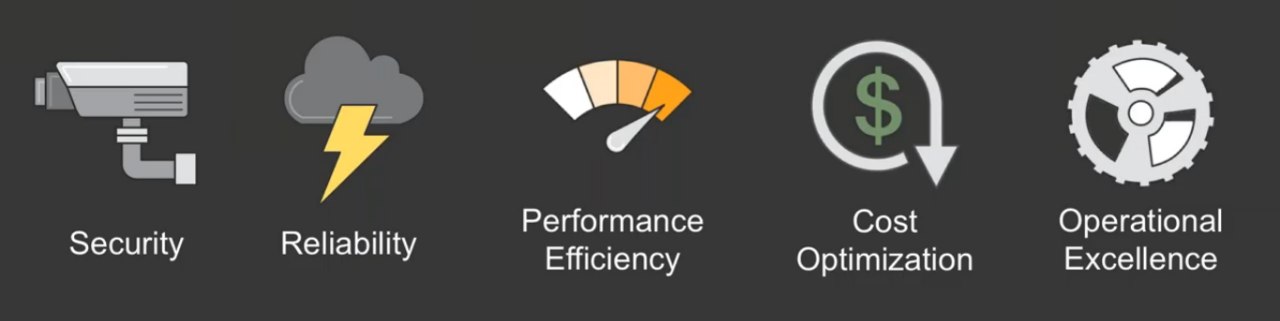
AWS Well-architected framework focuses on 5 pillars:
✓Operational Excellence
✓Security
✓Reliability
✓Performance Efficiency
✓Cost Optimization
#aws #big_data
AWS did an awesome job packing a lot of practical recommendations, best practices, tips, and suggestions into this document.
AWS Well-architected framework focuses on 5 pillars:
✓Operational Excellence
✓Security
✓Reliability
✓Performance Efficiency
✓Cost Optimization
#aws #big_data
For any error you can say the cause of it is between the monitor and the chair — and it's true, but it doesn't help fix the error in any way. To stand out today you need to bring both hard & soft skills to the table.
https://luminousmen.com/post/soft-skills-guide-for-software-engineer
#soft_skills
https://luminousmen.com/post/soft-skills-guide-for-software-engineer
#soft_skills