
Hackaday
Brick-Laying Machine Builds Without Mortar
https://hackaday.com/wp-content/uploads/2023/10/hadrian-x-800.png?w=800
Move over, 3D printed houses. There’s a new game in town, and it is able to use standard concrete blocks to build the walls of a house in just one day.
Australian company FBR’s Hadrian X is a tablet-controlled system that follows CAD models to lay the blocks one by one. As you can see in the video after the break, the blocks are laid so quickly that there’s no time for mortar, so they dip the bottom of each block in construction adhesive instead. In the second video after the break, you can watch Hadrian-X build a curved wall.
There are several things to consider when it comes to outdoor robots, such as wind and unwanted vibration. In order to correct for these nuisances, FBR came up with Dynamic Stabilisation Technology (DST). While we don’t have a lot of details on DST, the company calls it “a highly accurate system that continuously adjusts the position of a robot’s end effector to ensure it is always held with stability at the correct point in 3D space.”
Curious about printed housing? Here’s the current-ish state of affairs.
➖ @hardwareHack ➖
Brick-Laying Machine Builds Without Mortar
https://hackaday.com/wp-content/uploads/2023/10/hadrian-x-800.png?w=800
Move over, 3D printed houses. There’s a new game in town, and it is able to use standard concrete blocks to build the walls of a house in just one day.
Australian company FBR’s Hadrian X is a tablet-controlled system that follows CAD models to lay the blocks one by one. As you can see in the video after the break, the blocks are laid so quickly that there’s no time for mortar, so they dip the bottom of each block in construction adhesive instead. In the second video after the break, you can watch Hadrian-X build a curved wall.
There are several things to consider when it comes to outdoor robots, such as wind and unwanted vibration. In order to correct for these nuisances, FBR came up with Dynamic Stabilisation Technology (DST). While we don’t have a lot of details on DST, the company calls it “a highly accurate system that continuously adjusts the position of a robot’s end effector to ensure it is always held with stability at the correct point in 3D space.”
Curious about printed housing? Here’s the current-ish state of affairs.
➖ @hardwareHack ➖
Hackaday
Brick-Laying Machine Builds Without Mortar
Move over, 3D printed houses. There’s a new game in town, and it is able to use standard concrete blocks to build the walls of a house in just one day. Australian company FBR’s Hadrian …
Hackaday
EcoEDA Integrates Your Junk Bin into Your Designs
https://hackaday.com/wp-content/uploads/2023/10/ecoEDA.png?w=800
If you’re like us, there’s a creeping feeling that comes over you when you’re placing an order for parts for your latest project: Don’t I already have most of this stuff? With the well-stocked junk bins most of us sport and the stacks of defunct electronics that are almost always within arm’s length, chances are pretty good you do. And yet, we always seem to just click the button and place a new order anyway; it’s just easier.
But what if mining the treasure in your junk bin was easier? If you knew right at design time that you had something in your stash you could slot into your build, that would be something, right? That’s the idea behind ecoEDA, a Python-based KiCAD plugin by [Jasmine Lu], [Beza Desta], and [Joyce Passananti]. The tool integrates right into the schematic editor of KiCAD and makes suggestions for substitutions as you work. The substitutions are based on a custom library of components you have on hand, either from salvaged gear or from previous projects. The plug-in can make pin-for-pin substitutions, suggest replacements with similar specs but different pinouts, or even build up the equivalent of an integrated circuit from available discrete components. The video below gives an overview of the tool and how it integrates into the design workflow; there’s also a paper (PDF) with much more detail.
This seems like an absolutely fantastic idea. Granted, developing the library of parts inside all the stuff in a typical junk bin is likely the biggest barrier to entry for something like this, and may be too daunting for some of us. But there’s gold in all that junk, both literally and figuratively, and putting it to use instead of dumping it in a landfill just makes good financial and environmental sense. We’re already awash in e-waste, and anything we can do to make that even just a little bit better is probably worth a little extra effort.
➖ @hardwareHack ➖
EcoEDA Integrates Your Junk Bin into Your Designs
https://hackaday.com/wp-content/uploads/2023/10/ecoEDA.png?w=800
If you’re like us, there’s a creeping feeling that comes over you when you’re placing an order for parts for your latest project: Don’t I already have most of this stuff? With the well-stocked junk bins most of us sport and the stacks of defunct electronics that are almost always within arm’s length, chances are pretty good you do. And yet, we always seem to just click the button and place a new order anyway; it’s just easier.
But what if mining the treasure in your junk bin was easier? If you knew right at design time that you had something in your stash you could slot into your build, that would be something, right? That’s the idea behind ecoEDA, a Python-based KiCAD plugin by [Jasmine Lu], [Beza Desta], and [Joyce Passananti]. The tool integrates right into the schematic editor of KiCAD and makes suggestions for substitutions as you work. The substitutions are based on a custom library of components you have on hand, either from salvaged gear or from previous projects. The plug-in can make pin-for-pin substitutions, suggest replacements with similar specs but different pinouts, or even build up the equivalent of an integrated circuit from available discrete components. The video below gives an overview of the tool and how it integrates into the design workflow; there’s also a paper (PDF) with much more detail.
This seems like an absolutely fantastic idea. Granted, developing the library of parts inside all the stuff in a typical junk bin is likely the biggest barrier to entry for something like this, and may be too daunting for some of us. But there’s gold in all that junk, both literally and figuratively, and putting it to use instead of dumping it in a landfill just makes good financial and environmental sense. We’re already awash in e-waste, and anything we can do to make that even just a little bit better is probably worth a little extra effort.
➖ @hardwareHack ➖
Hackaday
EcoEDA Integrates Your Junk Bin Into Your Designs
If you’re like us, there’s a creeping feeling that comes over you when you’re placing an order for parts for your latest project: Don’t I already have most of this stuff? Wi…
Hackaday
Take the Tedium Out of Fabric Cutting, Make the Laser Do It
https://hackaday.com/wp-content/uploads/2023/10/Sewing-Hack-Laser-Cutting-Fabric-for-FAST-Production-using-my-Thunder-Nova-35-8-3-screenshot.png?w=612
Fabric must be cut before it can be turned into something else, and [fiercekittenz] shows how a laser cutter can hit all the right bases to save a lot of time on the process. She demonstrates processing three layers of fabric at once on a CO2 laser cutter, cutting three bags’ worth of material in a scant 1 minute and 29 seconds.
The three layers are a PU (polyurethane) waterproof canvas, a woven liner, and a patterned cotton canvas. The laser does a fantastic job of slicing out perfectly formed pieces in no time, and its precision means minimal waste. The only gotcha is to ensure materials are safe to laser cut. For example, PU-based canvas is acceptable, but PVC-based materials are not. If you want to skip the materials discussion and watch the job, laying the fabric in the machine starts around [3:16] in the video.
[fiercekittenz] acknowledges that her large 100-watt CO2 laser cutter is great but points out that smaller or diode-based laser machines can perfectly cut fabric under the right circumstances. One may have to work in smaller batches, but it doesn’t take 100 watts to do the job. Her large machine, for example, is running at only a fraction of its full power to cut the three layers at once.
One interesting thing is that the heat of the laser somewhat seals the cut edge of the PU waterproof canvas. In the past, we’ve seen defocused lasers used to weld and seal non-woven plastics like those in face masks, a task usually performed by ultrasonic welding. The ability for a laser beam to act as both “scissors” and “glue” in these cases is pretty interesting. You can learn all about using a laser cutter instead of fabric scissors in the video embedded below.
Thanks to [Tim Gremalm] for the tip!
➖ @hardwareHack ➖
Take the Tedium Out of Fabric Cutting, Make the Laser Do It
https://hackaday.com/wp-content/uploads/2023/10/Sewing-Hack-Laser-Cutting-Fabric-for-FAST-Production-using-my-Thunder-Nova-35-8-3-screenshot.png?w=612
Fabric must be cut before it can be turned into something else, and [fiercekittenz] shows how a laser cutter can hit all the right bases to save a lot of time on the process. She demonstrates processing three layers of fabric at once on a CO2 laser cutter, cutting three bags’ worth of material in a scant 1 minute and 29 seconds.
The three layers are a PU (polyurethane) waterproof canvas, a woven liner, and a patterned cotton canvas. The laser does a fantastic job of slicing out perfectly formed pieces in no time, and its precision means minimal waste. The only gotcha is to ensure materials are safe to laser cut. For example, PU-based canvas is acceptable, but PVC-based materials are not. If you want to skip the materials discussion and watch the job, laying the fabric in the machine starts around [3:16] in the video.
[fiercekittenz] acknowledges that her large 100-watt CO2 laser cutter is great but points out that smaller or diode-based laser machines can perfectly cut fabric under the right circumstances. One may have to work in smaller batches, but it doesn’t take 100 watts to do the job. Her large machine, for example, is running at only a fraction of its full power to cut the three layers at once.
One interesting thing is that the heat of the laser somewhat seals the cut edge of the PU waterproof canvas. In the past, we’ve seen defocused lasers used to weld and seal non-woven plastics like those in face masks, a task usually performed by ultrasonic welding. The ability for a laser beam to act as both “scissors” and “glue” in these cases is pretty interesting. You can learn all about using a laser cutter instead of fabric scissors in the video embedded below.
Thanks to [Tim Gremalm] for the tip!
➖ @hardwareHack ➖
Hackaday
Take The Tedium Out Of Fabric Cutting, Make The Laser Do It
Fabric must be cut before it can be turned into something else, and [fiercekittenz] shows how a laser cutter can hit all the right bases to save a lot of time on the process. She demonstrates proce…
Hackaday
Using EPROMS and EEPROMs As Programmable Logic With Lisp
https://hackaday.com/wp-content/uploads/2023/10/800px-Altera-epm7032-HD.jpg?w=800
That EPROMs, EEPROMs and kin can be used as programmable logic should probably not come as a major surprise, but [Jimmy] has created a Lisp-based project that makes using these chips as a logic array very straightforward. All it takes is importing the package into one’s Lisp project and defining the logic, before the truth function generates the binary file that can be written to the target chip.
Suggested is the one-time-programmable AT27C512R EPROM (64k x8), but any 8-bit parallel interface (E)EPROM should work, with non-OTP chips being nice unless the chip has to go into a production device. A possible future improvement is the addition of 16-bit (E)EPROM support.
The use of EEPROMs is common with PLA-replacements, as with, for example, the Commodore 64, where the official PLA IC tends to go bad over time. Due to the complexity of the logic in these PLA ICs, here CPLDs are used, which internally are still EEPROM-based, but feature many more programmable elements to allow for more complex logic. If all you need is a bit of glue logic and you are looking for something in between a stack of 74-logic ICs and a CPLD, an EEPROM may be just be the solution, regardless of whether you prefer to create the binary image with Lisp or C.
Top image: Die of an Altera EPM7032 EEPROM-based Complex Programmable Logic Device (CPLD). (Credit: ZeptoBars, Wikipedia)
➖ @hardwareHack ➖
Using EPROMS and EEPROMs As Programmable Logic With Lisp
https://hackaday.com/wp-content/uploads/2023/10/800px-Altera-epm7032-HD.jpg?w=800
That EPROMs, EEPROMs and kin can be used as programmable logic should probably not come as a major surprise, but [Jimmy] has created a Lisp-based project that makes using these chips as a logic array very straightforward. All it takes is importing the package into one’s Lisp project and defining the logic, before the truth function generates the binary file that can be written to the target chip.
Suggested is the one-time-programmable AT27C512R EPROM (64k x8), but any 8-bit parallel interface (E)EPROM should work, with non-OTP chips being nice unless the chip has to go into a production device. A possible future improvement is the addition of 16-bit (E)EPROM support.
The use of EEPROMs is common with PLA-replacements, as with, for example, the Commodore 64, where the official PLA IC tends to go bad over time. Due to the complexity of the logic in these PLA ICs, here CPLDs are used, which internally are still EEPROM-based, but feature many more programmable elements to allow for more complex logic. If all you need is a bit of glue logic and you are looking for something in between a stack of 74-logic ICs and a CPLD, an EEPROM may be just be the solution, regardless of whether you prefer to create the binary image with Lisp or C.
Top image: Die of an Altera EPM7032 EEPROM-based Complex Programmable Logic Device (CPLD). (Credit: ZeptoBars, Wikipedia)
➖ @hardwareHack ➖
Hackaday
Using EPROMS And EEPROMs As Programmable Logic With Lisp
That EPROMs, EEPROMs and kin can be used as programmable logic should probably not come as a major surprise, but [Jimmy] has created a Lisp-based project that makes using these chips as a logic arr…
Hackaday
Packing For Supercon? Here’s A Printable Case For Your Badge
https://hackaday.com/wp-content/uploads/2023/10/hadimg_sc23_shell_feat.png?w=800
Hackaday Supercon 2023 is a week away, and if you’re still thinking about the equipment you need to take with you, here’s something you’ll want to print – a case for the Supercon 2023 badge that you will find inside of your goodie bag. This year’s Supercon badge is a gorgeous analog playground board we call Vectorscope, powered by an RP2040, MicroPython, and a ton of love for all of the creativity that we’ve seen you bunch express through the wonders of analog electronics. There’s a round LCD screen, SMD buttons galore, as well as some pokey through-hole headers, and if you’ve carried a badge around, you know that all of these can be a bit touchy! You’re in luck, though – just in time, [T.B. Trzepacz] brings us a 3D-printed shell.
Over on Hackaday Discord, we’ve been watching this shell go through multiple iterations throughout the past few days – the initial design pics appeared almost as soon as we published the PCB files for the badge! Yesterday, [T.B. Trzepacz] dropped by the Design Lab where we’ve been putting finishing touches on the badges, and armed with the real-world PCBs, made the final tweaks to the design – then gave us the go-ahead to spread the word.
This shell is practical but elegant and does a mighty fine job protecting both the badge and the wearer. Nothing is hidden away, from the buttons to the expansion headers, and the lanyard holes keep it wearable. At this time, grab the Basic 2 files – these should work for SLA and FDM printers alike, and they’re tolerant enough even for FDM printers below average. Pick your favourite color scheme, or go for one of the transparent SLA resins, and when you arrive at the Supercon, you’ll have a case you can rely on.
Want to give this case your own spin? Perhaps a Pip-Boy aesthetic or a Vectrex console vibe? Should you want to modify anything, the Fusion360 sources are right there, open-source as they ought to be. It’s been a pleasure watching this case design grow, and in case you’re looking to hire a skilled engineer in Berlin, [T.B. Trzepacz] is looking for work!
➖ @hardwareHack ➖
Packing For Supercon? Here’s A Printable Case For Your Badge
https://hackaday.com/wp-content/uploads/2023/10/hadimg_sc23_shell_feat.png?w=800
Hackaday Supercon 2023 is a week away, and if you’re still thinking about the equipment you need to take with you, here’s something you’ll want to print – a case for the Supercon 2023 badge that you will find inside of your goodie bag. This year’s Supercon badge is a gorgeous analog playground board we call Vectorscope, powered by an RP2040, MicroPython, and a ton of love for all of the creativity that we’ve seen you bunch express through the wonders of analog electronics. There’s a round LCD screen, SMD buttons galore, as well as some pokey through-hole headers, and if you’ve carried a badge around, you know that all of these can be a bit touchy! You’re in luck, though – just in time, [T.B. Trzepacz] brings us a 3D-printed shell.
Over on Hackaday Discord, we’ve been watching this shell go through multiple iterations throughout the past few days – the initial design pics appeared almost as soon as we published the PCB files for the badge! Yesterday, [T.B. Trzepacz] dropped by the Design Lab where we’ve been putting finishing touches on the badges, and armed with the real-world PCBs, made the final tweaks to the design – then gave us the go-ahead to spread the word.
This shell is practical but elegant and does a mighty fine job protecting both the badge and the wearer. Nothing is hidden away, from the buttons to the expansion headers, and the lanyard holes keep it wearable. At this time, grab the Basic 2 files – these should work for SLA and FDM printers alike, and they’re tolerant enough even for FDM printers below average. Pick your favourite color scheme, or go for one of the transparent SLA resins, and when you arrive at the Supercon, you’ll have a case you can rely on.
Want to give this case your own spin? Perhaps a Pip-Boy aesthetic or a Vectrex console vibe? Should you want to modify anything, the Fusion360 sources are right there, open-source as they ought to be. It’s been a pleasure watching this case design grow, and in case you’re looking to hire a skilled engineer in Berlin, [T.B. Trzepacz] is looking for work!
➖ @hardwareHack ➖
Hackaday
Packing For Supercon? Here’s A Printable Case For Your Badge
Hackaday Supercon 2023 is a week away, and if you’re still thinking about the equipment you need to take with you, here’s something you’ll want to print – a case for the Sup…
Hackaday
Ham Radio May Speed Up Soon
https://hackaday.com/wp-content/uploads/2017/12/fcc-featured1.jpg?w=800
The FCC is circulating a proposal for new rules pertaining to amateur radio in the United States. In particular, they want to remove certain baud rate restrictions that have been in place since 1980. It appears the relaxed rules would apply only to some bands, notably some VHF and UHF bands along with the 630 meter and 2200 meter bands, which — we think — are lightly used so far. We’ll save you from grabbing the calculator. That’s around 475 kHz and 136 kHz.
Ham radio operators have long used digital modes like radio teletype and with restrictions on antennas and increasing interference from wireless networking to solar panels and more, digital has become even more popular than in the past. Besides that, cheap computer soundcards make it easier than ever and sophisticated digital modulation techniques have long left the old, clunky TeleType in the dust.
However, the FCC currently limits the baud rate to 300 baud or less, ostensibly to restrict signal bandwidth. No one wants to have an entire band consumed by a 10 Gb RF network. However, modern techniques often squeeze more into less and the FCC will finally recognize that by converting the limit to signal bandwidth, not baud rate.
What’s the bandwidth? For the common bands, it sounds like 2.8 kHz is the answer. For the VLF bands, they are asking for suggestions. The 2200 meter band isn’t even 2.8 kHz wide to start with!
All this talk makes us want to build something for the 2200 meter band. We better start winding the coil now. Then again, maybe we should go piezo. You know, just in case Thomas Dolby tells us that one of our submarines is missing.
➖ @hardwareHack ➖
Ham Radio May Speed Up Soon
https://hackaday.com/wp-content/uploads/2017/12/fcc-featured1.jpg?w=800
The FCC is circulating a proposal for new rules pertaining to amateur radio in the United States. In particular, they want to remove certain baud rate restrictions that have been in place since 1980. It appears the relaxed rules would apply only to some bands, notably some VHF and UHF bands along with the 630 meter and 2200 meter bands, which — we think — are lightly used so far. We’ll save you from grabbing the calculator. That’s around 475 kHz and 136 kHz.
Ham radio operators have long used digital modes like radio teletype and with restrictions on antennas and increasing interference from wireless networking to solar panels and more, digital has become even more popular than in the past. Besides that, cheap computer soundcards make it easier than ever and sophisticated digital modulation techniques have long left the old, clunky TeleType in the dust.
However, the FCC currently limits the baud rate to 300 baud or less, ostensibly to restrict signal bandwidth. No one wants to have an entire band consumed by a 10 Gb RF network. However, modern techniques often squeeze more into less and the FCC will finally recognize that by converting the limit to signal bandwidth, not baud rate.
What’s the bandwidth? For the common bands, it sounds like 2.8 kHz is the answer. For the VLF bands, they are asking for suggestions. The 2200 meter band isn’t even 2.8 kHz wide to start with!
All this talk makes us want to build something for the 2200 meter band. We better start winding the coil now. Then again, maybe we should go piezo. You know, just in case Thomas Dolby tells us that one of our submarines is missing.
➖ @hardwareHack ➖
Hackaday
Ham Radio May Speed Up Soon
The FCC is circulating a proposal for new rules pertaining to amateur radio in the United States. In particular, they want to remove certain baud rate restrictions that have been in place since 198…
Hackaday
Behold The Mega-Wheelie, a Huge One-Wheeled Electric Skateboard
https://hackaday.com/wp-content/uploads/2023/10/Mega-Wheelie_-Giant-one-wheeled-skateboard-1-44-screenshot.png?w=800
DIY electric personal vehicles are a field where even hobbyists can meaningfully innovate, and that’s demonstrated by the Mega-Wheelie, a self-balancing one-wheeled skateboard constructed as an experiment in traversing off-road conditions.
https://hackaday.com/wp-content/uploads/2023/10/Mega-Wheelie_-Giant-one-wheeled-skateboard-3-21-screenshot.png?w=400 [John Dingley] and [Nick Thatcher] have been building and testing self-balancing electric vehicles since 2008, with a beach being a common testing ground. They suspected that a larger wheel was the key to working better on rough ground and dry sand and tested this idea by creating a skateboard with a single wheel. A very big, very wide wheel, in fact.
The Mega-Wheelie houses a 24V LiFePO4 battery pack, 450 W gearmotor with chain and sprocket drive, SyRen motor controller from Dimension Engineering, Arduino microcontroller, and an inertial measurement unit to enable the self-balancing function. Steering is done by leaning, and the handheld controller is just a dead man’s switch that disables the vehicle if the person piloting it lets go.
Design-wise, a device like this has a few challenging constraints. A big wheel is essential for performance but takes up space that could otherwise be used for things like batteries. Also, the platform upon which the pilot stands needs to be as low to the ground as possible for maximum stability. Otherwise, it’s too easy to fall sideways. On the other hand, one must balance this against the need for sufficient ground clearance.
https://hackaday.com/wp-content/uploads/2023/10/Mega-Wheelie_-Giant-one-wheeled-skateboard-3-26-screenshot.png?w=800 Beaches are rarely covered in perfectly smooth and firm sand, making them a good test area.
In the end, how well did it work? Well enough to warrant a future version, says [John]. We can’t wait to see what that looks like, considering their past 3000 W unicycle’s only limitation was “personal courage” and featured a slick mechanism that shifted the pilot’s weight subtly to aid steering. A video of the Mega-Wheelie (and a more recent unicycle design) is embedded just below the page break.
And just for reference, here is some of [John]’s previous work on a self-balancing unicycle design.
➖ @hardwareHack ➖
Behold The Mega-Wheelie, a Huge One-Wheeled Electric Skateboard
https://hackaday.com/wp-content/uploads/2023/10/Mega-Wheelie_-Giant-one-wheeled-skateboard-1-44-screenshot.png?w=800
DIY electric personal vehicles are a field where even hobbyists can meaningfully innovate, and that’s demonstrated by the Mega-Wheelie, a self-balancing one-wheeled skateboard constructed as an experiment in traversing off-road conditions.
https://hackaday.com/wp-content/uploads/2023/10/Mega-Wheelie_-Giant-one-wheeled-skateboard-3-21-screenshot.png?w=400 [John Dingley] and [Nick Thatcher] have been building and testing self-balancing electric vehicles since 2008, with a beach being a common testing ground. They suspected that a larger wheel was the key to working better on rough ground and dry sand and tested this idea by creating a skateboard with a single wheel. A very big, very wide wheel, in fact.
The Mega-Wheelie houses a 24V LiFePO4 battery pack, 450 W gearmotor with chain and sprocket drive, SyRen motor controller from Dimension Engineering, Arduino microcontroller, and an inertial measurement unit to enable the self-balancing function. Steering is done by leaning, and the handheld controller is just a dead man’s switch that disables the vehicle if the person piloting it lets go.
Design-wise, a device like this has a few challenging constraints. A big wheel is essential for performance but takes up space that could otherwise be used for things like batteries. Also, the platform upon which the pilot stands needs to be as low to the ground as possible for maximum stability. Otherwise, it’s too easy to fall sideways. On the other hand, one must balance this against the need for sufficient ground clearance.
https://hackaday.com/wp-content/uploads/2023/10/Mega-Wheelie_-Giant-one-wheeled-skateboard-3-26-screenshot.png?w=800 Beaches are rarely covered in perfectly smooth and firm sand, making them a good test area.
In the end, how well did it work? Well enough to warrant a future version, says [John]. We can’t wait to see what that looks like, considering their past 3000 W unicycle’s only limitation was “personal courage” and featured a slick mechanism that shifted the pilot’s weight subtly to aid steering. A video of the Mega-Wheelie (and a more recent unicycle design) is embedded just below the page break.
And just for reference, here is some of [John]’s previous work on a self-balancing unicycle design.
➖ @hardwareHack ➖
Hackaday
Behold The Mega-Wheelie, A Huge One-Wheeled Electric Skateboard
DIY electric personal vehicles are a field where even hobbyists can meaningfully innovate, and that’s demonstrated by the Mega-Wheelie, a self-balancing one-wheeled skateboard constructed as …
Hackaday
The UK Online Safety Bill Becomes Law, What Does It Mean?
https://hackaday.com/wp-content/uploads/2023/10/king-canute-featured.jpg?w=800
We’ve previously reported from the UK about the Online Safety Bill, a piece of internet safety legislation that contains several concerning provisions relating to online privacy and encryption. UK laws enter the statutes by royal assent after being approved by Parliament, so with the signature of the King, it has now become the law of the land as the Online Safety Act 2023. Now that it’s beyond amendment, it’s time to take stock for a minute: what does it mean for internet users, both in the UK and beyond its shores?
The Act puts the onus on online platform owners to identify and remove illegal content and requires age verification for anything deemed unsuitable for sensitive young eyes. The concerning part is a provision allowing for service providers to be required to monitor communications, which would require strong encryption to be either removed or backdoored. Crucially, it’s a provision rather than a requirement, meaning that they can enact it in the future, but it’s not in force yet, but its mere existence has prompted some services to indicate that they’d leave the UK market if it came into force. Were that to happen, there would remain a concern for people not in the UK that backdoors introduced to satisfy UK law might compromise security for everyone.
https://hackaday.com/wp-content/uploads/2023/10/hackaday-making-a-gun.jpg?w=400 When does coverage of a story about gunsmithing become illegal?
Though the legislation is now on the books, there remains a process of consultation during which the parameters of what constitutes illegal content would be decided, along with the mechanics of how it would be enforced. While some of the areas of its scope, such as child abuse or terrorist recruitment, might be obvious, we can see that there could be unexpected ramifications. As an example, close to home, making or owning a firearm is illegal in the UK. We’d expect a terrorist firearms training video to be also illegal under the new Act, but could it be argued that watching an American make a firearm through a site like Hackaday would also be illegal? We expect that the consultation process will throw up more stories as it grapples with this kind of question.
Though we think this is a concerning piece of legislation with plenty of possibilities for becoming infamous as a bad piece of law, we’d counsel readers to remember how incompetent governments usually turn out to be when dealing with anything involving technology. There’s a probably apocryphal story about the medieval Norse King of England Knut the Great, ordering the tide to stop as a demonstration of the limits of his powers, which we think might form an appropriate parallel.
King Canute header image: William Balfour Ker, Public domain.
➖ @hardwareHack ➖
The UK Online Safety Bill Becomes Law, What Does It Mean?
https://hackaday.com/wp-content/uploads/2023/10/king-canute-featured.jpg?w=800
We’ve previously reported from the UK about the Online Safety Bill, a piece of internet safety legislation that contains several concerning provisions relating to online privacy and encryption. UK laws enter the statutes by royal assent after being approved by Parliament, so with the signature of the King, it has now become the law of the land as the Online Safety Act 2023. Now that it’s beyond amendment, it’s time to take stock for a minute: what does it mean for internet users, both in the UK and beyond its shores?
The Act puts the onus on online platform owners to identify and remove illegal content and requires age verification for anything deemed unsuitable for sensitive young eyes. The concerning part is a provision allowing for service providers to be required to monitor communications, which would require strong encryption to be either removed or backdoored. Crucially, it’s a provision rather than a requirement, meaning that they can enact it in the future, but it’s not in force yet, but its mere existence has prompted some services to indicate that they’d leave the UK market if it came into force. Were that to happen, there would remain a concern for people not in the UK that backdoors introduced to satisfy UK law might compromise security for everyone.
https://hackaday.com/wp-content/uploads/2023/10/hackaday-making-a-gun.jpg?w=400 When does coverage of a story about gunsmithing become illegal?
Though the legislation is now on the books, there remains a process of consultation during which the parameters of what constitutes illegal content would be decided, along with the mechanics of how it would be enforced. While some of the areas of its scope, such as child abuse or terrorist recruitment, might be obvious, we can see that there could be unexpected ramifications. As an example, close to home, making or owning a firearm is illegal in the UK. We’d expect a terrorist firearms training video to be also illegal under the new Act, but could it be argued that watching an American make a firearm through a site like Hackaday would also be illegal? We expect that the consultation process will throw up more stories as it grapples with this kind of question.
Though we think this is a concerning piece of legislation with plenty of possibilities for becoming infamous as a bad piece of law, we’d counsel readers to remember how incompetent governments usually turn out to be when dealing with anything involving technology. There’s a probably apocryphal story about the medieval Norse King of England Knut the Great, ordering the tide to stop as a demonstration of the limits of his powers, which we think might form an appropriate parallel.
King Canute header image: William Balfour Ker, Public domain.
➖ @hardwareHack ➖
Hackaday
The UK Online Safety Bill Becomes Law, What Does It Mean?
We’ve previously reported from the UK about the Online Safety Bill, a piece of internet safety legislation that contains several concerning provisions relating to online privacy and encryptio…
Hackaday
Hackaday Links: October 29, 2023
https://hackaday.com/wp-content/uploads/2014/11/had-links-banner.jpg?w=800
“As California goes, so goes the nation.” That adage has been true on and off for the last 100 years or so, and it’s true again now that GM’s Cruise self-driving car unit has halted operations across the United States, just a couple of days after California’s DMV suspended its license to conduct driverless tests on state roadways. The nationwide shutdown of testing was undertaken voluntarily by the company and takes their sore beset self-driving taxi fleet off the road in Phoenix, Houston, Austin, Dallas, and Miami, in addition to the California ban, which seemed to be mainly happening in San Francisco. Cruise’s fleet has suffered all manner of indignities over the last few months, from vandalism to “coning” pranks to even being used as rolling hookup spots, and that’s not to mention all the trouble they caused by brigading to the same address or losing games of chicken with a semi and a firetruck. We’re not sure what to make of all this; despite our somewhat snarky commentary on the company’s woes, we take little pleasure in this development other than to the degree it probably increases roadway safety in the former test cities. We really do want to see self-driving cars succeed, at least for certain use cases, but it seems like this is a case of too much, too soon for the technology we currently have at our disposal.
Speaking of unintended consequences, as we previously noted, NASA is having a tough time dealing with its unexpected largesse of asteroid goodness in the sample return container from OSIRIS-REx. The spacecraft’s TAGSAM, or “Touch and Go Sample Acquisition Module,” delved too greedily and too deep into the surface of asteroid Bennu, which resulted in a full to busting sample container. Literally busting, as it now appears that two of the 35 fasteners holding the sample container together are stuck. As NASA somewhat bloodlessly puts it, the wonky fasteners “could not be removed with the current tools approved for use in the OSIRIS-REx glovebox.” Our translation: “We stripped two screw heads and we’d really like to Dremel them out, but we can’t.” OK, that’s stretching it a bit; there are certainly challenges presented by working on a billion dollars worth of asteroid stuff that absolutely, positively can’t be contaminated that most of us will never have to consider. So we’ll have to cut NASA some slack here. And we’re genuinely interested in how they solve this problem from an engineering standpoint, so stay tuned for more on that. The good news is that they already have more than enough sample to meet their needs, so anything they free up from inside the sample canister will just be icing on the cake.
If you think the new Raspberry Pi 5 is such a good SBC that it would be a bargain at twice the list price, you’d be just about right — at least after the scalpers got through with you. It seems like the usual suspects got their preorders in to buy as many units as possible at the MSRP (a reasonable $60 for the 4GB and $80 for the 8GB) only to immediately list them on eBay for up to 108% of that. We’re all for making a buck, but it really would be better if people tried to earn a profit by adding something to the value chain instead of doing nothing more demanding than a few mouse clicks. This is why we can’t have nice things.
And finally, the number “42” became something of a geek culture in-joke thanks to Douglas Adams, who chose it as the ultimate answer to life, the universe, and everything in The Hitchhiker’s Guide to the Galaxy trilogy, which of course has five books, or six depending on how you count it. In the books, the disappointingly concise answer was 7.5 million years in the making by mega-computer Deep Thought, and no doubt Adams picked the number at random because it would be funny. But it turns out that there’s more to 42 than just pithy Br[...]
Hackaday Links: October 29, 2023
https://hackaday.com/wp-content/uploads/2014/11/had-links-banner.jpg?w=800
“As California goes, so goes the nation.” That adage has been true on and off for the last 100 years or so, and it’s true again now that GM’s Cruise self-driving car unit has halted operations across the United States, just a couple of days after California’s DMV suspended its license to conduct driverless tests on state roadways. The nationwide shutdown of testing was undertaken voluntarily by the company and takes their sore beset self-driving taxi fleet off the road in Phoenix, Houston, Austin, Dallas, and Miami, in addition to the California ban, which seemed to be mainly happening in San Francisco. Cruise’s fleet has suffered all manner of indignities over the last few months, from vandalism to “coning” pranks to even being used as rolling hookup spots, and that’s not to mention all the trouble they caused by brigading to the same address or losing games of chicken with a semi and a firetruck. We’re not sure what to make of all this; despite our somewhat snarky commentary on the company’s woes, we take little pleasure in this development other than to the degree it probably increases roadway safety in the former test cities. We really do want to see self-driving cars succeed, at least for certain use cases, but it seems like this is a case of too much, too soon for the technology we currently have at our disposal.
Speaking of unintended consequences, as we previously noted, NASA is having a tough time dealing with its unexpected largesse of asteroid goodness in the sample return container from OSIRIS-REx. The spacecraft’s TAGSAM, or “Touch and Go Sample Acquisition Module,” delved too greedily and too deep into the surface of asteroid Bennu, which resulted in a full to busting sample container. Literally busting, as it now appears that two of the 35 fasteners holding the sample container together are stuck. As NASA somewhat bloodlessly puts it, the wonky fasteners “could not be removed with the current tools approved for use in the OSIRIS-REx glovebox.” Our translation: “We stripped two screw heads and we’d really like to Dremel them out, but we can’t.” OK, that’s stretching it a bit; there are certainly challenges presented by working on a billion dollars worth of asteroid stuff that absolutely, positively can’t be contaminated that most of us will never have to consider. So we’ll have to cut NASA some slack here. And we’re genuinely interested in how they solve this problem from an engineering standpoint, so stay tuned for more on that. The good news is that they already have more than enough sample to meet their needs, so anything they free up from inside the sample canister will just be icing on the cake.
If you think the new Raspberry Pi 5 is such a good SBC that it would be a bargain at twice the list price, you’d be just about right — at least after the scalpers got through with you. It seems like the usual suspects got their preorders in to buy as many units as possible at the MSRP (a reasonable $60 for the 4GB and $80 for the 8GB) only to immediately list them on eBay for up to 108% of that. We’re all for making a buck, but it really would be better if people tried to earn a profit by adding something to the value chain instead of doing nothing more demanding than a few mouse clicks. This is why we can’t have nice things.
And finally, the number “42” became something of a geek culture in-joke thanks to Douglas Adams, who chose it as the ultimate answer to life, the universe, and everything in The Hitchhiker’s Guide to the Galaxy trilogy, which of course has five books, or six depending on how you count it. In the books, the disappointingly concise answer was 7.5 million years in the making by mega-computer Deep Thought, and no doubt Adams picked the number at random because it would be funny. But it turns out that there’s more to 42 than just pithy Br[...]
Hackaday
Hackaday Links: October 29, 2023
“As California goes, so goes the nation.” That adage has been true on and off for the last 100 years or so, and it’s true again now that GM’s Cruise self-driving car unit ha…
Hardware Hacking Brasil
Hackaday Hackaday Links: October 29, 2023 https://hackaday.com/wp-content/uploads/2014/11/had-links-banner.jpg?w=800 “As California goes, so goes the nation.” That adage has been true on and off for the last 100 years or so, and it’s true again now that…
itish comedy, as the number shows up time and again as an answer across multiple disciplines. Along with a bunch of arcane mathematical stuff, a rainbow creates a 42° arc in the sky, the Hubble constant that describes the expansion of the universe has a 42 in it (if you mix traditional units in with SI), and it appears the Sun with complete 42 orbits of the galactic center before it dies.
➖ @hardwareHack ➖
➖ @hardwareHack ➖
Hackaday
2023 Halloween Hackfest: Hack Skellington Is the Life of the Party
https://hackaday.com/wp-content/uploads/2023/10/hack-skellington-800.jpg?w=800
[Matt Vella] has had a talking, non-posable skeleton knocking around for years. As cool as that sounds, [Matt] is really tired of its three stock phrases. Fast forward to this year — [Matt] got a posable skeleton and decided to go all out on this, the hackiest of all holidays. The result? Hack Skellington.
https://hackaday.com/wp-content/uploads/2023/10/hack-skellington-inner.jpeg?w=300 Between the eye socket-mounted camera, the speaker, and servos in the head, jaw, and one arm, Hack Skellington is decked out to scare trick-or-treaters (or anyone who gets close enough) in modern fashion. Thanks to ChatGPT and an AI-generated voice, Hack can recognize people and welcome them by name, look people in the eye, or simply move its arm when someone gets too close.
The brains of this operation is a Radxa Zero SBC programmed in Viam, though any SBC with Wi-Fi, GPIO, I²C, and USB should work just fine. [Matt] only spent about $150 total, half of which went to the skeleton itself. Be sure to check the spooky action out after the break.
You have until 9 AM PT on Tuesday, October 31st to enter the 2023 Halloween Hackfest. Procrastinators unite! Don’t want to animate a whole skeleton? Come to think of it, a severed, animated hand is even creepier, anyway.
https://hackaday.com/wp-content/uploads/2023/09/bn-long-banner@2x.png
➖ @hardwareHack ➖
2023 Halloween Hackfest: Hack Skellington Is the Life of the Party
https://hackaday.com/wp-content/uploads/2023/10/hack-skellington-800.jpg?w=800
[Matt Vella] has had a talking, non-posable skeleton knocking around for years. As cool as that sounds, [Matt] is really tired of its three stock phrases. Fast forward to this year — [Matt] got a posable skeleton and decided to go all out on this, the hackiest of all holidays. The result? Hack Skellington.
https://hackaday.com/wp-content/uploads/2023/10/hack-skellington-inner.jpeg?w=300 Between the eye socket-mounted camera, the speaker, and servos in the head, jaw, and one arm, Hack Skellington is decked out to scare trick-or-treaters (or anyone who gets close enough) in modern fashion. Thanks to ChatGPT and an AI-generated voice, Hack can recognize people and welcome them by name, look people in the eye, or simply move its arm when someone gets too close.
The brains of this operation is a Radxa Zero SBC programmed in Viam, though any SBC with Wi-Fi, GPIO, I²C, and USB should work just fine. [Matt] only spent about $150 total, half of which went to the skeleton itself. Be sure to check the spooky action out after the break.
You have until 9 AM PT on Tuesday, October 31st to enter the 2023 Halloween Hackfest. Procrastinators unite! Don’t want to animate a whole skeleton? Come to think of it, a severed, animated hand is even creepier, anyway.
https://hackaday.com/wp-content/uploads/2023/09/bn-long-banner@2x.png
➖ @hardwareHack ➖
Hackaday
2023 Halloween Hackfest: Hack Skellington Is The Life Of The Party
[Matt Vella] has had a talking, non-posable skeleton knocking around for years. As cool as that sounds, [Matt] is really tired of its three stock phrases. Fast forward to this year — [Matt] g…
Hackaday
Real NES Plays Frame-Perfect For You On Twitch
https://hackaday.com/wp-content/uploads/2023/10/nes-auto-feature.jpg?w=800
Have you ever wanted to be the best Super Mario Brothers speedrunner, but you just couldn’t do the frame-perfect inputs? Fear not, because [Gregory Strike] is here to save the day with his automatic NES controller!
In his previous video, [Greg] already made an automatic controller that plays a sequence of inputs at the perfect time, but it still failed some of the frame-perfect tricks. So what gives? Deviation in the timing of the NES itself gives, as he shows how the NES doesn’t sample inputs at exactly the same time every frame. To account for this, he used the latch signal, which starts the controller reading process as a time reference, and replaced his digital “mixtape” with a more time-flexible Arduino. After the modification, he shows it pulling off frame-perfect inputs every time he plays Super Mario Brothers.
But if you have a controller that can do frame-perfect inputs and it can be connected to a computer, you can connect the controller to the internet! That’s right, [Greg] created a Twitch bot that tells the Arduino exactly what inputs to send, which then relays it to the NES. It accepts simple sequences of inputs via chat, and you can try it out right now on [Greg]’s Twitch stream.
This project shows promising results, and we think it’s possible to do much more with its internet connection. We’re certainly looking forward to what [Greg] decides to make next.
Video after the break.
➖ @hardwareHack ➖
Real NES Plays Frame-Perfect For You On Twitch
https://hackaday.com/wp-content/uploads/2023/10/nes-auto-feature.jpg?w=800
Have you ever wanted to be the best Super Mario Brothers speedrunner, but you just couldn’t do the frame-perfect inputs? Fear not, because [Gregory Strike] is here to save the day with his automatic NES controller!
In his previous video, [Greg] already made an automatic controller that plays a sequence of inputs at the perfect time, but it still failed some of the frame-perfect tricks. So what gives? Deviation in the timing of the NES itself gives, as he shows how the NES doesn’t sample inputs at exactly the same time every frame. To account for this, he used the latch signal, which starts the controller reading process as a time reference, and replaced his digital “mixtape” with a more time-flexible Arduino. After the modification, he shows it pulling off frame-perfect inputs every time he plays Super Mario Brothers.
But if you have a controller that can do frame-perfect inputs and it can be connected to a computer, you can connect the controller to the internet! That’s right, [Greg] created a Twitch bot that tells the Arduino exactly what inputs to send, which then relays it to the NES. It accepts simple sequences of inputs via chat, and you can try it out right now on [Greg]’s Twitch stream.
This project shows promising results, and we think it’s possible to do much more with its internet connection. We’re certainly looking forward to what [Greg] decides to make next.
Video after the break.
➖ @hardwareHack ➖
Hackaday
Real NES Plays Frame-Perfect For You On Twitch
Have you ever wanted to be the best Super Mario Brothers speedrunner, but you just couldn’t do the frame-perfect inputs? Fear not, because [Gregory Strike] is here to save the day with his au…
Hackaday
Creating a New Metal Rohde & Schwarz EB200 Miniport Receiver Dial Knob
https://hackaday.com/wp-content/uploads/2023/10/eb200knob_10.jpg?w=642
Recently [Roberto Barrios] got his hands on a Rohde & Schwarz EB200 monitoring and surveillance receiver that, despite its late 90s vintage, was in mint condition. Aside from damage to the main dial, that is, which was very much broken. With no off-the-shelf replacement available in 2023, the obvious answer was to get a close-enough dial knob with the rough proportions and use a lathe to machine it into shape. Initially, [Roberto] had used some filler material to replace the front of the original knob that was missing, but this was a decidedly inferior tactile experience with questionable long-term reliability.
https://hackaday.com/wp-content/uploads/2023/10/eb200knob_06.gif?w=400 Dimensions of the Rhode & Schwarz EB200 dial knob. (Credit: Roberto Barrios)
The challenge in replacing the original knob with a proper replacement was in how the dial knob is mounted on the receiver, as an internally threaded shell that goes on the internal dial encoder assembly. With a lathe at his behest, taking an off-the-shelf dial knob that accepts a 6 mm shaft and turning it into a compatible knob was a straightforward affair. Removing the excess material and creating the internal 1 mm pitch thread allowed the newly made knob to fit on the receiver like an OEM part. The only niggle was having to remove 1.8 mm off the face of the brass body to get the knob to sit close to the front panel.
Unlike the old patched-up knob, this new one is fully out of metal and has the absolutely essential feature of the recessed area for easy fine-tuning. Although perhaps not the most exciting fix for old gear, it’s decidedly essential to keep it functional.
➖ @hardwareHack ➖
Creating a New Metal Rohde & Schwarz EB200 Miniport Receiver Dial Knob
https://hackaday.com/wp-content/uploads/2023/10/eb200knob_10.jpg?w=642
Recently [Roberto Barrios] got his hands on a Rohde & Schwarz EB200 monitoring and surveillance receiver that, despite its late 90s vintage, was in mint condition. Aside from damage to the main dial, that is, which was very much broken. With no off-the-shelf replacement available in 2023, the obvious answer was to get a close-enough dial knob with the rough proportions and use a lathe to machine it into shape. Initially, [Roberto] had used some filler material to replace the front of the original knob that was missing, but this was a decidedly inferior tactile experience with questionable long-term reliability.
https://hackaday.com/wp-content/uploads/2023/10/eb200knob_06.gif?w=400 Dimensions of the Rhode & Schwarz EB200 dial knob. (Credit: Roberto Barrios)
The challenge in replacing the original knob with a proper replacement was in how the dial knob is mounted on the receiver, as an internally threaded shell that goes on the internal dial encoder assembly. With a lathe at his behest, taking an off-the-shelf dial knob that accepts a 6 mm shaft and turning it into a compatible knob was a straightforward affair. Removing the excess material and creating the internal 1 mm pitch thread allowed the newly made knob to fit on the receiver like an OEM part. The only niggle was having to remove 1.8 mm off the face of the brass body to get the knob to sit close to the front panel.
Unlike the old patched-up knob, this new one is fully out of metal and has the absolutely essential feature of the recessed area for easy fine-tuning. Although perhaps not the most exciting fix for old gear, it’s decidedly essential to keep it functional.
➖ @hardwareHack ➖
Hackaday
Creating A New Metal Rohde & Schwarz EB200 Miniport Receiver Dial Knob
Recently [Roberto Barrios] got his hands on a Rohde & Schwarz EB200 monitoring and surveillance receiver that, despite its late 90s vintage, was in mint condition. Aside from damage to the main…
Hackaday
All Inverters are (Not) Created Equal
https://hackaday.com/wp-content/uploads/2023/10/inv.png?w=800
Building a crystal clock source for a CPU used to be a bit of an effort but these days, there’s nothing to it. Even if your CPU or other device needs an external clock, you just slap in an inverter, a crystal, and two capacitors together, and you are done, right? Maybe not. [Dave Collins] got interested in the common circuit and pulled out his scope and an array of different kinds of inverters. He looked at inverters and NAND gates and a few common circuit configurations.
This is one of those things you just assume is of little importance, but it turns out your choice of circuit architecture and active device can have a big impact on the output. But who has time to do all the testing? Thanks to [Dave] you don’t have to.
Honestly, we are as likely to just buy a “can” oscillator if we need something like that these days. But still, it is interesting to see what kind of differences there are between using different inverting elements.
Crystal oscillators are relatively ancient tech, but they still beat everything until you get into exotic and expensive things. If you want to look even deeper into what goes into these, [Ken] can help.
➖ @hardwareHack ➖
All Inverters are (Not) Created Equal
https://hackaday.com/wp-content/uploads/2023/10/inv.png?w=800
Building a crystal clock source for a CPU used to be a bit of an effort but these days, there’s nothing to it. Even if your CPU or other device needs an external clock, you just slap in an inverter, a crystal, and two capacitors together, and you are done, right? Maybe not. [Dave Collins] got interested in the common circuit and pulled out his scope and an array of different kinds of inverters. He looked at inverters and NAND gates and a few common circuit configurations.
This is one of those things you just assume is of little importance, but it turns out your choice of circuit architecture and active device can have a big impact on the output. But who has time to do all the testing? Thanks to [Dave] you don’t have to.
Honestly, we are as likely to just buy a “can” oscillator if we need something like that these days. But still, it is interesting to see what kind of differences there are between using different inverting elements.
Crystal oscillators are relatively ancient tech, but they still beat everything until you get into exotic and expensive things. If you want to look even deeper into what goes into these, [Ken] can help.
➖ @hardwareHack ➖
Hackaday
All Inverters Are (Not) Created Equal
Building a crystal clock source for a CPU used to be a bit of an effort but these days, there’s nothing to it. Even if your CPU or other device needs an external clock, you just slap in an in…
Hackaday
Tile-Based Macro Pad Keeps Getting Better
https://hackaday.com/wp-content/uploads/2023/10/tile-based-macropad-800.jpg?w=800
If there’s one thing we love to see around here, it is the various iterations of a project. If you keep up with Keebin’, you know that [Michael Gardi] created a tile-based macropad after developing a tile system for yet another project. This macro pad would have 3D-printed tiles next to the keys that would not only make them easy to relabel, but give [Michael] a novel way to change the function when changing the tile using magnets and Hall effect sensors.
https://hackaday.com/wp-content/uploads/2023/10/tile-based-macropad-inner.jpg?w=355 Well, fast forward to [Michael] actually using the thing, and he’s found that, more often than not, he’s pressing the tiles instead of the keys next to them. So it was time for another iteration: a macro pad with tile buttons. Much like the previous iteration, this one uses a Pro Micro for a brain and a handful of very cool Futaba MD switches that bear Cherry MX stems.
Those Futaba switches are activated by tile holder buttons, which were quite the feat to create. These tile holder buttons each contain two Hall effect sensors and have a Cherry MX-style recession on the other side to connect to the Futaba. Unfortunately, some usage has already damaged the connections, so the next iteration will include small PCBs for surface-mount Hall effect sensors and a main PCB, as well.
[Michael] can make these pretty cheaply, but are they cheap enough to be given away?
➖ @hardwareHack ➖
Tile-Based Macro Pad Keeps Getting Better
https://hackaday.com/wp-content/uploads/2023/10/tile-based-macropad-800.jpg?w=800
If there’s one thing we love to see around here, it is the various iterations of a project. If you keep up with Keebin’, you know that [Michael Gardi] created a tile-based macropad after developing a tile system for yet another project. This macro pad would have 3D-printed tiles next to the keys that would not only make them easy to relabel, but give [Michael] a novel way to change the function when changing the tile using magnets and Hall effect sensors.
https://hackaday.com/wp-content/uploads/2023/10/tile-based-macropad-inner.jpg?w=355 Well, fast forward to [Michael] actually using the thing, and he’s found that, more often than not, he’s pressing the tiles instead of the keys next to them. So it was time for another iteration: a macro pad with tile buttons. Much like the previous iteration, this one uses a Pro Micro for a brain and a handful of very cool Futaba MD switches that bear Cherry MX stems.
Those Futaba switches are activated by tile holder buttons, which were quite the feat to create. These tile holder buttons each contain two Hall effect sensors and have a Cherry MX-style recession on the other side to connect to the Futaba. Unfortunately, some usage has already damaged the connections, so the next iteration will include small PCBs for surface-mount Hall effect sensors and a main PCB, as well.
[Michael] can make these pretty cheaply, but are they cheap enough to be given away?
➖ @hardwareHack ➖
Hackaday
Tile-Based Macro Pad Keeps Getting Better
If there’s one thing we love to see around here, it is the various iterations of a project. If you keep up with Keebin’, you know that [Michael Gardi] created a tile-based macropad afte…
Hackaday
How Framework Laptop Broke The Hacker Ceiling
https://hackaday.com/wp-content/uploads/2023/10/Framework.jpg?w=800
We’ve been keeping an eye on the Framework laptop over the past two years – back in 2021, they’ve announced a vision for a repairable and hacker-friendly laptop based on the x86 architecture. They’re not claiming to be either open-source or libre hardware, but despite that, they have very much delivered on repairability and fostered a hacker community around the laptop, while sticking to pretty ambitious standards for building upgradable hardware that lasts.
https://hackaday.com/wp-content/uploads/2023/09/hadimg_framework_future_feat.jpeg?w=800
I’ve long had a passion for laptop hardware, and when Hackaday covered Framework announcing the motherboards-for-makers program, I submitted my application, then dove into the ecosystem and started poking at the hardware internals every now and then. A year has passed since then, and I’ve been using a Framework as a daily driver, reading the forums on the regular, hanging out in the Discord server, and even developed a few Framework accessories along the way. I’d like to talk about what I’ve seen unfold in this ecosystem, both from Framework and the hackers that joined their effort, because I feel like we have something to learn from it.
If you have a hacker mindset, you might be wondering – just how much is there to hack on? And, if you have a business mindset, you might be wondering – how much can a consumer-oriented tech company achieve by creating a hacker-friendly environment? Today, I’d like to give you some insights and show cool things I’ve seen happen as an involved observer, as well as highlight the path that Framework is embarking upon with its new Framework 16. As Community Expands, So Do The Options
https://hackaday.com/wp-content/uploads/2023/09/hadimg_framework_future_2.jpeg?w=400 One of the selling points of a Framework laptop is that none of its external ports are set in stone – instead, it has USB-C-based slots for cards that can have various ports on them. This doesn’t give you more ports than the usual, maybe even less depending on which cards you get, but it does give you more flexibility in what ports you give yourself.
Maybe you prefer three external displays and a Thunderbolt dock, maybe you want three USB-A ports, or maybe you want to go full USB-C – whatever combination you’d like to use day to day, you can likely combine a few cards and get there. The “Expansion Card” standard also opens the door for third-party cards – cards that someone else has designed, either a hacker or Framework themselves in the future, or maybe even cards that you might want to design for your own use. In particular, Framework has published KiCad PCB files and 3D case drawings, keeps a separate forum area for expansion card development, and even gives more targeted support to individual hackers prototyping their own Expansion Cards.
Over the two years, we’ve seen a ton of expansion card ideas, mockups, designs and actual hardware. I’d estimate that out of all the expansion card ideas, 50% of them have stayed in the idea realm, 40% have been designed but never built, and 10% have been built and become available to users. The 10% include cards like UART, CAN and RS485 expansion cards, a Solo 2 security token adapter, an ESP32-S3 devboard, an optoisolated USB port card, an EC debugging adapter for your low-level laptop hacking needs, a USB3-connected logic analyzer, and other ones. By making expansion cards into a playground for hackers, Framework has let quite a few beginners go through their own “making a PCB idea into reality” journeys, something that’s so often a stepping stone to a myriad of wonderful projects down the line.
There are also less involved but nevertheless useful projects, like multiple Logitech mouse dongle hider cards using off-the-shelf adapters, a SNACK project t[...]
How Framework Laptop Broke The Hacker Ceiling
https://hackaday.com/wp-content/uploads/2023/10/Framework.jpg?w=800
We’ve been keeping an eye on the Framework laptop over the past two years – back in 2021, they’ve announced a vision for a repairable and hacker-friendly laptop based on the x86 architecture. They’re not claiming to be either open-source or libre hardware, but despite that, they have very much delivered on repairability and fostered a hacker community around the laptop, while sticking to pretty ambitious standards for building upgradable hardware that lasts.
https://hackaday.com/wp-content/uploads/2023/09/hadimg_framework_future_feat.jpeg?w=800
I’ve long had a passion for laptop hardware, and when Hackaday covered Framework announcing the motherboards-for-makers program, I submitted my application, then dove into the ecosystem and started poking at the hardware internals every now and then. A year has passed since then, and I’ve been using a Framework as a daily driver, reading the forums on the regular, hanging out in the Discord server, and even developed a few Framework accessories along the way. I’d like to talk about what I’ve seen unfold in this ecosystem, both from Framework and the hackers that joined their effort, because I feel like we have something to learn from it.
If you have a hacker mindset, you might be wondering – just how much is there to hack on? And, if you have a business mindset, you might be wondering – how much can a consumer-oriented tech company achieve by creating a hacker-friendly environment? Today, I’d like to give you some insights and show cool things I’ve seen happen as an involved observer, as well as highlight the path that Framework is embarking upon with its new Framework 16. As Community Expands, So Do The Options
https://hackaday.com/wp-content/uploads/2023/09/hadimg_framework_future_2.jpeg?w=400 One of the selling points of a Framework laptop is that none of its external ports are set in stone – instead, it has USB-C-based slots for cards that can have various ports on them. This doesn’t give you more ports than the usual, maybe even less depending on which cards you get, but it does give you more flexibility in what ports you give yourself.
Maybe you prefer three external displays and a Thunderbolt dock, maybe you want three USB-A ports, or maybe you want to go full USB-C – whatever combination you’d like to use day to day, you can likely combine a few cards and get there. The “Expansion Card” standard also opens the door for third-party cards – cards that someone else has designed, either a hacker or Framework themselves in the future, or maybe even cards that you might want to design for your own use. In particular, Framework has published KiCad PCB files and 3D case drawings, keeps a separate forum area for expansion card development, and even gives more targeted support to individual hackers prototyping their own Expansion Cards.
Over the two years, we’ve seen a ton of expansion card ideas, mockups, designs and actual hardware. I’d estimate that out of all the expansion card ideas, 50% of them have stayed in the idea realm, 40% have been designed but never built, and 10% have been built and become available to users. The 10% include cards like UART, CAN and RS485 expansion cards, a Solo 2 security token adapter, an ESP32-S3 devboard, an optoisolated USB port card, an EC debugging adapter for your low-level laptop hacking needs, a USB3-connected logic analyzer, and other ones. By making expansion cards into a playground for hackers, Framework has let quite a few beginners go through their own “making a PCB idea into reality” journeys, something that’s so often a stepping stone to a myriad of wonderful projects down the line.
There are also less involved but nevertheless useful projects, like multiple Logitech mouse dongle hider cards using off-the-shelf adapters, a SNACK project t[...]
Hackaday
How Framework Laptop Broke The Hacker Ceiling
We’ve been keeping an eye on the Framework laptop over the past two years – back in 2021, they’ve announced a vision for a repairable and hacker-friendly laptop based on the x86 a…
Hardware Hacking Brasil
Hackaday How Framework Laptop Broke The Hacker Ceiling https://hackaday.com/wp-content/uploads/2023/10/Framework.jpg?w=800 We’ve been keeping an eye on the Framework laptop over the past two years – back in 2021, they’ve announced a vision for a repairable…
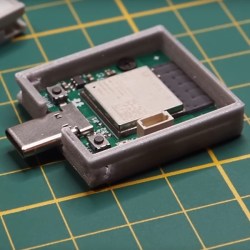
hat’s a 3D-printed empty expansion card you can store things in, or a conveniently-sized full-size SD card reader turned expansion card with just a little bit of PCB cutting!
https://hackaday.com/wp-content/uploads/2023/06/framework-esp32-thumbnail.jpg?w=250 There are a few upcoming cards, too – the dual-port USB-C card project is impressive, giving you two extra USB3-capable USB-C ports! Three different people and companies are working on an LTE card, and I might just make it four, purely because I have an outrageous idea that would be fun to make real. Framework also hasn’t been slacking – we’ve got an Ethernet expansion card, a 3.5mm audio adapter card that fits the upcoming Framework 16 but works everywhere, and we’ve also got firmware updates and rework instructions to enable power saving on the DisplayPort and HDMI cards they’ve already shipped.
In that way, USB-C and the Framework laptop are a match made in heaven, and the mechanical standard is reasonably well thought-out. If I were to be designing a laptop or other portable device today, I’d absolutely add a Framework-compatible Expansion Card socket!
Innovation in consumer laptop space seems to be mostly stagnant and improvements superficial, so having a ripe for the taking standard like this on the table is exciting, as even the currently relatively small number of third-party expansion cards makes it super worthwhile as a selling point. Given that MNT Reform has gone all-in on the USB-C in its Pocket edition, it could very well turn out to be a community mod – not that you can’t already plug an Expansion Card into a random USB-C socket, as the cards are fundamentally USB-C compatible!
Framework has also recently announced a video series where they’re going to take a full-sized SD Expansion Card from idea to manufacturing, and I have a suspicion that it won’t be limited to PCB design tutorials. Seeing a company get an actual product through their pipeline, explaining the reasoning behind it, is not the kind of lesson you get every day, and you can’t expect any other laptop company to give you such insights, as it stands. Reduce, Reuse, Rejoice
https://hackaday.com/wp-content/uploads/2023/09/hadimg_framework_future_7.jpg?w=400 When it comes to repairability, upgradability and hacker-friendliness, there’s an elephant in the room – individual part reuse, from the motherboards and screens, to keyboards and cases. Since the beginning, Framework has promised that you would be able to upgrade your motherboard when they release a new one, and indeed, there’s now 12th generation Intel CPU motherboards available, with 13th gen Intel and even AMD motherboards on the horizon. This is amazing, but what do you do with the old motherboard you now have laying on your desk, which is effectively a full computer in need of a home?
Framework has addressed this from multiple angles – the most fun one was the “motherboards for makers” program, a seed effort where they’ve sent out motherboards to people who described what kind of project they’d like to do. The reality of such an effort is lower-than-100% ROI – plenty of people will put the board on a shelf, and I have to admit that I’ve effectively done the same with the board I got, never using it for the purpose I stated I would. However, we’ve seen a good few prominent projects grace our pages, and my view is that the main achievement of this program has been putting the idea of “you can build things with this mainboard” rather than 100% return on the hardware investment. Something is better than nothing?
https://hackaday.com/wp-content/uploads/2023/09/hadimg_framework_future_6.jpg?w=800
I’ve noticed that Framework hooks into “I’ve built it myself” aspect of maker culture. Even if you’re just printing out a new case for a motherboard, it’s a project that you’re directing, and having a finished project under your belt feels good. With Framework, whenever you decide to upgrade your motherboard, you get a whole computer in return, that’s also a project par[...]
https://hackaday.com/wp-content/uploads/2023/06/framework-esp32-thumbnail.jpg?w=250 There are a few upcoming cards, too – the dual-port USB-C card project is impressive, giving you two extra USB3-capable USB-C ports! Three different people and companies are working on an LTE card, and I might just make it four, purely because I have an outrageous idea that would be fun to make real. Framework also hasn’t been slacking – we’ve got an Ethernet expansion card, a 3.5mm audio adapter card that fits the upcoming Framework 16 but works everywhere, and we’ve also got firmware updates and rework instructions to enable power saving on the DisplayPort and HDMI cards they’ve already shipped.
In that way, USB-C and the Framework laptop are a match made in heaven, and the mechanical standard is reasonably well thought-out. If I were to be designing a laptop or other portable device today, I’d absolutely add a Framework-compatible Expansion Card socket!
Innovation in consumer laptop space seems to be mostly stagnant and improvements superficial, so having a ripe for the taking standard like this on the table is exciting, as even the currently relatively small number of third-party expansion cards makes it super worthwhile as a selling point. Given that MNT Reform has gone all-in on the USB-C in its Pocket edition, it could very well turn out to be a community mod – not that you can’t already plug an Expansion Card into a random USB-C socket, as the cards are fundamentally USB-C compatible!
Framework has also recently announced a video series where they’re going to take a full-sized SD Expansion Card from idea to manufacturing, and I have a suspicion that it won’t be limited to PCB design tutorials. Seeing a company get an actual product through their pipeline, explaining the reasoning behind it, is not the kind of lesson you get every day, and you can’t expect any other laptop company to give you such insights, as it stands. Reduce, Reuse, Rejoice
https://hackaday.com/wp-content/uploads/2023/09/hadimg_framework_future_7.jpg?w=400 When it comes to repairability, upgradability and hacker-friendliness, there’s an elephant in the room – individual part reuse, from the motherboards and screens, to keyboards and cases. Since the beginning, Framework has promised that you would be able to upgrade your motherboard when they release a new one, and indeed, there’s now 12th generation Intel CPU motherboards available, with 13th gen Intel and even AMD motherboards on the horizon. This is amazing, but what do you do with the old motherboard you now have laying on your desk, which is effectively a full computer in need of a home?
Framework has addressed this from multiple angles – the most fun one was the “motherboards for makers” program, a seed effort where they’ve sent out motherboards to people who described what kind of project they’d like to do. The reality of such an effort is lower-than-100% ROI – plenty of people will put the board on a shelf, and I have to admit that I’ve effectively done the same with the board I got, never using it for the purpose I stated I would. However, we’ve seen a good few prominent projects grace our pages, and my view is that the main achievement of this program has been putting the idea of “you can build things with this mainboard” rather than 100% return on the hardware investment. Something is better than nothing?
https://hackaday.com/wp-content/uploads/2023/09/hadimg_framework_future_6.jpg?w=800
I’ve noticed that Framework hooks into “I’ve built it myself” aspect of maker culture. Even if you’re just printing out a new case for a motherboard, it’s a project that you’re directing, and having a finished project under your belt feels good. With Framework, whenever you decide to upgrade your motherboard, you get a whole computer in return, that’s also a project par[...]
Hardware Hacking Brasil
hat’s a 3D-printed empty expansion card you can store things in, or a conveniently-sized full-size SD card reader turned expansion card with just a little bit of PCB cutting! https://hackaday.com/wp-content/uploads/2023/06/framework-esp32-thumbnail.jpg?w=250…
t, and a seed for a project that you might just bring to reality.
On Hackaday alone, we’ve covered a cyberdeck, a cool-looking handheld, a tablet, a futuristic-looking terminal, a rebuild of venerable Thinkpad 701C, a mechanical keyboard, and all sorts of other devices like this all-in-one. On the Framework Discord server, I’ve just watched someone work on a build where a Framework board is packed together with a PC PSU and a Thunderbolt-connected external GPU for a reasonably powerful yet compact gaming machine. Upgrading such a laptop isn’t just a regular kind of upgrade you can do in the future, it’s a moment you can eagerly await with a special project idea in mind.
https://hackaday.com/wp-content/uploads/2023/09/hadimg_framework_future_9.jpeg?w=400 The Thinkpad 701C rebuild project is still ongoing, and involves an impressive amount of custom PCBs
Part reuse has been the area that I’ve focused on – I love such mostly-unexplored niches, and I’ve been building laptop hardware reuse projects long before that. This is where Framework has given free reign to the community, publishing partial schematics focused on external connectors of the board, and following up whenever people had further inquiries. They’ve released DXFs of the motherboard and associated boards, pinout, connector and part sourcing information for third-party boards, notes on the wiring intricacies, even EC sourcecode and a decent amount of sourcecode or libraries for various parts of the ecosystem, and they are quite helpful to all projects seeking to go beyond expansion cards and motherboard reuse. The Framework board has essentially become a kind of high-power x86 CPU module you can use for your project, with all sorts of interfaces you can pull out of USB-C and lower-level onboard ports, and a ready-to-go battery power solution if you need that.
Because of trade secret concerns and subsequent NDAs with the companies Framework has to work with in the x86 platform space, we may never see full Framework laptop schematics – what we hackers have is a 12-page PDF with the high-level board overview and Framework-specific connector schematics. This partial openness is understandable, and, it’s way better than building projects using smuggled schematics that only become available years after the device’s release.
There were a few nuances stemming from the proprietary aspects, that I and others had to reverse-engineer – for instance, Compal screwing up the pinout on the input cover connector symbol using a completely pin numbering different notation than the connector’s datasheet. However, simply probing the board with a multimeter has led to success, and in the end, I’ve successfully developed a RP2040-based controller for the keyboard+touchpad combo of the Framework – which has been a good playground for me to learn QMK, and also a platform for my experiments with HID over I2C, a wonderful technology that I hope I can introduce to you all sometime soon!
https://hackaday.com/wp-content/uploads/2023/10/hadimg_framework_future_11.jpeg?w=400 One thing we didn’t see materialize was third-party motherboards – despite us getting info like DXF outlines. However, a few people did start hacking on it, and as someone who talks with other hackers in the Framework community, I know that we might just get a surprise project down the road!
That said, as much as it’d be fun to have such a board, there’s not much demand – all in all, people have been pretty satisfied with the 12th and 13th generation Intel motherboard upgrades. Also, AMD motherboards already getting into the hands of people who have preordered them, and given that, we might just see an influx of projects based on Framework motherboards in the Hackaday Tips line! It won’t be the only influx we see, either. Bigger, Faster, More Expandable
About a year ago, Framework has announced the Framework 16 – a 16″ gaming/workstation laptop, larger, all-AMD, and with a discrete GPU. It’s no doubt a response to people who wanted something more beef[...]
On Hackaday alone, we’ve covered a cyberdeck, a cool-looking handheld, a tablet, a futuristic-looking terminal, a rebuild of venerable Thinkpad 701C, a mechanical keyboard, and all sorts of other devices like this all-in-one. On the Framework Discord server, I’ve just watched someone work on a build where a Framework board is packed together with a PC PSU and a Thunderbolt-connected external GPU for a reasonably powerful yet compact gaming machine. Upgrading such a laptop isn’t just a regular kind of upgrade you can do in the future, it’s a moment you can eagerly await with a special project idea in mind.
https://hackaday.com/wp-content/uploads/2023/09/hadimg_framework_future_9.jpeg?w=400 The Thinkpad 701C rebuild project is still ongoing, and involves an impressive amount of custom PCBs
Part reuse has been the area that I’ve focused on – I love such mostly-unexplored niches, and I’ve been building laptop hardware reuse projects long before that. This is where Framework has given free reign to the community, publishing partial schematics focused on external connectors of the board, and following up whenever people had further inquiries. They’ve released DXFs of the motherboard and associated boards, pinout, connector and part sourcing information for third-party boards, notes on the wiring intricacies, even EC sourcecode and a decent amount of sourcecode or libraries for various parts of the ecosystem, and they are quite helpful to all projects seeking to go beyond expansion cards and motherboard reuse. The Framework board has essentially become a kind of high-power x86 CPU module you can use for your project, with all sorts of interfaces you can pull out of USB-C and lower-level onboard ports, and a ready-to-go battery power solution if you need that.
Because of trade secret concerns and subsequent NDAs with the companies Framework has to work with in the x86 platform space, we may never see full Framework laptop schematics – what we hackers have is a 12-page PDF with the high-level board overview and Framework-specific connector schematics. This partial openness is understandable, and, it’s way better than building projects using smuggled schematics that only become available years after the device’s release.
There were a few nuances stemming from the proprietary aspects, that I and others had to reverse-engineer – for instance, Compal screwing up the pinout on the input cover connector symbol using a completely pin numbering different notation than the connector’s datasheet. However, simply probing the board with a multimeter has led to success, and in the end, I’ve successfully developed a RP2040-based controller for the keyboard+touchpad combo of the Framework – which has been a good playground for me to learn QMK, and also a platform for my experiments with HID over I2C, a wonderful technology that I hope I can introduce to you all sometime soon!
https://hackaday.com/wp-content/uploads/2023/10/hadimg_framework_future_11.jpeg?w=400 One thing we didn’t see materialize was third-party motherboards – despite us getting info like DXF outlines. However, a few people did start hacking on it, and as someone who talks with other hackers in the Framework community, I know that we might just get a surprise project down the road!
That said, as much as it’d be fun to have such a board, there’s not much demand – all in all, people have been pretty satisfied with the 12th and 13th generation Intel motherboard upgrades. Also, AMD motherboards already getting into the hands of people who have preordered them, and given that, we might just see an influx of projects based on Framework motherboards in the Hackaday Tips line! It won’t be the only influx we see, either. Bigger, Faster, More Expandable
About a year ago, Framework has announced the Framework 16 – a 16″ gaming/workstation laptop, larger, all-AMD, and with a discrete GPU. It’s no doubt a response to people who wanted something more beef[...]
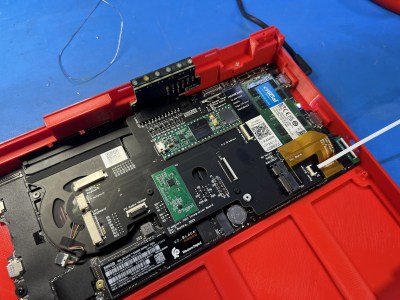
Hardware Hacking Brasil
t, and a seed for a project that you might just bring to reality. On Hackaday alone, we’ve covered a cyberdeck, a cool-looking handheld, a tablet, a futuristic-looking terminal, a rebuild of venerable Thinkpad 701C, a mechanical keyboard, and all sorts of…
y than the 13″ model, and it also has two standout features that push the Framework’s expandability standard even further – the Input Module ecosystem, and the Expansion Bay, giving you input device modularity and GPU replacements respectively.
https://hackaday.com/wp-content/uploads/2023/09/hadimg_framework_future_10.jpeg?w=171 An RGB LED-packed community-designed Input Module by [Joe Schroedl]The Expansion Bay has a PCIe x8 link you can bifurcate into two x4 links, a beefy power bus capable of bidirectional power transfer, and a few extra useful connections like a direct-to-panel eDP input, I2C, and a few GPIOs. From the business standpoint, it’s also a fun way to reduce SKUs they have to offer, and from a hackability standpoint, it’s a port for the ultimate kind of upgrades given its sheer PCIe capabilities. The connector, once again, makes use of reasonably accessible FX-Beam interconnect lineup, and Framework has released reference design information – which led to a community-sourced KiCad template, and a few in-progress projects have popped up that are adding things like OcuLink, extra expansion card sockets, or even an MXM GPU and a Dell docking station port.
The Input Modules, on the other hand, take the 13″ laptop’s single-piece keyboard+touchpad combination, and split it into modules socketed onto a common base, with the individual modules connected over USB or I2C. For a user, this means you can easily add a numpad to your Framework, remove it if you’re numpad-averse, or stack eight numpads in case you suffer from numpad deprival-induced trauma. It also means you can create your own modules that go in the place of the keyboard or the touchpad – from macropads to smartcard readers, and even extra screens! Framework has, once again, provided reference designs, and community members are already manufacturing their own cards, like this RGB LED matrix card that’s already been manufactured and is now in its second revision! Raising The Bar
Now, this is a lot to say about a two-year-old product, but I guess my background helps. I’ve spent a decade using devices like laptops and phones and then a decade more fixing and improving them, and during that time, I’ve watched them turn more and more into black boxes with knobs to tune the endless stream of entertainment. The difference is especially stark when I compare it to the 8-bit computing years I’ve been taught about, years that raised the generation whose knowledge and advice helped me find my place in the world of hacking and electronics. We’ve had a treasure trove of technological improvements since then, sure, but we’ve lost some core principles that made computers more human-friendly, and accumulated a fair bit of cruft that made the personal computer world feel dull and grey – no matter how bright the everpresent RGB lights shine.
https://hackaday.com/wp-content/uploads/2023/09/hadimg_framework_future_5.jpg?w=400 Looking at what Framework has achieved so far, I feel reassured. A lot of the most annoying cruft has been shed here, and you can see people having fun with the concept, driven because they get to improve upon a thing they will be using on the daily, or build something new that helps them live a fulfilling life in this tech-focused world.
Just throughout the few last days, I’ve been watching someone on the Framework Discord server build a powerful router out of a Framework motherboard, with PCIe Ethernet cards in both of the M.2 sockets, and a colorful 3D-printed case that makes the project look solid while shielding it from dust. Given the trove of existing mechanical designs you can start with, it’s been an easy project for them to build, and it’s been fun to observe for me too. It warms my heart to see people build their own tech so easily, because ultimately, it isn’t something you can buy – not just the specific device you build, but the fun you have on the way, and the power that it gives you.
The hacker-driven projects I list, aren’t there just for the technical value – each [...]
https://hackaday.com/wp-content/uploads/2023/09/hadimg_framework_future_10.jpeg?w=171 An RGB LED-packed community-designed Input Module by [Joe Schroedl]The Expansion Bay has a PCIe x8 link you can bifurcate into two x4 links, a beefy power bus capable of bidirectional power transfer, and a few extra useful connections like a direct-to-panel eDP input, I2C, and a few GPIOs. From the business standpoint, it’s also a fun way to reduce SKUs they have to offer, and from a hackability standpoint, it’s a port for the ultimate kind of upgrades given its sheer PCIe capabilities. The connector, once again, makes use of reasonably accessible FX-Beam interconnect lineup, and Framework has released reference design information – which led to a community-sourced KiCad template, and a few in-progress projects have popped up that are adding things like OcuLink, extra expansion card sockets, or even an MXM GPU and a Dell docking station port.
The Input Modules, on the other hand, take the 13″ laptop’s single-piece keyboard+touchpad combination, and split it into modules socketed onto a common base, with the individual modules connected over USB or I2C. For a user, this means you can easily add a numpad to your Framework, remove it if you’re numpad-averse, or stack eight numpads in case you suffer from numpad deprival-induced trauma. It also means you can create your own modules that go in the place of the keyboard or the touchpad – from macropads to smartcard readers, and even extra screens! Framework has, once again, provided reference designs, and community members are already manufacturing their own cards, like this RGB LED matrix card that’s already been manufactured and is now in its second revision! Raising The Bar
Now, this is a lot to say about a two-year-old product, but I guess my background helps. I’ve spent a decade using devices like laptops and phones and then a decade more fixing and improving them, and during that time, I’ve watched them turn more and more into black boxes with knobs to tune the endless stream of entertainment. The difference is especially stark when I compare it to the 8-bit computing years I’ve been taught about, years that raised the generation whose knowledge and advice helped me find my place in the world of hacking and electronics. We’ve had a treasure trove of technological improvements since then, sure, but we’ve lost some core principles that made computers more human-friendly, and accumulated a fair bit of cruft that made the personal computer world feel dull and grey – no matter how bright the everpresent RGB lights shine.
https://hackaday.com/wp-content/uploads/2023/09/hadimg_framework_future_5.jpg?w=400 Looking at what Framework has achieved so far, I feel reassured. A lot of the most annoying cruft has been shed here, and you can see people having fun with the concept, driven because they get to improve upon a thing they will be using on the daily, or build something new that helps them live a fulfilling life in this tech-focused world.
Just throughout the few last days, I’ve been watching someone on the Framework Discord server build a powerful router out of a Framework motherboard, with PCIe Ethernet cards in both of the M.2 sockets, and a colorful 3D-printed case that makes the project look solid while shielding it from dust. Given the trove of existing mechanical designs you can start with, it’s been an easy project for them to build, and it’s been fun to observe for me too. It warms my heart to see people build their own tech so easily, because ultimately, it isn’t something you can buy – not just the specific device you build, but the fun you have on the way, and the power that it gives you.
The hacker-driven projects I list, aren’t there just for the technical value – each [...]

Hardware Hacking Brasil
y than the 13″ model, and it also has two standout features that push the Framework’s expandability standard even further – the Input Module ecosystem, and the Expansion Bay, giving you input device modularity and GPU replacements respectively. https://hackaday.com/wp…
one of them holds a fair bit of joy from the person who worked on it. And that’s, without doubt, because Framework’s focus on the hackability has helped people channel the fundamental desire to play with the technology we use, each hacker imbuing their creation or mod with a piece of their soul. That’s a stark contrast to the soulless machines designed to be used in a certain way for a few years and then discarded – each Framework laptop is a gateway to a Framework laptop-based project, and each Framework project brings yet another hacker into our community.
https://hackaday.com/wp-content/uploads/2023/10/framework_cyberdeck.png?w=800 A cyberdeck build that we’ve just covered a week ago
I don’t know if these relatively high standards can nudge other companies to take lead, though we can all hope. I do know how powerful can examples of actual success be when it comes to making the world turn, and it matters that we can highlight a company that’s making large steps in the hacker-friendly direction while maintaining undeniable mass appeal. Sure, you can form an underground movement with repurposed and low-volume tech, but producing hackable things at scale is how you shape a generation, and we could always use a bit more of that.
Framework is, in many ways, an ecosystem ripe to be conquered by the hacking spirit, from upgrades to repairs made simple. I personally can’t wait to see where it goes, and whether its high standards can nudge other companies into a better direction as the repairability, hackability and openness promises come true one by one. The Framework experiment has, without a doubt, paid off, and sets a high standard for hacker community involvement and outreach – one that we haven’t been seeing companies do on such a scale, and can only hope to see more in the future.
➖ @hardwareHack ➖
https://hackaday.com/wp-content/uploads/2023/10/framework_cyberdeck.png?w=800 A cyberdeck build that we’ve just covered a week ago
I don’t know if these relatively high standards can nudge other companies to take lead, though we can all hope. I do know how powerful can examples of actual success be when it comes to making the world turn, and it matters that we can highlight a company that’s making large steps in the hacker-friendly direction while maintaining undeniable mass appeal. Sure, you can form an underground movement with repurposed and low-volume tech, but producing hackable things at scale is how you shape a generation, and we could always use a bit more of that.
Framework is, in many ways, an ecosystem ripe to be conquered by the hacking spirit, from upgrades to repairs made simple. I personally can’t wait to see where it goes, and whether its high standards can nudge other companies into a better direction as the repairability, hackability and openness promises come true one by one. The Framework experiment has, without a doubt, paid off, and sets a high standard for hacker community involvement and outreach – one that we haven’t been seeing companies do on such a scale, and can only hope to see more in the future.
➖ @hardwareHack ➖
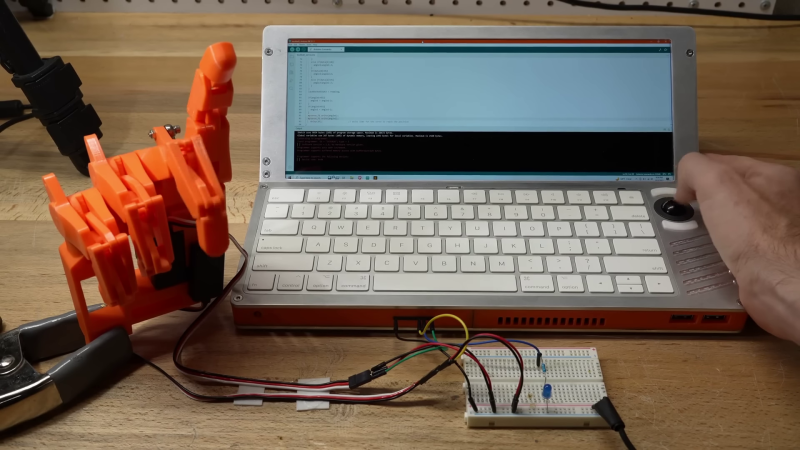
Hackaday
Rotating Necked Guitar Looks Difficult To Play
https://hackaday.com/wp-content/uploads/2023/10/360-guitar.jpg?w=800
Have you ever looked at a guitar and thought “Nah, that’s way too easy to play.”[Mattias Kranz] seems to have done, so he built the 360 Guitar, a new instrument with a circular, rotating neck. The rotating neck means that it can have more strings than most: we think that it has sixteen, but it’s hard to tell. Anyway, it has a lot of strings and looks utterly impractical, which makes it an exciting project.
The basic idea is intriguing: take a conventional guitar design and replace the fretboard with a rotating pillar. Perhaps even stick a motor in there to rotate it on command. Each of the strings is mounted along this pillar using standard string retainers and tuning pegs, with frets along the pillar. Because you can fit so many strings, you can use all of the standard strings for a bass and treble guitar, plus a few extra like the thickest bass string available and the thinnest guitar strings. It’s like a four-dimensional Chapman Stick.
[Mathias] is still working on the project as you can see in the video below the break, so we will be interested to see what new design aspects he comes up with, like the plan to use a motor to rotate the neck. [Mattias] has built a few instruments that we have featured before, like the Helium guitar, which replaces the resonant cavity with a helium balloon, and the Plasma Piano, a combination of piano and tuned plasma coil.
➖ @hardwareHack ➖
Rotating Necked Guitar Looks Difficult To Play
https://hackaday.com/wp-content/uploads/2023/10/360-guitar.jpg?w=800
Have you ever looked at a guitar and thought “Nah, that’s way too easy to play.”[Mattias Kranz] seems to have done, so he built the 360 Guitar, a new instrument with a circular, rotating neck. The rotating neck means that it can have more strings than most: we think that it has sixteen, but it’s hard to tell. Anyway, it has a lot of strings and looks utterly impractical, which makes it an exciting project.
The basic idea is intriguing: take a conventional guitar design and replace the fretboard with a rotating pillar. Perhaps even stick a motor in there to rotate it on command. Each of the strings is mounted along this pillar using standard string retainers and tuning pegs, with frets along the pillar. Because you can fit so many strings, you can use all of the standard strings for a bass and treble guitar, plus a few extra like the thickest bass string available and the thinnest guitar strings. It’s like a four-dimensional Chapman Stick.
[Mathias] is still working on the project as you can see in the video below the break, so we will be interested to see what new design aspects he comes up with, like the plan to use a motor to rotate the neck. [Mattias] has built a few instruments that we have featured before, like the Helium guitar, which replaces the resonant cavity with a helium balloon, and the Plasma Piano, a combination of piano and tuned plasma coil.
➖ @hardwareHack ➖
Hackaday
Rotating Necked Guitar Looks Difficult To Play
Have you ever looked at a guitar and thought “Nah, that’s way too easy to play.”[Mattias Kranz] seems to have done, so he built the 360 Guitar, a new instrument with a circular, r…