
Why a State Attack on Bitcoin Is Neither Likely, nor Likely to Succeed
Now that bitcoin (BTC) is establishing itself as an alternative store of value, fears are growing that governments might one day be motivated to try to take it down.
Members of the Bitcoin community have recently been brainstorming scenarios involving theoretical governmental offensives against the popular cryptoasset, ranging from misinformation-based strategies to bans and even classic 51% attacks.
However, industry figures have told Cryptonews.com that they believe the probability of a serious state attack on the Bitcoin network is low.
Even if a government (or two) were motivated to attack the popular cryptoasset, the experts say that its decentralized nature could protect it against serious consequences, enabling it to circumvent bans and continue to function even after an attempted 51% attack.
Police Raid South Korean Crypto Exchange Bithumb - Reports
Police in South Korea are reportedly searching the headquarters of Bithumb, the nation’s biggest crypto exchange per trading volume as part of an investigation into fraud and embezzlement.
Per Newsis and Seoul Shinmun, officers from the Seoul Metropolitan Police Agency’s Intelligence Unit raided Bithumb’s central offices in the Gangnam District of Seoul on the morning of September 2, seizing and confiscating data. The police are yet to issue a statement regarding the investigation and police are reportedly still conducting their search at the time of writing.
Both media outlets claim the investigation is related to the controversial BXA token, issued by the Blockchain Exchange Alliance (BXA) and the Singapore-based BXA Consortium – and the failed takeover of the company by a Singapore-based South Korean firm that eventually defaulted on payment.
Part of the consortium’s deal to buy the firm involved an obligation to list the BXA token on the Bithumb platform. That token has since seen its value plummet after raising some USD 25.7 million in an initial coin offering (ICO) – leaving investors in South Korea fuming.
A group of BXA investors has been trying to push ahead with a legal case against Bithumb executives Lee Jung-hoon and Kim Byung-gun.
Lee is the chairman of the board of directors of Bithumb Holdings and Bithumb Korea.
Investors claim that Bithumb is responsible for their financial losses as the firm failed to list the BXA token on the exchange despite its promises.
Newsis said it has also heard reports that police are also looking into possible violations of the country’s Foreign Exchange Transaction Act and the Capital Market Act.
Cryptonews.com has contacted Bithumb for comment and will update this article if and when a response is forthcoming.

Russian Ministry’s Crypto Mining Plans ‘a Cause for Concern’
The Russian Ministry of Finance wants to ban crypto miners from receiving token rewards leading to what newspaper Izvestia has called “a de facto ban on the circulation of cryptoassets in Russia.”
The newspaper said it has seen Ministry of Finance-drafted legislation proposals pertaining to a forthcoming crypto law that politicians claim may be ready for parliamentary debate as early as this month.
However, it may still be too early to ring the alarm bells, however, as the document appears to be a consultation paper that is awaiting legal review.
In either case, the measures have already been met with resistance from the industry. Moscow resident and crypto investment advisor Dmitriy Zaikov spoke to Cryptonews.com, stating,
“I find it hard to believe this is a serious proposition, but if it is, it’s a cause for concern. The Ministry of Finance has generally been pretty reasonable on crypto matters. I’m not sure how effectively banning crypto mining will benefit this country financially.”
Crypto mining has boomed in Russia, where energy prices are often low and cooling costs often minimal.
But it appears the ministry may be ready to move closer to the crypto-skeptic Central Bank’s position on crypto-related matters.
The ministry is allegedly content to allow individuals to mine coins, but not reap the rewards – and would seek to introduce criminal liability for mining-related offenses.
Offenders could be reportedly hit with fines of up to USD 1,330 and prison sentences of up to seven years.
In fact, the proposals appear to go a step further than simply limiting crypto mining – and would seek to prohibit companies and individuals from “performing any transactions with cryptoassets,” per the Izvestia journalists, with the exception of three instances.
The ministry appears to be content to allow crypto inheritances, and will also allow creditors to obtain assets in bankruptcy proceedings. Courts and law enforcement agencies would also be allowed to confiscate crypto funds as part of legal proceedings.
Readers might also recall that another strong-worded crypto crackdown-advocating proposal was shot down in May this year following industry and government pushback, while a local industry insider has previously told Cryptonews.com that a definitive crypto law for Russia may take a year or more to materialize.
Crypto Market Loses Almost USD 80bn This Week As Bitcoin Briefly Dips Below USD 10k
The sell-off in the crypto market has continued this weekend with bitcoin (BTC) briefly dipping below USD 10,000 on Saturday.
At pixel time (06:48 UTC), BTC trades at USD 10,113, somewhat recovering from USD 9,951 reached on Saturday evening (UTC time). The price is down by almost 4% in a day and 13% in a week, increasing monthly losses to 14.5%.
However, BTC recorded the smallest drop among the top 60 coins today, except bitcoin (SV) (unchanged in a day), and LEO (-2%). As a result, BTC dominance, or the percentage of the total market capitalization, increased to 58.8%, or the level last seen in the first half of August.
Meanwhile, ethereum (ETH), which recently rallied on the back of the DeFi frenzy, is down by 16% to USD 325, while other coins from the top 10 dropped by 4%-17%.
As usual this week, DeFi tokens crashed the most, with some top projects diving by more than 40% (UMA).
As SushiSwap Drains Liquidity From Uniswap, Aave Leads In DeFi
Following SushiSwap (SUSHI)'s completed migration from the major decentralized exchange Uniswap to its own decentralized exchange, taking hundreds of millions of dollars in liquidity with it, Uniswap fell from the throne of dominance, with crypto lending protocol Aave (LEND) sitting in its place - at least for now.
DeFi Pulse shows total value locked (TVL) to be USD 7.17bn, with Aave flipping Uniswap, given the latter's drop from the 1st to the 9th spot. Aave itself currently has USD 1.53bn in TVL.
Per Uniswap, its liquidity is down 70.6% in 24 hours, to USD 467.5m. DeFi Pulse shows total value locked in Uniswap dropping nearly 74% from USD 1.44bn on September 9 to the current USD 348m. However, the numbers are nonetheless higher than they were before the Sushi's creation and the following craze in late August.
DeFi Pulse didn't include SushiSwap yet though, so the overall number and ranking could potentially change if/when it does, and if Sushi continues growing.
Per the SushiSwap analytics dashboard, there is currently USD 1.32bn in liquidity. Volume on September 10 is recorded at USD 81m.
At pixel time (08:23 UTC), SUSHI, ranked 60th by market capitalization on CoinMarketCap, trades at USD 2.7. It is up by 10.5% in a day.
On September 9, SushiSwap completed its migration from Uniswap to its own community-owned, decentralized exchange platform, as announced by Sam Bankman-Fried, CEO of crypto derivatives exchange FTX, who took over the protocol just a couple of days prior.
The new Sushi head chef tweeted out the migration process, which involved tests as they go, marking an end to it just hours ago. "Once the migration has been completed, SUSHI rewards will flow to the new SushiSwap pool stakers," said the CEO, and if one kept on staking they'd automatically migrate and participate in SushiSwap. "If you stop staking prior to migration you will stay behind in Uniswap and cease to receive rewards," he added.
With it, he also announced the official transition to multisignature governance model, whereby changes are made through an approval of majority of elected leaders.

Did Kakao Token Listing Spark Rise in Coinone’s Popularity?
Major South Korean crypto exchanges are experiencing a rise in user numbers and trading volumes, with some convinced that the listing of Kakao’s klay (KLAY) token has helped propel a sharp rise in traffic to the Coinone trading platform.
According to media outlet TechM, statistics released by Big Data firm Mobile Index showed that as of September 9, Coinone's Android user numbers stood in excess of 80,000. The same media outlet stated that if iOS users were to be added, the number of South Korea-based Coinone users was estimated to be over 100,000. Coinone's combined active user base in March was around 40,000.
TechM stated that the exchange has now cornered around 10% of the total domestic market. And per CoinMarketCap data, Coinone is currently placed 12th in the world in terms of 24-hour volume, posting over USD 105m on Thursday. While CoinGecko ranked the platform as 23rd with USD 132m in trading volume.
Kakao’s KakaoTalk chat app, which has an active monthly user base of some 50 million people – the overwhelming majority of whom are based in South Korea – this year added a crypto wallet tab function to its app interface.
Kakao operates the Klaytn blockchain network, whose native klay token was unlisted in South Korea until Coinone decided to list it back in June.
The move, reported Korea Times back in late June, was unsanctioned by the Kakao blockchain subsidiary Ground X, and “annoyed” the chat app operator.
Regardless, observers believe the move has sparked a new wave on interest in Coinone – particularly in the wake of klay promotional giveaway events held earlier this year.
MicroStrategy and Willy Woo Have Good News For Bitcoin Bulls (UPDATED)
Just as a major US-based giant announced that it has increased its already large exposure to bitcoin (BTC), popular crypto analyst Willy Woo shared three new charts, which all painted a bullish picture for the number one cryptocurrency. (Updated at 15:21 UTC: updates in bold).
Michael J. Saylor, CEO of MicroStrategy, the US-based major business intelligence company which in August said it spent USD 250m on BTC, today confirmed today that the company "completed its acquisition of 16,796 additional bitcoins at an aggregate purchase price of $175 million" yesterday.
"To date, we have purchased a total of 38,250 bitcoins at an aggregate purchase price of $425 million, inclusive of fees and expenses," he said.
In a recent filing with the US Securities and Exchange Commission the company has already indicated that its holdings “may increase beyond the USD 250 million” initial investment.
MicroStrategy raised eyebrows in the crypto community and beyond when it first announced its intention to invest a large part of its cash holdings in bitcoin, effectively turning the company’s publicly traded stock into a play on the bitcoin price. "MicroStrategy has recognized Bitcoin as a legitimate investment asset that can be superior to cash and accordingly has made Bitcoin the principal holding in its treasury reserve strategy,” the CEO said back then.
Since MicroStrategy’s initial investment was announced on August 11, however, the bitcoin price has dropped by around 10%. At the time of writing (15:16 UTC), BTC trades at USD 10,797 and is up by 1% in a day and 6% in a week. The price is down by almost 9% in a month, trimming its annual gains to 5.5%.
And while the software firm left the door open for an even larger bet on bitcoin, the well-known bitcoin analyst Willy Woo yesterday shared several bitcoin price models that all suggested a new bull run may be ahead for the cryptocurrency.
Writing in a Twitter thread, Woo said about his first model that a new “impulse of coins changing hands” has now completed, suggesting the next move for the bitcoin price is “likely upwards.”

Colombia’s Financial Sector May Be Allowed to Pilot Crypto Transactions
Colombian banks may be permitted to test crypto transactions in a new regulatory sandbox, after a presidential advisor stated that a top financial regulator may actively seek the aid of the nation’s financial sector to pilot crypto-powered business.
In a tweet, presidential economic and tech adviser Víctor Muñoz wrote that the Superintendencia Financiera (Superfinanciera), a Colombian government agency that oversees financial regulation and markets, will “issue a call for the financial system to test fiat in and fiat out transactions using cryptoassets” using a new regulatory sandbox.
Details of the sandbox were unveiled earlier this week in a presidential decree.
Muñoz added that the regulator wanted to accrue “evidence for an intelligent regulatory framework, based on experience, data and knowledge.”
However, some are calling for crypto enthusiasts in the nation to curb their excitement at the news. Media outlet Criptonoticias noted that the decree makes no mention whatsoever of cryptoassets in its 12 pages.
The media outlet also noted that many crypto exchanges have met the sandbox developments with some degree of skepticism.
The publication quoted Bitcoin Colombia chief Carlos Mesa, as stating,
“We hope this call will come very soon and that it will welcome companies that are already established in this sector.”
But others took a more optimistic tone, with Mauricio Tovar, the co-director of blockchain academic research group InTIColombia, tweeting,
“This is important news. The financial sector will be able to experiment with crypto using the Superfinanciera’s sandbox.”
Meanwhile, as reported this pas summer, Colombian regulators were urged to start drawing up the country’s crypto legislation again from scratch. A consultancy group comprising Columbian crypto and blockchain industry chiefs told Bogotá to abandon earlier plans for regulation that were formulated back in 2018. The group stated that the plans were already outdated, and new debates needed to be held.
In August, the Colombian Ministry of Technology has spoken out in favor of blockchain and crypto innovation for the public sector. In an official release, the ministry claimed the country was “lagging behind” its international rivals when it came to adopting blockchain technology. The ministry suggested adopting blockchain-powered health record management platforms, crypto pay infrastructure, and blockchain-powered voting systems.

Two US Regulators Have Good News For Stablecoins
After several years of operating in a regulatory grey area, US national banks and federal savings associations are now officially permitted to engage with fiat-backed stablecoins, the Office of the Comptroller of the Currency (OCC) has clarified. Meanwhile, the Securities and Exchange Commission (SEC) also released a statement where it admitted that stablecoins are not necessarily securities.
According to an “interpretive letter” published by the OCC, US banks can provide “services in support of a stablecoin project,” which may include holding stablecoin reserves, as long as the bank has “instituted appropriate controls and conducted sufficient due diligence” and in situations where the coins are held in “hosted wallets.”
The clarification from the OCC is significant given the regulatory grey area that some stablecoins and their bank partners have been operating in for years.
Commenting on the release of the letter, Acting Comptroller of the Currency, Brian Brooks, also acknowledged that banks are already engaged in “stablecoin-related activities involving billions of dollars each day,” while also reassuring banks by saying that this will provide “greater regulatory certainty” in these dealings.
Posting on Twitter, however, Brooks, who is also known as a former general counsel at major crypto exchange Coinbase, went even further than in the official statement, saying that that the “rapid growth of stablecoin projects may signal a blockchain-enabled payment system of the future.”
“US OCC is pleased to provide guidance to banks supporting these assets,” he added.
ollowing the clarification on banks’ role as backers of stablecoins, the SEC released its own statement on the topic, saying that the issue of whether a particular stablecoin is a security is “inherently a facts and circumstances determination.”
Consequently, the SEC also noted in its response that not all stablecoins are necessarily considered securities, saying: “We believe that market participants may structure and sell a digital asset in such a way that it does not constitute a security and implicate the registration, reporting, and other requirements of the federal securities laws.”
Meanwhile, the latest interpretive letter from the OCC is not the first time the regulator under Brooks’ leadership has come out in defense of crypto. In July, the regulator clarified that federally chartered banks may provide custody services for cryptoassets, calling it “a modern form of traditional bank activities.”
Broker Confirms that Bithumb is up for Sale, Big Players ‘Interested’
An accounting firm has confirmed that Bithumb, South Korea’s major crypto exchange, is up for sale.
As reported yesterday, the troubled Bithumb Holdings, which owns over 70% of the exchange is actively looking for a buyer. Accounting firm Samjong KPMG, a joint-venture firm that includes Dutch giant KPMG, one of the global “big four,” told Cryptonews.com,
“It is correct that Samjong KPMG is serving as an M&A advisor for Bithumb."
The company declined to comment any further.
Investment banking sources have also told South Korean media outlets that “several” firms have already submitted “letters of intent” as the hunt for a buyer begins in earnest. A price of between USD 430 million and USD 602 million has been mentioned.
South Korean blockchain consultant Mira Kim told Cryptonews.com,
“Bithumb is the jewel in the crown of domestic crypto exchanges – perhaps even of all Asian exchanges. In 2018, a deal to buy 50% of the firm was agreed for USD 350 million, so I think it’s entirely realistic that a company will agree to pay more than that now for an even bigger stake in the company, if that’s indeed what’s on offer. Big domestic companies’ interest is real, I’m led to believe – they have been piqued, but regulatory issues could be off-putting.”
The crypto industry is hoping that the introduction of the first crypto-specific piece of legislation next year will provide legitimacy for domestic exchanges. South Korean mega-companies such as Hyundai and Kakao have also unveiled plans to create what sounds like de facto crypto exchanges, while Samsung smartphones now feature “blockchain wallets” capable of storing cryptoassets.
International players may also look to move into the lucrative South Korean market – with industry experts last year speculating that an American or Chinese buyer could emerge to snap up Bithumb, following the collapse of the 2018 agreement.
Meanwhile, Business Post has reported that Bithumb has begun offering a crypto custody service to corporate clients.
The service is called Bithumb Custody and will go live on September 25 for “major” domestic firms. The exchange said that it will offer a range of key and multisig management functions to help bolster security and will ensure anti-money laundering and know-your-customer (KYC) compliance protocols are met.
Bitcoin Miners Are Using New Strategies to Hedge Risks
Bitcoin (BTC) and other cryptoasset miners have been forced to employ various strategies to hedge risks, said researchers at the Cambridge Centre for Alternative Finance, but most of these attempts are still "elementary."
The study argued that, though mining pools are described as an aggregator of hashrate (the computational power of a cryptoasset network), they also purchase hashrate from hashers, thus contributing to its commoditization. And "as for any other commodity, the development of a spot market has led to the introduction of derivative contracts." A few companies have started issuing a suite of financial products based on hashrate, said the researchers, while "miners may see this development as an hedging opportunity to better manage their risks and improve their cashflow situation."
According to this study: mining players have seen increased competition amongst themselves, as well as tighter profit margins, which led them to explore a number of different strategies to hedge risks and make additional cashflows. The study here highlighted the recent development of new financial instruments targeted specifically at miners, such as hashrate forwards and difficulty futures (futures contracts trading against Bitcoin's future mining difficulty).
The study, however, described miners’ hedging strategies as "relatively elementary," primarily consisting of holding cryptoassets (58%) or fiat reserves (41%).
The researchers concluded that,
"Only a handful of miners make use of sophisticated financial instruments, such as cryptoasset (12%) or hashrate (14%) derivatives, or choose to collateralize their coins (15%)."
Trump Lost and Bitcoin Won First Presidential Debate - Cryptoverse
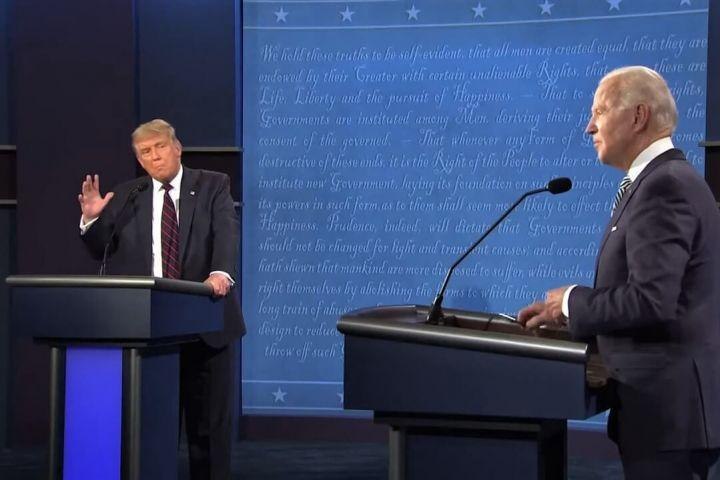
After last night’s first presidential debate between US President Donald Trump and former Vice President Joe Biden, crypto traders are betting that the likelihood of a Trump win in the election is far lower now than before the debate. Meanwhile, some crypto industry players took the chance to tout Bitcoin (BTC) again.
As of press time Wednesday morning (08:13 UTC), the Trump 2020 perpetual contract that is traded on crypto derivatives exchange FTX declined by more than 7% during the hour of the debate, from USD 0.436 before the debate and to USD 0.405 at the time of writing.
Similarly, ‘YES Trump’ and ‘NO Trump’ tokens issued by the decentralized prediction market protocol Augur (REP) also shows that people think that Trump’s chances of winning the election have decreased, with the NO Trump token now trading at USD 0.55 and YES Trump trading at USD 0.47.
However, market participants’ outlook on the election looked less favorable for Biden ahead of the debate, with the price of the YES Trump token at one point reaching nearly USD 0.50, before it corrected lower, according to data from Coingecko.
The price of the YES Trump token would go to USD 1 if Trump wins the election on November 3 and expire worthless if he loses, while the NO Trump tokens would move in the opposite direction.
Although the crypto world’s presidential prediction markets have given Biden the lead for now, however, many observers also agreed that the debate represented yet another low point in American politics. Once again, the Cryptoverse offered BTC as a solution.
“The debate was a landslide victory for Bitcoin,” wrote Dan Held, Growth Lead at major crypto exchange Kraken, while Julian Hosp of Cake DeFi asked his followers “So, tell me, how much faith do you have into the USD after watching 90 minutes of this madness of 2 people?,” while adding “Hey, Bitcoin fixes this!”
Meanwhile, the debate also brought some volatility to traditional financial markets, with US stock futures sliding lower on prospects of what observers like Northman Trader founder Sven Henrich worried “may not be an accepted election result.”
Smart Key DeFi connector. Oracel of the 2nd generation. 🚀🚀🚀
Investors' trust in the project is growing every day. The project has a chance to become 2 ChainLink ???
Become familiar with the project offer, its value and the strategy of development and value building.The project works with global brands:
🚙🚙🚙- Kia Car Factory.
🏨🏨🏨- Airbnb hotels that use automated billing and access.
📡📡📡- TELTONIKA the 3rd largest manufacturer of GSM-GPS sensors in the world.
Website:
https://smartkeyplatform.io/trade/
Telegram:
https://t.me/SmartKeyNews
SmartKey DeFi connector 🎥
This Is How John McAfee Made USD 23m For Shilling ICOs (According to SEC)
The US Securities and Exchange Commission (SEC) said that the controversial cybersecurity entrepreneur and former Bitcoin (BTC) bull, John McAfee, was promoting initial coin offerings without disclosing that he was paid to do so.
Yesterday, the SEC charged McAfee and his bodyguard Jimmy Watson, Jr. with violating antifraud provisions of the federal securities laws, McAfee with violating the anti-touting provisions, and Watson with aiding and abetting McAfee’s violations. Also, the entrepreneur was arrested in Spain where he is pending extradition, the US Department of Justice (DoJ) said in a separate announcement. Yesterday, the DoJ unsealed an indictment, charging McAfee with tax evasion and willful failure to file tax returns.
"McAfee and Watson profited, investors were left holding digital assets that are now essentially worthless," the SEC said.
According to the SEC, the alleged ICO shilling scheme worked like this:
McAfee promoted multiple ICOs on Twitter, allegedly pretending to be impartial and independent even though he was paid more than USD 23 million in digital assets for the promotions.
McAfee allegedly denied receiving any compensation from the issuers even when he was asked about it by certain investors.
McAfee allegedly lied that he had personally invested in some of the ICOs and that he was advising certain issuers.
Watson assisted McAfee by negotiating the promotion deals, helping McAfee cash out the digital asset payments for the promotions, and, for one of the ICOs McAfee was promoting, having his then-spouse tweet interest in the ICO.
Watson was allegedly paid at least USD 316,000 for his role.
McAfee and Watson also allegedly engaged in a separate scheme to profit from a digital asset security by pumping and dumping the asset.
“Potential investors in digital asset securities are entitled to know if promoters were compensated by the issuers of those securities,” Kristina Littman, Cyber Unit Chief at the SEC, was quoted as saying in the press release.
Meanwhile, the DoJ said that, from 2014 to 2018, McAfee allegedly failed to file tax returns, despite receiving millions in income from promoting cryptocurrencies, consulting work, speaking engagements, and selling the rights to his life story for a documentary.
According to the indictment, McAfee allegedly evaded his tax liability by directing his income to be paid into bank accounts and cryptocurrency exchange accounts in the names of nominees. The DoJ further alleges McAfee attempted to evade taxes by concealing assets, including real property, a vehicle, and a yacht, in the names of others.

SBI Takes Over TaoTao Exchange That Just Ditched Binance
One of Japan’s biggest financial companies, the SBI Group, has made a major move in the domestic market, snapping up a controlling stake in the TaoTao crypto exchange from Yahoo Japan.
The size of the deal was not disclosed, but TaoTao (previously known as BitARG prior to Yahoo Japan’s involvement) confirmed in a press release that SBI had acquired all of Yahoo Japan operator Z Holdings’ shares in the exchange – while Japanese media reports are claiming that TaoTao has become an official SBI “subsidiary.”
In the press release, TaoTao explained that it had undergone a “change of shareholders,” with Yahoo Japan’s shares.
The company added that it had also “formed a partnership with” SBI’s SBILM subsidiary, a newly launched branch of the financial giant that is set to use R3 blockchain consortium-developed technology to power its foreign exchange trading solutions.
The news comes in a busy week for both TaoTao and SBI. Earlier this week, the former stated that it had ended talks with Binance on a ”strategic partnership discussion” with TaoTao and Z Holdings – a deal that could have seen Binance return to the Japanese market.
SBI operates a crypto exchange of its own in Japan – SBI VC Trade – as well as a crypto mining subsidiary named SBI Crypto. It also runs the SBI-Ripple Asia blockchain network in conjunction with American crypto giant Ripple.
Yahoo Japan is the nation’s leading search engine. The firm is backed by SoftBank, which owns a 48% stake in the company Yahoo Japan. The company is also set to merge with Line, the brainchild of South Korean internet giant Naver, in a deal that will conclude early next year.
It has also been a momentous week for SBI. Today, Cryptonews.com reported that SBI is set to join forces with a Swiss cryptobank to create a USD 66.3m unlisted stocks fund for promising crypto and blockchain startups in Europe and Southeast Asia.
Also, this past summer, the Japanese financial giant stumped up USD 30 million for a stake in a UK-based crypto liquidity firm.

P2P Bitcoin Trading Drops in Argentina Amid Torrid Times for Fiat Peso
The bitcoin (BTC) boom in Argentina appears to have hit a bump in the road, with peer-to-peer (P2P) BTC volumes dropping in Argentina in the past few weeks – despite a wretched month for the Argentinian peso.
As previously reported, 2020 has been a breakthrough year for bitcoin in the country, with indications that citizens are now turning to the world’s most popular cryptoasset as a speculative tool, rather than a mere dollar gateway.
Access to the USD was last year limited to UD 200 per person in sales and purchases – in an effort to halt inflation.
Inflation has hit the country hard, spiking by almost 41% in August. Per Mercopress, the Argentine peso has become “virtually worthless” in neighboring Uruguay in recent weeks – with few bureau de change operators prepared to touch it.
The peso’s value has fallen yet further this month after the Central Bank of Argentina introduced a flexible exchange rate on October 1.
In a press release, Paxful’s Latin America chief Magdiela Rivas stated that the nation was undergoing a “boom in crypto” largely spurred by Argentina’s financial crisis.
As a result, said Paxful, “more and more Argentines are turning to new forms of investment such as cryptoassets to protect the value of their money.”
But the marketplace, which also recently added tether (USDT) support, noted that the American greenback is still the currency of choice for most Argentinian crypto users, as they seek the ability “to dollarize” their savings.
However, Rivas added that many ordinary Argentines now have “a greater knowledge of the crypto world.”
She concluded that cryptoassets “offer Argentines to access the dollar without having to” wade into foreign currency exchange black markets.
The news will come as a welcome boost for Paxful, which, in September, announced it was exiting Venezuela, citing “regulations and sanctions related to the Office of Foreign Assets Control (OFAC).”
The OFAC is a department of the American Treasury, which recently imposed a new set of sanctions on companies doing business with Venezuela and the Nicolás Maduro regime.
Localbitcoins told Cryptonews.com that it has no plans to leave Venezuela in the wake of the OFAC’s ruling.

Even the most influential, well-connected members of the community have gotten involved in the DeFi game. I’ve heard several brag about how much money they’ve already made.(3) In the best case, DeFi may just temporarily distract everyone and make the network more crowded and more expensive. In the worst case, it may be a slow, pernicious form of capture, as influencers themselves benefit from DeFi and, intentionally or unintentionally, act to support it, thus implicitly making it harder to do other things on Ethereum.
The result is a self-fulfilling prophecy. The more we build things for ourselves, the less we try to build things that make sense to other people. As DeFi applications have proliferated, the network has gotten busier and gas has become more expensive. As gas has become more expensive, non-DeFi applications have begun to shut down due to high costs. High-value DeFi transactions have rapidly become the only type of transaction worth paying for, since it doesn’t make sense to pay USD 25 in gas fees to buy a Cryptokitty. Ethereum has become a DeFi network, and DeFi has become a game of whales, aptly described as a process of gentrification.
Even as a casino, we’re failing. A casino can’t survive or succeed by recycling capital among a small group of gamblers. It needs to successfully market itself, attract new participants, and grow capital inflow. DeFi applications, at least in their present form, aren’t up to this task.

Don't Take Your Privacy For Granted As Regulators Get Anxious About Crypto
Global regulatory actions might be sending a worrying sign to the whole crypto industry and its players that are urged to stay vigilant and protect their right to privacy.
A regulatory change is coming, with governments globally looking to impose harsher restrictions on access to cryptoassets, according to Jake Chervinsky, General Counsel at Compound Finance.
When looking at the big picture of recent crypto regulation and enforcement news, what we have on our hands is "an ideological war over self-custody and privacy," said Chervinsky.
He argued in his recent Twitter thread that,
"Perhaps most importantly, policymakers worldwide are signaling a desire to expand existing laws to restrict access to crypto."
An example is the 'Swiss Rule,' which he said "practically prohibits self-custody in the guise of verifying the owner of a private key." Furthermore, the Financial Action Task Force (FATF), an international standard-setting body for anti-money laundering (AML) regulation, said in June that the "lack of explicit coverage of peer-to-peer transactions...was a source of concern", and next June, they might adopt the Swiss Rule as a global standard, warned Chervinsky.
As other examples, the Counsel noted numerous governments' statements naming financial privacy as a major risk, with the Bank for International Settlements (BIS) saying in its report on central bank digital currencies that: "Full anonymity is not plausible."
There is a change coming, wrote Chervinsky. While converting fiat into crypto and withdrawing any amount to one's own wallet is "quite easy" for most people, with not enough regulation "to seriously infringe on the freedoms of self-custody & privacy" - now the approach to AML regulation by policymakers is "shifting significantly toward harsher restrictions on a global scale."
The reason is that, when it comes to paper cash and electronic cash, AML regulations "break down." There is no intermediary, that is, financial institution, to deputize so to detect transactions, identify counterparties, determine sources of funds, conduct censorship and seizure, etc. for the governments, so the governments are less able to perform these actions.
And while paper cash is less of a worry, as it's used for in-person transfers and is difficult to transport far in large amounts, "regulators are much more concerned about digital transfers," said Chervinsky.
They've been satisfied so far with tracking crypto transfers via blockchain analytics, regulating on-ramps and off-ramps, limiting access to conversion, given that they believe crypto's main utility comes from conversion into fiat, and catching criminals in the process. However, said Chervinsky, over the last year, Bitcoin (BTC) has gained geopolitical significance, while stablecoin trading volume jumped, making authorities worried about illicit activity, as well as the threat to their monetary sovereignty.
"I fear we're heading for a world where withdrawing crypto from exchanges to self-custody is restricted as a means of attacking privacy. We'd have two separate crypto markets: one of "clean" custodial coins & another of "dirty" self-sovereign ones, with no bridge between."
But this is a worst-case scenario, he added, with industry insiders working to change the policymakers'' stance on these issues, but it is "our main challenge for years to come."
All that said, the authorities in different countries are hard at work creating digital money they can fully regulate and control. The European Central Bank (ECB) Executive Board member Fabio Panetta stated that "a digital euro would conform to the people’s fundamental right to privacy" and that, unlike private suppliers, "the central bank has no commercial interests related to consumer data."

🤑 Currency.com is listing DeFi tokens LINK, COMP & UNI – 2x leverage available
Regulated crypto exchange Currency.com announces the listing of 3 popular DeFi projects: Chainlink (LINK), Compound (COMP) and Uniswap (UNI). Each token will be available in pairs with USD and USDT.
You can trade the following pairs on the spot exchange:
🔸 LINK/USD & LINK/USDT
🔸 COMP/USD & COMP/USDT
🔸 UNI/USD & UNI/USDT
Leveraged trading will also be available for the pairs LINK/USD, COMP/USD & UNI/USD. The leverage margin is 2x.
Trading with a 2x leverage is a great way to hedge the price risks – remember that DeFi tokens are very volatile.
Register now on Currency.com now and start trading the best DeFi tokens!
Former Gulag in Russian Arctic Bids to Become Bitcoin Mining Hotspot
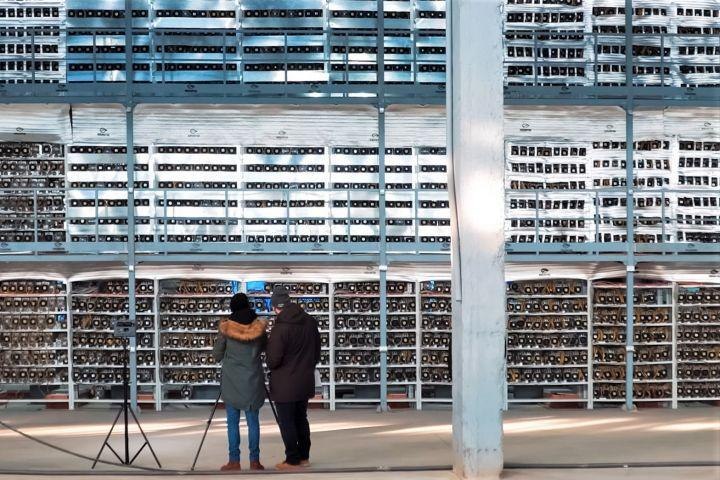
A Russian firm is set to open a hotel with a difference in the Arctic Circle – although it isn’t the kind most folks would ever dream of visiting. Instead it’s a crypto mining “hotel” fitted with ASIC bitcoin (BTC) mining rigs and powered with 11.2 MW of electrical energy.
In a uniquely crypto-themed twist, the Norilsk-based “hotel” will be housed in facilities owned and formerly operated by Norilsk Nickel, a company (fronted by Russia’s richest man Vladimir Potanin) that is working on the launch of a government-approved tokenized metals trading platform.
Built on permafrost in the 1930s, Norilsk is one of the world’s most northerly permanent human settlements – and was the center of the region’s Gulag labor camps in Soviet times. Camp residents were put to work mining and smelting nickel and other metal resources in the city. Average yearly temperatures are a frosty -6 to -10°C.
The bitcoin mining project appears to be the brainchild of Norilsk’s local authorities, which, per media outlet Zapolyarnaya Pravda, hinted that more mining operators could soon be welcomed to the region. The city’s council leader stated,
“Building mining farms in the Arctic will attract large investments here. And that will undoubtedly drive up regional growth.”
The facilities, run by a new Switzerland-based mining venture called BitCluster will initially be kitted out with 150 Chinese firm Bitmain’s S19 ASIC rigs.
The media outlet added that BitCluster has entered into a direct agreement with the local energy provider, the Norilsk-Taimyr Energy Company.
However, it appears that the city council has been actively pushing for the mining industry to consider Russia’s Arctic Circle territories as a destination – particularly for Chinese miners looking to relocate from the Middle Kingdom.
The city council’s chairman Alexander Pestryakov has been actively courting mining interests since 2019, the media outlet added. As cooling expenses are almost non-existent and electricity costs are low, in the past the only barrier to mining ventures was poor internet connectivity.
Pestryakov claimed that high-speed internet infrastructure is now widely available in Norilsk, potentially opening the floodgates for more mining “hotel” initiatives in the near future.

BTC Transfers, CBDC Airdrops, Regulatory Warnings and 20 Crypto Jokes
It was a fun crypto week. OKEx suspended withdrawals as they couldn't get in touch with a private key holder. Also, somebody moved Satoshi era 1,000 bitcoin again, Marc van der Chijs told us that hodling bitcoin would've been a better strategy than trying to outperform it, Kraken researchers said that BTC finished its worst-performing month in September, and that higher returns and volatility could be expected in October, and it was debated whether Elon Musk’s Tesla Gigafactory 1 plant was fitted with a BTC ATM. Also, PwC said that the Americas are loosing their share in crypto M&A and fundraising, and that five blockchain use cases might boost global GDP by USD 1.76T, while Fidelity Digital Assets said that growing institutional investor base could increase BTC's correlation with traditional assets. Also, the BTC in your "brainwallet" might be stolen in less than a second.
And more stuff happened in the Cryptoverse, as KBA asked the South Korean government to suspend crypto taxes until 2023, China started a digital yuan airdrop, and G7 is looking into CBDCs, reiterating that Libra can't be launched until it’s regulated. Fundstrat Global Advisors warned that trading on offshore exchanges might become riskier, and General Counsel at Compound Finance warned that governments globally are looking to impose harsher restrictions on access to cryptoassets. The OECD wants its members to adopt crypto tax frameworks, and the Russian Central bank wants to cap bitcoin buying at USD 7,800 a year. Meanwhile, Kate Winslet joined the cast of OneCoin crypto scam movie, crypto cruise ship Satoshi might set sail soon from the Mediterranean, and a Russian firm is set to open a crypto mining "hotel".