Elrond Announces Integration with Frontier Wallet, To Make DeFi Products & Staking Tools Available
Decentralized finance-focused network Elrond Blockchain announced on Wednesday that it has integrated with Frontier Wallet. Founder and CEO, Beniamin Mincu, posted a tweet stating that Elrond based DeFi and Staking Tools are now enabled on India based DeFi Wallet.
Frontier Wallet is one of the fastest growing blockchain wallets in the South Asia country, which has a tremendous future potential after the Supreme Court lifted the banking ban on crypto companies imposed by the RBI. Commenting on the integration, Ravindra Kumar, Frontier Wallet Founder and CEO said,
Ravindra Kumar said
Head of Research and Development at Frontier Wallet, Philip Arthur Moore also tweeted, stating that staking is an integral part of both Elrond and Frontier Wallet.
In the official post on Medium, Mincu said that the DeFi has massive potential, but interacting with different tools continues to be quite difficult.
Mincu said
Elrond Blockchain is a next-gen distributed architecture that was designed to make 1000-fold cumulative enhancements in throughput and transactional execution speed. On the other hand, Frontier Wallet is aimed at making DeFi secure and simple.

Wanchain Partners with Band Protocol as Official Genesis Validator
Multi-blockchain open finance platform Wanchain has partnered with Band Protocol, a cross-chain data oracle network focused on Web 3.0, as the official genesis validator. In the official tweet, Wanchain stated that the partnership would allow them to strengthen their capabilities to bring off-chain data to Wanchain dApps in real-time.
In an official post on Medium, Band Protocol said that the Wanchain team has been working closely with them for the past one month on the BandChain testnet 2. The integration with Wanchain, it added, will help them enable secure, real-time, and reliable oracles for developers, providing them the foundation of an interoperable financial system. Band Protocol CEO and Co-founder, Soravis Srinawakoon said,
Soravis Srinawakoon said
Band Protocol, as a cross-chain data oracle network, aggregates and links real-world data and APIs to smart contracts. It also enables smart contract applications such as DeFi, prediction markets, and games to be built on-chain. Wanchain, on the other hand, provides the infrastructure to connect the decentralized financial world. It allows the flow of digital assets and data across the globe by connecting all isolated public and private blockchains.
Commenting on the company’s integration with the leading blockchain-based oracle network, CEO & Founder of Wanchain, Jack Lu said,
Jack Lu said
In a Twitter thread posted yesterday, Band Protocol stated that the integration with Wanchain will ensure that the security and decentralization of the BandChain is always on the top. It will also allow the Wanchain community to contribute to reliability and decentralization of the Band Protocol oracles that power Wanchain based dApps by staking BAND token.

Is Bitcoin Going to Have a Trend Revision Unlike the One Seen Post 2012 and 2016 Halving?
Bitcoin price slides back to trade around $9.2k, and over the past 24 hours, BTC/USD kept oscillating between $9.2k to $9.3k price area
The uptrend that broke out 2 days back experienced a steep rise, yesterday and for a moment broke above $9.4k
Yet again the price of BTC has plummeted below $9.3k, at the press time
The entire MCap has dropped notably owing to the market crash in March, but it is still higher with 5 days to go for Bitcoin Halving as compared to the 2016 market and halving
According to historical data, Bitcoin has always shown an amazing price rally before the halving and a price dip after the event. However, this time the situation seems different as we are just 5 days away from the halving event, and a major rule out is yet to happen. But this time, many analysts believe in having a near-term BTC price rally which is likely to take place after the halving, inversing the previous trends. Nonetheless, the price of the crypto has shown an escalation after testing the yearly bottom around $3,200 in March this year.
Is it the Coronavirus outbreak that has laid its impact on the crypto space, just like the traditional investment avenues which experienced a massive sell-off?
Now, previously it was halving that pumped enough traction in the market; this time, the dynamics seem to have altered. However, just like the other sectors with variables such as employment, layoff, industries, businesses have a direct relation with the effects of the Pandemic, crypto has nothing to do due to the full course of digitalization.
This brings up the question: Are we going to see a change of trend after BTC Halving 2020?
Although the price of the major crypto—Bitcoin has been on a roar for multiple times over the past month and week, it has been nothing less than an illusion of a bullish breakout soon enough. Moreover, just when the price ramped up from the bottom of $3.2k to $7.5k in April, we have seen an escalation in the figures of trading volumes as well, and multiple attempts of the coin to hit above $9k and $9.2k will be successful once the price surpasses $9.5k.

Hot Scandals, Business Giants, Halvation and 20 Crypto Jokes
It was a fun, pre-halving week. Coinbase analyst said that we shouldn't count on banks to invest in crypto, and options traders appear to be skeptical about current ETH price. Business giants join a new consortium to help firms ‘manage digital assets’, Blockstream updated their BTC satelite network, and supply chain professionals are keen on blockchain technology. Bittrex will launch its own token in June, while BTCSHORT launched on Ethereum network. Meanwhile, the Cryptoverse had a question for the new Bitcoin star Paul Tudor Jones, while Tron and Justin Sun became a centre of a scandal.
As Petro went offline for maintanance, and registration fees forced BitKassa out of business, European money printer goes brrr program ran into a problem, and Telegram seems to be cutting all ties with the American investors. However, Europe’s biggest nuclear station might give electricity to BTC miners. Meanwhile, BTC had another mainstream moment, and PewDiePie left DLive for YouTube. We compared BitPay vs BTCPay, and we repored on six halving scenarios and three halving narratives.
And now – the best jokes of the week!
Hello, CT, my old friend. I've come to see how you're doing again.

Chainalysis Claims Mining Pools Holding More Bitcoin anticipating Bitcoin Price Surge Following The Halving
New York based blockchain investigation software enterprise Chainalysis claimed on Monday that as per its analysis, mining pools are holding more Bitcoin for the last few months in anticipation of the price surge that is expected after the scheduled halving. In a Twitter thread, it claimed having found that pools are holding more and selling less BTC since November last year.
Chainalysis released a blogpost showcasing their observational findings from mining pool behavior since October 2019. As per the blog, between October and mid-November, the total amount of Bitcoin held by mining pools fluctuates but largely remained around 10,000 BTC. However, it stated, balances kept rising steadily since November 19, which indicates that the mining pools are holding more BTC than before.
Chainalysis said
In a subsequent tweet in the thread, Chinalysis stated that the balances with the mining pools increased from 8,579 BTC on October 29, 2019, to 17,422 BTC on May 06, 2020.
The blockchain investigation enterprise also noted that there was a significant increase in the average time mining pools took to sell newly mined BTCs. As on October 06, 2019, miners sold newly minted Bitcoins on an average 2.24 days, which increased to 3.68 days on March 01, 2020, and subsequently to 5.74 days as on May 03, 2020.
Dove Wallet is Now a Part of Celo Alliance for Prosperity
Dove Wallet has recently announced its collaboration with Celo Alliance for Prosperity.
Alliance for Prosperity is a network of organizations that aims to work towards a better comprehensive financial system globally. Along with this, the organization offers to encourage blockchain technology.
Each and every individual in the organization encourages blockchain technology. The individuals are coming with unique approaches and strategic plans to develop blockchain technology. The Dove Wallet enables its users to buy and sell digital assets along with the stable assets of the Celo dollar. The Dove Wallets also lets you make use of the fiat money which enables you to use most currencies in the world for buying and selling crypto assets.
Currently, Dove Wallet is planning to make a “tipping” platform which enables the users to send small amounts online to people of various different communities. Collaborating with Celo Alliance, Dove Wallet aims to develop networking and work with other leaders of the blockchain world to encourage blockchain technology worldwide.
CryptoKitties Launches Artist Series Inspired by Blockchain Ecosystem
CryptoKitties is excited to launch the Artist Series collection, which is influenced by the creative aspects of the blockchain ecosystem. The very first set features four CryptoKitties by Momo Wang. Wang is a globally acclaimed illustrator from Beijing.
Wang is the creator of the world-famous character Tuzki. Tuzki is a basic character design of a bunny inspired by line drawing. The character is widely recognized in China and used in text messages as a sticker. The Tuzki sticker is widely used on Facebook and WeChat, and approximately 40M stickers are sent daily.
The characters created by Wang features cats that are inspired by DADA costumes for the ballet. Each of these characters holds the legitimate take on the inherited look of the CryptoKitty. The second character’s look will be revealing something very different from previous character designs. The first CryptoKitty designed by Wang, Catterina, is a limited edition character created for a particular time period worth $100. Catterina is available only on Nifty Gateway.
The earning from the sale will be contributed to Feeding America and Food Banks Canada to extend a helping hand to the affected communities due to the COVID-19 outbreak.
To increase the collection through propagation, two exceptional Momo Wang Kitties characters are reserved as Fancies to satisfy the user’s desire. One of these Kitty characters can be a perfect pairing partner for Catterina. The very first Momo Wang Fancy will be available from May 23, 2020, for a limited period of time.

ChainSafe Launches ChainBridge; Ethereum Classic Lab Initiates Support
ChainSafe is ecstatic to announce the launch of ChainBridge. ChainBridge is a modular multi-directional blockchain bridge that enables data transfer between blockchain. ChainSafe believes that blockchain technology will enable interaction with one another amidst major networks. The development of ChainBridge aims to achieve precise performance in a decentralized and cynical manner.
As of now, ChainBridge is initiating support for Ethereum, Ethereum Classic, and Cosmos-SDK based chains. Decentralized Finance has lately been the most adopted use case for Ethereum and Ethereum Classic users. ChainBridge will enable its users to secure their ETC and transfer its value to Ethereum, where the bridge will mint Synthetic ETC. ChainBridge functions in two-way that enable its users to make the transfer of assets that they have received after making an investment in DeFi.
The CEO of ChainSafe Systems Aidan Hyman quoted,
Aidan Hyman quoted
Ethereum Classic is excited to extend support to ChainSafe for developing ChainBridge. The bridge will allow transferring whimsical data from one blockchain platform to another. Both organizations believe that there are many opportunities where Ethereum Classic and Ethereum can make mutual development. And in the near future, organizations can be optimistic about adopting blockchain.
Talking about the collaboration, James Wo, the Founder of ETC Labs, said that Chainsafe had been a valuable partner for their organization that helps ETC to continue the growth while working with other blockchain technologies. This further provides smooth integration and increases developers’ value. Chainbridge has the ability that it can eventually be extended to any blockchain network.
Chainsafe Systems is the firm that assists blockchain research and works on necessary development on the platform with an aim to construct an infrastructure for Web3. Chainsafe has been an active contributor to Cosmos, Polkadot, and Filecoin ecosystems.
ETC Labs aims to build an easily approachable and best-quality technology. They aim to use technology to maintain the strategic plans as it is in the regulated ecosystem. The major aim is to accomplish the goal of improving people’s lives using the globally acclaimed public blockchain, Ethereum Classic.

Bitcoin and Ethereum Users Complain About Rising 'Ridiculous' Fees
While Bitcoin (BTC) fees keep rising, Ethereum (ETH) fees are also getting more expensive.
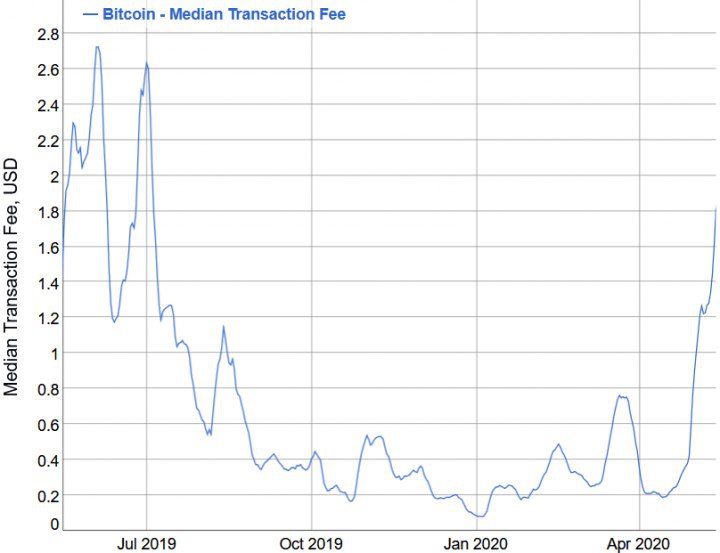
Bitcoin fees have been rising following the third halving. On May 12, the average transaction fee reached USD 2.79, the highest in ten months, jumping further to USD 5.16 on May 14. Bitinfocharts.com shows the 7-day moving average jumping since May 12's USD 2.493 to USD 3.088 two days later.
In the same period, the median transaction fee climbed 55% - from 1.797 to 2.781. The 7-day moving average shows an increase of 25% to USD 1.814. On April 1, it stood at USD 0.366 and was 395% higher on May 14.
"This is ridiculous," - commented Redditor 'miciomacho'. "Bitcoin just doesn’t scale. 72 blocks in mempool & a median fee of USD 3.19 on the second block." They added that this kind of fee wasn't intentional by design, but rather a result of an overcrowded mempool, where all the valid transactions wait to be confirmed by the Bitcoin network. "By the way, if the mempool keeps being overcrowded the fees will keep rising because people just want priority over others to be confirmed," the poster said.
The actual cost of a transaction on the Bitcoin network is about USD 35, argues 'harfatum', saying that most of it is subsidized by block rewards, "but as that diminishes the users will be forced to carry greater amounts of that burden." Still, some people are willing to pay higher fees. 'mysteelersrock82' believes this is a "small price you pay for having a truly decentralized network that is also the most secure network on the planet."
Meanwhile, "Ethereum transaction fees are ridiculous as well," says says 'phillipsjk'. Redditor 'ma6ic' also noted the crowded transactions, arguing that "if the upward trajectory continues and fomo fear of missing out sets in, both networks are going to chug to a halt."
Ethereum median fees have also increased in double digits this month. The 7-day moving average is up by 82%, to USD 0.153 on May 14. Since April 1, it jumped by 337%.
Median transaction fee, USD, 7-day simple moving average:
FTX Launches Futures Contracts on Bitcoin Hashrate
In what is likely to be the first such offering in the world, a crypto derivatives exchange has announced the launch of a new futures market that represents hashrate, or the computational power, of the Bitcoin (BTC) network.
Announced today by Sam Bankman-Fried, CEO of crypto derivatives exchange FTX, the new product drew mixed reactions from the community, with some hailing it as a “great for miners,” and others suggesting it is another unnecessary trading product.
Regardless of how useful the new futures contracts may be for regular retail traders, it may certainly offer some benefits for miners as they seek to hedge risks associated with fluctuating hashrate on the network.
According to FTX’s contract specifications, their new hashrate futures “expire to the average BTC mining difficulty over a period of time,” meaning that they “roughly represent” the total hashpower used on the Bitcoin network. For example, the BTC-HASH-2020Q3 contract “settles to the average difficulty of bitcoin blocks mined during 2020 Q3,” divided by 1 trillion, the exchange said.
The idea of adding hashrate futures was first raised by FTX in a blog post in August last year, where Bankman-Fried said that they “are looking into hashrate, BTC dominance, and commodity futures” for listing on the exchange.
The bitcoin hashrate has risen fairly consistently over the past 12 months, but took a marked hit in March and dropped again after the third Bitcoin mining reward halving on May 11. However, it seems that hashrate has started moving up today again.
In either case, as reported, it might take weeks until we have a clear picture of the Bitcoin network after the halving.
FTX, which is backed by Binance, also made headlines earlier this year when it launched a futures contract that tracks the probability of Donald Trump winning the next US presidential election. The TRUMP contract is still trading on FTX, and is currently indicating a 50.1% probability that Trump will win the election.

Bitcoin Topside Bias Vulnerable Below USD 10K, Altcoins Consolidate
☄️Bitcoin price is facing a strong resistance near USD 10,000.
☄️Ethereum and XRP are consolidating above USD 210 and USD 0.200 respectively.
☄️STEEM and SOLVE rallied more than 15% today.
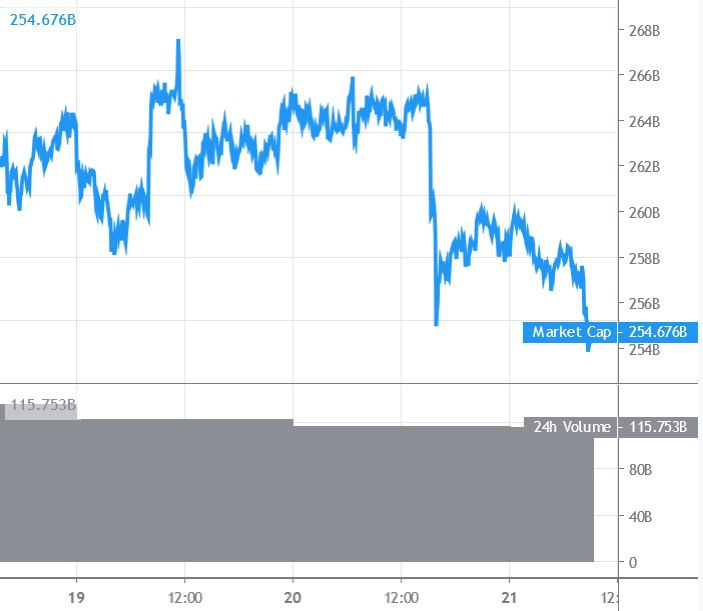
Bitcoin price started a downside correction after it failed to clear the USD 9,500 and USD 10,000 resistance levels. BTC/USD traded below the USD 9,850 support and tested USD 9,550. The price is currently (09:00 UTC) stuck in a range and seems to be facing a strong resistance near USD 10,000.
Looking at most major altcoins, there were range moves in ethereum, XRP, litecoin, bitcoin cash, BNB, EOS, TRX, ADA, and XLM. ETH/USD is currently consolidating above USD 210, with a key resistance near USD 215. Similarly, XPR is consolidating gains above USD 0.200 and it must surpass USD 0.210 for a sustained upward move.
Bitcoin price
After struggling to clear the USD 10,000 barrier, bitcoin price corrected lower below USD 9,850. It even traded below USD 9,700 and tested the USD 9,550 support level. The price is currently trading in a range above USD 9,700 and it might again rise towards the key USD 9,950 and USD 10,000 resistance levels.
To start another strong increase, the price must settle above the USD 10,000 resistance. If not, the bears are likely to aim a substantial downside correction towards USD 9,200 or even USD 9,000.
Ethereum price
Ethereum price corrected lower and tested the USD 205 zone. ETH is currently trading above USD 210 and it is facing a couple of strong hurdles near the USD 215 and USD 218 levels. The main resistance is still near the USD 220 level.
On the downside, an initial support is near the USD 205 level. The main support is near the USD 200 handle, below which the price might accelerate lower towards the USD 192 level.
Bitcoin cash, litecoin and XRP price
Bitcoin cash price is trading above the USD 240 and USD 245 levels. At the outset, BCH is consolidating near USD 250 and it seems like the bulls are eyeing a test of the USD 260 and USD 265 resistance levels. On the downside, the first key support is near the USD 240 level, below which it could test USD 225.
Litecoin settled above the USD 45.00 level, but it seems to be facing a couple of key hurdles near the USD 46.50 level. If there is a successful break above the USD 46.50 level, LTC price might continue to rise towards the USD 48.50 and USD 50.00 levels.
XRP price is trading well above the USD 0.200 and USD 0.202 levels. On the upside, the USD 0.209 and USD 0.210 levels are key barriers for the bulls. If they succeed, the price might rise steadily towards the USD 0.220 and USD 0.225 levels in the near term. Conversely, it might slide below USD 0.200 and revisit the USD 0.190 support.
Other altcoins market today
In the past three sessions, a few small altcoins gained more than 5%, including STEEM, SOLVE, MONA, ETN, FXC, QNT, and NANO. Conversely, BHT, NMR, CRPT, ZIL, LEND, and CKB are down more than 5%.
Overall, bitcoin is facing an uphill task near the USD 9,950 and USD 10,000 levels. Therefore, the next few sessions might be crucial and BTC could either rise sharply towards USD 10,000 or start a steady decline towards USD 9,200 or even USD 9,000.
Total market capitalization:

BitPay Processes More Volume, Transaction Count Remains Unchanged
In the first quarter this year, US-based major crypto payments company BitPay processed 10% more volume in USD, compared to the last three months of 2019, while the number of transactions remained unchanged.
It includes all cryptoassets the company supports, with bitcoin (BTC) representing the largest part, BitPay’s Chief Marketing Officer (CMO) Bill Zielke told Cryptonews.com without specifying. Key verticals driving this increase were financial services, currency exchange, computer software and engineering, and IT services. These saw increases by 11%-40%, Zielke said, adding that the company plans to launch its stats page later this summer.
Also, despite the turbulence in the financial markets in addition to the fluctuating price of BTC, the number of processed transactions through BitPay remained unchanged, Zielke said, without providing numbers. According to him, during the Coronavirus pandemic-caused isolation and house quarantines, with people being required to stay home, they continue to shop through ecommerce and online channels. GiftCards "have also seen large spike as people have been buying a lot more gift cards from the BitPay app or gift card sites like eGifter.com," Zielke said.
As for new trends, BitPay have seen an increase in spending in the UK and Europe in specific business niches, including domain hosting companies like Namecheap, video game providers like Microsoft Xbox, and delivery services like Takeaways.com, all of which have seen their volumes steadily increase, according to the CMO.
Last week, the company said it onboarded Beliani, a Europe-based web-only international seller of furniture and home accessories, that had over 1 million customers across 16 countries in Europe.
Besides BTC, BitPay supports etherum (ETH), bitcoin cash (BCH), XRP, as well as four dollar-pegged stablecoins, USD coin (USDC), gemini dollar (GUSD), paxos standard token (PAX), and binance USD (BUSD).
BitPay processed USD 1 billion in transactions in 2018, or second year in a row.
Bitcoin and Altcoins Vulnerable to a Further Correction
🔥Bitcoin price started a fresh decline after multiple failures below USD 10,000.
🔥Ethereum is now trading below USD 210 and XRP broke the USD 0.200 support.
🔥THETA outperformed the market and rallied more than 40% to USD 0.315.
Bitcoin price made many attempts to overcome the USD 9,950 and USD 10,000 resistance levels, but it failed. As a result, BTC reacted to the downside and broke a couple of key supports near the USD 9,550 level. It has opened the doors for a downside correction towards USD 9,000 or even USD 8,850.
Similarly, most major altcoins started a fresh decline and followed bitcoin, including ethereum, XRP, litecoin, bitcoin cash, BNB, EOS, TRX, ADA, and XLM. ETH/USD is down (08:30 UTC) close to 3% and it broke the USD 210 support zone. XPR is also sliding and it is now trading below the USD 0.200 support.
Bitcoin price
After another rejection close to USD 9,900, bitcoin price started a decline. BTC broke the USD 9,600 and USD 9,550 support levels to move into a short term bearish zone. The price is down close to 4% and it is now approaching the USD 9,400 level. The next key supports on the downside are near USD 9,200 and USD 9,000.
On the upside, the previous supports near USD 9,550 and USD 9,600 may now act as hurdles in the coming sessions.
Ethereum price
Ethereum price followed bitcoin and declined from the USD 215 resistance zone. ETH traded below the USD 212 and USD 210 support levels. It is now approaching the USD 205 support level, below which the bears are likely to aim a test of the USD 200 handle.
To move back into a positive zone, the price must climb above USD 212. Still, the main hurdles are near the USD 215 and USD 216 resistance levels.
Bitcoin cash, litecoin and XRP price
Bitcoin cash price declined steadily and broke the USD 240 support level. BCH is likely to continue lower towards the USD 230 support level. Any further losses might lead the price towards the USD 222 and USD 220 support levels. To the topside, the USD 245 and USD 250 levels are likely to prevent an upside break in the near term.
Litecoin broke the USD 45.00 support zone to start a fresh decline. LTC even traded below the USD 44.00 level and it is likely to continue lower towards the USD 42.20 support. The main uptrend support is near USD 40.00, below which the bears could take control and push the price towards the USD 38.00 and USD 36.50 levels.
XRP price struggled to stay above the USD 0.205 and declined recently. The price broke the USD 0.202 and USD 0.200 support levels. The current price action suggests that the bears are aiming a test of the USD 0.192 and USD 0.190 support levels in the next 2-3 sessions.
Other altcoins market today
In the past three sessions, many small altcoins declined more than 5%, including STEEM, ETN, HYN, ABBC, DGB, CRPT, NANO, SNT, and MATIC. Out of these, STEEM is down more than 25% and ETN declined nearly 20%.
To sum up, bitcoin price finally reacted to the downside and broke the key USD 9,550 support. If BTC continues to move down below USD 9,400, it could even revisit the USD 9,000 support zone.
Total market capitalization:
Trezor Team Making a Bitcoin Wallet Chip to Disrupt Multi-M Dollar Industry
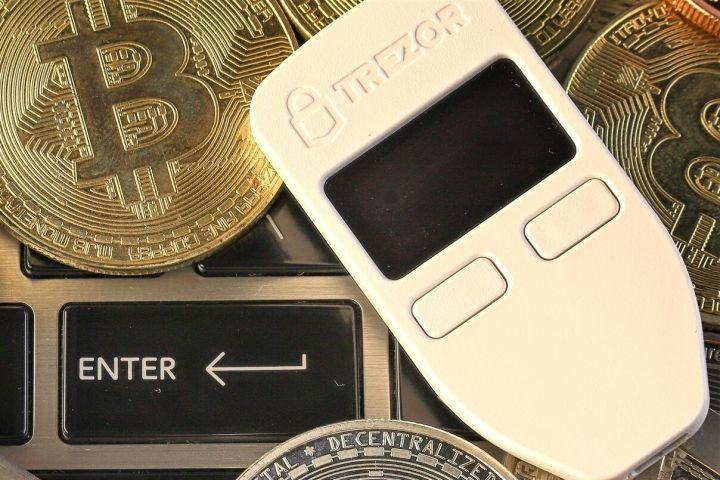
SatoshiLabs, the manufacturer of the Trezor hardware wallet, has announced a new initiative, dubbed 'Tropic Square', the goal of which is to create open-source chips.
Tropic Square stands for 'TRuly OPen IC,' and is a new company built by SatoshiLabs founders Pavol Rusnák and Marek Palatinus, joined by CEO Evžen Englberth and Chief Technology Officer Jan Pleskač. The team claims the company will disrupt a multi-million dollar industry and be beneficial for the crypto and hardware wallet, but also other industries, hardware manufacturers, and their customers. This they plan to accomplish via an open, fully auditable chip, the announcement said, without providing a specific timeline.
Coming from the Bitcoin (BTC) background and its "Don’t Trust, Verify" message, Trezor argues that certification can't replace independent reviews. The wallet itself was built on the principles of transparency and self-sovereignty, they said, while the beauty of open-source is that anybody can study and audit the entire content, which is, therefore, being constantly reviewed by thousands of reviewers - a point critical for BTC, as understanding leads to decentralization.
However, not everything in BTC open-source, they add. One of these are the special chips called "secure elements," which claim to be secure because they've been awarded certifications. But their claim can't be verified as they are closed and require a non-disclosure agreement (NDA). Looking at a reviewed certified option, the team found several critical flaws that can result in the keys being stolen from the chip with no special hardware - attacks they claim nobody tested against. "We did not even try very hard to break the chip," said the team. The vendor wouldn't tell the customer of the vulnerability, and neither could Trezor because of the NDA.
Tropic Square's solution is not customizing these chips, as NDAs would still stand, and it wouldn't solve the problem, but creating as open chip as possible in order "to provide access to design specification, verification, and testing without obscurity." The project promised a chip without NDAs, hidden clauses, or limitations.
Bitcoin and Altcoins Recovery Could Be Short-Lived
☄️Bitcoin price extended its decline towards USD 8,800 before correcting higher.
☄️Ethereum correcting higher from USD 192 and XRP is facing hurdles near USD 0.200.
☄️OMG rallied more than 50% and SOLVE is up more than 40% today.
Yesterday, we saw a strong bearish wave below the USD 9,550 support zone. It opened the doors for more losses and BTC price traded below the USD 9,200 support. The price tested the USD 8,800 support and it is currently (08:30 UTC) correcting higher above USD 9,000.
Similarly, most major altcoins declined sharply below many supports, including ethereum, XRP, litecoin, bitcoin cash, BNB, EOS, TRX, ADA, and XLM. ETH/USD tested the main USD 192 support zone and it is currently correcting higher above USD 198. XRP is also correcting higher, but it may struggle near the USD 0.200 and USD 0.202 levels.
Bitcoin price
After a successful break below the key USD 9,550 support, bitcoin price extended its decline below the USD 9,200 support. BTC even spiked below USD 9,000 and tested the USD 8,800 support. The price is currently rising and it is trading above USD 9,000. An initial resistance on the upside is near the USD 9,200 and USD 9,250 levels. The main resistance is now forming near USD 9,550 level.
On the downside, the USD 9,000 level is a short-term support. The key support is near USD 8,800, below which the price could decline towards USD 8,400.
Ethereum price
Ethereum price followed bitcoin and declined sharply below the USD 200 support. ETH/USD even broke the USD 195 support, but it found a strong support near the USD 192 level. The price is currently recovering and trading above USD 200.
To move back into a positive zone, the price must reclaim the USD 202 level. The next key resistance may perhaps be near the USD 205 and USD 206 levels.
Bitcoin cash, litecoin and XRP price
Bitcoin cash price dived below the USD 240 and USD 230 support levels. BCH tested the USD 220 support and it is currently rising. The price is testing the USD 230 level and it seems like it could correct further higher towards the USD 235 and USD 240 levels. On the downside, the main support zone for the bulls remain near the USD 220 level.
Litecoin also declined sharply and broke the USD 43.20 support. LTC tested the USD 42.00 support zone and it is currently correcting higher. On the upside, the price might struggle to move back above the USD 44.50 and USD 45.00 resistance levels. Conversely, a break below USD 42.00 may possibly lead the price towards USD 40.00.
XRP price failed to stay above the USD 195 support zone and even spiked below USD 0.192. It tested the USD 0.190 support zone and recently recovered. The price is now trading above the USD 0.195 level, but it is likely to struggle near the USD 0.200 and USD 0.202 resistance levels.
Other altcoins market today
In the past few hours, a few small altcoins rallied more than 10%, including OMG, SOLVE, HC, BCN, ELF, STX, DGB, BHT, and ZIL. Conversely, THETA, STEEM, ZRX, LEND, and FXC declined more than 8%.
Overall, bitcoin price is back in a bearish zone below USD 9,550 and USD 9,200. If BTC slides below the main USD 8,800 support, there are chances of a strong bearish continuation towards USD 8,400 or USD 8,200.
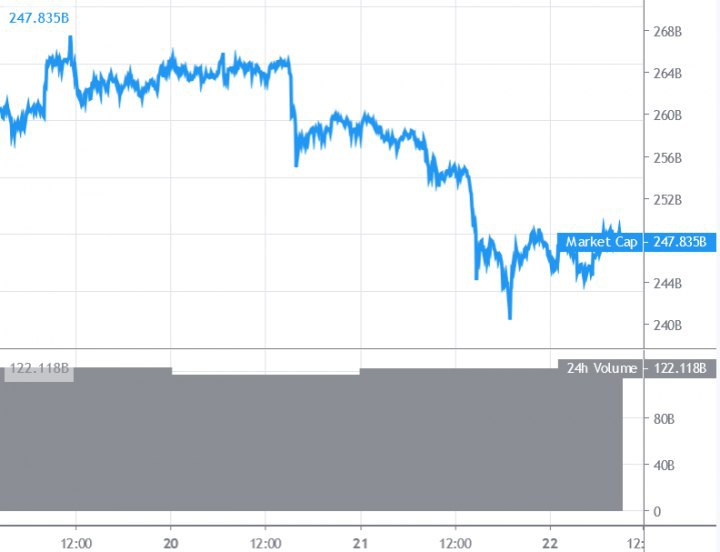
Total market capitalization:
Charles Hoskinson Explains if Cardano will be Useless after Launch of Ethereum 2.0
In a recent interview with “Crypto Adapter”, Charles Hoskinson, the Co-founder of Ethereum, Cardano and IOHK CEO, said that all the core protocols of Cardano are already of the same degree or better than Ethereum. Hoskinson made the clarification when asked if Cardano will become unneeded after the launch of Ethereum 2.0.
He said he’s confident that Ethereum is not in any way superior to Cardano, as Cardano can perform all the proposed features of Ethereum 2.0 excellently beyond what Ethereum 2.0 will offer, hence, Ethereum 2.0 can’t render Cardano useless.
According to Hoskinson, all the core protocols of Cardano are better than what Ethereum 2.0 has to offer, he further added that the Cardano network has explicit blockchain based governance an areas Ethereum is yet to develop on.
The Cardano network consensus protocol is far better and has more efficient ideas to update the system with significantly improved network designs that are extremely better than all that was proposed in the Ethereum 2.0.
In addition to this, Hoskinson went further to reveal that Ethereum, instead of achieving essential proposals, focuses on too many goals. Once the Hydra protocol is initiated Cardano will be able to execute more than one million transactions in one second, another leapfrog that will place Cardano ahead of Ethereum.
Hoskinson is however skeptical about Ethereum transiting from the proof of work protocol to proof of stake in a timely manner that will guarantee purposefulness. He was of the opinion that such implementation is supposed to be immediate without unnecessary hesitation.

South Africa Leads Crypto Revolution In Africa – Challenges Spur And Slow Adoption
Africans rank atop global cryptocurrency ownership rates, according to a new report by Arcade Research. South Africa ranks third globally with 13% of its internet users owning or using cryptocurrencies, while 11% of connected Nigerians own cryptocurrencies in the fifth-placed populous West African country.
Uganda, Nigeria, South Africa, Kenya, and Ghana are listed in the report among the top 10 countries where “cryptocurrency” is most searched on Google. Economic challenges work both ways, as the digital divide slows the adoption of cryptocurrency while high financial fees make virtual currencies an attractive alternative.
Africa also has some of the world’s most inflationary economies where fiscal indiscipline and controversial monetary policies sometimes erode citizens’ savings overnight. Apart from governments’ heavy hand, external factors such as sanctions and conflict also threaten savings, making cryptocurrency a less exposed investment.
Sub-Saharan Africa records $48 billion remittances annually but transaction fees go as high as 9%, while some mobile payment transfer services charge around 11%. Cryptocurrency use is also a way to undercut the disadvantages of centralization while eliminating high remittances cost.
Arcane Research notes lack of infrastructures such as crypto mining operations, supporting merchants, smartphone penetration, and internet connectivity as slowing the uptake of cryptocurrencies. With rural-majority populations in some countries, significant swaths of the continent are not electrified, limiting the reach of bitcoin and other digital assets. .
According to the report, lack of policy clarity, with close to 60% of African governments yet to announce their positions on cryptocurrencies, slows down adoption.
“Africa is one of, if not the most promising region for the adoption of cryptocurrencies,” - said the report.
“This is due to its unique combination of economic and demographic trends. While the overall adoption is relatively low, the potential is enormous, the growth is rapid, and the development is likely to become defining for the cryptocurrency industry going forward,” it added.

Bitcoin Investment App CEO Calls BTC a Monetary Revolution, Not a Technical One
Bitcoin is not yet a go-to investment option in the public eye, but those days could be coming.
What needs to happen for Bitcoin (BTC) to cement its role in the public eye as a valid investment option?
"Time," Aleks Svetski, CEO and co-founder of Bitcoin investment platform Amber, told Cointelegraph in an email. "This is NOT a technological revolution," he clarified, adding:
"It’s a monetary revolution - which takes (traditionally) centuries to manifest, whilst in the digital age, Bitcoin is likely to do it in decades."
Bitcoin rising despite instability
Since Bitcoin's 50% March price dive, in the midst of coronavirus fear and uncertainty, the mainstream public has become increasingly interested in crypto's pioneer asset. The coin also rebounded dramatically in value, seeing more than 130% gains from its low.
Bitcoin's positivity comes during unstable mainstream market conditions. Traditional market barometers posted some of their worst performances since the market crash of 1987, as business closures and coronavirus prevention measures took flight. Although markets have since rebounded, unemployment numbers provide rationale for continued concern.
A global asset, Bitcoin sits independent of government control, which may prove attractive during economic uncertainty. Svetski explained:
"The more holes that appear in the edifice that we call society; whether monetary, fiscal, social, political - the more people that will want to preserve their wealth in something immune to the tampering of the state."
Bitcoin gaining recent steam in the mainstream
In recent days, Bitcoin has seen a number of mainstream entities express interest in the crypto industry, including billionaire Paul Tudor Jones and his Bitcoin hedge play.
Svetski mentioned two reasons pulling the public into crypto, explaining:
"I have a saying: 'People will get into Bitcoin for curiosity or pain.' I’d also add 'greed' but that can come under the banner of curiosity."
Even JPMorgan Chase has changed its tune on the crypto space, recently announcing the lending of its services to crypto exchanges, Coinbase and Gemini. The move shows a stark contrast from 2017, when the Jamie Dimon, the banking giant's CEO, called BTC a fraud.
South Korean Crypto Tax ‘Coming Next Year for Traders, Miners & ICOs’
South Korean ministries have pledged to impose tax on cryptocurrency trading and crypto mining “from next year.”
Per reports from E Daily and Decenter, the Ministry of Economy and Finance is preparing to make an amendment to the existing Income Tax Act that will include clauses about taxing profitable cryptocurrency sales, as well as the profits of crypto mining projects. The ministry also spoke about taxing the proceeds of initial coin offerings (ICOs) – perhaps a slightly puzzling statement for some, as ICOs remained banned in the country.
The media outlets quote an official from the ministry as saying,
“We are looking into ways to impose capital gains tax or other forms of income tax on the profits earned by both domestic and foreign investors using cryptocurrencies.”
The ministry says its proposed amendment will be ready by July and submitted to parliament in September.
It looks as though the ministry’s plans, which have also received input from the Ministry of Science and ICT, will be designed in the image of existing securities tax laws, which only seeks to tax profit-making deals, rather than transactions that make a loss.
Crypto-to-crypto transactions will also likely be exempt, and the ministries are expected to follow a policy of imposing taxation wherever income or profits can be found.
As previously reported, Seoul has already introduced a new crypto law that contains provisos pertaining to exchanges, who may have to provide data to tax officials as part of a set of new regulatory measures that comes into force in Spring 2021.
Seoul has spoken about imposing crypto tax on numerous occasions in the past, most notably back in late 2017 and early 2018, although none of its previous plans have come to fruition. However, in a highly contentious move last year, tax authorities in the country hit exchange Bithumb with a USD 67 million tax bill for transactions carried out by its overseas customers.
There could be further obstacles for the new plan, though. E Daily quotes an official from the Korea Institute of Local Finance as stating that individuals who want to evade taxes will be able to do by making use of over-the-counter (OTC) exchanges.
A blockchain industry chief, meanwhile, stated that the government should instead hold fire on its tax plans until it has developed a more effective way of calculating tax bills, payable in fiat, on crypto transactions – a process that could take “up to three to four years.”

Financial Giants Fujitsu & Nomura to Launch Digital Asset Trading on Blockchain
Japanese tech giant Fujitsu has signed a deal with major securities company Nomura that will see the duo co-launch an interoperable blockchain platform for trading “digital assets” such as securities.
Per a report from Nikkei, Fujitsu is working on the project with Nomura’s Boostry blockchain affiliate, and the parties have already completed a number of tests on their new platform, which they say will be ready to roll out in the second half of the current financial year.
The companies believe that “digitalized financial products” are set for a boom in the near future, and says the platform will act as a service that connects and enables transactions conducted in “digital assets” between different blockchain networks.
The parties claim their platform will be suitable for use across a range of industries, but singled out the agriculture, real estate and entertainment sectors for note.
Nomura Group companies Nomura Holdings and the Nomura Research Institute set up Boostry last year with USD 11 million worth of capital.
The news comes hot on the heels of another blockchain interoperability-related deal for Fujitsu, whose America-based Fujitsu Laboratories earlier this month said it was jointly developing a blockchain interoperability solution named Hyperledger Cactus with Accenture. The solution, the companies said at the time, can link private and public blockchain networks.
And in January, Cryptonews.com also reported that Fujitsu is now working with Japan’s largest credit card company, JCB, on a payment platform that will likely be able to use both cryptocurrencies and stablecoins.
Boostry became the first company to issue blockchain-based digital bonds directly to Japanese investors in March this year.
Nomura, meanwhile, is also one of the founding members of the Japanese Securities Token Association.
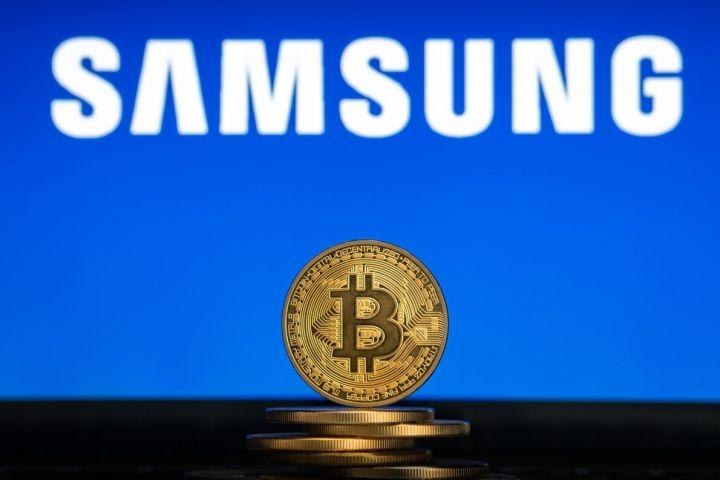
Samsung Adds Bitcoin Focused Exchange Gemini To Its Flagships
The world's largest smartphone maker, Samsung, has integrated the Gemini exchange into its Blockchain Wallet on Galaxy smartphones in the US and Canada. (Updated at 13:36 UTC: a quote by Jeanine Hightower-Sellitto has been added).
By connecting their Samsung Blockchain Wallet to the Gemini mobile app, users can buy and sell crypto, view their Gemini account balances, and also transfer their crypto into cold storage with Gemini Custody, the exchange said. They're the first US crypto exchange and custodian to partner with South Korean giant, according to the announcement.
The Samsung Blockchain Wallet and the Gemini Mobile App are available in the Samsung Galaxy Store for these devices: Galaxy S20 Series, Galaxy Z Flip, Galaxy Note 10 Series, Galaxy Fold, Galaxy S10 series (Verizon excluded).
“It’s a full integration between the two apps that’s very transparent and very easy to use,” Jeanine Hightower-Sellitto, Managing Director of Operations at Gemini, told Bloomberg. “It’s all integrated.” Terms of the deal were not disclosed.
24-hour trading volume (13:03 UTC) on Gemini stands at USD 20.6 million, while bitcoin (BTC) is responsible for 86% of it, ethereum (ETH) - 11%.
As reported, recession, a more favorable regulatory view, a better understanding of the technology, and traditional investors turning to crypto - are all aspects that are bringing adoption to crypto, Julian Sawyer, Gemini's Managing Director for Europe, recently told Cryptonews.com. Also as reported, major investment bank JPMorgan Chase recently welcomed Gemini and Coinbase as their first crypto clients.
Meanwhile, THETA.tv, the esports video platform powered by Theta (THETA) blockchain, recently said that might be featured as one of the content providers available in the Samsung Daily platform, pre-installed in every flagship Galaxy S20 phone shipped in the US.