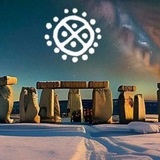
Algiz
Sometime known as "Elhaz" - 'elk', the name of this rune comes from Proto-Indo-European "el-", "ol-", "el-" which meant 'red, brown'. Reflexes (linked words) include Old Norse "Alkan" - 'swan' and Icelandic "alka" - 'swan'. Other reflexes include: 'Alder tree', 'Lamb', 'Auk bird', and 'Elder tree'
Ps. The 'swan' version is the reason why some rune workers connect swan-maidens and winged valkyries with the Algiz rune.
Sometime known as "Elhaz" - 'elk', the name of this rune comes from Proto-Indo-European "el-", "ol-", "el-" which meant 'red, brown'. Reflexes (linked words) include Old Norse "Alkan" - 'swan' and Icelandic "alka" - 'swan'. Other reflexes include: 'Alder tree', 'Lamb', 'Auk bird', and 'Elder tree'
Ps. The 'swan' version is the reason why some rune workers connect swan-maidens and winged valkyries with the Algiz rune.
Forwarded from Easter Tidings
Title: The Protocols and World Revolution
Including a Translation and Analysis of the "Protocols of the Meetings of the Zionist Men of Wisdom"
http://gutenberg.org/ebooks/64977
Including a Translation and Analysis of the "Protocols of the Meetings of the Zionist Men of Wisdom"
http://gutenberg.org/ebooks/64977
Forwarded from The Western Journal
French Generals, Top Officers Warn Political Elites of Military ‘Intervention’ if Divisive Critical Race Theory Breaks Down Society
READ: http://w-j.co/s/e6dce
READ: http://w-j.co/s/e6dce
The Western Journal
French Generals, Top Officers Warn Political Elites of Military 'Intervention' if Divisive Critical Race Theory Breaks Down Society
20 former French generals signed an open letter to President Emmanuel Macron warning that critical race theory could cause a civil war.
Forwarded from Stam van de Vos🦊, hekserij en heidendom van de Lage Landen
It is now one year ago that the Tribe of the Fox started making video's. Dirkje and me love making video's about our ancestors, naturespirits, deities and all things related to that so this was a productive year. 75 video's are now available and more video's are coming your way. The Tribe of the Fox want to thank our supporters for subscribing, viewing, liking and commenting❤️! https://www.youtube.com/watch?v=VmM2I6G-gUU
YouTube
One year of heathen videomaking
The Tribe of the Fox celebrates one year of heathen videomaking :-). Thanks for your support, our friends!Please join us on telegram (English): https://t.me/...
Sigurblót, or Victory Blot, marked the traditional beginning of Summer & was likely the most important blot of the year.
“In Sweden there was an age-old custom whilst they were still heathen that there should be a blot in Upsala during Goa (moon.) Then they would blot for peace & victory for their king. People from all over Sweden were to resort there.”
— Heimskringla Olaf’s Saga Helga 77
Scandinavians called this celebration “Sigurblót,” but the Anglish, Frisians, & Franks called it Eostre.
The Church doesn’t date “Easter” to the Equinox, but to “the first Sunday after the first full moon after the vernal Equinox.” — Bede De Temporum Ratione, ch 62.
The church still dates Easter this way today, not by the Equinox alone, but by the Full Moon.
More from Robert Sass ...
https://www.aldsidu.com/post/historical-accuracy-in-heathenry-solstices-equinoxes-were-not-observed-by-germanic-heathens
“In Sweden there was an age-old custom whilst they were still heathen that there should be a blot in Upsala during Goa (moon.) Then they would blot for peace & victory for their king. People from all over Sweden were to resort there.”
— Heimskringla Olaf’s Saga Helga 77
Scandinavians called this celebration “Sigurblót,” but the Anglish, Frisians, & Franks called it Eostre.
The Church doesn’t date “Easter” to the Equinox, but to “the first Sunday after the first full moon after the vernal Equinox.” — Bede De Temporum Ratione, ch 62.
The church still dates Easter this way today, not by the Equinox alone, but by the Full Moon.
More from Robert Sass ...
https://www.aldsidu.com/post/historical-accuracy-in-heathenry-solstices-equinoxes-were-not-observed-by-germanic-heathens
Germanicheathenry
Historical Pre-Christian Heathenry: When were the Blots?
The Wiccan Wheel of the Year, based on the solar calendar of Celtic and Gaelic Paganism has reigned as the “orthodox” view in Asatru since 1974, despite the fact that Celtic and Gaelic peoples did not know or venerate the Aesir. Almost all modern pagans ignore…
Beltane, Beltain, Bealtaine Beltaine - Celtic Fire Festival
https://www.newgrange.com/beltane.htm
https://www.newgrange.com/beltane.htm
Newgrange
Beltane, Beltain, Bealtaine Beltaine | Celtic Fire Festival
The Celtic Festival of Bealtaine is a Cross Quarter Day, half way between the Spring Equinox and the Summer Solstice
Caer Australis - The Celtic Fire Feasts: Beltaine
https://caeraustralis.com.au/beltaine.htm
https://caeraustralis.com.au/beltaine.htm
caeraustralis.com.au
Caer Australis - The Celtic Fire Feasts: Beltaine
The month of May, now called Bealtaine, is in the Book of Leinster (twelfth century) called mís cétamuin, and in Sanas Cormaic (ninth century) called Céitemain, there explained as 'cetsoman .i. cetsámsin .i. cétlúd síne samraid', which is 'May(day), i.e.…
The grazing season - and the work season for shepherds - began after the summer nights in April, and continued until the winter nights in October. Jyri's Day (April 23) is the traditional day for letting the cattle out of the winter shelter in eastern and southern Finland. It was said that “Jyri carries the cattle on his back if needed”, which meant that cattle was allowed to come out of the dark cowshed for a brief time even if there was snow and ice on the ground. The customs and traditions of Jyri’s Day ensured good luck for the cattle and house for the coming summer.
Letting the cattle out was a long-awaited and solemn event. The cows were let out for a moment, even if the ground was still covered with snow and ice. The cattle were walked through the gate that was decorated and had protective symbols such as torches, rowan branches and iron objects attached to it. An ax could be hidden under the barn's threshold. Livestock could be also protected with female spiritual power. The act of doing so was called "harakoiminen". This was done by letting the cows and sheep walk pass the gate as a woman stood on top of the gate so that the animals walked between her legs. The animals could also be protected by using objects such as bear claw and bear tooth, as well as a specific “incantation stone”.
Jyri's Day was held in silence, so that the thunder would not damage crops or buildings in the summer and the livestock would be protected from predators. One was not allowed to work, ride a horse, or make loud noises of any kind, including slamming doors. If the day passed quietly, summer would be calm as well. Cattle were also guided to their forest pastures in silence, so that the forest would not become angry. On this day, people were not allowed even to cut a branch from a tree. If an animal died in the summer, the reason was that right customs had not been followed on Jyrki.
Guardian spirits of forest and cattle were given food offerings on Jyrki's Day, so that the cattle would be protected in the summer when it grazed in the forest pasture. In South Savo, people ate a meal, and, before tasting anything, they placed part of every food to a special plate as an offering. Dishes such as pies, butter, milk, eggs and meat were taken to sacrificial trees in the hiisi, a sacred grove. The dishes could be carried in a birch bark pack that was left hung from a tree. People might also walk across the cattle while reciting spells and carrying a burning candle. The candle was later burned in the hiisi. There were also individual sacrificial trees to which people left offerings, such as money, when walking past them with the cattle. The shepherds offered a drink of liquor to each person they met while herding the cattle for the first time. This ensured good cattle luck for the summer.
Despite the silence associated with the day, it was also customary to "shout to the forest" to keep his beasts away during the grazing period. Around the Saimaa area the night before Jyri's Day was called the "shouting night". People walked in the forests at night and drove the wolves away with their shouts. For the same reason bonfires were burned and hills and shepherds played their horns. In some areas there was a particular custom called "jyrynajo", "driving Jyri away", which consisted of children wearing cowbells and running around the yard and nearby forests and making as much noise as possible.
Curiously, on Jyri's Day, as well as on Jakoaika after Kekri, people were not supposed to give away anything from the house, no goods nor animals, in order to keep the house prosperous. It was believed that whatever was given away on this day would not prosper in the coming year, but would decline instead. Consequently, if one had bought a cow, it was useless to come and ask for it on Jyri's Day - giving the cow away would result in the death of all the house’s cattle. The same belief is known in Estonia, where not even fire to light one's pipe was given to outsiders on this day.
Letting the cattle out was a long-awaited and solemn event. The cows were let out for a moment, even if the ground was still covered with snow and ice. The cattle were walked through the gate that was decorated and had protective symbols such as torches, rowan branches and iron objects attached to it. An ax could be hidden under the barn's threshold. Livestock could be also protected with female spiritual power. The act of doing so was called "harakoiminen". This was done by letting the cows and sheep walk pass the gate as a woman stood on top of the gate so that the animals walked between her legs. The animals could also be protected by using objects such as bear claw and bear tooth, as well as a specific “incantation stone”.
Jyri's Day was held in silence, so that the thunder would not damage crops or buildings in the summer and the livestock would be protected from predators. One was not allowed to work, ride a horse, or make loud noises of any kind, including slamming doors. If the day passed quietly, summer would be calm as well. Cattle were also guided to their forest pastures in silence, so that the forest would not become angry. On this day, people were not allowed even to cut a branch from a tree. If an animal died in the summer, the reason was that right customs had not been followed on Jyrki.
Guardian spirits of forest and cattle were given food offerings on Jyrki's Day, so that the cattle would be protected in the summer when it grazed in the forest pasture. In South Savo, people ate a meal, and, before tasting anything, they placed part of every food to a special plate as an offering. Dishes such as pies, butter, milk, eggs and meat were taken to sacrificial trees in the hiisi, a sacred grove. The dishes could be carried in a birch bark pack that was left hung from a tree. People might also walk across the cattle while reciting spells and carrying a burning candle. The candle was later burned in the hiisi. There were also individual sacrificial trees to which people left offerings, such as money, when walking past them with the cattle. The shepherds offered a drink of liquor to each person they met while herding the cattle for the first time. This ensured good cattle luck for the summer.
Despite the silence associated with the day, it was also customary to "shout to the forest" to keep his beasts away during the grazing period. Around the Saimaa area the night before Jyri's Day was called the "shouting night". People walked in the forests at night and drove the wolves away with their shouts. For the same reason bonfires were burned and hills and shepherds played their horns. In some areas there was a particular custom called "jyrynajo", "driving Jyri away", which consisted of children wearing cowbells and running around the yard and nearby forests and making as much noise as possible.
Curiously, on Jyri's Day, as well as on Jakoaika after Kekri, people were not supposed to give away anything from the house, no goods nor animals, in order to keep the house prosperous. It was believed that whatever was given away on this day would not prosper in the coming year, but would decline instead. Consequently, if one had bought a cow, it was useless to come and ask for it on Jyri's Day - giving the cow away would result in the death of all the house’s cattle. The same belief is known in Estonia, where not even fire to light one's pipe was given to outsiders on this day.
Jyri’s Day also started the spring sowing, and in Satakunta, people ate a special meal to celebrate this occasion. Special “sowing breads'' that had been baked around joulu were eaten as part of the celebration. Because Jyri was an important sowing day, the amount of snow left on the field determined the progress of the harvest.
Translation: Anssi A./Taivaannaula
Original article and translation here:
https://www.facebook.com/taivaannaula/photos/a.379403712092868/4284030271630173/
Translation: Anssi A./Taivaannaula
Original article and translation here:
https://www.facebook.com/taivaannaula/photos/a.379403712092868/4284030271630173/
Forwarded from Hvítgarðr (first - storage account)
Interesting thing about the survival of the word 'Hengist', the nasal N before a G, which is now softened before the front vowel (G > Y), makes hen-yist palatalise into hendgist, or henchest.
His name, and the word itself, survives in the word 'henchman', from hengestmann, a strong, stable servant who tended to the stallions.
The Scandinavian cognates derive from Old Norse hestr, from a variant *hanhistaz (causing the vowel cluster to collapse between nh), rather than *hangistaz.
Germanic has many names for the sacred horse, no less horse (and the name of Horsa) itself, from Germanic *hrussą (whence the name Ross), which shares its root with Latin currus (chariot), and cursus (course). It was very likely that *ehwaz (Old English eoh, cognate with Latin equus, from Indo-European *héḱwos), which was used for the runestaff's name, was deemed too holy and too taboo and thus replaced by hrussą, generally meaning the fast one.
His name, and the word itself, survives in the word 'henchman', from hengestmann, a strong, stable servant who tended to the stallions.
The Scandinavian cognates derive from Old Norse hestr, from a variant *hanhistaz (causing the vowel cluster to collapse between nh), rather than *hangistaz.
Germanic has many names for the sacred horse, no less horse (and the name of Horsa) itself, from Germanic *hrussą (whence the name Ross), which shares its root with Latin currus (chariot), and cursus (course). It was very likely that *ehwaz (Old English eoh, cognate with Latin equus, from Indo-European *héḱwos), which was used for the runestaff's name, was deemed too holy and too taboo and thus replaced by hrussą, generally meaning the fast one.