
Export of Minerals, Mining Products Exceeds $7 Billion in Seven Months
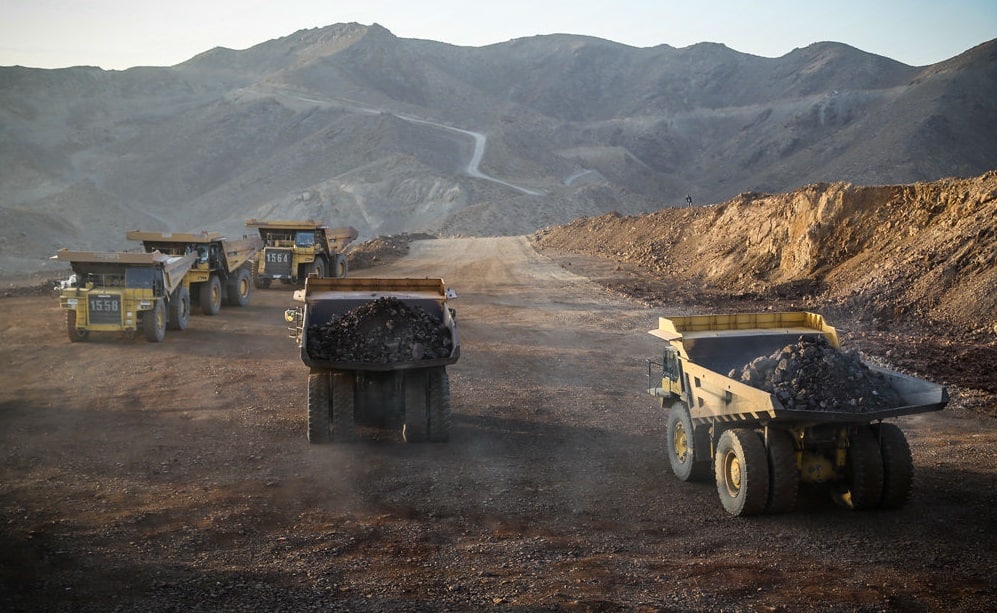
Atotal of 31.08 million tons of minerals and mining products worth $7.06 billion were exported from Iran in the current fiscal year’s first seven months (March 21-Oct. 22).
According to the Iranian Mines and Mining Industries Development and Renovation Organization, this registered a 9% and 105% year-on-year growth in weight and value respectively.
Steel and related products topped the list of exports in terms of value with $4.05 billion, followed by copper and related products with $967.35 million and aluminum and related products with $390.06 million.
financialtribune.com/node/111538
@fintribune
Atotal of 31.08 million tons of minerals and mining products worth $7.06 billion were exported from Iran in the current fiscal year’s first seven months (March 21-Oct. 22).
According to the Iranian Mines and Mining Industries Development and Renovation Organization, this registered a 9% and 105% year-on-year growth in weight and value respectively.
Steel and related products topped the list of exports in terms of value with $4.05 billion, followed by copper and related products with $967.35 million and aluminum and related products with $390.06 million.
financialtribune.com/node/111538
@fintribune
Regulator Prepares New System for PSP Ratings
Shaparak Company, affiliated to the Central Bank of Iran and in charge of supervising the domestic payment network, is working on a new model for assessing and rating payment service providers (PSPs).
According to Kazem Dehqan, the company CEO, it is rethinking the existing system of rating PSPs. Two phases of the plan to develop the new model are finalized, the company's website quoted him as saying on Saturday.
"Unlike the existing system, wherein PSPs are ranked based on the total transactions and their collective value, the new approach incorporates a wider range of factors," he said, without providing details.
financialtribune.com/node/111550
@fintribune
Shaparak Company, affiliated to the Central Bank of Iran and in charge of supervising the domestic payment network, is working on a new model for assessing and rating payment service providers (PSPs).
According to Kazem Dehqan, the company CEO, it is rethinking the existing system of rating PSPs. Two phases of the plan to develop the new model are finalized, the company's website quoted him as saying on Saturday.
"Unlike the existing system, wherein PSPs are ranked based on the total transactions and their collective value, the new approach incorporates a wider range of factors," he said, without providing details.
financialtribune.com/node/111550
@fintribune
2022-23 Draft Budget Appears Promising for Crisis-Hit Bourse
A look at the government’s proposed budget for March 2022-23 shows if passed it should be propitious for the struggling stock market.
The budget draft seems advantageous for the bourse in six ways, according to a review by the Securities and Exchange News Agency.
Concerns about a possibility of higher prices of feedstock for petrochemical companies eased after it was reported that the government would continue with this year’s price list for feedstock that have a considerable bearing on margins of petrochemical firms and by extension on the share prices.
financialtribune.com/node/111551
@fintribune
A look at the government’s proposed budget for March 2022-23 shows if passed it should be propitious for the struggling stock market.
The budget draft seems advantageous for the bourse in six ways, according to a review by the Securities and Exchange News Agency.
Concerns about a possibility of higher prices of feedstock for petrochemical companies eased after it was reported that the government would continue with this year’s price list for feedstock that have a considerable bearing on margins of petrochemical firms and by extension on the share prices.
financialtribune.com/node/111551
@fintribune
NIORDC Revenues to Rise by $2b p.a.
A nationwide scheme to convert 1.2 million gasoline-powered public transport and commercial vehicles to compressed natural gas hybrids will help reduce gasoline consumption by 10 million liters per day, director of the National Iranian Oil Refining and Distribution Company said.
“Given the fact that Persian Gulf free-on-board gasoline prices stand at 60 cents per liter, the saved volume 10 million liters is expected to add $2 billion to NIORDC’s annual revenue,” Jalil Salari was also quoted as saying by the Oil Ministry’s news service.
Since the launch of the plan in 2020, about 200,000 vehicles have been retrofitted and the rest are on the waiting list, he added.
financialtribune.com/node/111535
@fintribune
A nationwide scheme to convert 1.2 million gasoline-powered public transport and commercial vehicles to compressed natural gas hybrids will help reduce gasoline consumption by 10 million liters per day, director of the National Iranian Oil Refining and Distribution Company said.
“Given the fact that Persian Gulf free-on-board gasoline prices stand at 60 cents per liter, the saved volume 10 million liters is expected to add $2 billion to NIORDC’s annual revenue,” Jalil Salari was also quoted as saying by the Oil Ministry’s news service.
Since the launch of the plan in 2020, about 200,000 vehicles have been retrofitted and the rest are on the waiting list, he added.
financialtribune.com/node/111535
@fintribune
50 Million Iranians Fully Vaccinated Against Covid
https://financialtribune.com/node/111554
@fintribune
https://financialtribune.com/node/111554
@fintribune
Gov’t to Allocate $3.4b to Offset Impact Of Non-Subsidized Forex on Food Import
The government has allocated 1,000 trillion rials ($3.4b) to help compensate the elimination of subsidized foreign currency in the 2022-23 budget.
Scrapping the controversial forex subsidies is one of the critical issues in the next budget submitted to the parliament by President Ebrahim Raisi on Sunday.
As per the bill, the government will give this amount “to offset price rises of basic goods, pharmaceuticals, bread and guaranteed-purchase of wheat”, local media reported.
financialtribune.com/node/111565
@fintribune
The government has allocated 1,000 trillion rials ($3.4b) to help compensate the elimination of subsidized foreign currency in the 2022-23 budget.
Scrapping the controversial forex subsidies is one of the critical issues in the next budget submitted to the parliament by President Ebrahim Raisi on Sunday.
As per the bill, the government will give this amount “to offset price rises of basic goods, pharmaceuticals, bread and guaranteed-purchase of wheat”, local media reported.
financialtribune.com/node/111565
@fintribune
Currency, Gold Trim Gains
Foreign currency and gold prices retreated from the recent highs on Sunday following some positive reports, particularly those related to reviving Iran’s nuclear deal.
The dollar dropped more than 1.3% or 4,000 rials in Tehran’s unofficial currency market, retreating to 301,500 rials. The greenback gained 3% last week to cross a 14-month high of 306,500 rials. It briefly touched the critical 310,000-rial.
Other currencies pared some the previous gains against the rial. The euro lost 1.5% or 5,090 rials to buy 342,930 rials and the UAE dirham followed shedding 1.3% to close at 82,300 rials. Likewise, the UK pound sterling bought 401,890 rials, down 1.48% or 5,970 rials on Saturday.
financialtribune.com/node/111564
@fintribune
Foreign currency and gold prices retreated from the recent highs on Sunday following some positive reports, particularly those related to reviving Iran’s nuclear deal.
The dollar dropped more than 1.3% or 4,000 rials in Tehran’s unofficial currency market, retreating to 301,500 rials. The greenback gained 3% last week to cross a 14-month high of 306,500 rials. It briefly touched the critical 310,000-rial.
Other currencies pared some the previous gains against the rial. The euro lost 1.5% or 5,090 rials to buy 342,930 rials and the UAE dirham followed shedding 1.3% to close at 82,300 rials. Likewise, the UK pound sterling bought 401,890 rials, down 1.48% or 5,970 rials on Saturday.
financialtribune.com/node/111564
@fintribune
Monthly Industrial PMI Exceeds 12% to Distance From Threshold
The Purchasing Managers’ Index for Iranian industries in the current fiscal year’s eighth month (Oct. 23-Nov. 21) settled at 57.11 from 50.83 in the preceding month (Sept. 23-Oct. 22), indicating a 12.35% increase, the Statistics and Economic Analysis Center of Iran Chamber of Commerce, Industries, Mines and Agriculture reported.
The PMI is locally known by its Farsi acronym Shamekh.
PMI is an indicator of economic health for manufacturing and services sectors. It provides information about current business conditions to companies’ decision-makers, analysts and purchasing managers.
financialtribune.com/node/111560
@fintribune
The Purchasing Managers’ Index for Iranian industries in the current fiscal year’s eighth month (Oct. 23-Nov. 21) settled at 57.11 from 50.83 in the preceding month (Sept. 23-Oct. 22), indicating a 12.35% increase, the Statistics and Economic Analysis Center of Iran Chamber of Commerce, Industries, Mines and Agriculture reported.
The PMI is locally known by its Farsi acronym Shamekh.
PMI is an indicator of economic health for manufacturing and services sectors. It provides information about current business conditions to companies’ decision-makers, analysts and purchasing managers.
financialtribune.com/node/111560
@fintribune
New Budget Bill in Parliament
President Ebrahim Raisi submitted the fiscal 2022-23 budget bill to the parliament on Sunday.
In the next fiscal year (starting March 21, 2022), the operating budget (including revenues derived mainly from taxation and exports at the disposal of the government) has been projected to stand at 13,720 trillion rials (about $45.73 billion at the market exchange rate of 300,000 rials per dollar).
Add to this, revenues earmarked for ministries and governmental institutions worth 1,332 trillion rials ($4.44 billion) take the total sum of the general budget to 15,052 trillion rials ($50.17 billion).
financialtribune.com/node/111570
@fintribune
President Ebrahim Raisi submitted the fiscal 2022-23 budget bill to the parliament on Sunday.
In the next fiscal year (starting March 21, 2022), the operating budget (including revenues derived mainly from taxation and exports at the disposal of the government) has been projected to stand at 13,720 trillion rials (about $45.73 billion at the market exchange rate of 300,000 rials per dollar).
Add to this, revenues earmarked for ministries and governmental institutions worth 1,332 trillion rials ($4.44 billion) take the total sum of the general budget to 15,052 trillion rials ($50.17 billion).
financialtribune.com/node/111570
@fintribune
Northern Ports’ Potential Remains Largely Untapped
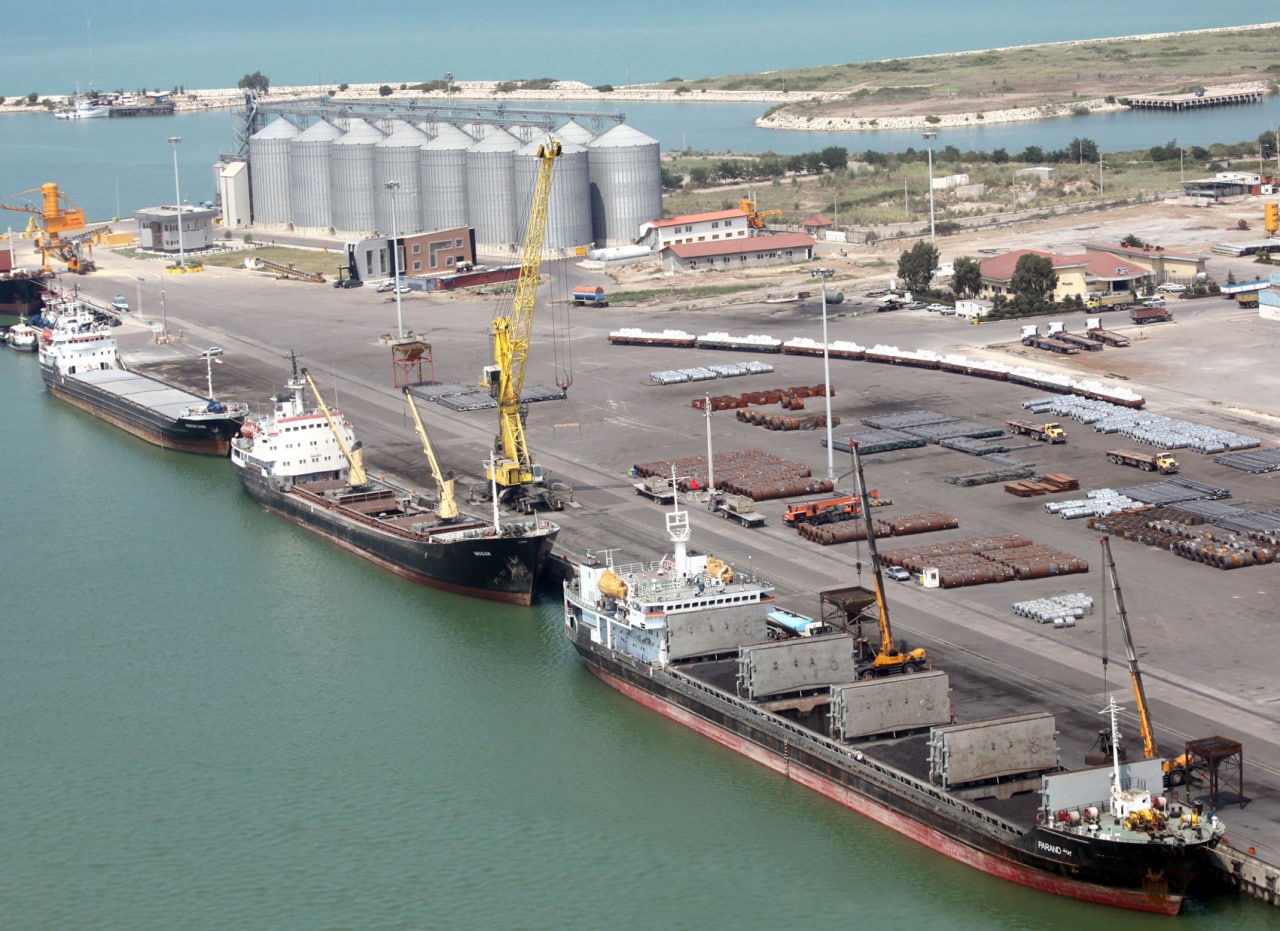
Poor export infrastructure and lack of equipment are to blame for low shipping traffic at Iran’s northern ports and freight forwarding companies.
The statement was made by Ali Chagharvand, director of Plan Management, Planning and Monitoring Department of Iran Chamber of Commerce, Industries, Mines and Agriculture, in a write-up for Tasnim News Agency. A translation of the full text follows:
Traders and transportation companies do not avail themselves of the numerous advantages of Iran’s northern ports. Simply put, northern Iranian ports are in recession.
financialtribune.com/node/111568
@fintribune
Poor export infrastructure and lack of equipment are to blame for low shipping traffic at Iran’s northern ports and freight forwarding companies.
The statement was made by Ali Chagharvand, director of Plan Management, Planning and Monitoring Department of Iran Chamber of Commerce, Industries, Mines and Agriculture, in a write-up for Tasnim News Agency. A translation of the full text follows:
Traders and transportation companies do not avail themselves of the numerous advantages of Iran’s northern ports. Simply put, northern Iranian ports are in recession.
financialtribune.com/node/111568
@fintribune
Water, Power Engineering Services Account for 60% of Techno Exports
The water and power sectors have made a positive contribution to exports of technical and engineering services in the past few years, the energy minister said.
“Water and electricity services account for almost 60% of Iran's total exports of technical and engineering services,” Ali Akbar Mehrabian was also quoted as saying by IRNA on Monday.
In 2016, water and power services made up 40% of engineering exports, which has now increased to 60% and is expected to rise further in the next two years, he added.
financialtribune.com/node/111577
@fintribune
The water and power sectors have made a positive contribution to exports of technical and engineering services in the past few years, the energy minister said.
“Water and electricity services account for almost 60% of Iran's total exports of technical and engineering services,” Ali Akbar Mehrabian was also quoted as saying by IRNA on Monday.
In 2016, water and power services made up 40% of engineering exports, which has now increased to 60% and is expected to rise further in the next two years, he added.
financialtribune.com/node/111577
@fintribune
New Budget Bill Expects $17.5 Billion in Tax Revenues
The government expects to earn 5,270 trillion rials ($17.5 billion) in tax revenues in the next fiscal year (March 2022-23).
The target is part of the budget bill submitted by President Ebrahim Raisi to the parliament on Dec. 12.
For the first time, the budget counts on taxing all owners of cars valued over 10 billion rials ($33,333) as well as owners of houses worth more than 100 billion rials ($333,333).
financialtribune.com/node/111590
@fintribune
The government expects to earn 5,270 trillion rials ($17.5 billion) in tax revenues in the next fiscal year (March 2022-23).
The target is part of the budget bill submitted by President Ebrahim Raisi to the parliament on Dec. 12.
For the first time, the budget counts on taxing all owners of cars valued over 10 billion rials ($33,333) as well as owners of houses worth more than 100 billion rials ($333,333).
financialtribune.com/node/111590
@fintribune
Wheat Imports Increase by 60% in Volume, 92% in Value
Wheat imports stood at 3.6 million tons worth $1.2 billion since the beginning of the current fiscal year on March 21, up until Nov. 6, registering a 60% rise in volume and 92% growth in value compared with the similar period of last year.
The grain, considered an essential good, is imported using subsidized foreign currency (at the rate of 42,000 rials per dollar), ISNA reported.
Also known as necessity goods, essential goods are products consumers will buy, regardless of changes in income levels.
financialtribune.com/node/111584
@fintribune
Wheat imports stood at 3.6 million tons worth $1.2 billion since the beginning of the current fiscal year on March 21, up until Nov. 6, registering a 60% rise in volume and 92% growth in value compared with the similar period of last year.
The grain, considered an essential good, is imported using subsidized foreign currency (at the rate of 42,000 rials per dollar), ISNA reported.
Also known as necessity goods, essential goods are products consumers will buy, regardless of changes in income levels.
financialtribune.com/node/111584
@fintribune
Fiscal 2020-21 Increase in Rental Housing Expenses Unprecedented
The share of housing in the Iranian households’ spending budget has reached an unprecedented high.
According to official statistics, households living in urban areas spent an average of 43% of their monthly expenses on rent in the Iranian year ending March 2021.
Tenants spent 28% of their living expenses on paying rents in the mid-2000s, one of the relatively calm periods in the rental market, given the 30% conventional share of housing costs in household expenditure.
financialtribune.com/node/111581
@fintribune
The share of housing in the Iranian households’ spending budget has reached an unprecedented high.
According to official statistics, households living in urban areas spent an average of 43% of their monthly expenses on rent in the Iranian year ending March 2021.
Tenants spent 28% of their living expenses on paying rents in the mid-2000s, one of the relatively calm periods in the rental market, given the 30% conventional share of housing costs in household expenditure.
financialtribune.com/node/111581
@fintribune
Iran's Export of Iron Products Gains Luster
The share of iron products in Iran’s total non-oil exports increased noticeably, says the spokesman of the Islamic Republic of Iran Customs Administration.
“With the growth in production and export of iron products, including semi-finished product, all kinds of rods, ingots, iron or steel plates, a total of $4.5 billion were exported during the current fiscal year’s first eight months March 21-Nov. 21 compared with last year’s corresponding period, to account for 14.5% of total exports worth $31 billion during the period,” Rouhollah Latifi was also quoted as saying by IRNA.
According to the official, 11.07 million tons worth $3.74 billion were exported in the fiscal 2020-21, of which 2.23 million tons worth $105.6 million constituted iron ore and related products, and 8.84 million tons worth $3.63 billion were iron and steel products.
financialtribune.com/node/111598
@fintribune
The share of iron products in Iran’s total non-oil exports increased noticeably, says the spokesman of the Islamic Republic of Iran Customs Administration.
“With the growth in production and export of iron products, including semi-finished product, all kinds of rods, ingots, iron or steel plates, a total of $4.5 billion were exported during the current fiscal year’s first eight months March 21-Nov. 21 compared with last year’s corresponding period, to account for 14.5% of total exports worth $31 billion during the period,” Rouhollah Latifi was also quoted as saying by IRNA.
According to the official, 11.07 million tons worth $3.74 billion were exported in the fiscal 2020-21, of which 2.23 million tons worth $105.6 million constituted iron ore and related products, and 8.84 million tons worth $3.63 billion were iron and steel products.
financialtribune.com/node/111598
@fintribune
Iranian Private Banks Resist Higher Interest Rates
Private banks and credit institutions are against increasing interest rates, the secretary of Iran's Private Banks and Credit Institutions Council said.
"Bank CEOs agreed to comply with rates set earlier by the Money and Credit Council. Some banks are already offering higher rates on term deposits. Further increases obviously will not benefit them," IBENA quoted Mohammad Reza Jamshidi as saying.
Last year the MCC allowed lenders to raise interest on term deposits, apparently to curb the scale and scope of money flooding into some financial markets and avoid further depreciation of the national currency.
financialtribune.com/node/111607
@fintribune
Private banks and credit institutions are against increasing interest rates, the secretary of Iran's Private Banks and Credit Institutions Council said.
"Bank CEOs agreed to comply with rates set earlier by the Money and Credit Council. Some banks are already offering higher rates on term deposits. Further increases obviously will not benefit them," IBENA quoted Mohammad Reza Jamshidi as saying.
Last year the MCC allowed lenders to raise interest on term deposits, apparently to curb the scale and scope of money flooding into some financial markets and avoid further depreciation of the national currency.
financialtribune.com/node/111607
@fintribune