
EGFI to Open 21 Offices to Boost Exports
The Export Guarantee Fund of Iran is planning to open 21 offices in the provinces to help address exporters’ increasing demand for guarantees.
"Provincial offices should ease the process of issuing export guarantees, register exporters and undertake the primary steps of issuing guarantees," Afrouz Bahrami, EGFI's head was quoted as saying during a meeting with members of Sistan-Balouchestan Chamber of Commerce, Industries, Mining and Agriculture on Thursday.
bit.ly/3hQSP9N
@fintribune
The Export Guarantee Fund of Iran is planning to open 21 offices in the provinces to help address exporters’ increasing demand for guarantees.
"Provincial offices should ease the process of issuing export guarantees, register exporters and undertake the primary steps of issuing guarantees," Afrouz Bahrami, EGFI's head was quoted as saying during a meeting with members of Sistan-Balouchestan Chamber of Commerce, Industries, Mining and Agriculture on Thursday.
bit.ly/3hQSP9N
@fintribune
Impact of Fiat Money
Expansion of monetary growth has again been blamed on the Central Bank of Iran’s obligation to purchase forex from the National Development Fund of Iran and settle the payment in rials, an “ill-advised method” the CBI governor says is tantamount to over borrowing from the bank at a time when NDFI currency resources at best are inaccessible.
In a note on his social media account, Abdolnasser Hemmati wrote the CBI buying currency from the NDFI to fund budget deficits at the time of tough economic and banking sanctions is like “funding the budget via expanding monetary base”.
“This method in the short-term is tantamount to borrowing from the central bank,” he wrote, adding that “the CBI communicated its (frank) opinion about the possible adverse impact of this method of budget financing”.
bit.ly/316KEiF
@fintribune
Expansion of monetary growth has again been blamed on the Central Bank of Iran’s obligation to purchase forex from the National Development Fund of Iran and settle the payment in rials, an “ill-advised method” the CBI governor says is tantamount to over borrowing from the bank at a time when NDFI currency resources at best are inaccessible.
In a note on his social media account, Abdolnasser Hemmati wrote the CBI buying currency from the NDFI to fund budget deficits at the time of tough economic and banking sanctions is like “funding the budget via expanding monetary base”.
“This method in the short-term is tantamount to borrowing from the central bank,” he wrote, adding that “the CBI communicated its (frank) opinion about the possible adverse impact of this method of budget financing”.
bit.ly/316KEiF
@fintribune
Five Industrial Projects Worth $237m Come on Stream
Five industrial projects worth 56 trillion rials ($237 million) were inaugurated in three provinces by President Hassan Rouhani via videoconference meetings on Thursday.
The inaugurations are part of the government's plan to launch 200 industrial, mining and trade projects worth 1.69 quadrillion rials ($7 billion) across the country by the end of the current fiscal year (March 20, 2021), creating 41,000 new jobs along the way, the Ministry of Industries, Mining and Trade's official news service Shata reported.
One of the newly-inaugurated projects is a medium-density fiberboard plant owned by Arian Shimi Factory in Amirabad Port’s Special Economic Zone, located in northern Mazandaran Province.
bit.ly/2D5uoqk
@fintirbune
Five industrial projects worth 56 trillion rials ($237 million) were inaugurated in three provinces by President Hassan Rouhani via videoconference meetings on Thursday.
The inaugurations are part of the government's plan to launch 200 industrial, mining and trade projects worth 1.69 quadrillion rials ($7 billion) across the country by the end of the current fiscal year (March 20, 2021), creating 41,000 new jobs along the way, the Ministry of Industries, Mining and Trade's official news service Shata reported.
One of the newly-inaugurated projects is a medium-density fiberboard plant owned by Arian Shimi Factory in Amirabad Port’s Special Economic Zone, located in northern Mazandaran Province.
bit.ly/2D5uoqk
@fintirbune
Services PPI Inflation at 27.6% in Q1
The average Producer Price Index for the services sector in the four-quarter period ending June 20 increased by 27.6% compared with the same period of last year, according to the latest data released by the Statistical Center of Iran.
The sector’s average PPI for the four-quarter period to March 19, marking the end of Q4 of last Iranian year, had increased by 29% year-on-year.
The overall PPI for the services sector (using 2011 as the base year) stood at 440.3 in the first quarter of the current fiscal year (March 20-June 20), indicating a 6.7% increase compared with the preceding quarter and a 26.6% rise compared with last year's same quarter.
Services PPI is based on the indexes of eight subsectors, namely “repairing motor vehicles, motorcycles and home devices” with a coefficient of 2.5%, “hotels and restaurants” with the coefficient of 4.8%, “transportation, warehouse services and communications” with a coefficient of 29.6%, “brokerage (insurance) services” with a coefficient of 1.9%, “real estate, renting and business” with a coefficient of 39%, “education” with a coefficient of 12.3%, “health services and social work” with a coefficient of 5.8%, and “other public, social and personal services” with a coefficient of 4.1%.
bit.ly/3gjFB4V
@fintribune
The average Producer Price Index for the services sector in the four-quarter period ending June 20 increased by 27.6% compared with the same period of last year, according to the latest data released by the Statistical Center of Iran.
The sector’s average PPI for the four-quarter period to March 19, marking the end of Q4 of last Iranian year, had increased by 29% year-on-year.
The overall PPI for the services sector (using 2011 as the base year) stood at 440.3 in the first quarter of the current fiscal year (March 20-June 20), indicating a 6.7% increase compared with the preceding quarter and a 26.6% rise compared with last year's same quarter.
Services PPI is based on the indexes of eight subsectors, namely “repairing motor vehicles, motorcycles and home devices” with a coefficient of 2.5%, “hotels and restaurants” with the coefficient of 4.8%, “transportation, warehouse services and communications” with a coefficient of 29.6%, “brokerage (insurance) services” with a coefficient of 1.9%, “real estate, renting and business” with a coefficient of 39%, “education” with a coefficient of 12.3%, “health services and social work” with a coefficient of 5.8%, and “other public, social and personal services” with a coefficient of 4.1%.
bit.ly/3gjFB4V
@fintribune
Most Stocks Rise Again in Tehran Market
Tehran’s stock market moved higher at the start of trading week on Saturday as investors’ attention shifted again toward giants in the market.
The benchmark of Tehran Stock Exchange, TEDPIX, soared more than 57,325 points, or 3.01%, to close trade at 1,961,649.
Led by large-cap shares, shares of a broad range of smaller companies also gained pushing up the equal-weighted index to 2.16%.
financialtribune.com/node/104615
@fintribune
Tehran’s stock market moved higher at the start of trading week on Saturday as investors’ attention shifted again toward giants in the market.
The benchmark of Tehran Stock Exchange, TEDPIX, soared more than 57,325 points, or 3.01%, to close trade at 1,961,649.
Led by large-cap shares, shares of a broad range of smaller companies also gained pushing up the equal-weighted index to 2.16%.
financialtribune.com/node/104615
@fintribune
Iran Energy Minister: Hirmand Water Dispute Resolved
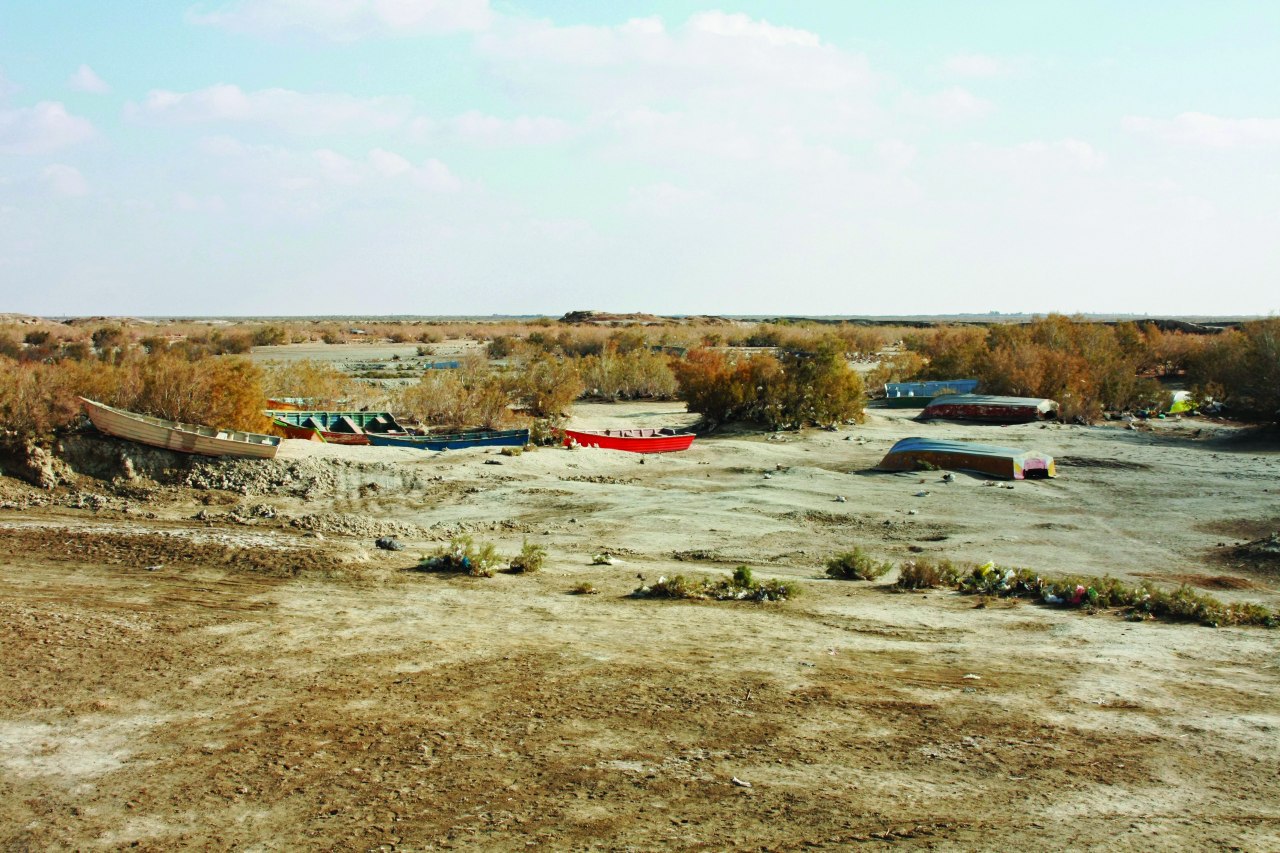
Since the beginning of the current water year (last September) Iran unlike previous years has been receiving its fair share of water from Hirmand (Helmand) River as per an agreement signed with Afghanistan in 1972, the energy minister said.
“As per the treaty, Iran is getting its share that will reach 800 million cubic meters by next September,” Reza Ardakanian was quoted as saying by ILNA on Saturday.
Following regular meetings in Tehran and Kabul since 2005 regarding Iran's water rights from the border river, the Afghan side accepted to pursue its water development projects on the shared basin in a way that will not harm Iran’s water share.
“Construction plans on the river should not restrict Iran's share of the joint basin under any circumstances,” the minister said.
Iran is saddled with severe water shortages in its southeastern regions bordering Afghanistan. A big part of the problem is linked directly Kabul respecting the 1972 agreement in the breach.
bit.ly/3hYCP5K
@fintribune
Since the beginning of the current water year (last September) Iran unlike previous years has been receiving its fair share of water from Hirmand (Helmand) River as per an agreement signed with Afghanistan in 1972, the energy minister said.
“As per the treaty, Iran is getting its share that will reach 800 million cubic meters by next September,” Reza Ardakanian was quoted as saying by ILNA on Saturday.
Following regular meetings in Tehran and Kabul since 2005 regarding Iran's water rights from the border river, the Afghan side accepted to pursue its water development projects on the shared basin in a way that will not harm Iran’s water share.
“Construction plans on the river should not restrict Iran's share of the joint basin under any circumstances,” the minister said.
Iran is saddled with severe water shortages in its southeastern regions bordering Afghanistan. A big part of the problem is linked directly Kabul respecting the 1972 agreement in the breach.
bit.ly/3hYCP5K
@fintribune
Iran's Q1 Rail Passenger Traffic Decreases by 84 Percent
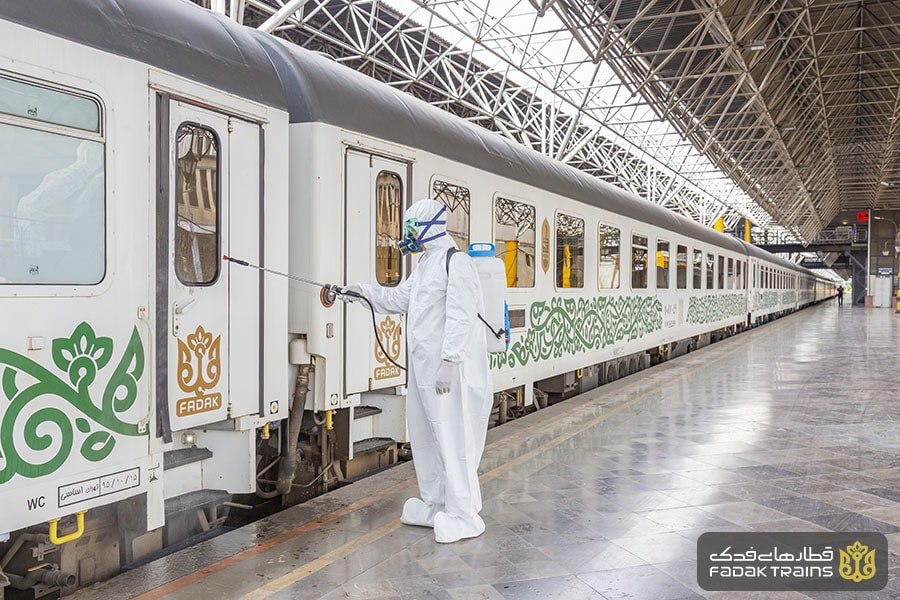
The coronavirus pandemic has dealt a heavy blow to the Iranian rail sector.
A total of 1.1 million passengers were transported by the Islamic Republic of Iran Railways in the first quarter of the current Iranian year (March 20-June 20), 84% lower than those in the corresponding period of last year (6.82 million).
The number of passengers transported by rail in Iran stood at 102,000 in the month ending April 19, 254,000 in the month ending May 20 and 750,000 in the month ending June 20, registering a 95%, 88% and 69% year-on-year declines respectively...
bit.ly/2PcCvUz
@fintribune
The coronavirus pandemic has dealt a heavy blow to the Iranian rail sector.
A total of 1.1 million passengers were transported by the Islamic Republic of Iran Railways in the first quarter of the current Iranian year (March 20-June 20), 84% lower than those in the corresponding period of last year (6.82 million).
The number of passengers transported by rail in Iran stood at 102,000 in the month ending April 19, 254,000 in the month ending May 20 and 750,000 in the month ending June 20, registering a 95%, 88% and 69% year-on-year declines respectively...
bit.ly/2PcCvUz
@fintribune
Iran's Trade With Turkey Normalizing
Iran’s trade with Turkey totaled $1.07 billion during January-June to register a decrease of 72.54% compared with the first half of 2019, data released by Turkish Statistical Institute show.
Iran exported $417.5 million worth of goods to Turkey during the six months under review to register an 84.64% year-on-year drop.
Imports stood at $652.19 million, down 44.63% YOY.
Bilateral trade amounted to $267.08 million in June to register an 11.81% decline compared to June 2019. Exports to Turkey accounted for $85.81 million of the figure, down 41.83% YOY, while Turkey’s exports to Iran stood at $181.26 million, down by 16.71% YOY.
Iran was Turkey’s 33rd biggest trading partner during the period.
bit.ly/39Qrf9Y
@fintribune
Iran’s trade with Turkey totaled $1.07 billion during January-June to register a decrease of 72.54% compared with the first half of 2019, data released by Turkish Statistical Institute show.
Iran exported $417.5 million worth of goods to Turkey during the six months under review to register an 84.64% year-on-year drop.
Imports stood at $652.19 million, down 44.63% YOY.
Bilateral trade amounted to $267.08 million in June to register an 11.81% decline compared to June 2019. Exports to Turkey accounted for $85.81 million of the figure, down 41.83% YOY, while Turkey’s exports to Iran stood at $181.26 million, down by 16.71% YOY.
Iran was Turkey’s 33rd biggest trading partner during the period.
bit.ly/39Qrf9Y
@fintribune
Tehran Share Market Strengthens
After getting near the milestone 2 million points for almost two weeks, the benchmark of Tehran Stock Exchange, TEDPIX, moved past the psychological level on Sunday.
TSE’s market-cap weighted TEDPIX, gained 2.54% on Sunday by adding 49,870 points to close at record high of 2,011,492.
Iran’s share market has been mostly in upbeat mode in the past four months driven by a combination of factors, the most important being the full support of the government in tandem with systematic efforts to encourage more investors to join the fast-pacing market.
financialtribune.com/node/104634
@fintribune
After getting near the milestone 2 million points for almost two weeks, the benchmark of Tehran Stock Exchange, TEDPIX, moved past the psychological level on Sunday.
TSE’s market-cap weighted TEDPIX, gained 2.54% on Sunday by adding 49,870 points to close at record high of 2,011,492.
Iran’s share market has been mostly in upbeat mode in the past four months driven by a combination of factors, the most important being the full support of the government in tandem with systematic efforts to encourage more investors to join the fast-pacing market.
financialtribune.com/node/104634
@fintribune
Iran's Non-Oil Foreign Trade Tops $19 Billion in Four Months
Iran’s non-oil foreign trade stood at $19.63 billion during the four months to July 21, of which exports accounted for $8.71 billion and imports constituted $10.92 billion, according to Rouhollah Latifi, the spokesman of the Islamic Republic of Iran Customs Administration.
The country posted a trade deficit of $2.21 billion over the first four months of the current fiscal year.
Noting that Iran traded over 42.07 million tons of non-oil goods during the four-month period, the official put the weight of exports and imports at 30.28 million tons and 11.79 million tons respectively, Fars News Agency reported.
“Compared with the corresponding period of last year March 21-July 22, 2019, exports and imports registered a 39% and 1% decline in weight and a 40% and 24% decrease in value, respectively,” he said.
bit.ly/39ORayv
@fintribune
Iran’s non-oil foreign trade stood at $19.63 billion during the four months to July 21, of which exports accounted for $8.71 billion and imports constituted $10.92 billion, according to Rouhollah Latifi, the spokesman of the Islamic Republic of Iran Customs Administration.
The country posted a trade deficit of $2.21 billion over the first four months of the current fiscal year.
Noting that Iran traded over 42.07 million tons of non-oil goods during the four-month period, the official put the weight of exports and imports at 30.28 million tons and 11.79 million tons respectively, Fars News Agency reported.
“Compared with the corresponding period of last year March 21-July 22, 2019, exports and imports registered a 39% and 1% decline in weight and a 40% and 24% decrease in value, respectively,” he said.
bit.ly/39ORayv
@fintribune
OECD: Iran's Steel Production Capacity to Rise 51% by 2022
The Organization for Economic Cooperation and Development has predicted Iran’s nominal annual crude steelmaking capacity to reach 54.4 million tons by 2022, an increase of 51% compared to the capacity level of 36 million tons registered by the end of 2019.
In a newly-released report, OECD has provided an overview of steelmaking capacity developments taking place around the world, providing an assessment of gross capacity additions that could come on stream from 2020 to 2022, based on information available until December 2019.
Reviewing developments in Iran, the report says a total of 2.8 million tons of steelmaking capacity came on stream in 2019.
bit.ly/3gpKp8Q
@fintribune
The Organization for Economic Cooperation and Development has predicted Iran’s nominal annual crude steelmaking capacity to reach 54.4 million tons by 2022, an increase of 51% compared to the capacity level of 36 million tons registered by the end of 2019.
In a newly-released report, OECD has provided an overview of steelmaking capacity developments taking place around the world, providing an assessment of gross capacity additions that could come on stream from 2020 to 2022, based on information available until December 2019.
Reviewing developments in Iran, the report says a total of 2.8 million tons of steelmaking capacity came on stream in 2019.
bit.ly/3gpKp8Q
@fintribune
Taming Inflation the Iran's CB Way
The Central Bank of Iran says the coronavirus pandemic, deepening budget deficit and disruption in foreign trade are largely responsible for pushing up consumer prices in recent months.
The bank released a statement on its website Sunday to inform public opinion about the root causes of galloping inflation and CBI measures to control it.
Covid-19 was a body blow to both aggregate demand and supply as the central bank was compelled to adopt an expansionary fiscal policy to stimulate the economy, it said.
https://bit.ly/2DueIN2
@fintribune
The Central Bank of Iran says the coronavirus pandemic, deepening budget deficit and disruption in foreign trade are largely responsible for pushing up consumer prices in recent months.
The bank released a statement on its website Sunday to inform public opinion about the root causes of galloping inflation and CBI measures to control it.
Covid-19 was a body blow to both aggregate demand and supply as the central bank was compelled to adopt an expansionary fiscal policy to stimulate the economy, it said.
https://bit.ly/2DueIN2
@fintribune
CSDI: 3.58 Million Trading Codes Issued in 4 Months
The benchmark of Tehran Stock Exchange, TEDPIX, lost 18,194 points on Monday drifting lower by 0.9% to retreat below the milestone 2,000,000 points seen on Sunday. It closed trading session at 1,993,330 points.
While sell-off hit majority of shares, the downturn for large-cap stocks was deeper as seen in the 0.19% drop in equal-weighted index and 2% loss for the TSE-30 index.
The former tracks all stocks irrespective of market cap and the latter focuses on shares of 30 large companies with the TSE.
financialtribune.com/node/104651
@fintribune
The benchmark of Tehran Stock Exchange, TEDPIX, lost 18,194 points on Monday drifting lower by 0.9% to retreat below the milestone 2,000,000 points seen on Sunday. It closed trading session at 1,993,330 points.
While sell-off hit majority of shares, the downturn for large-cap stocks was deeper as seen in the 0.19% drop in equal-weighted index and 2% loss for the TSE-30 index.
The former tracks all stocks irrespective of market cap and the latter focuses on shares of 30 large companies with the TSE.
financialtribune.com/node/104651
@fintribune