+ دور الترجمة بالمسلسل عظيم
أغلب المرات، ماريكو ما تترجم الكلام بشكل حرفي. تلكاها تغيّره بما يلائم عادات وثقافة كل لغة وبنفس الوقت دتشتغل بصفتها دبلوماسية ونص المرات تخفف من حدّة الكلام لما تترجمه.
أغلب المرات، ماريكو ما تترجم الكلام بشكل حرفي. تلكاها تغيّره بما يلائم عادات وثقافة كل لغة وبنفس الوقت دتشتغل بصفتها دبلوماسية ونص المرات تخفف من حدّة الكلام لما تترجمه.
0/0
+ دور الترجمة بالمسلسل عظيم أغلب المرات، ماريكو ما تترجم الكلام بشكل حرفي. تلكاها تغيّره بما يلائم عادات وثقافة كل لغة وبنفس الوقت دتشتغل بصفتها دبلوماسية ونص المرات تخفف من حدّة الكلام لما تترجمه.
Tbh, it beats the movie 'Arrival' in this aspect. And that movie was literally about translation.
Stoics and Epicureans. — The Epicurean seeks out the situation, the persons, and even the events that suit his extremely sensitive intellectual constitution; he forgoes the rest—that is, almost everything—because it would be too strong and heavy a diet. The Stoic, by contrast, trains himself to swallow stones and worms, glass shards and scorpions without nausea; he wants his stomach to be ultimately insensible to everything the chance of existence pours into him—he likes to act out his insensitivity before an invited audience, which is precisely what the Epicurean gladly eschews—for he has his ‘garden’! Stoicism may well be advisable for those with whom fate improvises and who live in violent times and depend on impulsive and changeable people. But someone who more or less expects fate to allow him to spin a long thread does well to take an Epicurean orientation; people engaged in work of the spirit have always done so! For it would be the loss of all losses, for them, to forfeit their subtle sensitivity in exchange for a hard Stoic skin with porcupine spines.
— The Joyful Science, aphorism 306
— The Joyful Science, aphorism 306
Stoicism is always required to balance an artistic sensibility
على مِثلِ ليلى يَقتُلُ المرءُ نَفسَه
وإنْ كنتُ من ليلى على اليأسِ طاويا
خَلِيلَيَّ إنْ ضَنُّوا بليلى فقَرِّبا
ليَ النعشَ والأكفانَ واستغفِرا ليا
— قيس بن الملوح
وإنْ كنتُ من ليلى على اليأسِ طاويا
خَلِيلَيَّ إنْ ضَنُّوا بليلى فقَرِّبا
ليَ النعشَ والأكفانَ واستغفِرا ليا
— قيس بن الملوح
What? The ultimate goal of science is to create the most pleasure possible to man, and the least possible pain? But what if pleasure and pain should be so closely connected that he who wants the greatest possible amount of the one must also have the greatest possible amount of the other, that he who wants to experience the "heavenly high jubilation," must also be ready to be "sorrowful unto death"?
— The Joyful Science
— The Joyful Science
Life is difficult. This is a great truth, one of the greatest truths. Most do not fully see this truth. Instead they moan more or less incessantly, noisily or subtly, about the enormity of their problems, their burdens, and their difficulties as if life were generally easy, as if life should be easy.
— The Road Less Traveled, by M. Scott Peck
— The Road Less Traveled, by M. Scott Peck
Neurosis is always a substitute for legitimate suffering.
— Carl Jung
— Carl Jung
Forwarded from a hook into an eye
“And what is the use of a book, thought Alice, "without pictures or conversations?”
**
“Narrative medicine” is a branch of medicine that deals with narrative competence. Narrative competence is defined by Rita Charon as, “the ability to acknowledge, absorb, interpret, and act on the stories and plights of others”. Though primarily defined to improve the doctor-patient relationship, a “good story” or a narration is also a powerful and effective way of learning medicine.
It is well known, that “stories” and “art” help a person remember better compared to plain text. The famous idiom:
has stood the test of time. We have modified this adage to say:
**
“Narrative medicine” is a branch of medicine that deals with narrative competence. Narrative competence is defined by Rita Charon as, “the ability to acknowledge, absorb, interpret, and act on the stories and plights of others”. Though primarily defined to improve the doctor-patient relationship, a “good story” or a narration is also a powerful and effective way of learning medicine.
It is well known, that “stories” and “art” help a person remember better compared to plain text. The famous idiom:
A picture is worth a thousand words
has stood the test of time. We have modified this adage to say:
A story is worth a thousand pages of a text
The “naïve realism” of any healthy person who has not been an inmate of a lunatic asylum or a pupil of the idealist philosophers consists in the view that things, the environment, the world, exist independently of our sensation, of our consciousness, of our self and of man in general.
Our sensation, our consciousness is only an image of the external world, and it is obvious that an image cannot exist without the thing imaged, and that the latter exists independently of that which images it. Materialism deliberately makes the “naïve” belief of mankind the foundation of its theory of knowledge.
— Materialism and Empirio-criticism, by Vladimir Lenin
Our sensation, our consciousness is only an image of the external world, and it is obvious that an image cannot exist without the thing imaged, and that the latter exists independently of that which images it. Materialism deliberately makes the “naïve” belief of mankind the foundation of its theory of knowledge.
— Materialism and Empirio-criticism, by Vladimir Lenin
0/0
Photo
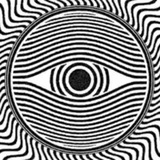
Perceptual (especially visual) illusions are often used to prove the fallibility of our senses and how unreliable they are in our search for the truth. But the very fact that we address them as "illusions" indicates our ability to recognize that there's something more truthful beyond this illusion; in other words, since we're able to perceive both the illusory aspect of these visual illusions and then, after some effort, we can also see the so-called "reality" of it, this tells us that the so-called "illusion" is not merely a veil or a distraction. Rather, it's a fundamental trait and an aspect of the very thing being perceived; a different face, another point of view of the thing.