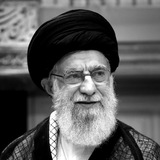
🇮🇶 Breaking — His Excellency Ayatullah Javadi Amoli (H) has arrived at the residence of His Eminence Ayatullah Sayyid Ali Husayni Sistani (H) in Najaf.
The meeting between the two senior scholars is currently underway.
🔹@enemywatch
The meeting between the two senior scholars is currently underway.
🔹@enemywatch
❤44
Forwarded from NEW WORLD ORDYR 313 (0 EIE)
🇮🇷🇱🇧 | Iran performed performed 1,260 successful surgeries for injured loved ones from the terrorist pagers attack
The head of the Iranian Red Crescent Society at the ceremony commemorating Red Crescent Week, Pir-Hossein Kolivand:
🔸 If Pakistan had a flood, if Syria or Morocco had an earthquake, etc., we would have been the first countries to be present.
🔸 We were among the first and most effective countries to provide aid and relief to neighboring countries.
🔸In the atrocity of Operation Pagers in Lebanon, where there were 3,000 wounded, 700 of whom were in critical condition, we performed 1,260 surgeries on these loved ones without a single delayed or unsuccessful operation.
🟡 @NEWWORLDORDYR
The head of the Iranian Red Crescent Society at the ceremony commemorating Red Crescent Week, Pir-Hossein Kolivand:
🔸 If Pakistan had a flood, if Syria or Morocco had an earthquake, etc., we would have been the first countries to be present.
🔸 We were among the first and most effective countries to provide aid and relief to neighboring countries.
🔸In the atrocity of Operation Pagers in Lebanon, where there were 3,000 wounded, 700 of whom were in critical condition, we performed 1,260 surgeries on these loved ones without a single delayed or unsuccessful operation.
Please open Telegram to view this post
VIEW IN TELEGRAM
❤44🙏7🤝1
✅ | It was a test: (1/2):
The recent fight between India and Pakistan appears to have been more than just a border skirmish—it seems to have been a calculated test. [by whom?]. India launched aggression against Pakistan under the pretext of avenging the Pahalgam attack, an incident which was neither conclusively proven nor fully denied by Pakistan. While Pakistan has provided some statements claiming non-involvement, India insists that elements connected to the attack have links within Pakistan—citing the presence of militant infrastructure and training camps.
Despite the outbreak of hostilities, there are signs that this was not a spontaneous conflict but rather a carefully monitored exercise, with the United States playing both sides. On one hand, the U.S. appeared to be encouraging India’s aggressive stance, while on the other, it maintained influence over Pakistan as well. This suggests the confrontation may have been orchestrated—or at least exploited—by the U.S. and its allies as a strategic test. The aim: to gauge how such a conflict might unfold in the region and assess the capabilities of each side, particularly Pakistan’s, which until now had remained largely undisclosed.
This test was not just about India and Pakistan. It had broader implications, especially for China. The U.S. likely wanted to observe how regional instability could be triggered and managed, possibly in preparation for future conflicts involving China. Meanwhile, anti-Pakistan and more than that; the Islamophobe rhetoric in India—has emboldened the Hindutva regime, which aligns ideologically with global Zionist interests.
Pakistan’s retaliatory actions, though justifiable under the right to self-defense, also played into the broader geopolitical strategy of external powers. While both India and Pakistan have the sovereign right to manage their own affairs, continued manipulation by external actors—especially the U.S.—will only deepen regional instability. Both nations are well aware of America’s real intentions, yet continue to act as pawns in its strategic game. This dependency is dangerous and unsustainable.
Beyond the surface, this confrontation was also a test—an experiment in how a larger war might unfold. The United States has long positioned itself as the orchestrator of such proxy matches. Its fingerprints are visible behind many layers of this crisis, directly and indirectly.
What we are witnessing is not just a bilateral dispute—it’s a multi-tiered arms and influence network. Turkey has supplied weapons to both Israel and Pakistan. Israel, in turn, has transferred weapons to India. Meanwhile, India has reportedly sent weapons to Turkey to be rebranded and sold in the Israeli market. This circular arms trade reveals a deeply entangled and cynical web of military commerce. These deals are not isolated transactions—they are part of a broader power game in which economic interests, strategic alliances, and ideological manipulation all intersect.
This is not only morally bankrupt but also geopolitically dangerous. The same actors supplying weapons to both sides of a conflict are essentially feeding the fire they pretend to extinguish. The Turkey-Israel relationship, despite public friction, continues to function smoothly behind closed doors when it comes to arms and trade. What emerges is a global arms ecosystem exploiting regional fault lines.
China is also clearly in the crosshairs. The U.S. wants to send a clear signal to Beijing: “We’re closer than you think.” By using Kashmir as a geopolitical bait, Washington hopes to provoke renewed Indian aggression toward Pakistani-controlled Kashmir (Azad Kashmir), prompting a retaliation from Pakistan. This dogfight, once unleashed, would not remain local—it would serve broader strategic aims, destabilizing China’s neighborhood while justifying increased U.S. military presence in the region.
🔹@enemywatch
The recent fight between India and Pakistan appears to have been more than just a border skirmish—it seems to have been a calculated test. [by whom?]. India launched aggression against Pakistan under the pretext of avenging the Pahalgam attack, an incident which was neither conclusively proven nor fully denied by Pakistan. While Pakistan has provided some statements claiming non-involvement, India insists that elements connected to the attack have links within Pakistan—citing the presence of militant infrastructure and training camps.
Despite the outbreak of hostilities, there are signs that this was not a spontaneous conflict but rather a carefully monitored exercise, with the United States playing both sides. On one hand, the U.S. appeared to be encouraging India’s aggressive stance, while on the other, it maintained influence over Pakistan as well. This suggests the confrontation may have been orchestrated—or at least exploited—by the U.S. and its allies as a strategic test. The aim: to gauge how such a conflict might unfold in the region and assess the capabilities of each side, particularly Pakistan’s, which until now had remained largely undisclosed.
This test was not just about India and Pakistan. It had broader implications, especially for China. The U.S. likely wanted to observe how regional instability could be triggered and managed, possibly in preparation for future conflicts involving China. Meanwhile, anti-Pakistan and more than that; the Islamophobe rhetoric in India—has emboldened the Hindutva regime, which aligns ideologically with global Zionist interests.
Pakistan’s retaliatory actions, though justifiable under the right to self-defense, also played into the broader geopolitical strategy of external powers. While both India and Pakistan have the sovereign right to manage their own affairs, continued manipulation by external actors—especially the U.S.—will only deepen regional instability. Both nations are well aware of America’s real intentions, yet continue to act as pawns in its strategic game. This dependency is dangerous and unsustainable.
Beyond the surface, this confrontation was also a test—an experiment in how a larger war might unfold. The United States has long positioned itself as the orchestrator of such proxy matches. Its fingerprints are visible behind many layers of this crisis, directly and indirectly.
What we are witnessing is not just a bilateral dispute—it’s a multi-tiered arms and influence network. Turkey has supplied weapons to both Israel and Pakistan. Israel, in turn, has transferred weapons to India. Meanwhile, India has reportedly sent weapons to Turkey to be rebranded and sold in the Israeli market. This circular arms trade reveals a deeply entangled and cynical web of military commerce. These deals are not isolated transactions—they are part of a broader power game in which economic interests, strategic alliances, and ideological manipulation all intersect.
This is not only morally bankrupt but also geopolitically dangerous. The same actors supplying weapons to both sides of a conflict are essentially feeding the fire they pretend to extinguish. The Turkey-Israel relationship, despite public friction, continues to function smoothly behind closed doors when it comes to arms and trade. What emerges is a global arms ecosystem exploiting regional fault lines.
China is also clearly in the crosshairs. The U.S. wants to send a clear signal to Beijing: “We’re closer than you think.” By using Kashmir as a geopolitical bait, Washington hopes to provoke renewed Indian aggression toward Pakistani-controlled Kashmir (Azad Kashmir), prompting a retaliation from Pakistan. This dogfight, once unleashed, would not remain local—it would serve broader strategic aims, destabilizing China’s neighborhood while justifying increased U.S. military presence in the region.
🔹@enemywatch
😡18
Enemy Watch — Official
✅ | It was a test: (1/2): The recent fight between India and Pakistan appears to have been more than just a border skirmish—it seems to have been a calculated test. [by whom?]. India launched aggression against Pakistan under the pretext of avenging the Pahalgam…
+
(2/2):
If you think Pakistan naming its strategic defense operation with a Qur’anic term somehow places it in the same category as Hezbollah’s resistance battles, you are deeply mistaken. These cannot and should not be compared. Hezbollah’s military actions are rooted in a long-standing, grassroots resistance against occupation and aggression, carried out with ideological clarity and independent purpose. Pakistan’s military, by contrast, operates under a very different structure, and more importantly, under influences that are often far from transparent.
To assume that this is a noble, righteous defense of Pakistan—simply because of the symbolic name—is dangerously naive. We must remember who the Pakistani military is, under whose command structures it functions, and whose strategic interests it often ends up serving. It is misleading to view this as a purely nationalist or religious effort. There are deeper forces at play, both regional and global, and they must not be ignored.
While there is a moral and religious imperative to support a nation in times of genuine turmoil, this support must not come blindly. Every Pakistani citizen must ask: Who is really calling the shots? Who benefits from this conflict? Who arms it, and who justifies it?
Patriotism, nationalism, and emotional appeals to Islamic defense must not cloud our judgment. To paint this conflict with the same brush as traditional India-Pakistan tensions, without investigating the larger game being played, is not just irresponsible—it is dangerous.
Nationalism, religion, regionalism, caste, and communal identities are all being weaponized—by both state and non-state actors—to stir populations into taking sides. But those caught in the wave must ask: Whose game are we playing?
If an Indian Muslim finds themselves celebrating aggression against Pakistan in the name of nationalism, or if a Pakistani citizen views this as a divine battle without questioning who is pulling the strings, both are playing into a long, destructive drama choreographed elsewhere.
It is critical for both Indians and Pakistanis to remain aware and alert. This isn’t just about territory. It’s about strategy, arms markets, and a dangerous global chessboard in which both nations risk becoming pawns.
🔹@enemywatch
(2/2):
If you think Pakistan naming its strategic defense operation with a Qur’anic term somehow places it in the same category as Hezbollah’s resistance battles, you are deeply mistaken. These cannot and should not be compared. Hezbollah’s military actions are rooted in a long-standing, grassroots resistance against occupation and aggression, carried out with ideological clarity and independent purpose. Pakistan’s military, by contrast, operates under a very different structure, and more importantly, under influences that are often far from transparent.
To assume that this is a noble, righteous defense of Pakistan—simply because of the symbolic name—is dangerously naive. We must remember who the Pakistani military is, under whose command structures it functions, and whose strategic interests it often ends up serving. It is misleading to view this as a purely nationalist or religious effort. There are deeper forces at play, both regional and global, and they must not be ignored.
While there is a moral and religious imperative to support a nation in times of genuine turmoil, this support must not come blindly. Every Pakistani citizen must ask: Who is really calling the shots? Who benefits from this conflict? Who arms it, and who justifies it?
Patriotism, nationalism, and emotional appeals to Islamic defense must not cloud our judgment. To paint this conflict with the same brush as traditional India-Pakistan tensions, without investigating the larger game being played, is not just irresponsible—it is dangerous.
Nationalism, religion, regionalism, caste, and communal identities are all being weaponized—by both state and non-state actors—to stir populations into taking sides. But those caught in the wave must ask: Whose game are we playing?
If an Indian Muslim finds themselves celebrating aggression against Pakistan in the name of nationalism, or if a Pakistani citizen views this as a divine battle without questioning who is pulling the strings, both are playing into a long, destructive drama choreographed elsewhere.
It is critical for both Indians and Pakistanis to remain aware and alert. This isn’t just about territory. It’s about strategy, arms markets, and a dangerous global chessboard in which both nations risk becoming pawns.
🔹@enemywatch
💯31❤1
Enemy Watch — Official
✅ | It was a test: (1/2): The recent fight between India and Pakistan appears to have been more than just a border skirmish—it seems to have been a calculated test. [by whom?]. India launched aggression against Pakistan under the pretext of avenging the Pahalgam…
❎ | Modi’s recent statement and the tone of his public address strongly suggest that he is attempting to trigger an escalation by blaming a pre-fabricated Pakistani “terrorist” attack. This narrative appears coordinated and deliberate; it was a test, and they intend to repeat it. It’s not just India operating alone. The entire U.S. security establishment is closely aligned with both the Indian government and the Pakistani military. On one side, the Americans and Israelis are sitting with India, feeding its aggressive posture. On the other, the U.S. continues its deep engagement with the Pakistani army, backing it to fight war.
🔹@enemywatch
🔹@enemywatch
💯25❤1
🇮🇶 Breaking: Ayatullah Javadi Amoli (H) has met with Ayatullah Sayyid Ali Sistani (H) — may Allah prolong their noble lives.
This rare and significant meeting between two of the most senior Marajiʿ highlights continued scholarly unity in the region.
🔹@enemywatch
This rare and significant meeting between two of the most senior Marajiʿ highlights continued scholarly unity in the region.
🔹@enemywatch
❤45
☑️ | Don’t take the India-Pakistan conflict lightly this isn’t meme material or some form of sadistic entertainment. It’s a grim, unfolding catastrophe with the potential to unleash widespread destruction, unbearable suffering, famine, and chaos on both sides. What lies ahead isn’t a spectacle; it’s a humanitarian disaster in waiting. And in moments like these, even lalochezia; the urge to curse just to release pain feels useless against the scale of what’s coming.
🔹@enemywatch
🔹@enemywatch
💯28
This media is not supported in your browser
VIEW IN TELEGRAM
✅ | The virus is now stepping closer to reaching Saudi Arabia. All eyes are on the treacherous and stinging implications of Trump’s visit to the Kingdom — a moment heavy with betrayal and geopolitical foulness.
🔹@enemywatch
🔹@enemywatch
💯45😡1
🇵🇸 Breaking — The fire belt is attacking Gaza now. At least 40 have been martyred today, with dozens more injured. Entire neighborhoods are being reduced to ash — much of the horror is unfolding off-camera and unheard.
🔹@enemywatch
🔹@enemywatch
😡40😭11💔9
🇾🇪 Breaking — A U.S. MQ-9 Reaper drone has been downed over Saada province, northern Yemen.
🔹@enemywatch
🔹@enemywatch
❤45🔥17🙏2
Enemy Watch — Official
+ 🟩 Report: Recent Operations: (-8 May): 1) Al-Qassam Brigades Operations: 1. Targeting of Zionist Engineering Force – Al-Tanwar, East Rafah • A 12-member Zionist engineering unit was preparing a bombing operation inside a house near Al-Fadai Junction.…
+
🟩 Report: Recent Operations: (-13 May):
1. Operation in Shuja’iyya – Coordinated Ground Ambush
A field commander in Saraya al-Quds confirmed that at exactly 12:45 AM on Saturday, their fighters launched a targeted operation east of the Shuja’iyya neighborhood in Gaza City. The operation began by luring Zionist forces into a trap using an anti-armor missile that struck a military vehicle, injuring several officers and soldiers. Shortly afterward, Israeli forces retaliated by shelling the area, and reinforcements from the “Quds Brigade” were sent in. These reinforcements were ambushed with a pre-positioned explosive device of the “Thaqib” type, leading to further Israeli casualties. Following the explosion, the mujahideen engaged the remaining forces with light and medium weapons while tactically withdrawing from the area. This complex, multi-phase ambush was carried out in honor of martyr Nour al-Bitawi, a prominent West Bank military commander.
2. Downing of Israeli Super Heron Drone – Gaza City
Saraya al-Quds also announced that its fighters successfully shot down an Israeli Super Heron drone while it was flying over Gaza City. The operation represents a significant step in the resistance’s ongoing attempts to neutralize enemy aerial surveillance and maintain airspace disruption in favor of ground operations.
🔹@enemywatch
🟩 Report: Recent Operations: (-13 May):
1. Operation in Shuja’iyya – Coordinated Ground Ambush
A field commander in Saraya al-Quds confirmed that at exactly 12:45 AM on Saturday, their fighters launched a targeted operation east of the Shuja’iyya neighborhood in Gaza City. The operation began by luring Zionist forces into a trap using an anti-armor missile that struck a military vehicle, injuring several officers and soldiers. Shortly afterward, Israeli forces retaliated by shelling the area, and reinforcements from the “Quds Brigade” were sent in. These reinforcements were ambushed with a pre-positioned explosive device of the “Thaqib” type, leading to further Israeli casualties. Following the explosion, the mujahideen engaged the remaining forces with light and medium weapons while tactically withdrawing from the area. This complex, multi-phase ambush was carried out in honor of martyr Nour al-Bitawi, a prominent West Bank military commander.
2. Downing of Israeli Super Heron Drone – Gaza City
Saraya al-Quds also announced that its fighters successfully shot down an Israeli Super Heron drone while it was flying over Gaza City. The operation represents a significant step in the resistance’s ongoing attempts to neutralize enemy aerial surveillance and maintain airspace disruption in favor of ground operations.
🔹@enemywatch
🔥19❤1🕊1
Media is too big
VIEW IN TELEGRAM
🟡 | Hezbollah has published rare footage of its martyred commander, Sayyid Dhu al-Fiqar (r) — Mustafa Badr al-Din. A founding architect of the resistance, he played a critical role in shaping Hezbollah’s military doctrine and later supervised key operations in Syria. He was martyred in a blast near Damascus on May 12, 2016.
🔹@enemywatch
🔹@enemywatch
❤26🕊3
🇵🇸 Breaking — Prominent Palestinian journalist Hassan Aslih (r) has been martyred in an Israeli airstrike targeting Khan Yunis in the southern Gaza Strip.
Aslih, previously wounded in an Israeli strike on journalists’ tents at Nasser Hospital a month ago, was assassinated while undergoing treatment in his hospital bed — a deliberate attack on press and truth.
Hassan Aslih (r) was a respected voice of Gaza, known for his unwavering documentation of Israeli atrocities since the October 7 war. He played a pivotal role in exposing the suffering of Palestinians under siege, aligning firmly with the resistance axis, and echoing his support for Hezbollah, the Islamic Republic of Iran.
According to Gaza’s Government Information Office, Aslih’s martyrdom brings the number of journalists killed since October 7 to 215.
This was not a random strike — it was an execution of a voice that refused to be silenced.
🔹@enemywatch
Aslih, previously wounded in an Israeli strike on journalists’ tents at Nasser Hospital a month ago, was assassinated while undergoing treatment in his hospital bed — a deliberate attack on press and truth.
Hassan Aslih (r) was a respected voice of Gaza, known for his unwavering documentation of Israeli atrocities since the October 7 war. He played a pivotal role in exposing the suffering of Palestinians under siege, aligning firmly with the resistance axis, and echoing his support for Hezbollah, the Islamic Republic of Iran.
According to Gaza’s Government Information Office, Aslih’s martyrdom brings the number of journalists killed since October 7 to 215.
This was not a random strike — it was an execution of a voice that refused to be silenced.
🔹@enemywatch
💔31🙏1
🟨 Report — Speech of Hezbollah’s Deputy Secretary-General, His Eminence Shaykh Naim Qassim, on the Ninth Anniversary of the Martyrdom of Jihadi Commander Sayyed Mustafa Badreddine (r) – 12 May 2025. (1/9):
In the name of Allah, the Most Gracious, the Most Merciful.
Praise be to Allah, the Lord of the Worlds. And may peace and blessings be upon the noblest of creation—our master, our beloved, and our leader, Abu al-Qasim Muhammad—and upon his pure and immaculate household, his chosen righteous companions, and all the prophets and the righteous until the Day of Judgment.
Peace and mercy of Allah be upon you all.
We are now marking the ninth anniversary of the martyrdom of the great jihadi commander, Sayyid Mustafa Badreddine (Zulfaqar).
On this occasion, I extend both my condolences and congratulations to his noble family, to the people of the resistance, and to all the supporters who continue to embrace this mujahid and the mujahideen of the Islamic Resistance everywhere.
I also take this opportunity to offer my condolences for all the martyrs in occupied Palestine, in proud Lebanon, in blessed Yemen, in generous Iraq, in dignified Iran, and in every place where martyrs have fallen for the cause of resistance and its sacrifices.
Congratulations and condolences to all the beloved, to all the families, and to all those who stand by them.
Today, we will speak about Sayyid Mustafa Badreddine, the great jihadi commander, and also about the broader political situation.
Let me begin by speaking about the great jihadi figure. He was born in 1961, and when he was martyred in 2016, he was 55 years old.
With the blessed victory of the Islamic Revolution in 1979, he was among the most active participants in demonstrations and gatherings commemorating that victory, even though he was not yet seventeen years old.
When Grand Ayatollah Sayyed Muhammad Baqir al-Sadr—may Allah’s mercy be upon him—was martyred, he was among those who fought and confronted the Iraqi Ba’ath regime at the time, in defense, in retaliation, and in resistance. He was nineteen years old then.
In 1982, during the Israeli invasion, he was among the first to fight in Khaldeh, the gateway to Beirut. He was wounded at that time, and he was twenty-one years old. In other words, from his earliest youth, he occupied frontline positions—defending, resisting, and struggling for just causes, foremost among them the Palestinian cause and the confrontation with the Israeli enemy.
He was imprisoned in Kuwait between 1983 and 1990 for seven years, but he terrified his jailers more than they terrified him.
He was a direct military commander for Hezbollah from 1995 to 1999, for a period of four years. He was targeted during the “Grapes of Wrath” aggression in 1996, led the Ansariyeh operation in 1997, and personally supervised every step carried out by the mujahideen in that well-known operation.
He played a leading role in Syria for five years, overseeing the management of security and military operations there. He went to Syria for the sake of the resistance, in support of the resistance, and to reinforce its position. His presence there was not part of any internal conflict.
Today, we reaffirm that we want a united Syria for all its people—where they cooperate with one another and form their own leadership and government as they wish, with the participation of everyone, far from purges, revenge, and the targeting of Alawite, Druze, and Christian minorities, as is happening at the hands of some factions. We want Syria to be unified and cohesive.
We also strongly condemn the repeated Israeli aggression, and we have great hope in the proud, Arab, Islamic, heroic Syrian people—that they will prevent Israel from achieving its objectives in Syria.
🔹@enemywatch
+
In the name of Allah, the Most Gracious, the Most Merciful.
Praise be to Allah, the Lord of the Worlds. And may peace and blessings be upon the noblest of creation—our master, our beloved, and our leader, Abu al-Qasim Muhammad—and upon his pure and immaculate household, his chosen righteous companions, and all the prophets and the righteous until the Day of Judgment.
Peace and mercy of Allah be upon you all.
We are now marking the ninth anniversary of the martyrdom of the great jihadi commander, Sayyid Mustafa Badreddine (Zulfaqar).
On this occasion, I extend both my condolences and congratulations to his noble family, to the people of the resistance, and to all the supporters who continue to embrace this mujahid and the mujahideen of the Islamic Resistance everywhere.
I also take this opportunity to offer my condolences for all the martyrs in occupied Palestine, in proud Lebanon, in blessed Yemen, in generous Iraq, in dignified Iran, and in every place where martyrs have fallen for the cause of resistance and its sacrifices.
Congratulations and condolences to all the beloved, to all the families, and to all those who stand by them.
Today, we will speak about Sayyid Mustafa Badreddine, the great jihadi commander, and also about the broader political situation.
Let me begin by speaking about the great jihadi figure. He was born in 1961, and when he was martyred in 2016, he was 55 years old.
With the blessed victory of the Islamic Revolution in 1979, he was among the most active participants in demonstrations and gatherings commemorating that victory, even though he was not yet seventeen years old.
When Grand Ayatollah Sayyed Muhammad Baqir al-Sadr—may Allah’s mercy be upon him—was martyred, he was among those who fought and confronted the Iraqi Ba’ath regime at the time, in defense, in retaliation, and in resistance. He was nineteen years old then.
In 1982, during the Israeli invasion, he was among the first to fight in Khaldeh, the gateway to Beirut. He was wounded at that time, and he was twenty-one years old. In other words, from his earliest youth, he occupied frontline positions—defending, resisting, and struggling for just causes, foremost among them the Palestinian cause and the confrontation with the Israeli enemy.
He was imprisoned in Kuwait between 1983 and 1990 for seven years, but he terrified his jailers more than they terrified him.
He was a direct military commander for Hezbollah from 1995 to 1999, for a period of four years. He was targeted during the “Grapes of Wrath” aggression in 1996, led the Ansariyeh operation in 1997, and personally supervised every step carried out by the mujahideen in that well-known operation.
He played a leading role in Syria for five years, overseeing the management of security and military operations there. He went to Syria for the sake of the resistance, in support of the resistance, and to reinforce its position. His presence there was not part of any internal conflict.
Today, we reaffirm that we want a united Syria for all its people—where they cooperate with one another and form their own leadership and government as they wish, with the participation of everyone, far from purges, revenge, and the targeting of Alawite, Druze, and Christian minorities, as is happening at the hands of some factions. We want Syria to be unified and cohesive.
We also strongly condemn the repeated Israeli aggression, and we have great hope in the proud, Arab, Islamic, heroic Syrian people—that they will prevent Israel from achieving its objectives in Syria.
🔹@enemywatch
+
❤15🙏1