🔥Bet Crypto on World Cup 2022 Qatar with 1xBit🔥
🇦🇷Argentina - 2.79x
🇫🇷France - 2.78x
The day has come. Two football giants made it to the Final match of the World Cup 2022. The probability of the victory of each team is high.
Will France defend their champion title or will Argentina win the World Cup for the first time in many years?
🏆Take part in TICKET RUSH - collect tickets and win up to 0.5 BTC🏆
Promocode - CRYPTOCUSH
#1xBit #WorldCup2022 #Crypto
🇦🇷Argentina - 2.79x
🇫🇷France - 2.78x
The day has come. Two football giants made it to the Final match of the World Cup 2022. The probability of the victory of each team is high.
Will France defend their champion title or will Argentina win the World Cup for the first time in many years?
🏆Take part in TICKET RUSH - collect tickets and win up to 0.5 BTC🏆
Promocode - CRYPTOCUSH
#1xBit #WorldCup2022 #Crypto
Hi guys! 👋
Let's remember a few basic elements of the rules: 📖
🔹 The game has 10 levels that open gradually, according to the schedule. As you play, levels open from the lowest (cheapest) to the highest. Each level is a separate structure.
🔹The two players behind you will pay you 74% each. For participation in the level, YOU WILL RECEIVE 148% 🌠
🔹Payouts can be endless, but after each payout you need to activate the level again
🔹By missing the time to buy a level you will lose the pace of the game ☝️
🔹Your 100% deposit goes to higher players. 74% goes as main income to players above and 25% goes to their referrals.
For more information on the rules of the game, follow our web 🌐 and learn in detail in full.
Web | Channel | Chat | Twitter
Let's remember a few basic elements of the rules: 📖
🔹 The game has 10 levels that open gradually, according to the schedule. As you play, levels open from the lowest (cheapest) to the highest. Each level is a separate structure.
🔹The two players behind you will pay you 74% each. For participation in the level, YOU WILL RECEIVE 148% 🌠
🔹Payouts can be endless, but after each payout you need to activate the level again
🔹By missing the time to buy a level you will lose the pace of the game ☝️
🔹Your 100% deposit goes to higher players. 74% goes as main income to players above and 25% goes to their referrals.
For more information on the rules of the game, follow our web 🌐 and learn in detail in full.
Web | Channel | Chat | Twitter
National Bank of Kazakhstan Publishes Whitepaper for Digital Tenge
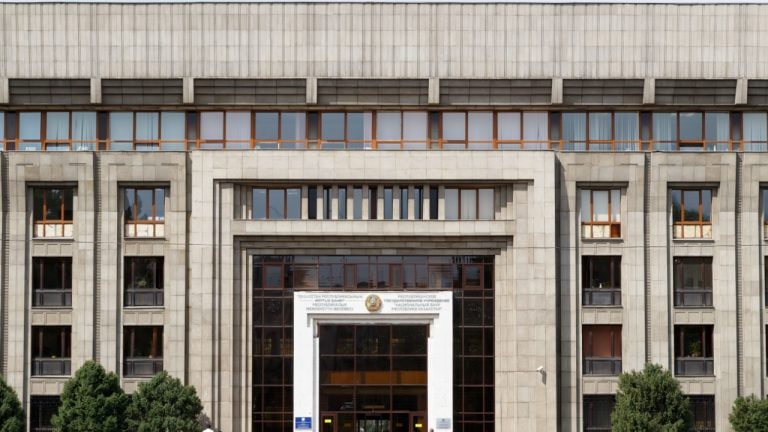
The central bank of Kazakhstan has completed the second phase of testing for its digital currency and published a whitepaper. The studies carried out by the regulator on its introduction did not identify significant risks for the country’s financial stability and economy.
The National Bank of Kazakhstan (NBK) has announced the successful completion of the second stage of testing of the platform for its central bank digital currency (CBDC). The results of the trials and the study on the need for the new version of the national fiat, the tenge, have been presented in a whitepaper published by the regulator.
The first phase of the pilot was conducted between July and December, 2021, when a prototype was developed to examine the viability of the CBDC concept, detailed an announcement, quoted by RBC Crypto. During the second stage, from January to December, 2022, the platform was fine-tuned and trials started with financial market players and users.
According to the bank, the research has confirmed that the digital tenge is a feasible project. Once introduced, the CBDC can increase the availability of financial services, including through a feature allowing offline transactions as well as the offering of new products and services. A survey among consumers indicated the majority would use the coin.
The third phase of implementation of the digital national currency will commence in January and continue throughout 2023. Next year, developers plan to introduce a solution for commercial use. During the fourth stage, which is scheduled to end in December 2025, the NBK will invite more participants and launch additional services.
In October, Binance founder and CEO Changpeng Zhao announced on Twitter that the NBK plans to use the Bnb Chain for the deployment of the digital tenge. The world’s largest crypto trading platform was granted license to operate as a provider of exchange and custody services for digital assets out of the Astana International Financial Center (AIFC), the country’s financial hub.
Authorities in Kazakhstan, which became a major mining hub since China cracked down on the industry in 2021, have been also working to more comprehensively regulate crypto-related activities. Earlier in December, the lower house of parliament, the Mazhilis, passed a dedicated bill which, besides mining, addresses crypto trading and taxation.
The central bank of Kazakhstan has completed the second phase of testing for its digital currency and published a whitepaper. The studies carried out by the regulator on its introduction did not identify significant risks for the country’s financial stability and economy.
The National Bank of Kazakhstan (NBK) has announced the successful completion of the second stage of testing of the platform for its central bank digital currency (CBDC). The results of the trials and the study on the need for the new version of the national fiat, the tenge, have been presented in a whitepaper published by the regulator.
The first phase of the pilot was conducted between July and December, 2021, when a prototype was developed to examine the viability of the CBDC concept, detailed an announcement, quoted by RBC Crypto. During the second stage, from January to December, 2022, the platform was fine-tuned and trials started with financial market players and users.
According to the bank, the research has confirmed that the digital tenge is a feasible project. Once introduced, the CBDC can increase the availability of financial services, including through a feature allowing offline transactions as well as the offering of new products and services. A survey among consumers indicated the majority would use the coin.
The third phase of implementation of the digital national currency will commence in January and continue throughout 2023. Next year, developers plan to introduce a solution for commercial use. During the fourth stage, which is scheduled to end in December 2025, the NBK will invite more participants and launch additional services.
In October, Binance founder and CEO Changpeng Zhao announced on Twitter that the NBK plans to use the Bnb Chain for the deployment of the digital tenge. The world’s largest crypto trading platform was granted license to operate as a provider of exchange and custody services for digital assets out of the Astana International Financial Center (AIFC), the country’s financial hub.
Authorities in Kazakhstan, which became a major mining hub since China cracked down on the industry in 2021, have been also working to more comprehensively regulate crypto-related activities. Earlier in December, the lower house of parliament, the Mazhilis, passed a dedicated bill which, besides mining, addresses crypto trading and taxation.
Payments Giant Visa Proposes Using Ethereum L2 Starknet to Bolster Auto Payments for Self-Custodial Wallets
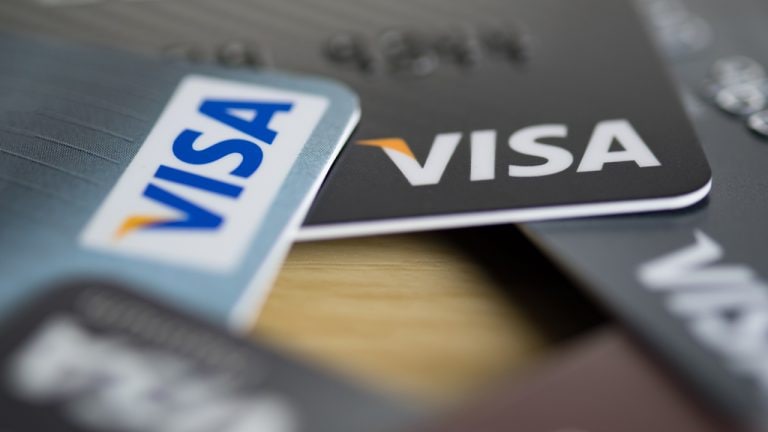
Visa, the financial services corporation headquartered in San Francisco, California, published a blog post that talks about leveraging ethereum and the layer two (L2) scaling solution Starknet so people with self-custodial wallets can pay their bills. The blog post notes that while Ethereum doesnt support account abstraction or delegable accounts, the financial services company implemented a delegable accounts solution on Starknet, the L2 blockchain network.
On Dec. 19, 2022, Visa’s Crypto Thought Leadership blog published a post written by Andrew Beams, Catherine Gu, Srini Raghuraman, Mohsen Minaei, and Ranjit Kumaresan. Visa’s subject brief is about “auto payments for self-custodial wallets,” and Visa shows that it is possible to leverage Ethereum to execute auto-payments from a self-custodial wallet solution. However, the concept utilizes account abstraction, a feature that Ethereum core developers are currently debating.
“Account abstraction (AA) is a proposal that attempts to combine user accounts and smart contracts into just one Ethereum account type by making user accounts function like smart contracts,” the Visa blog post details.
In order to bypass the issue that AA is currently not feasible using Ethereum’s layer one (L1), Visa crypto researchers have summarized how they can accomplish auto payments for self-custodial wallets with AA via the L2 scaling solution Starknet. “With Starknet’s account model, we were able to implement our delegable accounts solution thus enabling auto payments for self-custodial wallets,” Visa explained. The company’s blog post adds:
We see auto payments as a core functionality that existing blockchain infrastructure lacks.
The Visa blog post on the subject originally stems from a research paper that was published in Aug. 2022. The news follows Visa filing trademark applications at the end of Oct. 2022 and the trademarks covered a broad range of crypto products including a wallet. Being one of the world’s largest payment networks, Visa said the firm wants to help “make money and payments programmable.”
In addition to Visa, the second-largest payment-processing corporation worldwide and Visa’s competitor, Mastercard, is also working to make cryptocurrency solutions more accessible. During the first week of Nov. 2022, Mastercard said: “We’re welcoming a new cohort of startups to ease access to digital assets, build communities for creators and empower people to innovate for the future through Web3 technologies.”
Visa’s statements are akin to the same ideas and the auto-payments from a self-custodial wallet solution could provide a myriad of concepts. “We shared a novel solution that leverages the concept of account abstraction to provide self-custodial wallets with automatic recurring payments capability,” Visa’s blog post concludes. “Using the approach we have introduced, other real-world applications beyond recurring payments could be brought to the blockchain.”
Visa, the financial services corporation headquartered in San Francisco, California, published a blog post that talks about leveraging ethereum and the layer two (L2) scaling solution Starknet so people with self-custodial wallets can pay their bills. The blog post notes that while Ethereum doesnt support account abstraction or delegable accounts, the financial services company implemented a delegable accounts solution on Starknet, the L2 blockchain network.
On Dec. 19, 2022, Visa’s Crypto Thought Leadership blog published a post written by Andrew Beams, Catherine Gu, Srini Raghuraman, Mohsen Minaei, and Ranjit Kumaresan. Visa’s subject brief is about “auto payments for self-custodial wallets,” and Visa shows that it is possible to leverage Ethereum to execute auto-payments from a self-custodial wallet solution. However, the concept utilizes account abstraction, a feature that Ethereum core developers are currently debating.
“Account abstraction (AA) is a proposal that attempts to combine user accounts and smart contracts into just one Ethereum account type by making user accounts function like smart contracts,” the Visa blog post details.
In order to bypass the issue that AA is currently not feasible using Ethereum’s layer one (L1), Visa crypto researchers have summarized how they can accomplish auto payments for self-custodial wallets with AA via the L2 scaling solution Starknet. “With Starknet’s account model, we were able to implement our delegable accounts solution thus enabling auto payments for self-custodial wallets,” Visa explained. The company’s blog post adds:
We see auto payments as a core functionality that existing blockchain infrastructure lacks.
The Visa blog post on the subject originally stems from a research paper that was published in Aug. 2022. The news follows Visa filing trademark applications at the end of Oct. 2022 and the trademarks covered a broad range of crypto products including a wallet. Being one of the world’s largest payment networks, Visa said the firm wants to help “make money and payments programmable.”
In addition to Visa, the second-largest payment-processing corporation worldwide and Visa’s competitor, Mastercard, is also working to make cryptocurrency solutions more accessible. During the first week of Nov. 2022, Mastercard said: “We’re welcoming a new cohort of startups to ease access to digital assets, build communities for creators and empower people to innovate for the future through Web3 technologies.”
Visa’s statements are akin to the same ideas and the auto-payments from a self-custodial wallet solution could provide a myriad of concepts. “We shared a novel solution that leverages the concept of account abstraction to provide self-custodial wallets with automatic recurring payments capability,” Visa’s blog post concludes. “Using the approach we have introduced, other real-world applications beyond recurring payments could be brought to the blockchain.”
Russian Parliament Postpones Adoption of Crypto Mining Bill
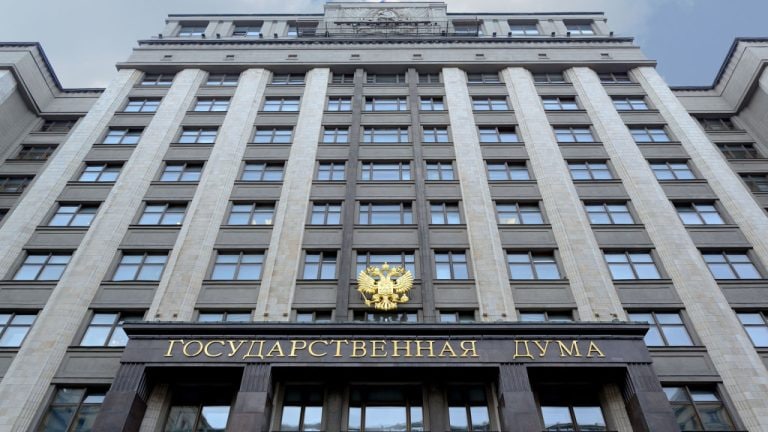
Russian lawmakers will consider a draft law on cryptocurrency mining in 2023 despite earlier indications they were going to vote on the proposal in December. The bill is expected to set the rules for the extraction and sale of cryptocurrency in Russia amid sanctions limiting the country’s access to global finances and markets.
Members of the State Duma will review and vote on the draft law designed to legalize cryptocurrency mining in the Russian Federation in 2023, the head of the Financial Market Committee Anatoly Aksakov announced in comments for the crypto section of the business news portal RBC.
The high-ranking lawmaker, who has been closely involved in efforts to regulate Russia’s crypto space, explained that the proposed legislation needs additional approvals. He was likely referring to the reconciliation of the positions of the various regulators involved in the process.
The bill, which was submitted to the lower house of Russian parliament in November, introduces amendments to the existing law “On Digital Financial Assets.” The latter went into force in January of 2021 and only partially regulated crypto-related activities.
Mining, for which Russia has certain competitive advantages like low-cost power and a cool climate, has been expanding as an industry and spreading as an additional income source for many amateur miners, especially in the country’s energy-rich regions.
Throughout this year, Russian government institutions have been mulling over how to expand the current regulatory framework to cover operations with cryptocurrencies. While most officials remain opposed to allowing the free circulation of bitcoin and the like inside Russia, their use in cross-border payments amid financial restrictions imposed over the war in Ukraine has gained significant support. Sanctions have affected the mining sector, too.
The mining law was initially rejected by the legal department of the Duma which insisted that the draft should first be coordinated with the Bank of Russia. The central bank, which has maintained a hardline stance on crypto, later supported the document under the condition that the minted coins will either be sold abroad or exchanged to fiat only under special legal regimes in Russia.
In mid-December, Aksakov’s committee considered the bill and proposed its adoption on first reading before the end of the fall session. The establishment of the “experimental legal regimes” proposed by the Bank of Russia should be regulated with a separate bill which also had to be filed with the Duma this year. Aksakov added that this piece of legislation needs to be approved as well.
Russian lawmakers will consider a draft law on cryptocurrency mining in 2023 despite earlier indications they were going to vote on the proposal in December. The bill is expected to set the rules for the extraction and sale of cryptocurrency in Russia amid sanctions limiting the country’s access to global finances and markets.
Members of the State Duma will review and vote on the draft law designed to legalize cryptocurrency mining in the Russian Federation in 2023, the head of the Financial Market Committee Anatoly Aksakov announced in comments for the crypto section of the business news portal RBC.
The high-ranking lawmaker, who has been closely involved in efforts to regulate Russia’s crypto space, explained that the proposed legislation needs additional approvals. He was likely referring to the reconciliation of the positions of the various regulators involved in the process.
The bill, which was submitted to the lower house of Russian parliament in November, introduces amendments to the existing law “On Digital Financial Assets.” The latter went into force in January of 2021 and only partially regulated crypto-related activities.
Mining, for which Russia has certain competitive advantages like low-cost power and a cool climate, has been expanding as an industry and spreading as an additional income source for many amateur miners, especially in the country’s energy-rich regions.
Throughout this year, Russian government institutions have been mulling over how to expand the current regulatory framework to cover operations with cryptocurrencies. While most officials remain opposed to allowing the free circulation of bitcoin and the like inside Russia, their use in cross-border payments amid financial restrictions imposed over the war in Ukraine has gained significant support. Sanctions have affected the mining sector, too.
The mining law was initially rejected by the legal department of the Duma which insisted that the draft should first be coordinated with the Bank of Russia. The central bank, which has maintained a hardline stance on crypto, later supported the document under the condition that the minted coins will either be sold abroad or exchanged to fiat only under special legal regimes in Russia.
In mid-December, Aksakov’s committee considered the bill and proposed its adoption on first reading before the end of the fall session. The establishment of the “experimental legal regimes” proposed by the Bank of Russia should be regulated with a separate bill which also had to be filed with the Duma this year. Aksakov added that this piece of legislation needs to be approved as well.
Craig Wright Calls XRP ‘Useless Pump And Dump Scheme’, Ripple CTO Hits back
David Schwartz, Ripple CTO and Craig Wright, self proclaimed Bitcoin creator got into a war of words over BTC adoption by institutional investors.
However, this heated conversation took a wrong turn toward the XRP token and its utility.
https://coingape.com/xrp-news-craig-wright-calls-xrp-useless-pump-dump-scheme-ripple-cto-hits-back/?sd
David Schwartz, Ripple CTO and Craig Wright, self proclaimed Bitcoin creator got into a war of words over BTC adoption by institutional investors.
However, this heated conversation took a wrong turn toward the XRP token and its utility.
https://coingape.com/xrp-news-craig-wright-calls-xrp-useless-pump-dump-scheme-ripple-cto-hits-back/?sd
Report: R&B Artist Akon Denies Claims His Crypto City Dream Is Crumbling
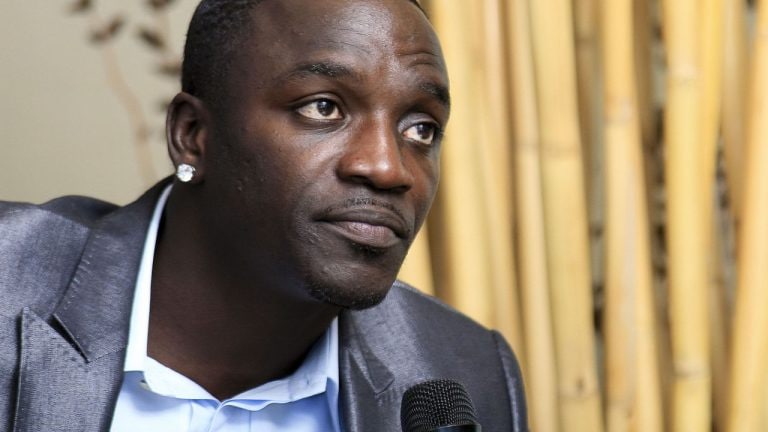
Senegalese-American artist, Akon, reportedly reassured participants in his so-called token of appreciation (TOA) that they will be reimbursed for donations. To back this promise, the singer reportedly claimed he is even willing to do “a world tour just to pay them all back.” Akon, however, conceded during an interview that he should “have gotten more things in place before promoting it [Akon City].”
Rhythm and blues (R&B) singer and music producer, Akon, reportedly promised to reimburse disillusioned supporters who have been waiting for refunds from his token of appreciation (TOA) campaign. The Senegalese-American artist also told TOA holders that he is prepared to use his own funds to ensure this promise is honored.
“I’m dead serious. I would do a world tour just to pay them all back,” the award-winning artist reportedly said.
Launched in 2019, Akon’s TOA was given to his early financial backers. The TOA was not only a precursor to the akoin cryptocurrency but it also reportedly gave supporters an opportunity to acquire the crypto. However, after more than two years of waiting, some early backers have lost faith and are now asking for refunds.
Although he seemingly acknowledged that some supporters have lost faith in the project, Akon suggested during an interview with the BBC that his ambitious but much-delayed mega-construction project — Akon City — is still on track. As reported by Bitcoin News, construction of the initial phase of the singer’s “futuristic cryptocurrency-themed city” was expected to commence sometime in the second half of 2020.
Following the announcement of the singer’s reported multibillion-dollar project, Akon’s team revealed that the initial phase, which included the construction of hotels, a school, a waste facility, and a solar power plant, would be complete by the end of 2023. However, according to the BBC report, the site of Akon’s mega city has now become grazing land for goats.
During the interview, Akon — who blames the Covid-19 pandemic for causing the delay — conceded that he should “have gotten more things in place before promoting it.” The singer is nevertheless adamant that his project, which has been “co-signed by the current [Senegalese] president” is still alive.
“I plan to retire in that city. I don’t like to use the word the king of the city. But that’s what it will turn out to be,” Akon reportedly said.
During the interview, the R&B singer was also asked to respond to investor concerns about the legality of using a cryptocurrency in a jurisdiction regulated by the Central Bank of West African States (BCEAO). He said.
I want to make sure that however we involve crypto within the city is in a way that it lines up with all the rules and regulations.
As explained in the BBC report, the BCEAO has not only warned of the dangers of using crypto but has reportedly called it illegal.
Meanwhile, when asked if the akoin cryptocurrency is still the preferred medium of exchange in the envisaged city, Akon promised to have this “figured out by the time the city’s up, that’s for sure.”
Senegalese-American artist, Akon, reportedly reassured participants in his so-called token of appreciation (TOA) that they will be reimbursed for donations. To back this promise, the singer reportedly claimed he is even willing to do “a world tour just to pay them all back.” Akon, however, conceded during an interview that he should “have gotten more things in place before promoting it [Akon City].”
Rhythm and blues (R&B) singer and music producer, Akon, reportedly promised to reimburse disillusioned supporters who have been waiting for refunds from his token of appreciation (TOA) campaign. The Senegalese-American artist also told TOA holders that he is prepared to use his own funds to ensure this promise is honored.
“I’m dead serious. I would do a world tour just to pay them all back,” the award-winning artist reportedly said.
Launched in 2019, Akon’s TOA was given to his early financial backers. The TOA was not only a precursor to the akoin cryptocurrency but it also reportedly gave supporters an opportunity to acquire the crypto. However, after more than two years of waiting, some early backers have lost faith and are now asking for refunds.
Although he seemingly acknowledged that some supporters have lost faith in the project, Akon suggested during an interview with the BBC that his ambitious but much-delayed mega-construction project — Akon City — is still on track. As reported by Bitcoin News, construction of the initial phase of the singer’s “futuristic cryptocurrency-themed city” was expected to commence sometime in the second half of 2020.
Following the announcement of the singer’s reported multibillion-dollar project, Akon’s team revealed that the initial phase, which included the construction of hotels, a school, a waste facility, and a solar power plant, would be complete by the end of 2023. However, according to the BBC report, the site of Akon’s mega city has now become grazing land for goats.
During the interview, Akon — who blames the Covid-19 pandemic for causing the delay — conceded that he should “have gotten more things in place before promoting it.” The singer is nevertheless adamant that his project, which has been “co-signed by the current [Senegalese] president” is still alive.
“I plan to retire in that city. I don’t like to use the word the king of the city. But that’s what it will turn out to be,” Akon reportedly said.
During the interview, the R&B singer was also asked to respond to investor concerns about the legality of using a cryptocurrency in a jurisdiction regulated by the Central Bank of West African States (BCEAO). He said.
I want to make sure that however we involve crypto within the city is in a way that it lines up with all the rules and regulations.
As explained in the BBC report, the BCEAO has not only warned of the dangers of using crypto but has reportedly called it illegal.
Meanwhile, when asked if the akoin cryptocurrency is still the preferred medium of exchange in the envisaged city, Akon promised to have this “figured out by the time the city’s up, that’s for sure.”
Report: Nigerian Central Bank Spent Over $1.8 Billion Managing Local Currency
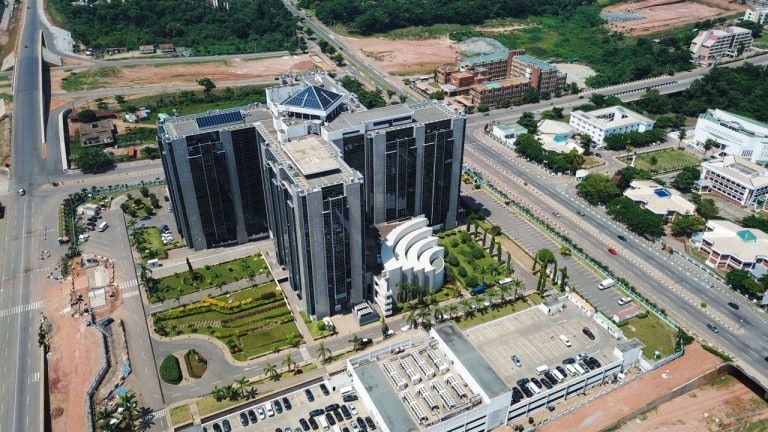
During her appearance before Nigerian lawmakers, Aisha Ahmad, the deputy governor of the Central Bank of Nigeria (CBN), told lawmakers that out of the nearly $1.8 billion used to manage the local currency, over 90% of this total was reportedly used to fund expenses associated with the production of banknotes.
According to Aisha Ahmad, the deputy governor of the Central Bank of Nigeria (CBN), between the years 2017 and 2021, the apex bank spent an equivalent of nearly $1.8 billion, or 800 billion naira, managing the local currency. The production of new banknotes alone accounted for more than 90% of this figure.
As per remarks published by the Punch, Ahmad, in her recent appearance before Nigerian lawmakers, also claimed that the cost of maintaining the local currency has been increasing by over $22 million annually. Before Ahmad’s disclosure, Kingsley Moghalu, a former CBN deputy governor, had also told lawmakers that the central bank uses approximately $336 million to manage the currency.
In addition to incurring high costs associated with managing the naira currency, the CBN has to contend with the increased risk of counterfeiting, the report said.
Meanwhile, in her testimony, Ahmad partly blamed the spiraling costs on what she characterized as wholesale hoarding of the naira by the Nigerian public.
“An observation supported by statistics shows that cash outside banks consists of over 80 per cent of the currency in circulation; worsening [the] shortage of fit banknotes in circulation. This portends [a] negative public perception of the bank and increases [the] threat to financial system stability,” Ahmad is quoted as saying.
To help the central bank overcome some of the challenges identified by Ahmad, the CBN introduced into circulation newly designed naira banknotes on Dec. 15. At the same time, the bank said Nigerian residents in possession of the old banknotes should return these before or by Jan. 1, 2023.
The central bank has also restricted the amount of cash that individuals and corporate organizations can withdraw. However, some Nigerian commentators have accused the CBN of using the so-called naira redesign policy to target politicians. Responding to these allegations, Ahmad reportedly told lawmakers that the bank’s decision to limit cash withdrawals was based on research.
“I have to make it very clear that the CBN is an independent institution and our decisions are taken based on research — it is the work of many teams working together across the different directories,” Ahmad reportedly said.
During her appearance before Nigerian lawmakers, Aisha Ahmad, the deputy governor of the Central Bank of Nigeria (CBN), told lawmakers that out of the nearly $1.8 billion used to manage the local currency, over 90% of this total was reportedly used to fund expenses associated with the production of banknotes.
According to Aisha Ahmad, the deputy governor of the Central Bank of Nigeria (CBN), between the years 2017 and 2021, the apex bank spent an equivalent of nearly $1.8 billion, or 800 billion naira, managing the local currency. The production of new banknotes alone accounted for more than 90% of this figure.
As per remarks published by the Punch, Ahmad, in her recent appearance before Nigerian lawmakers, also claimed that the cost of maintaining the local currency has been increasing by over $22 million annually. Before Ahmad’s disclosure, Kingsley Moghalu, a former CBN deputy governor, had also told lawmakers that the central bank uses approximately $336 million to manage the currency.
In addition to incurring high costs associated with managing the naira currency, the CBN has to contend with the increased risk of counterfeiting, the report said.
Meanwhile, in her testimony, Ahmad partly blamed the spiraling costs on what she characterized as wholesale hoarding of the naira by the Nigerian public.
“An observation supported by statistics shows that cash outside banks consists of over 80 per cent of the currency in circulation; worsening [the] shortage of fit banknotes in circulation. This portends [a] negative public perception of the bank and increases [the] threat to financial system stability,” Ahmad is quoted as saying.
To help the central bank overcome some of the challenges identified by Ahmad, the CBN introduced into circulation newly designed naira banknotes on Dec. 15. At the same time, the bank said Nigerian residents in possession of the old banknotes should return these before or by Jan. 1, 2023.
The central bank has also restricted the amount of cash that individuals and corporate organizations can withdraw. However, some Nigerian commentators have accused the CBN of using the so-called naira redesign policy to target politicians. Responding to these allegations, Ahmad reportedly told lawmakers that the bank’s decision to limit cash withdrawals was based on research.
“I have to make it very clear that the CBN is an independent institution and our decisions are taken based on research — it is the work of many teams working together across the different directories,” Ahmad reportedly said.
IMF Warns of Tough Year Ahead for World Economy Citing Slowdown in US, EU, China
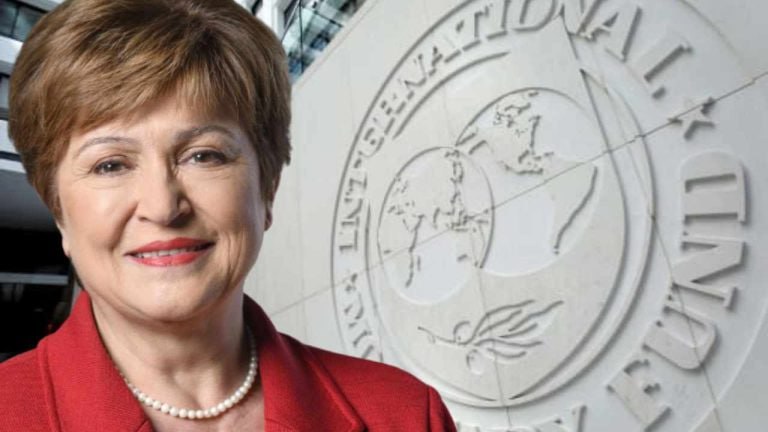
The International Monetary Fund (IMF) has warned that 2023 will be a tougher year for most of the world economy because the U.S., EU, and Chinese economies are all slowing down simultaneously. “We expect one-third of the world economy to be in recession … Even countries that are not in recession, it would feel like recession for hundreds of millions of people,” said IMF chief Kristalina Georgieva.
International Monetary Fund (IMF) Managing Director Kristalina Georgieva shared the IMF’s predictions on the U.S., the EU, China, and the world economy in an interview with CBS, aired Sunday. She detailed:
This is what we see in 2023. For most of the world economy, this is going to be a tough year, tougher than the year we leave behind. Why? Because the three big economies, U.S., EU, China, are all slowing down simultaneously.
“The U.S. is most resilient. The U.S. may avoid recession. We see the labor market remaining quite strong. This is, however, a mixed blessing because if the labor market is very strong, the Fed may have to keep interest rates tighter for longer to bring inflation down,” the IMF chief continued.
“The EU was very severely hit by the war in Ukraine. Half of the European Union will be in recession next year. China is going to slow down this year further,” she added.
Moreover, the IMF boss said:
Next year will be a tough year for China. And that translates into negative trends globally.
“When we look at the emerging markets in developing economies, there, the picture is even direr. Why? Because on top of everything else, they get hit by high interest rates and by the appreciation of the dollar. For those economies that have high level of that, this is a devastation,” she cautioned.
Regarding China specifically, Georgieva described: “In the short term, bad news. China has slowed down dramatically in 2022 because of this tight zero Covid policy. For the first time in 40 years, China’s growth in 2022 is likely to be at or below global growth. That has never happened before.”
Emphasizing that she hopes the U.S. economy “is not going to slip into recession despite all these risks,” the IMF managing director shared:
We expect one third of the world economy to be in recession … Even countries that are not in recession, it would feel like recession for hundreds of millions of people.
Georgieva added that “the world has changed dramatically,” noting that “it is a more shock-prone world.” She explained that these shocks include Covid, the Russia-Ukraine war, and the cost of living crisis.
“My message [is] don’t think that we are going to go back to pre-Covid predictability. More uncertainty, more overlap of crises wait for us … We have to buckle up and act in that more agile, precautionary manner,” she concluded.
The International Monetary Fund (IMF) has warned that 2023 will be a tougher year for most of the world economy because the U.S., EU, and Chinese economies are all slowing down simultaneously. “We expect one-third of the world economy to be in recession … Even countries that are not in recession, it would feel like recession for hundreds of millions of people,” said IMF chief Kristalina Georgieva.
International Monetary Fund (IMF) Managing Director Kristalina Georgieva shared the IMF’s predictions on the U.S., the EU, China, and the world economy in an interview with CBS, aired Sunday. She detailed:
This is what we see in 2023. For most of the world economy, this is going to be a tough year, tougher than the year we leave behind. Why? Because the three big economies, U.S., EU, China, are all slowing down simultaneously.
“The U.S. is most resilient. The U.S. may avoid recession. We see the labor market remaining quite strong. This is, however, a mixed blessing because if the labor market is very strong, the Fed may have to keep interest rates tighter for longer to bring inflation down,” the IMF chief continued.
“The EU was very severely hit by the war in Ukraine. Half of the European Union will be in recession next year. China is going to slow down this year further,” she added.
Moreover, the IMF boss said:
Next year will be a tough year for China. And that translates into negative trends globally.
“When we look at the emerging markets in developing economies, there, the picture is even direr. Why? Because on top of everything else, they get hit by high interest rates and by the appreciation of the dollar. For those economies that have high level of that, this is a devastation,” she cautioned.
Regarding China specifically, Georgieva described: “In the short term, bad news. China has slowed down dramatically in 2022 because of this tight zero Covid policy. For the first time in 40 years, China’s growth in 2022 is likely to be at or below global growth. That has never happened before.”
Emphasizing that she hopes the U.S. economy “is not going to slip into recession despite all these risks,” the IMF managing director shared:
We expect one third of the world economy to be in recession … Even countries that are not in recession, it would feel like recession for hundreds of millions of people.
Georgieva added that “the world has changed dramatically,” noting that “it is a more shock-prone world.” She explained that these shocks include Covid, the Russia-Ukraine war, and the cost of living crisis.
“My message [is] don’t think that we are going to go back to pre-Covid predictability. More uncertainty, more overlap of crises wait for us … We have to buckle up and act in that more agile, precautionary manner,” she concluded.
Hello Everyone 😀,
🏆Gear up for the MCL NEW YEAR BASH TOURNAMENT!🏆
Key Highlights:
🏏Total Prizepool: $10000.
🏏Grab 10000 Passes for FREE.
🏏No NFT Needed & No KYC Needed.
🏏100% of participants will be declared winners.
Grab your Passes to Participate in this exciting tournament! 🎉
Claim Yours Now: https://www.jump.trade/drop/free-mcl-pass?fsz=GCp
🏆Gear up for the MCL NEW YEAR BASH TOURNAMENT!🏆
Key Highlights:
🏏Total Prizepool: $10000.
🏏Grab 10000 Passes for FREE.
🏏No NFT Needed & No KYC Needed.
🏏100% of participants will be declared winners.
Grab your Passes to Participate in this exciting tournament! 🎉
Claim Yours Now: https://www.jump.trade/drop/free-mcl-pass?fsz=GCp
Crypto Exchange Upbit Logo to Appear on Italian Soccer Club Napoli’s Jerseys
Shirts worn by the players of the Italian soccer team Napoli will display the logo of cryptocurrency exchange Upbit. The arrangement is part of a sponsorship deal with Dunamu, the company that operates the coin trading platform, which is one of the largest in South Korea.
SSC Napoli, the current leaders in the Italian professional soccer league, Serie A, and Dunamu Inc. announced a partnership that will make the Korean fintech firm the official back-of-shirt and crypto-exchange partner of the soccer team for the current and the next season.
The deal, which covers all of Napoli’s Serie A, Coppa Italia and friendly matches, will place the logo of Dunamu’s crypto exchange, Upbit, below the number on the back of their jerseys. The company’s logo will also appear on billboards around Stadio Diego Armando Maradona in Naples.
“This will come into play for the team’s next Serie A fixture on Wednesday, Jan. 4, against Inter,” Napoli unveiled in a press release on the first day of the week. The club emphasized the importance of the agreement with Dunamu in light of Napoli’s intention to expand its fan base in South Korea.
At the heart of the Napoli lineup is Kim Min-jae, the Korea Joongang Daily noted in a report. The Korean center-back, who signed for Napoli in late July, made his debut in August and was named Lega Serie A Player of the Month for September.
Kim scored two goals in his first few weeks with Napoli, which made him the second-highest scoring Korean to ever play in Serie A. His team currently tops the league’s table and has remained undefeated at home throughout the 2022-23 season.
“We’re thrilled to have reached this agreement with the South Korean company Dunamu, a leader in its sector,” said Tommaso Bianchini, chief international development officer of Napoli. “We’d like to warmly welcome Upbit to our family and we look forward to working together and enlarging our presence in South Korea,” he added.
“Dunamu is excited about our new partnership with SSC Napoli, one of the biggest and most prestigious football clubs in the world. We’re thankful for the warmest welcome and are thrilled to be a part of the journey together with SSC Napoli, including star defender Kim Min-jae,” Dunamu CEO Sirgoo Lee was quoted as stating.
Napoli is not the only leading Italian football club with a crypto sponsor. In August, 2021, soccer giant AC Milan sealed a deal with Bitmex to make the crypto exchange its ‘official sleeve and crypto trading partner’ under a multi-year sponsorship agreement. In September of that year, crypto derivatives exchange Bitget announced a partnership with Juventus and Inter secured a $100 million sponsorship with blockchain company Zytara Labs.
Shirts worn by the players of the Italian soccer team Napoli will display the logo of cryptocurrency exchange Upbit. The arrangement is part of a sponsorship deal with Dunamu, the company that operates the coin trading platform, which is one of the largest in South Korea.
SSC Napoli, the current leaders in the Italian professional soccer league, Serie A, and Dunamu Inc. announced a partnership that will make the Korean fintech firm the official back-of-shirt and crypto-exchange partner of the soccer team for the current and the next season.
The deal, which covers all of Napoli’s Serie A, Coppa Italia and friendly matches, will place the logo of Dunamu’s crypto exchange, Upbit, below the number on the back of their jerseys. The company’s logo will also appear on billboards around Stadio Diego Armando Maradona in Naples.
“This will come into play for the team’s next Serie A fixture on Wednesday, Jan. 4, against Inter,” Napoli unveiled in a press release on the first day of the week. The club emphasized the importance of the agreement with Dunamu in light of Napoli’s intention to expand its fan base in South Korea.
At the heart of the Napoli lineup is Kim Min-jae, the Korea Joongang Daily noted in a report. The Korean center-back, who signed for Napoli in late July, made his debut in August and was named Lega Serie A Player of the Month for September.
Kim scored two goals in his first few weeks with Napoli, which made him the second-highest scoring Korean to ever play in Serie A. His team currently tops the league’s table and has remained undefeated at home throughout the 2022-23 season.
“We’re thrilled to have reached this agreement with the South Korean company Dunamu, a leader in its sector,” said Tommaso Bianchini, chief international development officer of Napoli. “We’d like to warmly welcome Upbit to our family and we look forward to working together and enlarging our presence in South Korea,” he added.
“Dunamu is excited about our new partnership with SSC Napoli, one of the biggest and most prestigious football clubs in the world. We’re thankful for the warmest welcome and are thrilled to be a part of the journey together with SSC Napoli, including star defender Kim Min-jae,” Dunamu CEO Sirgoo Lee was quoted as stating.
Napoli is not the only leading Italian football club with a crypto sponsor. In August, 2021, soccer giant AC Milan sealed a deal with Bitmex to make the crypto exchange its ‘official sleeve and crypto trading partner’ under a multi-year sponsorship agreement. In September of that year, crypto derivatives exchange Bitget announced a partnership with Juventus and Inter secured a $100 million sponsorship with blockchain company Zytara Labs.

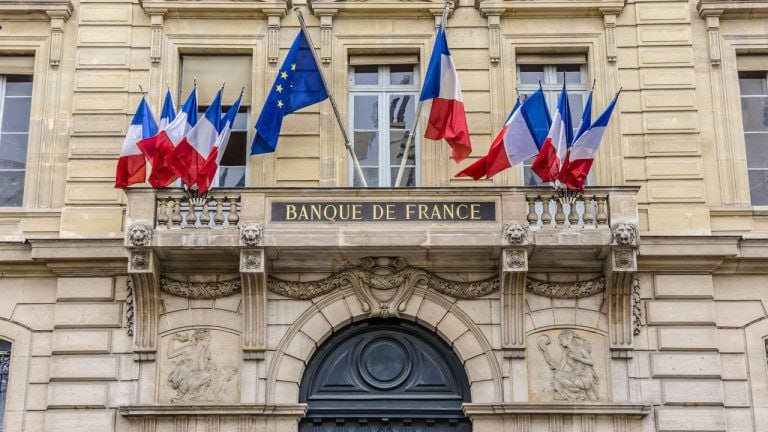
Bank of France Governor Calls for Mandatory Licensing for Crypto Companies
France has to adopt a licensing regime for crypto service providers, the head of the country’s central bank has suggested. According to the executive, the need to tighten regulatory oversight stems from the “disorder” in the industry throughout the past year.
Banque de France Governor Francois Villeroy de Galhau has urged for subjecting crypto businesses to stricter regulatory requirements. Licensing must be introduced instead of the current registration in response to the recent volatility in the sector, he insisted.
De Galhau also thinks that Paris should not hesitate but act even before the upcoming EU regulations take effect and make it obligatory for Digital Asset Service Providers (DASPs) to obtain licenses from the French government, Bloomberg reported.
Around 60 platforms working with cryptocurrencies have so far registered with the Autorité des Marchés Financiers (AMF), France’s financial markets authority, including global players such as Binance, the world’s largest crypto exchange.
Licenses are still optional and there are no licensees yet among the digital asset service providers registered in France. Speaking to representatives of the financial sector on said Thursday, Villeroy de Galhau stated:
All the disorder in 2022 feeds a simple belief: it is desirable for France to move to an obligatory licensing of DASP as soon as possible, rather than just registration.
Digital asset service providers which want to be granted a license are required by the AMF to comply with certain standards in terms of organization, available financial resources and business conduct, the report notes.
The governor’s proposal comes after last summer key EU institutions and member states reached an agreement on the new Markets in Crypto Assets (MiCA) legislation and achieved consensus on a set of new anti-money laundering rules for the industry.
The regulatory package is expected to enter into force in 2023 but businesses will have another 12 to 18 months to comply with it. Brussels also wants to oblige platforms processing crypto transactions for EU residents to report to tax authorities in the Union.
France has to adopt a licensing regime for crypto service providers, the head of the country’s central bank has suggested. According to the executive, the need to tighten regulatory oversight stems from the “disorder” in the industry throughout the past year.
Banque de France Governor Francois Villeroy de Galhau has urged for subjecting crypto businesses to stricter regulatory requirements. Licensing must be introduced instead of the current registration in response to the recent volatility in the sector, he insisted.
De Galhau also thinks that Paris should not hesitate but act even before the upcoming EU regulations take effect and make it obligatory for Digital Asset Service Providers (DASPs) to obtain licenses from the French government, Bloomberg reported.
Around 60 platforms working with cryptocurrencies have so far registered with the Autorité des Marchés Financiers (AMF), France’s financial markets authority, including global players such as Binance, the world’s largest crypto exchange.
Licenses are still optional and there are no licensees yet among the digital asset service providers registered in France. Speaking to representatives of the financial sector on said Thursday, Villeroy de Galhau stated:
All the disorder in 2022 feeds a simple belief: it is desirable for France to move to an obligatory licensing of DASP as soon as possible, rather than just registration.
Digital asset service providers which want to be granted a license are required by the AMF to comply with certain standards in terms of organization, available financial resources and business conduct, the report notes.
The governor’s proposal comes after last summer key EU institutions and member states reached an agreement on the new Markets in Crypto Assets (MiCA) legislation and achieved consensus on a set of new anti-money laundering rules for the industry.
The regulatory package is expected to enter into force in 2023 but businesses will have another 12 to 18 months to comply with it. Brussels also wants to oblige platforms processing crypto transactions for EU residents to report to tax authorities in the Union.
World Bank Report Forecasts Bleak Global Economic Outlook, Citing ‘Adverse Developments’ and ‘Long-Lasting Slowdown’
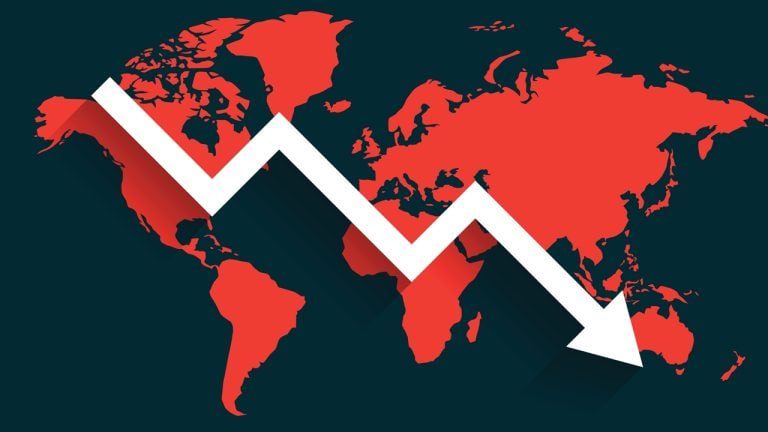
On Jan. 10, 2023, the World Bank published its Global Economic Prospects report, stating that the outlook for the global economy and future economic conditions is bleak. According to the report, 2023 growth forecasts have been cut across the board, with the global economy projected to grow by 1.7% in 2023 and 2.7% in 2024. The World Bank also cited a number of adverse developments that could push the world’s economy into a deep recession.
The World Bank, the financial organization with 174 member countries, released its Global Economic Prospects report on Tuesday. The report envisions a “sharp, long-lasting slowdown to hit developing countries hard.” The World Bank cites numerous issues plaguing the global economy, including the Covid-19 pandemic and “escalating geopolitical tensions,” as reasons why the world’s economy could spiral into a recession. The report also mentions interest rate hikes by central banks and “higher-than-expected inflation” as contributing factors to the “adverse developments.”
The World Bank’s report further detailed that inflation has dropped to some degree at the end of 2022. It also noted that skyrocketing commodity and energy prices have subsided for the time being. The World Bank warns, however, that global economies will likely still see inflation persist, and supply disruptions could stem from adversities such as the Covid-19 pandemic and the Ukraine-Russia war in Europe. If inflation persists, the World Bank warns that benchmark bank rates could continue to climb in order to curb inflationary pressures.
“Growth in advanced economies is projected to slow from 2.5% in 2022 to 0.5% in 2023. Over the past two decades, slowdowns of this scale have foreshadowed a global recession,” the World Bank’s Global Economic Prospects report details. “In the United States, growth is forecast to fall to 0.5% in 2023—1.9 percentage points below previous forecasts and the weakest performance outside of official recessions since 1970. In 2023, euro-area growth is expected at zero percent—a downward revision of 1.9 percentage points. In China, growth is projected at 4.3% in 2023—0.9 percentage point below previous forecasts.”
The report’s summary concludes that one thing that can help the global economy is by improving “long-term growth prospects by bolstering resilience to climate change.” The World Bank insists that policymakers need to “address climate change and support people affected by crises and hunger.” In order to “offset the long-term damage from the adverse shocks of the past three years,” emerging markets and developing economies will need to “substantially increase investment,” according to the World Bank’s report.
On Jan. 10, 2023, the World Bank published its Global Economic Prospects report, stating that the outlook for the global economy and future economic conditions is bleak. According to the report, 2023 growth forecasts have been cut across the board, with the global economy projected to grow by 1.7% in 2023 and 2.7% in 2024. The World Bank also cited a number of adverse developments that could push the world’s economy into a deep recession.
The World Bank, the financial organization with 174 member countries, released its Global Economic Prospects report on Tuesday. The report envisions a “sharp, long-lasting slowdown to hit developing countries hard.” The World Bank cites numerous issues plaguing the global economy, including the Covid-19 pandemic and “escalating geopolitical tensions,” as reasons why the world’s economy could spiral into a recession. The report also mentions interest rate hikes by central banks and “higher-than-expected inflation” as contributing factors to the “adverse developments.”
The World Bank’s report further detailed that inflation has dropped to some degree at the end of 2022. It also noted that skyrocketing commodity and energy prices have subsided for the time being. The World Bank warns, however, that global economies will likely still see inflation persist, and supply disruptions could stem from adversities such as the Covid-19 pandemic and the Ukraine-Russia war in Europe. If inflation persists, the World Bank warns that benchmark bank rates could continue to climb in order to curb inflationary pressures.
“Growth in advanced economies is projected to slow from 2.5% in 2022 to 0.5% in 2023. Over the past two decades, slowdowns of this scale have foreshadowed a global recession,” the World Bank’s Global Economic Prospects report details. “In the United States, growth is forecast to fall to 0.5% in 2023—1.9 percentage points below previous forecasts and the weakest performance outside of official recessions since 1970. In 2023, euro-area growth is expected at zero percent—a downward revision of 1.9 percentage points. In China, growth is projected at 4.3% in 2023—0.9 percentage point below previous forecasts.”
The report’s summary concludes that one thing that can help the global economy is by improving “long-term growth prospects by bolstering resilience to climate change.” The World Bank insists that policymakers need to “address climate change and support people affected by crises and hunger.” In order to “offset the long-term damage from the adverse shocks of the past three years,” emerging markets and developing economies will need to “substantially increase investment,” according to the World Bank’s report.
Bitconnect Victims to Receive Over $17 Million in Restitution From Ponzi Scheme
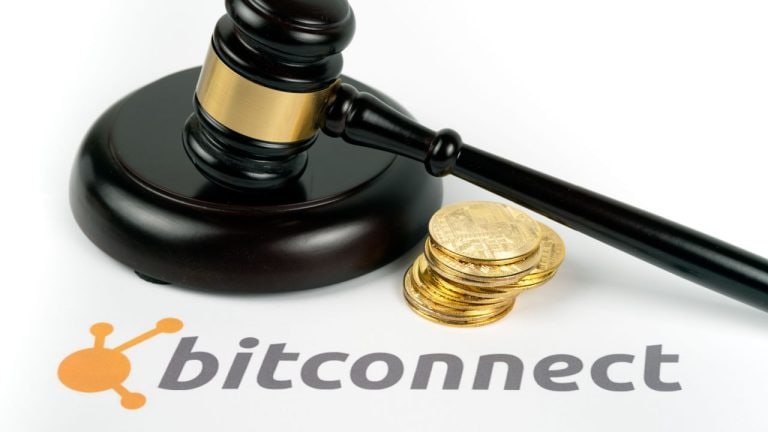
More than $17 million in restitution will be distributed among investors in the pyramid scheme Bitconnect under a court order in the United States. The notorious crypto investment scheme defrauded thousands of people around the world.
A total of over $17 million in restitution will be returned to around 800 victims from more than 40 countries who lost money to Bitconnect, the U.S. Department of Justice (DOJ) announced Thursday, quoting an order issued by a federal district court in San Diego. The large-scale crypto investment scheme defrauded thousands of investors globally.
The ruling comes after on Sept. 16, 2021, the top U.S.-based promoter of Bitconnect, 44-year-old Glenn Arcaro, pleaded guilty to conspiracy to commit wire fraud. He admitted to marketing Bitconnect’s initial coin offering and digital currency exchange as a lucrative investment with the goal to exploit investor interest in cryptocurrency.
Arcaro and his co-conspirators misled investors about Bitconnect’s “Lending Program” and its purported proprietary “Bitconnect Trading Bot” and “Volatility Software” technologies which, as they claimed, could generate guaranteed returns on investors’ money used to trade on crypto exchange markets.
“In truth, however, Bitconnect operated a textbook Ponzi scheme by paying earlier Bitconnect investors with money from later investors. Arcaro and his co-conspirators ensured that up to 15% of the money invested into Bitconnect went directly into a slush fund to be used for the benefit of its owner and promoters,” the DOJ explained.
Glenn Arcaro, a resident of Los Angeles, was sentenced to 38 months in U.S. federal prison in September of 2022. He admitted to earning at least $24 million from the scam. At the time, the DOJ pointed out that all of that money will be repaid to investors or forfeited to the government. In November, the previous year, the Justice department had offered for sale $56 million worth of crypto assets seized from Bitconnect.
The crypto pyramid’s founder, Indian national Satish Kumbhani, was indicted on Feb. 25, 2022 for his key role in organizing the $3.4 billion fraud scheme. In August, police in India launched an investigation into Bitconnect and a search for its mastermind. If convicted in the U.S., he would face a maximum of 70 years in prison.
More than $17 million in restitution will be distributed among investors in the pyramid scheme Bitconnect under a court order in the United States. The notorious crypto investment scheme defrauded thousands of people around the world.
A total of over $17 million in restitution will be returned to around 800 victims from more than 40 countries who lost money to Bitconnect, the U.S. Department of Justice (DOJ) announced Thursday, quoting an order issued by a federal district court in San Diego. The large-scale crypto investment scheme defrauded thousands of investors globally.
The ruling comes after on Sept. 16, 2021, the top U.S.-based promoter of Bitconnect, 44-year-old Glenn Arcaro, pleaded guilty to conspiracy to commit wire fraud. He admitted to marketing Bitconnect’s initial coin offering and digital currency exchange as a lucrative investment with the goal to exploit investor interest in cryptocurrency.
Arcaro and his co-conspirators misled investors about Bitconnect’s “Lending Program” and its purported proprietary “Bitconnect Trading Bot” and “Volatility Software” technologies which, as they claimed, could generate guaranteed returns on investors’ money used to trade on crypto exchange markets.
“In truth, however, Bitconnect operated a textbook Ponzi scheme by paying earlier Bitconnect investors with money from later investors. Arcaro and his co-conspirators ensured that up to 15% of the money invested into Bitconnect went directly into a slush fund to be used for the benefit of its owner and promoters,” the DOJ explained.
Glenn Arcaro, a resident of Los Angeles, was sentenced to 38 months in U.S. federal prison in September of 2022. He admitted to earning at least $24 million from the scam. At the time, the DOJ pointed out that all of that money will be repaid to investors or forfeited to the government. In November, the previous year, the Justice department had offered for sale $56 million worth of crypto assets seized from Bitconnect.
The crypto pyramid’s founder, Indian national Satish Kumbhani, was indicted on Feb. 25, 2022 for his key role in organizing the $3.4 billion fraud scheme. In August, police in India launched an investigation into Bitconnect and a search for its mastermind. If convicted in the U.S., he would face a maximum of 70 years in prison.
Spanish Airline Vueling to Accept Cryptocurrency as Means of Payment
Vueling, a low-cost Spanish airline, has announced it is exploring the functionality of blockchain and NFT (non-fungible token) technology to accept cryptocurrency as a means of payment for its services. The company enlisted the aid of Criptan, a registered Spanish cryptocurrency exchange, and aims to open this payment option for users by Q3 2023.
Vueling, one of the Spanish budget airlines that has grown after the Covid-19 travel restrictions ended, is taking its first steps to accepting crypto as payment for its services. The company announced on Jan. 14 it was examining the usage of blockchain and NFT technology in order to allow customers to acquire plane tickets with crypto.
For this task, Vueling has partnered with Criptan, a national exchange that has already registered with the Bank of Spain, to serve as a payments company, processing and completing customers’ orders using crypto.
Vueling states this move will turn it into the first low-cost airline to accept crypto as a means of payment in Europe. On this, Jesus Monzo, Vueling’s alliances and distribution manager, stated:
This agreement places us at the forefront of new technologies and innovation, further reinforcing our commitment to our customers and offering the best and most advanced tools and solutions on our website.
Jorge Soriano, Criptan’s CEO, stated the company is convinced that the introduction of crypto payments could improve user experience by showing customers the potential there is behind the implementation of such solutions.
The functionality is expected to be available on the website of the airline by Q3 2023, and it will be using UATP tech, the global payments network for airlines, although the company has not indicated which cryptocurrencies will be accepted.
Other airlines have already introduced crypto and even NFTs as part of their retail operations. One of these is Flybondi, an Argentine airline, that announced it would be issuing plane tickets as NFTs in September 2022, allowing users to sell them on secondary markets. As part of that alliance, the company would also accept payments in stablecoins like USDC, using Binance Pay as a payment processing partner.
But even prior to that, the Venezuelan government reported it would be accepting several cryptocurrencies as payment for plane tickets in Oct. 2021, including among these the national token, the petro.
Vueling, a low-cost Spanish airline, has announced it is exploring the functionality of blockchain and NFT (non-fungible token) technology to accept cryptocurrency as a means of payment for its services. The company enlisted the aid of Criptan, a registered Spanish cryptocurrency exchange, and aims to open this payment option for users by Q3 2023.
Vueling, one of the Spanish budget airlines that has grown after the Covid-19 travel restrictions ended, is taking its first steps to accepting crypto as payment for its services. The company announced on Jan. 14 it was examining the usage of blockchain and NFT technology in order to allow customers to acquire plane tickets with crypto.
For this task, Vueling has partnered with Criptan, a national exchange that has already registered with the Bank of Spain, to serve as a payments company, processing and completing customers’ orders using crypto.
Vueling states this move will turn it into the first low-cost airline to accept crypto as a means of payment in Europe. On this, Jesus Monzo, Vueling’s alliances and distribution manager, stated:
This agreement places us at the forefront of new technologies and innovation, further reinforcing our commitment to our customers and offering the best and most advanced tools and solutions on our website.
Jorge Soriano, Criptan’s CEO, stated the company is convinced that the introduction of crypto payments could improve user experience by showing customers the potential there is behind the implementation of such solutions.
The functionality is expected to be available on the website of the airline by Q3 2023, and it will be using UATP tech, the global payments network for airlines, although the company has not indicated which cryptocurrencies will be accepted.
Other airlines have already introduced crypto and even NFTs as part of their retail operations. One of these is Flybondi, an Argentine airline, that announced it would be issuing plane tickets as NFTs in September 2022, allowing users to sell them on secondary markets. As part of that alliance, the company would also accept payments in stablecoins like USDC, using Binance Pay as a payment processing partner.
But even prior to that, the Venezuelan government reported it would be accepting several cryptocurrencies as payment for plane tickets in Oct. 2021, including among these the national token, the petro.

The best cryptocurrencies that are sure to grow in 2023
👇🏻👇🏻👇🏻 WATCH 👇🏻👇🏻👇🏻
https://youtu.be/T-ZT1NTv7ls
👇🏻👇🏻👇🏻 WATCH 👇🏻👇🏻👇🏻
https://youtu.be/T-ZT1NTv7ls
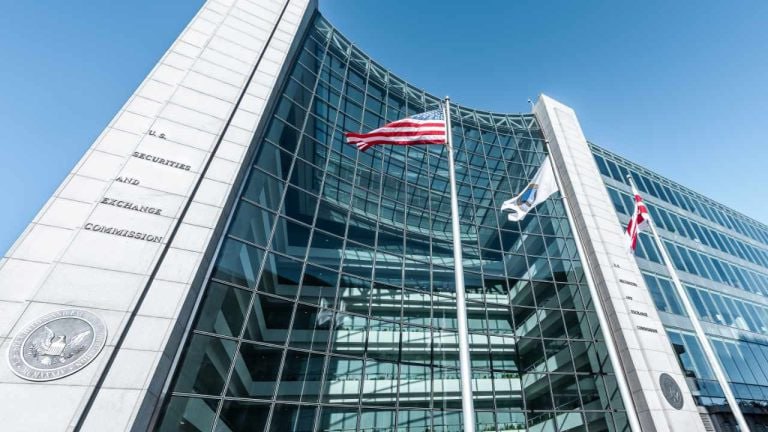
Ripple CEO ‘Optimistic’ About SEC Lawsuit Over XRP — Says ‘I Feel Very Good About Where We Are’
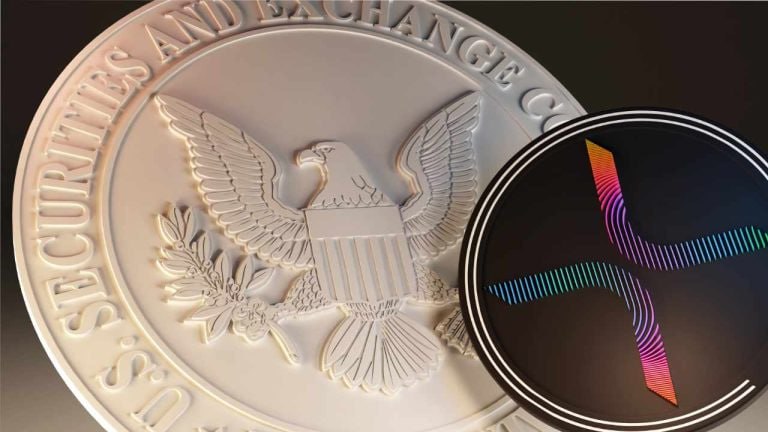
Ripple CEO Brad Garlinghouse says that he is “optimistic” that the Securities and Exchange Commission (SEC) lawsuit over xrp “will certainly be resolved in 2023.” He added that it could even be resolved in the first half of this year. “I feel very good about where we are relative to the law and the facts, the Ripple executive said.
The CEO of Ripple Labs, Brad Garlinghouse, shared his view on the lawsuit brought by the U.S. Securities and Exchange Commission (SEC) over the sale of XRP in an interview with CNBC Wednesday at the World Economic Forum in Davos, Switzerland.
Noting that the judges will “take however long” they take, Garlinghouse said:
We’re optimistic that this will certainly be resolved in 2023, and maybe the first half. So we’ll see how it plays out from here. But I feel very good about where we are relative to the law and the facts.
The SEC filed a lawsuit against Garlinghouse, Ripple, and co-founder Chris Larsen in December 2020 over the sale of XRP which the regulator claimed was an unregistered security offering. Ripple has maintained that XRP is not a security. Both the SEC and Ripple submitted their final round of briefs in December last year, seeking a summary judgment of the case.
The Ripple CEO said he expects a ruling to arrive “sometime in the coming single-digit months,” adding that he doesn’t expect Ripple to settle with the securities regulator.
“We have always said that we would love to settle, but it requires one very important thing, and that is that, on a go-forward basis, it’s clear that XRP is not a security,” Garlinghouse stressed, elaborating:
The SEC and Gary Gensler has very outwardly said he views almost all crypto as a security. And so that leaves very little space in the Venn diagram for settlement.
SEC Chairman Gary Gensler has said on several occasions bitcoin is a commodity but most other crypto tokens are securities.
Emphasizing the significance of the Ripple lawsuit’s outcome, Garlinghouse said Wednesday: “Something I’ve heard here in Davos repeatedly is how important this is, not just to Ripple … but also, really, the whole crypto industry in the United States.” He added: “I keep reminding people that outside the United States, crypto is still thriving, Ripple’s still thriving, and we should make sure we’re continuing to engage non-U.S. regulators as well.”
In a separate fireside discussion with CNBC, Garlinghouse opined:
From the beginning, I thought it was very clear that the facts were on our side, that the law was on our side … And I think as you have seen this play out, as you have seen the filings in the court, that the judge certainly is hearing our arguments.
Ripple CEO Brad Garlinghouse says that he is “optimistic” that the Securities and Exchange Commission (SEC) lawsuit over xrp “will certainly be resolved in 2023.” He added that it could even be resolved in the first half of this year. “I feel very good about where we are relative to the law and the facts, the Ripple executive said.
The CEO of Ripple Labs, Brad Garlinghouse, shared his view on the lawsuit brought by the U.S. Securities and Exchange Commission (SEC) over the sale of XRP in an interview with CNBC Wednesday at the World Economic Forum in Davos, Switzerland.
Noting that the judges will “take however long” they take, Garlinghouse said:
We’re optimistic that this will certainly be resolved in 2023, and maybe the first half. So we’ll see how it plays out from here. But I feel very good about where we are relative to the law and the facts.
The SEC filed a lawsuit against Garlinghouse, Ripple, and co-founder Chris Larsen in December 2020 over the sale of XRP which the regulator claimed was an unregistered security offering. Ripple has maintained that XRP is not a security. Both the SEC and Ripple submitted their final round of briefs in December last year, seeking a summary judgment of the case.
The Ripple CEO said he expects a ruling to arrive “sometime in the coming single-digit months,” adding that he doesn’t expect Ripple to settle with the securities regulator.
“We have always said that we would love to settle, but it requires one very important thing, and that is that, on a go-forward basis, it’s clear that XRP is not a security,” Garlinghouse stressed, elaborating:
The SEC and Gary Gensler has very outwardly said he views almost all crypto as a security. And so that leaves very little space in the Venn diagram for settlement.
SEC Chairman Gary Gensler has said on several occasions bitcoin is a commodity but most other crypto tokens are securities.
Emphasizing the significance of the Ripple lawsuit’s outcome, Garlinghouse said Wednesday: “Something I’ve heard here in Davos repeatedly is how important this is, not just to Ripple … but also, really, the whole crypto industry in the United States.” He added: “I keep reminding people that outside the United States, crypto is still thriving, Ripple’s still thriving, and we should make sure we’re continuing to engage non-U.S. regulators as well.”
In a separate fireside discussion with CNBC, Garlinghouse opined:
From the beginning, I thought it was very clear that the facts were on our side, that the law was on our side … And I think as you have seen this play out, as you have seen the filings in the court, that the judge certainly is hearing our arguments.
US Authorities Charge Mango Markets Attacker — Defendant Arrested, Detained in Puerto Rico
The U.S. Securities and Exchange Commission (SEC), the Commodities Futures Trading Commission (CFTC), and the Department of Justice (DOJ) have charged an alleged attacker who stole $116 million from crypto trading platform Mango Markets. The defendant has been arrested and is currently detained in Puerto Rico.
The U.S. Securities and Exchange Commission (SEC) announced Friday that it has charged Avraham Eisenberg with “orchestrating an attack on a crypto asset trading platform, Mango Markets, by manipulating the MNGO token.” The regulator noted that the crypto token was offered and sold as a security.
The defendant is a 27-year-old U.S. citizen who is facing “parallel criminal and civil charges” brought by the Department of Justice (DOJ) and the Commodities Futures Trading Commission (CFTC), respectively, the SEC added. The CFTC filed a civil enforcement action against Eisenberg on Jan. 9. He has been arrested and detained at MDC Guaynabo, Puerto Rico.
The securities watchdog explained that beginning on Oct. 11, 2022, while living in Puerto Rico:
Eisenberg engaged in a scheme to steal approximately $116 million worth of crypto assets from the Mango Markets platform.
He allegedly “used an account that he controlled on Mango Markets to sell a large amount of perpetual futures for MNGO tokens and used a separate account on Mango Markets to purchase those same perpetual futures,” the regulator said.
In addition, Eisenberg allegedly made a series of large purchases of the thinly traded MNGO token to artificially raise the token’s price relative to USD Coin (USDC), the SEC continued, adding that the price of MNGO perpetual futures on Mango Markets subsequently increased. According to the securities regulator:
Eisenberg used the increased value of his MNGO perpetual futures position to borrow and withdraw approximately $116 million worth of various crypto assets from Mango Markets, effectively draining all available assets from the Mango Markets platform.
The SEC charged Eisenberg with “violating anti-fraud and market manipulation provisions of the securities laws.” The regulator is seeking “permanent injunctive relief, a conduct-based injunction, disgorgement with prejudgment interest, and civil penalties.”
The U.S. Securities and Exchange Commission (SEC), the Commodities Futures Trading Commission (CFTC), and the Department of Justice (DOJ) have charged an alleged attacker who stole $116 million from crypto trading platform Mango Markets. The defendant has been arrested and is currently detained in Puerto Rico.
The U.S. Securities and Exchange Commission (SEC) announced Friday that it has charged Avraham Eisenberg with “orchestrating an attack on a crypto asset trading platform, Mango Markets, by manipulating the MNGO token.” The regulator noted that the crypto token was offered and sold as a security.
The defendant is a 27-year-old U.S. citizen who is facing “parallel criminal and civil charges” brought by the Department of Justice (DOJ) and the Commodities Futures Trading Commission (CFTC), respectively, the SEC added. The CFTC filed a civil enforcement action against Eisenberg on Jan. 9. He has been arrested and detained at MDC Guaynabo, Puerto Rico.
The securities watchdog explained that beginning on Oct. 11, 2022, while living in Puerto Rico:
Eisenberg engaged in a scheme to steal approximately $116 million worth of crypto assets from the Mango Markets platform.
He allegedly “used an account that he controlled on Mango Markets to sell a large amount of perpetual futures for MNGO tokens and used a separate account on Mango Markets to purchase those same perpetual futures,” the regulator said.
In addition, Eisenberg allegedly made a series of large purchases of the thinly traded MNGO token to artificially raise the token’s price relative to USD Coin (USDC), the SEC continued, adding that the price of MNGO perpetual futures on Mango Markets subsequently increased. According to the securities regulator:
Eisenberg used the increased value of his MNGO perpetual futures position to borrow and withdraw approximately $116 million worth of various crypto assets from Mango Markets, effectively draining all available assets from the Mango Markets platform.
The SEC charged Eisenberg with “violating anti-fraud and market manipulation provisions of the securities laws.” The regulator is seeking “permanent injunctive relief, a conduct-based injunction, disgorgement with prejudgment interest, and civil penalties.”
Celsius Floats Possibility of Debt Token to Repay Creditors; Secures Court Approval to Process Customer Withdrawals
The defunct crypto lender Celsius is exploring the possibility of creating a debt token to repay creditors. The plan would need to be approved by regulators, but if approved by the trustee and financial authorities, the debt token would be called an “asset share token (AST).”
Various reports, including an editorial about the subject published by Bloomberg on Jan. 24, reveal that Celsius lawyers have detailed that the bankrupt company would like to become a publicly traded recovery corporation that could issue a debt token in order to repay creditors.
According to Celsius attorney Ross M. Kwasteniet, the plan and the new asset would be called an “Asset Share Token” (AST). More specifically, Celsius creditors who meet certain threshold requirements would be eligible to receive the AST. Reportedly, this is not the first time Celsius has thought about issuing an IOU token.
Executives allegedly floated the idea to creditors back in September 2022. Leaked audio files summarizing a Celsius IOU token idea indicated that the IOU tokens would be similar to the AST concept. Tokens would essentially represent a ratio of what customers are owed and what the firm has left on its balance sheet.
The Asset Share Token (AST) won’t give creditors full recovery and they would receive a haircut on what they are owed. According to Celsius attorney Ross M. Kwasteniet, while it may not be a complete recovery, the proposal would be beneficial to creditors looking for liquid assets. He mentioned that the AST would be readily tradable, similar to many of the crypto assets today.
The news follows New York Attorney General Letitia James filing a lawsuit against Alex Mashinsky, the co-founder and former CEO of Celsius, for allegedly misleading investors. The same day, the New York-based bankruptcy court ruled that Celsius owns the rights to depositor funds.
Tuesday’s court filings further show that Celsius has been approved to process a fraction of customer withdrawals. The bankruptcy court also gave Celsius permission to distribute airdropped flare (FLR) tokens to customers who held XRP.
The defunct crypto lender Celsius is exploring the possibility of creating a debt token to repay creditors. The plan would need to be approved by regulators, but if approved by the trustee and financial authorities, the debt token would be called an “asset share token (AST).”
Various reports, including an editorial about the subject published by Bloomberg on Jan. 24, reveal that Celsius lawyers have detailed that the bankrupt company would like to become a publicly traded recovery corporation that could issue a debt token in order to repay creditors.
According to Celsius attorney Ross M. Kwasteniet, the plan and the new asset would be called an “Asset Share Token” (AST). More specifically, Celsius creditors who meet certain threshold requirements would be eligible to receive the AST. Reportedly, this is not the first time Celsius has thought about issuing an IOU token.
Executives allegedly floated the idea to creditors back in September 2022. Leaked audio files summarizing a Celsius IOU token idea indicated that the IOU tokens would be similar to the AST concept. Tokens would essentially represent a ratio of what customers are owed and what the firm has left on its balance sheet.
The Asset Share Token (AST) won’t give creditors full recovery and they would receive a haircut on what they are owed. According to Celsius attorney Ross M. Kwasteniet, while it may not be a complete recovery, the proposal would be beneficial to creditors looking for liquid assets. He mentioned that the AST would be readily tradable, similar to many of the crypto assets today.
The news follows New York Attorney General Letitia James filing a lawsuit against Alex Mashinsky, the co-founder and former CEO of Celsius, for allegedly misleading investors. The same day, the New York-based bankruptcy court ruled that Celsius owns the rights to depositor funds.
Tuesday’s court filings further show that Celsius has been approved to process a fraction of customer withdrawals. The bankruptcy court also gave Celsius permission to distribute airdropped flare (FLR) tokens to customers who held XRP.

AE Cryptocurrency Options and Futures Exchange
✅ Options of different expiration dates on BTC ETH MATIC DOGE futures. Liquidity in all contracts. Delivery options.
💵 All option prices and settlements are in USD. Deposit in USDT and Bitcoin.
💼 Portfolio margining for all accounts. Conservative risk management. No account liquidations.
💻 The best trading terminals for modeling options strategies and all options calculations.
🎯 All the possibilities of algorithmic trading. Ready-made delta hedging robots and others. You can write your own trading algorithm.
Trade options and futures for cryptocurrencies with the best opportunities on the AE exchange https://ae.exchange/ 👍
Telegram channel AE exchange 👉 https://t.me/optionscrypto
✅ Options of different expiration dates on BTC ETH MATIC DOGE futures. Liquidity in all contracts. Delivery options.
💵 All option prices and settlements are in USD. Deposit in USDT and Bitcoin.
💼 Portfolio margining for all accounts. Conservative risk management. No account liquidations.
💻 The best trading terminals for modeling options strategies and all options calculations.
🎯 All the possibilities of algorithmic trading. Ready-made delta hedging robots and others. You can write your own trading algorithm.
Trade options and futures for cryptocurrencies with the best opportunities on the AE exchange https://ae.exchange/ 👍
Telegram channel AE exchange 👉 https://t.me/optionscrypto
Receive and send cryptocurrency payments with PassimPay
We created a cryptocurrency payment system. It is a simple, quick, and convenient solution for your financial needs.
PassimPay is suitable for personal use and businesses, offering efficient tools for storing, sending, and receiving money.
— Instant transactions
— Flexible payment settings.
— Service fees between 0.1% and 1% for individuals and up to 3.5% for businesses.
— Multilevel protection system: 2FA, IP-tracking, secret key, intrusion alarm system, etc.
— Simple API integration for any website.
Easy. Instant. Secure. For any purpose. Sign up here!
More info 👉 https://t.me/Passim_Pay
We created a cryptocurrency payment system. It is a simple, quick, and convenient solution for your financial needs.
PassimPay is suitable for personal use and businesses, offering efficient tools for storing, sending, and receiving money.
— Instant transactions
— Flexible payment settings.
— Service fees between 0.1% and 1% for individuals and up to 3.5% for businesses.
— Multilevel protection system: 2FA, IP-tracking, secret key, intrusion alarm system, etc.
— Simple API integration for any website.
Easy. Instant. Secure. For any purpose. Sign up here!
More info 👉 https://t.me/Passim_Pay