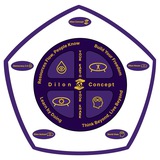
AI tools assist participants in governance processes, helping synthesize diverse inputs and identify potential solutions to complex challenges. This capability shows how AI can enhance rather than replace human decision-making.
Predictive Modeling
Sophisticated AI models predict outcomes of various decisions and implementation approaches, helping participants understand potential consequences before committing to specific pathways. This predictive capability accelerates learning and reduces the risks associated with implementation.
Personalized Experience Adaptation
AI personalizes each participant's experience based on their interests, skills, and learning needs, maximizing engagement and effectiveness. This adaptation demonstrates how AI can enhance individual autonomy within collective systems.
Data Collection and Analysis for Concept Refinement
Dilonland DAO functions as a comprehensive research platform:
Behavioral Analysis
The platform collects anonymized data on how participants interact with various aspects of the system, providing insights into human behavior within resource-based economic structures. This analysis helps refine the Dilon Concept to align with actual human tendencies.
Implementation Effectiveness Metrics
Detailed metrics track the effectiveness of different implementation approaches, identifying which strategies produce optimal outcomes across various contexts. This data-driven approach ensures that physical implementations build on proven successes.
Participant Feedback Systems
Structured feedback mechanisms enable participants to share their experiences and suggestions, ensuring the system evolves in response to user needs and perspectives. This participatory approach enhances both the quality of the concept and community ownership.
Comparative Analysis
The platform enables controlled experiments that compare different approaches to implementing Dilon principles, providing clear evidence of their relative effectiveness. This comparative capability accelerates learning and optimization.
Path from Virtual Testing to Physical Implementation
Dilonland DAO is designed to facilitate the transition from virtual testing to physical implementation:
Digital Twin Development
For planned physical implementations, detailed digital twins are created within the virtual environment, enabling comprehensive testing and refinement before physical construction commences. This approach reduces implementation risks while optimizing designs.
Implementation Planning Tools
Sophisticated planning tools help translate virtual successes into detailed implementation plans for physical projects, ensuring insights are effectively applied. These tools bridge the gap between virtual experimentation and real-world action.
Community Formation
The virtual environment enables future residents of physical implementations to form communities, establish governance processes, and build relationships before physical construction begins. This pre-implementation community building enhances the success of physical projects.
Continuous Feedback Loops
Once physical implementations begin, data from real-world projects feed back into the virtual environment, allowing for the continuous refinement of both the virtual and physical manifestations of the Dilon Concept. This iterative approach ensures ongoing improvement and adaptation.
Conclusion: The Vital Role of Dilonland DAO
Dilonland DAO represents a paradigm shift in how societal transformation can be approached—moving from theoretical speculation or risky large-scale implementation to data-driven, participatory evolution through virtual testing. By providing a space where the Dilon Concept can be experienced, refined, and validated before significant physical resources are committed, it dramatically increases the likelihood of successful implementation while building the community and capabilities needed for global transformation.
Predictive Modeling
Sophisticated AI models predict outcomes of various decisions and implementation approaches, helping participants understand potential consequences before committing to specific pathways. This predictive capability accelerates learning and reduces the risks associated with implementation.
Personalized Experience Adaptation
AI personalizes each participant's experience based on their interests, skills, and learning needs, maximizing engagement and effectiveness. This adaptation demonstrates how AI can enhance individual autonomy within collective systems.
Data Collection and Analysis for Concept Refinement
Dilonland DAO functions as a comprehensive research platform:
Behavioral Analysis
The platform collects anonymized data on how participants interact with various aspects of the system, providing insights into human behavior within resource-based economic structures. This analysis helps refine the Dilon Concept to align with actual human tendencies.
Implementation Effectiveness Metrics
Detailed metrics track the effectiveness of different implementation approaches, identifying which strategies produce optimal outcomes across various contexts. This data-driven approach ensures that physical implementations build on proven successes.
Participant Feedback Systems
Structured feedback mechanisms enable participants to share their experiences and suggestions, ensuring the system evolves in response to user needs and perspectives. This participatory approach enhances both the quality of the concept and community ownership.
Comparative Analysis
The platform enables controlled experiments that compare different approaches to implementing Dilon principles, providing clear evidence of their relative effectiveness. This comparative capability accelerates learning and optimization.
Path from Virtual Testing to Physical Implementation
Dilonland DAO is designed to facilitate the transition from virtual testing to physical implementation:
Digital Twin Development
For planned physical implementations, detailed digital twins are created within the virtual environment, enabling comprehensive testing and refinement before physical construction commences. This approach reduces implementation risks while optimizing designs.
Implementation Planning Tools
Sophisticated planning tools help translate virtual successes into detailed implementation plans for physical projects, ensuring insights are effectively applied. These tools bridge the gap between virtual experimentation and real-world action.
Community Formation
The virtual environment enables future residents of physical implementations to form communities, establish governance processes, and build relationships before physical construction begins. This pre-implementation community building enhances the success of physical projects.
Continuous Feedback Loops
Once physical implementations begin, data from real-world projects feed back into the virtual environment, allowing for the continuous refinement of both the virtual and physical manifestations of the Dilon Concept. This iterative approach ensures ongoing improvement and adaptation.
Conclusion: The Vital Role of Dilonland DAO
Dilonland DAO represents a paradigm shift in how societal transformation can be approached—moving from theoretical speculation or risky large-scale implementation to data-driven, participatory evolution through virtual testing. By providing a space where the Dilon Concept can be experienced, refined, and validated before significant physical resources are committed, it dramatically increases the likelihood of successful implementation while building the community and capabilities needed for global transformation.
As we move forward with implementing the Dilon Concept, Dilonland DAO will serve as both the proving ground for our ideas and the gathering place for our growing community. In this virtual space, the future we envision can be experienced, tested, and refined today.
Implementation Strategy and Roadmap
Transforming the Dilon Concept from vision to reality requires a carefully orchestrated implementation strategy that balances ambition with pragmatism. As the founder, I recognize that paradigm shifts of this magnitude cannot occur overnight—they require thoughtful phasing, strategic partnerships, and an adaptive approach responsive to real-world feedback. The integration of AI throughout this implementation process serves not merely as an end goal but as a powerful enabler of the transition itself.
Central to our implementation strategy is the Dilonland DAO—a decentralized autonomous organization providing a virtual environment for testing, refining, and scaling Dilon Concept ideas before and alongside physical implementation. This virtual testing ground represents a revolutionary approach to societal transformation, allowing us to iterate rapidly, gather data-driven insights, and build community while minimizing risks and implementation costs.
Phase 1: Foundational Technology Development (Years 1-3)
The initial phase focuses on developing the core technological infrastructure necessary to support the implementation of the Dilon Concept, with the Dilonland DAO serving as the primary testing environment.
Dilonland DAO Creation and Initial Virtual Testing
Technical Infrastructure Development: Establish the blockchain-based infrastructure for Dilonland DAO, including governance mechanisms, resource tracking systems, and participant interfaces.
Virtual Resource Rights System: Develop and deploy the initial version of virtual resource rights allocation, enabling participants to experience and interact with their digital representation of resource entitlements.
Simulation Environment: Develop AI-powered simulation models that predict the outcomes of various resource allocation strategies and governance decisions within a virtual environment.
Community Building: Recruit initial participants from diverse backgrounds to test, provide feedback, and help refine the virtual environment, establishing governance protocols for the DAO itself.
Democracy 2.0 Platform Development with Virtual Prototyping
Resource Tracking System: An AI-powered system for monitoring resource flows with unprecedented precision and transparency, first tested and refined within Dilonland DAO before physical implementation.
Personal Resource Rights Interface: A user-friendly application allowing individuals to monitor and manage their resource rights, with initial versions deployed in the virtual environment for usability testing and refinement.
Collective Decision-Making Tools: AI-enhanced platforms for democratic deliberation and decision-making about resource allocation, tested through virtual governance exercises in Dilonland DAO.
AI Ethics and Governance Framework with Simulation Testing
Ethical Guidelines for AI Development: A comprehensive framework ensuring all AI systems developed within the Dilon ecosystem adhere to principles of transparency, equity, and human empowerment, tested through simulated scenarios in Dilonland DAO.
Distributed Governance Structures: Mechanisms ensuring no single entity can control the direction of AI development, with representation from diverse stakeholders, including traditionally marginalized communities, prototyped through DAO governance.
Open Standards for AI Interoperability: Technical standards enabling diverse AI systems to work together seamlessly while preserving user autonomy and data sovereignty, tested through virtual integration exercises.
Data Sovereignty Infrastructure with Virtual User Testing
Personal Data Vaults: Secure, user-controlled repositories where individuals can store their data and selectively grant access for specific purposes, first implemented as virtual prototypes within Dilonland DAO.
Implementation Strategy and Roadmap
Transforming the Dilon Concept from vision to reality requires a carefully orchestrated implementation strategy that balances ambition with pragmatism. As the founder, I recognize that paradigm shifts of this magnitude cannot occur overnight—they require thoughtful phasing, strategic partnerships, and an adaptive approach responsive to real-world feedback. The integration of AI throughout this implementation process serves not merely as an end goal but as a powerful enabler of the transition itself.
Central to our implementation strategy is the Dilonland DAO—a decentralized autonomous organization providing a virtual environment for testing, refining, and scaling Dilon Concept ideas before and alongside physical implementation. This virtual testing ground represents a revolutionary approach to societal transformation, allowing us to iterate rapidly, gather data-driven insights, and build community while minimizing risks and implementation costs.
Phase 1: Foundational Technology Development (Years 1-3)
The initial phase focuses on developing the core technological infrastructure necessary to support the implementation of the Dilon Concept, with the Dilonland DAO serving as the primary testing environment.
Dilonland DAO Creation and Initial Virtual Testing
Technical Infrastructure Development: Establish the blockchain-based infrastructure for Dilonland DAO, including governance mechanisms, resource tracking systems, and participant interfaces.
Virtual Resource Rights System: Develop and deploy the initial version of virtual resource rights allocation, enabling participants to experience and interact with their digital representation of resource entitlements.
Simulation Environment: Develop AI-powered simulation models that predict the outcomes of various resource allocation strategies and governance decisions within a virtual environment.
Community Building: Recruit initial participants from diverse backgrounds to test, provide feedback, and help refine the virtual environment, establishing governance protocols for the DAO itself.
Democracy 2.0 Platform Development with Virtual Prototyping
Resource Tracking System: An AI-powered system for monitoring resource flows with unprecedented precision and transparency, first tested and refined within Dilonland DAO before physical implementation.
Personal Resource Rights Interface: A user-friendly application allowing individuals to monitor and manage their resource rights, with initial versions deployed in the virtual environment for usability testing and refinement.
Collective Decision-Making Tools: AI-enhanced platforms for democratic deliberation and decision-making about resource allocation, tested through virtual governance exercises in Dilonland DAO.
AI Ethics and Governance Framework with Simulation Testing
Ethical Guidelines for AI Development: A comprehensive framework ensuring all AI systems developed within the Dilon ecosystem adhere to principles of transparency, equity, and human empowerment, tested through simulated scenarios in Dilonland DAO.
Distributed Governance Structures: Mechanisms ensuring no single entity can control the direction of AI development, with representation from diverse stakeholders, including traditionally marginalized communities, prototyped through DAO governance.
Open Standards for AI Interoperability: Technical standards enabling diverse AI systems to work together seamlessly while preserving user autonomy and data sovereignty, tested through virtual integration exercises.
Data Sovereignty Infrastructure with Virtual User Testing
Personal Data Vaults: Secure, user-controlled repositories where individuals can store their data and selectively grant access for specific purposes, first implemented as virtual prototypes within Dilonland DAO.
Fair Compensation Mechanisms: Systems ensuring individuals receive appropriate value when their data contributes to AI advancement, tested through virtual data marketplace simulations.
Consent Management Tools: User-friendly interfaces allowing granular control over data usage permissions, with AI assistance to help users understand implications of different choices, refined through virtual user testing.
Phase 2: Pilot Programs and Community Adoption (Years 3-5)
With foundational technology in place, Phase 2 focuses on real-world implementation through carefully selected pilot programs, with Dilonland DAO serving as both a testing ground and a bridge between virtual and physical deployments.
Virtual-to-Physical Implementation Pipeline
Digital Twin Development: Create detailed digital representations of planned physical implementations within Dilonland DAO, allowing for comprehensive testing before committing resources to construction.
Simulation-Based Optimization: Utilize AI-powered simulations within a virtual environment to identify potential issues and optimize designs prior to physical implementation.
Community Co-Design: Enable future residents and users of physical implementations to participate in design and decision-making through the virtual environment, creating ownership and alignment before breaking ground.
Dilonland DAO Community Expansion and Governance
Scaled Participation: Expand Dilonland DAO membership to thousands of participants globally, creating a diverse community of testers and contributors.
Governance Evolution: Refine governance mechanisms based on actual usage patterns and participant feedback, developing increasingly sophisticated models for democratic decision-making.
Resource Rights Refinement: Test and iterate on resource rights allocation methodologies, developing nuanced approaches that account for diverse contexts and needs.
Dilon House Pilot Communities
We will establish:
Urban Pilot: A neighborhood-scale implementation in a major city, first designed and tested as a digital twin in Dilonland DAO before physical construction begins.
Rural Pilot: A small-town implementation showcasing self-sufficiency and sustainable resource management, with virtual testing informing physical development.
Retrofit Pilot: A program demonstrating how existing communities can transition toward the Dilon framework without complete rebuilding, using virtual simulations to identify optimal transition pathways.
Each pilot will incorporate:
AI-Enhanced Resource Management: Smart systems optimizing energy, water, food, and material flows, refined through virtual testing before deployment.
Community Governance Platforms: Local implementations of the Democracy 2.0 Platform for community decision-making, with governance protocols developed in Dilonland DAO.
Resource Rights Allocation: Practical testing of mechanisms for fair distribution of resource rights, building on insights from virtual experimentation.
Feedback Loops Between Virtual and Physical Implementations
Data Collection Systems: Implement comprehensive monitoring in physical pilot programs, feeding real-world data back into Dilonland DAO simulations for continuous refinement.
Comparative Analysis: Systematically compare outcomes between virtual predictions and physical results, identifying discrepancies and improving simulation accuracy.
Rapid Iteration Cycles: Utilize insights from physical implementations to update virtual models, and leverage refined virtual models to inform adjustments to physical implementations.
Phase 3: Scaling and Integration with Existing Systems (Years 5-10)
Building on lessons from pilot programs, Phase 3 focuses on scaling the Dilon Concept while creating bridges with existing economic, political, and social systems. The Dilonland DAO enables large-scale virtual testing of integration approaches.
Large-Scale Virtual Simulations of System Integration
Consent Management Tools: User-friendly interfaces allowing granular control over data usage permissions, with AI assistance to help users understand implications of different choices, refined through virtual user testing.
Phase 2: Pilot Programs and Community Adoption (Years 3-5)
With foundational technology in place, Phase 2 focuses on real-world implementation through carefully selected pilot programs, with Dilonland DAO serving as both a testing ground and a bridge between virtual and physical deployments.
Virtual-to-Physical Implementation Pipeline
Digital Twin Development: Create detailed digital representations of planned physical implementations within Dilonland DAO, allowing for comprehensive testing before committing resources to construction.
Simulation-Based Optimization: Utilize AI-powered simulations within a virtual environment to identify potential issues and optimize designs prior to physical implementation.
Community Co-Design: Enable future residents and users of physical implementations to participate in design and decision-making through the virtual environment, creating ownership and alignment before breaking ground.
Dilonland DAO Community Expansion and Governance
Scaled Participation: Expand Dilonland DAO membership to thousands of participants globally, creating a diverse community of testers and contributors.
Governance Evolution: Refine governance mechanisms based on actual usage patterns and participant feedback, developing increasingly sophisticated models for democratic decision-making.
Resource Rights Refinement: Test and iterate on resource rights allocation methodologies, developing nuanced approaches that account for diverse contexts and needs.
Dilon House Pilot Communities
We will establish:
Urban Pilot: A neighborhood-scale implementation in a major city, first designed and tested as a digital twin in Dilonland DAO before physical construction begins.
Rural Pilot: A small-town implementation showcasing self-sufficiency and sustainable resource management, with virtual testing informing physical development.
Retrofit Pilot: A program demonstrating how existing communities can transition toward the Dilon framework without complete rebuilding, using virtual simulations to identify optimal transition pathways.
Each pilot will incorporate:
AI-Enhanced Resource Management: Smart systems optimizing energy, water, food, and material flows, refined through virtual testing before deployment.
Community Governance Platforms: Local implementations of the Democracy 2.0 Platform for community decision-making, with governance protocols developed in Dilonland DAO.
Resource Rights Allocation: Practical testing of mechanisms for fair distribution of resource rights, building on insights from virtual experimentation.
Feedback Loops Between Virtual and Physical Implementations
Data Collection Systems: Implement comprehensive monitoring in physical pilot programs, feeding real-world data back into Dilonland DAO simulations for continuous refinement.
Comparative Analysis: Systematically compare outcomes between virtual predictions and physical results, identifying discrepancies and improving simulation accuracy.
Rapid Iteration Cycles: Utilize insights from physical implementations to update virtual models, and leverage refined virtual models to inform adjustments to physical implementations.
Phase 3: Scaling and Integration with Existing Systems (Years 5-10)
Building on lessons from pilot programs, Phase 3 focuses on scaling the Dilon Concept while creating bridges with existing economic, political, and social systems. The Dilonland DAO enables large-scale virtual testing of integration approaches.
Large-Scale Virtual Simulations of System Integration
Economic System Integration Models: Develop comprehensive simulations of how the Dilon Concept can integrate with existing economic systems, testing various transition pathways and identifying potential challenges.
Governance Hybridization Scenarios: Develop virtual testing environments for hybrid governance models that bridge the gap between current political systems and Democracy 2.0 approaches.
Resource Rights Implementation Strategies: Test various approaches to implementing resource rights within existing legal and economic frameworks, identifying optimal pathways for different contexts.
Government Partnerships
We will establish:
Municipal Implementations: Partnerships with forward-thinking cities to implement aspects of the Dilon Concept at the municipal scale, with Dilonland DAO providing virtual testing environments customized to each city's specific context.
Regional Resource Management Programs: Collaborations with regional governments on AI-powered resource tracking and optimization, using virtual simulations to demonstrate potential benefits before full implementation.
Policy Innovation Labs: Joint initiatives with government agencies to develop regulatory frameworks supporting the transition to a resource-based economy, with virtual testing of policy impacts before enactment.
Corporate Transition Programs
To engage the private sector, we will develop:
Business Model Transformation Roadmaps: Guidance for companies transitioning from profit-maximization to resource-optimization business models, with virtual simulations helping businesses understand implications and opportunities.
AI Alignment Certification: Programs helping companies ensure their AI development aligns with Dilon principles, with certification criteria refined through virtual testing scenarios.
Resource Rights Integration: Systems allowing companies to account for and honor individual resource rights in their operations, with virtual prototyping in Dilonland DAO before implementation.
Financial System Bridges
To facilitate the transition from current monetary systems, we will create:
Resource-Backed Currencies: Monetary instruments directly tied to specific resources, first tested as virtual currencies within Dilonland DAO before physical implementation.
Value Translation Protocols: AI-powered systems for fair conversion between traditional currencies and resource rights, refined through extensive virtual market simulations.
Investment Vehicles: Financial instruments allowing traditional capital to support Dilon Concept implementation while receiving fair returns, with risk and return profiles tested in virtual environments.
Phase 4: Global Expansion and Ecosystem Development (Years 10-20)
The final phase focuses on global scaling and the development of a self-sustaining ecosystem around the Dilon Concept, with Dilonland DAO evolving into a worldwide coordination mechanism.
Global Coordination Through Dilonland DAO
Decentralized Global Governance: Evolution of Dilonland DAO into a sophisticated global coordination mechanism for Dilon Concept implementation across diverse contexts.
Cross-Cultural Adaptation: Use of the virtual environment to test and refine adaptations of Dilon principles to diverse cultural contexts, ensuring relevance and appropriateness worldwide.
Implementation Knowledge Commons: Development of a comprehensive repository of implementation experiences, best practices, and lessons learned, accessible through the virtual environment.
Global Resource Rights Registry
We will establish:
Universal Resource Rights Allocation: Systems ensuring every person on Earth receives their fair share of resource rights from birth, with allocation methodologies refined through years of virtual testing in Dilonland DAO.
Global Governance Mechanisms: Democratic structures for decisions affecting planetary resources, enhanced by AI but ultimately controlled by human representatives, with governance protocols developed through years of virtual experimentation.
Governance Hybridization Scenarios: Develop virtual testing environments for hybrid governance models that bridge the gap between current political systems and Democracy 2.0 approaches.
Resource Rights Implementation Strategies: Test various approaches to implementing resource rights within existing legal and economic frameworks, identifying optimal pathways for different contexts.
Government Partnerships
We will establish:
Municipal Implementations: Partnerships with forward-thinking cities to implement aspects of the Dilon Concept at the municipal scale, with Dilonland DAO providing virtual testing environments customized to each city's specific context.
Regional Resource Management Programs: Collaborations with regional governments on AI-powered resource tracking and optimization, using virtual simulations to demonstrate potential benefits before full implementation.
Policy Innovation Labs: Joint initiatives with government agencies to develop regulatory frameworks supporting the transition to a resource-based economy, with virtual testing of policy impacts before enactment.
Corporate Transition Programs
To engage the private sector, we will develop:
Business Model Transformation Roadmaps: Guidance for companies transitioning from profit-maximization to resource-optimization business models, with virtual simulations helping businesses understand implications and opportunities.
AI Alignment Certification: Programs helping companies ensure their AI development aligns with Dilon principles, with certification criteria refined through virtual testing scenarios.
Resource Rights Integration: Systems allowing companies to account for and honor individual resource rights in their operations, with virtual prototyping in Dilonland DAO before implementation.
Financial System Bridges
To facilitate the transition from current monetary systems, we will create:
Resource-Backed Currencies: Monetary instruments directly tied to specific resources, first tested as virtual currencies within Dilonland DAO before physical implementation.
Value Translation Protocols: AI-powered systems for fair conversion between traditional currencies and resource rights, refined through extensive virtual market simulations.
Investment Vehicles: Financial instruments allowing traditional capital to support Dilon Concept implementation while receiving fair returns, with risk and return profiles tested in virtual environments.
Phase 4: Global Expansion and Ecosystem Development (Years 10-20)
The final phase focuses on global scaling and the development of a self-sustaining ecosystem around the Dilon Concept, with Dilonland DAO evolving into a worldwide coordination mechanism.
Global Coordination Through Dilonland DAO
Decentralized Global Governance: Evolution of Dilonland DAO into a sophisticated global coordination mechanism for Dilon Concept implementation across diverse contexts.
Cross-Cultural Adaptation: Use of the virtual environment to test and refine adaptations of Dilon principles to diverse cultural contexts, ensuring relevance and appropriateness worldwide.
Implementation Knowledge Commons: Development of a comprehensive repository of implementation experiences, best practices, and lessons learned, accessible through the virtual environment.
Global Resource Rights Registry
We will establish:
Universal Resource Rights Allocation: Systems ensuring every person on Earth receives their fair share of resource rights from birth, with allocation methodologies refined through years of virtual testing in Dilonland DAO.
Global Governance Mechanisms: Democratic structures for decisions affecting planetary resources, enhanced by AI but ultimately controlled by human representatives, with governance protocols developed through years of virtual experimentation.
Cross-Border Resource Flow Management: Systems optimizing resource distribution across national boundaries while respecting sovereignty, with complex scenarios tested in virtual environments before implementation.
Virtual Testing of Long-Term Outcomes
Generational Simulations: Development of sophisticated AI models capable of simulating outcomes across generations, helping identify potential long-term consequences of implementation decisions.
System Stability Analysis: Rigorous testing of the Dilon framework's resilience to various shocks and stresses, identifying potential vulnerabilities and developing mitigation strategies.
Adaptation Mechanism Testing: Virtual experimentation with various approaches to system evolution and adaptation, ensuring the framework can remain relevant and effective as conditions change.
Complete AI Integration
Building on earlier phases, we will develop:
Resource Optimization AI: Advanced systems continuously identify opportunities for more efficient, equitable resource use, with capabilities refined through years of virtual testing.
Democratic Process AI: Systems enhancing human deliberation and decision-making without replacing human judgment, with safeguards and limitations established through extensive virtual governance exercises.
Education AI: Personalized learning systems helping individuals develop their full potential within the Dilon framework, with pedagogical approaches refined through virtual educational experiments.
Key Partnerships and Stakeholder Engagement
Successful implementation requires strategic collaboration with diverse stakeholders, with Dilonland DAO serving as a neutral platform for engagement:
Academic Institutions
Partnerships with universities and research centers will provide:
Rigorous evaluation of both virtual and physical implementations
Research advancing theoretical foundations
Development of educational curricula
Technical innovation in AI and resource management
Civil Society Organizations
Engagement with NGOs and community groups will ensure:
Representation of diverse perspectives in both virtual and physical implementations
Grassroots mobilization and education
Accountability and oversight
Cultural adaptation across contexts
Technology Companies
Collaboration with forward-thinking tech firms will accelerate:
AI development aligned with Dilon principles
Platform infrastructure creation for both Dilonland DAO and physical implementations
User interface design and accessibility
Technical standards development
Government Agencies
Partnerships with innovative government entities will facilitate:
Regulatory framework development
Public resource integration
Scaling beyond private initiatives
International coordination
Financial Institutions
Engagement with progressive financial organizations will support:
Transition funding mechanisms
Resource-backed currency development
Investment vehicle creation
Legacy system integration
Implementation Challenges and Mitigation Strategies
We anticipate several key challenges in implementing the Dilon Concept and have developed proactive strategies to address them, with Dilonland DAO playing a central role in risk mitigation:
Technical Complexity
Challenge: The integrated systems required for the Dilon Concept involve unprecedented technical complexity.
Mitigation:
Modular architecture allowing incremental development and deployment
Open-source approach leveraging global developer community
AI-assisted development is accelerating innovation cycles
Rigorous testing in the Dilonland DAO virtual environment before physical deployment
Cultural Resistance
Challenge: The Dilon Concept represents a significant departure from dominant cultural paradigms around ownership, value, and success.
Mitigation:
Extensive education and communication programs
Demonstrable benefits in virtual simulations before asking for physical commitment
Cultural adaptation across different contexts tested in Dilonland DAO
Engagement with respected thought leaders and influencers
Political Opposition
Virtual Testing of Long-Term Outcomes
Generational Simulations: Development of sophisticated AI models capable of simulating outcomes across generations, helping identify potential long-term consequences of implementation decisions.
System Stability Analysis: Rigorous testing of the Dilon framework's resilience to various shocks and stresses, identifying potential vulnerabilities and developing mitigation strategies.
Adaptation Mechanism Testing: Virtual experimentation with various approaches to system evolution and adaptation, ensuring the framework can remain relevant and effective as conditions change.
Complete AI Integration
Building on earlier phases, we will develop:
Resource Optimization AI: Advanced systems continuously identify opportunities for more efficient, equitable resource use, with capabilities refined through years of virtual testing.
Democratic Process AI: Systems enhancing human deliberation and decision-making without replacing human judgment, with safeguards and limitations established through extensive virtual governance exercises.
Education AI: Personalized learning systems helping individuals develop their full potential within the Dilon framework, with pedagogical approaches refined through virtual educational experiments.
Key Partnerships and Stakeholder Engagement
Successful implementation requires strategic collaboration with diverse stakeholders, with Dilonland DAO serving as a neutral platform for engagement:
Academic Institutions
Partnerships with universities and research centers will provide:
Rigorous evaluation of both virtual and physical implementations
Research advancing theoretical foundations
Development of educational curricula
Technical innovation in AI and resource management
Civil Society Organizations
Engagement with NGOs and community groups will ensure:
Representation of diverse perspectives in both virtual and physical implementations
Grassroots mobilization and education
Accountability and oversight
Cultural adaptation across contexts
Technology Companies
Collaboration with forward-thinking tech firms will accelerate:
AI development aligned with Dilon principles
Platform infrastructure creation for both Dilonland DAO and physical implementations
User interface design and accessibility
Technical standards development
Government Agencies
Partnerships with innovative government entities will facilitate:
Regulatory framework development
Public resource integration
Scaling beyond private initiatives
International coordination
Financial Institutions
Engagement with progressive financial organizations will support:
Transition funding mechanisms
Resource-backed currency development
Investment vehicle creation
Legacy system integration
Implementation Challenges and Mitigation Strategies
We anticipate several key challenges in implementing the Dilon Concept and have developed proactive strategies to address them, with Dilonland DAO playing a central role in risk mitigation:
Technical Complexity
Challenge: The integrated systems required for the Dilon Concept involve unprecedented technical complexity.
Mitigation:
Modular architecture allowing incremental development and deployment
Open-source approach leveraging global developer community
AI-assisted development is accelerating innovation cycles
Rigorous testing in the Dilonland DAO virtual environment before physical deployment
Cultural Resistance
Challenge: The Dilon Concept represents a significant departure from dominant cultural paradigms around ownership, value, and success.
Mitigation:
Extensive education and communication programs
Demonstrable benefits in virtual simulations before asking for physical commitment
Cultural adaptation across different contexts tested in Dilonland DAO
Engagement with respected thought leaders and influencers
Political Opposition
Challenge: Entities benefiting from current systems may actively oppose the implementation of the Dilon Concept.
Mitigation:
Focus on non-threatening initial applications
Creation of transition benefits for existing power centers
Building broad-based coalitions transcending traditional political divisions
Use of Dilonland DAO to demonstrate benefits without requiring immediate system changes
Implementation Costs
Challenge: Transitioning to new systems requires significant upfront investment before full benefits are realized.
Mitigation:
Phased approach with each stage generating demonstrable value
Innovative funding mechanisms, including resource-backed bonds
Strategic partnerships reduce duplication of efforts
Virtual testing in Dilonland DAO reduces costly implementation errors
Virtual-to-Physical Implementation Gaps
Challenge: Insights from virtual testing may not perfectly translate to physical implementation due to unforeseen real-world factors.
Mitigation:
Continuous refinement of simulation models based on physical implementation data
Conservative interpretation of virtual testing results
Incremental physical implementation with frequent reassessment
Maintaining flexibility to adapt physical implementations based on emerging realities
The implementation strategy outlined above represents a balanced approach combining bold vision with practical realism. By leveraging Dilonland DAO as a virtual testing environment alongside physical implementation, we can transform the Dilon Concept from theoretical framework to lived reality with reduced risk and increased effectiveness, creating a world where AI serves as a powerful tool for human flourishing within planetary boundaries.
Future Vision and Call to Action
As we stand at this pivotal moment in human history, the path we choose for the development of artificial intelligence will shape not just our technological landscape but also the very fabric of our society for generations to come. The Dilon Concept offers not merely an alternative approach to AI, but a comprehensive vision for how this transformative technology can catalyze a fundamental restructuring of our relationships with resources, governance, education, and one another. And through Dilonland DAO, we now have a powerful tool to test, refine, and demonstrate this vision in a participatory virtual environment.
A Vision of Integrated Harmony
Imagine a world twenty years from now where the Dilon Concept has been fully implemented and AI has matured within this framework. What might this world look like?
In this future, every child born receives their birthright share of Earth's resources, recorded on the global resource rights registry. Their parents can choose to allocate some of these rights toward their education and development, while preserving others for when they reach adulthood. No child anywhere on Earth lives in poverty or lacks access to essential resources—not because of charity but because of recognized inherent rights.
The path to this reality began in Dilonland DAO, where virtual resource rights allocation systems were tested and refined, providing data-driven insights that guided physical implementation. What started as a virtual experiment evolved into a global framework for equitable resource distribution, with millions of early participants in the DAO becoming advocates and implementers of the physical system.
Communities around the world have transformed through the Dilon House model. Urban neighborhoods have mainly become self-sufficient, with AI-optimized vertical farms producing fresh food, renewable energy systems meeting local needs, and waste transformed into valuable inputs for other processes. Rural communities have experienced revitalization, as the ability to work remotely, combined with resource self-sufficiency, has reversed urbanization trends, redistributing population more harmoniously across landscapes.
Mitigation:
Focus on non-threatening initial applications
Creation of transition benefits for existing power centers
Building broad-based coalitions transcending traditional political divisions
Use of Dilonland DAO to demonstrate benefits without requiring immediate system changes
Implementation Costs
Challenge: Transitioning to new systems requires significant upfront investment before full benefits are realized.
Mitigation:
Phased approach with each stage generating demonstrable value
Innovative funding mechanisms, including resource-backed bonds
Strategic partnerships reduce duplication of efforts
Virtual testing in Dilonland DAO reduces costly implementation errors
Virtual-to-Physical Implementation Gaps
Challenge: Insights from virtual testing may not perfectly translate to physical implementation due to unforeseen real-world factors.
Mitigation:
Continuous refinement of simulation models based on physical implementation data
Conservative interpretation of virtual testing results
Incremental physical implementation with frequent reassessment
Maintaining flexibility to adapt physical implementations based on emerging realities
The implementation strategy outlined above represents a balanced approach combining bold vision with practical realism. By leveraging Dilonland DAO as a virtual testing environment alongside physical implementation, we can transform the Dilon Concept from theoretical framework to lived reality with reduced risk and increased effectiveness, creating a world where AI serves as a powerful tool for human flourishing within planetary boundaries.
Future Vision and Call to Action
As we stand at this pivotal moment in human history, the path we choose for the development of artificial intelligence will shape not just our technological landscape but also the very fabric of our society for generations to come. The Dilon Concept offers not merely an alternative approach to AI, but a comprehensive vision for how this transformative technology can catalyze a fundamental restructuring of our relationships with resources, governance, education, and one another. And through Dilonland DAO, we now have a powerful tool to test, refine, and demonstrate this vision in a participatory virtual environment.
A Vision of Integrated Harmony
Imagine a world twenty years from now where the Dilon Concept has been fully implemented and AI has matured within this framework. What might this world look like?
In this future, every child born receives their birthright share of Earth's resources, recorded on the global resource rights registry. Their parents can choose to allocate some of these rights toward their education and development, while preserving others for when they reach adulthood. No child anywhere on Earth lives in poverty or lacks access to essential resources—not because of charity but because of recognized inherent rights.
The path to this reality began in Dilonland DAO, where virtual resource rights allocation systems were tested and refined, providing data-driven insights that guided physical implementation. What started as a virtual experiment evolved into a global framework for equitable resource distribution, with millions of early participants in the DAO becoming advocates and implementers of the physical system.
Communities around the world have transformed through the Dilon House model. Urban neighborhoods have mainly become self-sufficient, with AI-optimized vertical farms producing fresh food, renewable energy systems meeting local needs, and waste transformed into valuable inputs for other processes. Rural communities have experienced revitalization, as the ability to work remotely, combined with resource self-sufficiency, has reversed urbanization trends, redistributing population more harmoniously across landscapes.
Each of these communities was first designed and tested as a digital twin within Dilonland DAO, allowing future residents to experience, refine, and optimize their living environments before physical construction began. This virtual-first approach significantly reduced implementation costs and risks, while ensuring that designs truly met human needs.
The Democracy 2.0 Platform has evolved into a sophisticated system enabling meaningful participation in decisions at all scales. Citizens engage in nuanced deliberation about resource allocation, assisted by AI systems that help synthesize diverse perspectives and identify creative solutions to complex challenges. Leadership positions are filled based on demonstrated resource management abilities rather than wealth or charisma, creating a true meritocracy of stewardship.
These governance systems were developed through years of experimentation in Dilonland DAO, where participants tested various decision-making processes, leadership selection mechanisms, and AI support tools. The virtual environment provided a laboratory for democratic innovation, identifying approaches that maximized both participation and effectiveness.
Education has been transformed through the Dilon School approach. Young people learn through direct engagement with real-world challenges, developing both practical skills and a deep understanding of complex systems. AI tutors provide personalized guidance, adapting to each learner's unique strengths and interests while ensuring all develop the capabilities needed for genuine autonomy and meaningful contribution.
Dilonland DAO itself served as an educational platform where participants learned through direct experience, with AI-powered learning tools adapting to individual needs and interests. This virtual learning environment demonstrated how education could shift from standardized content delivery to personalized, experiential learning at scale.
The economy has shifted from a money-centered to a resource-centered approach, with AI systems tracking resource flows with unprecedented precision and transparency. Markets still exist, but they function as tools for efficient resource allocation rather than mechanisms for wealth accumulation. Innovation flourishes when people are freed from artificial scarcity, allowing them to pursue their genuine interests and address meaningful challenges.
This economic transformation began in the virtual economy of Dilonland DAO, where participants experienced how resource-based exchange systems could function in practice. The virtual environment provided a space to test various economic mechanisms, identify potential challenges, and develop solutions before implementing them in the physical economy.
Artificial intelligence has developed along a radically different trajectory than once feared. Rather than becoming centralized tools of surveillance and control, AI systems have evolved as distributed aids to human flourishing. Personal AI assistants help individuals manage their resource rights and navigate complex systems. Community AI systems optimize local resource flows while respecting democratically established priorities. Global AI networks identify opportunities for mutually beneficial exchange across regions.
This beneficial trajectory was shaped by governance frameworks and technical approaches developed and tested in Dilonland DAO, where participants experienced various models of human-AI collaboration and provided feedback that guided development. The virtual environment created a space where AI could be aligned with human values by design rather than as an afterthought.
The Democracy 2.0 Platform has evolved into a sophisticated system enabling meaningful participation in decisions at all scales. Citizens engage in nuanced deliberation about resource allocation, assisted by AI systems that help synthesize diverse perspectives and identify creative solutions to complex challenges. Leadership positions are filled based on demonstrated resource management abilities rather than wealth or charisma, creating a true meritocracy of stewardship.
These governance systems were developed through years of experimentation in Dilonland DAO, where participants tested various decision-making processes, leadership selection mechanisms, and AI support tools. The virtual environment provided a laboratory for democratic innovation, identifying approaches that maximized both participation and effectiveness.
Education has been transformed through the Dilon School approach. Young people learn through direct engagement with real-world challenges, developing both practical skills and a deep understanding of complex systems. AI tutors provide personalized guidance, adapting to each learner's unique strengths and interests while ensuring all develop the capabilities needed for genuine autonomy and meaningful contribution.
Dilonland DAO itself served as an educational platform where participants learned through direct experience, with AI-powered learning tools adapting to individual needs and interests. This virtual learning environment demonstrated how education could shift from standardized content delivery to personalized, experiential learning at scale.
The economy has shifted from a money-centered to a resource-centered approach, with AI systems tracking resource flows with unprecedented precision and transparency. Markets still exist, but they function as tools for efficient resource allocation rather than mechanisms for wealth accumulation. Innovation flourishes when people are freed from artificial scarcity, allowing them to pursue their genuine interests and address meaningful challenges.
This economic transformation began in the virtual economy of Dilonland DAO, where participants experienced how resource-based exchange systems could function in practice. The virtual environment provided a space to test various economic mechanisms, identify potential challenges, and develop solutions before implementing them in the physical economy.
Artificial intelligence has developed along a radically different trajectory than once feared. Rather than becoming centralized tools of surveillance and control, AI systems have evolved as distributed aids to human flourishing. Personal AI assistants help individuals manage their resource rights and navigate complex systems. Community AI systems optimize local resource flows while respecting democratically established priorities. Global AI networks identify opportunities for mutually beneficial exchange across regions.
This beneficial trajectory was shaped by governance frameworks and technical approaches developed and tested in Dilonland DAO, where participants experienced various models of human-AI collaboration and provided feedback that guided development. The virtual environment created a space where AI could be aligned with human values by design rather than as an afterthought.
Most importantly, this world is characterized by a profound sense of agency and possibility. People no longer feel trapped in dysfunctional systems beyond their control but experience themselves as active participants in continuously evolving, fundamentally life-affirming social structures. The existential dread that characterized the early 21st century has been replaced by a grounded optimism based not on naive techno-utopianism but on demonstrated capacity for positive transformation.
This sense of agency began with participation in Dilonland DAO, where individuals experienced their capacity to shape systems rather than merely being shaped by them. The virtual environment provided a taste of what was possible, building both the skills and the confidence needed for broader societal transformation.
This vision is ambitious but achievable. The technologies required are either already available or within reach. The principles have been tested at more minor scales and have been found to be viable. What remains is the collective will to move from isolated experiments to systematic implementation, to choose a different path for our technological and social evolution. And through Dilonland DAO, we now have a powerful tool to build that collective will through direct experience rather than abstract argument.
Beyond Technical Solutions: A New Narrative
The transition to this future requires more than technical innovation or policy reform. It demands a new narrative about who we are and what kind of society we wish to create. The Dilon Concept offers this narrative—a story about humanity reclaiming its relationship with Earth's resources and harnessing technological advancement for genuine flourishing rather than illusory progress.
Dilonland DAO brings this narrative to life in a virtual environment where it can be experienced rather than merely contemplated. This experiential dimension transforms abstract principles into lived reality, building both understanding and commitment in ways that theoretical exposition alone cannot achieve.
This narrative challenges the assumptions underlying our current systems: that scarcity is inevitable, that competition must trump cooperation, that value can be adequately represented by abstract financial instruments, and that technological advancement must concentrate power rather than distribute it. It offers instead a vision grounded in abundance within planetary boundaries, cooperation alongside healthy competition, direct relationship with real resources, and technology as a tool for empowerment rather than control.
The integration of AI within this narrative is compelling. Rather than fearing artificial intelligence as a potential usurper of human relevance, we can recognize it as a tool uniquely suited to helping us manage complexity, optimize resource flows, and enhance our collective decision-making—if developed within the proper framework. The Dilon Concept provides this framework, aligning AI advancement with human flourishing by design rather than as an afterthought.
Dilonland DAO demonstrates this alignment in practice, showing how AI can enhance human capabilities and support human values rather than undermining them. The virtual environment offers a space where individuals can experience the benefits of AI integration firsthand, transforming abstract possibilities into tangible experiences.
Addressing Potential Criticisms
Any vision of this magnitude will face skepticism and criticism. Let me address some potential objections directly:
This sense of agency began with participation in Dilonland DAO, where individuals experienced their capacity to shape systems rather than merely being shaped by them. The virtual environment provided a taste of what was possible, building both the skills and the confidence needed for broader societal transformation.
This vision is ambitious but achievable. The technologies required are either already available or within reach. The principles have been tested at more minor scales and have been found to be viable. What remains is the collective will to move from isolated experiments to systematic implementation, to choose a different path for our technological and social evolution. And through Dilonland DAO, we now have a powerful tool to build that collective will through direct experience rather than abstract argument.
Beyond Technical Solutions: A New Narrative
The transition to this future requires more than technical innovation or policy reform. It demands a new narrative about who we are and what kind of society we wish to create. The Dilon Concept offers this narrative—a story about humanity reclaiming its relationship with Earth's resources and harnessing technological advancement for genuine flourishing rather than illusory progress.
Dilonland DAO brings this narrative to life in a virtual environment where it can be experienced rather than merely contemplated. This experiential dimension transforms abstract principles into lived reality, building both understanding and commitment in ways that theoretical exposition alone cannot achieve.
This narrative challenges the assumptions underlying our current systems: that scarcity is inevitable, that competition must trump cooperation, that value can be adequately represented by abstract financial instruments, and that technological advancement must concentrate power rather than distribute it. It offers instead a vision grounded in abundance within planetary boundaries, cooperation alongside healthy competition, direct relationship with real resources, and technology as a tool for empowerment rather than control.
The integration of AI within this narrative is compelling. Rather than fearing artificial intelligence as a potential usurper of human relevance, we can recognize it as a tool uniquely suited to helping us manage complexity, optimize resource flows, and enhance our collective decision-making—if developed within the proper framework. The Dilon Concept provides this framework, aligning AI advancement with human flourishing by design rather than as an afterthought.
Dilonland DAO demonstrates this alignment in practice, showing how AI can enhance human capabilities and support human values rather than undermining them. The virtual environment offers a space where individuals can experience the benefits of AI integration firsthand, transforming abstract possibilities into tangible experiences.
Addressing Potential Criticisms
Any vision of this magnitude will face skepticism and criticism. Let me address some potential objections directly:
"This is utopian thinking disconnected from human nature." The Dilon Concept is not based on assumptions of perfect human behavior but on creating systems that better align incentives with collective well-being. It acknowledges human complexity—our capacity for both cooperation and competition, as well as altruism and self-interest—and designs accordingly. Dilonland DAO provides a space where these incentive structures can be tested with real human participants, gathering empirical data on how people behave within alternative systems rather than relying on theoretical assumptions.
"The transition would be too disruptive." The implementation strategy outlined in this paper addresses explicitly transition challenges through a phased approach, bridge mechanisms between current and future systems, and careful attention to minimizing unnecessary disruption while maximizing benefits. Dilonland DAO further reduces transition risks by allowing concepts to be tested and refined in a virtual environment before physical implementation, thereby identifying potential challenges and developing proactive solutions.
"Powerful interests would prevent this transformation." While resistance from those benefiting from current arrangements is inevitable, the Dilon Concept creates opportunities for existing power centers to adapt and thrive in new ways rather than being displaced. The transition can be positioned as an evolution rather than a revolution. Dilonland DAO provides a non-threatening space where these adaptations can be explored and demonstrated, potentially reducing resistance by showing pathways that benefit all stakeholders.
"Resource-based economies have been tried and failed." Previous attempts at resource-based economic models lacked the technological infrastructure to manage complexity at scale. AI fundamentally changes this equation, making possible what was previously computationally infeasible. Dilonland DAO demonstrates this feasibility in practice, showing how AI-powered resource tracking and allocation can function effectively at scale in a virtual environment before being implemented physically.
"AI cannot be controlled and will inevitably concentrate power." This deterministic view ignores the role of intentional design in shaping technological trajectories. AI developed within the Dilon framework would have fundamentally different characteristics than AI developed within current economic structures. Dilonland DAO provides a controlled environment where alternative approaches to AI governance and alignment can be tested and refined, demonstrating that technological trajectories are choices rather than inevitabilities.
"Virtual testing cannot accurately predict real-world outcomes." While no simulation can perfectly predict reality, Dilonland DAO provides valuable insights that reduce implementation risks and improve designs before physical resources are committed. The iterative approach—moving from virtual testing to small-scale physical implementation and back to refined virtual models—creates a learning cycle that continuously improves both the predictive accuracy of the virtual environment and the effectiveness of the physical implementation.
These criticisms deserve serious engagement rather than dismissal. The Dilon Concept continues to evolve through dialogue with diverse perspectives, incorporating valid concerns while maintaining its core principles. Dilonland DAO provides a space where this evolution can occur through direct experience and empirical testing rather than purely theoretical debate.
A Personal Commitment
As the founder of the Dilon Concept and Dilonland DAO, I am under no illusions about the magnitude of the transformation proposed. This is the work of a generation, not a quarterly business cycle. It requires sustained commitment, openness to learning and adaptation, and collaboration across traditional boundaries.
"The transition would be too disruptive." The implementation strategy outlined in this paper addresses explicitly transition challenges through a phased approach, bridge mechanisms between current and future systems, and careful attention to minimizing unnecessary disruption while maximizing benefits. Dilonland DAO further reduces transition risks by allowing concepts to be tested and refined in a virtual environment before physical implementation, thereby identifying potential challenges and developing proactive solutions.
"Powerful interests would prevent this transformation." While resistance from those benefiting from current arrangements is inevitable, the Dilon Concept creates opportunities for existing power centers to adapt and thrive in new ways rather than being displaced. The transition can be positioned as an evolution rather than a revolution. Dilonland DAO provides a non-threatening space where these adaptations can be explored and demonstrated, potentially reducing resistance by showing pathways that benefit all stakeholders.
"Resource-based economies have been tried and failed." Previous attempts at resource-based economic models lacked the technological infrastructure to manage complexity at scale. AI fundamentally changes this equation, making possible what was previously computationally infeasible. Dilonland DAO demonstrates this feasibility in practice, showing how AI-powered resource tracking and allocation can function effectively at scale in a virtual environment before being implemented physically.
"AI cannot be controlled and will inevitably concentrate power." This deterministic view ignores the role of intentional design in shaping technological trajectories. AI developed within the Dilon framework would have fundamentally different characteristics than AI developed within current economic structures. Dilonland DAO provides a controlled environment where alternative approaches to AI governance and alignment can be tested and refined, demonstrating that technological trajectories are choices rather than inevitabilities.
"Virtual testing cannot accurately predict real-world outcomes." While no simulation can perfectly predict reality, Dilonland DAO provides valuable insights that reduce implementation risks and improve designs before physical resources are committed. The iterative approach—moving from virtual testing to small-scale physical implementation and back to refined virtual models—creates a learning cycle that continuously improves both the predictive accuracy of the virtual environment and the effectiveness of the physical implementation.
These criticisms deserve serious engagement rather than dismissal. The Dilon Concept continues to evolve through dialogue with diverse perspectives, incorporating valid concerns while maintaining its core principles. Dilonland DAO provides a space where this evolution can occur through direct experience and empirical testing rather than purely theoretical debate.
A Personal Commitment
As the founder of the Dilon Concept and Dilonland DAO, I am under no illusions about the magnitude of the transformation proposed. This is the work of a generation, not a quarterly business cycle. It requires sustained commitment, openness to learning and adaptation, and collaboration across traditional boundaries.
The final core principle emphasizes individual and community self-sufficiency as essential for true freedom and sustainability:
Local solutions are prioritized over global standardization
Communities are empowered to meet their own needs through direct resource access
Dependency on centralized systems is reduced
Diversity of approaches is encouraged based on local conditions and preferences
This principle acknowledges that genuine autonomy necessitates the capacity to meet one's basic needs independently, which in turn requires direct access to the necessary resources. By emphasizing self-sufficiency, the Dilon Concept aims to create more resilient and adaptable systems that can withstand various shocks and disruptions.
Main Components
The Dilon Concept includes four main components that provide practical implementation pathways for its core principles:
Democracy 2.0 Platform
This technological platform serves as the infrastructure for a resource-based economy by:
Tracking resource availability, distribution, and use
Providing transparency in resource allocation
Enabling democratic decision-making about resource management
Creating accountability through open information access
The platform represents an evolution of democratic governance beyond simple voting to include direct participation in resource management decisions that affect everyone's well-being.
Dilon House
This component provides a model for sustainable autonomous living that demonstrates the practical implementation of resource-based economics:
Showcases self-sufficient housing designs that minimize resource consumption
Integrates renewable energy, water harvesting, and food production
Creates templates for community-scale resource management
Demonstrates how resource rights can translate into practical living arrangements
The Dilon House serves as both a proof of concept and a practical template that can be adapted to various cultural and ecological contexts.
Dilon School
Education is reimagined through this component to focus on practical resource management skills:
Emphasizes hands-on learning rather than abstract theory
Teaches self-sufficiency skills for sustainable living
Develops resource management capabilities from an early age
Prepares individuals to participate effectively in a resource-based economy
By transforming education to focus on practical skills and resource understanding, the Dilon School component aims to create generations capable of managing resources wisely and living autonomously.
Worldview Ideology Institute
This component addresses the philosophical and ideological dimensions of transitioning to a resource-based system:
Develops and refines the philosophical foundations for the Dilon Concept
Researches and promotes ethical approaches to resource management
Addresses ideological challenges in transitioning from monetary to resource-based systems
Provides an intellectual framework for societal transformation
Recognizing that economic systems are always embedded in broader worldviews and value systems, this component works to articulate and develop the philosophical underpinnings necessary for widespread adoption of resource-based approaches.
Addressing Key Issues
The Dilon Concept offers distinctive approaches to several persistent social and economic problems:
Poverty Elimination
Rather than treating poverty through charity or welfare, the Dilon Concept redefines poverty itself:
Poverty is understood as a lack of access to resources rather than a lack of money
Direct resource rights address the root causes of poverty
Basic needs are met through guaranteed resource access
This approach eliminates the need for traditional welfare systems
The Dilon Concept aims to make poverty structurally impossible rather than merely alleviating its symptoms by ensuring that everyone has direct access to the resources needed for a dignified life.
Corruption Reduction
Corruption is addressed through systemic design rather than merely punishing individual wrongdoing:
Transparent resource tracking reduces opportunities for corruption
Local solutions are prioritized over global standardization
Communities are empowered to meet their own needs through direct resource access
Dependency on centralized systems is reduced
Diversity of approaches is encouraged based on local conditions and preferences
This principle acknowledges that genuine autonomy necessitates the capacity to meet one's basic needs independently, which in turn requires direct access to the necessary resources. By emphasizing self-sufficiency, the Dilon Concept aims to create more resilient and adaptable systems that can withstand various shocks and disruptions.
Main Components
The Dilon Concept includes four main components that provide practical implementation pathways for its core principles:
Democracy 2.0 Platform
This technological platform serves as the infrastructure for a resource-based economy by:
Tracking resource availability, distribution, and use
Providing transparency in resource allocation
Enabling democratic decision-making about resource management
Creating accountability through open information access
The platform represents an evolution of democratic governance beyond simple voting to include direct participation in resource management decisions that affect everyone's well-being.
Dilon House
This component provides a model for sustainable autonomous living that demonstrates the practical implementation of resource-based economics:
Showcases self-sufficient housing designs that minimize resource consumption
Integrates renewable energy, water harvesting, and food production
Creates templates for community-scale resource management
Demonstrates how resource rights can translate into practical living arrangements
The Dilon House serves as both a proof of concept and a practical template that can be adapted to various cultural and ecological contexts.
Dilon School
Education is reimagined through this component to focus on practical resource management skills:
Emphasizes hands-on learning rather than abstract theory
Teaches self-sufficiency skills for sustainable living
Develops resource management capabilities from an early age
Prepares individuals to participate effectively in a resource-based economy
By transforming education to focus on practical skills and resource understanding, the Dilon School component aims to create generations capable of managing resources wisely and living autonomously.
Worldview Ideology Institute
This component addresses the philosophical and ideological dimensions of transitioning to a resource-based system:
Develops and refines the philosophical foundations for the Dilon Concept
Researches and promotes ethical approaches to resource management
Addresses ideological challenges in transitioning from monetary to resource-based systems
Provides an intellectual framework for societal transformation
Recognizing that economic systems are always embedded in broader worldviews and value systems, this component works to articulate and develop the philosophical underpinnings necessary for widespread adoption of resource-based approaches.
Addressing Key Issues
The Dilon Concept offers distinctive approaches to several persistent social and economic problems:
Poverty Elimination
Rather than treating poverty through charity or welfare, the Dilon Concept redefines poverty itself:
Poverty is understood as a lack of access to resources rather than a lack of money
Direct resource rights address the root causes of poverty
Basic needs are met through guaranteed resource access
This approach eliminates the need for traditional welfare systems
The Dilon Concept aims to make poverty structurally impossible rather than merely alleviating its symptoms by ensuring that everyone has direct access to the resources needed for a dignified life.
Corruption Reduction
Corruption is addressed through systemic design rather than merely punishing individual wrongdoing:
Transparent resource tracking reduces opportunities for corruption
Islam prohibits waste and excessive consumption (israf). The Quran states that "the wasteful are brothers of the devils" (17:27). Islamic teachings emphasize moderation in resource use and the preservation of natural systems.
Judaism has concepts like bal tashchit (prohibition against needless destruction), which has been expanded in contemporary Jewish thought to encompass broader environmental ethics and resource conservation.
Hinduism reveres nature and promotes harmony with the environment. Its sacred texts describe the interconnectedness of all life and the importance of maintaining balance in natural systems.
Buddhism teaches the Middle Way, avoiding both excessive consumption and extreme deprivation. The principle of non-harming (ahimsa) extends to environmental impacts, encouraging mindful use of resources.
The Dilon Concept aligns with these religious perspectives by:
Emphasizing sustainable resource management as a core principle
Promoting self-sufficiency and reduced consumption through efficient design
Focusing on long-term planning for resource use across generations
Encouraging a balance between human needs and resource limitations
Both frameworks acknowledge that current resource use must consider the needs of future generations and the health of ecological systems. They reject short-term exploitation for immediate gain in favor of sustainable management that preserves resources for the future. While religious traditions approach this through ethical teachings about moderation and responsibility, the Dilon Concept builds sustainability into its structural design through resource tracking, education, and management systems.
These alignments between religious perspectives and the Dilon Concept reveal a shared vision of economic life that differs significantly from conventional Western financial systems. Despite their diverse origins and contexts, major world religions consistently articulate economic values that find greater expression in the Dilon Concept's resource-based approach than in traditional capitalism's profit-maximizing, growth-oriented framework. This suggests that the Dilon Concept may offer a pathway for implementing economic arrangements more aligned with humanity's deepest spiritual and ethical traditions.
Differences Between Religious Perspectives and Traditional Western Economics
While the previous section highlighted alignments between religious perspectives and the Dilon Concept, this section examines the significant divergences between religious economic teachings and traditional Western economic systems. Across five key dimensions, religious perspectives consistently challenge fundamental assumptions and practices of conventional Western economics.
Purpose of Economic Activity
Perhaps the most fundamental difference concerns the very purpose of economic activity—what economies are ultimately for and how success should be measured.
Religious perspectives consistently emphasize that economic activity should serve human dignity and the common good:
Christianity teaches that economic activity should support human dignity and development while serving the common good. Pope Francis has criticized economies that prioritize profit over people, stating that "the economy should serve humanity, not the other way around."
Islam views economic activity as a means to fulfill needs while adhering to ethical principles derived from divine guidance. The purpose is not merely material gain but the creation of a just society that reflects divine values.
Judaism holds that wealth creation should support community welfare and enable the fulfillment of religious obligations. Economic success is measured not merely by accumulation but by how resources are used to support family, community, and religious life.
Hinduism teaches that economic activity should align with dharma (righteousness), with material prosperity serving as a foundation for spiritual development rather than as an end in itself.
Judaism has concepts like bal tashchit (prohibition against needless destruction), which has been expanded in contemporary Jewish thought to encompass broader environmental ethics and resource conservation.
Hinduism reveres nature and promotes harmony with the environment. Its sacred texts describe the interconnectedness of all life and the importance of maintaining balance in natural systems.
Buddhism teaches the Middle Way, avoiding both excessive consumption and extreme deprivation. The principle of non-harming (ahimsa) extends to environmental impacts, encouraging mindful use of resources.
The Dilon Concept aligns with these religious perspectives by:
Emphasizing sustainable resource management as a core principle
Promoting self-sufficiency and reduced consumption through efficient design
Focusing on long-term planning for resource use across generations
Encouraging a balance between human needs and resource limitations
Both frameworks acknowledge that current resource use must consider the needs of future generations and the health of ecological systems. They reject short-term exploitation for immediate gain in favor of sustainable management that preserves resources for the future. While religious traditions approach this through ethical teachings about moderation and responsibility, the Dilon Concept builds sustainability into its structural design through resource tracking, education, and management systems.
These alignments between religious perspectives and the Dilon Concept reveal a shared vision of economic life that differs significantly from conventional Western financial systems. Despite their diverse origins and contexts, major world religions consistently articulate economic values that find greater expression in the Dilon Concept's resource-based approach than in traditional capitalism's profit-maximizing, growth-oriented framework. This suggests that the Dilon Concept may offer a pathway for implementing economic arrangements more aligned with humanity's deepest spiritual and ethical traditions.
Differences Between Religious Perspectives and Traditional Western Economics
While the previous section highlighted alignments between religious perspectives and the Dilon Concept, this section examines the significant divergences between religious economic teachings and traditional Western economic systems. Across five key dimensions, religious perspectives consistently challenge fundamental assumptions and practices of conventional Western economics.
Purpose of Economic Activity
Perhaps the most fundamental difference concerns the very purpose of economic activity—what economies are ultimately for and how success should be measured.
Religious perspectives consistently emphasize that economic activity should serve human dignity and the common good:
Christianity teaches that economic activity should support human dignity and development while serving the common good. Pope Francis has criticized economies that prioritize profit over people, stating that "the economy should serve humanity, not the other way around."
Islam views economic activity as a means to fulfill needs while adhering to ethical principles derived from divine guidance. The purpose is not merely material gain but the creation of a just society that reflects divine values.
Judaism holds that wealth creation should support community welfare and enable the fulfillment of religious obligations. Economic success is measured not merely by accumulation but by how resources are used to support family, community, and religious life.
Hinduism teaches that economic activity should align with dharma (righteousness), with material prosperity serving as a foundation for spiritual development rather than as an end in itself.
These themes provide a framework for Christian engagement with economic questions that transcends specific policy prescriptions. They offer ethical principles that can be applied to different economic systems and historical contexts.
Islam: Divine Guidance for Economic Justice
Islamic teachings on economics and finance are remarkably comprehensive, offering detailed guidance on financial transactions, wealth creation, and the distribution of resources. Unlike some religious traditions that address economic matters primarily in general ethical terms, Islam provides specific rules and principles that have given rise to a distinct Islamic economic system and financial industry.
At the heart of Islamic economic ethics is the understanding that all wealth ultimately belongs to Allah, with humans serving as trustees rather than absolute owners. This perspective fundamentally shapes how Muslims are called to approach economic activity, emphasizing responsibility, moderation, and ethical constraints on the pursuit and use of wealth.
The most distinctive feature of Islamic economics is the prohibition of riba, which refers to interest or usury. Based on clear Quranic injunctions, Islamic law forbids charging or paying interest on loans. This prohibition stems from the view that money should function as a medium of exchange rather than a commodity that generates profit merely through lending. Instead of interest-based transactions, Islamic finance promotes risk-sharing arrangements in which lenders participate in both the gains and losses of the enterprises they finance.
Several key principles further characterize the Islamic approach to finance:
Asset-backed transactions: Financial dealings should be tied to tangible assets or economic activities, rather than abstract financial instruments that are divorced from the real economy.
Ethical investment restrictions: Investment in specific industries and activities considered harmful (haram) is prohibited, including alcohol, gambling, pornography, and conventional interest-based financial services.
Prohibition of excessive uncertainty (gharar): Contracts must have clear terms and avoid excessive ambiguity or speculation.
Prohibition of gambling-like activities (maisir): Transactions that resemble gambling, where gain comes from chance rather than productive effort, are forbidden.
These principles have given rise to distinctive Islamic financial instruments such as:
Mudarabah: A partnership where one party provides capital and another provides expertise, with profits shared according to a predetermined ratio.
Musharakah: A joint venture where all parties contribute capital and share in profits and losses proportionally.
Murabaha: Cost-plus financing where a bank purchases an asset and sells it to the client at a marked-up price with deferred payment.
Sukuk: Investment certificates that represent ownership in tangible assets, usufruct, services, or projects, functioning as an alternative to conventional bonds.
Beyond specific financial arrangements, Islam places strong emphasis on social and economic justice. One of the Five Pillars of Islam is the obligation of zakat (almsgiving), which requires Muslims to give a portion of their wealth to support those in need. This creates a built-in mechanism for wealth redistribution and poverty alleviation within Islamic societies.
Islamic economic ethics also emphasize:
Fair and transparent transactions: Business dealings should be conducted with honesty, clarity, and mutual consent.
Moderation in consumption: Extravagance (israf) and wasteful consumption (tabdhir) are discouraged.
Labor rights: Workers should be treated with dignity and paid fair wages promptly.
Environmental stewardship: Natural resources are viewed as divine gifts that should be managed responsibly.
Islam: Divine Guidance for Economic Justice
Islamic teachings on economics and finance are remarkably comprehensive, offering detailed guidance on financial transactions, wealth creation, and the distribution of resources. Unlike some religious traditions that address economic matters primarily in general ethical terms, Islam provides specific rules and principles that have given rise to a distinct Islamic economic system and financial industry.
At the heart of Islamic economic ethics is the understanding that all wealth ultimately belongs to Allah, with humans serving as trustees rather than absolute owners. This perspective fundamentally shapes how Muslims are called to approach economic activity, emphasizing responsibility, moderation, and ethical constraints on the pursuit and use of wealth.
The most distinctive feature of Islamic economics is the prohibition of riba, which refers to interest or usury. Based on clear Quranic injunctions, Islamic law forbids charging or paying interest on loans. This prohibition stems from the view that money should function as a medium of exchange rather than a commodity that generates profit merely through lending. Instead of interest-based transactions, Islamic finance promotes risk-sharing arrangements in which lenders participate in both the gains and losses of the enterprises they finance.
Several key principles further characterize the Islamic approach to finance:
Asset-backed transactions: Financial dealings should be tied to tangible assets or economic activities, rather than abstract financial instruments that are divorced from the real economy.
Ethical investment restrictions: Investment in specific industries and activities considered harmful (haram) is prohibited, including alcohol, gambling, pornography, and conventional interest-based financial services.
Prohibition of excessive uncertainty (gharar): Contracts must have clear terms and avoid excessive ambiguity or speculation.
Prohibition of gambling-like activities (maisir): Transactions that resemble gambling, where gain comes from chance rather than productive effort, are forbidden.
These principles have given rise to distinctive Islamic financial instruments such as:
Mudarabah: A partnership where one party provides capital and another provides expertise, with profits shared according to a predetermined ratio.
Musharakah: A joint venture where all parties contribute capital and share in profits and losses proportionally.
Murabaha: Cost-plus financing where a bank purchases an asset and sells it to the client at a marked-up price with deferred payment.
Sukuk: Investment certificates that represent ownership in tangible assets, usufruct, services, or projects, functioning as an alternative to conventional bonds.
Beyond specific financial arrangements, Islam places strong emphasis on social and economic justice. One of the Five Pillars of Islam is the obligation of zakat (almsgiving), which requires Muslims to give a portion of their wealth to support those in need. This creates a built-in mechanism for wealth redistribution and poverty alleviation within Islamic societies.
Islamic economic ethics also emphasize:
Fair and transparent transactions: Business dealings should be conducted with honesty, clarity, and mutual consent.
Moderation in consumption: Extravagance (israf) and wasteful consumption (tabdhir) are discouraged.
Labor rights: Workers should be treated with dignity and paid fair wages promptly.
Environmental stewardship: Natural resources are viewed as divine gifts that should be managed responsibly.
Meritocratic leadership selection based on demonstrated competence reduces nepotism and favoritism
Direct connection between resources and their management eliminates middlemen
System design reduces incentives for corrupt practices
By creating transparent systems with built-in accountability, the Dilon Concept aims to make corruption difficult and unprofitable rather than merely illegal.
Population Balance
The Dilon Concept addresses population sustainability through awareness and education rather than coercion:
Resource awareness encourages sustainable population levels
Education about carrying capacity and resource limitations informs family planning
Emphasis on quality of life rather than quantity of consumption
Long-term planning for sustainable resource use across generations
This approach aims to create natural incentives for sustainable population levels by making resource limitations visible and linking population growth to resource availability.
Government Funding
Traditional taxation is replaced with a more direct approach to funding public services:
Government is directly financed by resource management rather than taxation
Efficient resource use generates surplus for public services
Elimination of complex tax systems reduces administrative costs
Direct connection between resources and services increases accountability
This approach simplifies government funding while creating more direct accountability between resource management and public services.
The Dilon Concept represents a fundamental reimagining of economic and social systems based on the principle that resources, not money, are the proper foundation of wealth and well-being. By restructuring society around resource rights and management, it aims to address many of the problems inherent in traditional monetary economies while creating more sustainable, equitable, and autonomous communities.
Traditional Western Economics
Traditional Western economics encompasses several interconnected systems and theories that have dominated economic thought and practice in Western societies, particularly since the Industrial Revolution. This section examines the key principles and characteristics of these economic approaches, which will later be contrasted with both religious perspectives and the Dilon Concept.
Capitalism and Its Principles
Capitalism has been the dominant economic system in the Western world since the breakup of feudalism. As defined by the Encyclopedia Britannica, it is an "economic system in which most means of production are privately owned and production is guided and income distributed largely through the operation of markets." Several core principles define capitalist economics:
Private Ownership of Means of Production
At the foundation of capitalism is the concept of private property rights, particularly regarding productive assets:
Land, factories, technology, and other productive resources are primarily owned by individuals or corporations rather than by the state or communities
Property rights are legally protected and enforced through state mechanisms
Owners have broad autonomy in deciding how to use their property
The concentration of ownership is accepted as a natural outcome of market competition
This principle contrasts with systems like socialism, where productive assets are collectively owned, and feudalism, where ownership was tied to hereditary status and obligations.
Market-Based Exchange
Capitalism relies on markets as the primary mechanism for coordinating economic activity:
The production and pricing of goods are determined primarily by the interaction of supply and demand
Price signals coordinate the activities of producers and consumers without central direction
Competition among sellers is expected to drive efficiency and innovation
Government intervention in markets is generally limited, though the degree varies across different capitalist systems
Direct connection between resources and their management eliminates middlemen
System design reduces incentives for corrupt practices
By creating transparent systems with built-in accountability, the Dilon Concept aims to make corruption difficult and unprofitable rather than merely illegal.
Population Balance
The Dilon Concept addresses population sustainability through awareness and education rather than coercion:
Resource awareness encourages sustainable population levels
Education about carrying capacity and resource limitations informs family planning
Emphasis on quality of life rather than quantity of consumption
Long-term planning for sustainable resource use across generations
This approach aims to create natural incentives for sustainable population levels by making resource limitations visible and linking population growth to resource availability.
Government Funding
Traditional taxation is replaced with a more direct approach to funding public services:
Government is directly financed by resource management rather than taxation
Efficient resource use generates surplus for public services
Elimination of complex tax systems reduces administrative costs
Direct connection between resources and services increases accountability
This approach simplifies government funding while creating more direct accountability between resource management and public services.
The Dilon Concept represents a fundamental reimagining of economic and social systems based on the principle that resources, not money, are the proper foundation of wealth and well-being. By restructuring society around resource rights and management, it aims to address many of the problems inherent in traditional monetary economies while creating more sustainable, equitable, and autonomous communities.
Traditional Western Economics
Traditional Western economics encompasses several interconnected systems and theories that have dominated economic thought and practice in Western societies, particularly since the Industrial Revolution. This section examines the key principles and characteristics of these economic approaches, which will later be contrasted with both religious perspectives and the Dilon Concept.
Capitalism and Its Principles
Capitalism has been the dominant economic system in the Western world since the breakup of feudalism. As defined by the Encyclopedia Britannica, it is an "economic system in which most means of production are privately owned and production is guided and income distributed largely through the operation of markets." Several core principles define capitalist economics:
Private Ownership of Means of Production
At the foundation of capitalism is the concept of private property rights, particularly regarding productive assets:
Land, factories, technology, and other productive resources are primarily owned by individuals or corporations rather than by the state or communities
Property rights are legally protected and enforced through state mechanisms
Owners have broad autonomy in deciding how to use their property
The concentration of ownership is accepted as a natural outcome of market competition
This principle contrasts with systems like socialism, where productive assets are collectively owned, and feudalism, where ownership was tied to hereditary status and obligations.
Market-Based Exchange
Capitalism relies on markets as the primary mechanism for coordinating economic activity:
The production and pricing of goods are determined primarily by the interaction of supply and demand
Price signals coordinate the activities of producers and consumers without central direction
Competition among sellers is expected to drive efficiency and innovation
Government intervention in markets is generally limited, though the degree varies across different capitalist systems
Buddhism promotes economic activity that supports "right livelihood" without causing harm. The ultimate goal is to reduce suffering rather than maximize consumption or profit.
In contrast, traditional Western economics typically defines the purpose of economic activity in markedly different terms:
Maximizing profit and shareholder value is often positioned as the primary goal of business activity. Milton Friedman famously argued that "the social responsibility of business is to increase its profits."
GDP growth is the principal measure of economic success, and policy discussions focus on how to maximize this metric regardless of how the benefits are distributed or what is produced.
Consumer satisfaction through unlimited consumption is presented as both the goal and the measure of economic success, with little consideration given to whether increased consumption improves well-being.
Individual utility maximization is assumed to be the primary driving force behind economic behavior, with broader social and ecological considerations often categorized as "externalities."
This fundamental difference in purpose creates a cascade of divergences in how economic systems are structured and evaluated. Religious perspectives consistently challenge the reduction of economic purpose to profit maximization, GDP growth, or consumer satisfaction, insisting instead that economies should serve broader human and spiritual needs within the framework of ethical constraints.
Attitude Toward Interest and Debt
Another striking divergence concerns attitudes toward interest and debt. These elements are foundational to modern Western economic systems but are viewed with suspicion or outright prohibition in many religious traditions.
Religious perspectives often restrict or prohibit interest:
Christianity historically prohibited usury (charging interest on loans), with Thomas Aquinas arguing that "to take usury for money lent is unjust in itself, because this is to sell what does not exist." While modern Christian denominations have developed more nuanced positions, many still emphasize ethical lending that does not exploit vulnerability.
Islam strictly prohibits interest (riba) in all forms, with the Quran stating that "Allah has permitted trade and has forbidden interest" (2:275). This prohibition has led to the development of an entire Islamic financial system based on profit-sharing rather than interest.
Judaism prohibits charging interest to fellow Jews, while allowing it with non-Jews, creating a dual system that maintains interest-free lending within the community while permitting commercial lending outside it.
Hinduism's traditional texts warn against excessive interest and exploitative lending practices. The Laws of Manu provide detailed regulations on appropriate and inappropriate lending.
Buddhism discourages debt dependence and the exploitation of interest. The Buddha warns against the suffering caused by indebtedness, and the Thai Buddhist monk Prayudh Payutto notes that "interest is a form of exploitation."
In stark contrast, traditional Western economics places interest and debt at the center of its functioning:
Interest is considered a fundamental component of the financial system. Interest rates serve as a primary tool of monetary policy and a basic mechanism for allocating capital.
Debt-based money creation is the norm, with banks issuing loans that create approximately 97% of the money in modern economies.
Economic growth depends on expanding credit, creating a structural dependency on increasing debt levels to maintain economic functioning.
Interest is viewed as a legitimate form of compensation for lending, with little consideration given to its systemic effects on wealth distribution or economic growth imperatives.
In contrast, traditional Western economics typically defines the purpose of economic activity in markedly different terms:
Maximizing profit and shareholder value is often positioned as the primary goal of business activity. Milton Friedman famously argued that "the social responsibility of business is to increase its profits."
GDP growth is the principal measure of economic success, and policy discussions focus on how to maximize this metric regardless of how the benefits are distributed or what is produced.
Consumer satisfaction through unlimited consumption is presented as both the goal and the measure of economic success, with little consideration given to whether increased consumption improves well-being.
Individual utility maximization is assumed to be the primary driving force behind economic behavior, with broader social and ecological considerations often categorized as "externalities."
This fundamental difference in purpose creates a cascade of divergences in how economic systems are structured and evaluated. Religious perspectives consistently challenge the reduction of economic purpose to profit maximization, GDP growth, or consumer satisfaction, insisting instead that economies should serve broader human and spiritual needs within the framework of ethical constraints.
Attitude Toward Interest and Debt
Another striking divergence concerns attitudes toward interest and debt. These elements are foundational to modern Western economic systems but are viewed with suspicion or outright prohibition in many religious traditions.
Religious perspectives often restrict or prohibit interest:
Christianity historically prohibited usury (charging interest on loans), with Thomas Aquinas arguing that "to take usury for money lent is unjust in itself, because this is to sell what does not exist." While modern Christian denominations have developed more nuanced positions, many still emphasize ethical lending that does not exploit vulnerability.
Islam strictly prohibits interest (riba) in all forms, with the Quran stating that "Allah has permitted trade and has forbidden interest" (2:275). This prohibition has led to the development of an entire Islamic financial system based on profit-sharing rather than interest.
Judaism prohibits charging interest to fellow Jews, while allowing it with non-Jews, creating a dual system that maintains interest-free lending within the community while permitting commercial lending outside it.
Hinduism's traditional texts warn against excessive interest and exploitative lending practices. The Laws of Manu provide detailed regulations on appropriate and inappropriate lending.
Buddhism discourages debt dependence and the exploitation of interest. The Buddha warns against the suffering caused by indebtedness, and the Thai Buddhist monk Prayudh Payutto notes that "interest is a form of exploitation."
In stark contrast, traditional Western economics places interest and debt at the center of its functioning:
Interest is considered a fundamental component of the financial system. Interest rates serve as a primary tool of monetary policy and a basic mechanism for allocating capital.
Debt-based money creation is the norm, with banks issuing loans that create approximately 97% of the money in modern economies.
Economic growth depends on expanding credit, creating a structural dependency on increasing debt levels to maintain economic functioning.
Interest is viewed as a legitimate form of compensation for lending, with little consideration given to its systemic effects on wealth distribution or economic growth imperatives.
Chapter 5 (Revision 1): Forging the Path to a Resource-Based Future – A Mosaic of Consensual Realities and Chosen Destinies
As we draw the threads of this discourse together, from the unmasking of Classic Democracy’s inherent limitations – particularly its failure to prevent the tyranny of the majority – to the articulation of the Dilon Concept, and the unveiling of its virtual proving ground, the Dilonland DAO, one truth becomes incandescently clear: the journey towards a resource-based future, governed by merit at the macro level and pure, unadulterated unanimous consent within self-determined micro-communities, is not a solitary pursuit but a profound collective endeavor. This white paper, in my voice as Dilon, has sought to lay down not just a critique or a vision, but a tangible blueprint and an earnest invitation to co-create a society where individual freedom and harmonious community are not opposing forces but mutually reinforcing realities, actualized through the power of choice and unanimous agreement at a human scale. The potential we have discussed – the capacity to usher in an era of unprecedented societal harmony, sustainability, and individual empowerment – is immense, but its realization hinges upon our shared commitment and collaborative action in building this mosaic of consensual realities.
The Dilon Concept, with its foundational assertion of inherent resource rights for every individual, its call for a transition to a resource-based economy, and its insistence on meritocratic leadership for overarching platform functions, offers a radical yet rational departure. (Knowledge Module: Dilon Concept for societal restructuring). The Dilonland DAO, built on the Polygon blockchain and structured with tiered NFT citizenship that also signifies community affiliation, and a layered governance model that champions local unanimity and individual choice of resource stewardship, is the first bold step in translating this concept from aspiration to operational reality. (Knowledge Module: Dilonland DAO virtual country concept; Knowledge Module: Dilonland DAO virtual country implementation details; Knowledge Module: Dilonland DAO governance principles; User-provided new information). Here, in this carefully constructed virtual realm, we will test, refine, and demonstrate the viability of Democracy 2.0 – a system where no individual is forced to live under rules they do not agree with within their chosen community of 300-500 peers.
However, the creation and flourishing of Dilonland and the broader societal transformation it aims to inspire require more than sound principles and innovative design. They require resources, participation, and a shared belief in the possibility of a future where individuals are truly sovereign. To this end, we have structured a strategic pathway for funding and development, now re-contextualized to emphasize the goal of fostering a diverse ecosystem of these consensual micro-communities within Dilonland:
1. The Founding Citizens Initiative: This initial phase is crucial for establishing the core infrastructure of Dilonland and attracting the first wave of citizens – the visionaries and early adopters who will help shape its foundational culture and, critically, pioneer the first unanimous micro-communities. Funding will be directed towards developing the virtual environment, the core DAO governance smart contracts, the systems for community charter registration, and the initial resource simulation systems that allow for individual and community-level management, including the selection of resource stewards. Those who participate will be recognized as pioneers not just of Dilonland but of a new model of consensual living, receiving unique Founding Steward NFTs that may also denote their role in establishing these first communities. (Knowledge Module: Dilonland DAO virtual country implementation details; User-provided new information).
As we draw the threads of this discourse together, from the unmasking of Classic Democracy’s inherent limitations – particularly its failure to prevent the tyranny of the majority – to the articulation of the Dilon Concept, and the unveiling of its virtual proving ground, the Dilonland DAO, one truth becomes incandescently clear: the journey towards a resource-based future, governed by merit at the macro level and pure, unadulterated unanimous consent within self-determined micro-communities, is not a solitary pursuit but a profound collective endeavor. This white paper, in my voice as Dilon, has sought to lay down not just a critique or a vision, but a tangible blueprint and an earnest invitation to co-create a society where individual freedom and harmonious community are not opposing forces but mutually reinforcing realities, actualized through the power of choice and unanimous agreement at a human scale. The potential we have discussed – the capacity to usher in an era of unprecedented societal harmony, sustainability, and individual empowerment – is immense, but its realization hinges upon our shared commitment and collaborative action in building this mosaic of consensual realities.
The Dilon Concept, with its foundational assertion of inherent resource rights for every individual, its call for a transition to a resource-based economy, and its insistence on meritocratic leadership for overarching platform functions, offers a radical yet rational departure. (Knowledge Module: Dilon Concept for societal restructuring). The Dilonland DAO, built on the Polygon blockchain and structured with tiered NFT citizenship that also signifies community affiliation, and a layered governance model that champions local unanimity and individual choice of resource stewardship, is the first bold step in translating this concept from aspiration to operational reality. (Knowledge Module: Dilonland DAO virtual country concept; Knowledge Module: Dilonland DAO virtual country implementation details; Knowledge Module: Dilonland DAO governance principles; User-provided new information). Here, in this carefully constructed virtual realm, we will test, refine, and demonstrate the viability of Democracy 2.0 – a system where no individual is forced to live under rules they do not agree with within their chosen community of 300-500 peers.
However, the creation and flourishing of Dilonland and the broader societal transformation it aims to inspire require more than sound principles and innovative design. They require resources, participation, and a shared belief in the possibility of a future where individuals are truly sovereign. To this end, we have structured a strategic pathway for funding and development, now re-contextualized to emphasize the goal of fostering a diverse ecosystem of these consensual micro-communities within Dilonland:
1. The Founding Citizens Initiative: This initial phase is crucial for establishing the core infrastructure of Dilonland and attracting the first wave of citizens – the visionaries and early adopters who will help shape its foundational culture and, critically, pioneer the first unanimous micro-communities. Funding will be directed towards developing the virtual environment, the core DAO governance smart contracts, the systems for community charter registration, and the initial resource simulation systems that allow for individual and community-level management, including the selection of resource stewards. Those who participate will be recognized as pioneers not just of Dilonland but of a new model of consensual living, receiving unique Founding Steward NFTs that may also denote their role in establishing these first communities. (Knowledge Module: Dilonland DAO virtual country implementation details; User-provided new information).
2. The Resource Expansion and Community Diversification Fund: As Dilonland matures, this fund will support the expansion of its virtual world, the introduction of more complex resource management systems, the development of advanced tools for citizen interaction and economic activity, and the formation of a wide array of diverse micro-communities, each with its unique, unanimously agreed-upon charter and worldview. This phase will enrich the Dilonland experience by showcasing the vibrancy of many freely chosen, consensual societal expressions.
3. The Citizenship Proliferation and Inter-Community Symbiosis Program: With a robust platform supporting a thriving ecosystem of diverse, unanimous communities, this program will focus on expanding the Dilonland citizenry. It will involve outreach, education on the Dilon Concept and the revolutionary freedom of Democracy 2.0, and mechanisms for integrating new citizens smoothly into Dilonland, empowering them to find or form communities that perfectly align with their values. The goal is to create a vibrant, diverse, and growing global population actively participating in and benefiting from this new paradigm of chosen destinies within a framework of shared resource rights. (Knowledge Module: Dilonland DAO virtual country implementation details; User-provided new information).
Each of these phases is designed to build upon the successes of the last, creating a virtuous cycle of development, engagement, and the organic growth of a society based on proper consent. But beyond the structured plans, the true forging of this path lies in the collective will. This white paper is an open invitation to thinkers, innovators, builders, and every individual who yearns for a world where their voice truly matters, where they are not a mere statistic in a majority-minority equation, but a sovereign individual co-creating their reality with like-minded peers. It is an invitation to engage with these ideas, to participate in the Dilonland experiment, and to collectively forge a future where the flaws of classic democracy are relegated to history, and a new dawn of resource-based prosperity, true meritocratic guidance, and unfettered individual choice within consensual communities rises.
The Dilon Concept, actualized through Dilonland, offers a blueprint for this vibrant mosaic of self-determined, resource-based societies. The task is significant, but the potential rewards – a world where every individual can thrive in a community of their choosing, where resources are managed wisely, and where leadership at any level is a true reflection of service and capability – are immeasurable. Let us forge this path towards a future where individual freedom and collective harmony are achieved through the power of choice and unanimous agreement. The time for fundamental transformation is now.
(References: User-provided new information re: small unanimous communities, choice of management, freedom to leave; Knowledge Module: Dilon Concept for societal restructuring; Knowledge Module: Dilonland DAO virtual country concept; Knowledge Module: Dilonland DAO virtual country implementation details; Knowledge Module: Dilonland DAO governance principles.)
3. The Citizenship Proliferation and Inter-Community Symbiosis Program: With a robust platform supporting a thriving ecosystem of diverse, unanimous communities, this program will focus on expanding the Dilonland citizenry. It will involve outreach, education on the Dilon Concept and the revolutionary freedom of Democracy 2.0, and mechanisms for integrating new citizens smoothly into Dilonland, empowering them to find or form communities that perfectly align with their values. The goal is to create a vibrant, diverse, and growing global population actively participating in and benefiting from this new paradigm of chosen destinies within a framework of shared resource rights. (Knowledge Module: Dilonland DAO virtual country implementation details; User-provided new information).
Each of these phases is designed to build upon the successes of the last, creating a virtuous cycle of development, engagement, and the organic growth of a society based on proper consent. But beyond the structured plans, the true forging of this path lies in the collective will. This white paper is an open invitation to thinkers, innovators, builders, and every individual who yearns for a world where their voice truly matters, where they are not a mere statistic in a majority-minority equation, but a sovereign individual co-creating their reality with like-minded peers. It is an invitation to engage with these ideas, to participate in the Dilonland experiment, and to collectively forge a future where the flaws of classic democracy are relegated to history, and a new dawn of resource-based prosperity, true meritocratic guidance, and unfettered individual choice within consensual communities rises.
The Dilon Concept, actualized through Dilonland, offers a blueprint for this vibrant mosaic of self-determined, resource-based societies. The task is significant, but the potential rewards – a world where every individual can thrive in a community of their choosing, where resources are managed wisely, and where leadership at any level is a true reflection of service and capability – are immeasurable. Let us forge this path towards a future where individual freedom and collective harmony are achieved through the power of choice and unanimous agreement. The time for fundamental transformation is now.
(References: User-provided new information re: small unanimous communities, choice of management, freedom to leave; Knowledge Module: Dilon Concept for societal restructuring; Knowledge Module: Dilonland DAO virtual country concept; Knowledge Module: Dilonland DAO virtual country implementation details; Knowledge Module: Dilonland DAO governance principles.)
The market mechanism is credited with efficiently allocating resources without requiring central planning, though critics note that markets can fail to account for externalities, public goods, and social welfare concerns.
Profit Motive
The pursuit of profit serves as the primary motivator for economic activity in capitalist systems:
Businesses aim to maximize returns on investment
Self-interest is seen as driving economic efficiency through Adam Smith's concept of the "invisible hand."
Profit signals where capital can be most productively employed
The accumulation of capital through profit is the engine of economic growth
This principle posits that the pursuit of individual self-interest, when channeled through competitive markets, yields socially beneficial outcomes. Throughout capitalism's history, this assumption has been both defended and criticized.
Capital Accumulation
A distinctive feature of capitalism is the use of accumulated capital to expand productive capacity:
Profits are reinvested to increase future production rather than being consumed
This process leads to compound growth in productive capacity
Capital accumulation drives technological innovation and economic expansion
The system inherently favors growth over stability or sufficiency
As noted in the Encyclopedia Britannica, this characteristic distinguished early capitalism from previous systems where surplus was often invested in "economically unproductive enterprises, such as pyramids and cathedrals."
Modern Monetary Systems
Contemporary Western economies operate on monetary systems that have evolved significantly from earlier forms of capitalism. These systems have several key characteristics:
Fiat Currency
Modern economies use fiat currencies whose value is established by government decree rather than intrinsic worth:
Not backed by physical commodities like gold or silver
Value depends on public confidence and government stability
Supply is managed by central banks rather than limited by physical constraints
Enables flexible monetary policy but also creates potential for inflation and currency manipulation
The transition from commodity-backed currencies to fiat systems, which was completed when the United States abandoned the gold standard in 1971, fundamentally altered the nature of money in Western economies.
Modern Monetary Theory (MMT)
More recently, Modern Monetary Theory has emerged as an influential perspective on how monetary systems function in countries with sovereign currencies:
Governments that issue their own fiat currency cannot "run out of money."
Such governments can pay for goods, services, and financial assets without first collecting taxes.
The valid constraint on government spending is not financial but real resources.
Inflation occurs when government spending exceeds the economy's productive capacity.
While not universally accepted, Modern Monetary Theory (MMT) has gained prominence in economic and policy discussions. It challenges conventional wisdom about government deficits and debt.
Fractional Reserve Banking
The creation of money in Western economies occurs primarily through the banking system:
Banks are required to hold only a fraction of deposits as reserves
When banks make loans, they create new money
This system enables credit expansion beyond the base money supply
Creates a multiplier effect that amplifies changes in monetary policy
This system allows for flexible credit creation, but also creates inherent instability and dependency on debt for money creation.
Central Banking
Central banks manage Western monetary systems with significant powers:
Control interest rates to influence borrowing and economic activity
Conduct open market operations to expand or contract the money supply
Serve as lenders of last resort during financial crises
Balance competing goals of price stability, employment, and growth
Profit Motive
The pursuit of profit serves as the primary motivator for economic activity in capitalist systems:
Businesses aim to maximize returns on investment
Self-interest is seen as driving economic efficiency through Adam Smith's concept of the "invisible hand."
Profit signals where capital can be most productively employed
The accumulation of capital through profit is the engine of economic growth
This principle posits that the pursuit of individual self-interest, when channeled through competitive markets, yields socially beneficial outcomes. Throughout capitalism's history, this assumption has been both defended and criticized.
Capital Accumulation
A distinctive feature of capitalism is the use of accumulated capital to expand productive capacity:
Profits are reinvested to increase future production rather than being consumed
This process leads to compound growth in productive capacity
Capital accumulation drives technological innovation and economic expansion
The system inherently favors growth over stability or sufficiency
As noted in the Encyclopedia Britannica, this characteristic distinguished early capitalism from previous systems where surplus was often invested in "economically unproductive enterprises, such as pyramids and cathedrals."
Modern Monetary Systems
Contemporary Western economies operate on monetary systems that have evolved significantly from earlier forms of capitalism. These systems have several key characteristics:
Fiat Currency
Modern economies use fiat currencies whose value is established by government decree rather than intrinsic worth:
Not backed by physical commodities like gold or silver
Value depends on public confidence and government stability
Supply is managed by central banks rather than limited by physical constraints
Enables flexible monetary policy but also creates potential for inflation and currency manipulation
The transition from commodity-backed currencies to fiat systems, which was completed when the United States abandoned the gold standard in 1971, fundamentally altered the nature of money in Western economies.
Modern Monetary Theory (MMT)
More recently, Modern Monetary Theory has emerged as an influential perspective on how monetary systems function in countries with sovereign currencies:
Governments that issue their own fiat currency cannot "run out of money."
Such governments can pay for goods, services, and financial assets without first collecting taxes.
The valid constraint on government spending is not financial but real resources.
Inflation occurs when government spending exceeds the economy's productive capacity.
While not universally accepted, Modern Monetary Theory (MMT) has gained prominence in economic and policy discussions. It challenges conventional wisdom about government deficits and debt.
Fractional Reserve Banking
The creation of money in Western economies occurs primarily through the banking system:
Banks are required to hold only a fraction of deposits as reserves
When banks make loans, they create new money
This system enables credit expansion beyond the base money supply
Creates a multiplier effect that amplifies changes in monetary policy
This system allows for flexible credit creation, but also creates inherent instability and dependency on debt for money creation.
Central Banking
Central banks manage Western monetary systems with significant powers:
Control interest rates to influence borrowing and economic activity
Conduct open market operations to expand or contract the money supply
Serve as lenders of last resort during financial crises
Balance competing goals of price stability, employment, and growth
This divergence reflects fundamentally different understandings of the nature and purpose of money. Religious traditions typically view money as a medium of exchange that should facilitate real economic activity rather than generating returns through mere lending. Traditional Western economics, in contrast, treats money as a commodity that naturally generates returns through interest, with this mechanism serving as a cornerstone of the financial system.
Resource Ownership and Distribution
A third area of significant difference concerns attitudes toward resource ownership and distribution—who can legitimately own what and what obligations accompany ownership.
Religious perspectives consistently qualify ownership rights with social obligations:
Christianity teaches that resources should benefit all, with private property carrying social responsibilities. Pope John Paul II wrote that private property has a "social mortgage," meaning that ownership entails obligations to ensure that resources serve the common good.
Islam views resources as belonging ultimately to Allah, with humans serving as trustees rather than absolute owners. This creates obligations to share resources and utilize them according to divine guidance rather than solely for personal benefit.
Judaism, particularly through institutions like the Jubilee and sabbatical year, created mechanisms to prevent the permanent concentration of land ownership and ensure periodic redistribution of productive resources.
Hinduism teaches that resources should be managed according to dharma for the benefit of all, with the concept of aparigraha (non-possession) encouraging detachment from excessive accumulation.
Buddhism views attachment to ownership as a source of suffering. The Buddha teaches that generosity and sharing create merit, while hoarding creates negative karma.
Traditional Western economics, by contrast, emphasizes strong private property rights with minimal social obligations:
Private property rights are considered nearly absolute. Owners have broad discretion over how resources are used, regardless of social consequences.
Resources are allocated primarily through market mechanisms to those willing and able to pay the highest price, regardless of need or purpose.
Concentrating ownership is considered efficient and desirable, and economies of scale justify consolidating resources in fewer hands.
Minimal restrictions are placed on accumulation, with wealth concentration viewed as a natural and acceptable outcome of market competition.
This divergence reflects different understandings of the relationship between humans and resources. Religious traditions typically view resources as gifts or trusts that carry responsibilities toward others. At the same time, traditional Western economics primarily treats resources as commodities to be owned and used according to market logic, with minimal ethical constraints.
Approach to Poverty
The fourth area of divergence concerns approaches to poverty—its causes, moral significance, and appropriate responses.
Religious perspectives consistently emphasize moral obligations toward the poor:
Christianity presents care for the poor as a central moral and spiritual obligation, with Jesus identifying himself with the poor and teaching that treating the vulnerable is treating him (Matthew 25:31-46).
Islam establishes zakat (mandatory almsgiving) as one of the Five Pillars of faith, creating a structural mechanism for wealth redistribution and poverty alleviation that is not optional but required.
Judaism's tzedakah (charity) is considered a religious obligation rather than a voluntary act. Maimonides outlines eight levels of giving that culminate in helping others become self-sufficient.
Hinduism views dana (giving) as essential for spiritual development. Texts like the Bhagavad Gita emphasize the spiritual benefits of generosity and the moral imperative to share resources.
Resource Ownership and Distribution
A third area of significant difference concerns attitudes toward resource ownership and distribution—who can legitimately own what and what obligations accompany ownership.
Religious perspectives consistently qualify ownership rights with social obligations:
Christianity teaches that resources should benefit all, with private property carrying social responsibilities. Pope John Paul II wrote that private property has a "social mortgage," meaning that ownership entails obligations to ensure that resources serve the common good.
Islam views resources as belonging ultimately to Allah, with humans serving as trustees rather than absolute owners. This creates obligations to share resources and utilize them according to divine guidance rather than solely for personal benefit.
Judaism, particularly through institutions like the Jubilee and sabbatical year, created mechanisms to prevent the permanent concentration of land ownership and ensure periodic redistribution of productive resources.
Hinduism teaches that resources should be managed according to dharma for the benefit of all, with the concept of aparigraha (non-possession) encouraging detachment from excessive accumulation.
Buddhism views attachment to ownership as a source of suffering. The Buddha teaches that generosity and sharing create merit, while hoarding creates negative karma.
Traditional Western economics, by contrast, emphasizes strong private property rights with minimal social obligations:
Private property rights are considered nearly absolute. Owners have broad discretion over how resources are used, regardless of social consequences.
Resources are allocated primarily through market mechanisms to those willing and able to pay the highest price, regardless of need or purpose.
Concentrating ownership is considered efficient and desirable, and economies of scale justify consolidating resources in fewer hands.
Minimal restrictions are placed on accumulation, with wealth concentration viewed as a natural and acceptable outcome of market competition.
This divergence reflects different understandings of the relationship between humans and resources. Religious traditions typically view resources as gifts or trusts that carry responsibilities toward others. At the same time, traditional Western economics primarily treats resources as commodities to be owned and used according to market logic, with minimal ethical constraints.
Approach to Poverty
The fourth area of divergence concerns approaches to poverty—its causes, moral significance, and appropriate responses.
Religious perspectives consistently emphasize moral obligations toward the poor:
Christianity presents care for the poor as a central moral and spiritual obligation, with Jesus identifying himself with the poor and teaching that treating the vulnerable is treating him (Matthew 25:31-46).
Islam establishes zakat (mandatory almsgiving) as one of the Five Pillars of faith, creating a structural mechanism for wealth redistribution and poverty alleviation that is not optional but required.
Judaism's tzedakah (charity) is considered a religious obligation rather than a voluntary act. Maimonides outlines eight levels of giving that culminate in helping others become self-sufficient.
Hinduism views dana (giving) as essential for spiritual development. Texts like the Bhagavad Gita emphasize the spiritual benefits of generosity and the moral imperative to share resources.
The Dawn of Democracy 2.0: A Dilon Perspective
A White Paper by Dilon
As Dilon, I present this white paper to articulate not merely a critique, but a tangible pathway towards a future where societal structures empower every individual through equitable resource management, true meritocracy, and the profound freedom of association within self-determined communities. We stand at a precipice where the echoes of ancient, flawed systems must give way to innovative, resilient models. This document outlines the journey from understanding the inherent contradictions of "Classic Democracy" to embracing the Dilon Concept, its pioneering virtual implementation in the Dilonland DAO, and the revolutionary principle of small, unanimous communities as the bedrock of Democracy 2.0.
A White Paper by Dilon
As Dilon, I present this white paper to articulate not merely a critique, but a tangible pathway towards a future where societal structures empower every individual through equitable resource management, true meritocracy, and the profound freedom of association within self-determined communities. We stand at a precipice where the echoes of ancient, flawed systems must give way to innovative, resilient models. This document outlines the journey from understanding the inherent contradictions of "Classic Democracy" to embracing the Dilon Concept, its pioneering virtual implementation in the Dilonland DAO, and the revolutionary principle of small, unanimous communities as the bedrock of Democracy 2.0.
The comprehensive nature of Islamic economic teachings has enabled the development of a modern Islamic financial industry that seeks to apply these principles within contemporary economic contexts. While implementation varies across different Muslim societies, the underlying ethical framework provides a coherent alternative to conventional interest-based capitalism.
Judaism: Balancing Prosperity and Responsibility
Judaism presents a nuanced perspective on wealth and poverty, differing significantly from both Christianity and Islam. Unlike some Christian traditions, which have at times glorified poverty as a spiritually virtuous state, Judaism generally views poverty negatively. However, it sees wealth as potentially positive when acquired ethically and used responsibly.
As Ronald Eisenberg notes, "the Rabbis saw no virtue in poverty." Instead, poverty is considered "pointless suffering" rather than a spiritual ideal. Jewish law calls upon Jews to earn a living through gainful employment and avoid dependence on others. This positive view of productive work and self-sufficiency lays the foundation for Jewish economic ethics, which values material prosperity while placing it within the framework of ethical constraints.
The Hebrew Bible (Tanakh) portrays material wealth as a divine blessing when it results from righteous living. Figures such as Abraham, Isaac, Jacob, and Solomon are depicted as wealthy individuals whose prosperity is presented as a sign of divine favor. However, this optimistic view of wealth is consistently coupled with strong ethical obligations regarding how wealth should be acquired and used.
Central to Jewish economic ethics is the concept of tzedakah, often translated as "charity" but more accurately meaning "righteousness" or "justice." Unlike voluntary philanthropy, tzedakah is considered a religious obligation that must be performed regardless of one's financial standing. Even those with limited means are expected to give tzedakah, reflecting the communal responsibility that permeates Jewish economic thinking.
The Jewish approach to economic justice is further reflected in biblical laws designed to prevent extreme inequality and exploitation:
The Jubilee (Yovel): Every 50 years, ancestral lands were to be returned to their original families, preventing the permanent concentration of land ownership.
The Sabbatical Year (Shmita): Every seventh year, debts were to be forgiven, agricultural lands left fallow, and their spontaneous produce made available to all.
Gleaning laws required farmers to leave the corners of their fields and drop produce for the poor to gather.
Fair labor practices: The Torah mandates the prompt payment of wages and the fair treatment of workers.
Prohibition against excessive interest: While interest was permitted in some contexts, exploitative lending practices were forbidden.
These mechanisms created a system that respected private property while preventing unlimited accumulation and ensuring that the basic needs of all community members were met. As Kravitz and Olitzky observe, Jewish attitudes toward wealth evolved as Hebrew society transitioned from a nomadic to an agricultural to an urban society. Still, the emphasis on ethical constraints and communal responsibility remained consistent.
Jewish economic ethics also emphasize the concept of being a "mensch" (a person of integrity and honor) in business dealings. The Talmud extensively discusses fair business practices, honest weights and measures, and the obligation to deal truthfully with others in economic transactions. These teachings establish a framework for ethical wealth creation that prioritizes prosperity while rejecting exploitation and dishonesty.
Judaism: Balancing Prosperity and Responsibility
Judaism presents a nuanced perspective on wealth and poverty, differing significantly from both Christianity and Islam. Unlike some Christian traditions, which have at times glorified poverty as a spiritually virtuous state, Judaism generally views poverty negatively. However, it sees wealth as potentially positive when acquired ethically and used responsibly.
As Ronald Eisenberg notes, "the Rabbis saw no virtue in poverty." Instead, poverty is considered "pointless suffering" rather than a spiritual ideal. Jewish law calls upon Jews to earn a living through gainful employment and avoid dependence on others. This positive view of productive work and self-sufficiency lays the foundation for Jewish economic ethics, which values material prosperity while placing it within the framework of ethical constraints.
The Hebrew Bible (Tanakh) portrays material wealth as a divine blessing when it results from righteous living. Figures such as Abraham, Isaac, Jacob, and Solomon are depicted as wealthy individuals whose prosperity is presented as a sign of divine favor. However, this optimistic view of wealth is consistently coupled with strong ethical obligations regarding how wealth should be acquired and used.
Central to Jewish economic ethics is the concept of tzedakah, often translated as "charity" but more accurately meaning "righteousness" or "justice." Unlike voluntary philanthropy, tzedakah is considered a religious obligation that must be performed regardless of one's financial standing. Even those with limited means are expected to give tzedakah, reflecting the communal responsibility that permeates Jewish economic thinking.
The Jewish approach to economic justice is further reflected in biblical laws designed to prevent extreme inequality and exploitation:
The Jubilee (Yovel): Every 50 years, ancestral lands were to be returned to their original families, preventing the permanent concentration of land ownership.
The Sabbatical Year (Shmita): Every seventh year, debts were to be forgiven, agricultural lands left fallow, and their spontaneous produce made available to all.
Gleaning laws required farmers to leave the corners of their fields and drop produce for the poor to gather.
Fair labor practices: The Torah mandates the prompt payment of wages and the fair treatment of workers.
Prohibition against excessive interest: While interest was permitted in some contexts, exploitative lending practices were forbidden.
These mechanisms created a system that respected private property while preventing unlimited accumulation and ensuring that the basic needs of all community members were met. As Kravitz and Olitzky observe, Jewish attitudes toward wealth evolved as Hebrew society transitioned from a nomadic to an agricultural to an urban society. Still, the emphasis on ethical constraints and communal responsibility remained consistent.
Jewish economic ethics also emphasize the concept of being a "mensch" (a person of integrity and honor) in business dealings. The Talmud extensively discusses fair business practices, honest weights and measures, and the obligation to deal truthfully with others in economic transactions. These teachings establish a framework for ethical wealth creation that prioritizes prosperity while rejecting exploitation and dishonesty.
Buddhism teaches that generosity generates merit and that addressing poverty is essential for social harmony, with the Buddha recognizing poverty as a root cause of crime and social issues.
Traditional Western economics approaches poverty quite differently:
Poverty is often viewed primarily as a market failure or an individual shortcoming, rather than a moral crisis that requires an immediate response.
Welfare systems are often designed as safety nets rather than expressions of fundamental rights or obligations. They frequently have conditions and limitations that reflect a certain level of suspicion toward recipients.
Economic growth is expected to reduce poverty through trickle-down effects, with direct redistribution often viewed as inefficient or counterproductive.
Charity is positioned as voluntary and praiseworthy rather than obligatory, with giving decisions left to individual discretion rather than established as systemic requirements.
This divergence reflects different understandings of social responsibility and human interconnectedness. Religious traditions typically view poverty as a moral emergency that requires immediate response from all who have resources, while traditional Western economics often treats poverty as an unfortunate but not morally urgent condition that will gradually improve through market mechanisms.
Timeframe and Sustainability
The final area of divergence concerns timeframes for economic decision-making and attitudes toward sustainability.
Religious perspectives consistently emphasize long-term thinking and intergenerational responsibility:
Christianity teaches the stewardship of creation for the benefit of future generations. In recent decades, there has been a growing emphasis on environmental responsibility as an expression of love for God and one's neighbor.
Islam explicitly identifies preservation of resources for future generations as a religious duty, with the Prophet Muhammad teaching that "the world is green and beautiful, and God has appointed you as His stewards over it."
Judaism emphasizes intergenerational responsibility for resources. The concept of l'dor vendor ("from generation to generation") creates a timeframe that extends far beyond quarterly profits or annual returns.
Hinduism operates within a cosmic timeframe that considers multiple lifetimes and cycles of existence, encouraging consideration of long-term consequences beyond immediate results.
Buddhism's understanding of karma extends across multiple lifetimes, creating awareness that actions have consequences that may unfold over very long timeframes.
Traditional Western economics typically operates with much shorter timeframes:
Quarterly profits and annual growth rates drive business decisions, with long-term considerations often sacrificed for immediate financial returns.
Future values are discounted in economic calculations, mathematically reducing the importance of long-term consequences compared to short-term benefits.
Environmental costs are frequently externalized rather than incorporated into economic decisions, creating incentives for resource depletion and pollution.
Limited consideration is given to intergenerational equity, with future generations having no direct representation in current market transactions.
This divergence reflects fundamentally different temporal perspectives. Religious traditions typically operate within expansive timeframes that consider obligations to future generations and sometimes even cosmic or eternal consequences. Traditional Western economics, on the other hand, often focuses on much shorter timeframes, driven by financial reporting cycles and the discounting of future values.
Traditional Western economics approaches poverty quite differently:
Poverty is often viewed primarily as a market failure or an individual shortcoming, rather than a moral crisis that requires an immediate response.
Welfare systems are often designed as safety nets rather than expressions of fundamental rights or obligations. They frequently have conditions and limitations that reflect a certain level of suspicion toward recipients.
Economic growth is expected to reduce poverty through trickle-down effects, with direct redistribution often viewed as inefficient or counterproductive.
Charity is positioned as voluntary and praiseworthy rather than obligatory, with giving decisions left to individual discretion rather than established as systemic requirements.
This divergence reflects different understandings of social responsibility and human interconnectedness. Religious traditions typically view poverty as a moral emergency that requires immediate response from all who have resources, while traditional Western economics often treats poverty as an unfortunate but not morally urgent condition that will gradually improve through market mechanisms.
Timeframe and Sustainability
The final area of divergence concerns timeframes for economic decision-making and attitudes toward sustainability.
Religious perspectives consistently emphasize long-term thinking and intergenerational responsibility:
Christianity teaches the stewardship of creation for the benefit of future generations. In recent decades, there has been a growing emphasis on environmental responsibility as an expression of love for God and one's neighbor.
Islam explicitly identifies preservation of resources for future generations as a religious duty, with the Prophet Muhammad teaching that "the world is green and beautiful, and God has appointed you as His stewards over it."
Judaism emphasizes intergenerational responsibility for resources. The concept of l'dor vendor ("from generation to generation") creates a timeframe that extends far beyond quarterly profits or annual returns.
Hinduism operates within a cosmic timeframe that considers multiple lifetimes and cycles of existence, encouraging consideration of long-term consequences beyond immediate results.
Buddhism's understanding of karma extends across multiple lifetimes, creating awareness that actions have consequences that may unfold over very long timeframes.
Traditional Western economics typically operates with much shorter timeframes:
Quarterly profits and annual growth rates drive business decisions, with long-term considerations often sacrificed for immediate financial returns.
Future values are discounted in economic calculations, mathematically reducing the importance of long-term consequences compared to short-term benefits.
Environmental costs are frequently externalized rather than incorporated into economic decisions, creating incentives for resource depletion and pollution.
Limited consideration is given to intergenerational equity, with future generations having no direct representation in current market transactions.
This divergence reflects fundamentally different temporal perspectives. Religious traditions typically operate within expansive timeframes that consider obligations to future generations and sometimes even cosmic or eternal consequences. Traditional Western economics, on the other hand, often focuses on much shorter timeframes, driven by financial reporting cycles and the discounting of future values.