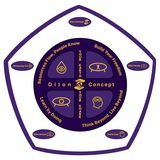
Dillon Concept.
A new concept of building the economical and political structure of society.
Platform - Democracy 2.0 Democracy 2.0
Modern information technologies make it possible to build a single database of accounting for all state resources with the following basic principles:
reflection of all available resources in real-time 24/7
automatic division of available resources by the number of living citizens
reflection of resources available to every citizen in real time 24/7
embezzlement prevention mechanisms, only a percentage equal to age is available for use, for example, 100 years is 100%, respectively, at 25 years, only 25% of resources are available
The mechanism of automatic withdrawal of a certain percentage from parents at the birth of a child
and other functions of regulation, forecasting, and analytics of available resources
It is proposed to abolish the right to inheritance of one citizen from another. Any property containing significant resources becomes the property of society after the death of a person.
It is proposed to abolish the loan interest. The amount of money supply should be tightly tied to the number of available resources. Any activity to produce money from money should be illegal.
It is assumed that the federal system of laws will be written as an open-source program. Only Captain Dilons will have the right to change this code by direct electronic voting.
The Dillon Captains are expected to vote on the content of the system's main control code. Captain Dilon is a person who has completed the construction of his/her house at Dillon School and has proven his/her ability to provide for him/herself completely autonomously within one or two years. Thus, Captain Dillon becomes a person who has proven his/her practical ability to convert resources into wealth.
It is proposed that all residents will have a sacred right to their share of resources. Only Captain Dilon will have the right to vote. The rest of the citizens will have the right to add their vote to Captain Dilon if they give their share of the resources to the management of Captain Dilon. Captain Dilon's vote will be counted as 1 + the number of citizens who choose to give their share of resources to Captain Dilon's management.
It is proposed that people will live in small communities of 300-500 people maximum, where all members of the community agree with its rules by 99% - Democracy 2.0.
It is assumed that any resident will be free to choose the management company for their share of the resources as well as the community for living.
Dilon House
It is proposed to create a concept and layout of the Dillon house. A new type of house, which will be created from a fireproof body and have the following characteristics:
not fixed to the ground, movable
have all the elements of a full cycle of life support autonomously, regardless of any centralized systems
departments - for growing food, extracting and processing water, production, etc. necessary for a full cycle of self-sufficiency.
Dilon School
It is proposed to create a new type of school. A school where students will have the opportunity and resources to build their own Dillon House. Pupils, after graduating from elementary school, will learn disciplines through the construction and arrangement of their own housing, and the practice of complete self-sufficiency. It is assumed that the state will provide a ready-made building for the student's future home, using its resources.
Word View Ideology (Not just Ideology!) Institute.
A new concept of building the economical and political structure of society.
Platform - Democracy 2.0 Democracy 2.0
Modern information technologies make it possible to build a single database of accounting for all state resources with the following basic principles:
reflection of all available resources in real-time 24/7
automatic division of available resources by the number of living citizens
reflection of resources available to every citizen in real time 24/7
embezzlement prevention mechanisms, only a percentage equal to age is available for use, for example, 100 years is 100%, respectively, at 25 years, only 25% of resources are available
The mechanism of automatic withdrawal of a certain percentage from parents at the birth of a child
and other functions of regulation, forecasting, and analytics of available resources
It is proposed to abolish the right to inheritance of one citizen from another. Any property containing significant resources becomes the property of society after the death of a person.
It is proposed to abolish the loan interest. The amount of money supply should be tightly tied to the number of available resources. Any activity to produce money from money should be illegal.
It is assumed that the federal system of laws will be written as an open-source program. Only Captain Dilons will have the right to change this code by direct electronic voting.
The Dillon Captains are expected to vote on the content of the system's main control code. Captain Dilon is a person who has completed the construction of his/her house at Dillon School and has proven his/her ability to provide for him/herself completely autonomously within one or two years. Thus, Captain Dillon becomes a person who has proven his/her practical ability to convert resources into wealth.
It is proposed that all residents will have a sacred right to their share of resources. Only Captain Dilon will have the right to vote. The rest of the citizens will have the right to add their vote to Captain Dilon if they give their share of the resources to the management of Captain Dilon. Captain Dilon's vote will be counted as 1 + the number of citizens who choose to give their share of resources to Captain Dilon's management.
It is proposed that people will live in small communities of 300-500 people maximum, where all members of the community agree with its rules by 99% - Democracy 2.0.
It is assumed that any resident will be free to choose the management company for their share of the resources as well as the community for living.
Dilon House
It is proposed to create a concept and layout of the Dillon house. A new type of house, which will be created from a fireproof body and have the following characteristics:
not fixed to the ground, movable
have all the elements of a full cycle of life support autonomously, regardless of any centralized systems
departments - for growing food, extracting and processing water, production, etc. necessary for a full cycle of self-sufficiency.
Dilon School
It is proposed to create a new type of school. A school where students will have the opportunity and resources to build their own Dillon House. Pupils, after graduating from elementary school, will learn disciplines through the construction and arrangement of their own housing, and the practice of complete self-sufficiency. It is assumed that the state will provide a ready-made building for the student's future home, using its resources.
Word View Ideology (Not just Ideology!) Institute.
It is proposed to consider the correct Worldview Ideology that answers 3 fundamental questions:
Where do we people come from, our history of appearance?
Why do we people exist? our purpose, if it exists?
What happens to us after death?
All other ideologies are proposed to be considered ideological substructures. Since they do not give a complete ideological picture of the world.
Ideology should develop a worldview based on the latest scientific and philosophical knowledge and experience and should be constantly adjusted. The number of competing schools of thought should be endorsed.
It is proposed to create an institute for the development of a worldview ideology with the following parameters:
Where do we people come from, our history of appearance?
Why do we people exist? our purpose, if it exists?
What happens to us after death?
All other ideologies are proposed to be considered ideological substructures. Since they do not give a complete ideological picture of the world.
Ideology should develop a worldview based on the latest scientific and philosophical knowledge and experience and should be constantly adjusted. The number of competing schools of thought should be endorsed.
It is proposed to create an institute for the development of a worldview ideology with the following parameters:
Focus only on future development, strictly forbidden dealing with current issues or getting involved
independent, answering only to the people
aimed at the continuous study and processing of known and new scientific facts
engaged exclusively in the development of the theory of the modern worldview of man
independent, answering only to the people
aimed at the continuous study and processing of known and new scientific facts
engaged exclusively in the development of the theory of the modern worldview of man
White Paper
By Dilon, Founder of the Dilon Concept
Executive Summary
The Dilon Concept represents a comprehensive framework for societal restructuring based on resource rights and management. This white paper explores how artificial intelligence (AI) and the Dilon Concept create a perfect market fit. They address the fundamental limitations of current AI development approaches while unlocking new possibilities for technological advancement and human flourishing.
The core principles of the Dilon Concept include recognizing inherent resource rights from birth, transitioning to a resource-based economy, redefining money as a temporary store of value for natural resources, establishing meritocratic leadership based on resource management abilities, and emphasizing self-sufficiency and individual autonomy.
When integrated with AI, this framework creates powerful synergies: decentralized AI ownership aligned with resource rights, AI-powered resource tracking and optimization, enhanced democratic processes, sustainable living applications, educational transformation, and ideological development.
Central to our implementation strategy is Dilonland DAO—a decentralized autonomous organization providing a virtual environment for testing, refining, and scaling Dilon Concept ideas before and alongside physical implementation. This virtual testing ground represents a revolutionary approach to societal transformation, allowing us to iterate rapidly, gather data-driven insights, and build community while minimizing risks and implementation costs.
The implementation strategy outlines a four-phase approach spanning 20 years, addressing potential challenges while creating pathways for diverse stakeholder engagement and participation. Dilonland DAO serves as both the proving ground for our ideas and the gathering place for our growing community.
This white paper invites collaboration in creating a future where AI serves as a catalyst for positive societal transformation rather than an accelerant of existing problems—a future of dignity, autonomy, and flourishing for all.
Introduction and Background
As the founder of the Dilon Concept, I have dedicated my life to reimagining how society can function in harmony with our planet's resources while empowering individuals to achieve true autonomy and prosperity. The journey that led to the development of this framework began with a simple yet profound realization: our current economic and social structures are fundamentally misaligned with both human potential and planetary boundaries.
In today's world, we face unprecedented challenges. Resource depletion is accelerating at an alarming rate, while wealth concentration reaches historic levels. Governments struggle with corruption and inefficiency, educational systems fail to prepare individuals for meaningful contributions, and technological advancements often benefit the few rather than the many. These systemic issues cannot be solved through incremental changes to existing frameworks—they demand a complete paradigm shift in how we conceptualize resources, governance, education, and human potential.
The Dilon Concept emerged from years of cross-disciplinary research, practical experimentation, and deep reflection on the fundamental nature of human societies. It represents not merely a theoretical construct but a comprehensive, implementable framework for societal transformation. At its core lies a revolutionary premise: every human being has inherent rights to Earth's resources from birth, and our economic, political, and social systems should be designed to honor and operationalize this truth.
The timing for this transformation could not be more critical. As we stand at the precipice of the artificial intelligence revolution, we face a pivotal choice. Will AI development follow the same centralized, extractive patterns that have characterized previous technological revolutions? Or can we align this powerful technology with a more equitable, sustainable vision for humanity's future?
By Dilon, Founder of the Dilon Concept
Executive Summary
The Dilon Concept represents a comprehensive framework for societal restructuring based on resource rights and management. This white paper explores how artificial intelligence (AI) and the Dilon Concept create a perfect market fit. They address the fundamental limitations of current AI development approaches while unlocking new possibilities for technological advancement and human flourishing.
The core principles of the Dilon Concept include recognizing inherent resource rights from birth, transitioning to a resource-based economy, redefining money as a temporary store of value for natural resources, establishing meritocratic leadership based on resource management abilities, and emphasizing self-sufficiency and individual autonomy.
When integrated with AI, this framework creates powerful synergies: decentralized AI ownership aligned with resource rights, AI-powered resource tracking and optimization, enhanced democratic processes, sustainable living applications, educational transformation, and ideological development.
Central to our implementation strategy is Dilonland DAO—a decentralized autonomous organization providing a virtual environment for testing, refining, and scaling Dilon Concept ideas before and alongside physical implementation. This virtual testing ground represents a revolutionary approach to societal transformation, allowing us to iterate rapidly, gather data-driven insights, and build community while minimizing risks and implementation costs.
The implementation strategy outlines a four-phase approach spanning 20 years, addressing potential challenges while creating pathways for diverse stakeholder engagement and participation. Dilonland DAO serves as both the proving ground for our ideas and the gathering place for our growing community.
This white paper invites collaboration in creating a future where AI serves as a catalyst for positive societal transformation rather than an accelerant of existing problems—a future of dignity, autonomy, and flourishing for all.
Introduction and Background
As the founder of the Dilon Concept, I have dedicated my life to reimagining how society can function in harmony with our planet's resources while empowering individuals to achieve true autonomy and prosperity. The journey that led to the development of this framework began with a simple yet profound realization: our current economic and social structures are fundamentally misaligned with both human potential and planetary boundaries.
In today's world, we face unprecedented challenges. Resource depletion is accelerating at an alarming rate, while wealth concentration reaches historic levels. Governments struggle with corruption and inefficiency, educational systems fail to prepare individuals for meaningful contributions, and technological advancements often benefit the few rather than the many. These systemic issues cannot be solved through incremental changes to existing frameworks—they demand a complete paradigm shift in how we conceptualize resources, governance, education, and human potential.
The Dilon Concept emerged from years of cross-disciplinary research, practical experimentation, and deep reflection on the fundamental nature of human societies. It represents not merely a theoretical construct but a comprehensive, implementable framework for societal transformation. At its core lies a revolutionary premise: every human being has inherent rights to Earth's resources from birth, and our economic, political, and social systems should be designed to honor and operationalize this truth.
The timing for this transformation could not be more critical. As we stand at the precipice of the artificial intelligence revolution, we face a pivotal choice. Will AI development follow the same centralized, extractive patterns that have characterized previous technological revolutions? Or can we align this powerful technology with a more equitable, sustainable vision for humanity's future?
I propose that the Dilon Concept provides the perfect market fit for AI development and deployment. Rather than allowing AI to exacerbate existing inequalities, the integration of AI within the Dilon framework creates unprecedented opportunities to optimize resource allocation, enhance democratic processes, revolutionize education, and support sustainable living, all while ensuring the benefits are distributed equitably among humanity.
Introduction to Virtual Testing through Dilonland DAO
A key innovation in our approach to implementing the Dilon Concept is the creation of Dilonland DAO. This decentralized autonomous organization serves as a virtual testing environment for all aspects of the framework. This virtual space allows us to test, refine, and validate our ideas before committing significant resources to physical implementation, dramatically reducing risk while accelerating development through rapid iteration.
Dilonland DAO represents a paradigm shift in how societal transformation can be approached. Rather than relying solely on theoretical speculation or risking large-scale implementation without adequate testing, we can now create a data-driven, participatory evolution process through virtual experimentation. This approach enables thousands of people worldwide to experience and contribute to the development of the Dilon Concept, ensuring it addresses diverse needs and perspectives while building a global community of advocates and implementers.
Within this virtual environment, participants receive resource rights, engage in governance decisions, and experience the core principles of the Dilon Concept firsthand. Advanced AI simulation capabilities model complex interactions between resources, participants, and governance structures, allowing us to predict outcomes and identify optimal implementation strategies. The insights gained from this virtual testing ground directly inform our physical implementation plans, creating a continuous feedback loop between virtual experimentation and real-world action.
This white paper outlines how the Dilon Concept's core principles and components create the ideal foundation for ethical, beneficial AI advancement, with Dilonland DAO serving as both the proving ground for our ideas and the gathering place for our growing community. It presents a vision where technology serves as a tool for human empowerment rather than exploitation, where resource rights form the basis of a new economic paradigm, and where artificial intelligence becomes a catalyst for positive societal transformation.
The journey ahead is ambitious, but the alternative—continuing on our current trajectory—is unacceptable. I invite you to explore this vision for a fundamentally restructured society, where AI and human potential can flourish together in service of a more equitable and sustainable world. Consider joining us in Dilonland DAO to help shape this future through direct participation.
The Genesis of the Dilon Concept
My journey toward developing the Dilon Concept began with a profound disillusionment with existing economic and political systems. After years working within traditional structures—observing their inherent contradictions and limitations firsthand—I became convinced that meaningful change would require rethinking our most basic assumptions about resources, value, and human organization.
The concept's development was influenced by diverse intellectual traditions, ranging from resource-based economic theories to systems thinking, as well as indigenous wisdom on resource stewardship and cutting-edge research on technological governance. What emerged was not merely an academic exercise but a practical framework designed to address the most pressing challenges of our time.
The name "Dilon" itself represents the dual pillars of this vision: dignity and autonomy. These values stand in stark contrast to current systems that often undermine human dignity through artificial scarcity and limit autonomy through centralized control of resources and decision-making.
Introduction to Virtual Testing through Dilonland DAO
A key innovation in our approach to implementing the Dilon Concept is the creation of Dilonland DAO. This decentralized autonomous organization serves as a virtual testing environment for all aspects of the framework. This virtual space allows us to test, refine, and validate our ideas before committing significant resources to physical implementation, dramatically reducing risk while accelerating development through rapid iteration.
Dilonland DAO represents a paradigm shift in how societal transformation can be approached. Rather than relying solely on theoretical speculation or risking large-scale implementation without adequate testing, we can now create a data-driven, participatory evolution process through virtual experimentation. This approach enables thousands of people worldwide to experience and contribute to the development of the Dilon Concept, ensuring it addresses diverse needs and perspectives while building a global community of advocates and implementers.
Within this virtual environment, participants receive resource rights, engage in governance decisions, and experience the core principles of the Dilon Concept firsthand. Advanced AI simulation capabilities model complex interactions between resources, participants, and governance structures, allowing us to predict outcomes and identify optimal implementation strategies. The insights gained from this virtual testing ground directly inform our physical implementation plans, creating a continuous feedback loop between virtual experimentation and real-world action.
This white paper outlines how the Dilon Concept's core principles and components create the ideal foundation for ethical, beneficial AI advancement, with Dilonland DAO serving as both the proving ground for our ideas and the gathering place for our growing community. It presents a vision where technology serves as a tool for human empowerment rather than exploitation, where resource rights form the basis of a new economic paradigm, and where artificial intelligence becomes a catalyst for positive societal transformation.
The journey ahead is ambitious, but the alternative—continuing on our current trajectory—is unacceptable. I invite you to explore this vision for a fundamentally restructured society, where AI and human potential can flourish together in service of a more equitable and sustainable world. Consider joining us in Dilonland DAO to help shape this future through direct participation.
The Genesis of the Dilon Concept
My journey toward developing the Dilon Concept began with a profound disillusionment with existing economic and political systems. After years working within traditional structures—observing their inherent contradictions and limitations firsthand—I became convinced that meaningful change would require rethinking our most basic assumptions about resources, value, and human organization.
The concept's development was influenced by diverse intellectual traditions, ranging from resource-based economic theories to systems thinking, as well as indigenous wisdom on resource stewardship and cutting-edge research on technological governance. What emerged was not merely an academic exercise but a practical framework designed to address the most pressing challenges of our time.
The name "Dilon" itself represents the dual pillars of this vision: dignity and autonomy. These values stand in stark contrast to current systems that often undermine human dignity through artificial scarcity and limit autonomy through centralized control of resources and decision-making.
The creation of Dilonland DAO as a virtual testing environment represents the latest evolution in this journey, recognizing that transformative ideas benefit from experimentation, refinement, and community input before large-scale implementation. This approach embodies the scientific method applied to societal transformation, allowing us to test hypotheses, gather data, and iterate based on evidence rather than ideology alone.
Current Societal and Economic Challenges
To understand why the Dilon Concept represents such a necessary departure from existing frameworks, we must first acknowledge the fundamental challenges we face:
Resource Misallocation: Despite having sufficient global resources to meet everyone's basic needs, billions of people live in poverty, while resources are wasted or hoarded. This is not merely an implementation problem, but a design flaw in our economic architecture.
Monetary System Distortions: Our current economic systems have become increasingly detached from the physical resources they are supposed to represent, creating perverse incentives that reward extraction over regeneration and speculation over productive contributions.
Governance Failures: Political systems worldwide struggle with corruption, short-termism, and capture by special interests. Even well-intentioned leaders operate within structures that make truly transformative change nearly impossible.
Educational Inadequacy: Our educational institutions essentially prepare people to be cogs in an outdated industrial machine rather than autonomous, creative contributors capable of addressing complex challenges.
Technological Concentration: The benefits of technological advancement, particularly in AI, are increasingly concentrated among a small number of corporations and individuals, creating dangerous power imbalances.
Environmental Degradation: Our economic systems treat ecological destruction as an "externality" rather than a fundamental threat to human wellbeing and survival.
Implementation Barriers: Even when better alternatives are identified, the transition costs and coordination challenges of implementing new systems at scale create nearly insurmountable barriers to change.
These challenges are interconnected and mutually reinforcing. Addressing them requires not isolated solutions but a comprehensive framework that realigns our social, economic, and technological systems with both human needs and planetary boundaries, along with innovative approaches to testing and implementing such transformative ideas.
The Need for a Paradigm Shift in Resource Management
The most fundamental shift proposed by the Dilon Concept is in how we understand and manage resources. Currently, resources are treated primarily as commodities to be owned, traded, and exploited for profit. This approach has led to massive inefficiencies, inequities, and environmental destruction.
The Dilon Concept proposes instead that resources be recognized as the common heritage of humanity, with each person holding inherent rights to their fair share. This doesn't mean abolishing private use or stewardship of resources, but instead establishing a new foundation for how resource rights are allocated and managed.
This paradigm shift becomes particularly powerful when combined with artificial intelligence. AI offers unprecedented capabilities to track, optimize, and fairly distribute resources—but only if deployed within a framework that prioritizes equitable access and sustainable use. Without such a framework, AI is likely to accelerate resource extraction and concentration, rather than enabling a more just and sustainable world.
Dilonland DAO offers a virtual environment where this paradigm shift can be experienced and refined before being implemented on a full scale. By allowing participants to receive and manage virtual resource rights, engage in collective decision-making about resource allocation, and experience the benefits of AI-optimized resource management, the DAO creates both a proving ground for the concept and an onramp for broader adoption.
Current Societal and Economic Challenges
To understand why the Dilon Concept represents such a necessary departure from existing frameworks, we must first acknowledge the fundamental challenges we face:
Resource Misallocation: Despite having sufficient global resources to meet everyone's basic needs, billions of people live in poverty, while resources are wasted or hoarded. This is not merely an implementation problem, but a design flaw in our economic architecture.
Monetary System Distortions: Our current economic systems have become increasingly detached from the physical resources they are supposed to represent, creating perverse incentives that reward extraction over regeneration and speculation over productive contributions.
Governance Failures: Political systems worldwide struggle with corruption, short-termism, and capture by special interests. Even well-intentioned leaders operate within structures that make truly transformative change nearly impossible.
Educational Inadequacy: Our educational institutions essentially prepare people to be cogs in an outdated industrial machine rather than autonomous, creative contributors capable of addressing complex challenges.
Technological Concentration: The benefits of technological advancement, particularly in AI, are increasingly concentrated among a small number of corporations and individuals, creating dangerous power imbalances.
Environmental Degradation: Our economic systems treat ecological destruction as an "externality" rather than a fundamental threat to human wellbeing and survival.
Implementation Barriers: Even when better alternatives are identified, the transition costs and coordination challenges of implementing new systems at scale create nearly insurmountable barriers to change.
These challenges are interconnected and mutually reinforcing. Addressing them requires not isolated solutions but a comprehensive framework that realigns our social, economic, and technological systems with both human needs and planetary boundaries, along with innovative approaches to testing and implementing such transformative ideas.
The Need for a Paradigm Shift in Resource Management
The most fundamental shift proposed by the Dilon Concept is in how we understand and manage resources. Currently, resources are treated primarily as commodities to be owned, traded, and exploited for profit. This approach has led to massive inefficiencies, inequities, and environmental destruction.
The Dilon Concept proposes instead that resources be recognized as the common heritage of humanity, with each person holding inherent rights to their fair share. This doesn't mean abolishing private use or stewardship of resources, but instead establishing a new foundation for how resource rights are allocated and managed.
This paradigm shift becomes particularly powerful when combined with artificial intelligence. AI offers unprecedented capabilities to track, optimize, and fairly distribute resources—but only if deployed within a framework that prioritizes equitable access and sustainable use. Without such a framework, AI is likely to accelerate resource extraction and concentration, rather than enabling a more just and sustainable world.
Dilonland DAO offers a virtual environment where this paradigm shift can be experienced and refined before being implemented on a full scale. By allowing participants to receive and manage virtual resource rights, engage in collective decision-making about resource allocation, and experience the benefits of AI-optimized resource management, the DAO creates both a proving ground for the concept and an onramp for broader adoption.
As we stand at this critical juncture in human history, with both ecological systems and social cohesion under severe strain, the Dilon Concept offers not just a critique of existing systems but a comprehensive alternative—one that can harness the transformative potential of AI to create a world of abundance, dignity, and autonomy for all. And through Dilonland DAO, we now have a powerful tool for testing, refining, and demonstrating this alternative in a low-risk, participatory environment.
The Dilon Concept: Core Principles and Framework
The Dilon Concept is built upon five core principles that together form a coherent framework for societal restructuring:
1. Inherent Resource Rights from Birth
Every person, by being born on Earth, has inherent rights to a fair share of the planet's resources. These rights are not granted by governments or earned through labor but exist as a birthright of every human being. This principle fundamentally reframes our relationship with resources, shifting from a paradigm of scarcity and competition to one of birthright and stewardship.
2. Resource-Based Economy Transition
Society should transition from a money-centered economy to a resource-based economy where decisions are made based on actual resource availability and needs rather than abstract financial metrics. This doesn't mean abolishing markets or exchange, but instead grounding them in physical reality rather than financial abstraction.
3. Money as a Temporary Store of Value for Resources
In the Dilon framework, money functions primarily as a temporary store of value for natural resources rather than an end in itself. This reorientation helps prevent the financialization of the economy that has led to massive wealth concentration disconnected from actual resource creation or stewardship.
4. Meritocratic Leadership Based on Resource Management
Leadership positions should be filled based on demonstrated ability to manage resources effectively and equitably rather than wealth, charisma, or political connections. This principle creates a true meritocracy of stewardship rather than exploitation.
5. Self-Sufficiency and Individual Autonomy
The Dilon Concept emphasizes developing systems that enhance individual self-sufficiency and autonomy rather than creating dependency. This principle recognizes that true freedom requires not just political rights but the practical capacity to meet one's needs without excessive dependence on centralized systems.
These principles are operationalized through four main components:
Democracy 2.0 Platform
A technological platform for transparent resource tracking and democratic decision-making about resource allocation: this platform would utilize distributed ledger technology and advanced analytics to create an immutable, real-time record of resource flows while enabling meaningful participation in governance at all scales.
Dilon House
A model for sustainable, autonomous living environments that minimize resource consumption while maximizing quality of life. These environments would incorporate renewable energy, efficient water systems, local food production, and circular waste management to demonstrate the practical implementation of resource-based living.
Dilon School
An educational approach focused on practical skills, systems thinking, and resource management rather than standardized content delivery. This approach would prepare individuals to thrive in a resource-based economy while developing their unique potential.
Worldview Ideology Institute
A research and development center focused on refining the philosophical foundations of the Dilon Concept and translating them into practical applications across diverse contexts. This component recognizes that societal transformation requires not just technical solutions but coherent ideological frameworks.
The Dilon Concept: Core Principles and Framework
The Dilon Concept is built upon five core principles that together form a coherent framework for societal restructuring:
1. Inherent Resource Rights from Birth
Every person, by being born on Earth, has inherent rights to a fair share of the planet's resources. These rights are not granted by governments or earned through labor but exist as a birthright of every human being. This principle fundamentally reframes our relationship with resources, shifting from a paradigm of scarcity and competition to one of birthright and stewardship.
2. Resource-Based Economy Transition
Society should transition from a money-centered economy to a resource-based economy where decisions are made based on actual resource availability and needs rather than abstract financial metrics. This doesn't mean abolishing markets or exchange, but instead grounding them in physical reality rather than financial abstraction.
3. Money as a Temporary Store of Value for Resources
In the Dilon framework, money functions primarily as a temporary store of value for natural resources rather than an end in itself. This reorientation helps prevent the financialization of the economy that has led to massive wealth concentration disconnected from actual resource creation or stewardship.
4. Meritocratic Leadership Based on Resource Management
Leadership positions should be filled based on demonstrated ability to manage resources effectively and equitably rather than wealth, charisma, or political connections. This principle creates a true meritocracy of stewardship rather than exploitation.
5. Self-Sufficiency and Individual Autonomy
The Dilon Concept emphasizes developing systems that enhance individual self-sufficiency and autonomy rather than creating dependency. This principle recognizes that true freedom requires not just political rights but the practical capacity to meet one's needs without excessive dependence on centralized systems.
These principles are operationalized through four main components:
Democracy 2.0 Platform
A technological platform for transparent resource tracking and democratic decision-making about resource allocation: this platform would utilize distributed ledger technology and advanced analytics to create an immutable, real-time record of resource flows while enabling meaningful participation in governance at all scales.
Dilon House
A model for sustainable, autonomous living environments that minimize resource consumption while maximizing quality of life. These environments would incorporate renewable energy, efficient water systems, local food production, and circular waste management to demonstrate the practical implementation of resource-based living.
Dilon School
An educational approach focused on practical skills, systems thinking, and resource management rather than standardized content delivery. This approach would prepare individuals to thrive in a resource-based economy while developing their unique potential.
Worldview Ideology Institute
A research and development center focused on refining the philosophical foundations of the Dilon Concept and translating them into practical applications across diverse contexts. This component recognizes that societal transformation requires not just technical solutions but coherent ideological frameworks.
Together, these principles and components address fundamental issues including poverty, corruption, population balance, and government funding through a comprehensive restructuring based on resource rights and the elimination of money as the primary exchange medium.
The Current AI Landscape: Challenges and Limitations
The artificial intelligence revolution represents one of the most significant technological transformations in human history. While its potential to enhance human capabilities and address complex challenges is immense, the current trajectory of AI development raises serious concerns that must be addressed if we are to realize its full beneficial potential.
Centralization of AI Power and Resources
Today's AI landscape is characterized by extreme centralization. A handful of technology corporations control the most advanced AI systems, the computational resources required to develop them, and the vast datasets on which they are trained. This concentration creates dangerous power imbalances, as these entities effectively become gatekeepers of technological advancement with minimal democratic oversight or accountability.
The economics of current AI development reinforce this centralization. The enormous computational resources required for training state-of-the-art models create prohibitive barriers to entry for all but the wealthiest organizations. This dynamic ensures that the direction of AI research and application is determined primarily by profit motives rather than broader human needs or values.
Data Privacy and Ownership Concerns
Modern AI systems are trained on massive datasets often harvested from individuals without meaningful consent or compensation. Our data—our digital expressions, behaviors, and preferences—have become the raw material for AI advancement. Yet, we retain little control over how this data is used and receive minimal benefit from its exploitation.
This arrangement represents a fundamental misalignment of incentives. The entities developing AI have strong motivations to collect and utilize as much personal data as possible. In contrast, individuals have few practical tools to protect their privacy or ensure their data generates value for themselves rather than distant corporations.
Ethical Considerations in AI Development
Current approaches to AI ethics often focus on mitigating harms within existing economic and social frameworks, rather than questioning whether those frameworks themselves are compatible with the development of ethical AI. Issues like algorithmic bias, while important, represent symptoms of deeper structural problems rather than isolated technical challenges.
More fundamentally, we lack consensus on what values should guide AI development and who should have input into these crucial decisions. When profit maximization serves as the default objective, other values—such as equity, sustainability, and human autonomy—are frequently subordinated.
Resource-Intensive Nature of AI Advancement
The environmental footprint of advanced AI systems continues to grow at an alarming rate. Training a single large language model can generate carbon emissions equivalent to those of multiple cars over their lifetimes. As models grow in size and complexity, their resource requirements increase exponentially, creating tension between technological advancement and environmental sustainability.
This resource intensity also exacerbates global inequalities, as the benefits of AI advancement flow primarily to regions with abundant computational resources, while the environmental costs are distributed globally.
Misalignment with Human Values and Needs
Perhaps most concerning is the growing risk of fundamental misalignment between AI systems and human values. As AI capabilities advance, ensuring that these systems act in accordance with human interests becomes both more important and increasingly challenging. Current economic incentives often prioritize capabilities over alignment, creating risks that will only grow as AI systems become more powerful.
The Current AI Landscape: Challenges and Limitations
The artificial intelligence revolution represents one of the most significant technological transformations in human history. While its potential to enhance human capabilities and address complex challenges is immense, the current trajectory of AI development raises serious concerns that must be addressed if we are to realize its full beneficial potential.
Centralization of AI Power and Resources
Today's AI landscape is characterized by extreme centralization. A handful of technology corporations control the most advanced AI systems, the computational resources required to develop them, and the vast datasets on which they are trained. This concentration creates dangerous power imbalances, as these entities effectively become gatekeepers of technological advancement with minimal democratic oversight or accountability.
The economics of current AI development reinforce this centralization. The enormous computational resources required for training state-of-the-art models create prohibitive barriers to entry for all but the wealthiest organizations. This dynamic ensures that the direction of AI research and application is determined primarily by profit motives rather than broader human needs or values.
Data Privacy and Ownership Concerns
Modern AI systems are trained on massive datasets often harvested from individuals without meaningful consent or compensation. Our data—our digital expressions, behaviors, and preferences—have become the raw material for AI advancement. Yet, we retain little control over how this data is used and receive minimal benefit from its exploitation.
This arrangement represents a fundamental misalignment of incentives. The entities developing AI have strong motivations to collect and utilize as much personal data as possible. In contrast, individuals have few practical tools to protect their privacy or ensure their data generates value for themselves rather than distant corporations.
Ethical Considerations in AI Development
Current approaches to AI ethics often focus on mitigating harms within existing economic and social frameworks, rather than questioning whether those frameworks themselves are compatible with the development of ethical AI. Issues like algorithmic bias, while important, represent symptoms of deeper structural problems rather than isolated technical challenges.
More fundamentally, we lack consensus on what values should guide AI development and who should have input into these crucial decisions. When profit maximization serves as the default objective, other values—such as equity, sustainability, and human autonomy—are frequently subordinated.
Resource-Intensive Nature of AI Advancement
The environmental footprint of advanced AI systems continues to grow at an alarming rate. Training a single large language model can generate carbon emissions equivalent to those of multiple cars over their lifetimes. As models grow in size and complexity, their resource requirements increase exponentially, creating tension between technological advancement and environmental sustainability.
This resource intensity also exacerbates global inequalities, as the benefits of AI advancement flow primarily to regions with abundant computational resources, while the environmental costs are distributed globally.
Misalignment with Human Values and Needs
Perhaps most concerning is the growing risk of fundamental misalignment between AI systems and human values. As AI capabilities advance, ensuring that these systems act in accordance with human interests becomes both more important and increasingly challenging. Current economic incentives often prioritize capabilities over alignment, creating risks that will only grow as AI systems become more powerful.
Limitations of Current Virtual Testing Environments
Existing approaches to testing AI systems and their societal impacts are woefully inadequate. Current testing environments typically focus on narrow technical performance rather than broader social implications, fail to incorporate diverse stakeholder perspectives, and occur too late in the development process to redirect problematic trajectories fundamentally.
These challenges are not merely technical problems awaiting technical solutions. They are the inevitable result of developing transformative technologies within economic and social structures that prioritize centralization, extraction, and short-term profit over distributed benefits, regeneration, and long-term flourishing.
The Dilon Concept as the Perfect Market Fit for AI
The Dilon Concept provides a comprehensive alternative framework for AI development and deployment—one that addresses the fundamental limitations of current approaches while unlocking new possibilities for the advancement of beneficial AI. Rather than attempting to retrofit ethical considerations onto an inherently problematic foundation, the Dilon Concept offers a new foundation that aligns with both human values and technological potential. Dilonland DAO serves as the virtual testing ground where this alignment can be demonstrated, refined, and validated.
Decentralized AI Ownership Aligned with Resource Rights
At the core of the Dilon Concept is the recognition that every person has inherent rights to Earth's resources from birth. When applied to artificial intelligence, this principle reshapes our understanding of ownership and control over AI systems and the data that powers them.
Under the Dilon framework, computational resources would be recognized as part of humanity's common heritage, with each person entitled to their fair share. This doesn't mean abolishing private development of AI, but rather ensuring that the benefits of AI advancement are widely distributed and that no entity can monopolize the resources required for AI development.
Within Dilonland DAO, this principle is operationalized through virtual resource rights that include computational resources. Participants can experience how decentralized AI ownership might function, with governance mechanisms ensuring equitable access to AI capabilities. This virtual testing allows us to refine allocation methodologies, governance structures, and incentive systems before implementing them in the physical world.
Similarly, personal data would be recognized as a resource to which individuals have inherent rights. Rather than treating data as something to be harvested without compensation, the Dilon framework would establish mechanisms to ensure that individuals maintain sovereignty over their data and receive fair value when it contributes to AI advancements.
Dilonland DAO implements virtual data sovereignty tools that allow participants to control their data and receive value when it contributes to collective intelligence. These tools serve as a testing ground for consent mechanisms, value attribution systems, and data governance frameworks that can later be implemented at scale.
This approach addresses the centralization problem at its root, creating the conditions for a thriving ecosystem of AI development that aligns with diverse human needs rather than concentrated corporate interests.
AI-Powered Resource Tracking and Optimization
The Dilon Concept envisions transitioning to a resource-based economy where money functions primarily as a temporary store of value for natural resources rather than an end in itself. AI offers unprecedented capabilities to make such a system viable at scale.
Advanced AI systems can track resource flows with extraordinary precision, identifying inefficiencies and optimization opportunities invisible to human analysis alone. They can model complex ecological systems to ensure resource use remains within planetary boundaries. They can also help match resources with needs in ways that maximize both efficiency and equity.
Existing approaches to testing AI systems and their societal impacts are woefully inadequate. Current testing environments typically focus on narrow technical performance rather than broader social implications, fail to incorporate diverse stakeholder perspectives, and occur too late in the development process to redirect problematic trajectories fundamentally.
These challenges are not merely technical problems awaiting technical solutions. They are the inevitable result of developing transformative technologies within economic and social structures that prioritize centralization, extraction, and short-term profit over distributed benefits, regeneration, and long-term flourishing.
The Dilon Concept as the Perfect Market Fit for AI
The Dilon Concept provides a comprehensive alternative framework for AI development and deployment—one that addresses the fundamental limitations of current approaches while unlocking new possibilities for the advancement of beneficial AI. Rather than attempting to retrofit ethical considerations onto an inherently problematic foundation, the Dilon Concept offers a new foundation that aligns with both human values and technological potential. Dilonland DAO serves as the virtual testing ground where this alignment can be demonstrated, refined, and validated.
Decentralized AI Ownership Aligned with Resource Rights
At the core of the Dilon Concept is the recognition that every person has inherent rights to Earth's resources from birth. When applied to artificial intelligence, this principle reshapes our understanding of ownership and control over AI systems and the data that powers them.
Under the Dilon framework, computational resources would be recognized as part of humanity's common heritage, with each person entitled to their fair share. This doesn't mean abolishing private development of AI, but rather ensuring that the benefits of AI advancement are widely distributed and that no entity can monopolize the resources required for AI development.
Within Dilonland DAO, this principle is operationalized through virtual resource rights that include computational resources. Participants can experience how decentralized AI ownership might function, with governance mechanisms ensuring equitable access to AI capabilities. This virtual testing allows us to refine allocation methodologies, governance structures, and incentive systems before implementing them in the physical world.
Similarly, personal data would be recognized as a resource to which individuals have inherent rights. Rather than treating data as something to be harvested without compensation, the Dilon framework would establish mechanisms to ensure that individuals maintain sovereignty over their data and receive fair value when it contributes to AI advancements.
Dilonland DAO implements virtual data sovereignty tools that allow participants to control their data and receive value when it contributes to collective intelligence. These tools serve as a testing ground for consent mechanisms, value attribution systems, and data governance frameworks that can later be implemented at scale.
This approach addresses the centralization problem at its root, creating the conditions for a thriving ecosystem of AI development that aligns with diverse human needs rather than concentrated corporate interests.
AI-Powered Resource Tracking and Optimization
The Dilon Concept envisions transitioning to a resource-based economy where money functions primarily as a temporary store of value for natural resources rather than an end in itself. AI offers unprecedented capabilities to make such a system viable at scale.
Advanced AI systems can track resource flows with extraordinary precision, identifying inefficiencies and optimization opportunities invisible to human analysis alone. They can model complex ecological systems to ensure resource use remains within planetary boundaries. They can also help match resources with needs in ways that maximize both efficiency and equity.
Within Dilonland DAO, these capabilities are demonstrated through sophisticated simulation models that track virtual resource flows, identify optimization opportunities, and predict outcomes of various allocation strategies. Participants can observe how AI-powered resource management functions in practice and provide feedback to refine these systems before their implementation.
These capabilities address one of the primary objections to resource-based economic models: the computational complexity of resource allocation without price mechanisms. What was once computationally infeasible is becoming increasingly practical with the advancement of AI systems designed specifically for this purpose. Dilonland DAO provides a controlled environment where these complex systems can be tested and refined without risking real-world resources.
Enhanced Democracy 2.0 Platform Through AI Integration
The Democracy 2.0 Platform represents a core component of the Dilon Concept—a system for transparent resource tracking and democratic decision-making about resource allocation. AI integration dramatically enhances this platform's capabilities.
Natural language processing enables the platform to process and synthesize diverse citizen input at an unprecedented scale, ensuring that more voices can meaningfully participate in democratic processes. Machine learning algorithms can identify patterns and insights in resource usage data, informing more effective policy decisions. And AI systems can help translate complex policy questions into accessible formats, reducing barriers to informed participation.
Dilonland DAO serves as a testing ground for these AI-enhanced democratic processes. Participants engage in collective decision-making about virtual resource allocation, with AI tools helping synthesize diverse inputs, identify potential solutions, and predict outcomes of various decisions. This virtual governance laboratory allows us to refine democratic processes before implementing them at scale.
Crucially, these AI enhancements would operate within a framework designed for transparency and accountability, rather than one that fosters opacity and control. The objective would not be to replace human decision-making but to augment it, providing tools that expand rather than constrain human agency in governance. Dilonland DAO allows us to test various approaches to AI-human collaboration in governance, identifying optimal balances that maximize both efficiency and human autonomy.
AI Applications in Sustainable Living (Dilon House)
The Dilon House concept focuses on sustainable, autonomous living environments that minimize resource consumption while maximizing quality of life. AI integration creates new possibilities for achieving these goals.
Smart home systems powered by AI can optimize energy usage, water consumption, and waste management in real-time, dramatically reducing resource requirements without requiring constant human attention. Predictive maintenance algorithms can extend the lifespan of infrastructure and equipment, thereby reducing the need for replacements. And AI-powered design tools can help create living spaces that are both resource-efficient and deeply aligned with human psychological and social needs.
Within Dilonland DAO, virtual Dilon Houses serve as digital twins for planned physical implementations. Participants can experience these environments, test various configurations, and provide feedback before physical construction begins. AI simulation models predict resource usage, occupant satisfaction, and maintenance requirements for various designs, enabling the identification of optimal approaches.
These applications demonstrate how AI can serve as a tool for increased self-sufficiency and autonomy rather than increased dependence and control—a fundamental reorientation of technological development priorities. Dilonland DAO provides a space where this reorientation can be experienced and refined before significant resources are committed to physical implementation.
AI-Driven Educational Transformation (Dilon School)
These capabilities address one of the primary objections to resource-based economic models: the computational complexity of resource allocation without price mechanisms. What was once computationally infeasible is becoming increasingly practical with the advancement of AI systems designed specifically for this purpose. Dilonland DAO provides a controlled environment where these complex systems can be tested and refined without risking real-world resources.
Enhanced Democracy 2.0 Platform Through AI Integration
The Democracy 2.0 Platform represents a core component of the Dilon Concept—a system for transparent resource tracking and democratic decision-making about resource allocation. AI integration dramatically enhances this platform's capabilities.
Natural language processing enables the platform to process and synthesize diverse citizen input at an unprecedented scale, ensuring that more voices can meaningfully participate in democratic processes. Machine learning algorithms can identify patterns and insights in resource usage data, informing more effective policy decisions. And AI systems can help translate complex policy questions into accessible formats, reducing barriers to informed participation.
Dilonland DAO serves as a testing ground for these AI-enhanced democratic processes. Participants engage in collective decision-making about virtual resource allocation, with AI tools helping synthesize diverse inputs, identify potential solutions, and predict outcomes of various decisions. This virtual governance laboratory allows us to refine democratic processes before implementing them at scale.
Crucially, these AI enhancements would operate within a framework designed for transparency and accountability, rather than one that fosters opacity and control. The objective would not be to replace human decision-making but to augment it, providing tools that expand rather than constrain human agency in governance. Dilonland DAO allows us to test various approaches to AI-human collaboration in governance, identifying optimal balances that maximize both efficiency and human autonomy.
AI Applications in Sustainable Living (Dilon House)
The Dilon House concept focuses on sustainable, autonomous living environments that minimize resource consumption while maximizing quality of life. AI integration creates new possibilities for achieving these goals.
Smart home systems powered by AI can optimize energy usage, water consumption, and waste management in real-time, dramatically reducing resource requirements without requiring constant human attention. Predictive maintenance algorithms can extend the lifespan of infrastructure and equipment, thereby reducing the need for replacements. And AI-powered design tools can help create living spaces that are both resource-efficient and deeply aligned with human psychological and social needs.
Within Dilonland DAO, virtual Dilon Houses serve as digital twins for planned physical implementations. Participants can experience these environments, test various configurations, and provide feedback before physical construction begins. AI simulation models predict resource usage, occupant satisfaction, and maintenance requirements for various designs, enabling the identification of optimal approaches.
These applications demonstrate how AI can serve as a tool for increased self-sufficiency and autonomy rather than increased dependence and control—a fundamental reorientation of technological development priorities. Dilonland DAO provides a space where this reorientation can be experienced and refined before significant resources are committed to physical implementation.
AI-Driven Educational Transformation (Dilon School)
The Dilon School component focuses on practical education that empowers individuals to become truly self-sufficient and contribute meaningfully to their communities. AI offers powerful tools to advance this vision.
Personalized learning algorithms can adapt educational experiences to individual strengths, interests, and learning styles, making education more effective and engaging. AI tutors can provide immediate feedback and support, allowing learners to progress at their own pace without being limited by teacher availability. Simulation environments powered by AI can offer safe spaces to practice complex skills before applying them in real-world contexts.
Dilonland DAO itself serves as an educational platform where participants can learn about resource-based economics, sustainable living, and democratic governance through direct experience. AI-powered learning tools within the virtual environment adapt to each participant's interests and learning style, demonstrating how personalized education might function in practice.
Perhaps most importantly, AI can help shift education from standardized content delivery to authentic problem-solving and creation, preparing people not just to operate within existing systems but to transform them thoughtfully. Dilonland DAO offers opportunities for participants to engage in meaningful problem-solving related to resource allocation, governance, and sustainable living, utilizing AI tools that support rather than replace human creativity and critical thinking.
AI Analysis for Ideology Development (Worldview Ideology Institute)
The Worldview Ideology Institute component of the Dilon Concept focuses on developing coherent philosophical frameworks to guide societal transformation. AI can serve as a powerful tool in this complex intellectual work.
Natural language processing systems can analyze vast bodies of philosophical, scientific, and cultural texts, identifying patterns, contradictions, and opportunities for synthesis that might otherwise escape human analysis alone. Simulation models can test the implications of different ideological frameworks, helping identify unintended consequences before implementation. AI systems can also help translate abstract philosophical principles into concrete policy recommendations, thereby bridging the gap between theory and practice.
Within Dilonland DAO, these capabilities support ongoing refinement of the Dilon Concept's philosophical foundations. AI tools analyze participant feedback, identify emerging patterns in governance decisions, and help translate abstract principles into concrete virtual implementations. This iterative process ensures the concept evolves based on both theoretical soundness and practical effectiveness.
These applications demonstrate how AI can enhance rather than replace human wisdom, serving as a tool for expanding our collective capacity for thoughtful reflection on our deepest values and aspirations. Dilonland DAO provides a space where this human-AI collaboration in philosophical development can be explored and refined.
Market Fit Analysis: Why the Dilon Concept, AI, and Dilonland DAO Are Perfect Partners
The integration of AI within the Dilon framework, tested and refined through Dilonland DAO, creates a powerful synergy that addresses the limitations of current approaches while unlocking new possibilities for both technological advancement and human flourishing.
Alignment of Incentives
The Dilon Concept creates incentive structures that naturally align AI development with broader human values. By recognizing resource rights as inherent to all people, it ensures that the benefits of AI advancement flow to humanity broadly rather than being captured by a small elite. By prioritizing resource optimization within planetary boundaries, AI development is directed toward sustainability rather than extraction. By emphasizing autonomy and self-sufficiency, it encourages AI applications that empower individuals rather than control them.
Personalized learning algorithms can adapt educational experiences to individual strengths, interests, and learning styles, making education more effective and engaging. AI tutors can provide immediate feedback and support, allowing learners to progress at their own pace without being limited by teacher availability. Simulation environments powered by AI can offer safe spaces to practice complex skills before applying them in real-world contexts.
Dilonland DAO itself serves as an educational platform where participants can learn about resource-based economics, sustainable living, and democratic governance through direct experience. AI-powered learning tools within the virtual environment adapt to each participant's interests and learning style, demonstrating how personalized education might function in practice.
Perhaps most importantly, AI can help shift education from standardized content delivery to authentic problem-solving and creation, preparing people not just to operate within existing systems but to transform them thoughtfully. Dilonland DAO offers opportunities for participants to engage in meaningful problem-solving related to resource allocation, governance, and sustainable living, utilizing AI tools that support rather than replace human creativity and critical thinking.
AI Analysis for Ideology Development (Worldview Ideology Institute)
The Worldview Ideology Institute component of the Dilon Concept focuses on developing coherent philosophical frameworks to guide societal transformation. AI can serve as a powerful tool in this complex intellectual work.
Natural language processing systems can analyze vast bodies of philosophical, scientific, and cultural texts, identifying patterns, contradictions, and opportunities for synthesis that might otherwise escape human analysis alone. Simulation models can test the implications of different ideological frameworks, helping identify unintended consequences before implementation. AI systems can also help translate abstract philosophical principles into concrete policy recommendations, thereby bridging the gap between theory and practice.
Within Dilonland DAO, these capabilities support ongoing refinement of the Dilon Concept's philosophical foundations. AI tools analyze participant feedback, identify emerging patterns in governance decisions, and help translate abstract principles into concrete virtual implementations. This iterative process ensures the concept evolves based on both theoretical soundness and practical effectiveness.
These applications demonstrate how AI can enhance rather than replace human wisdom, serving as a tool for expanding our collective capacity for thoughtful reflection on our deepest values and aspirations. Dilonland DAO provides a space where this human-AI collaboration in philosophical development can be explored and refined.
Market Fit Analysis: Why the Dilon Concept, AI, and Dilonland DAO Are Perfect Partners
The integration of AI within the Dilon framework, tested and refined through Dilonland DAO, creates a powerful synergy that addresses the limitations of current approaches while unlocking new possibilities for both technological advancement and human flourishing.
Alignment of Incentives
The Dilon Concept creates incentive structures that naturally align AI development with broader human values. By recognizing resource rights as inherent to all people, it ensures that the benefits of AI advancement flow to humanity broadly rather than being captured by a small elite. By prioritizing resource optimization within planetary boundaries, AI development is directed toward sustainability rather than extraction. By emphasizing autonomy and self-sufficiency, it encourages AI applications that empower individuals rather than control them.
Dilonland DAO enables these aligned incentive structures to be tested and refined in a virtual environment before being implemented at scale. Participants can experience how different incentive systems influence behavior and outcomes, providing data-driven insights for optimal design.
Solving the Data Problem
The current AI paradigm treats personal data as a resource to be extracted without meaningful compensation or consent. The Dilon framework reconceptualizes data as a resource to which individuals have inherent rights, creating the foundation for more ethical and equitable data practices. This approach not only addresses privacy concerns but also potentially improves data quality by aligning the interests of data creators and AI developers.
Within Dilonland DAO, participants can experience various approaches to data sovereignty, consent management, and value attribution. These virtual experiments offer insights into the mechanisms that most effectively protect individual rights while facilitating collective intelligence.
Addressing Computational Resource Limitations
By recognizing computational resources as part of humanity's common heritage, the Dilon Concept creates mechanisms for more equitable access to the resources required for AI development. This approach could significantly expand who can participate in shaping AI's future, leading to more diverse and innovative applications that align with a broader range of human needs.
Dilonland DAO demonstrates how decentralized access to AI capabilities might function in practice, with governance mechanisms ensuring equitable distribution of computational resources among participants. This virtual testing helps identify optimal approaches to managing shared computational infrastructure.
Creating a Path to Beneficial AGI
As AI capabilities continue to advance toward artificial general intelligence (AGI), ensuring these systems remain aligned with human values becomes increasingly crucial. The Dilon Concept provides a comprehensive framework for this alignment, one that addresses the economic and social structures within which AI develops rather than treating alignment as a purely technical problem.
Dilonland DAO serves as a controlled environment where approaches to AI alignment can be tested and refined before implementation in more powerful systems. Virtual experiments with various governance structures, incentive systems, and technical safeguards provide insights into which approaches most effectively ensure AI systems remain beneficial as their capabilities increase.
Enabling New Markets and Applications
The integration of AI within the Dilon framework enables entirely new markets and applications that are difficult or impossible within current economic structures. From AI-powered resource tracking systems to platforms for equitable data exchange, from tools for democratic participation to applications for sustainable living, the innovation potential is vast.
Dilonland DAO provides a space where these new markets and applications can be prototyped, tested, and refined before significant resources are committed to physical implementation. This virtual incubation accelerates innovation while reducing risk.
Reducing Implementation Risks
Perhaps most importantly, Dilonland DAO dramatically reduces the risks associated with implementing transformative ideas at scale. By allowing concepts to be tested, refined, and validated in a virtual environment before physical implementation, it creates a path to societal transformation that is both more ambitious and more pragmatic than traditional approaches.
Solving the Data Problem
The current AI paradigm treats personal data as a resource to be extracted without meaningful compensation or consent. The Dilon framework reconceptualizes data as a resource to which individuals have inherent rights, creating the foundation for more ethical and equitable data practices. This approach not only addresses privacy concerns but also potentially improves data quality by aligning the interests of data creators and AI developers.
Within Dilonland DAO, participants can experience various approaches to data sovereignty, consent management, and value attribution. These virtual experiments offer insights into the mechanisms that most effectively protect individual rights while facilitating collective intelligence.
Addressing Computational Resource Limitations
By recognizing computational resources as part of humanity's common heritage, the Dilon Concept creates mechanisms for more equitable access to the resources required for AI development. This approach could significantly expand who can participate in shaping AI's future, leading to more diverse and innovative applications that align with a broader range of human needs.
Dilonland DAO demonstrates how decentralized access to AI capabilities might function in practice, with governance mechanisms ensuring equitable distribution of computational resources among participants. This virtual testing helps identify optimal approaches to managing shared computational infrastructure.
Creating a Path to Beneficial AGI
As AI capabilities continue to advance toward artificial general intelligence (AGI), ensuring these systems remain aligned with human values becomes increasingly crucial. The Dilon Concept provides a comprehensive framework for this alignment, one that addresses the economic and social structures within which AI develops rather than treating alignment as a purely technical problem.
Dilonland DAO serves as a controlled environment where approaches to AI alignment can be tested and refined before implementation in more powerful systems. Virtual experiments with various governance structures, incentive systems, and technical safeguards provide insights into which approaches most effectively ensure AI systems remain beneficial as their capabilities increase.
Enabling New Markets and Applications
The integration of AI within the Dilon framework enables entirely new markets and applications that are difficult or impossible within current economic structures. From AI-powered resource tracking systems to platforms for equitable data exchange, from tools for democratic participation to applications for sustainable living, the innovation potential is vast.
Dilonland DAO provides a space where these new markets and applications can be prototyped, tested, and refined before significant resources are committed to physical implementation. This virtual incubation accelerates innovation while reducing risk.
Reducing Implementation Risks
Perhaps most importantly, Dilonland DAO dramatically reduces the risks associated with implementing transformative ideas at scale. By allowing concepts to be tested, refined, and validated in a virtual environment before physical implementation, it creates a path to societal transformation that is both more ambitious and more pragmatic than traditional approaches.