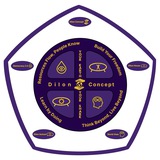
Dillon Concept.
A new concept of building the economical and political structure of society.
Platform - Democracy 2.0 Democracy 2.0
Modern information technologies make it possible to build a single database of accounting for all state resources with the following basic principles:
reflection of all available resources in real-time 24/7
automatic division of available resources by the number of living citizens
reflection of resources available to every citizen in real time 24/7
embezzlement prevention mechanisms, only a percentage equal to age is available for use, for example, 100 years is 100%, respectively, at 25 years, only 25% of resources are available
The mechanism of automatic withdrawal of a certain percentage from parents at the birth of a child
and other functions of regulation, forecasting, and analytics of available resources
It is proposed to abolish the right to inheritance of one citizen from another. Any property containing significant resources becomes the property of society after the death of a person.
It is proposed to abolish the loan interest. The amount of money supply should be tightly tied to the number of available resources. Any activity to produce money from money should be illegal.
It is assumed that the federal system of laws will be written as an open-source program. Only Captain Dilons will have the right to change this code by direct electronic voting.
The Dillon Captains are expected to vote on the content of the system's main control code. Captain Dilon is a person who has completed the construction of his/her house at Dillon School and has proven his/her ability to provide for him/herself completely autonomously within one or two years. Thus, Captain Dillon becomes a person who has proven his/her practical ability to convert resources into wealth.
It is proposed that all residents will have a sacred right to their share of resources. Only Captain Dilon will have the right to vote. The rest of the citizens will have the right to add their vote to Captain Dilon if they give their share of the resources to the management of Captain Dilon. Captain Dilon's vote will be counted as 1 + the number of citizens who choose to give their share of resources to Captain Dilon's management.
It is proposed that people will live in small communities of 300-500 people maximum, where all members of the community agree with its rules by 99% - Democracy 2.0.
It is assumed that any resident will be free to choose the management company for their share of the resources as well as the community for living.
Dilon House
It is proposed to create a concept and layout of the Dillon house. A new type of house, which will be created from a fireproof body and have the following characteristics:
not fixed to the ground, movable
have all the elements of a full cycle of life support autonomously, regardless of any centralized systems
departments - for growing food, extracting and processing water, production, etc. necessary for a full cycle of self-sufficiency.
Dilon School
It is proposed to create a new type of school. A school where students will have the opportunity and resources to build their own Dillon House. Pupils, after graduating from elementary school, will learn disciplines through the construction and arrangement of their own housing, and the practice of complete self-sufficiency. It is assumed that the state will provide a ready-made building for the student's future home, using its resources.
Word View Ideology (Not just Ideology!) Institute.
A new concept of building the economical and political structure of society.
Platform - Democracy 2.0 Democracy 2.0
Modern information technologies make it possible to build a single database of accounting for all state resources with the following basic principles:
reflection of all available resources in real-time 24/7
automatic division of available resources by the number of living citizens
reflection of resources available to every citizen in real time 24/7
embezzlement prevention mechanisms, only a percentage equal to age is available for use, for example, 100 years is 100%, respectively, at 25 years, only 25% of resources are available
The mechanism of automatic withdrawal of a certain percentage from parents at the birth of a child
and other functions of regulation, forecasting, and analytics of available resources
It is proposed to abolish the right to inheritance of one citizen from another. Any property containing significant resources becomes the property of society after the death of a person.
It is proposed to abolish the loan interest. The amount of money supply should be tightly tied to the number of available resources. Any activity to produce money from money should be illegal.
It is assumed that the federal system of laws will be written as an open-source program. Only Captain Dilons will have the right to change this code by direct electronic voting.
The Dillon Captains are expected to vote on the content of the system's main control code. Captain Dilon is a person who has completed the construction of his/her house at Dillon School and has proven his/her ability to provide for him/herself completely autonomously within one or two years. Thus, Captain Dillon becomes a person who has proven his/her practical ability to convert resources into wealth.
It is proposed that all residents will have a sacred right to their share of resources. Only Captain Dilon will have the right to vote. The rest of the citizens will have the right to add their vote to Captain Dilon if they give their share of the resources to the management of Captain Dilon. Captain Dilon's vote will be counted as 1 + the number of citizens who choose to give their share of resources to Captain Dilon's management.
It is proposed that people will live in small communities of 300-500 people maximum, where all members of the community agree with its rules by 99% - Democracy 2.0.
It is assumed that any resident will be free to choose the management company for their share of the resources as well as the community for living.
Dilon House
It is proposed to create a concept and layout of the Dillon house. A new type of house, which will be created from a fireproof body and have the following characteristics:
not fixed to the ground, movable
have all the elements of a full cycle of life support autonomously, regardless of any centralized systems
departments - for growing food, extracting and processing water, production, etc. necessary for a full cycle of self-sufficiency.
Dilon School
It is proposed to create a new type of school. A school where students will have the opportunity and resources to build their own Dillon House. Pupils, after graduating from elementary school, will learn disciplines through the construction and arrangement of their own housing, and the practice of complete self-sufficiency. It is assumed that the state will provide a ready-made building for the student's future home, using its resources.
Word View Ideology (Not just Ideology!) Institute.
It is proposed to consider the correct Worldview Ideology that answers 3 fundamental questions:
Where do we people come from, our history of appearance?
Why do we people exist? our purpose, if it exists?
What happens to us after death?
All other ideologies are proposed to be considered ideological substructures. Since they do not give a complete ideological picture of the world.
Ideology should develop a worldview based on the latest scientific and philosophical knowledge and experience and should be constantly adjusted. The number of competing schools of thought should be endorsed.
It is proposed to create an institute for the development of a worldview ideology with the following parameters:
Where do we people come from, our history of appearance?
Why do we people exist? our purpose, if it exists?
What happens to us after death?
All other ideologies are proposed to be considered ideological substructures. Since they do not give a complete ideological picture of the world.
Ideology should develop a worldview based on the latest scientific and philosophical knowledge and experience and should be constantly adjusted. The number of competing schools of thought should be endorsed.
It is proposed to create an institute for the development of a worldview ideology with the following parameters:
Focus only on future development, strictly forbidden dealing with current issues or getting involved
independent, answering only to the people
aimed at the continuous study and processing of known and new scientific facts
engaged exclusively in the development of the theory of the modern worldview of man
independent, answering only to the people
aimed at the continuous study and processing of known and new scientific facts
engaged exclusively in the development of the theory of the modern worldview of man
White Paper
By Dilon, Founder of the Dilon Concept
Executive Summary
The Dilon Concept represents a comprehensive framework for societal restructuring based on resource rights and management. This white paper explores how artificial intelligence (AI) and the Dilon Concept create a perfect market fit. They address the fundamental limitations of current AI development approaches while unlocking new possibilities for technological advancement and human flourishing.
The core principles of the Dilon Concept include recognizing inherent resource rights from birth, transitioning to a resource-based economy, redefining money as a temporary store of value for natural resources, establishing meritocratic leadership based on resource management abilities, and emphasizing self-sufficiency and individual autonomy.
When integrated with AI, this framework creates powerful synergies: decentralized AI ownership aligned with resource rights, AI-powered resource tracking and optimization, enhanced democratic processes, sustainable living applications, educational transformation, and ideological development.
Central to our implementation strategy is Dilonland DAO—a decentralized autonomous organization providing a virtual environment for testing, refining, and scaling Dilon Concept ideas before and alongside physical implementation. This virtual testing ground represents a revolutionary approach to societal transformation, allowing us to iterate rapidly, gather data-driven insights, and build community while minimizing risks and implementation costs.
The implementation strategy outlines a four-phase approach spanning 20 years, addressing potential challenges while creating pathways for diverse stakeholder engagement and participation. Dilonland DAO serves as both the proving ground for our ideas and the gathering place for our growing community.
This white paper invites collaboration in creating a future where AI serves as a catalyst for positive societal transformation rather than an accelerant of existing problems—a future of dignity, autonomy, and flourishing for all.
Introduction and Background
As the founder of the Dilon Concept, I have dedicated my life to reimagining how society can function in harmony with our planet's resources while empowering individuals to achieve true autonomy and prosperity. The journey that led to the development of this framework began with a simple yet profound realization: our current economic and social structures are fundamentally misaligned with both human potential and planetary boundaries.
In today's world, we face unprecedented challenges. Resource depletion is accelerating at an alarming rate, while wealth concentration reaches historic levels. Governments struggle with corruption and inefficiency, educational systems fail to prepare individuals for meaningful contributions, and technological advancements often benefit the few rather than the many. These systemic issues cannot be solved through incremental changes to existing frameworks—they demand a complete paradigm shift in how we conceptualize resources, governance, education, and human potential.
The Dilon Concept emerged from years of cross-disciplinary research, practical experimentation, and deep reflection on the fundamental nature of human societies. It represents not merely a theoretical construct but a comprehensive, implementable framework for societal transformation. At its core lies a revolutionary premise: every human being has inherent rights to Earth's resources from birth, and our economic, political, and social systems should be designed to honor and operationalize this truth.
The timing for this transformation could not be more critical. As we stand at the precipice of the artificial intelligence revolution, we face a pivotal choice. Will AI development follow the same centralized, extractive patterns that have characterized previous technological revolutions? Or can we align this powerful technology with a more equitable, sustainable vision for humanity's future?
By Dilon, Founder of the Dilon Concept
Executive Summary
The Dilon Concept represents a comprehensive framework for societal restructuring based on resource rights and management. This white paper explores how artificial intelligence (AI) and the Dilon Concept create a perfect market fit. They address the fundamental limitations of current AI development approaches while unlocking new possibilities for technological advancement and human flourishing.
The core principles of the Dilon Concept include recognizing inherent resource rights from birth, transitioning to a resource-based economy, redefining money as a temporary store of value for natural resources, establishing meritocratic leadership based on resource management abilities, and emphasizing self-sufficiency and individual autonomy.
When integrated with AI, this framework creates powerful synergies: decentralized AI ownership aligned with resource rights, AI-powered resource tracking and optimization, enhanced democratic processes, sustainable living applications, educational transformation, and ideological development.
Central to our implementation strategy is Dilonland DAO—a decentralized autonomous organization providing a virtual environment for testing, refining, and scaling Dilon Concept ideas before and alongside physical implementation. This virtual testing ground represents a revolutionary approach to societal transformation, allowing us to iterate rapidly, gather data-driven insights, and build community while minimizing risks and implementation costs.
The implementation strategy outlines a four-phase approach spanning 20 years, addressing potential challenges while creating pathways for diverse stakeholder engagement and participation. Dilonland DAO serves as both the proving ground for our ideas and the gathering place for our growing community.
This white paper invites collaboration in creating a future where AI serves as a catalyst for positive societal transformation rather than an accelerant of existing problems—a future of dignity, autonomy, and flourishing for all.
Introduction and Background
As the founder of the Dilon Concept, I have dedicated my life to reimagining how society can function in harmony with our planet's resources while empowering individuals to achieve true autonomy and prosperity. The journey that led to the development of this framework began with a simple yet profound realization: our current economic and social structures are fundamentally misaligned with both human potential and planetary boundaries.
In today's world, we face unprecedented challenges. Resource depletion is accelerating at an alarming rate, while wealth concentration reaches historic levels. Governments struggle with corruption and inefficiency, educational systems fail to prepare individuals for meaningful contributions, and technological advancements often benefit the few rather than the many. These systemic issues cannot be solved through incremental changes to existing frameworks—they demand a complete paradigm shift in how we conceptualize resources, governance, education, and human potential.
The Dilon Concept emerged from years of cross-disciplinary research, practical experimentation, and deep reflection on the fundamental nature of human societies. It represents not merely a theoretical construct but a comprehensive, implementable framework for societal transformation. At its core lies a revolutionary premise: every human being has inherent rights to Earth's resources from birth, and our economic, political, and social systems should be designed to honor and operationalize this truth.
The timing for this transformation could not be more critical. As we stand at the precipice of the artificial intelligence revolution, we face a pivotal choice. Will AI development follow the same centralized, extractive patterns that have characterized previous technological revolutions? Or can we align this powerful technology with a more equitable, sustainable vision for humanity's future?