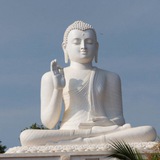
Forwarded from Buddha
When wanting and clinging are gone, the struggle is gone, and you are liberated from suffering. When you are liberated from suffering, you have an incomparable kind of happiness.
Observe suffering; look at the body and the mind. This is the reason that we must watch our body and our mind. If you know the body and mind as they really are, you see the three characteristics of body and mind. When you see the truth of them, you become disillusioned with them and release your clinging. When wanting and clinging are gone, the struggle is gone, and you are liberated from suffering. When you are liberated from suffering, you have an incomparable kind of happiness. It is a happiness that doesn’t change in response to sights, sounds, smells, tastes, bodily feelings, and thoughts. It is a happiness that is independent of sights, sounds, smells, tastes, bodily feelings, and thoughts. It is independent of things that are uncertain. Sights are uncertain; sounds, smells, tastes, bodily feelings, and thoughts are uncertain. As long as you are dependent on things that are uncertain, then your happiness is uncertain. When you don’t rely on things that are uncertain, when you don’t rely on anything in the world, then you attain the true, perfect happiness.
So keep practicing. Today it might be difficult. In the future it will be easy. Just keep watching the body and the mind. Today there are many defilements. In the future there will be fewer. Today there is a lot of suffering, and it lasts a long time. In the future there will be little suffering, and for a shorter amount of time, until eventually suffering comes to an end. Whoever does it will attain it. But you have to do it properly. Don’t use the methods that the Buddha didn’t teach, such as the method of feeding desires. This doesn’t work. The method of denying desires, that doesn’t work either. The method of knowing suffering until you automatically relinquish desire: That’s the method that works.
Adapted from Voices of Siam 2025 compiled and translated by Bruce Evans.
===
Ajahn Pramote took bhikkhu ordination in 2001 and went on to establish his own monastery at Wat Suan Santidham in Chon Buri Province, where he currently lives and teaches.
===
Part 1 of 2:
https://t.me/dhammapadas/4278
Part 2 of 2:
https://t.me/lorddivinebuddha/4804
===
Buddha dharma teachings channel:
https://t.me/lorddivinebuddha
===
Observe suffering; look at the body and the mind. This is the reason that we must watch our body and our mind. If you know the body and mind as they really are, you see the three characteristics of body and mind. When you see the truth of them, you become disillusioned with them and release your clinging. When wanting and clinging are gone, the struggle is gone, and you are liberated from suffering. When you are liberated from suffering, you have an incomparable kind of happiness. It is a happiness that doesn’t change in response to sights, sounds, smells, tastes, bodily feelings, and thoughts. It is a happiness that is independent of sights, sounds, smells, tastes, bodily feelings, and thoughts. It is independent of things that are uncertain. Sights are uncertain; sounds, smells, tastes, bodily feelings, and thoughts are uncertain. As long as you are dependent on things that are uncertain, then your happiness is uncertain. When you don’t rely on things that are uncertain, when you don’t rely on anything in the world, then you attain the true, perfect happiness.
So keep practicing. Today it might be difficult. In the future it will be easy. Just keep watching the body and the mind. Today there are many defilements. In the future there will be fewer. Today there is a lot of suffering, and it lasts a long time. In the future there will be little suffering, and for a shorter amount of time, until eventually suffering comes to an end. Whoever does it will attain it. But you have to do it properly. Don’t use the methods that the Buddha didn’t teach, such as the method of feeding desires. This doesn’t work. The method of denying desires, that doesn’t work either. The method of knowing suffering until you automatically relinquish desire: That’s the method that works.
Adapted from Voices of Siam 2025 compiled and translated by Bruce Evans.
===
Ajahn Pramote took bhikkhu ordination in 2001 and went on to establish his own monastery at Wat Suan Santidham in Chon Buri Province, where he currently lives and teaches.
===
Part 1 of 2:
https://t.me/dhammapadas/4278
Part 2 of 2:
https://t.me/lorddivinebuddha/4804
===
Buddha dharma teachings channel:
https://t.me/lorddivinebuddha
===
Telegram
Dhammapada - Buddha Dharma Teachings
The Task in Relation to Suffering
How we can learn to see things as they are—and, in the process, find freedom
By Ajahn Pramote | Translated by Bruce Evans
Part 1 of 2
Keep practicing. Don’t be discouraged. The reward of meditation practice awaits us…
How we can learn to see things as they are—and, in the process, find freedom
By Ajahn Pramote | Translated by Bruce Evans
Part 1 of 2
Keep practicing. Don’t be discouraged. The reward of meditation practice awaits us…
✍1👍1😇1
5. Dhanapàlako nàma kuñjaro
kañukappabhedano dunnivàrayo
Baddho kabalam na bhuñjati
sumarati nàgavanassa kuñjaro. 324.
AN ELEPHANT CARED FOR HIS MOTHER
5. The uncontrollable, captive tusker named Dhanapàlaka, with pungent juice flowing, eats no morsel; the tusker calls to mind the elephant forest. 324.
Story
An old man was neglected by his children. One day he went to see the Buddha, who made a suggestion to him which proved very successful. Later, the children tenderly cared for their father. Commenting on their attention, the Buddha uttered this verse to show the loving care of a captive elephant towards its mother.
===
Buddha dharma teachings channel:
https://t.me/lorddivinebuddha
===
kañukappabhedano dunnivàrayo
Baddho kabalam na bhuñjati
sumarati nàgavanassa kuñjaro. 324.
AN ELEPHANT CARED FOR HIS MOTHER
5. The uncontrollable, captive tusker named Dhanapàlaka, with pungent juice flowing, eats no morsel; the tusker calls to mind the elephant forest. 324.
Story
An old man was neglected by his children. One day he went to see the Buddha, who made a suggestion to him which proved very successful. Later, the children tenderly cared for their father. Commenting on their attention, the Buddha uttered this verse to show the loving care of a captive elephant towards its mother.
===
Buddha dharma teachings channel:
https://t.me/lorddivinebuddha
===
Telegram
Buddha
Buddha dharma teachings from the suttas and commentaries
👍1🙏1🤝1
Namakāra Gāthā
Araham Sammā-Sambuddho Bhagavā,
Buddham Bhagavantam abhivādemi.
Svākkhāto Bhagavatā Dhammo,
Dhammam namassāmi.
Supaṭipanno Bhagavato sāvaka-sangho,
Sangham namāmi.
The Blessed One is the Arahant, the Perfectly and Fully Awakened One;
I pay homage to the Buddha, the Blessed One.
The Dhamma is well-expounded by the Blessed One;
I pay homage to the Dhamma.
The Saṅgha of the Blessed One's disciples has practiced well;
I pay homage to the Saṅgha.
Araham Sammā-Sambuddho Bhagavā,
Buddham Bhagavantam abhivādemi.
Svākkhāto Bhagavatā Dhammo,
Dhammam namassāmi.
Supaṭipanno Bhagavato sāvaka-sangho,
Sangham namāmi.
The Blessed One is the Arahant, the Perfectly and Fully Awakened One;
I pay homage to the Buddha, the Blessed One.
The Dhamma is well-expounded by the Blessed One;
I pay homage to the Dhamma.
The Saṅgha of the Blessed One's disciples has practiced well;
I pay homage to the Saṅgha.
🙏3👏1🫡1😎1
Forwarded from Buddha
Free Buddha Dharma ebook
The Karma of Questions
Essays on the Buddhist Path
By Thanissaro Bhikkhu
This is a revised edition to the second collection of essays. Significant changes were made to the essay Perennial Issues, and Pali diacritics were added throughout. The essays included are: Life Isn’t Just Suffering, Opening the Door to the Dhamma, Questions of Skill, Freedom from Fear, Samsara, Samsara Divided by Zero, The Agendas of Mindfulness, De-perception, The Weight of Mountains, Five Piles of Bricks, Perennial Issues, and When You Know for Yourselves.
Free download available:
https://www.dhammatalks.org/Archive/Writings/Ebooks/KarmaOfQuestions_251113.pdf
===
The Karma of Questions
Essays on the Buddhist Path
By Thanissaro Bhikkhu
This is a revised edition to the second collection of essays. Significant changes were made to the essay Perennial Issues, and Pali diacritics were added throughout. The essays included are: Life Isn’t Just Suffering, Opening the Door to the Dhamma, Questions of Skill, Freedom from Fear, Samsara, Samsara Divided by Zero, The Agendas of Mindfulness, De-perception, The Weight of Mountains, Five Piles of Bricks, Perennial Issues, and When You Know for Yourselves.
Free download available:
https://www.dhammatalks.org/Archive/Writings/Ebooks/KarmaOfQuestions_251113.pdf
===
👏1🙏1💯1
Forwarded from Buddha
Free Buddha Dharma ebook
The Karma of Questions
Essays on the Buddhist Path
By Thanissaro Bhikkhu
This is a revised edition to the second collection of essays. Significant changes were made to the essay Perennial Issues, and Pali diacritics were added throughout. The essays included are: Life Isn’t Just Suffering, Opening the Door to the Dhamma, Questions of Skill, Freedom from Fear, Samsara, Samsara Divided by Zero, The Agendas of Mindfulness, De-perception, The Weight of Mountains, Five Piles of Bricks, Perennial Issues, and When You Know for Yourselves.
Free download available:
https://www.dhammatalks.org/Archive/Writings/Ebooks/KarmaOfQuestions_251113.pdf
===
The Karma of Questions
Essays on the Buddhist Path
By Thanissaro Bhikkhu
This is a revised edition to the second collection of essays. Significant changes were made to the essay Perennial Issues, and Pali diacritics were added throughout. The essays included are: Life Isn’t Just Suffering, Opening the Door to the Dhamma, Questions of Skill, Freedom from Fear, Samsara, Samsara Divided by Zero, The Agendas of Mindfulness, De-perception, The Weight of Mountains, Five Piles of Bricks, Perennial Issues, and When You Know for Yourselves.
Free download available:
https://www.dhammatalks.org/Archive/Writings/Ebooks/KarmaOfQuestions_251113.pdf
===
❤1🤝1🫡1
6. Middhã yadà hoti mahagghaso ca
niddàyità samparivattasàyã
Mahàvaràho' va nivàpapuññho
punappunam gabbham upeti mando. 325.
BE MODERATE IN EATING
6. The stupid one, when he is torpid, gluttonous, sleepy, rolls about lying like a great hog nourished on pig-wash, goes to rebirth again and again. 325.
Story
Owing to overeating King Kosala had to experience much discomfort. As advised by the Buddha he became moderate in eating and improved in health.
===
Words of the Buddha channel:
https://t.me/wordsofbuddha
===
niddàyità samparivattasàyã
Mahàvaràho' va nivàpapuññho
punappunam gabbham upeti mando. 325.
BE MODERATE IN EATING
6. The stupid one, when he is torpid, gluttonous, sleepy, rolls about lying like a great hog nourished on pig-wash, goes to rebirth again and again. 325.
Story
Owing to overeating King Kosala had to experience much discomfort. As advised by the Buddha he became moderate in eating and improved in health.
===
Words of the Buddha channel:
https://t.me/wordsofbuddha
===
Telegram
Words of the Buddha
Daily teachings of Buddha Dharma
☃2👍1🔥1🙏1👌1
“And what is the origin of suffering? In dependence on the eye & forms, eye-consciousness arises. The meeting of the three is contact. With contact as condition, feeling comes to be; with feeling as condition, craving. This is the origin of suffering.
“In dependence on the ear & sounds …[the nose & odours, the tongue & tastes, the body & tactile objects, the mind & mental phenomena], mind-consciousness arises. The meeting of the three is contact. With contact as condition, feeling comes to be; with feeling as condition, craving. This is the origin of suffering.
“And what , is the passing away of suffering? With the remainderless fading away & cessation of that same craving comes cessation of clinging; with the cessation of clinging, cessation of existence; with the cessation of existence, cessation of birth; with the cessation of birth, aging-and-death, sorrow, lamentation, pain, displeasure, & despair cease. This is the passing away of suffering.
Partial excerpts from SN 12.43: Dukkhasutta
“In dependence on the ear & sounds …[the nose & odours, the tongue & tastes, the body & tactile objects, the mind & mental phenomena], mind-consciousness arises. The meeting of the three is contact. With contact as condition, feeling comes to be; with feeling as condition, craving. This is the origin of suffering.
“And what , is the passing away of suffering? With the remainderless fading away & cessation of that same craving comes cessation of clinging; with the cessation of clinging, cessation of existence; with the cessation of existence, cessation of birth; with the cessation of birth, aging-and-death, sorrow, lamentation, pain, displeasure, & despair cease. This is the passing away of suffering.
Partial excerpts from SN 12.43: Dukkhasutta
🙏1🕊1🫡1
Forwarded from Words of the Buddha
Free Buddhism dharma ebook
Getting Started in Mindfulness With Breathing
BUDDHADASA BHIKKHU
“Sit up straight with all the vertebrae of the spine fitting together snugly. Keep the head upright, with the eyes gazing toward the tip of the nose. Whether you see it or not doesn’t really matter, just gaze in the direction of the nose or past it. Once you get used to this, the results will be better than closing the eyes, and you won’t be inclined to fall asleep so easily. In particular, people who are sleepy will benefit from keeping the eyes open at first rather than closing them. Practice like this steadily and they will close by themselves when the time comes for them to close. However, if you want to practice with your eyes closed from the start, that’s fine too...”
Free download here:
https://www.suanmokkh.org/system/books/files/000/000/020/original/Buddhadasa-Getting-started-in-mindfulness-with-breathing.pdf?1599465452
===
Getting Started in Mindfulness With Breathing
BUDDHADASA BHIKKHU
“Sit up straight with all the vertebrae of the spine fitting together snugly. Keep the head upright, with the eyes gazing toward the tip of the nose. Whether you see it or not doesn’t really matter, just gaze in the direction of the nose or past it. Once you get used to this, the results will be better than closing the eyes, and you won’t be inclined to fall asleep so easily. In particular, people who are sleepy will benefit from keeping the eyes open at first rather than closing them. Practice like this steadily and they will close by themselves when the time comes for them to close. However, if you want to practice with your eyes closed from the start, that’s fine too...”
Free download here:
https://www.suanmokkh.org/system/books/files/000/000/020/original/Buddhadasa-Getting-started-in-mindfulness-with-breathing.pdf?1599465452
===
⚡1🏆1🎄1
Forwarded from Words of the Buddha
Free Buddhism dharma ebook
Getting Started in Mindfulness With Breathing
BUDDHADASA BHIKKHU
“Sit up straight with all the vertebrae of the spine fitting together snugly. Keep the head upright, with the eyes gazing toward the tip of the nose. Whether you see it or not doesn’t really matter, just gaze in the direction of the nose or past it. Once you get used to this, the results will be better than closing the eyes, and you won’t be inclined to fall asleep so easily. In particular, people who are sleepy will benefit from keeping the eyes open at first rather than closing them. Practice like this steadily and they will close by themselves when the time comes for them to close. However, if you want to practice with your eyes closed from the start, that’s fine too...”
Free download here:
https://www.suanmokkh.org/system/books/files/000/000/020/original/Buddhadasa-Getting-started-in-mindfulness-with-breathing.pdf?1599465452
===
Getting Started in Mindfulness With Breathing
BUDDHADASA BHIKKHU
“Sit up straight with all the vertebrae of the spine fitting together snugly. Keep the head upright, with the eyes gazing toward the tip of the nose. Whether you see it or not doesn’t really matter, just gaze in the direction of the nose or past it. Once you get used to this, the results will be better than closing the eyes, and you won’t be inclined to fall asleep so easily. In particular, people who are sleepy will benefit from keeping the eyes open at first rather than closing them. Practice like this steadily and they will close by themselves when the time comes for them to close. However, if you want to practice with your eyes closed from the start, that’s fine too...”
Free download here:
https://www.suanmokkh.org/system/books/files/000/000/020/original/Buddhadasa-Getting-started-in-mindfulness-with-breathing.pdf?1599465452
===
❤1👏1👌1🕊1
Forwarded from Words of the Buddha
“Bhikkhus, there are world interstices, vacant and abysmal regions of blinding darkness and gloom, where the light of the sun and moon, so powerful and mighty, does not reach.”
When this was said, a certain bhikkhu said to the Blessed One: “That darkness, venerable sir, is indeed great; that darkness is indeed very great. But is there, venerable sir, any other darkness greater and more frightful than that one?”
“There is, bhikkhu.”
Those ascetics and brahmins, bhikkhu, who do not understand as it really is: ‘This is suffering’; who do not understand as it really is: ‘This is the origin of suffering’; who do not understand as it really is: ‘This is the cessation of suffering’; who do not understand as it really is: ‘This is the way leading to the cessation of suffering’— they tumble into the darkness of birth, aging, death, sorrow, lamentation, pain, displeasure, and despair.
Partial excerpts from SN 56.46 : Andhakasrasutta : Darkness
When this was said, a certain bhikkhu said to the Blessed One: “That darkness, venerable sir, is indeed great; that darkness is indeed very great. But is there, venerable sir, any other darkness greater and more frightful than that one?”
“There is, bhikkhu.”
Those ascetics and brahmins, bhikkhu, who do not understand as it really is: ‘This is suffering’; who do not understand as it really is: ‘This is the origin of suffering’; who do not understand as it really is: ‘This is the cessation of suffering’; who do not understand as it really is: ‘This is the way leading to the cessation of suffering’— they tumble into the darkness of birth, aging, death, sorrow, lamentation, pain, displeasure, and despair.
Partial excerpts from SN 56.46 : Andhakasrasutta : Darkness
⚡2🔥1🥰1
7. Idam pure cittam acàri càrikam
yena'icchakam yatthakàmam yathàsukham
Tadajj' aham niggahessàmi yoniso
hatthippabhinnam viya aïkusaggaho. 326.
CONTROL YOUR THOUGHTS
7. Formerly this mind went wandering where it liked, as it wished and as it listed. Today with attentiveness I shall completely hold it in check, as a mahout (holds in check) an elephant in must. 326.
Story
A young novice who led a very virtuous life later desired to leave the Order. But his mother dissuaded him from doing so. Finally he realized the manifold advantages of the Holy Life. The Buddha uttered this verse in admonition.
===
Dhammapada, beloved and favorite teachings of the Buddha channel:
https://t.me/dhammapadas
===
yena'icchakam yatthakàmam yathàsukham
Tadajj' aham niggahessàmi yoniso
hatthippabhinnam viya aïkusaggaho. 326.
CONTROL YOUR THOUGHTS
7. Formerly this mind went wandering where it liked, as it wished and as it listed. Today with attentiveness I shall completely hold it in check, as a mahout (holds in check) an elephant in must. 326.
Story
A young novice who led a very virtuous life later desired to leave the Order. But his mother dissuaded him from doing so. Finally he realized the manifold advantages of the Holy Life. The Buddha uttered this verse in admonition.
===
Dhammapada, beloved and favorite teachings of the Buddha channel:
https://t.me/dhammapadas
===
Telegram
Dhammapada - Buddha Dharma Teachings
Daily teachings of the Dhammapada, beloved and favorite teachings of the Buddha
👍1💯1😇1
The vigilant sage who practises alone,
who unshaken is by blame or praise,
is as a lion that trembles not at sounds,
or as wind within a net cannot be caught,
or like a lotus flower by water not defiled,
leading other people but not by others led—
that one do the wise proclaim as a sage.
True Knower of the universe, Seer of highest truth,
crossed the ocean’s flood, One Thus and unattached,
One who’s knots are cut, with no inflows left—
that one do the wise proclaim as a sage.
Partial excerpts from Snp 1.12 : Muni Sutta
who unshaken is by blame or praise,
is as a lion that trembles not at sounds,
or as wind within a net cannot be caught,
or like a lotus flower by water not defiled,
leading other people but not by others led—
that one do the wise proclaim as a sage.
True Knower of the universe, Seer of highest truth,
crossed the ocean’s flood, One Thus and unattached,
One who’s knots are cut, with no inflows left—
that one do the wise proclaim as a sage.
Partial excerpts from Snp 1.12 : Muni Sutta
🙏3👏1🫡1