Compass Call
T-72B Obr.1989 🇷🇺
Today we will talk about the T-72B Obr.1989, essentially a standard T-72B, which we have already discussed, fitted with Kontakt-5 explosive reactive armor (ERA). This armor is present on the frontal hull, not in the form of external bricks but directly integrated into the hull's design, on the forward sections of the side hull (those rectangular structures), and on the turret, which in this model is characterized by its distinctive wedge-shaped profile.
The entire armor package weighs approximately 2 tonnes. These ERA modules feature steel plates 16-20 mm thick, compared to the 3 mm plates used in Kontakt-1. This was designed for a specific purpose: it was the first ERA system capable of defeating 120 mm NATO APFSDS penetrators. The reason is that the plate is installed at an angle, and when the explosive element detonates, it propels the plate obliquely against the penetrator as it enters the armor. This can fracture, deform, and deflect the projectile, requiring a much thicker plate. The concept is similar to that of Kontakt-1, with the difference that in the latter the movement of the two internal plates was sufficient only to disrupt a HEAT jet.
When NATO gained access to Soviet tanks left behind in Germany during the confusion of the early 1990s, it discovered that the T-72B Obr.1989 was effectively immune to the 120 mm M829A1 depleted uranium rounds. As a result, the tank was considered frontally impenetrable and, in the event of war, would have been capable of absorbing repeated hits to its frontal arc. The only significant advantage retained by NATO tanks would have been their vastly superior night-fighting capabilities. However, the tank was not protected against tandem-charge warheads.
This unexpected discovery led to the development of the M829A2 and later M829A3 penetrators, which eventually surpassed the vehicle's protective capabilities.
Consequently, the T-72B Obr.1989 possessed an estimated frontal protection equivalent of approximately 690-740 mm against APFSDS rounds, significantly exceeding the Challenger 1 and Leopard 2, which were estimated at 550-580 mm, and even surpassing the M1 Abrams HA variant, whose depleted uranium armor package approached 680 mm. At the time, it was considered the most heavily protected tank in the world.
Against HEAT munitions, its protection was estimated at 1,100-1,200 mm RHA equivalent, roughly comparable to that of the M1 HA.
The entire armor package weighs approximately 2 tonnes. These ERA modules feature steel plates 16-20 mm thick, compared to the 3 mm plates used in Kontakt-1. This was designed for a specific purpose: it was the first ERA system capable of defeating 120 mm NATO APFSDS penetrators. The reason is that the plate is installed at an angle, and when the explosive element detonates, it propels the plate obliquely against the penetrator as it enters the armor. This can fracture, deform, and deflect the projectile, requiring a much thicker plate. The concept is similar to that of Kontakt-1, with the difference that in the latter the movement of the two internal plates was sufficient only to disrupt a HEAT jet.
When NATO gained access to Soviet tanks left behind in Germany during the confusion of the early 1990s, it discovered that the T-72B Obr.1989 was effectively immune to the 120 mm M829A1 depleted uranium rounds. As a result, the tank was considered frontally impenetrable and, in the event of war, would have been capable of absorbing repeated hits to its frontal arc. The only significant advantage retained by NATO tanks would have been their vastly superior night-fighting capabilities. However, the tank was not protected against tandem-charge warheads.
This unexpected discovery led to the development of the M829A2 and later M829A3 penetrators, which eventually surpassed the vehicle's protective capabilities.
Consequently, the T-72B Obr.1989 possessed an estimated frontal protection equivalent of approximately 690-740 mm against APFSDS rounds, significantly exceeding the Challenger 1 and Leopard 2, which were estimated at 550-580 mm, and even surpassing the M1 Abrams HA variant, whose depleted uranium armor package approached 680 mm. At the time, it was considered the most heavily protected tank in the world.
Against HEAT munitions, its protection was estimated at 1,100-1,200 mm RHA equivalent, roughly comparable to that of the M1 HA.
🇮🇹 Oggi parleremo del T-72BObr.1989, sostanzialmente un normale T-72B di cui abbiamo già parlato con l'aggiunta della corazza reattiva Kontakt-5, la quale è presente sullo scafo frontale, ma non come mattoncini, bensì è direttamente integrata nel design dello scafo del carro, sulla prima parte dello scafo laterale (quei rettangoli) e sulla torretta, caratterizzata in questo modello dal tipico cuneo.L'intero kit pesa circa 2 tonnellate, queste piastre hanno una lastra di acciaio di ben 16-20mm contro i 3mm della Kontakt-1, perché ha uno scopo preciso, è la prima ERA capace di spezzare i penetratori APFSDS da 120mm della NATO, questo perché la piastra è montata con un'inclinazione, e l'esplosione del contenuto scaglia la piastra con una forza obliqua verso il dardo nel mentre che questo penetra, riuscendo a spezzarlo, deformarlo e deviarne la traiettoria, per questo motivo è necessaria una piastra così spessa, il concetto è lo stesso della Kontakt-1 con la differenza che li il movimento delle piastre (che erano 2 interne) era sufficiente a disturbare solo il getto HEAT.
Quando dopo la NATO riuscì nella confusione dei primi anni '90 a mettere le mani sui carri sovietici rimasti in Germania, scoprì che il T-72B Obr.1989 era TOTALMENTE immune ai dardi all'uranio impoverito da 120mm M829A1, il carro era dunque impenetrabile frontalmente e in caso di guerra avrebbe potuto assorbire ripetuti colpi sull'arco frontale, l'unico vantaggio dei carri NATO sarebbe rimasta la capacità di combattimento notturno molto migliore, il carro non è protetto da testate tandem.
La dura scoperta portò alla realizzazione dei nuovi penetratori M829A2 e A3 che superarono più avanti il carro.Dunque il T-72B Obr.1989 aveva una protezione frontale di circa 690-740mm contro APFSDS superando ampiamente Challenger 1 e Leopard 2 che si fermavano a 550-580mm e persino la variante HA dell'Abrams, con l'uranio impoverito all'interno che sfiorava i 680mm, era il carro più protetto al mondo.
Contro HEAT saliva a 1100-1200mm, circa come l'M1 HA.
Quando dopo la NATO riuscì nella confusione dei primi anni '90 a mettere le mani sui carri sovietici rimasti in Germania, scoprì che il T-72B Obr.1989 era TOTALMENTE immune ai dardi all'uranio impoverito da 120mm M829A1, il carro era dunque impenetrabile frontalmente e in caso di guerra avrebbe potuto assorbire ripetuti colpi sull'arco frontale, l'unico vantaggio dei carri NATO sarebbe rimasta la capacità di combattimento notturno molto migliore, il carro non è protetto da testate tandem.
La dura scoperta portò alla realizzazione dei nuovi penetratori M829A2 e A3 che superarono più avanti il carro.Dunque il T-72B Obr.1989 aveva una protezione frontale di circa 690-740mm contro APFSDS superando ampiamente Challenger 1 e Leopard 2 che si fermavano a 550-580mm e persino la variante HA dell'Abrams, con l'uranio impoverito all'interno che sfiorava i 680mm, era il carro più protetto al mondo.
Contro HEAT saliva a 1100-1200mm, circa come l'M1 HA.
Gerboise Bleue pinned «Today we will talk about the T-72B Obr.1989, essentially a standard T-72B, which we have already discussed, fitted with Kontakt-5 explosive reactive armor (ERA). This armor is present on the frontal hull, not in the form of external bricks but directly integrated…»
Forwarded from Wolfpam
This media is not supported in your browser
VIEW IN TELEGRAM
🇺🇦🇷🇺First Captured Vehicles
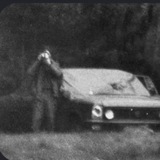
An abandoned T-72B (Model 1989). Judging by the video, the tank is intact; it starts up and is capable of moving. The crew abandoned the functional vehicle and fled.
Incidentally, the person in the footage is not a regular Ukrainian soldier but a member of the Territorial Defense Forces; the location is presumably the Chernihiv region.
#т72 #т72б #трофей #T72 #T72B #CapturedVehicle
We're on Telegram👈
An abandoned T-72B (Model 1989). Judging by the video, the tank is intact; it starts up and is capable of moving. The crew abandoned the functional vehicle and fled.
Incidentally, the person in the footage is not a regular Ukrainian soldier but a member of the Territorial Defense Forces; the location is presumably the Chernihiv region.
RU:
🇺🇦🇷🇺Первые трофеи
Брошенный Т-72Б обр. 1989 г. Судя по видео, танк цел, заводится и способен передвигаться. Экипаж бросил исправную машину и убежал.
Кстати, на кадрах не регулярный украинский военный, а представитель территориальной обороны, предположительно это Черниговская область.
#т72 #т72б #трофей #T72 #T72B #CapturedVehicle
We're on Telegram👈
T-72B3 Obr.2011 🇷🇺
Top left: Syrian tank 🇸🇾
Top right: In Russian service
Bottom: Sosna U thermal image of another T-72B3.
Credit to Wolfpam for the images!
https://t.me/wolfpam_armor
Top left: Syrian tank 🇸🇾
Top right: In Russian service
Bottom: Sosna U thermal image of another T-72B3.
Credit to Wolfpam for the images!
https://t.me/wolfpam_armor
Compass Call
T-72B3 Obr.2011 🇷🇺 Top left: Syrian tank 🇸🇾 Top right: In Russian service Bottom: Sosna U thermal image of another T-72B3. Credit to Wolfpam for the images! https://t.me/wolfpam_armor
Between 1990 and the 2000s, with the collapse of the USSR and the birth of the T-90 program, the T-72 series was put on hold until the early 2010s, with the entry into service of the T-72B3 Obr.2011. This was an upgrade of the T-72B that brought an otherwise obsolete tank back to an (exclusively offensive) standard comparable to Western ones.
The main improvement is the introduction of the Sosna-U system for the gunner, which integrates a laser rangefinder, a day sight, the guidance channel for ATGMs, and, above all, the long-awaited thermal imager into a single system; its absence in the 1990s had heavily penalized the then almost impenetrable T-72B Obr.1989.It is easily recognizable as a clearly visible cylindrical optic on the turret. Designed by the Belarusian company JSC Peleng in the early 2000s, it transfers all information to the fire control computer, which automatically positions the barrel toward the target.The thermal imager used—the core of the system—is ironically French, the Thales Catherine-FC, though it was later replaced by a Russian model. The commander lacks modern optics, which remain unchanged from the previous model, so everything depends on the gunner, especially regarding engagement and situational awareness.
Most T-72B3 Obr.2011 tanks use the 1000hp V92S-2 engine, compared to the previous 840hp. This makes the tank more agile, though still less so than Western ones, and allows it to overcome obstacles more easily; however, the reverse speed remains extremely slow.A crucial improvement is the new gun with new ammunition: the 2A46M-5 is mounted, which greatly increases accuracy, reduces dispersion, and, most importantly, is fed by a new autoloader that can accommodate longer APFSDS rounds like the Svinets-1 (tungsten) and Svinets-2 (uranium), ensuring much higher penetration alongside a significant boost in precision.
The armor remains the same, and by 2011 it was already obsolete given the widespread use of tandem warheads and uranium penetrators with steel caps that survive the Kontakt-5.In the Ukrainian conflict, it has performed well due to its excellent accuracy, but survivability remains a disaster for this tank, both against other MBTs and against the much more common FPV drones and ATGMs.
The main improvement is the introduction of the Sosna-U system for the gunner, which integrates a laser rangefinder, a day sight, the guidance channel for ATGMs, and, above all, the long-awaited thermal imager into a single system; its absence in the 1990s had heavily penalized the then almost impenetrable T-72B Obr.1989.It is easily recognizable as a clearly visible cylindrical optic on the turret. Designed by the Belarusian company JSC Peleng in the early 2000s, it transfers all information to the fire control computer, which automatically positions the barrel toward the target.The thermal imager used—the core of the system—is ironically French, the Thales Catherine-FC, though it was later replaced by a Russian model. The commander lacks modern optics, which remain unchanged from the previous model, so everything depends on the gunner, especially regarding engagement and situational awareness.
Most T-72B3 Obr.2011 tanks use the 1000hp V92S-2 engine, compared to the previous 840hp. This makes the tank more agile, though still less so than Western ones, and allows it to overcome obstacles more easily; however, the reverse speed remains extremely slow.A crucial improvement is the new gun with new ammunition: the 2A46M-5 is mounted, which greatly increases accuracy, reduces dispersion, and, most importantly, is fed by a new autoloader that can accommodate longer APFSDS rounds like the Svinets-1 (tungsten) and Svinets-2 (uranium), ensuring much higher penetration alongside a significant boost in precision.
The armor remains the same, and by 2011 it was already obsolete given the widespread use of tandem warheads and uranium penetrators with steel caps that survive the Kontakt-5.In the Ukrainian conflict, it has performed well due to its excellent accuracy, but survivability remains a disaster for this tank, both against other MBTs and against the much more common FPV drones and ATGMs.
🇮🇹 Fra il 1990 e gli anni 2000, con la caduta dell'URSS e la nascita del programma T-90, la serie T-72 fu lasciata in sospeso fino all'inizio degli anni '10 del 2000, con l'entrata in servizio del T-72B3 Obr.2011, un'aggiornamento del T-72B che ha riportato un carro ormai superato ad uno standard (esclusivamente offensivo) paragonabile a quelli Occidentali.
Il miglioramento principale è l'introduzione del sistema Sosna-U in dotazione al cannoniere, che integra in un solo sistema un telemetro laser, un mirino diurno, il canale di guida per ATGM e soprattutto l'attesa termocamera, di cui la mancanza negli anni '90 aveva penalizzato moltissimo l'allora quasi impenetrabile T-72B Obr.1989.
E' facilmente riconoscibile essendo un'ottica cilindrica ben visibile sulla torretta, fu progettato dall'azienda Bielorussa JSC Peleng all'inizio degli anni 2000, trasferisce tutte le informazioni al computer di tiro che posiziona automaticamente la canna in direzione del bersaglio.
La termocamera utilizzata, ovvero il fulcro del sistema, ironicamente è Francese, la Catherine-FC della Thales, ma è stata successivamente sostituita da un modello Russo, il comandante non ha ottiche moderne, invariate dal modello precedente, per cui tutto dipende dal cannoniere, soprattutto a livello di ingaggio e consapevolezza situazionale.
La maggior parte dei T-72B3 Obr.2011 utilizza il motore da 1000cv V92S-2, contro gli 840 precedenti, ciò rende più scattante il carro sebbene meno di quelli Occidentali, e gli permette di superare più facilmente gli ostacoli, tuttavia la retromarcia rimane lentissima.
Un miglioramento importantissimo è il nuovo cannone con le nuove munizioni, viene montato il 2A46M-5 che aumenta di molto la precisione, diminuisce la dispersione e soprattutto è alimentato dal nuovo caricatore automatico che può utilizzare APFSDS più lunghi come Svinets 1 (tungsteno) e 2 (uranio), garantendo penetrazioni molto maggiori con un importante incremento di precisione.
L'armatura rimane la stessa, e nel 2011 è ormai obsoleta vista la diffusione di testate tandem e penetratori all'Uranio con cappuccio in acciaio che sopravvivono alla Kontakt-5.
Nel conflitto Ucraino si è comportato bene a causa dell'ottima precisione, ma la sopravvivenza resta un dramma per questo carro, sia contro altri MBT che contro i molto più comuni FPV e ATGM.
Il miglioramento principale è l'introduzione del sistema Sosna-U in dotazione al cannoniere, che integra in un solo sistema un telemetro laser, un mirino diurno, il canale di guida per ATGM e soprattutto l'attesa termocamera, di cui la mancanza negli anni '90 aveva penalizzato moltissimo l'allora quasi impenetrabile T-72B Obr.1989.
E' facilmente riconoscibile essendo un'ottica cilindrica ben visibile sulla torretta, fu progettato dall'azienda Bielorussa JSC Peleng all'inizio degli anni 2000, trasferisce tutte le informazioni al computer di tiro che posiziona automaticamente la canna in direzione del bersaglio.
La termocamera utilizzata, ovvero il fulcro del sistema, ironicamente è Francese, la Catherine-FC della Thales, ma è stata successivamente sostituita da un modello Russo, il comandante non ha ottiche moderne, invariate dal modello precedente, per cui tutto dipende dal cannoniere, soprattutto a livello di ingaggio e consapevolezza situazionale.
La maggior parte dei T-72B3 Obr.2011 utilizza il motore da 1000cv V92S-2, contro gli 840 precedenti, ciò rende più scattante il carro sebbene meno di quelli Occidentali, e gli permette di superare più facilmente gli ostacoli, tuttavia la retromarcia rimane lentissima.
Un miglioramento importantissimo è il nuovo cannone con le nuove munizioni, viene montato il 2A46M-5 che aumenta di molto la precisione, diminuisce la dispersione e soprattutto è alimentato dal nuovo caricatore automatico che può utilizzare APFSDS più lunghi come Svinets 1 (tungsteno) e 2 (uranio), garantendo penetrazioni molto maggiori con un importante incremento di precisione.
L'armatura rimane la stessa, e nel 2011 è ormai obsoleta vista la diffusione di testate tandem e penetratori all'Uranio con cappuccio in acciaio che sopravvivono alla Kontakt-5.
Nel conflitto Ucraino si è comportato bene a causa dell'ottima precisione, ma la sopravvivenza resta un dramma per questo carro, sia contro altri MBT che contro i molto più comuni FPV e ATGM.
🇬🇧The EBRC Jaguar is the most interesting of the three vehicles of the Scorpion program for me. While the other two vehicles offer solid, mobile, and modular options for transport the infantry around the battlefield the Jaguar is a new type of vehicles and it is the replacement for the renowned AMX-10RC. A 6x6 vehicle weighing 25 tons and armed with a 40mm automatic cannon, the Jaguar carries a sophisticated sensor suite and a pair of Akeron missiles with a 4,000-meter range. KNDS and Arquus describe it as highly versatile vehicle, suitable for peacekeeping and counter-insurgency operations as well as conflicts against adversaries with conventional capabilities. This versatility is achieved through a combination of armour (STANAG Level IV) and high mobility. Like the other vehicles in the program, it integrates the SICS system. It reach a high survivability, because it has the ability to withstand mines, IEDs, and RPGs. Its armor can be upgraded via various kits, and it incorporates the ECLIPSE jamming system to disrupt radio frequencies. The EBRC Jaguar features laser and incoming missile detection (Antares) system and an acoustic localization device (the Piral V). All this information is shared in real-time with other vehicles, providing crews with collective threat awareness. A unique feature of the Piral V system is that, when multiple Jaguars are used together, they can triangulate sounds to pinpoint a source's location; this information is instantly distributed across the group, potentially allowing one of the vehicles to automatically aim its weapon at the threat. The vehicle can also deploy 80mm smoke grenades designed to interfere with various parts of the electromagnetic spectrum; these obscure not only visual sight lines but also laser and infrared targeting, providing 360-degree coverage around the vehicle. The launcher can also be equipped with fragmentation grenades.