
📌Most Important German Verbs (Part 1)
💥 Yes, you must know these verbs, so don't postpone it until tomorrow!
1. The verbs HABEN (to have) and SEIN (to be)
"To have" and "to be" are the most important verbs of any language, as they convey two important meanings:
- I am, this is ... - existence
- I have, he has ... - belonging
Examples:
er hat viele Freunde - he has many friends
was wollen Sie haben? - what do you want?
er ist zu Hause - he is at home
es ist kalt - it's cold
2. The verbs MACHEN and TUN (to do)
The most important expressions:
was machst du? - what are you doing?
das macht nichts - is nothing, nothing at all (answer to "thank you")
einen Antrag machen - to propose (to marry)
es tut mir leid - I'm sorry
viel zu tun haben - to be very busy
3. Modal and related verbs
Modality is a complex category that expresses the desire to do something, the obligation, the permission. Here they are:
können - can (to have a physical ability)
dürfen - allowed to (to have permission, permission)
mögen (möchten) - to wish (to like)
wollen - to want (exactly and categorically)
sollen - should (mild, recommendation)
müssen– have to (order)
Modal verbs differ from ordinary verbs in all respects:
- by their non-standard temporary forms;
- those that are not used with zu (in infinitive constructions).
4. The verb of becoming WERDEN
It is necessary to know it without thinking twice, since it forms the future tense with the infinitive of any semantic verb.
Ich werde Deutsch lernen - I will learn German.
Future tense is very important, isn't it? In addition to the future, WERDEN shows the process of changing one to another, or rather becoming:
Es wird dunkel - It's getting dark
die Tage werden länger kürzer - days get longer and shorter
was will er werden? - what does he want to be?
And with the help of this verb, Passiv is formed:
das Haus wird gebaut - the house is under construction
5. The verb GEBEN (to give)
What is so special about it, you ask, because this is an ordinary semantic verb. Not really! In the meaning of GIVING, this is really just a useful semantic verb. But there is a peculiarity: GEBEN forms a special linguistic form Es gibt - exists / exist, which is why I isolated it.
🔥The Es gibt construction is extremely important! It is used in relation to everything that "is", that is, "exists":
Es gibt viel interessantes - there are many interesting things
Gut, dass es dich gibt - it's good that you are
🔥 IMPORTANT TO REMEMBER: Es gibt + Akkusativ - that is, the addition will always be in the accusative case, and in addition, it is important to understand that even if there are many objects, the form of the verb will still be gibt (since the subject is es anyway):
Es gibt einen Mann - There is one person
es gibt viel zu tun - a lot of work
was gibt es da zu lachen? - what's so funny?
📌 Learn these important verbs today!
👍2
😄👍🏻 Wie geht's? - How are you?
📌20 easy answers (according to the degree of positivity)
🔥👍🏻 (++)
sehr gut - very good
ausgezeichnet - great
fantastisch - fantastic
toll - class
prima - super
😄 (+)
ganz gut - pretty good
gut - good
normal - normal
😉 (+/-)
so-so - so-so, 50/50
nicht schlecht - not bad
nicht besonders gut - not so good
Es geht. - Nothing (go).
leidlich - more or less
😟 (-)
nicht gut - not good
schlecht - bad
😖😢 (-)
sehr schlecht - very bad
miserabel - disgusting, bad
mies - lousy
erbärmlich - deplorable
scheußlich - disgusting, disgusting
❓How are you doing?
❤1
🇩🇪 Particles in German
1️⃣ amplifying particles 💪🏻
doch - yet,
sogar - the same / even,
so - so(English one), zu - too,
selbst - even;
2️⃣ excretory particles: ❗️
gerade / eben / ausgerechnet - exactly / just;
3️⃣ bounding particles 🚫
nur / bloß / erst / allein - only,
noch - more;
4️⃣ negative particles ⛔️
nicht - not,
nicht einmal - not even;
5️⃣ emotionally modal particles 😃
denn / etwa - maybe / only,
mal - once,
nun - well.
Dazu ist es schon zu spät - Besides, it's too late (particle "zu").
So früh habe ich dich nicht erwartet - I did not expect you so early (particle "so").
Selbst das Einfachste wußte sie nicht - She did not know even the simplest (particle "selbst").
Es war doch herrlich hier, in der kleine Siedlung am Waldrand - After all, here, in a small village at the edge of the forest, it was wonderful (particle "doch").
✅ You should pay attention to the fact that in their appearance particles can be similar to:
- adjectives / adverbs - bloß, eben, gerade, mal, nun, so, schon;
- pronouns - allein, es, etwa, selbst;
- Word unions- denn, doch.
☝🏻Not forget about the syntactic function of particles and other parts of speech:
👉🏻 Particle doch:
Wo habe ich doch diese Frau gesehen? - Where have I seen this woman?
👉🏻 Union doch:
Zuweilen bekommen wir Nachrichten von ihm, doch nicht oft - Sometimes we hear from him, but not often.
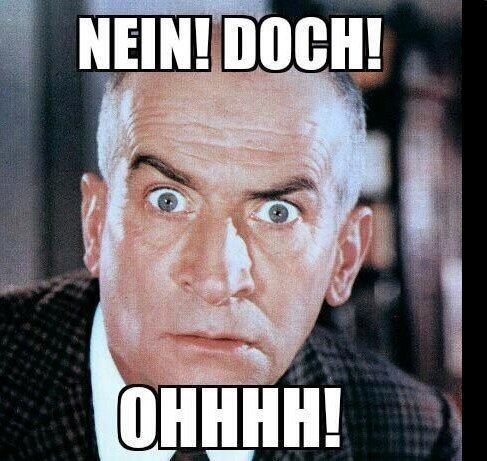
✔️ Express admiration in German!
1. Fein! - Great! Wonderful!
2. Klasse! Cool! Super! - Great! Super!
3. Prima! - Excellent! Sumptuously!
4. Toll! - well!
5. Das finde ich gut / prima! - This I find good, magnificent!
6. Das wäre gut, prima, schön! - That would be good, great, great!
7. Das wäre fein, nicht schlecht, herrlich! - That would be great, not bad, great!
8. Ich bin einfach sprachlos! Mir fehlen die Worte! - I just can't find the words! No words!
9. Das liegt auf der Hand! - It's perfectly clear, obvious!
10. Das ist mir sehr recht! - It suits me very much!
11. Da schweigen alle Geigen! - No words! Dumb delight!
👍2❤1
🙏🏻🌷15 WAYS TO EXPRESS THANKS IN GERMAN
Danke sehr! - Thank you so much!
Danke schön! - Thank you so much!
Vielen Dank! - Many thanks!
Tausend Dank! - A thousand thanks!
Herzlichen Dank! - Thank you very much!
Danke! - Thank
Danke dir! - Thank you!
Danke euch! - Thanks you!
Danke Ihnen! - Thanks you! (respect.)
Danke vielmals! - Thank you many times!
Ich bin dir / Ihnen sehr dankbar! - I am / thank you!
Das ist nett von dir! - Very nice of you!
Danke, dass es dich gibt! - Thank you for being there!
Das ist sehr freundlich von Ihnen! - Very friendly on your part
Herzlichen Dank für deine / Ihre Hilfe! - Thank you very much for your / your help!
Yes, and thank you for 36,000 followers on Instagram ☝️
📅 Dates the German way
📌 Often, instead of the name of the month, an ordinal is used:
8.Februar = 8.02 (achter zweiter)
11. Januar = 11.01 (elfter erster)
The date 3.10 can be said like this: der dritte zehnte or der dritte Oktober
Welches Datum haben wir? - Wir haben den achten September.
Wann ist Goethe geboren? - Am 28. August 1794.
When was Goethe born? - Twenty-eighth August 1794.
Der Wievielte ist heute? - Heute ist der 9. Dezember.
What's the date today? - Today is the ninth of December.
Den Wievielten haben wir heute? - Heute haben wir den 9. Dezember.
What day is it today? - Today is the ninth of December.
📌 The indication of the year (date) is read:
1749 - siebzehnhundertneunundvierzig,
but 2002 - zweitausendzwei
The combination im Jahre is placed before the designation of the year or is absent altogether.
Ich bin 1959 in Moskau gewesen. - In 1959 I was in Moscow.
or
Ich bin im Jahre 1959 in Moskau gewesen. - In 1959 I was in Moscow
❗️ Please note:
Anfang August - early August
Mitte Juni - early June
Ende Januar - late January
Anfang, Mitte, Ende des Jahres - at the beginning, in the middle, at the end of the year
Mitte Sommer - in the middle of summer
✅ The date is written in German like this:
Berlin, den 5. Mai 1995 or
Berlin, den 5.5.1995 or: Berlin, den 5.5.
❓ Are you confused about writing dates in German?
👍2
🔥🇩🇪 TOP 10 adjective suffixes
Let's consider the most common suffixes that serve to form adjectives in German:
1. -ig
die Sonne (sun) - sonnig (solar)
die Macht (power) - mächtig (powerful)
die Freude (joy) - freudig (joyful)
die Geduld (patience) - geduldig (patient)
2.-lich
der Mensch (human) - menschlich (human)
der Freund (friend) - freundlich (friendly)
3. -haft
die Dauer (duration) - dauerhaft durable (long lasting)
der Sieg (win) - sieghaft (victorious, victorious)
4. (r)
der Stein (stone) - steinern (stone)
das Gold (gold) - golden (gold)
5. -isch
die Politik (politics) - politisch (political)
das Quadrat (square) - quadratisch (square)
6. -er
/ used to form adjectives from city names /
Hamburg - Hamburger🍔 :D
Berlin - Berliner
7. -bar
/ forms adjectives from stems of transitive verbs /
danken (to thank) - dankbar (thankful)
trinken (to drink) - trinkbar (drinkable)
8. -sam
/ forms adjectives from stems of nouns, adjectives and verbs /
lang (long) - langsam (slow)
bedeuten (meaning) - bedeutsam (significant)
9. -voll, -reich
/ denote the completeness of quality /
die Bedeutung (meaning) - bedeutungsvoll (meaningful)
die Abwechslung (change) - abwechslungsreich (varied)
10. -leer, -frei, -los, -arm
/ indicate lack of quality /
die Bedeutung (meaning) - bedeutungslos (minor)
der Alkohol (alcohol) - alkoholfrei (non-alcoholic)
🇩🇪 Useful phrases for everyday communication!
🍔 Let's see some useful phrases in today's post!
Ich habe kein(en) Bock darauf! = I don't want that! / No mood for this!
Das ist echt Spitze! = This is super!
Gott sei Dank! = Thank God!
Es ist mir Wurst / egal. = I don't care.
Wann treffen wir uns? = When will we meet?
Was sagen Sie dazu? = What do you say to that?
Das macht aber nichts! = But it's okay!
Es tut mir Leid. = I'm sorry.
Wie schade! = What a pity!
Leider nicht. = Sorry, no.
Alles Gute! = Good luck!
Schämen Sie sich! = Be ashamed!
Was ist los? = What happened?
Lassen Sie mich in Ruhe. = Leave me alone.
Kennen wir uns nicht? = Looks like we know each other?
Einen Augenblick bitte. = Wait a second, please.
Meine besten Glückwünsche. = Please accept my best wishes.
Fahren Sie so schnell Sie können. = Come as soon as possible.
Kein Problem. = No problem.
Was du nicht sagst! = What are you!
Das ist ja eine Überraschung! = What a surprise!
Kommt nicht in Frage! = This is out of the question!
Hast du etwas dagegen? = Do you have anything against?
Ich habe nichts dagegen. = I have nothing against it.
Ich drück dir die Daumen! = I hold my fists for you!
Viel Spaß! = Have a good time! / Good luck!
Gute Reise! = Bon voyage!
Gute Besserung! = Get well soon!
Lass dir schmecken! = Help yourself!
Gut geschlafen? = How did you sleep?
Mach's gut! = Good luck!
Alles Gute! = Good luck!
Gleichfalls! = Mutually! / And to you (to you) the same!
All these phrases are simple and easy to remember, try to use some of them more often in your speech, and you will quickly reach the level of confident spoken German 💪
🔸 Expressing opinion
Ich denke (nicht), dass ... - I don't / think that ...
Ich finde (nicht), dass ... - I don't / think that….
Ich glaube, dass ... - I suppose that ...
Meiner Meinung nach ... - In my opinion / from my point of view ...
Ich bin mir (nicht) sicher,…. - I am not / sure that….
🔸 Expressing unexpected
Na so was! - Well, you must! Well well!
Das kann doch nicht wahr sein! - It can not be true! / This cannot be!
Wirklich? - True? / Is it real?
So eine Überraschung! - What a surprise!!
Was du nicht sagst! - What didn't you say!?!
Ist das möglich !! ?? - Is it possible ?? !!
🔸 Commenting on new information
Ich finde es (nicht) interessant, weil ... - I find the article (not) interesting because ...
Mich wundert, dass… / Mich überrascht, dass… - I am amazed / surprised that ...
Ich hätte nicht gedacht, dass ... - I would not have thought that ...
Es war klar, dass ... - it was clear that ...
🔸 Commenting on the situation
Das ist aber peinlich / ärgerlich / unerfreulich! - It's still unpleasant / annoying / disappointing!
Dumm gelaufen! - Down the drain!
So ein Pech! - What a failure!
Diese Situation ist mir echt (can also be ziemlich / total) peinlich (or unangenehm). - This situation is really (quite, absolutely) unpleasant to me.
Das hätte mir auch passieren können! - It could happen to me too.
Ich finde es gar nicht peinlich, wenn ... - I think that it is not at all / not at all shameful if….
Das möchte ich nicht erleben! - I would not want to survive this!
Das wäre mir nicht passiert! - It would be better if this did not happen to me / happened!
Es ist lustig, dass ... - It's funny that ... / I am glad that ...
Ist es nicht lustig, dass ..? - Isn't it funny / happy that ...?
❄ 40 useful words to describe the weather
das Eis - ice
das Gestöber - blizzard (squall)
der Frost - Frost
der Reif - hoarfrost (rime)
der Sturm - storm (storm)
der Schnee - snow
der Schneefall - Snowfall
der Schneehaufen - snowdrift
der Schneesturm - snow storm
die Eisglätte - ice
die Kälte - cold
kalt - cold
es schneit - it's snowing
es stürmt - the storm is raging
frieren - freeze
das Barometer - barometer
das Gewitter - thunderstorm
das Thermometer - thermometer (thermometer)
der Atmosphärendruck - Atmospheric pressure
der Blitz - lightning
der Donner - thunder
der Hagel - hail
der Regen - rain
der Tau - dew
der Wetterbericht - weather forecast (weather report)
der Wind - wind
der Wärmegrad - temperature (degree of air heating)
die Dürre - drought
die Flut - flood (tide, flood)
die Jahreszeit - season (season)
die Sonne - sun
die Windwebe - skid (snowy, sandy)
eisig - icy
es friert - cold (freeze)
es regnet - it's raining
furchtbar - terrible (scary, unusual)
heiß - hot (hot)
klar - clear (transparent)
nebelig - foggy
scheinen - to shine (to shine)
❤1
🇩🇪 30 BASIC PHRASES EVERYONE SHOULD KNOW
Thanks - Danke
Thanks a lot - Vielen Dank
Please (in response to "thank you") - Gern geschehen; Bitte schön
Please (request) - Bitte
Nothing - Nichts
Yes - Ja
No - Nein
I understand - Ich verstehe
Good - Gut
How many? - Wie viel?
How long? - Wie lange?
How, excuse me? - Wie bitte?
Whom should I ask? - Wen soll ich fragen?
I don't understand - Ich verstehe nicht
Sorry, I didn't hear - Entschuldigung, ich habe es nicht recht gehört
I'm lost - Ich habe mich verlaufen
Do you speak English? - Sprechen Sie Englisch?
Sorry, sorry (drawing attention). - Entschuldigung
Sorry (if you're sorry). - Verzeihung
I will not interfere? - Störe ich Sie?
Please repeat. - Wiederholen Sie es, bitte.
Please speak a little more slowly. - Sprechen Sie bitte ein bisschen langsamer.
Write it here, please. - Schreiben Sie das hier, bitte.
I'm not sure. - Ich bin nicht sicher.
What is it? - Was ist das?
What does it mean? - Was bedeudet das?
Where is the toilet? - Wo ist die Toilette?
Why not? - Warum nicht?
What time is it now? - Wie spät ist es?
Good luck! - Viel Erfolg!
👍1
🔸 Expressing our opinion
Ich denke (nicht), dass ... - I don't / think that ...
Ich finde (nicht), dass ... - I don't / think that….
Ich glaube, dass ... - I suppose that ...
Meiner Meinung nach ... - In my opinion (my opinion) / In my opinion / from my point of view ...
Ich bin mir (nicht) sicher,…. - I am not / sure that….
🔸 Expressing surprise
Na so was! - Well, you must! What are you doing! Well well!
Das kann doch nicht wahr sein! - It can not be true! / This cannot be!
Wirklich? - True? Is it real?
So eine Überraschung! - What a surprise!!
Was du nicht sagst! - What didn't you say!?!
Ist das möglich !! ?? - Is it possible ?? !!
🔸 Commenting on new information
Ich finde es (nicht) interessant, weil ... - I find the article (not) interesting because ...
Mich wundert, dass… / Mich überrascht, dass…. - I am amazed / amazed that ...
Ich hätte nicht gedacht, dass ... - I would not have thought that ...
Es war klar, dass ... - it was clear / clear that ...
🔸 Commenting on the situation
Das ist aber peinlich / ärgerlich / unerfreulich! - It's still unpleasant / annoying / disappointing!
Dumm gelaufen! - Down the drain!
So ein Pech! - What a failure!
Diese Situation ist mir echt (can also be ziemlich / total) peinlich (or unangenehm). - This situation is really (quite, absolutely) unpleasant to me.
Das hätte mir auch passieren können! - It could happen to me too.
Ich finde es gar nicht peinlich, wenn ... - I think that it is not at all / not at all shameful if….
Das möchte ich nicht erleben! - I would not want to survive this!
Das wäre mir nicht passiert! - It would be better if this did not happen to me / happened!
Es ist lustig, dass ... - It's funny that ... / I am glad that ...
Ist es nicht lustig, dass ..? - Isn't it funny / happy that ...?
📍 Personal pronouns
ich - i
du - you
er - he
sie - she
es - it
wir - we
ihr - you
Sie - you
sie - they
📍 Genitiv - Dativ - Akkusativ
my - meiner me - mir me - mich
your - deiner you - dir you - dich
him - seiner him - ihm him - ihn
him - seiner him - ihm his - es
her - ihrer her - ihr her - sie
our - unser us - uns us - uns
your - euer you - euch you - euch
them - ihrer im - ihnen them - sie
Yours - Ihrer You - Ihnen You - Sie
🇩🇪 Adjectives and antonyms
ganz - whole
kaputt - broken
froh - joyful
sauer - offended
frei - free
besetzt - busy
erster - first
letzter - last
breit - wide
eng - narrow
bequem - comfortable
unbequem - uncomfortable
altmodisch - old fashioned
modern - modern
früh - early
spät - late
fleißig - hardworking
faul - lazy
dick - thick
dünn - thin
🔥 Important German f-words
Scheiss drauf! - fuck it! (no matter)
Scheisse - (💩)
beschissen - shitty (not very good quality)
Arsch (arsh) - asshole, brat
verarschen - to scam(to lie)
leck mich! - fuck off!
Pimmel (pimmel) - male genital organ (quite rough)
Fotze (fotze) - female genital organ (quite rough)
Schlampe - a girl of very easy virtue
ficken - to fuck (have sexual intercourse)
Fick dich! - fuck you!
Verpiss dich! - fuck off (go away please)
👍1
🤔 12 GERMAN QUESTIONS
Wo? - where?
Was? - what?
Wer? - who?
Wann? - when?
Wie? - as?
Warum? - why?
Wessen? - whose?
Wem? - to whom?
Wohin? - where?
Woher? - where from?
Wofür? - for what?
Worüber? - about what?
Wo? - where?
Was? - what?
Wer? - who?
Wann? - when?
Wie? - as?
Warum? - why?
Wessen? - whose?
Wem? - to whom?
Wohin? - where?
Woher? - where from?
Wofür? - for what?
Worüber? - about what?
25 SIMPLE AND USEFUL EXPRESSIONS
1.I have nothing against it - ich habe nichts dagegen
2. who is against? - wer ist dagegen?
3.pros and cons - das Für und Wider
4.not without reason - nicht ohne Grund
5.without reservations - ohne Vorbehalt
6.without his knowledge - ohne sein Wissen
7.no doubt - ohne Zweifel, zweifellos
8.without exception - ohne Ausnahme, ausnahmslos
9.weaknesses - schwache Seiten, Schwächen
10.this is his weak point - das ist seine Achillesferse
11. the weaker sex - das schwache zarte Geschlecht
12.he's strong at mathematics - Mathematik ist seine Stärke
13.I'm not good at this - das ist nicht meine starke Seite
14.in order - in bester Ordnung
15.complete rest - vollständige Ruhe
16.complete silence - völlige Stille
17. in full force - vollzählig
18.to the fullest - in vollem Maße
19. as far as possible !, how can you! - was denken Sie sich! das ist nicht denkbar!
20.You might think - man könnte glauben
21. we can say - sozusagen
22. can be done like this - man kann es so machen
23.as soon as possible - so schnell wie möglich, möglichst schnell
24. an order of magnitude more - um eine Größenordnung mehr
25. it's in the order of things - das ist normal
🍺25 SHORT GERMAN PHRASES FOR ALL OCCASIONS!
Ich glaube ... = I think ...
Ja, klar! = Of course! (all clear)
Ja, sicher! = Of course! (required)
Macht nichts = Yes, nothing (scary)
Ich möchte ... = I would like to ...
Prima / klasse / toll! = Great! Super!
Das ist mir (völlig) egal = I don't care
Ich habe keine Lust = I don't want
Tut mir leid = I'm sorry
Offen / ehrlich gesagt = Honestly
Auf jeden Fall / jedenfalls = Anyway
Übrigens = By the way
Wahrscheinlich = Probably, probably
Praktisch = Practically
Im Prinzip = Basically
Sozusagen = So to speak
In der Tat = Actually
Offensichtlich = Obvious
Genau = Exactly, exactly
Einerseits = One side
Andererseits = On the other hand
Soviel ich weiß = As far as I know
Also = So
Gleich / sofort = Right now
Außerdem = Also
👍1
🇩🇪 15 WAYS TO EXPRESS THANKS
Danke sehr! - Thank you so much!
Danke schön! - Thank you so much!
Vielen Dank! - Many thanks! (literally: thank you so much)
Tausend Dank! - A thousand thanks!
Herzlichen Dank! - Thank you very much!
Danke! - Thank
Danke dir! - Thank you!
Danke euch! - Thank you!
Danke Ihnen! - Thank you! (respectful)
Danke vielmals! - Thank you many times!
Ich bin dir / Ihnen sehr dankbar! - I very thankful to you
Das ist nett von dir! - Very nice of you!
Danke, dass es dich gibt! - Thank you for being there!(that you're)
Das ist sehr freundlich von Ihnen! - Very friendly on your part
Herzlichen Dank für deine / Ihre Hilfe! - Thank you very much for your / your help!
25 SIMPLE AND USEFUL EXPRESSIONS
1.I have nothing against it - ich habe nichts dagegen
2. who is against? - wer ist dagegen?
3. pros and cons - das Für und Wider
4. not without reason - nicht ohne Grund
5. without reservations - ohne Vorbehalt
6. without his knowledge - ohne sein Wissen
7. no doubt - ohne Zweifel, zweifellos
8. without exception - ohne Ausnahme, ausnahmslos
9. weaknesses - schwache Seiten, Schwächen
10. this is his weak point - das ist seine Achillesferse
11. the weaker sex - das schwache [zarte] Geschlecht
12. he's strong at mathematics - Mathematik ist seine Stärke
13. I'm not good at this - das ist nicht meine starke Seite
14. in order - in bester Ordnung
15. complete rest - vollständige Ruhe
16. complete silence - völlige Stille
17. in full force - vollzählig
18. to the fullest - in vollem Maße
19. as far as possible !, how can you! - was denken Sie sich! das ist nicht denkbar!
20. You might think - man könnte glauben
21. we can say - sozusagen
22. can be done like this - man kann es so machen
23. as soon as possible - so schnell wie möglich, möglichst schnell
24. an order of magnitude more - um eine Größenordnung mehr
25. it's in the order of things - das ist normal
🇩🇪 33 helpful exclamations in German!
los! - come on!
Eigentlich nicht! - Not at all!
Na endlich! - Finally!
Na klar! - Sure!
wie schön! - how wonderful!
guck mal! - look!
ach was! - just think!, what is it there!, never mind!, not at all!
ach Gott! - Oh my God!
ach, du lieber Himmel! - Oh my God!
so ist es! - (this is the case) just like that!
so sind sie! - that's what they are!
so und nicht anders! - the only way!
so viel! - so much!
o nein! - Oh no!
nein doch! - no!
nein, das geht zu weit! - no, this is too much!
das geht nicht, nein! - no, that will not do!
ach ja! - Yes of course!
ach je! - oh !, oh, what a pity!
ach so! - that's how! Means so!
ach Gott! - Oh my God!
ach du Schreck! - oh horror !, my God!
o weh! - ah !, oh, my God!
o, je! - ah !, oh, my God!
weh (mir)! - woe to me!
dass ihn der Teufel hole! - damn him!
dass dich! - damn you!
Verdammt! - Damn it!
Ich bin dagegen! - I'm against!
I am for! - Ich bin dafür!
Klar! - Clear!
Quatsch! - Nonsense!
na, ja! - well, how! Oh yes!
👍1