
📌 Vocabulary: In der Sporthalle / in the gym
Do you go to the gym?
Today we will learn a few words and expressions that will help you navigate the gym.
📍Most of the words that are used in the fitness industry come from the English language. It is not surprising that in German many names of equipment for classes and fitness areas are borrowed and coincide with English.
das Gerät - device
der Laufband - running track
das Spinningrad - exercise bike
der Cross-Stepper - elliptical trainer
die Scheibenhantel - disc dumbbell
die Hantel - dumbbell
Bankdrüken machen - bench press
das Krafttraining - strength training
das Ausdauertraining - endurance training
zum Kurs gehen - go to group classes
mit dem persönlichen Trainer trainieren - training with a personal trainer
das Herzkreislauftraining - cardio training
das yoga - yoga
der Pilates - Pilates
die Dehngymnastik - Stretching
Muskelkater haben - sore muscles
Wie kaufe ich eine Dauerkarte? - How do I buy a subscription?
Ist es moglich eine Monatskarte zu kaufen? - Is it possible to buy a subscription for a month?
Gibt es ein Probetraining? - Is there a trial workout?
Was enthalt die Monatskarte? - What is included in the monthly subscription?
Darf man jedes Training bezahlen? - Is it possible to pay for each training session?
Wo kann ich hier meine Sachen einschlieβen? - Where can I put my things?

👍22👏4
🧠Gehirn
📍Let's analyze the phrase from yesterday's video:
Mein Gehirn funktioniert wie ein Computer. Ich verschiebe Grandpa's Geschichten an einen ganz besonderen Ort.
Let's analyze the vocabulary:
das Gehirn - brain
verschieben - move (from place), transfer
📍The verb verschieben is an irregular verb, so you should remember the principle of its conjugation: verschieben - verschob - verschoben
der Ort - place, point, locality
👉 Translation of Homer's line: My brain functions like a computer. I take my grandfather's stories to a special place.
YouTube
Homers Gehirn ist ein PC (Die Simpsons)
Hey Leute, seht einfach selbst...
👍30😱4
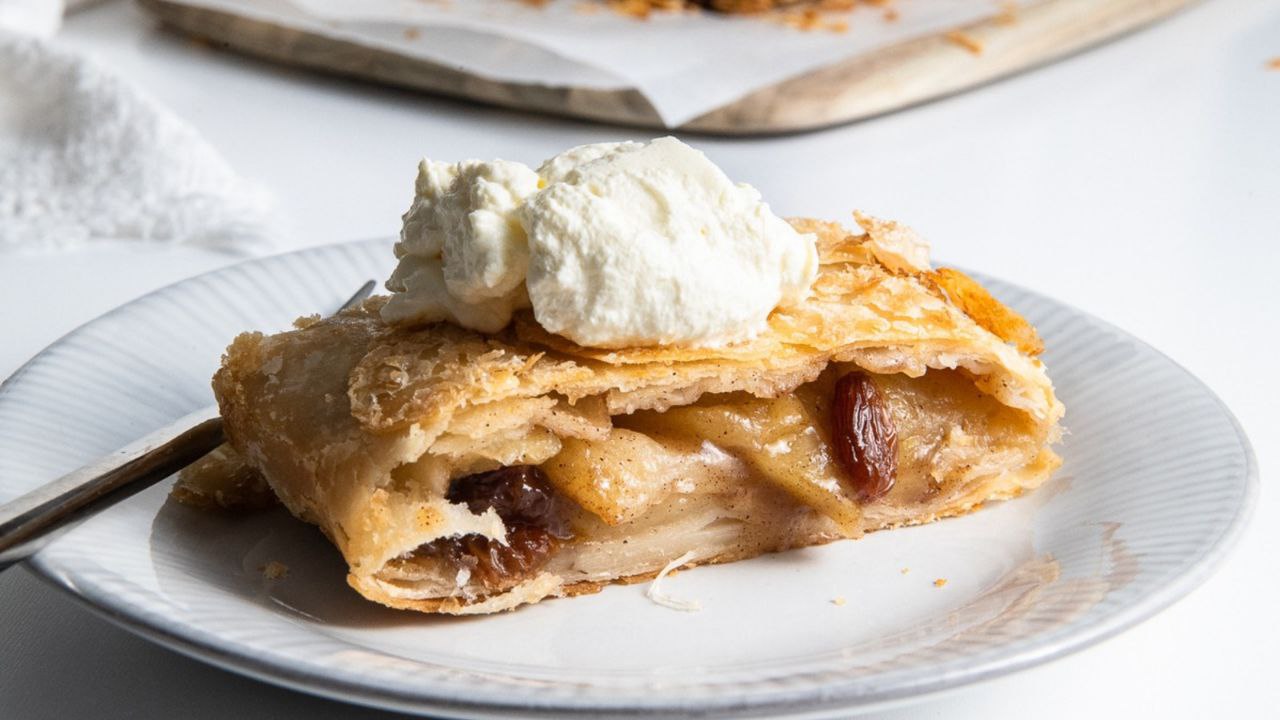
📌 Strudel
Strudel is one of the most popular German dishes. Outside of Germany, strudel is usually served as a dessert: with apples, cherries, etc. In fact, strudel can be with meat and vegetables. Another version of this dish is also popular: roast meat with strudel.
Today we will look at the recipe for a classic German cherry strudel.
📍Zutaten / Ingredients
🔺Mehl 2 Glaser
2 cups of flour
🔺Öl 4 Eβlöffel
4 tbsp vegetable oil
🔺Kirschen 700g
700g cherries
🔺Butter 100g
100g butter
🔺Zucker 1.5 Glas
1.5 cups sugar
🔺Geknackte Nüsse ein Drittel Glas
1/3 cup chopped nuts
🔺Zimt ein Teeloffel
teaspoon of cinnamon
Wie man kocht/how to cook:
1️⃣ Im groβen Schüssel Öl mit Wasser und Mehl mischen, ein wenig salzen. So bekommt man einen schön plastischen Teig. Kugel daraus machen, mit Öl einfetten und für eine halbe Stunde unter dem Handtuch liegen lassen.
In a large bowl, mix vegetable oil with water and flour, salt a little. This makes for an excellent plastic dough. Roll a ball out of it, grease with vegetable oil and leave for half an hour under a towel.
2️⃣ Kirschen in die Kasserolle legen und Zucker dazu ergänzen, kochen bis der Kirschensaft braust, dann den Herd runterstellen und noch fünf Minuten kochen.
Put the cherries in a saucepan, sprinkle with sugar and bring the released cherry juice to a boil, then reduce the heat and cook for another five minutes.
3️⃣ Dann die Kasserolle vom Herd nehmen und die Kirschen in den Durchschlag werfen.
Then remove the saucepan from the stove and discard the cherry in a colander.
4️⃣ Nüsse braten, dann zerkleinern, mit Zimt einmischen.
Roast nuts, chop and mix with cinnamon.
5️⃣ Butter zerlassen.
Melt butter.
6️⃣ Den Teig je feiner desto besser ausrollen und mit zerlassenem Butter einfetten.
Roll out the dough (the thinner the better) and brush with melted butter.
7️⃣ Nüsse mit Zimt und Kirschen über den Taig aufteilen und den Teig einrollen.
Spread nuts with cinnamon and cherries over the surface of the dough, roll up the roll.
8️⃣ Den Strudel mit Resten des zerlassenen Butters einfetten und in einigen Orten einschneiden.
Brush the strudel with the rest of the melted butter and make a few notches.
9️⃣ Im Backofen 40 Minuten backen.
Bake 40 minutes.
Enjoy your meal! ☺️
🥰25👍14😱2❤1
🧛🏻♂️ Breaking Dawn - Biss zum Ende der Nacht
📍Today we will watch an excerpt from the movie "Twilight". A romantic story that won the hearts of many people. Let's look at the moment where Bella first meets her father after her conversion into a vampire.
(DE) Esme: Viel Gluck!
(EN) Good luck!
(DE) Carlisle: Hallo, Charlie.
(EN) Hello Charlie.
(DE) Charlie: Wo ist Bella?
(EN) Where is Bella?
(DE) Bella: Hey, Dad.
(EN) Hello dad.
(DE) Charlie: Ist dir gut?
(EN) Are you okay?
(DE) Bella: Ja, bestens. Ich hab eine Pferde Natur.
(EN) Yes, the best. I have health like a horse.
(DE) Charlie: Du, verwandelst du dich nicht auch in ein Tier, oder?
(EN) You, you don't turn into an animal the same way, or?
(DE) Jacob: So cool währ sie wohl gern.
(EN) She would love to be so cool.
(DE) Edward: Lassen wir den beiden allein.
(EN) Let's leave them alone.
(DE) Charlie: Jacob hat gesagt, das hier war notwendig. Was heist das?
(EN) Jake said it was necessary. What does it mean?
(DE) Bella: Ich glaube es wäre besser…
(EN) I think it would be better...
(DE) Charlie: Ich will wissen was mit dir passiert ist.
(EN) I want to know what happened to you.
(DE) Bella: Das kann ich dir nicht sagen.
(EN) I can't tell you that.
(DE) Charlie: Ich hab eine Erklärung verdient.
(EN) I deserve an explanation.
(DE) Bella: Das hast du. Aber wenn du darauf bestehst, muss ich weg ziehen.
(EN) Deserved. But if you insist, then I'll have to drive away.
(DE) Charlie: Ach komm schon, nein! Du gehst nicht schon wieder fort.
(EN) Come on, no! You won't disappear again.
(DE) Bella: Dad, du musst mir einfach vertrauen aus welchem Grund auch immer. Es geht mir gut. Es geht mir mehr, als gut. Cannst du damit leben?
(EN) Dad, you just have to trust me always, no matter for what reasons. I feel good. I'm more than good. Can you live with it?
(DE) Charlie: Kann ich damit leben? Ja, keine Ahnung, Bella. Ich hab' gerade gesehen wie ein Junge, den ich schon sein ganzes Leben kenne, sich in ein verdammt großen Hund verwandelt. Meine Tochter…sie nehmen meine Tochter aus, aber auch wieder nicht.
(EN) Can I live with it? Yes, no idea, Bella. I just saw a guy I've known all my life turn into a damn big dog. My daughter...they take my daughter away and then they're gone again.
(DE) Bella: Kannst du mir wenigstens glauben, dass ich dir alles erzählen werde was du wissen musst.
(EN) Can you trust me a little that I will tell you everything you need to know.
(DE) Charlie: Und das hier muss ich nicht wissen?
(EN) But I shouldn't know this?
(DE) Bella: Nein. Musst du wirklich nothing.
(EN) No. The truth shouldn't.
(DE) Charlie: Tja, ich will dich nicht wieder verlieren. Kann ich nothing.
(EN) Hmm, I don't want to lose you again. I can not.
(DE) Bella: Dann wirst du das auch nicht. Ich verspreche es.
(EN) Then you won't lose. I promise you.
(DE) Charlie: Ich hab' dich vermisst, Bella. So sehr.
(EN) I missed you, Bella. Very much.
(DE) Bella: Ich dich auch, Dad.
(EN) I'm after you too, dad.
(DE) Edward: Charlie, das ist Renesmee.
(EN) Charlie, this is Renesmee.
(DE) Charlie: Deine Nothing?
(EN) Your niece?
(DE) Edward: Unsere Tochter.
(EN) Our daughter.
(DE) Charlie: Richtig. Die Adoption. Renesmee? Sie hat deine Augen, Bella. Mehr muss ich wohl nicht wissen?
(EN) Correct. Adoption. Renesmee? She has your eyes, Bella. Shouldn't I know more?
❓Have you watched "Twilight"?
#movies
👍22🥰9👏1
👥 Difference between JETZT, GLEICH, GERADE and EBEN
👀 Why do Germans need so many words for "now"?
🎯 When is each used?
🔄 When are they interchangeable?
👇 Click the button below, read the article and speak correctly!
👀 Why do Germans need so many words for "now"?
🎯 When is each used?
🔄 When are they interchangeable?
👇 Click the button below, read the article and speak correctly!

👍13👏5💯3🥰1
👧 Vaiana
📍The Disney cartoon "Moana" in the German interpretation was called "Vayana". The name of the main character was changed due to the fact that in many European countries, including Germany, the trademark "Moana" already existed. By the way, in some countries, for example, in Italy, you can find another name: "Oceania".
📍Today we will listen to one of the most popular songs from the cartoon "Moana" - "Thank you".
Okay, okay, schon klar, was jetzt hier passiert.
Okay, okay, I see what happened.
Du kommst mit wahrer Größe noch nicht klar.
You're not used to true greatness yet.
Du weißt nicht genau, was du fühlst.
I know exactly how you feel.
Echt süß, Kleine!
Very cute baby!
Menschen sind noch immer sehr berechenbar.
People are still very predictable.
Gleich fängt die Show für dich an.
The show is about to start for you.
Ja, ich bin es wirklich.
Yes, it's really me.
Maui! Zieh's dir rein.
Maui! You can read.
Schon sehr interesting,
Already very interesting
So insgesamt.
So in general.
So ein Halbgott ist halt imposant!
Such a demigod is simply imposing!
Was soll ich sagen? Hey, voll gerne!
What can I say? Hey please!
Alles hier ist handgemacht.
Everything here is handmade.
Es ist okay, ist okay, voll gerne!
It's all right, all right, please!
Bin nur der Durchschnittsgott von nebenan.
I'm just an ordinary god next door.
Hey, wer stemmt mit Daumen jedes Gewicht?
Hey, who fingers any weight?
Du musst nicht lange raten.
You won't have to guess for long.
Na, ich!
Well, I!
Wird es kalt bei Nacht,
It was cold at night
Wer hat das Feuer euch gebracht?
Who brought you the fire?
Ich hab' das gemacht. Yo!
It's me! Hey!
Fur euch fing ich die Sonne ein. Voll gerne!
For you, I caught the sun. You're welcome!
Die Tagen wurden länger, Spaß muss sein!
The days are getting longer, it should be better!
Den Wind zu zähmen war schwer.
It was difficult to tame the wind.
Voll gerne!
Please!
❓Have you watched "Moana"?
👏17👍14🙏1
📍Stehen and its prefixes
If you add prefixes to the verb stehen ("stand"), you get a whole series of verbs with different meanings. Let's see some of them!
1️⃣ aufstehen - to get up
Dieser Traum lässt mich jeden Tag aufstehen - This dream makes me get up in the morning.
2️⃣ bestehen - to consist, to exist, to insist
Woraus sollte ein gesundes Frühstück bestehen? What should a healthy breakfast consist of?
3️⃣ entstehen - to arise, to appear
Diese Probleme entstehen jedoch nicht allein in Köln - These problems, however, do not only arise in Cologne.
4️⃣ gestehen - to confess
Und ich dachte, heute Abend ist der perfekte Anlass, es euch zu gestehen - And I thought that tonight is a great opportunity to confess.
5️⃣ verstehen - understand
Es gibt Dinge, die kannst du nicht verstehen - There are things you cannot understand.
🥰27👍10🙏6❤1
🌹Der Pate
📍A scene from The Godfather that has become the basis for countless parodies. The famous phrase "You come to me without respect" in various variations has become almost winged. Today we will watch the famous scene in German:
(DE) Don Corleone: Warum gehst du zur Polizei? Warum kommst du nicht gleich zu mir?
(EN) Why did you go to the police? Why didn't you come to me right away?
(DE) Bonosera: Was verlangen Sie von mir? Sagen Sie was es ist, aber tun Sie worum ich Sie biete.
(EN) What do you want from me? Tell me, but do what I ask you.
(DE) Don Corleone: Was soll ich tun? Das kann ich nicht tun.
(EN) What should I do? I can not do it.
(DE) Bonosera: Ich gebe Ihnen dafür was Sie verlangen.
(EN) I will give you what you ask.
(DE) Don Corleone: Wir beide kennen uns schon viele Jahre, aber heute kommst du zum ersten Mal zu mir um Rat oder um Hilfe. Ich kann mich nicht daran errinern, wann du mich das letzte Mal in dein Haus zu einer Tasse Kaffee eingeladen hast. Und dabei meine Frau ist Parentante deines einziges Kindes. Aber lass uns ganz offen sein: du hast nie Wert gelegt auf meine Freundschaft. Du... hast gefürchtet, in meiner Schuld zu sein.
(EN) We have known each other for many years, but today is the first time you come to me for advice or help. I can't remember the last time you invited me to your house for a cup of coffee. Even though my wife is the godmother of your only child. But let's be honest: you never appreciated my friendship. You... You were afraid to be in my debt.
(DE) Bonosera: Ich wollte nur keine Unannehmlichkeiten haben.
(EN) I didn't want problems.
(DE) Don Corleone: Ja, ich weiß. Fur dich war Amerika das Paradies. Dein Geschäft geht gut, die Polizei ist da um dich zu beschützen. Außerdem gibt es Gerichte, wo zu dich ein Freund wie mich? Aber... Jetzt kommst du zu mir und sagst: Don Corleone, verschafft mir die Gerechtigkeit. Aber du zeigt mir keinen Respekt, bietest nicht etwa Freundschaft. Du sagst nicht einmal Pate zu mir. Nein, stattdessen kommst du am Hochzeitstag meiner Tochter in mein Haus und bittest mich einen Mord zu begehen - für Geld.
(EN) Yes, I know. For you, America was heaven. Your business is going well, the police are protecting you. As a last resort, there is a court, why do you need a friend like me? But... Now you come to me and say, "Don Corleone, deliver justice." But you don't show me any respect, you don't offer me friendship. You don't even call me godfather. No, instead you come to my house on my daughter's wedding day and ask me to commit murder - for money.
(DE) Bonosera: Ich bietest Sie um Gerechtigkeit.
(EN) I demanded justice.
(DE) Don Corleone: Das ist keine Gerechtigkeit, deine Tochter lebt.
(EN) This is not justice, your daughter is alive.
(DE) Bonosera: Dann lassen Sie diese Schweine fühlen, was sie verbrochen haben. Wie viel soll ich bezahlen?
(EN) Then make these pigs feel what they did wrong. How much should I pay?
YouTube
Deutsch lernen mit Videos - Der Pate - Deutscher Untertitel
sich(Dat.) jdn. zum Feind machen = to make sb. an enemy
Abschaum, r = die Menschen, die von anderen als moralisch verachtenswert oder minderwertig angesehen werden
Abschaum, r = die Menschen, die von anderen als moralisch verachtenswert oder minderwertig angesehen werden
👍25👏7💯2
🇩🇪 Fließend-falsch-Sprechender. Or as I call it "Incorrigible B1".
⠀
These are people who can express thoughts relatively freely in German, but make many mistakes in speech.
⠀
Suppose a person enters a language environment, and he needs to somehow communicate there. He gets out as best he can.
⠀
At some point, he reaches a level where he speaks with errors, but is understandable to others. And here comes the choice:
⠀
1. Eliminate mistakes and increase speech literacy.
⠀
2. To leave it as is - they still understand.
⠀
As you know, repeated action becomes a habit. And for those who follow path number 2, clumsy German is automated.
⠀
I saw several interviews on YouTube with late settlers who have been living in Germany for 15-20 years. I understood well what they were saying. But their German was so weird that the kick was just...
⠀
❌ There was no word order, there were no articles and endings
⠀
❌ Strong verbs changed as weak ones, haben / sein in Perfekt were placed at random, it is not clear on what principles the prepositions were chosen ...
⠀
I think that we can make 1-2 small mistakes in five sentences. But if we have 1-2 errors in EACH sentence, then such a speech sounds extremely ugly.
⠀
It's certainly better to be "Incorrigible B1" than not to speak at all. But as I said above, such speech becomes a habit and is automated. It's getting harder and harder to relearn every year.
⠀
The outcome is known: 10+ years in Germany, I speak fluently, but it is not clear how.
⠀
❓What do you think about this?
⠀
These are people who can express thoughts relatively freely in German, but make many mistakes in speech.
⠀
Suppose a person enters a language environment, and he needs to somehow communicate there. He gets out as best he can.
⠀
At some point, he reaches a level where he speaks with errors, but is understandable to others. And here comes the choice:
⠀
1. Eliminate mistakes and increase speech literacy.
⠀
2. To leave it as is - they still understand.
⠀
As you know, repeated action becomes a habit. And for those who follow path number 2, clumsy German is automated.
⠀
I saw several interviews on YouTube with late settlers who have been living in Germany for 15-20 years. I understood well what they were saying. But their German was so weird that the kick was just...
⠀
❌ There was no word order, there were no articles and endings
⠀
❌ Strong verbs changed as weak ones, haben / sein in Perfekt were placed at random, it is not clear on what principles the prepositions were chosen ...
⠀
I think that we can make 1-2 small mistakes in five sentences. But if we have 1-2 errors in EACH sentence, then such a speech sounds extremely ugly.
⠀
It's certainly better to be "Incorrigible B1" than not to speak at all. But as I said above, such speech becomes a habit and is automated. It's getting harder and harder to relearn every year.
⠀
The outcome is known: 10+ years in Germany, I speak fluently, but it is not clear how.
⠀
❓What do you think about this?
👍25👏3😱3🤔1🙏1
📌 Man
📍Today we will analyze the indefinite personal pronoun man and look at its main meanings
🔺Man denotes persons unknown to the speaker. For example:
Man hat mir das Buch geschenkt. - Someone gifted me a book.
📍Note that man is the subject in this case. The predicate in this case is expressed by the verb in the 3rd person singular.
🔺 In combination with the modal verb man is translated as part of an impersonal sentence:
Man darf hier nicht rauchen. - You can't smoke here.
🔺In combination with Konjunktiv (in the present form), man forms the “should…” construction:
Man nehme 1 Kilogramm Äpfel. - Should take 1 kilogram of apples.
Was ist schwerer: ein Kilo Federn oder ein Kilo Eisen?

🥰16👍13
💬 EXPRESSIONS WITH THE VERB GEHEN
auf die Reise gehen - to go on a trip
ins Ausland gehen - to move abroad
auf den Markt gehen - to go to the market
zu Fuß gehen - to walk
zur Seite gehen - to step aside
zur Arbeit gehen - to go to work
zu Ende gehen - to go to the end
eigene wege gehen - to go your own way
nach Hause gehen - to go home
durch die Straßen gehen - to walk the streets
durch viele Hände gehen - go through many hands
j-m durch die Lappen gehen - to slip away from someone
auf die Nerven gehen - to get on someones nerves
📌 Save and remember!

👍27🥰13👏2🤔2
✉️ Writing a letter in German
Do Germans write letters in the 21st century? What types of personal letters are there? What are the rules for writing a letter in German?
Today we will learn how to write a personal letter in German for different situations in life.
Do Germans write letters in the 21st century? What types of personal letters are there? What are the rules for writing a letter in German?
Today we will learn how to write a personal letter in German for different situations in life.

👍28🙏7🥰4
✨🤠 20 useful idioms and common expressions
es glückt - life (things) are getting better
das lässt schön - things are getting better
schon gut - okay, so be it... (agreeing to smth)
an und für sich - by itself
lass dir das gesagt sein - let it be known to you...
das hat gerade noch gefehlt - that was just missing
weiße Mäuse sehen - to get drunk
es ist zum Lachen und zum Weinen zugleich - both laughter and sin
du kannst von Glück sagen - you got off easy (lucky)
Gluck auf den Weg! - happy journey!
Gluck ab! - Happy flight!
Ich wünsche dir viel Erfolg - good luck to you!
sieh oben - see above (usually abbreviated s. o.)
sieh unten - see below (respectively s. u.)
lass dir's gut schmecken - bon appetit
hier ist etwas nicht in Ordnung - something is wrong here...
der ist in Ordnung = one can rely on, one can trust (someone)
zur Not kann man es noch sehen lassen - well, that's all right
er hat ein Auge auf sie geworfen - he had his eye on her (he liked her)
Auge um Auge, Zahn um Zahn - an eye for an eye, a tooth for a tooth
👍38🥰3🤔1
🎃 Halloween in Germany
🧛♀ Helloween as a phenomenon came to Germany in the 90s of the last century along the beaten path: through movies and cartoons. The Germans gradually got used to the existence of such an unusual celebration, and then began to organize it in their own country.
📌 By the way: the American phrase “Trick or treat” is translated into “Süsses oder Saures”.
👇 Traditions and national features of the celebration of All Saints' Day in Germany, as well as mystical places in Berlin, where you should go in a costume - in our article!

🥰14👍11👏4🤔2
☝️ USEFUL PHRASES FOR COMMUNICATION
📌 Starting a sentence
Ich denke... - I think...
Ich glaube... - I assume...
Ich meine... - I think ...
Ich vermute... - I assume...
Ich bezweifle... - I doubt...
Ich weiß... - I know...
Ich verstehe... - I understand...
Ich schließe aus... - I exclude...
Ich verspreche... - I promise...
Ich gebe zu... - I admit ...
Ich behaupte... - I claim...
Ich stimme zu... - I agree...
📌 Developing the thought
Gut, aber... - Good, but...
Na schön, aber... - Fine, but...
Das kann sein, aber... - Maybe, but...
Das stimmt zwar, aber... - That's right, but...
Einverstanden, aber... - Agreed, but...
Man muss betonen, dass... - It must be stressed that...
Zu guter Letzt... - On top of that...
Mit einem Wort... - In a word...
Ich überlege mir... - I consider...
Eine wichtige Rolle spielt hier... - An important role is played here..
👍48💯10🥰9🙏4👏3
🇩🇪 Useful phrases for everyday communication!
🍔 Let's see some useful phrases in today's post!
Ich habe kein(en) Bock darauf! = I don't want that! / No mood for this!
Das ist echt Spitze! = This is super!
Gott sei Dank! = Thank God!
Es ist mir Wurst / egal. = I don't care.
Wann treffen wir uns? = When will we meet?
Was sagen Sie dazu? = What do you say to that?
Das macht aber nichts! = But it's okay!
Es tut mir Leid. = I'm sorry.
Wie schade! = What a pity!
Leider nicht. = Sorry, no.
Alles Gute! = Good luck!
Schämen Sie sich! = Be ashamed!
Was ist los? = What happened?
Lassen Sie mich in Ruhe. = Leave me alone.
Kennen wir uns nicht? = Looks like we know each other?
Einen Augenblick bitte. = Wait a second, please.
Meine besten Glückwünsche. = Please accept my best wishes.
Fahren Sie so schnell Sie können. = Come as soon as possible.
Kein Problem. = No problem.
Was du nicht sagst! = What are you!
Das ist ja eine Überraschung! = What a surprise!
Kommt nicht in Frage! = This is out of the question!
Hast du etwas dagegen? = Do you have anything against?
Ich habe nichts dagegen. = I have nothing against it.
Ich drück dir die Daumen! = I hold my fists for you!
Viel Spaß! = Have a good time! / Good luck!
Gute Reise! = Bon voyage!
Gute Besserung! = Get well soon!
Lass dir schmecken! = Help yourself!
Gut geschlafen? = How did you sleep?
Mach's gut! = Good luck!
Alles Gute! = Good luck!
Gleichfalls! = Mutually! / And to you (to you) the same!
All these phrases are simple and easy to remember, try to use some of them more often in your speech, and you will quickly reach the level of confident spoken German 💪
👍22👏14🥰7
📌Friends
🔺Today we will watch a short excerpt from the series “Friends”. You've probably already seen this part: Joey is trying to learn French. And if you don't know the famous "La Pu Pu" quote, enjoy this episode!
🔺 Let's analyze the first part of the video, where Phoebe is just starting to train Joey.
(DE) Phoebe: Gut, es ist je zum Gluck ziemlich einfach. Deine erste Satz lautet: "Mein Name ist Klod".
(EN) Great, fortunately it's quite simple. Your first sentence means "My name is Claude."
(DE) Joey: Gut!
(EN) Good!
(DE) Phoebe: Also, du musst mir nachsprechen. Je m'appelle Claude.
(EN) So, repeat after me. My name is Claude (fr.)
(DE) Joey: Ja da kom plah!
(DE) Phoebe: Gut, nochmal an zweite.
(EN) Okay, once again.
(DE) Joey: Ja, gerne.
(EN) With pleasure.
(DE) Phoebe: Je m'appelle Claude.
(DE) Joey: Ja ta pli ploh!
(DE) Phoebe: Das war nicht ganz, dass was ich eben sagte.
(EN) That's not exactly what I said.
(DE) Joey: Na ja, aber das hörte sich doch so genau, Phoebe.
(EN) Yes, but that's how it sounded, Phoebe.
(DE) Phoebe: Ja, findest du?
(EN) Really?
(DE) Joey: Ja!
(EN) Yes!
(DE) Phoebe: Versuchen wir es weiter. Hor bitte gut zu.
(EN) Let's continue. Listen carefully.
(DE) Joey: Okay, klar.
(EN) Yes, okay.
(DE) Phoebe: Je m'appelle Claude.
(DE) Joey: Je da plo pleh!
(DE) Phoebe: Oh, mon Dieu! (Oh my God - French)
(DE) Joey: Oh de fuf!
😄Have you had the same situations as Joey?
YouTube
Französisch ist ganz einfach ;-)
Joey von Friends lernt Französisch für eine Rolle
👏16👍10💯7
🇫🇷 Franzosisch
🥐 Today we will watch the video of Joey's attempts to learn French until the end.
(DE) Und zählen wir von einz bis fünf. Un. deux. Trois. Quarte. Cinq.
(EN) Let's count from one to five.
(DE) Joey: E, bluh, twa, u, plenk.
(DE) Gut gemacht!
(EN) Great!
(DE) Joey: Danke sehr. Hey!
(EN) Thank you. Hello!
(DE) Phoebe: Hey, Joey. Entschuldige ich fur mich einfach fürchtbare Miswegen gestern. Ich habe nochmal darüber nachgedacht. Ich war zu aufbrausend. Wir versuchen es weiter.
(EN) Hello, Joey. Excuse me for my just terrible behavior yesterday. I thought it over again. I was too quick-tempered. We will continue on.
(DE) Joey: Nein, alles ist schon in Ordnung. Deine Hilfe ist gar nicht mir notig. Ich habe weiter gearbeitet und ich bin sehr gut!
(EN) No, everything is already in order. I don't need your help anymore. I kept working and things got a lot better.
(DE) Phoebe: Könnte ich veilleicht mal was hören?
(EN) Can I listen?
(DE) Joey: Ja, natürlich, gern. OK. (Etwas auf "französisch"). Na?
(EN) Yes, of course, with pleasure. OK. (--) Well?
(DE) Phoebe: Ich weiß gar nicht... Also, das ist gar nicht... Wie soll ich sagen... Du kannst kein französich!
(EN) I don't even know... Well, that's not really... How should I say... You don't speak French!
(DE) Joey: Hey, wieso? Also dach ich aber anders, und die werden mir die Rolle aufgeben, okay?
(EN) Hey, why? I think differently, and they will give me this role, understand?
(DE) Phoebe: Ich würde gerne wissen, warum du dass denkst?!
(EN) I would like to know why you think so?!
(DE) Joey: Ganz einfach, weil mich der Kerl auf dem Band gerade sehr gelobt hat!
(EN) Everything is very simple. Because the guy from the tape recorder praised me very much!
---
(DE) Regisseur: Sind Sie bereit, Joey?
(EN) Are you ready, Joey?
(DE) Joey: Ja. (Etwas auf "französisch")
(EN) Yes.
(DE) Wie, bitte? Was ist ihm hier los?
(EN) What, excuse me? What's wrong with him?
(DE) Joey: Sie müssen ein bischen französisch geben.
(EN) Need to give out some French.
(DE) Regisseur: Eine Frage, Joey. Sprechen Sie franzosisch?
(EN) Joey, a question. Do you speak french?
(DE) Joey: (Etwas auf "französisch")
(DE) Regisseur: Gut, ich denke, das Vorsprichen ist zu Ende.
(EN) Okay, I think the audition is over.
(DE) Phoebe: Pardon, ich bin Regina Phalange. Wissen Sie, ich kam vorbei, weil ich gerade dieser bezabelen Mann Rede hörte und zwar im Dialekt meinem geliebten französischen Heimatstadt Estelauder.
(EN) Sorry, my name is Regina Falange. You see, I was passing by when I heard this man speaking, just in the dialect from my favorite French hometown... Ethelauder.
(DE) Regisseur: Sie wollen mir sagen, dass dieser Mann französisch spricht?
(EN) Do you mean that this man speaks French?
(Phoebe spricht französisch)
(DE) Regisseur: Sehr gut gemacht, mein kleiner Freund! Ihr französisch ist ganz perfekt. Aber ich denke doch, wir werden die Rolle anders besetzen.
(EN) Great job my friend! Your French is perfect. But I think that we will play this role differently.
(DE) Joey: Na, okay. Aber mein französisch war gut?
(EN) Oh, good. But is my French okay?
(DE) Regisseur: Es war großartig!
(EN) Wonderful!
(DE) Joey: Ah, siehst du?!
(EN) See?!
YouTube
Französisch ist ganz einfach ;-)
Joey von Friends lernt Französisch für eine Rolle
👍29🥰3💯3👏2
🇩🇪📌 German prepositions with Akkusativ
German prepositions (placed before nouns) and postpositions (placed after nouns), indicate the location of a person and an object, they can be used either with the dative case (Wo?), or with the accusative case (Wohin?). However, there are also prepositions that are always used only with Akkusativ. They need to be learned.
✔️ um - around
um den Apfelbaum - around the apple tree
um die Straßenbahn - around the tram
um das Sommerhaus = ums Sommerhaus - around the country house
✔️ durch - through
durchs Notspeiserohr - through the emergency feed pipe
durch den Gang - across the hallway
durch die Wand - through the wall
✔️ entlang - along
den Kai entlang - along the waterfront
die Küste entlang - along the coast
das Tal entlang - along the valley
✔️ gegen - against
gegen den Wind - against the wind
gegen die Ungerechtigkeit - against injustice
gegen das Moratorium - against the moratorium
✔️ wider - contrary to, against
wider den Strom - against the stream
wider (alles) Erwarten - contrary to (all) expectations
✔️ für - for
für den Kollegen - for the colleague
für die Wahrheit - for the truth
für das Volkswohl - for the good of the people
✔️ ohne - without
ohne Anstand - without delay
ohne Warnung - without warning
ohne Datum - without a date
✔️ bis - until
bis Mittwoch - until Wednesday
bis Ende des Jahres - until the end of the year
bis Mitternacht - until midnight
✔️ betreffend - relatively, in relation
betreffend die Zusammenarbeit - regarding cooperation
betreffend den neuen Termin - regarding the new date
betreffend das Vorhandensein - regarding availability
✅ Let's now see how all of the above prepositions are used in German sentences:
Unsere Kinder sitzen gerne um den runden Tisch. - Our children like to sit around the round table.
Die Berge kann dein Sohn durch das Fernglas sehen. - Your son can see the mountains through the binoculars.
Dieser Autobahn entlang gab es viele Zypressen. - There were many cypress trees along this highway.
Sie alle beabsichtigen, gegen die Internetzensur zu demonstrieren. - They all intend to demonstrate against internet censorship.
Der LKW war gegen die Brückenstütze gefahren. - The truck drove into the bridge support.
Dein Mann handelte immer wider besseres Wissen. - Your husband always acted against his better judgment.
Seine Kameraden glühen für das Vaterland. - His comrades are burning with patriotism.
Dieses Restaurant war zu teuer für unsere Freunde. - This restaurant was too expensive for our friends.
Barbara wartete auf uns bis Mittag. - Barbara waited for us until noon.
Seine Tante saß am Schreibtisch ohne Brille. - His aunt was sitting at her desk without glasses.
Der Anruf betreffend die Verlängerung der Lieferzeit hat ihn überrascht. - The call regarding the lengthening of delivery dates startled him.

👍33🥰4