
🤩 Only 5 German Learning Planners Left!
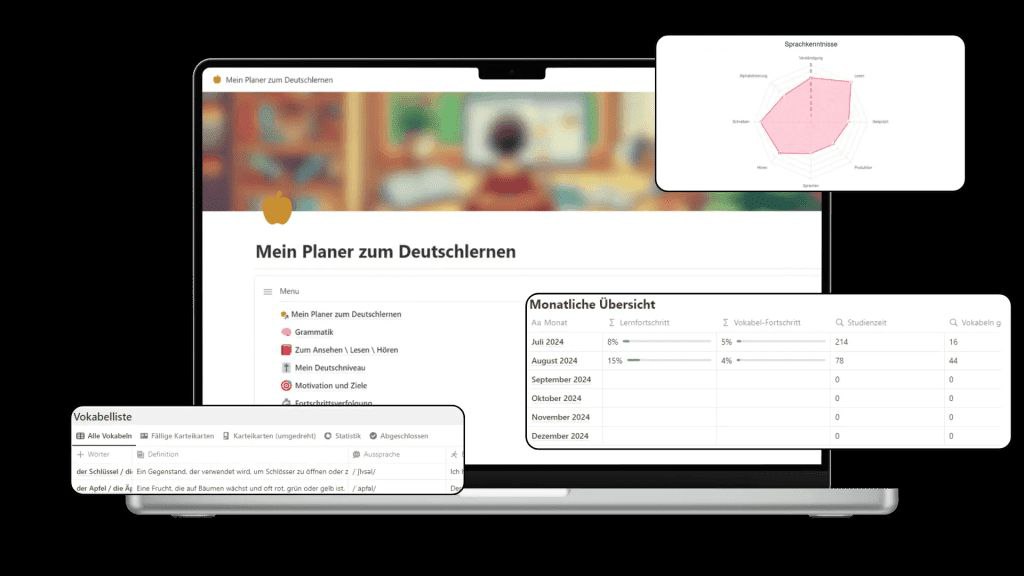
Join 195 other learners who are already transforming their German study routine with this unique tool! The German Learning Planner is the ultimate system for mastering the language while keeping every skill in check.
😱 From beginners to advanced learners, it’s crafted to support your journey every step of the way.
🎯 With the German Learning Planner, you can:
👉🏻 Organize and balance all language skills
👉🏻 Track your progress seamlessly
👉🏻 Enjoy lifetime updates with just a one-time payment!
⏳ Only 5 planners remain! Once they’re gone, they’re gone for good—don’t miss your chance to make this powerful planner part of your journey!
👇🏻 Claim yours below
❤7👍2😢2🥰1
👇 Ready to transform your German learning journey? 👇
Are you frustrated by slow progress in German? You’re not alone. Most learners struggle with overwhelming grammar rules, translating every word in their head, or using apps that feel disconnected from real-life conversations.
Here’s the solution: A practical framework to simplify learning, focus on speaking, and reduce overwhelm. Created by Leo, a German teacher with over 10,000 successful learners, this approach works.
🌟 What you’ll achieve:
- Speak German confidently in real-life situations.
- Understand grammar naturally without endless memorization.
- Build a practical vocabulary tailored to your goals.
it's free
👍6💯4
Use every opportunity to practice! Cashiers are trained to ask lots of questions to upsell 💵. Count how many of these you understand:
1. Möchten Sie hier essen oder mitnehmen?
- Do you want to eat here or take away?
2. Soll es ein Menü sein?
- Would you like to make it a meal?
3. Mit oder ohne Zwiebeln?
- With or without onions?
4. Möchten Sie Käse oder Speck hinzufügen?
- Would you like to add cheese or bacon for an extra cost?
5. Welche Soße möchten Sie dazu?
- Which sauce would you like?
6. Kleine oder große Pommes?
- Small or large fries?
7. Möchten Sie etwas zu trinken? Cola, Sprite, oder Eistee?
- Would you like a drink? Coke, Sprite, or iced tea?
8. Bar oder mit Karte?
- Cash or card?
9. Möchten Sie noch ein Dessert, wie Apfelkuchen oder Kekse?
- Would you like a dessert, like apple pie or cookies?
10. Haben Sie ein Kindermenü? Junge oder Mädchen-Spielzeug?
- Do you want the kids’ meal? A boy’s or girl’s toy?
11. Benötigen Sie Servietten oder feuchte Tücher?
- Do you need napkins or wet wipes?
12. Wären Sie bereit, ein paar Minuten auf frische Pommes zu warten?
- Are you okay waiting a few minutes for fresh fries?
13. Möchten Sie den Gesamtbetrag aufrunden und für einen guten Zweck spenden?
- Would you like to round up your total to donate to charity?
Want to learn more?
Join my newsletter for exclusive tips, free resources, and weekly language learning secrets!
Please open Telegram to view this post
VIEW IN TELEGRAM
👍23❤7
👇 Expressions with "ganz" 👇
Today, let's explore some common expressions with the adjective "ganz":
🔹 ganz Deutschland
- all of Germany
🔹 von ganzem Herzen
- with all my heart
🔹 den ganzen Tag
- the whole day
🔹 einen ganzen Monat
- a whole month
🔹 eine ganze Stunde
- a whole hour
🔹 ganz allein
- completely alone
🔹 ganz von selbst
- by itself / naturally
🔹 mein ganzes Leben
- my whole life
❤21👍2
👇 "Also," "Therefore," "Namely..." 👇
Today, let's dive into adverbs of cause and reason:
✅ also
- thus, therefore
✅ anstandshalber
- for the sake of decency
✅ nämlich
- namely
✅ folglich
- consequently
✅ infolgedessen
- as a result
✅ deshalb
- because, therefore
✅ deswegen
- that’s why
✅ demgemäß
- accordingly
✅ zusammengefasst
- in summary
❤27👍2🥰2
📌 The Verb “drücken”
Today, we’re exploring the meanings of the verb "drücken":
Three principal parts: drücken - drückte - hat gedrückt.
📍 auf (Akk.) drücken - to press something
Examples:
🔗 Du hast auf falschen Knopf gedrückt!
- You pressed the wrong button!
📍 (Akk.) drücken - to push, press, squeeze
Examples:
🔗 Bei Alarm Knopf drücken!
- Press the button in case of an alarm!
🔗 Wir drücken uns immer die Hände.
- We always shake hands.
📍 (Akk.) drücken - to squeeze, extract
Examples:
🔗 Ich will den Saft aus der Zitrone drücken.
- I want to squeeze the juice out of the lemon.
📍 (Akk.) drücken - to lower (prices)
Examples:
🔗 Man muss die Kosten dringend drücken.
- The costs urgently need to be reduced.
👍13❤2🥰2
✅ Polysemous Words in German
In German, many words have two or more meanings that seem unrelated at first glance. Understanding the context is essential for translating these words correctly. To start, let’s learn the key meanings of some of the most important polysemous words!
👉 Words with Different Meanings:
die Bank
1. bench
2. bank
die Mutter
1. mother
2. nut (mechanical)
das Gericht
1. dish (food)
2. court (legal)
die Scheibe
1. windowpane
2. slice
3. disc
die Schiene
1. rail
2. splint
der Wurf
1. throw
2. litter (animals)
die Tafel
1. board (chalkboard)
2. bar (of chocolate)
der Stock
1. stick
2. floor (of a building)
der Nagel
1. nail (hardware)
2. fingernail
die Schale
1. bowl
2. shell/peel
der Schalter
1. switch
2. counter (in a bank, station)
der Absatz
1. paragraph
2. sales
3. heel
der Ball
1. ball (toy)
2. ball (dance event)
die Decke
1. blanket
2. ceiling
die Blume
1. flower
2. foam (beer)
👉 Words with Related Meanings:
das Glas
1. glass (material)
2. glass (drinking vessel)
die Birne
1. pear
2. lightbulb
das Eis
1. ice
2. ice cream
das Schloss
1. castle
2. lock
das Tor
1. gate
2. goal
das Rad
1. wheel
2. bicycle
der Löffel
1. spoon
2. rabbit ear
der Ring
1. ring (jewelry)
2. arena
das Becken
1. basin (sink)
2. pelvis (anatomy)
3. cymbal (musical instrument)
das Blatt
1. leaf (of a plant)
2. sheet (of paper)
die Geschichte
1. history
2. story
❤20👍4🥰3
🗣 Conversation When Meeting a German
Here’s a selection of common questions you’ll likely hear during introductions:
📍 Wie heißt du?
- What’s your name?
📍 Wie alt bist du?
- How old are you?
📍 Woher kommst du?
- Where are you from?
📍 Wo wohnst du?
- Where do you live?
📍 Als was arbeitest du?
- What do you do for a living?
📍 Was sind deine Hobbys?
- What are your hobbies?
📍 Bist du verheiratet?
- Are you married?
📍 Hast du Kinder?
- Do you have children?
📍 Hast du Haustiere?
- Do you have pets?
📍 Wie viele Sprachen sprichst du?
- How many languages do you speak?
❤13💯3👍2🥰1
🌟 Positive Adjectives
Great for describing someone!
Er / sie ist...
(He / She is...)
🔹 aufmerksam – attentive
🔹 sorgfältig – diligent
🔹 entschlossen – determined
🔹 kühn – bold, courageous
🔹 toll – amazing
🔹 stark – strong
🔹 zart – tender
🔹 sinnlich – sensual
🔹 pflichtbewusst – conscientious
🔹 sentimental / empfindsam – sentimental
🔹 emotional – emotional
🔹 energisch – energetic
🔹 tatkräftig – active, proactive
🔹 kreativ – creative
🔹 zielstrebig – goal-oriented
🔹 glücklich – happy
🔹 immer erfolgreich – always successful
🔹 sachkundig – knowledgeable
🔹 umsichtig / weitblickend / scharfsichtig – farsighted
🔹 voraussichtig – prudent
🔹 kompetent – competent
🔹 beredt / redegewandt – eloquent
🔹 temperamentvoll – spirited
🔹 beharrlich / hartnäckig – persistent
🔹 flexibel – flexible
👍25🥰4
⛰ Prepositions of Place with Natural Landmarks
Today, we’re focusing on prepositions of place used with natural landmarks:
‼️ Quick Reminder:
If the expression answers WO? (Where?), use the Dative case.
If it answers WOHIN? (Where to?), use the Accusative case.
---
### Categories of Natural Landmarks
Water bodies and shores:
📍 der Ozean – ocean
📍 das Meer – sea
📍 der See – lake
📍 der Fluss – river
📍 der Strand – beach
📍 das Ufer – shore
📍 die Küste – coast
Island and village:
📍 die Insel – island
📍 das Land – village
Forests, mountains, deserts:
📍 der Wald – forest
📍 die Berge – mountains
📍 das Gebirge – mountain range
📍 die Wüste – desert
---
### For water bodies and shores, use:
WOHIN? (Where to?) → an + Accusative
Examples:
🔗 Ich fahre ans Meer. – I’m going to the sea.
🔗 Er geht an den See. – He’s going to the lake.
🔗 Sie fährt an den Strand. – She’s going to the beach.
🔗 Wir gehen an die Küste. – We’re going to the coast.
WO? (Where?) → an + Dative
Examples:
🔗 Sie sind am Meer. – They are at the sea.
🔗 Wir sind am See. – We are at the lake.
🔗 Ich liege am Strand. – I’m lying on the beach.
🔗 Er entspannt sich an der Küste. – He’s relaxing on the coast.
WOHER? (Where from?) → von + Dative
Examples:
🔗 Sie fliegt von der Insel. – She’s flying from the island.
🔗 Er kommt vom Strand. – He’s coming from the beach.
💡 Note: When swimming in the sea or coming out of it, use in (inside) and aus (out of).
---
### For "island" and "village," use:
WOHIN? (Where to?) → auf + Accusative
Examples:
🔗 Ich fliege auf die Insel. – I’m flying to the island.
🔗 Sie fährt auf das Land. – She’s going to the village.
WO? (Where?) → auf + Dative
Examples:
🔗 Sie sind auf der Insel. – They are on the island.
🔗 Wir sind auf dem Land. – We are in the village.
WOHER? (Where from?) → von + Dative
Examples:
🔗 Sie fliegt von der Insel. – She’s flying from the island.
🔗 Er fährt vom Land. – He’s coming from the village.
---
### For forests, mountains, and deserts:
WOHIN? (Where to?) → in + Accusative
Examples:
🔗 Ich gehe in den Wald. – I’m going into the forest.
🔗 Sie geht ins Gebirge. – She’s going to the mountains.
🔗 Wir fahren in die Wüste. – We’re going to the desert.
WO? (Where?) → in + Dative
Examples:
🔗 Ich wandere im Wald. – I’m hiking in the forest.
🔗 Sie ist im Gebirge. – She’s in the mountains.
🔗 Wir sind in der Wüste. – We are in the desert.
WOHER? (Where from?) → aus + Dative
Examples:
🔗 Ich komme aus dem Wald. – I’m coming from the forest.
🔗 Sie fährt aus dem Gebirge. – She’s coming from the mountains.
🔗 Wir fliegen aus der Wüste. – We’re flying from the desert.
❤22👍12💯3👏1
🚀 Key Verbs to Expand Your German Vocabulary 🚀
📍 überlassen (überließ, hat überlassen) – to hand over, to entrust
Example:
🔗 Sie überließ ihnen während ihres Urlaubs ihre Wohnung.
(She entrusted them with her apartment during her vacation.)
📍 hinterlassen (hinterließ, hat hinterlassen) – to leave behind
Example:
🔗 Er hat einen guten Eindruck bei allen hinterlassen.
(He left a good impression on everyone.)
📍 auflassen (ließ auf, hat aufgelassen) – to launch
Example:
🔗 Ganze Bündel von Luftballons wurden aufgelassen.
(Whole bunches of balloons were launched.)
📍 zulassen (ließ zu, hat zugelassen) – to allow, to permit
Example:
🔗 Wie konntest du zulassen, dass die Kinder auf der Straße spielen!
(How could you allow the children to play on the street!)
📍 verlassen (verließ, hat verlassen) – to leave, to abandon
Example:
🔗 Ich arbeite morgen, deshalb muss ich deine Party heute früh verlassen.
(I work tomorrow, so I have to leave your party early today.)
👍16❤4
- das Familienmitglied (-er): family member
- die Verwandten: relatives
- die Blutsverwandten: blood relatives
- entfernte Verwandte: distant relatives
- die Verwandtschaft: kinship
- die Familienplanung: family planning
- die Mehrkindfamilie: large family
- der Familienzuwachs: new addition to the family
- das Familienleben: family life
Please open Telegram to view this post
VIEW IN TELEGRAM
💯9👍8❤5
🥤 Making mulled wine
🍷 What, if not mulled wine, gives the holiday atmosphere a special charm? And no, I am not only talking about an alcoholic drink - there are non-alcoholic counterparts that are not far behind the original.
📕 Let's analyze the vocabulary that will be useful to you while making non-alcoholic mulled wine. First - the ingredients (Zutaten):
🍇 Trauben- oder Apfelsaft (1 Liter) - A liter of grape or apple juice. There are other analogues - for example, cherry juice (Kirschsaft)
🎍Zimt (1 Strange) - cinnamon stick
🫙 Gewürznelken (2) - two cloves
🍋 Zitronenscheiben (3) - three slices of lemon. Interestingly, the word "die Scheibe" has a wide range of meanings - from "disk" to "washer"
🍎 Apfel - apple
🍯 Etwas Honig/Zucker - some honey or sugar
🤔 How to cook mulled wine? Extremely simple.
▫️ Erwärmen Sie den Saft in einem großen Topf auf mittlerer Stufe - Heat the juice in a large saucepan over medium heat
▫️Fügen Sie während dem Erwärmen die restlichen Zutaten hinzu - While heating, add the rest of the ingredients
▫️Nehmen Sie dann den Topf vom Herd und lasse das Ganze mit allen Zutaten etwa eine Stunde ziehen - Then remove the pot from the stove and let it sit with all the ingredients for an hour.
🔺Your mulled wine is ready - Prost! I hope this recipe will add your Christmas mood 😄
👍12❤5🔥3
🥰 Expressions with the word "Spaß" for German Learners
Let’s talk about "Spaß"! This versatile word appears in many useful expressions that will enrich your German vocabulary. 😉
📍 j-m Spaß machen – to bring someone joy
📍 Spaß haben – to have fun
📍 Viel Spaß! – Have fun! / Enjoy!
📍 zum Spaß – for fun
📍 Spaß beiseite! – Jokes aside!
📍 Spaß für Ernst nehmen – to take a joke seriously
📍 Spaß muss sein – A little fun is a must
📍 Spaß treiben – to amuse oneself/play around
📍 spaßbefreit – humorless
Save these for your next German conversation or comment below your favorite phrase! 💬
👍14🔥5👏1
How to Politely Ask for Help in German 🙏
Learning how to request help politely can make a huge difference in your interactions. Here are some essential phrases:
🌟 Seien Sie so lieb … — Be so kind …
🌟 Könnten Sie mir bitte helfen? — Could you help me, please?
🌟 Darf ich Sie um Hilfe bitten? — May I ask for your help?
🌟 Würden Sie mir bitte einen Gefallen tun? — Would you do me a favor?
🌟 Könnten Sie mir einen Moment Ihrer Zeit geben? — Could you spare me a moment of your time?
🌟 Wenn es Ihnen recht ist, würde ich gerne… — If it’s convenient for you, I’d like to…
🌟 Es wäre sehr nett von Ihnen, wenn Sie… — It would be very kind of you if you…
🌟 Wenn es keine Umstände macht, könnten Sie… — If it’s no trouble, could you…
🌟 Könnte ich Sie darum bitten, … — Could I ask you to…
👍21🥰4❤2
New Year Verbs in German!
Here are five useful verbs with cases to get your New Year's conversations flowing. Mastering these will make you sound more like a pro in German!
❤️ gratulieren zu (+ Dativ) – to congratulate on...
Example: Ich gratuliere dir zum neuen Jahr!
(I congratulate you on the New Year!)
❤️ glauben an (+ Akkusativ) – to believe in...
Example: Ich glaube an einen Neuanfang!
(I believe in a fresh start!)
❤️ genießen (+ Akkusativ) – to enjoy...
Example: Wir genießen die Feiertage.
(We enjoy the holidays.)
❤️ einladen (+ Akkusativ / Dativ) – to invite...
Example: Ich lade dich zur Feier ein.
(I invite you to the party.)
❤️ sich freuen auf/über (+ Akkusativ) – to look forward to/be happy about...
Example: Ich freue mich auf das neue Jahr.
(I look forward to the New Year.)
✨ Want to learn how to use these verbs fluently in conversations? Explore my 5+5 Grammar Superstar Bundle! You'll master German grammar, prepositions, and so much more in just six weeks. Perfect for learners who want to shine in 2024!
❤16👍4🎉1
🎄 Life in the City Before New Year’s Eve!
The New Year is just around the corner, and the city is buzzing with excitement and preparations. Here’s some vocabulary to capture the festive atmosphere:
✨ es herrscht Hektik – there’s a lot of hustle and bustle
✨ man steht lange im Stau – people spend ages in traffic jams
✨ in der U-Bahn gibt es sehr viele Menschen – the subway is crowded with people
✨ viele machen einen Einkaufsbummel – many people go shopping
✨ überall stehen Weihnachtsbäume – Christmas trees are everywhere
✨ alles ist schön geschmückt – everything is beautifully decorated
✨ einigen fehlt die Weihnachtsatmosphäre – some people feel the Christmas spirit is missing
✨ es gibt viele Schneehaufen – there are piles of snow everywhere
❓ Do you enjoy the pre-New Year hustle and the festive beauty around you?
❤16👍3
🎅 Don't Let Grammar Hold You Back in 2025!
Struggling with German cases and declensions? Make 2025 the year you conquer them! 🎅
The 5+5 Grammar Superstar bundle offers:
✅ 10 eBooks packed with clear explanations.
✅ 2000+ exercises for every level.
✅ Lifetime updates – start strong, finish stronger.
🎁 This holiday season, invest in YOU. Let grammar success be your first achievement of 2025!
🔥3❤1👍1💯1
👍 Replace "Yes" with More Expressive Alternatives!
Let’s refresh your vocabulary with these handy ways to replace the simple word "yes" in German:
📍 das stimmt – that’s correct
📍 genau – exactly
📍 ganz genau – absolutely right
📍 macht nichts – no problem / it’s okay
📍 super! – super! / great!
📍 einverstanden! – agreed!
📍 ich stimme dir zu! – I agree with you!
📍 du hast recht – you’re right
📍 gut – good / okay
📍 weiter so! – keep it up!
❓ Which of these do you use the most, and which will you try to include in your conversations?
❤24👍9🥰3🙏1
New Year, Fluent You in 2025!
Dreaming of fluent German in 2025? 🌟 Start your New Year right with 5+5 Grammar Superstar.
🎓 Master German grammar in just 6 weeks with:
✅ Over 100 grammar units.
✅ Video lessons and intensive exercises.
✅ A risk-free, money-back guarantee.
🎅 Why wait? Treat yourself or a loved one to the gift of language mastery this Christmas!
👍6
📨 Invitations
📍 We often find ourselves in situations where we’re invited somewhere or want to invite someone. It could be for a birthday, coffee, a movie, or just a walk. How do we do this in German?
Here are phrases to help you make or accept an invitation:
Phrases for Inviting Someone:
❤️ Was machst du heute Abend?
What are you doing this evening?
💚 Ich gehe ins Kino. Kommst du mit?
I’m going to the cinema. Want to join me?
❤️ Wollen wir spazieren gehen?
Let’s go for a walk?
💚 Am Sonntag habe ich Geburtstag und möchte dich zur Party einladen.
It’s my birthday on Sunday, and I’d like to invite you to my party.
Phrases for Responding to an Invitation:
❤️ Ja, gerne. Danke für die Einladung.
Yes, gladly. Thanks for the invitation.
💚 Es ist sehr nett von dir.
That’s very kind of you.
❤️ Gute Idee! Gehen wir.
Great idea! Let’s go.
💚 Mit Vergnügen!
With pleasure!
❤️ Ich kann heute leider nicht.
Unfortunately, I can’t today.
💚 Am Sonntag um 17 Uhr bin ich beschäftigt, aber ich kann später kommen.
I’m busy at 5 PM on Sunday, but I can come later.
If the Invitation Is Accepted:
❤️ Super! Gehen wir.
Awesome! Let’s go.
💚 Schön, dann bis Sonntag.
Great, see you on Sunday.
If the Invitation Is Declined:
❤️ Schade, hoffentlich nächstes Mal hast du Zeit.
That’s a pity. Hopefully, you’ll have time next time.
💯14👍8❤4🥰2