
🧞♂️ Summer Wishes
Today, let's remember the things we usually really want to do in the summer.
Ich will … - I want to …
📍im Meer schwimmen - swim in the sea
📍viel Eis essen - eat a lot of ice cream
📍im See baden - bathe in the lake
📍viel Obst und Beeren essen - eat lots of fruits and berries
📍mich sonnen - sunbathe
📍die Sonne genießen - enjoy the sun
📍aufs Land fahren - go to the countryside
📍mit den Freunden spazieren - walk with friends
📍ausschlafen - sleep in
📍Bücher lesen - read books
📍Deutsch lernen - learn German
🙏🏻 Don't lose your knowledge over the summer! To help you start systematic learning, I have something that has already helped over 2000 students in 2023.
👀 Where? How?
✓ In the German Grammar Superstar Pack
✓ Over 2000 pages of exercises and theoretical materials
✓ Includes 10 unique eBooks covering all aspects of grammar
👉 Get your copy
👍26❤11🔥2💯2
🌤 What's the weather like outside? 🌤
Today, let's review some adverbs describing the weather:
📍windig - windy
🔗 Es ist heute sehr windig, ich glaube wir müssen das Boot nicht fahren. - It’s very windy today; I think we shouldn't take the boat out.
📍kühl - cool
🔗 Nimm bitte die Jacke mit! Es ist schon ziemlich kühl. - Please take your jacket! It's already quite cool.
📍bewölkt - cloudy
🔗 Es ist heute so bewölkt, dass ich keine Flugzeuge im Himmel sehe. - It's so cloudy today that I can't see any planes in the sky.
📍nebelig - foggy
🔗 Ich fahre das Auto sehr vorsichtig, weil es nebelig ist. - I'm driving the car very carefully because it's foggy.
📍regnerisch - rainy
🔗 Die Kinder wollten gestern im Hof spielen, aber es war sehr regnerisch. - The children wanted to play in the yard yesterday, but it was very rainy.
👉 Get your German Grammar freebies
👍15❤7
Don't fall 💨
Let's memorize expressions with the word "der Fall":
- der Fall — case
- auf jeden Fall — in any case
- auf keinen Fall — no way
- in einem solchen Fall — in such a case
- im äußersten Fall — in the extreme case
- im gegebenen Fall — in this case
- von Fall zu Fall — from case to case
- für den Fall, wenn… — in case, if…
- für alle Fälle — just in case
- im schlimmsten Fall — in the worst case
- im besten Fall — in the best case
Vergiss es, auf keinen Fall! — Forget it, no way!
Das hängt wirklich von Fall zu Fall ab. — It really depends on the case.
❤35👍10🥰1
🇩🇪 Exam Writing Section Cheat Sheet 😎
I made a useful document for you!
It contains phrases that can come in handy during exams.
I highly recommend checking out the document and picking a few phrases from each category.
Learning at least one phrase from each category is not too difficult.
The document is attached below.
Good luck! 😀
The offer has been expired.
❤16👍4
Break the Language Barrier and Master German Grammar with the Superstar Pack! 💥
👀 Where? How?
✓ In the German Grammar Superstar Pack
✓ Over 2000 pages of exercises and theoretical materials
✓ Includes 10 unique eBooks covering all aspects of grammar
📩 Details and below
👀 Where? How?
✓ In the German Grammar Superstar Pack
✓ Over 2000 pages of exercises and theoretical materials
✓ Includes 10 unique eBooks covering all aspects of grammar
📩 Details and below
👍5❤1
You’ve started learning German 🇩🇪 because of the lifestyle you envisioned.
You wanted to speak fluently, connect with native speakers, and master the language efficiently, all while balancing it with your busy life.
But something just doesn’t click 🤔—grammar feels confusing, rules are hard to remember, and your progress seems slower than you hoped.
Well, it’s typically three things that hold people back… and we’ve addressed them all in the German Grammar Superstar program.
👇 Click the button below to discover the German Grammar Superstar and unlock your German potential today! 💪✨
👍5❤2🥰2
Here’s why relying only on apps and textbooks is slowing down your progress in learning German 🐢📚
It’s not about how much content you consume, it’s about how effectively you’re learning. 🔑✨
People who only focus on apps and free content often find themselves stuck in an endless loop of grammar drills without real progress. 😩
I’ve seen this happen with many students who struggle on their own—until they join my structured courses, designed for real-life application. 🎯
Without proper guidance, you end up frustrated, wasting time, and feeling like you’re getting nowhere. ⏳😔
Instead of piecing together random resources, follow a proven path with my German Intensivkurse that focus on what really matters: speaking, listening, and confident communication. 🗣✅
Want to see how my courses have helped thousands of students achieve fluency? Just check out the success stories! 🚀🙌
👇 Click the link below to explore my German Intensivkurse and get the results you deserve! 💪🔥
👍7❤4
✨ Ready to Elevate Your German Learning? ✨
Unlock the German Learning Planner and make your language journey organized, efficient, and fun! 🎉
📝 What’s Inside:
- Track your progress like a game
- Organize your notes, vocabulary, and goals
- Tailored to your learning pace from A1 to C1
Click the link below to get started and master German today!👇
❤3
👇 Ready to finally conquer German grammar?
You’ve been fighting the battle with German grammar for a while now. Confusing rules, tricky sentence structures, and those impossible cases – it’s enough to make anyone feel stuck. 😓
But here’s the game-changer: 5+5 Grammar Superstar. 🌟 It’s your guide through the toughest parts of German. With 10 eBooks and 2000+ pages of step-by-step exercises, this mega bundle is designed to turn frustration into confidence! 💪
Whether you're a self-learner or a teacher, this pack is your ultimate solution, covering everything from A1 to B2. 🚀
Imagine mastering German grammar in just 6 weeks! 😍 And here’s the catch: The price will increase at the end of the month! ⏳
With less than 3 months of 2024 left, now’s your chance to finally break through and end the year on a high note. 🌟
✨ Don’t wait – grab your 5+5 Grammar Superstar bundle now before the price goes up! 🎯
❤9👍2🤔1
💡 überbieten
Forms: überbietet (Present), überbot (Past), hat überboten (Perfect)
Meanings:
🌟 To outbid someone, especially at auctions, by offering a higher price.
- jemanden bei einer Auktion um 50 Euro überbieten
- To outbid someone by 50 euros at an auction.
- Er hat ihn beträchtlich überboten.
- He has significantly outbid him.
🌟 To surpass someone in a certain achievement.
- Er hat den Rekord im 1000-Meter-Lauf überboten.
- He broke the record in the 1000-meter run.
- Seine Leistung ist nicht mehr zu überbieten (= ist unübertrefflich).
- His performance is unsurpassable.
- Sie überboten sich gegenseitig an Höflichkeit.
- They outdid each other in politeness.
- Das ist eine nicht mehr zu überbietende Frechheit.
- That's an unparalleled impudence.
- Eine Norm überbieten (= übererfüllen).
- To exceed a norm.
Related Expressions:
➡️ über sich hinauswachsen — to surpass oneself
➡️ Jemandem den Rang ablaufen — to outdo someone
- In the race for new contracts, Company A is outdoing its rival Company B.
➡️ Jemanden aus dem Rennen werfen — to knock someone out of the race
➡️ Jemanden hinter sich lassen — to leave someone behind
- She left all competitors behind and won the competition.
➡️ Etwas toppen — to top something
- New heat record topped in the city.
➡️ Etwas/jemanden in den Schatten stellen — to overshadow something/someone
➡️ Einer Sache/jemandem ein Schnippchen schlagen — to outsmart something/someone
- Those who want to outsmart the system should know a few tricks.
📒 Note when the prefix is separable!
👍12❤3🥰3🔥2
🌍 Prepositions of Place with Natural Landforms in German
Let's dive into German prepositions of place when they're used with natural landmarks like oceans, forests, mountains, etc.
📌 Quick Grammar Reminder:
- If the expression with a preposition answers the question "WO?" (Where?), use the Dative case.
- If it answers "WOHIN?" (Where to?), use the Accusative case.
📖 Categories of Natural Landforms
Bodies of Water and Shores:
- 🌊 der Ozean - ocean
- 🌊 das Meer - sea
- 🌊 der See - lake
- 🌊 der Fluss - river
- 🏖 der Strand - beach
- 🌊 das Ufer - shore
- 🏖 die Küste - coast
Islands and Villages:
- 🏝 die Insel - island
- 🏡 das Land - village, countryside
Forests, Mountains, Deserts:
- 🌲 der Wald - forest
- ⛰ die Berge - mountains
- ⛰ das Gebirge - mountain range
- 🏜 die Wüste - desert
1️⃣ For Bodies of Water and Shores:
Going to the Water/Shores (WOHIN?) – use an + Accusative
- 🔹 Ich fahre ans Meer. – I’m going to the sea.
- 🔹 Er geht an den See. – He’s going to the lake.
- 🔹 Sie fährt an den Strand. – She’s going to the beach.
- 🔹 Wir gehen an die Küste. – We’re going to the coast.
Being at the Water/Shores (WO?) – use an + Dative
- 🔹 Sie sind am Meer. – They are at the sea.
- 🔹 Wir sind am See. – We are at the lake.
- 🔹 Ich liege am Strand. – I’m lying on the beach.
- 🔹 Er entspannt sich an der Küste. – He is relaxing at the coast.
Coming from the Water/Shores (WOHER?) – use von + Dative
- 🔹 Sie fliegt von der Insel. – She’s flying from the island.
‼️ Note: If you want to say "swimming in the sea" or "coming out of the sea," use in (inside) and aus (out of).
2️⃣ For Islands and Villages:
Going to an Island or Village (WOHIN?) – use auf + Accusative
- 🔹 Ich fliege auf die Insel. – I’m flying to the island.
- 🔹 Sie fährt auf das Land. – She’s going to the village.
Being on an Island or in the Countryside (WO?) – use auf + Dative
- 🔹 Sie sind auf der Insel. – They are on the island.
- 🔹 Wir sind auf dem Land. – We are in the countryside.
Coming from an Island or Village (WOHER?) – use von + Dative
- 🔹 Er fährt vom Land. – He’s coming from the village.
3️⃣ For Forests, Mountains, and Deserts:
Going into Forests, Mountains, Deserts (WOHIN?) – use in + Accusative
- 🔹 Ich gehe in den Wald. – I’m going into the forest.
- 🔹 Sie geht ins Gebirge. – She’s going into the mountains.
- 🔹 Wir fahren in die Wüste. – We’re going into the desert.
Being in Forests, Mountains, Deserts (WO?) – use in + Dative
- 🔹 Ich wandere im Wald. – I’m hiking in the forest.
- 🔹 Sie ist im Gebirge. – She’s in the mountains.
- 🔹 Wir sind in der Wüste. – We’re in the desert.
Coming from Forests, Mountains, Deserts (WOHER?) – use aus + Dative
- 🔹 Ich komme aus dem Wald. – I’m coming from the forest.
- 🔹 Sie fährt aus dem Gebirge. – She’s coming from the mountains.
- 🔹 Wir fliegen aus der Wüste. – We’re flying out of the desert.
Understanding these prepositions and cases will help you talk about places and movement related to natural landscapes in German! 🌄
❤16👍6🥰1💯1
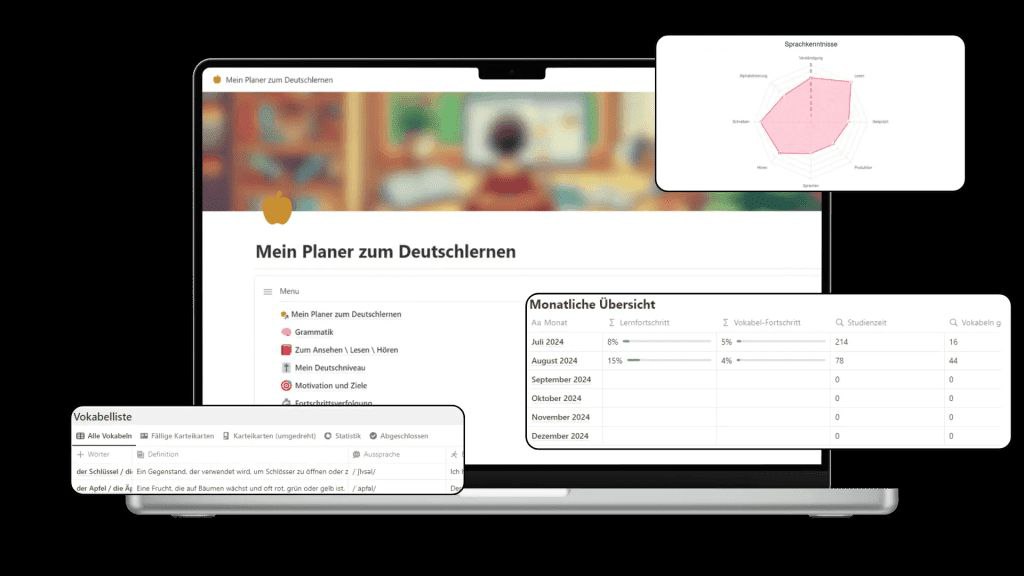
🤩 Only 5 German Learning Planners Left!
Join 195 other learners who are already transforming their German study routine with this unique tool! The German Learning Planner is the ultimate system for mastering the language while keeping every skill in check.
😱 From beginners to advanced learners, it’s crafted to support your journey every step of the way.
🎯 With the German Learning Planner, you can:
👉🏻 Organize and balance all language skills
👉🏻 Track your progress seamlessly
👉🏻 Enjoy lifetime updates with just a one-time payment!
⏳ Only 5 planners remain! Once they’re gone, they’re gone for good—don’t miss your chance to make this powerful planner part of your journey!
👇🏻 Claim yours below
❤7👍2😢2🥰1
👇 Ready to transform your German learning journey? 👇
Are you frustrated by slow progress in German? You’re not alone. Most learners struggle with overwhelming grammar rules, translating every word in their head, or using apps that feel disconnected from real-life conversations.
Here’s the solution: A practical framework to simplify learning, focus on speaking, and reduce overwhelm. Created by Leo, a German teacher with over 10,000 successful learners, this approach works.
🌟 What you’ll achieve:
- Speak German confidently in real-life situations.
- Understand grammar naturally without endless memorization.
- Build a practical vocabulary tailored to your goals.
it's free
👍6💯4
Use every opportunity to practice! Cashiers are trained to ask lots of questions to upsell 💵. Count how many of these you understand:
1. Möchten Sie hier essen oder mitnehmen?
- Do you want to eat here or take away?
2. Soll es ein Menü sein?
- Would you like to make it a meal?
3. Mit oder ohne Zwiebeln?
- With or without onions?
4. Möchten Sie Käse oder Speck hinzufügen?
- Would you like to add cheese or bacon for an extra cost?
5. Welche Soße möchten Sie dazu?
- Which sauce would you like?
6. Kleine oder große Pommes?
- Small or large fries?
7. Möchten Sie etwas zu trinken? Cola, Sprite, oder Eistee?
- Would you like a drink? Coke, Sprite, or iced tea?
8. Bar oder mit Karte?
- Cash or card?
9. Möchten Sie noch ein Dessert, wie Apfelkuchen oder Kekse?
- Would you like a dessert, like apple pie or cookies?
10. Haben Sie ein Kindermenü? Junge oder Mädchen-Spielzeug?
- Do you want the kids’ meal? A boy’s or girl’s toy?
11. Benötigen Sie Servietten oder feuchte Tücher?
- Do you need napkins or wet wipes?
12. Wären Sie bereit, ein paar Minuten auf frische Pommes zu warten?
- Are you okay waiting a few minutes for fresh fries?
13. Möchten Sie den Gesamtbetrag aufrunden und für einen guten Zweck spenden?
- Would you like to round up your total to donate to charity?
Want to learn more?
Join my newsletter for exclusive tips, free resources, and weekly language learning secrets!
Please open Telegram to view this post
VIEW IN TELEGRAM
👍23❤7
👇 Expressions with "ganz" 👇
Today, let's explore some common expressions with the adjective "ganz":
🔹 ganz Deutschland
- all of Germany
🔹 von ganzem Herzen
- with all my heart
🔹 den ganzen Tag
- the whole day
🔹 einen ganzen Monat
- a whole month
🔹 eine ganze Stunde
- a whole hour
🔹 ganz allein
- completely alone
🔹 ganz von selbst
- by itself / naturally
🔹 mein ganzes Leben
- my whole life
❤21👍2
👇 "Also," "Therefore," "Namely..." 👇
Today, let's dive into adverbs of cause and reason:
✅ also
- thus, therefore
✅ anstandshalber
- for the sake of decency
✅ nämlich
- namely
✅ folglich
- consequently
✅ infolgedessen
- as a result
✅ deshalb
- because, therefore
✅ deswegen
- that’s why
✅ demgemäß
- accordingly
✅ zusammengefasst
- in summary
❤27👍2🥰2
📌 The Verb “drücken”
Today, we’re exploring the meanings of the verb "drücken":
Three principal parts: drücken - drückte - hat gedrückt.
📍 auf (Akk.) drücken - to press something
Examples:
🔗 Du hast auf falschen Knopf gedrückt!
- You pressed the wrong button!
📍 (Akk.) drücken - to push, press, squeeze
Examples:
🔗 Bei Alarm Knopf drücken!
- Press the button in case of an alarm!
🔗 Wir drücken uns immer die Hände.
- We always shake hands.
📍 (Akk.) drücken - to squeeze, extract
Examples:
🔗 Ich will den Saft aus der Zitrone drücken.
- I want to squeeze the juice out of the lemon.
📍 (Akk.) drücken - to lower (prices)
Examples:
🔗 Man muss die Kosten dringend drücken.
- The costs urgently need to be reduced.
👍13❤2🥰2
✅ Polysemous Words in German
In German, many words have two or more meanings that seem unrelated at first glance. Understanding the context is essential for translating these words correctly. To start, let’s learn the key meanings of some of the most important polysemous words!
👉 Words with Different Meanings:
die Bank
1. bench
2. bank
die Mutter
1. mother
2. nut (mechanical)
das Gericht
1. dish (food)
2. court (legal)
die Scheibe
1. windowpane
2. slice
3. disc
die Schiene
1. rail
2. splint
der Wurf
1. throw
2. litter (animals)
die Tafel
1. board (chalkboard)
2. bar (of chocolate)
der Stock
1. stick
2. floor (of a building)
der Nagel
1. nail (hardware)
2. fingernail
die Schale
1. bowl
2. shell/peel
der Schalter
1. switch
2. counter (in a bank, station)
der Absatz
1. paragraph
2. sales
3. heel
der Ball
1. ball (toy)
2. ball (dance event)
die Decke
1. blanket
2. ceiling
die Blume
1. flower
2. foam (beer)
👉 Words with Related Meanings:
das Glas
1. glass (material)
2. glass (drinking vessel)
die Birne
1. pear
2. lightbulb
das Eis
1. ice
2. ice cream
das Schloss
1. castle
2. lock
das Tor
1. gate
2. goal
das Rad
1. wheel
2. bicycle
der Löffel
1. spoon
2. rabbit ear
der Ring
1. ring (jewelry)
2. arena
das Becken
1. basin (sink)
2. pelvis (anatomy)
3. cymbal (musical instrument)
das Blatt
1. leaf (of a plant)
2. sheet (of paper)
die Geschichte
1. history
2. story
❤20👍4🥰3
🗣 Conversation When Meeting a German
Here’s a selection of common questions you’ll likely hear during introductions:
📍 Wie heißt du?
- What’s your name?
📍 Wie alt bist du?
- How old are you?
📍 Woher kommst du?
- Where are you from?
📍 Wo wohnst du?
- Where do you live?
📍 Als was arbeitest du?
- What do you do for a living?
📍 Was sind deine Hobbys?
- What are your hobbies?
📍 Bist du verheiratet?
- Are you married?
📍 Hast du Kinder?
- Do you have children?
📍 Hast du Haustiere?
- Do you have pets?
📍 Wie viele Sprachen sprichst du?
- How many languages do you speak?
❤13💯3👍2🥰1
🌟 Positive Adjectives
Great for describing someone!
Er / sie ist...
(He / She is...)
🔹 aufmerksam – attentive
🔹 sorgfältig – diligent
🔹 entschlossen – determined
🔹 kühn – bold, courageous
🔹 toll – amazing
🔹 stark – strong
🔹 zart – tender
🔹 sinnlich – sensual
🔹 pflichtbewusst – conscientious
🔹 sentimental / empfindsam – sentimental
🔹 emotional – emotional
🔹 energisch – energetic
🔹 tatkräftig – active, proactive
🔹 kreativ – creative
🔹 zielstrebig – goal-oriented
🔹 glücklich – happy
🔹 immer erfolgreich – always successful
🔹 sachkundig – knowledgeable
🔹 umsichtig / weitblickend / scharfsichtig – farsighted
🔹 voraussichtig – prudent
🔹 kompetent – competent
🔹 beredt / redegewandt – eloquent
🔹 temperamentvoll – spirited
🔹 beharrlich / hartnäckig – persistent
🔹 flexibel – flexible
👍25🥰4
⛰ Prepositions of Place with Natural Landmarks
Today, we’re focusing on prepositions of place used with natural landmarks:
‼️ Quick Reminder:
If the expression answers WO? (Where?), use the Dative case.
If it answers WOHIN? (Where to?), use the Accusative case.
---
### Categories of Natural Landmarks
Water bodies and shores:
📍 der Ozean – ocean
📍 das Meer – sea
📍 der See – lake
📍 der Fluss – river
📍 der Strand – beach
📍 das Ufer – shore
📍 die Küste – coast
Island and village:
📍 die Insel – island
📍 das Land – village
Forests, mountains, deserts:
📍 der Wald – forest
📍 die Berge – mountains
📍 das Gebirge – mountain range
📍 die Wüste – desert
---
### For water bodies and shores, use:
WOHIN? (Where to?) → an + Accusative
Examples:
🔗 Ich fahre ans Meer. – I’m going to the sea.
🔗 Er geht an den See. – He’s going to the lake.
🔗 Sie fährt an den Strand. – She’s going to the beach.
🔗 Wir gehen an die Küste. – We’re going to the coast.
WO? (Where?) → an + Dative
Examples:
🔗 Sie sind am Meer. – They are at the sea.
🔗 Wir sind am See. – We are at the lake.
🔗 Ich liege am Strand. – I’m lying on the beach.
🔗 Er entspannt sich an der Küste. – He’s relaxing on the coast.
WOHER? (Where from?) → von + Dative
Examples:
🔗 Sie fliegt von der Insel. – She’s flying from the island.
🔗 Er kommt vom Strand. – He’s coming from the beach.
💡 Note: When swimming in the sea or coming out of it, use in (inside) and aus (out of).
---
### For "island" and "village," use:
WOHIN? (Where to?) → auf + Accusative
Examples:
🔗 Ich fliege auf die Insel. – I’m flying to the island.
🔗 Sie fährt auf das Land. – She’s going to the village.
WO? (Where?) → auf + Dative
Examples:
🔗 Sie sind auf der Insel. – They are on the island.
🔗 Wir sind auf dem Land. – We are in the village.
WOHER? (Where from?) → von + Dative
Examples:
🔗 Sie fliegt von der Insel. – She’s flying from the island.
🔗 Er fährt vom Land. – He’s coming from the village.
---
### For forests, mountains, and deserts:
WOHIN? (Where to?) → in + Accusative
Examples:
🔗 Ich gehe in den Wald. – I’m going into the forest.
🔗 Sie geht ins Gebirge. – She’s going to the mountains.
🔗 Wir fahren in die Wüste. – We’re going to the desert.
WO? (Where?) → in + Dative
Examples:
🔗 Ich wandere im Wald. – I’m hiking in the forest.
🔗 Sie ist im Gebirge. – She’s in the mountains.
🔗 Wir sind in der Wüste. – We are in the desert.
WOHER? (Where from?) → aus + Dative
Examples:
🔗 Ich komme aus dem Wald. – I’m coming from the forest.
🔗 Sie fährt aus dem Gebirge. – She’s coming from the mountains.
🔗 Wir fliegen aus der Wüste. – We’re flying from the desert.
❤22👍12💯3👏1