
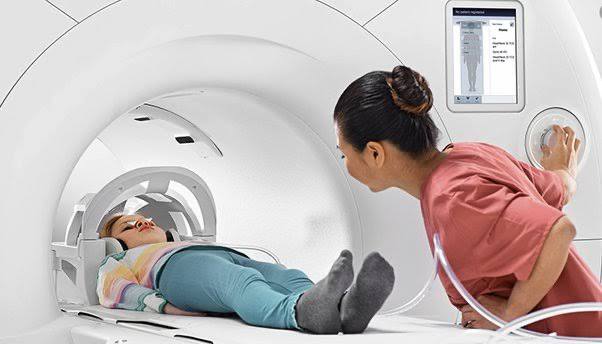
Why are no metallic items allowed to be worn inside an MRI room?
An arm MRI (magnetic resonance imaging) scan uses strong magnets to create pictures of the upper and lower arm. This may include the elbow, wrist, hands, fingers, and the surrounding muscles and other tissues.
For the MRI exam, the patient is placed inside of the MR system or scanner—typically a large donut-shaped device that is open on both ends. The powerful magnetic field aligns atomic particles called protons that exist in body tissues that contain water. The applied radio waves then interact with these protons to produce signals that are picked up by a receiver within the MR scanner. The signals are specially characterized using the rapidly changing magnetic fields. With the help of computer processing, cross-sectional images of tissues are created as "slices" that can be viewed in any orientation.
As a patient, it is vital that you remove all metallic belongings in advance of an MRI examination, including external hearing aids, watches, jewelry, cell phones, and items of clothing that have metallic threads or fasteners. Additionally, makeup, nail polish, or other cosmetics that may contain metallic particles should be removed if applied to the area of the body undergoing the MRI examination.
The powerful magnetic field of the MR system will pull on any ferromagnetic object in or on the patient’s body such as a medical implant (e.g., certain aneurysm clips, medication pumps, etc.). Therefore, all MRI facilities have comprehensive screening procedures and protocols they use to identify any potential hazards. When carefully followed, these steps ensure that the MRI technologist and radiologist know about the presence of any metallic objects so they can take precautions as needed.
An arm MRI (magnetic resonance imaging) scan uses strong magnets to create pictures of the upper and lower arm. This may include the elbow, wrist, hands, fingers, and the surrounding muscles and other tissues.
For the MRI exam, the patient is placed inside of the MR system or scanner—typically a large donut-shaped device that is open on both ends. The powerful magnetic field aligns atomic particles called protons that exist in body tissues that contain water. The applied radio waves then interact with these protons to produce signals that are picked up by a receiver within the MR scanner. The signals are specially characterized using the rapidly changing magnetic fields. With the help of computer processing, cross-sectional images of tissues are created as "slices" that can be viewed in any orientation.
As a patient, it is vital that you remove all metallic belongings in advance of an MRI examination, including external hearing aids, watches, jewelry, cell phones, and items of clothing that have metallic threads or fasteners. Additionally, makeup, nail polish, or other cosmetics that may contain metallic particles should be removed if applied to the area of the body undergoing the MRI examination.
The powerful magnetic field of the MR system will pull on any ferromagnetic object in or on the patient’s body such as a medical implant (e.g., certain aneurysm clips, medication pumps, etc.). Therefore, all MRI facilities have comprehensive screening procedures and protocols they use to identify any potential hazards. When carefully followed, these steps ensure that the MRI technologist and radiologist know about the presence of any metallic objects so they can take precautions as needed.
👍49❤10🔥3👏3😱2
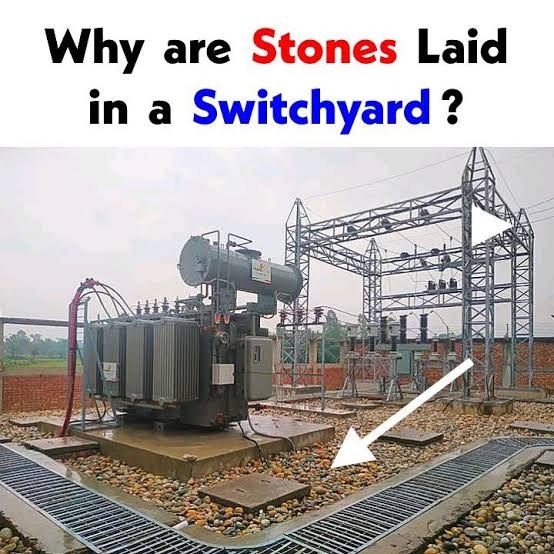
Why are Stones/Gravel laid in Switchyard?
Grit and gravel are laid in switchyards for a variety of reasons. Firstly, they are used to facilitate drainage. Switchyards are exposed to various weather conditions, and the layer of grit and gravel allows water to percolate through the ground quickly. This helps prevent the accumulation of water, reducing the risk of equipment malfunctions, corrosion, or electrical hazards.
Secondly, grit and gravel enhance grounding in switchyards. They provide a conductive layer that improves the conductivity of the soil. This allows fault currents to flow effectively through the ground, reducing the risk of electrical shocks and ensuring the safe dissipation of fault currents.
Thirdly, they help control erosion. Switchyards are often situated in open areas, and grit and gravel stabilize the ground, preventing soil erosion caused by wind, rain, or water runoff. This ensures the stability of the switchyard infrastructure.
Fourthly, grit and gravel act as a fire-resistant layer. In the event of a fire caused by equipment failure or electrical faults, they help contain the flames and prevent them from spreading to other areas of the switchyard. This reduces the risk of damage to valuable equipment and enhances overall fire safety.
Lastly, grit and gravel provide a stable surface for workers to access the switchyard and perform maintenance tasks. They offer traction for vehicles and equipment, ensuring safe movement within the switchyard premises. This accessibility facilitates regular inspections, repairs, and maintenance activities.
Grit and gravel are laid in switchyards for a variety of reasons. Firstly, they are used to facilitate drainage. Switchyards are exposed to various weather conditions, and the layer of grit and gravel allows water to percolate through the ground quickly. This helps prevent the accumulation of water, reducing the risk of equipment malfunctions, corrosion, or electrical hazards.
Secondly, grit and gravel enhance grounding in switchyards. They provide a conductive layer that improves the conductivity of the soil. This allows fault currents to flow effectively through the ground, reducing the risk of electrical shocks and ensuring the safe dissipation of fault currents.
Thirdly, they help control erosion. Switchyards are often situated in open areas, and grit and gravel stabilize the ground, preventing soil erosion caused by wind, rain, or water runoff. This ensures the stability of the switchyard infrastructure.
Fourthly, grit and gravel act as a fire-resistant layer. In the event of a fire caused by equipment failure or electrical faults, they help contain the flames and prevent them from spreading to other areas of the switchyard. This reduces the risk of damage to valuable equipment and enhances overall fire safety.
Lastly, grit and gravel provide a stable surface for workers to access the switchyard and perform maintenance tasks. They offer traction for vehicles and equipment, ensuring safe movement within the switchyard premises. This accessibility facilitates regular inspections, repairs, and maintenance activities.
👍64❤23🔥7🤩4👏3
What is a Hypnic Jerk?
A hypnic jerk, also known as a sleep start or a hypnagogic jerk, is an involuntary muscle spasm or twitch that occurs just as a person is falling asleep. It is a common phenomenon experienced by many people and is generally harmless.
Hypnic jerks typically manifest as sudden, brief muscle contractions that can involve various parts of the body, such as the arms, legs, or torso. They often cause a sensation of falling or a "jolt" that can briefly wake a person up. These jerks can be accompanied by a feeling of unease, a rapid heartbeat, or a quickened breathing rate.
While the exact cause of hypnic jerks is not fully understood, several factors are believed to contribute to their occurrence:
Muscle relaxation: As you transition from wakefulness to sleep, your muscles start to relax. The sudden relaxation of muscle groups can trigger a reflexive jerk.
Brain activity: The brain's electrical activity changes during the transition from wakefulness to sleep. Some researchers believe that hypnic jerks could be related to irregularities in this brain activity.
Fatigue and stress: Fatigue, sleep deprivation, and high levels of stress have been associated with an increased likelihood of experiencing hypnic jerks.
Caffeine and stimulants: Consumption of stimulants like caffeine close to bedtime may increase the likelihood of experiencing hypnic jerks.
Hypnic jerks are generally harmless and do not require medical treatment. However, if they consistently disrupt your sleep or cause significant distress, it may be helpful to practice good sleep hygiene, such as establishing a regular sleep schedule, creating a relaxing sleep environment, and managing stress levels. If you have concerns about your sleep or experience any unusual symptoms, it's always a good idea to consult with a healthcare professional for guidance and further evaluation.
A hypnic jerk, also known as a sleep start or a hypnagogic jerk, is an involuntary muscle spasm or twitch that occurs just as a person is falling asleep. It is a common phenomenon experienced by many people and is generally harmless.
Hypnic jerks typically manifest as sudden, brief muscle contractions that can involve various parts of the body, such as the arms, legs, or torso. They often cause a sensation of falling or a "jolt" that can briefly wake a person up. These jerks can be accompanied by a feeling of unease, a rapid heartbeat, or a quickened breathing rate.
While the exact cause of hypnic jerks is not fully understood, several factors are believed to contribute to their occurrence:
Muscle relaxation: As you transition from wakefulness to sleep, your muscles start to relax. The sudden relaxation of muscle groups can trigger a reflexive jerk.
Brain activity: The brain's electrical activity changes during the transition from wakefulness to sleep. Some researchers believe that hypnic jerks could be related to irregularities in this brain activity.
Fatigue and stress: Fatigue, sleep deprivation, and high levels of stress have been associated with an increased likelihood of experiencing hypnic jerks.
Caffeine and stimulants: Consumption of stimulants like caffeine close to bedtime may increase the likelihood of experiencing hypnic jerks.
Hypnic jerks are generally harmless and do not require medical treatment. However, if they consistently disrupt your sleep or cause significant distress, it may be helpful to practice good sleep hygiene, such as establishing a regular sleep schedule, creating a relaxing sleep environment, and managing stress levels. If you have concerns about your sleep or experience any unusual symptoms, it's always a good idea to consult with a healthcare professional for guidance and further evaluation.
👍80❤17🔥6👏4🤩4😱1
What are the differences between an Ocean, a Sea, a Bay and a Gulf?
The term “ocean,” as defined by Merriam-Webster, is ”the whole body of saltwater that covers nearly three-fourths of the surface of the earth.” Comprising 1.3 billion cubic kilometers of water, this is the global body of water that covers roughly 71% of the earth. We often hear and speak of the ocean as it’s divided into five components: Arctic, Atlantic, Indian, Pacific and Southern (Antarctic). While these are often referred to as individual oceans (plural), there is no real barrier separating them. Because these are all connected, there is truly only one ocean (singular).
generally “sea” does refer to a smaller segment of the ocean, there are different types of seas in geology: marginal and inland. A marginal sea is one that is defined by its proximity to the land that surrounds it, such as the Mediterranean Sea, the Black Sea or even the Gulf of Mexico (more on that in a minute). Alternatively, an inland sea, while also shallow, is—you guessed it—more inland and covers part of a continent. These are also sometimes called epeiric or epicontinental seas. Epeiric or inland seas have changed throughout periods of time as the earth has evolved, but they are typically landlocked and connect to the broader ocean through a very small channel. Modern-day examples of these include the Baltic Sea and the Hudson Bay.
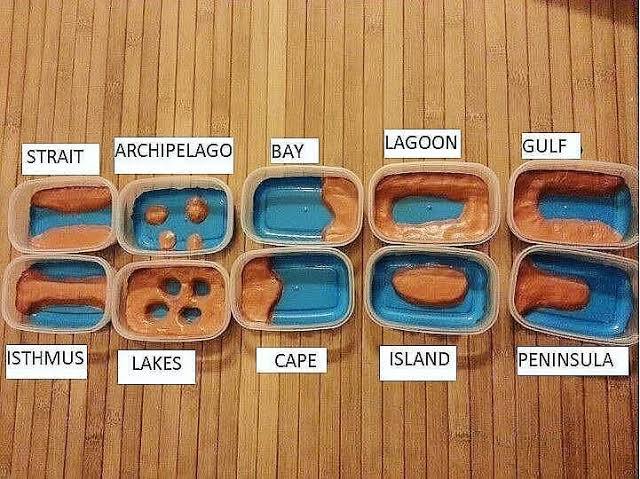
Both bays and gulfs are also part of a sea or ocean. A bay is a broad, recessed coastal inlet where the land curves inward. There is a coastline on three sides of a bay. A gulf is a more defined and deeper inlet with the entrance more enclosed than a bay.
The term “ocean,” as defined by Merriam-Webster, is ”the whole body of saltwater that covers nearly three-fourths of the surface of the earth.” Comprising 1.3 billion cubic kilometers of water, this is the global body of water that covers roughly 71% of the earth. We often hear and speak of the ocean as it’s divided into five components: Arctic, Atlantic, Indian, Pacific and Southern (Antarctic). While these are often referred to as individual oceans (plural), there is no real barrier separating them. Because these are all connected, there is truly only one ocean (singular).
generally “sea” does refer to a smaller segment of the ocean, there are different types of seas in geology: marginal and inland. A marginal sea is one that is defined by its proximity to the land that surrounds it, such as the Mediterranean Sea, the Black Sea or even the Gulf of Mexico (more on that in a minute). Alternatively, an inland sea, while also shallow, is—you guessed it—more inland and covers part of a continent. These are also sometimes called epeiric or epicontinental seas. Epeiric or inland seas have changed throughout periods of time as the earth has evolved, but they are typically landlocked and connect to the broader ocean through a very small channel. Modern-day examples of these include the Baltic Sea and the Hudson Bay.
Both bays and gulfs are also part of a sea or ocean. A bay is a broad, recessed coastal inlet where the land curves inward. There is a coastline on three sides of a bay. A gulf is a more defined and deeper inlet with the entrance more enclosed than a bay.
👍131🔥27❤18🤩5😱3👏2
Why do airlines apply Speed Tape to their planes?
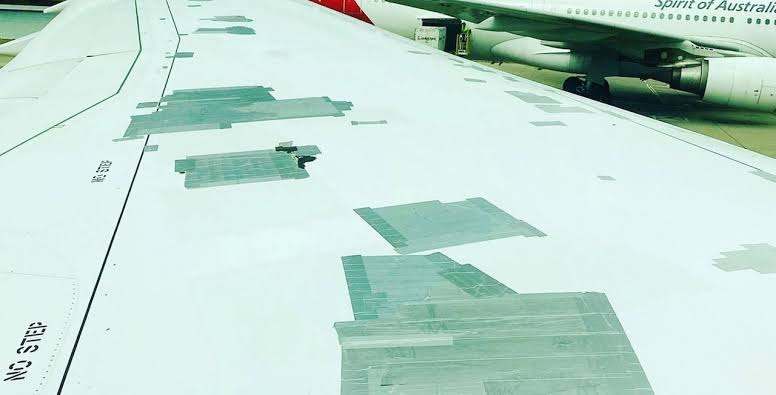
Airlines apply speed tape to their planes to temporarily repair minor damages to the aircraft's exterior. Speed tape is a thin, aluminum tape with a pressure-sensitive adhesive. It is designed to withstand high temperatures and wind speeds, making it ideal for use on aircraft.
Speed tape is typically used to repair small dents, scratches, or cracks in the aircraft's skin. It can also be used to cover holes or gaps in the skin. Speed tape is not a permanent repair, but it can keep the aircraft airworthy until a more permanent repair can be made.
The gaps between panels or fairings create drag if they aren't filled. The gaps also let water in, which can cause corrosion.
Normally, if they aren't removable panels that get opened all the time, they are sealed using a rubber compound called PRC to make a fillet seal. The PRC takes a while to cure, so sometimes if a plane flies, the sealant will be covered with speed tape to stop it from getting damaged before it sets. Or the seal will be temporarily made with just tape.
Or sometimes little fairings, bits of plane skin that are not structural, fall off or get damaged, and tape is used to replace them.
Airlines apply speed tape to their planes to temporarily repair minor damages to the aircraft's exterior. Speed tape is a thin, aluminum tape with a pressure-sensitive adhesive. It is designed to withstand high temperatures and wind speeds, making it ideal for use on aircraft.
Speed tape is typically used to repair small dents, scratches, or cracks in the aircraft's skin. It can also be used to cover holes or gaps in the skin. Speed tape is not a permanent repair, but it can keep the aircraft airworthy until a more permanent repair can be made.
The gaps between panels or fairings create drag if they aren't filled. The gaps also let water in, which can cause corrosion.
Normally, if they aren't removable panels that get opened all the time, they are sealed using a rubber compound called PRC to make a fillet seal. The PRC takes a while to cure, so sometimes if a plane flies, the sealant will be covered with speed tape to stop it from getting damaged before it sets. Or the seal will be temporarily made with just tape.
Or sometimes little fairings, bits of plane skin that are not structural, fall off or get damaged, and tape is used to replace them.
👍87❤10🔥10🤩5👏4
What is Air Quality Index (AQI)?
The Air Quality Index (AQI) is a system used to measure and report the quality of the air in a specific area. It’s designed to help people understand how polluted the air currently is or how polluted it is forecast to become.
It's like a yardstick that runs from 0 to 500, with higher numbers indicating greater levels of air pollution and health concern. An AQI of 50 or below is considered good, while an AQI above 300 is considered hazardous.
The AQI takes into account five major air pollutants: ozone, particulate matter (PM2.5 and PM10), nitrogen dioxide, sulfur dioxide, and carbon monoxide. Each pollutant has specific health effects, and the AQI considers the pollutant with the highest concentration to determine the overall air quality.
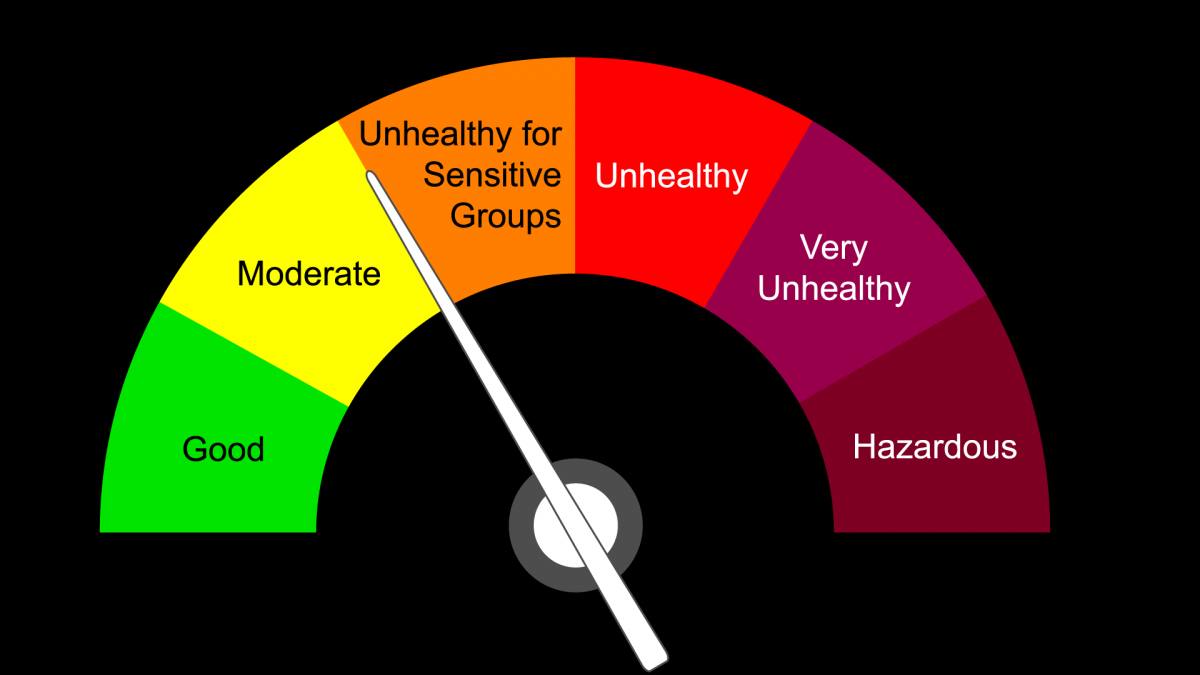
The AQI is divided into six categories, each with a corresponding color code:
Good (0-50): Green
Moderate (51-100): Yellow
Unhealthy for Sensitive Groups (101-150): Orange
Unhealthy (151-200): Red
Very Unhealthy (201-300): Purple
Hazardous (301+): Maroon
The AQI is a valuable tool for understanding the health risks associated with air pollution. It can help you make decisions about whether to limit outdoor activity, especially for children, older adults, and people with respiratory problems.
The Air Quality Index (AQI) is a system used to measure and report the quality of the air in a specific area. It’s designed to help people understand how polluted the air currently is or how polluted it is forecast to become.
It's like a yardstick that runs from 0 to 500, with higher numbers indicating greater levels of air pollution and health concern. An AQI of 50 or below is considered good, while an AQI above 300 is considered hazardous.
The AQI takes into account five major air pollutants: ozone, particulate matter (PM2.5 and PM10), nitrogen dioxide, sulfur dioxide, and carbon monoxide. Each pollutant has specific health effects, and the AQI considers the pollutant with the highest concentration to determine the overall air quality.
The AQI is divided into six categories, each with a corresponding color code:
Good (0-50): Green
Moderate (51-100): Yellow
Unhealthy for Sensitive Groups (101-150): Orange
Unhealthy (151-200): Red
Very Unhealthy (201-300): Purple
Hazardous (301+): Maroon
The AQI is a valuable tool for understanding the health risks associated with air pollution. It can help you make decisions about whether to limit outdoor activity, especially for children, older adults, and people with respiratory problems.
👍100❤11🔥10👏7😱4
How are lab grown Diamonds made?
Artificial diamonds, also known as laboratory-grown diamonds or synthetic diamonds, are diamonds that are created in a controlled laboratory environment rather than being formed naturally in the Earth's crust. These diamonds have the same chemical composition, crystal structure, and physical properties as natural diamonds, but they are produced through advanced technological processes.
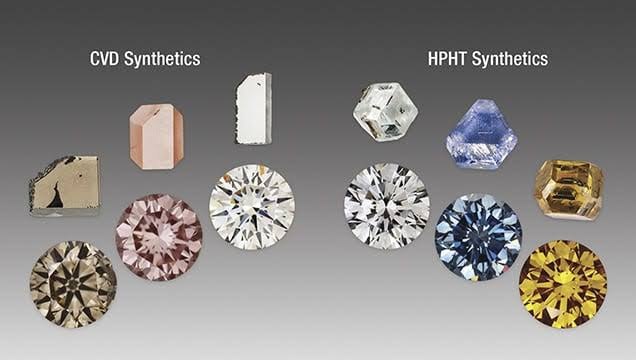
The process of creating artificial diamonds involves replicating the conditions under which natural diamonds are formed, such as high pressure and temperature. Two main methods are commonly used: the High-Pressure High-Temperature (HPHT) method and the Chemical Vapor Deposition (CVD) method.
In the HPHT method, a small diamond seed is placed in a press that applies immense pressure and temperature, similar to the conditions found deep within the Earth. This process allows the carbon atoms in the seed to rearrange and form a larger diamond crystal.
The CVD method involves placing a diamond seed in a chamber filled with a carbon-rich gas, such as methane. The gas is then heated and broken down into carbon atoms, which are deposited onto the seed, gradually forming a larger diamond crystal.
It's important to note that artificial diamonds are not imitations or simulants; they are genuine diamonds with the same properties as natural diamonds, but they are created in a laboratory rather than being mined from the Earth.
Artificial diamonds, also known as laboratory-grown diamonds or synthetic diamonds, are diamonds that are created in a controlled laboratory environment rather than being formed naturally in the Earth's crust. These diamonds have the same chemical composition, crystal structure, and physical properties as natural diamonds, but they are produced through advanced technological processes.
The process of creating artificial diamonds involves replicating the conditions under which natural diamonds are formed, such as high pressure and temperature. Two main methods are commonly used: the High-Pressure High-Temperature (HPHT) method and the Chemical Vapor Deposition (CVD) method.
In the HPHT method, a small diamond seed is placed in a press that applies immense pressure and temperature, similar to the conditions found deep within the Earth. This process allows the carbon atoms in the seed to rearrange and form a larger diamond crystal.
The CVD method involves placing a diamond seed in a chamber filled with a carbon-rich gas, such as methane. The gas is then heated and broken down into carbon atoms, which are deposited onto the seed, gradually forming a larger diamond crystal.
It's important to note that artificial diamonds are not imitations or simulants; they are genuine diamonds with the same properties as natural diamonds, but they are created in a laboratory rather than being mined from the Earth.
👍80🔥13❤10😱5👏4
What is BioMining?
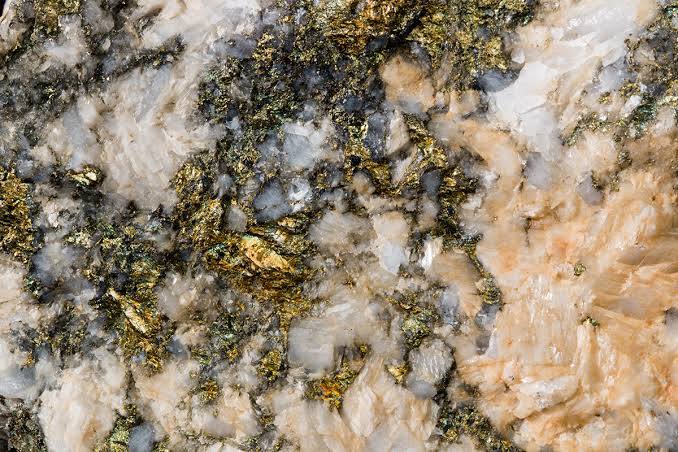
Biomining is the process of using microorganisms to extract metals from ores. It is an alternative to traditional mining methods, which can be harmful to the environment. Biomining uses bacteria and fungi to break down the ore and release the metals. This process is more environmentally friendly because it does not require the use of chemicals or large amounts of energy.
Microorganisms are introduced to the ore.
The microorganisms produce acids or other chemicals that break down the ore.
The metals are released from the ore and can be collected.
The microorganisms used in biomining are typically extremophiles, which are organisms that can survive in extreme environments. These organisms are able to tolerate high temperatures, high pressures, and acidic or alkaline conditions.
Biomining has a number of advantages over traditional mining methods:
It is more environmentally friendly.
It is less expensive. It is more efficient. It can be used to extract metals from ores that are not suitable for traditional mining methods.
Biomining is still a relatively new technology, but it has the potential to revolutionize the mining industry. It is a more sustainable and environmentally friendly way to extract metals from ores, and it could help to reduce the environmental impact of mining.
Biomining is the process of using microorganisms to extract metals from ores. It is an alternative to traditional mining methods, which can be harmful to the environment. Biomining uses bacteria and fungi to break down the ore and release the metals. This process is more environmentally friendly because it does not require the use of chemicals or large amounts of energy.
Microorganisms are introduced to the ore.
The microorganisms produce acids or other chemicals that break down the ore.
The metals are released from the ore and can be collected.
The microorganisms used in biomining are typically extremophiles, which are organisms that can survive in extreme environments. These organisms are able to tolerate high temperatures, high pressures, and acidic or alkaline conditions.
Biomining has a number of advantages over traditional mining methods:
It is more environmentally friendly.
It is less expensive. It is more efficient. It can be used to extract metals from ores that are not suitable for traditional mining methods.
Biomining is still a relatively new technology, but it has the potential to revolutionize the mining industry. It is a more sustainable and environmentally friendly way to extract metals from ores, and it could help to reduce the environmental impact of mining.
👍75🔥12😱12❤8👏2🤩1
What is Inflation? What are different types of Inflation?
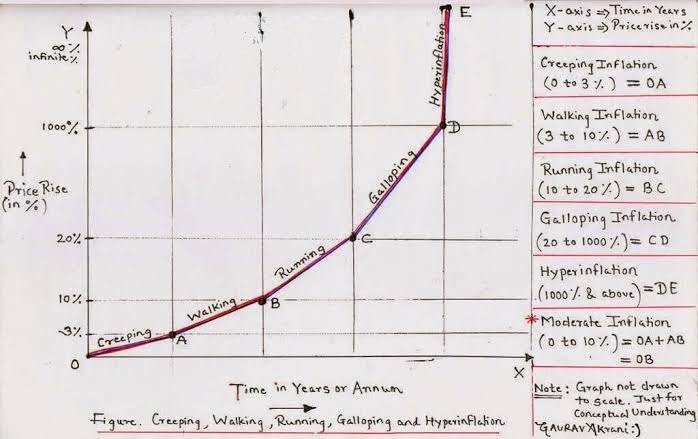
Inflation is a general increase in prices and fall in the purchasing value of money. It is often measured by the Consumer Price Index (CPI), which tracks the prices of a basket of goods and services that are commonly purchased by households.
There are several types of inflation, each with its own characteristics:
Demand-pull Inflation: This occurs when the overall demand for goods and services in an economy exceeds the supply, leading to an increase in prices. It is often caused by factors such as increased consumer spending, rising wages, or government expansionary policies.
Cost-push Inflation: This occurs when the cost of producing goods and services increases, leading to higher prices. It can be caused by factors such as rising wages, higher raw material costs, or increased energy prices.
Built-in Inflation: This occurs when there is an expectation of future inflation, leading to wage and price increases in anticipation of higher costs. It can become self-perpetuating as higher wages and prices reinforce each other.
Deflation: This is the opposite of inflation, where there is a general decrease in prices and an increase in the purchasing value of money. It can be caused by factors such as reduced consumer demand, excess supply, or tight monetary policies.
Disinflation: This is a slowdown in the rate of inflation, where prices are still increasing but at a slower pace. It can be caused by factors such as tighter monetary policies, reduced government spending, or a decrease in economic growth.
Reflation: This is a deliberate policy to increase the inflation rate in an economy, often used to combat deflation or stimulate economic growth. It can be achieved through expansionary monetary and fiscal policies.
Greedflation: This is a term used to describe inflation that is caused by excessive corporate greed and profiteering, leading to higher prices for goods and services.
Lowflation: This is a term used to describe a low and stable rate of inflation, often considered to be beneficial for economic growth and stability.
Skew Inflation: This refers to a situation where the inflation rate is not uniform across different sectors or goods and services. For example, some sectors may experience higher inflation rates than others.
Inflation is a general increase in prices and fall in the purchasing value of money. It is often measured by the Consumer Price Index (CPI), which tracks the prices of a basket of goods and services that are commonly purchased by households.
There are several types of inflation, each with its own characteristics:
Demand-pull Inflation: This occurs when the overall demand for goods and services in an economy exceeds the supply, leading to an increase in prices. It is often caused by factors such as increased consumer spending, rising wages, or government expansionary policies.
Cost-push Inflation: This occurs when the cost of producing goods and services increases, leading to higher prices. It can be caused by factors such as rising wages, higher raw material costs, or increased energy prices.
Built-in Inflation: This occurs when there is an expectation of future inflation, leading to wage and price increases in anticipation of higher costs. It can become self-perpetuating as higher wages and prices reinforce each other.
Deflation: This is the opposite of inflation, where there is a general decrease in prices and an increase in the purchasing value of money. It can be caused by factors such as reduced consumer demand, excess supply, or tight monetary policies.
Disinflation: This is a slowdown in the rate of inflation, where prices are still increasing but at a slower pace. It can be caused by factors such as tighter monetary policies, reduced government spending, or a decrease in economic growth.
Reflation: This is a deliberate policy to increase the inflation rate in an economy, often used to combat deflation or stimulate economic growth. It can be achieved through expansionary monetary and fiscal policies.
Greedflation: This is a term used to describe inflation that is caused by excessive corporate greed and profiteering, leading to higher prices for goods and services.
Lowflation: This is a term used to describe a low and stable rate of inflation, often considered to be beneficial for economic growth and stability.
Skew Inflation: This refers to a situation where the inflation rate is not uniform across different sectors or goods and services. For example, some sectors may experience higher inflation rates than others.
👍80❤26👏7🔥6🤩2
What is Bull and Bear in stock market?
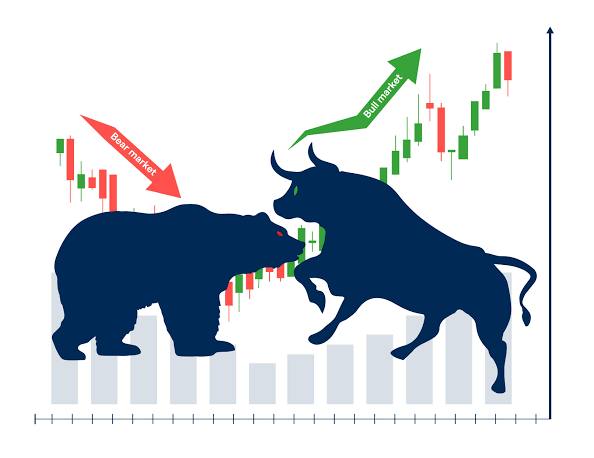
The stock market is a dynamic stage where two opposing forces play out: Bulls and Bears. Bulls, with their horns pointed skyward, represent optimism and rising markets. They believe stock prices will climb, prompting them to buy stocks in anticipation of future profits. A bull market is characterized by rising prices, increased trading volume, and a positive economic outlook.
Bears, on the other hand, are pessimists who see the market heading downwards. They believe stock prices will decline, leading them to sell stocks or avoid buying altogether. A bear market is marked by falling prices, decreased trading volume, and a negative economic outlook.
While bulls and bears represent opposing sentiments, the market rarely operates in absolutes. There are often periods of consolidation, where the market moves sideways, and mixed signals can exist even within a dominant trend. Recognizing these nuances is crucial for making informed investment decisions.
The stock market is a dynamic stage where two opposing forces play out: Bulls and Bears. Bulls, with their horns pointed skyward, represent optimism and rising markets. They believe stock prices will climb, prompting them to buy stocks in anticipation of future profits. A bull market is characterized by rising prices, increased trading volume, and a positive economic outlook.
Bears, on the other hand, are pessimists who see the market heading downwards. They believe stock prices will decline, leading them to sell stocks or avoid buying altogether. A bear market is marked by falling prices, decreased trading volume, and a negative economic outlook.
While bulls and bears represent opposing sentiments, the market rarely operates in absolutes. There are often periods of consolidation, where the market moves sideways, and mixed signals can exist even within a dominant trend. Recognizing these nuances is crucial for making informed investment decisions.
👍75❤20🔥8👏5🤩5😱3
How do we measure the distances to things in space?
There are a few primary methods used to measure distances to objects in space:
The choice of method depends on the type of object and how far away it is. Combining multiple techniques can provide more robust distance measurements for astronomical objects. As our observational capabilities have improved, we've been able to measure distances to increasingly remote parts of the universe.
There are a few primary methods used to measure distances to objects in space:
Parallax:For relatively nearby objects within our own galaxy, we can use the parallax effect. This involves measuring the apparent shift in position of an object against the background as observed from two different locations (such as the Earth at different times of the year). The degree of parallax shift is inversely proportional to the distance.Redshift:For distant galaxies and other extragalactic objects, we can use the redshift of their light to estimate their distance. As objects move away from us, their light is shifted towards longer, redder wavelengths, and the degree of redshift is proportional to the recession velocity, which is in turn related to the distance via Hubble's law.Standard Candles: Astronomers can use "standard candles" - objects of known intrinsic brightness, like certain types of stars or supernovae. By comparing the observed brightness to the known intrinsic brightness, the distance can be calculated.Time Delay: For extremely distant objects like quasars, astronomers can measure the time delay between the arrival of light from different parts of the object. This time delay is related to the size of the object and its distance.Radar Ranging: For objects within our solar system, like planets and asteroids, we can use radar to bounce radio signals off them and measure the time of flight to calculate the distance.The choice of method depends on the type of object and how far away it is. Combining multiple techniques can provide more robust distance measurements for astronomical objects. As our observational capabilities have improved, we've been able to measure distances to increasingly remote parts of the universe.

👍61❤8🔥5😱3👏2
What is the difference between Identical Twins and Fraternal Twins?
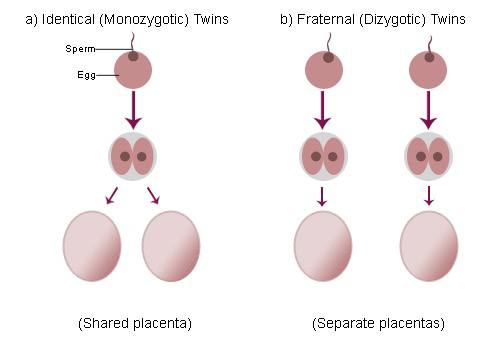
Identical twins, also known as monozygotic twins, are formed when a single fertilized egg splits in two and develops into two separate embryos. Since they come from the same egg, they share the same DNA and genetic material, which is why they often look very similar or identical. This rare phenomenon occurs in about 3 in every 1,000 births.
Fraternal twins, on the other hand, are formed when two separate eggs are fertilized by two different sperm. They have different DNA and genetic material, just like regular siblings, and may look similar or dissimilar. Fraternal twins are more common than identical twins, occurring in about 6 in every 1,000 births.
The key difference between identical and fraternal twins lies in their origin and genetic makeup. Identical twins are formed from a single egg and share the same DNA, while fraternal twins are formed from two separate eggs and have different DNA. This difference in origin is what determines their physical similarities and genetic connections.
Identical twins, also known as monozygotic twins, are formed when a single fertilized egg splits in two and develops into two separate embryos. Since they come from the same egg, they share the same DNA and genetic material, which is why they often look very similar or identical. This rare phenomenon occurs in about 3 in every 1,000 births.
Fraternal twins, on the other hand, are formed when two separate eggs are fertilized by two different sperm. They have different DNA and genetic material, just like regular siblings, and may look similar or dissimilar. Fraternal twins are more common than identical twins, occurring in about 6 in every 1,000 births.
The key difference between identical and fraternal twins lies in their origin and genetic makeup. Identical twins are formed from a single egg and share the same DNA, while fraternal twins are formed from two separate eggs and have different DNA. This difference in origin is what determines their physical similarities and genetic connections.
👍101❤12😱7🔥4👏3
What is the Challenger deep?
The Challenger Deep is the lowest point on Earth, with a depth of approximately 35,787 feet (10,902 meters) in the Mariana Trench, which is located in the western Pacific Ocean. It is a depression in the Earth's crust, a deep-sea trench that is a remarkable natural feature.
To put that depth in perspective, the Challenger Deep is nearly 7 miles (11 kilometers) deeper than Mount Everest, the highest mountain on Earth, is tall. It's an incredibly extreme environment, with pressures reaching over 1,000 times the pressure at sea level and temperatures ranging from just above freezing to near-freezing.
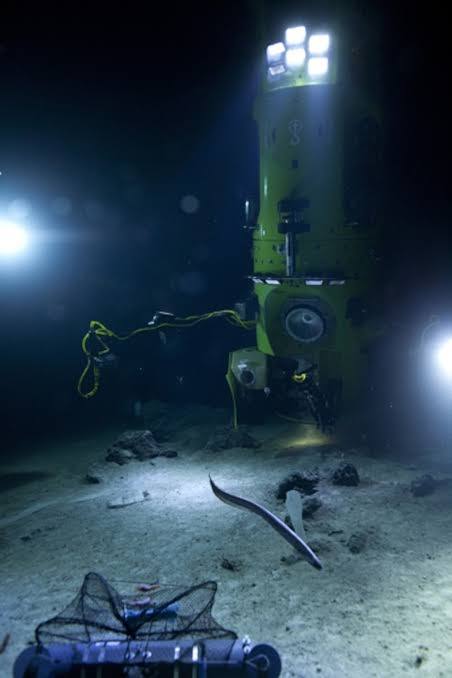
The Challenger Deep was named after the HMS Challenger, a British ship that first measured its depth in 1875. The trench is a remote and inhospitable region, with only a few humans having visited the bottom, including Jacques Piccard and US Navy Lieutenant Don Walsh in 1960, and filmmaker James Cameron in 2012.
The Challenger Deep is a unique ecosystem, with organisms that have adapted to survive in the extreme conditions. Despite the harsh environment, scientists have discovered a variety of life forms, including giant amphipods, deep-sea fish, and microorganisms that thrive in the trench's dark, cold waters.
The Challenger Deep continues to fascinate scientists, explorers, and the general public alike, and ongoing research and exploration efforts are helping to uncover more about this remarkable and largely unexplored region of our planet.
The Challenger Deep is the lowest point on Earth, with a depth of approximately 35,787 feet (10,902 meters) in the Mariana Trench, which is located in the western Pacific Ocean. It is a depression in the Earth's crust, a deep-sea trench that is a remarkable natural feature.
To put that depth in perspective, the Challenger Deep is nearly 7 miles (11 kilometers) deeper than Mount Everest, the highest mountain on Earth, is tall. It's an incredibly extreme environment, with pressures reaching over 1,000 times the pressure at sea level and temperatures ranging from just above freezing to near-freezing.
The Challenger Deep was named after the HMS Challenger, a British ship that first measured its depth in 1875. The trench is a remote and inhospitable region, with only a few humans having visited the bottom, including Jacques Piccard and US Navy Lieutenant Don Walsh in 1960, and filmmaker James Cameron in 2012.
The Challenger Deep is a unique ecosystem, with organisms that have adapted to survive in the extreme conditions. Despite the harsh environment, scientists have discovered a variety of life forms, including giant amphipods, deep-sea fish, and microorganisms that thrive in the trench's dark, cold waters.
The Challenger Deep continues to fascinate scientists, explorers, and the general public alike, and ongoing research and exploration efforts are helping to uncover more about this remarkable and largely unexplored region of our planet.
👍80❤22🔥12😱5👏4
What is Dry cleaning?
Dry cleaning is any cleaning process for clothing and textiles using a chemical solvent other than water. It is used to clean fabrics that degrade in water, and delicate fabrics that cannot withstand the rough and tumble of a washing machine and clothes dryer.
Dry cleaners use a variety of solvents to clean fabric. Early solvents included gasoline, kerosene, benzene, turpentine and petroleum, which were very flammable and dangerous, according to the State Coalition for Remediation of Drycleaners (SCRD), a group whose members share information about cleanup programs. The 1930s saw the development of synthetic, nonflammable solvents — such as perchloroethylene (also known as perc or PCE) and decamethylcyclopentasiloxane (also known as GreenEarth) — which are still used today.
Detergents are typically added to the solvents to aid in the removal of soils, according to an SCRD report titled "Chemicals Used in Drycleaning Operations." Detergents aid dry cleaning in three ways:
Carrying moisture to aid in the removal of water-soluble soils.
Suspending soil after it has been removed from the fabric so it won't be reabsorbed.
Acting as a spotting agent to penetrate the fabric so that the solvents will be able to remove the stains.
Detergents are either added into the solvent before dry cleaning begins or added into the process at specific times.
Dry cleaning is any cleaning process for clothing and textiles using a chemical solvent other than water. It is used to clean fabrics that degrade in water, and delicate fabrics that cannot withstand the rough and tumble of a washing machine and clothes dryer.
Dry cleaners use a variety of solvents to clean fabric. Early solvents included gasoline, kerosene, benzene, turpentine and petroleum, which were very flammable and dangerous, according to the State Coalition for Remediation of Drycleaners (SCRD), a group whose members share information about cleanup programs. The 1930s saw the development of synthetic, nonflammable solvents — such as perchloroethylene (also known as perc or PCE) and decamethylcyclopentasiloxane (also known as GreenEarth) — which are still used today.
Detergents are typically added to the solvents to aid in the removal of soils, according to an SCRD report titled "Chemicals Used in Drycleaning Operations." Detergents aid dry cleaning in three ways:
Carrying moisture to aid in the removal of water-soluble soils.
Suspending soil after it has been removed from the fabric so it won't be reabsorbed.
Acting as a spotting agent to penetrate the fabric so that the solvents will be able to remove the stains.
Detergents are either added into the solvent before dry cleaning begins or added into the process at specific times.

👍78🔥10❤8👏8😱2
What Is the Difference Between Good and Bad Cholesterol?
Cholesterol, a waxy substance that builds in the arteries is not completely harmful, despite its reputation for being bad for you. In fact, some of it can even improve your health when consumed in the right amounts.
There are two types: high-density lipoprotein (HDL) and low-density lipoprotein (LDL). As a general rule, HDL is considered “good” cholesterol, while LDL is considered “bad.” This is because HDL carries cholesterol to your liver, where it can be removed from your bloodstream before it builds up in your arteries. LDL, on the other hand, takes cholesterol directly to your arteries. This can result in atherosclerosis, a plaque buildup that can even cause heart attack and stroke.
Triglycerides make up the third component of cholesterol and act as unused calories that are stored as fat in the blood. Eating more calories than you burn can cause triglycerides to build up in the bloodstream, increasing your risk for heart attacks.
An LDL count of 100 or less is considered healthy. Your HDL count should be at least 40 (or 50 if you’re female) or greater. Healthy triglyceride counts are 150 or less. Your “numbers,” or total HDL and LDL cholesterol plus triglycerides, should add up to no more than 200. If your numbers are higher than 200, check with your physician, you may have a higher HDL count, which is not unhealthy.
Maintaining healthy levels of cholesterol is manageable. Medication is key, along with eating a healthy diet with lots of vegetables and getting regular exercise.
Cholesterol, a waxy substance that builds in the arteries is not completely harmful, despite its reputation for being bad for you. In fact, some of it can even improve your health when consumed in the right amounts.
There are two types: high-density lipoprotein (HDL) and low-density lipoprotein (LDL). As a general rule, HDL is considered “good” cholesterol, while LDL is considered “bad.” This is because HDL carries cholesterol to your liver, where it can be removed from your bloodstream before it builds up in your arteries. LDL, on the other hand, takes cholesterol directly to your arteries. This can result in atherosclerosis, a plaque buildup that can even cause heart attack and stroke.
Triglycerides make up the third component of cholesterol and act as unused calories that are stored as fat in the blood. Eating more calories than you burn can cause triglycerides to build up in the bloodstream, increasing your risk for heart attacks.
An LDL count of 100 or less is considered healthy. Your HDL count should be at least 40 (or 50 if you’re female) or greater. Healthy triglyceride counts are 150 or less. Your “numbers,” or total HDL and LDL cholesterol plus triglycerides, should add up to no more than 200. If your numbers are higher than 200, check with your physician, you may have a higher HDL count, which is not unhealthy.
Maintaining healthy levels of cholesterol is manageable. Medication is key, along with eating a healthy diet with lots of vegetables and getting regular exercise.

👍86❤19👏8🔥3😱3
What is Bonsai?
Bonsai is a Japanese art form using cultivation techniques to produce, in containers, small trees that mimic the shape and scale of full size trees. Similar practices exist in other cultures, including the Chinese tradition of penzai or penjing from which the art originated, and the miniature living landscapes of Vietnamese Hòn Non Bộ. The Japanese tradition dates back over a thousand years.
Purposes of bonsai are primarily contemplation for the viewer, and the pleasant exercise of effort and ingenuity for the grower. By contrast with other plant cultivation practices, bonsai is not intended for production of food or for medicine. Instead, bonsai practice focuses on long-term cultivation and shaping of one or more small trees growing in a container.
Bonsai is a Japanese art form using cultivation techniques to produce, in containers, small trees that mimic the shape and scale of full size trees. Similar practices exist in other cultures, including the Chinese tradition of penzai or penjing from which the art originated, and the miniature living landscapes of Vietnamese Hòn Non Bộ. The Japanese tradition dates back over a thousand years.
Purposes of bonsai are primarily contemplation for the viewer, and the pleasant exercise of effort and ingenuity for the grower. By contrast with other plant cultivation practices, bonsai is not intended for production of food or for medicine. Instead, bonsai practice focuses on long-term cultivation and shaping of one or more small trees growing in a container.

👍78❤20🔥8👏7🤩2
Why don't Birds get Electrocuted sitting on Power Lines?
Birds don't get electrocuted while sitting on power lines due to a combination of factors. Firstly, birds have dry feathers that act as insulators, preventing electricity from passing through their bodies. Feathers trap air, creating a layer of insulation that inhibits the flow of electric current. Additionally, birds' feet are covered in scales, which also provide some insulation.
Secondly, when a bird sits on a power line, its body does not usually make contact with both the live wire and the neutral wire or the ground. For an electric shock to occur, there needs to be a complete circuit, with the current flowing from the power source, through the bird's body, and back to the power source. Since birds typically only touch one wire at a time, the circuit is not completed, and no electricity flows through their bodies.
However, it's important to note that while birds are generally safe from electrocution, accidents can still happen. If a bird's wings touch both wires simultaneously, or if it comes into contact with a damaged or faulty power line, it can suffer an electric shock. These instances are relatively rare, but they do occur.
Birds don't get electrocuted while sitting on power lines due to a combination of factors. Firstly, birds have dry feathers that act as insulators, preventing electricity from passing through their bodies. Feathers trap air, creating a layer of insulation that inhibits the flow of electric current. Additionally, birds' feet are covered in scales, which also provide some insulation.
Secondly, when a bird sits on a power line, its body does not usually make contact with both the live wire and the neutral wire or the ground. For an electric shock to occur, there needs to be a complete circuit, with the current flowing from the power source, through the bird's body, and back to the power source. Since birds typically only touch one wire at a time, the circuit is not completed, and no electricity flows through their bodies.
However, it's important to note that while birds are generally safe from electrocution, accidents can still happen. If a bird's wings touch both wires simultaneously, or if it comes into contact with a damaged or faulty power line, it can suffer an electric shock. These instances are relatively rare, but they do occur.

👍102❤18👏14🔥12😱9
Why are Tractors Tyres filled with water?
The process of filling water in the tyres of a tractor is called ballasting of tyres. Under this process, about 60 to 80 per cent of water is filled in the tyres of the tractor.
Tractor tires are filled with water for several reasons:
Increased traction: Water-filled tires provide better traction compared to air-filled tires. The added weight of the water helps to increase the contact area between the tire and the ground, resulting in improved grip and stability, especially in muddy or slippery conditions. This enhanced traction is particularly beneficial for agricultural tractors that operate in challenging terrains and need to pull heavy loads.
Reduced soil compaction: Water-filled tires exert less pressure on the soil compared to air-filled tires. The weight of the water is distributed more evenly across the tire's surface, reducing the risk of soil compaction. This is crucial for preserving soil structure and preventing damage to crops and vegetation. By minimizing soil compaction, water-filled tires promote sustainable farming practices and help maintain soil health.
Improved stability: The added weight of the water in the tires contributes to increased stability for tractors. This is especially important when operating on slopes or uneven terrain. The water acts as a ballast and preventing it from tipping over. This enhanced stability allows farmers to work safely and efficiently in challenging conditions.
Smoother ride: Water-filled tires provide a smoother ride for tractors compared to air-filled tires. The water acts as a cushion, absorbing vibrations and reducing the impact of bumps and irregularities on the ground. This improved ride comfort can reduce operator fatigue and enhance overall productivity during long working hours.
Extended tire life: Water-filled tires tend to last longer than air-filled tires. The water provides additional support and protection for the tire's structure, reducing the risk of punctures and other damage. Additionally, water acts as a coolant, dissipating heat generated by the tire during operation, which contributes to increased tire durability.
The process of filling water in the tyres of a tractor is called ballasting of tyres. Under this process, about 60 to 80 per cent of water is filled in the tyres of the tractor.
Tractor tires are filled with water for several reasons:
Increased traction: Water-filled tires provide better traction compared to air-filled tires. The added weight of the water helps to increase the contact area between the tire and the ground, resulting in improved grip and stability, especially in muddy or slippery conditions. This enhanced traction is particularly beneficial for agricultural tractors that operate in challenging terrains and need to pull heavy loads.
Reduced soil compaction: Water-filled tires exert less pressure on the soil compared to air-filled tires. The weight of the water is distributed more evenly across the tire's surface, reducing the risk of soil compaction. This is crucial for preserving soil structure and preventing damage to crops and vegetation. By minimizing soil compaction, water-filled tires promote sustainable farming practices and help maintain soil health.
Improved stability: The added weight of the water in the tires contributes to increased stability for tractors. This is especially important when operating on slopes or uneven terrain. The water acts as a ballast and preventing it from tipping over. This enhanced stability allows farmers to work safely and efficiently in challenging conditions.
Smoother ride: Water-filled tires provide a smoother ride for tractors compared to air-filled tires. The water acts as a cushion, absorbing vibrations and reducing the impact of bumps and irregularities on the ground. This improved ride comfort can reduce operator fatigue and enhance overall productivity during long working hours.
Extended tire life: Water-filled tires tend to last longer than air-filled tires. The water provides additional support and protection for the tire's structure, reducing the risk of punctures and other damage. Additionally, water acts as a coolant, dissipating heat generated by the tire during operation, which contributes to increased tire durability.

👍77❤15🔥10👏4🤩3
Why are Men's voices deeper than Women's?
The difference in pitch between men's and women's voices is primarily influenced by the size of the larynx (voice box) and the length and tension of the vocal cords. In general, men tend to have larger larynxes and longer vocal cords than women, which results in a lower pitch when they speak.
Hormones, particularly testosterone in men and estrogen in women, play a significant role in the development of the larynx during puberty, which is when the most significant changes in vocal pitch occur. Testosterone causes the growth of the larynx in boys, leading to the lengthening and thickening of the vocal cords and a deeper voice. This process typically happens during puberty and continues into early adulthood.
Estrogen, on the other hand, does not have the same effect on the larynx as testosterone does. This is why women's voices do not undergo the same deepening process during puberty as men's voices do. However, estrogen does play a role in maintaining the health of the vocal cords and the overall quality of the voice.
It's important to note that while hormones play a significant role in determining the pitch of the voice, other factors such as genetics, age, and vocal training can also influence the pitch and quality of a person's voice.
The difference in pitch between men's and women's voices is primarily influenced by the size of the larynx (voice box) and the length and tension of the vocal cords. In general, men tend to have larger larynxes and longer vocal cords than women, which results in a lower pitch when they speak.
Hormones, particularly testosterone in men and estrogen in women, play a significant role in the development of the larynx during puberty, which is when the most significant changes in vocal pitch occur. Testosterone causes the growth of the larynx in boys, leading to the lengthening and thickening of the vocal cords and a deeper voice. This process typically happens during puberty and continues into early adulthood.
Estrogen, on the other hand, does not have the same effect on the larynx as testosterone does. This is why women's voices do not undergo the same deepening process during puberty as men's voices do. However, estrogen does play a role in maintaining the health of the vocal cords and the overall quality of the voice.
It's important to note that while hormones play a significant role in determining the pitch of the voice, other factors such as genetics, age, and vocal training can also influence the pitch and quality of a person's voice.

👍71❤22🔥7👏5😱2
Hello Curiosity Tea members! ☕
We hope you're enjoying the conversations and connections you've made in our group.
As we continue to grow, we'd love to welcome more like-minded individuals who share our passion for learning and exploration.
To help us expand our community, we kindly ask you to share the group link with your friends, family, and colleagues who might be interested in joining us.
By doing so, you'll be contributing to a richer and more diverse environment where everyone can learn from each other's experiences and perspectives.
Remember, our group is a safe space for open discussions, and we encourage everyone to participate and engage in respectful conversations.
Thank you for your continued support and for helping us spread the word about Curiosity Tea!
Share Link: https://t.me/Curiosity_Tea
We hope you're enjoying the conversations and connections you've made in our group.
As we continue to grow, we'd love to welcome more like-minded individuals who share our passion for learning and exploration.
To help us expand our community, we kindly ask you to share the group link with your friends, family, and colleagues who might be interested in joining us.
By doing so, you'll be contributing to a richer and more diverse environment where everyone can learn from each other's experiences and perspectives.
Remember, our group is a safe space for open discussions, and we encourage everyone to participate and engage in respectful conversations.
Thank you for your continued support and for helping us spread the word about Curiosity Tea!
Share Link: https://t.me/Curiosity_Tea
👍91❤27🔥8👏4🤩4