
"Ethereum Is (Not) Money" Trigger Tested Again And It Still Works.
As the two largest cryptoassets by market capitalization - bitcoin (BTC) and ethereum (ETH) (plus several thousand other coins) - are competing for new money in a crypto beauty contest, the resurfaced question whether ETH is money once again added fuel to the fire.
While the traditional financial world does not consider BTC to be money, many BTC fans are of the same opinion about ETH.
The debate surrounding ETH and its use case as money has been thrust into the spotlight once again, thanks to Ryan Selkis, founder of US-based major crypto researcher Messari. Selkis published a mega-report entitled Crypto Thesis for 2021, which has a whole section called “ETH Isn’t Money.” While some hardcore Ethereans were quick to react to this statement, even some members of Messari’s own team do not agree with their boss.
However, the CEO stressed that ETH “will likely prove to be a terrific investment anyway.”
“A commodity that secures transactions on the world’s most valuable computing platform (gas for throttling, staking for processing), and that can be ubiquitously leveraged as collateral within a burgeoning new financial system, is plenty valuable. I love ETH, and I own a bunch,” he said.
Also, Selkis pointed to Ryan Watkins and Wilson Withiam, senior research analysts at Messari, who “just wrote a BIBLE on Ethereum 2.0” and they “disagree” with his own report’s section on ETH “pretty much point for point.”
According to them, this combination will provide ETH with an unprecedented combination of attributes from each of the three asset superclasses: capital assets, commodities, and stores of value, respectively.
“And it may also create a constant tug of war for ETH demanded by each use case,” they said.
As the two largest cryptoassets by market capitalization - bitcoin (BTC) and ethereum (ETH) (plus several thousand other coins) - are competing for new money in a crypto beauty contest, the resurfaced question whether ETH is money once again added fuel to the fire.
While the traditional financial world does not consider BTC to be money, many BTC fans are of the same opinion about ETH.
The debate surrounding ETH and its use case as money has been thrust into the spotlight once again, thanks to Ryan Selkis, founder of US-based major crypto researcher Messari. Selkis published a mega-report entitled Crypto Thesis for 2021, which has a whole section called “ETH Isn’t Money.” While some hardcore Ethereans were quick to react to this statement, even some members of Messari’s own team do not agree with their boss.
However, the CEO stressed that ETH “will likely prove to be a terrific investment anyway.”
“A commodity that secures transactions on the world’s most valuable computing platform (gas for throttling, staking for processing), and that can be ubiquitously leveraged as collateral within a burgeoning new financial system, is plenty valuable. I love ETH, and I own a bunch,” he said.
Also, Selkis pointed to Ryan Watkins and Wilson Withiam, senior research analysts at Messari, who “just wrote a BIBLE on Ethereum 2.0” and they “disagree” with his own report’s section on ETH “pretty much point for point.”
According to them, this combination will provide ETH with an unprecedented combination of attributes from each of the three asset superclasses: capital assets, commodities, and stores of value, respectively.
“And it may also create a constant tug of war for ETH demanded by each use case,” they said.

Pre-Christmas Rally Brings Bitcoin to USD 24K, Litecoin Outshines Again
After cooling down for a couple of days, the most popular cryptocurrency, bitcoin (BTC), accelerated its pre-Christmas rally and for the first time in its history hit the USD 24,000 level. As is usual this week, the top cryptoasset was outperformed by its smaller peers.
At pixel time (17:16 UTC), BTC trades at USD 24,049 and is up by almost 6% in a day and 31% in a week. The price rallied by 33% in a month and 234% in a year.
BTC is now the second-best performer in the past seven days among the top 10 coins. Litecoin (LTC) rallied today by 12%, to USD 119%, and is now up by 58% in a week. And while it also outperformed BTC in the past month (+46%), it grew less in the past 12 months (194%). Moreover, the LTC 24-hour trading volume surpassed "only" USD 4bn, compared with BTC's almost USD 27bn.
Other coins from the top 10 club are up by 2%-10% today.
As reported, Philip Gradwell, the Chief Economist at blockchain analysis firm Chainalysis, said on Thursday that he expects to see “significant swings in the price over the next few days as the market tries to find a balance between demand and supply.”
"In 2020, bitcoin has matured as a financial asset that is well suited to our current macro environment and due to this large investors have purchased millions of bitcoin, significantly reducing the remaining supply available to buy,” he added.
Meanwhile, also as reported, Brian Armstrong, CEO of the Coinbase exchange, warned investors who may be focusing on short-term speculation and encourage customers to seek out resources and consult financial advisors to better understand the risks associated with investing in cryptocurrencies.
"For those who believe in the potential of crypto, we also all have to believe that we’re still in the very early stages and that there’s a lot more to come," he said.
After cooling down for a couple of days, the most popular cryptocurrency, bitcoin (BTC), accelerated its pre-Christmas rally and for the first time in its history hit the USD 24,000 level. As is usual this week, the top cryptoasset was outperformed by its smaller peers.
At pixel time (17:16 UTC), BTC trades at USD 24,049 and is up by almost 6% in a day and 31% in a week. The price rallied by 33% in a month and 234% in a year.
BTC is now the second-best performer in the past seven days among the top 10 coins. Litecoin (LTC) rallied today by 12%, to USD 119%, and is now up by 58% in a week. And while it also outperformed BTC in the past month (+46%), it grew less in the past 12 months (194%). Moreover, the LTC 24-hour trading volume surpassed "only" USD 4bn, compared with BTC's almost USD 27bn.
Other coins from the top 10 club are up by 2%-10% today.
As reported, Philip Gradwell, the Chief Economist at blockchain analysis firm Chainalysis, said on Thursday that he expects to see “significant swings in the price over the next few days as the market tries to find a balance between demand and supply.”
"In 2020, bitcoin has matured as a financial asset that is well suited to our current macro environment and due to this large investors have purchased millions of bitcoin, significantly reducing the remaining supply available to buy,” he added.
Meanwhile, also as reported, Brian Armstrong, CEO of the Coinbase exchange, warned investors who may be focusing on short-term speculation and encourage customers to seek out resources and consult financial advisors to better understand the risks associated with investing in cryptocurrencies.
"For those who believe in the potential of crypto, we also all have to believe that we’re still in the very early stages and that there’s a lot more to come," he said.
In Its Quest For Financial Inclusion Crypto Plays A Role In International Aid.
In December, the United Nations has warned that “2021 is literally going to be catastrophic,” largely as a result of the coronavirus pandemic, not to mention underlying economic and development issues.
Such forecasts are highly troubling, but until blockchain technology and cryptocurrency help increase and democratize financial inclusion on a much wider scale than it is now, it can already help with humanitarian aid and international development in a variety of ways.
According to industry figures and researchers working within the aid sector, blockchain can help increase the transparency and efficiency of charitable processes, potentially reducing the incidence of mismanagement and corruption. At the same time, the openness of the cryptocurrency sector also promises to increase financial inclusion and help people to take care of themselves better.
Growing numbers of projects
According to Dr Bernhard Reinsberg, a lecturer in international relations at the University of Glasgow, there are already many successful projects that have used either cryptocurrencies or blockchain for the purposes of aid or development.
“Some of them have completed the pilot phase and are being rolled out in several countries now. Key examples are Aid:Tech and WFP Building Blocks, which enable secure money transfer for humanitarian relief,” he told.
Reinsberg cited TruBudget as another example, an open-source blockchain-based platform developed by the KfW German Development Bank.
It “has increased transparency in aid projects by allowing donors to track real-time their money flows to recipients and the use of such funds by sub-contractors,” he said.
UNICEF
One of the biggest charitable organizations in the world is UNICEF, the United Nations Children’s Fund. According to its Blockchain Lead, Christina Lomazzo, and its Blockchain Developer, Mehran Hydary, it’s already exploring blockchain and cryptocurrency in a variety of ways.
“To stimulate and support the development of open-source digital public goods, UNICEF makes early-stage investments in blockchain startups in both USD and cryptocurrency through its Innovation Fund and CryptoFund,” they told.
UNICEF is also building a number of international prototypes based around blockchain tech with the support of UNICEF programmatic teams and country offices around the world.
“As an example of an internally built product, UNICEF Kazakhstan created a platform that digitized financial processes, leveraging blockchain technology, to simulate business rules and the release of funds in a streamlined and transparent way to partner organizations,” they said.
On top of this, a number of UNICEF National Committees are already accepting donations in the form of cryptocurrency, including UNICEF France, Australia, New Zealand, and the USA.
In December, the United Nations has warned that “2021 is literally going to be catastrophic,” largely as a result of the coronavirus pandemic, not to mention underlying economic and development issues.
Such forecasts are highly troubling, but until blockchain technology and cryptocurrency help increase and democratize financial inclusion on a much wider scale than it is now, it can already help with humanitarian aid and international development in a variety of ways.
According to industry figures and researchers working within the aid sector, blockchain can help increase the transparency and efficiency of charitable processes, potentially reducing the incidence of mismanagement and corruption. At the same time, the openness of the cryptocurrency sector also promises to increase financial inclusion and help people to take care of themselves better.
Growing numbers of projects
According to Dr Bernhard Reinsberg, a lecturer in international relations at the University of Glasgow, there are already many successful projects that have used either cryptocurrencies or blockchain for the purposes of aid or development.
“Some of them have completed the pilot phase and are being rolled out in several countries now. Key examples are Aid:Tech and WFP Building Blocks, which enable secure money transfer for humanitarian relief,” he told.
Reinsberg cited TruBudget as another example, an open-source blockchain-based platform developed by the KfW German Development Bank.
It “has increased transparency in aid projects by allowing donors to track real-time their money flows to recipients and the use of such funds by sub-contractors,” he said.
UNICEF
One of the biggest charitable organizations in the world is UNICEF, the United Nations Children’s Fund. According to its Blockchain Lead, Christina Lomazzo, and its Blockchain Developer, Mehran Hydary, it’s already exploring blockchain and cryptocurrency in a variety of ways.
“To stimulate and support the development of open-source digital public goods, UNICEF makes early-stage investments in blockchain startups in both USD and cryptocurrency through its Innovation Fund and CryptoFund,” they told.
UNICEF is also building a number of international prototypes based around blockchain tech with the support of UNICEF programmatic teams and country offices around the world.
“As an example of an internally built product, UNICEF Kazakhstan created a platform that digitized financial processes, leveraging blockchain technology, to simulate business rules and the release of funds in a streamlined and transparent way to partner organizations,” they said.
On top of this, a number of UNICEF National Committees are already accepting donations in the form of cryptocurrency, including UNICEF France, Australia, New Zealand, and the USA.

XRP Crashes as Coinbase to Suspend Trading In January.
The fourth-largest cryptoasset, XRP, crashed to September lows after US-based major exchange Coinbase said it will join other trading platforms in suspending trading in this coin in January due to a recent regulatory crackdown on XRP-affiliated Ripple.
XRP trades at USD 0.2248 and is down by almost 21% in a day and 53% in a week. The price dropped by 63% in a month, trimming its gains over the past 12 months to less than 16%.
"We strive to provide our customers with access to a broad set of assets, all of which are evaluated against our Digital Asset Framework to assess factors like security, compliance, and the project’s alignment with our mission of creating an open financial system for the world. We take seriously any decision to change our customers’ access to one of those assets," the company said.
Multiple trading plaftorms have already announced they're suspending XRP trading after the US Securities and Exchange Commission filed a lawsuit against Ripple.
OKCoin also announced that they will suspend XRP trading and deposits on January 4. "As the lawsuit proceedings take place, we have determined it is the best course of action," they added.
Also, Bitstamp announced it is going to halt all trading and deposits of XRP for their US customers on 8 January 2021 at 9 PM UTC.
Meanwhile, even major exchanges that do not offer trading services in the US market are keeping a close eye on the situation.
"The SEC's action against Ripple remains outside of our operating jurisdiction, but we are closely monitoring for new developments. As a brand rooted in trust, safety, and compliance, we respect and trust the due process of law. However, the safety of our users and their assets are of paramount importance so we will continue to assess the situation as the matter progresses," Ciara Sun, VP of Global Markets of Huobi Group.
As reported, the Huobi business group appears set to make a return to the United States a year after it hastily exited the country
The fourth-largest cryptoasset, XRP, crashed to September lows after US-based major exchange Coinbase said it will join other trading platforms in suspending trading in this coin in January due to a recent regulatory crackdown on XRP-affiliated Ripple.
XRP trades at USD 0.2248 and is down by almost 21% in a day and 53% in a week. The price dropped by 63% in a month, trimming its gains over the past 12 months to less than 16%.
"We strive to provide our customers with access to a broad set of assets, all of which are evaluated against our Digital Asset Framework to assess factors like security, compliance, and the project’s alignment with our mission of creating an open financial system for the world. We take seriously any decision to change our customers’ access to one of those assets," the company said.
Multiple trading plaftorms have already announced they're suspending XRP trading after the US Securities and Exchange Commission filed a lawsuit against Ripple.
OKCoin also announced that they will suspend XRP trading and deposits on January 4. "As the lawsuit proceedings take place, we have determined it is the best course of action," they added.
Also, Bitstamp announced it is going to halt all trading and deposits of XRP for their US customers on 8 January 2021 at 9 PM UTC.
Meanwhile, even major exchanges that do not offer trading services in the US market are keeping a close eye on the situation.
"The SEC's action against Ripple remains outside of our operating jurisdiction, but we are closely monitoring for new developments. As a brand rooted in trust, safety, and compliance, we respect and trust the due process of law. However, the safety of our users and their assets are of paramount importance so we will continue to assess the situation as the matter progresses," Ciara Sun, VP of Global Markets of Huobi Group.
As reported, the Huobi business group appears set to make a return to the United States a year after it hastily exited the country
Trezor December Sales Were 'Off the Charts'.
SatoshiLabs, the maker of the Trezor hardware wallet, saw a major increase in the popular wallet's sales in the last month of 2020, and one of the reasons for the boost in numbers was their competitor Ledger's ongoing data breach incident, according to the company's Chief Technology Officer (CTO).
"We have experienced a massive increase in our sales during the last two months of this year,"
The company declined to provide any numbers. In either case, per the CTO, there were three factors that contributed to this increase, but he emphasized that it's "almost impossible to isolate the distinct effect of any one." These are:
1) a strong Holiday season which started with Black Friday;
2) bitcoin (BTC) price rally, which eventually led to it crossing the previous all-time-high value set in 2017, and which brought an undeniable increase in demand for hardware wallets;
3) the publishing of Ledger’s customer data on a hackers forum.
"December is traditionally a peak season for most businesses," said Rusnák, and although the company doesn't share exact numbers, "we can say that this December sales are absolutely off the charts when compared to earlier months or previous years." The CTO added that:
"The only period that was similar to what we are experiencing now was December of 2017 when bitcoin crossed the [USD] 10000 value for the first time."
As reported, their main competitor, Ledger found itself in boiling hot waters when, following a data breach it had suffered in summer 2020, a database reportedly containing more than a million email addresses of Ledger users and more than 270,000 physical addresses and phone numbers, was dumped on Raidforums, a website for sharing hacked databases, in the second half of December. Also as reported, it seems that the scammers who got their hands on the Ledger users' information have also been trying to scam Trezor users.
Similarly to what Ledger is doing, SatoshiLabs is also educating people on how to protect their cryptoassets from phishing attacks. "We are doing everything possible to minimize the potential impact of such leaks by automatically scrubbing all personal data from Trezor e-shop after 90 days from purchase," said Rusnák.
Meanwhile, in September 2020, Swiss hardware wallet provider Shift Crypto said it had disclosed a vulnerability in Trezor, after which SatoshiLabs paid a bounty fee to Shift Crypto and claimed it had fixed the issue in their previously upgrades.
As for their other endeavors, a few weeks ago, a cryptoasset rate comparison tool that streamlines crypto purchase and exchange transactions. SatoshiLabs also established Tropic Square last spring, the intention of which is to create the first fully-auditable and transparent secure chip. After a period of market research, the company is moving onto the development phase and the prototype of the chip - tentatively named TASSIC - Transparent Authenticated Secure Storage Integrated Circuit - is estimated to be available at the end of 2021.
SatoshiLabs, the maker of the Trezor hardware wallet, saw a major increase in the popular wallet's sales in the last month of 2020, and one of the reasons for the boost in numbers was their competitor Ledger's ongoing data breach incident, according to the company's Chief Technology Officer (CTO).
"We have experienced a massive increase in our sales during the last two months of this year,"
The company declined to provide any numbers. In either case, per the CTO, there were three factors that contributed to this increase, but he emphasized that it's "almost impossible to isolate the distinct effect of any one." These are:
1) a strong Holiday season which started with Black Friday;
2) bitcoin (BTC) price rally, which eventually led to it crossing the previous all-time-high value set in 2017, and which brought an undeniable increase in demand for hardware wallets;
3) the publishing of Ledger’s customer data on a hackers forum.
"December is traditionally a peak season for most businesses," said Rusnák, and although the company doesn't share exact numbers, "we can say that this December sales are absolutely off the charts when compared to earlier months or previous years." The CTO added that:
"The only period that was similar to what we are experiencing now was December of 2017 when bitcoin crossed the [USD] 10000 value for the first time."
As reported, their main competitor, Ledger found itself in boiling hot waters when, following a data breach it had suffered in summer 2020, a database reportedly containing more than a million email addresses of Ledger users and more than 270,000 physical addresses and phone numbers, was dumped on Raidforums, a website for sharing hacked databases, in the second half of December. Also as reported, it seems that the scammers who got their hands on the Ledger users' information have also been trying to scam Trezor users.
Similarly to what Ledger is doing, SatoshiLabs is also educating people on how to protect their cryptoassets from phishing attacks. "We are doing everything possible to minimize the potential impact of such leaks by automatically scrubbing all personal data from Trezor e-shop after 90 days from purchase," said Rusnák.
Meanwhile, in September 2020, Swiss hardware wallet provider Shift Crypto said it had disclosed a vulnerability in Trezor, after which SatoshiLabs paid a bounty fee to Shift Crypto and claimed it had fixed the issue in their previously upgrades.
As for their other endeavors, a few weeks ago, a cryptoasset rate comparison tool that streamlines crypto purchase and exchange transactions. SatoshiLabs also established Tropic Square last spring, the intention of which is to create the first fully-auditable and transparent secure chip. After a period of market research, the company is moving onto the development phase and the prototype of the chip - tentatively named TASSIC - Transparent Authenticated Secure Storage Integrated Circuit - is estimated to be available at the end of 2021.
Strike Visa Cards To Launch in US, EU, and UK Within First Half of 2021.
Strike, a popular bitcoin (BTC) banking service by US-based Bitcoin Lightning startup Zap, aims to have their Strike Cards rolled out in countries on two continents in the first half of 2021.
Per the rollout plan as presented by Zap founder Jack Mallers, Strike will be issuing the Strike Card in the US already in Q1 2021. After that, they plan to issue Strike Cards in the EU and UK in Q2 2021. Also in the second quarter, more fiat currency pairs will be added to Strike.
The card is described by the website as "a real debit card with real rewards for the real world." In June, it was announced that Zap was admitted to Visa’s Fast Track Program and that it would be launching its card within a year. Per Forbes, Mallers said that he was working with Visa on several projects, but that only the credit card is public, and that the company is contractually obligated to launch a card within 12 months.
"So we’re coming out with the Strike card, traditional debit card tied to Strike. Strike will be interoperable with the Visa Direct network, and you get an account routing number. So Strike will act as a vertical bank," said Mallers in a recent The Investor’s Podcast Network's Bitcoin Fundamentals episode. "So we can do anything a traditional bank can do for you. And you just line up your direct deposit to Strike just like anything else. And within your settings, you can say, hey, of every paycheck, I’ll take 15% in bitcoin, I’ll take 20% in bitcoin, and you treat it like your savings account."
The founder further added that when it comes to the Visa partnership, "the vision for this is simple. Let’s say my local grocer doesn’t yet work in an interoperable fashion with the Lightning Network. I should still be able to spend that USD 5,000 balance that is my Strike balance. And so it’s our bridge to the rest of the world. They connect us to the rest of the world. And there’s a lot of cool things we could do with it, different rewards or whatever else."
He added that Strike has "no concrete plans of Bitcoin rewards."
In the same post in which Mallers discussed the cards, he announced Strike Global, stating that Strike has partnered with Bittrex Global and will be launching in over 200 countries. It has added support for tether (USDT), USD coin (USDC), EUR, GBP, and CHF, among other options, adding that all Bittrex users, more than a million of them, will be onboarded onto Strike and Lightning. All this is planned for the first quarter.
By the time the cards are issued in Europe, Stike aims to establish a Bitcoin-native neo-bank; partnerships with major exchanges and companies, including Bittrex, CMT, and Visa; instant and free international fund transfers; stablecoin support; Strike Payday, and others. "I have more partnerships and products to announce and release," Mallers wrote.
Strike, a popular bitcoin (BTC) banking service by US-based Bitcoin Lightning startup Zap, aims to have their Strike Cards rolled out in countries on two continents in the first half of 2021.
Per the rollout plan as presented by Zap founder Jack Mallers, Strike will be issuing the Strike Card in the US already in Q1 2021. After that, they plan to issue Strike Cards in the EU and UK in Q2 2021. Also in the second quarter, more fiat currency pairs will be added to Strike.
The card is described by the website as "a real debit card with real rewards for the real world." In June, it was announced that Zap was admitted to Visa’s Fast Track Program and that it would be launching its card within a year. Per Forbes, Mallers said that he was working with Visa on several projects, but that only the credit card is public, and that the company is contractually obligated to launch a card within 12 months.
"So we’re coming out with the Strike card, traditional debit card tied to Strike. Strike will be interoperable with the Visa Direct network, and you get an account routing number. So Strike will act as a vertical bank," said Mallers in a recent The Investor’s Podcast Network's Bitcoin Fundamentals episode. "So we can do anything a traditional bank can do for you. And you just line up your direct deposit to Strike just like anything else. And within your settings, you can say, hey, of every paycheck, I’ll take 15% in bitcoin, I’ll take 20% in bitcoin, and you treat it like your savings account."
The founder further added that when it comes to the Visa partnership, "the vision for this is simple. Let’s say my local grocer doesn’t yet work in an interoperable fashion with the Lightning Network. I should still be able to spend that USD 5,000 balance that is my Strike balance. And so it’s our bridge to the rest of the world. They connect us to the rest of the world. And there’s a lot of cool things we could do with it, different rewards or whatever else."
He added that Strike has "no concrete plans of Bitcoin rewards."
In the same post in which Mallers discussed the cards, he announced Strike Global, stating that Strike has partnered with Bittrex Global and will be launching in over 200 countries. It has added support for tether (USDT), USD coin (USDC), EUR, GBP, and CHF, among other options, adding that all Bittrex users, more than a million of them, will be onboarded onto Strike and Lightning. All this is planned for the first quarter.
By the time the cards are issued in Europe, Stike aims to establish a Bitcoin-native neo-bank; partnerships with major exchanges and companies, including Bittrex, CMT, and Visa; instant and free international fund transfers; stablecoin support; Strike Payday, and others. "I have more partnerships and products to announce and release," Mallers wrote.

Bitcoin Mining in 2021: Growth, Consolidation, Renewables, and Regulation.
Bitcoin (BTC) mining has had a couple of less profitable years. After the highs of late 2017 and early 2018, profitability declined by March 2020 to as little as USD 0.0693 per day for every 1 THash of mining power (having been USD 3.139 in January 2018).
However, with the bull market of late 2020, the price of bitcoin has risen strongly, and with it mining profitability has steadily crept up to USD 0.222, representing a rise of 200% since May’s Bitcoin halving. Given that analysts claim bitcoin’s price still has some way left to rise, this is obviously encouraging news for the mining industry, which looks set to have a consistently better 2021 than 2020.
This is what pretty much everyone within the mining industry estimates will happen, that they expect the sector to expand vigorously in 2021. They also expect to see a degree of market consolidation within the space, and while it’s unlikely that the new year will provide mining with technical innovations, it’s possible that we’ll witness a gradual shift to renewable energy sources, as well as the emergence of regulation that specifically addresses mining.
Bitcoin price growth = mining growth
The 200% rise in mining profitability since May is an instructive figure, given that the price of bitcoin rose by more than 230% over the same timeframe. This is pretty strong evidence that bitcoin price rises continue to drive mining profitability, despite 2020’s halving.
In other words, assuming that the price of bitcoin will rise to, say, USD 100,000 by the end of 2021, the mining industry will expand in parallel.
This is pretty much the consensus view among industry participants, although Tim Rainey, Chief Financial Officer of US-based powerplant-cryptomining hybrid Greenidge Generation, said we may see a temporary contraction at the beginning of 2020.
Bitcoin (BTC) mining has had a couple of less profitable years. After the highs of late 2017 and early 2018, profitability declined by March 2020 to as little as USD 0.0693 per day for every 1 THash of mining power (having been USD 3.139 in January 2018).
However, with the bull market of late 2020, the price of bitcoin has risen strongly, and with it mining profitability has steadily crept up to USD 0.222, representing a rise of 200% since May’s Bitcoin halving. Given that analysts claim bitcoin’s price still has some way left to rise, this is obviously encouraging news for the mining industry, which looks set to have a consistently better 2021 than 2020.
This is what pretty much everyone within the mining industry estimates will happen, that they expect the sector to expand vigorously in 2021. They also expect to see a degree of market consolidation within the space, and while it’s unlikely that the new year will provide mining with technical innovations, it’s possible that we’ll witness a gradual shift to renewable energy sources, as well as the emergence of regulation that specifically addresses mining.
Bitcoin price growth = mining growth
The 200% rise in mining profitability since May is an instructive figure, given that the price of bitcoin rose by more than 230% over the same timeframe. This is pretty strong evidence that bitcoin price rises continue to drive mining profitability, despite 2020’s halving.
In other words, assuming that the price of bitcoin will rise to, say, USD 100,000 by the end of 2021, the mining industry will expand in parallel.
This is pretty much the consensus view among industry participants, although Tim Rainey, Chief Financial Officer of US-based powerplant-cryptomining hybrid Greenidge Generation, said we may see a temporary contraction at the beginning of 2020.

ECB President Attacks Bitcoin Again As Digital Euro In Works.
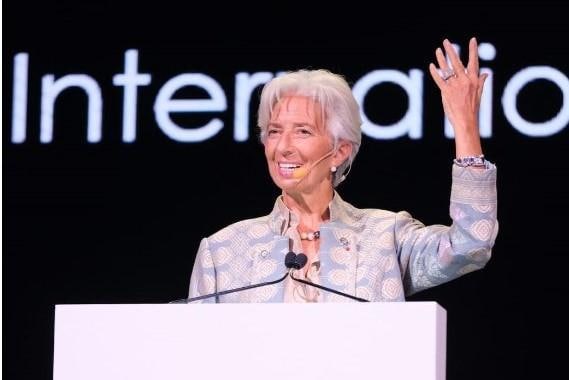
After claiming that bitcoin (BTC) is highly volatile, illiquid and speculative, Christine Lagarde, President of the European Central bank, now called for global regulation of this most popular cryptocurrency.
“(Bitcoin) is a highly speculative asset, which has conducted some funny business and some interesting and totally reprehensible money laundering activity,” Lagarde said at the Reuters Next conference today, as reported by this news agency.
According to William Mougayar, an entrepreneur, investor, blockchain researcher, and advisor, these statements by Lagarde are an "ultimate display of misunderstanding cryptocurrencies potential."
"Bitcoin & crypto are already regulated by proxy. Anti-money laundering applies to everything, and while many financial instruments are speculative, none are more transformative than cryptocurrencies," he tweeted, while one of his followers replied that "they understand cryptos absolutely. They are just feared of it because they can't put the money in their own pocket like taxes or other donations."
In either case, as legendary investor and BTC bull Paul Tudor Jones warned recently, as cryptoassets fight a bloody battle for survival and the top, the authorities will, as they did before, lead their own fight against private cryptocurrencies.
Meanwhile, the ECB’s Governing Council is exploring the possibility of issuing a new central bank digital currency (CBDC), a digital euro, in an attempt to respond to the accelerating trend toward digitization in payments. Also, a recent paper authored by a group of economists and policymakers from the ECB stated that introducing “a CBDC sooner rather than later could give rise to a significant first-mover advantage to its issuer.”
After claiming that bitcoin (BTC) is highly volatile, illiquid and speculative, Christine Lagarde, President of the European Central bank, now called for global regulation of this most popular cryptocurrency.
“(Bitcoin) is a highly speculative asset, which has conducted some funny business and some interesting and totally reprehensible money laundering activity,” Lagarde said at the Reuters Next conference today, as reported by this news agency.
According to William Mougayar, an entrepreneur, investor, blockchain researcher, and advisor, these statements by Lagarde are an "ultimate display of misunderstanding cryptocurrencies potential."
"Bitcoin & crypto are already regulated by proxy. Anti-money laundering applies to everything, and while many financial instruments are speculative, none are more transformative than cryptocurrencies," he tweeted, while one of his followers replied that "they understand cryptos absolutely. They are just feared of it because they can't put the money in their own pocket like taxes or other donations."
In either case, as legendary investor and BTC bull Paul Tudor Jones warned recently, as cryptoassets fight a bloody battle for survival and the top, the authorities will, as they did before, lead their own fight against private cryptocurrencies.
Meanwhile, the ECB’s Governing Council is exploring the possibility of issuing a new central bank digital currency (CBDC), a digital euro, in an attempt to respond to the accelerating trend toward digitization in payments. Also, a recent paper authored by a group of economists and policymakers from the ECB stated that introducing “a CBDC sooner rather than later could give rise to a significant first-mover advantage to its issuer.”
Associated Gas Pilot Could Lead to Huge Boon for Russian Bitcoin Miners.
Russian Bitcoin (BTC) miners could be in for a massive, unexpected environmentally friendly windfall if a pilot leads the nation’s energy giants to embrace crypto mining en masse.
Further details have been unveiled about a plant operated by the oil arm of Gazprom, Gazprom Neft, which late last year invited miners to set up shop at an oilfield in the Khanty-Mansi region. The miners have been at work with a month-long Bitcoin mining effort.
Pumping oil from fields like these produces associate gas – not the intended target of the oil extraction.
Typically, such gas is flared – essentially just burned up – releasing pollutants into the atmosphere. But associated gas can also be converted on-site into electrical energy. And given the fact that the Khanty-Mansi region is located conveniently (from a mining perspective) in Western Siberia, famous for its icy winters, cooling costs are also low in the region.
The pilot, per Ugra-News, is seeing Gazprom Neft provide enough power to allow a setup of 150 Antminer ASIC S9 devices to mine a haul of BTC 1.8 (USD 64,000) in the space of a month, using power provided by 49,500 cubic meters of associate gas. The Gazprom subsidiary carried out the energy conversion process.
The media outlet says that “preliminary estimates” from 2020 show that in 2020 about 34 billion cubic meters of associated gas were produced in the region last year.
The miners at the oilfield paid “less than USD 0.04” per kW of energy. Businesses typically pay at least double that amount for electricity on average elsewhere in the country, according to Global Petrol Prices data.
But the ramifications of the pilot could be even bigger, as the pilot is in its early stages and there are at least nine such oilfields in the region. The media outlet quotes Natalya Komarova, the long-serving Governor of the Khanty-Mansiysk Autonomous Okrug, and a former MP, as stating,
“The region has several competitive advantages for hosting [crypto miners]. Among the favorable factors are low air temperature, which significantly reduces energy consumption, the availability of land plots that meet the basic requirements for the location of [mining] centers, a system of telecommunications and transport infrastructure.”
The pilot also has support in parliament from the likes of Pavel Zavalny the chairman of the parliamentary energy committee – a man who also happens to be the President of the Russian Gas Society. Zavalny was quoted as saying, albeit with several caveats about other potential uses of crypto and tokens’ legal status,
“Crypto mining is one of the ways to monetize cheap electricity where there is a surplus, or where the cost of electricity production is higher than market prices. In this case, it is economically more expedient to monetize bitcoin and exchange it for material goods in exchange. This is a competitive way to monetize the electricity generated.”
Russian Bitcoin (BTC) miners could be in for a massive, unexpected environmentally friendly windfall if a pilot leads the nation’s energy giants to embrace crypto mining en masse.
Further details have been unveiled about a plant operated by the oil arm of Gazprom, Gazprom Neft, which late last year invited miners to set up shop at an oilfield in the Khanty-Mansi region. The miners have been at work with a month-long Bitcoin mining effort.
Pumping oil from fields like these produces associate gas – not the intended target of the oil extraction.
Typically, such gas is flared – essentially just burned up – releasing pollutants into the atmosphere. But associated gas can also be converted on-site into electrical energy. And given the fact that the Khanty-Mansi region is located conveniently (from a mining perspective) in Western Siberia, famous for its icy winters, cooling costs are also low in the region.
The pilot, per Ugra-News, is seeing Gazprom Neft provide enough power to allow a setup of 150 Antminer ASIC S9 devices to mine a haul of BTC 1.8 (USD 64,000) in the space of a month, using power provided by 49,500 cubic meters of associate gas. The Gazprom subsidiary carried out the energy conversion process.
The media outlet says that “preliminary estimates” from 2020 show that in 2020 about 34 billion cubic meters of associated gas were produced in the region last year.
The miners at the oilfield paid “less than USD 0.04” per kW of energy. Businesses typically pay at least double that amount for electricity on average elsewhere in the country, according to Global Petrol Prices data.
But the ramifications of the pilot could be even bigger, as the pilot is in its early stages and there are at least nine such oilfields in the region. The media outlet quotes Natalya Komarova, the long-serving Governor of the Khanty-Mansiysk Autonomous Okrug, and a former MP, as stating,
“The region has several competitive advantages for hosting [crypto miners]. Among the favorable factors are low air temperature, which significantly reduces energy consumption, the availability of land plots that meet the basic requirements for the location of [mining] centers, a system of telecommunications and transport infrastructure.”
The pilot also has support in parliament from the likes of Pavel Zavalny the chairman of the parliamentary energy committee – a man who also happens to be the President of the Russian Gas Society. Zavalny was quoted as saying, albeit with several caveats about other potential uses of crypto and tokens’ legal status,
“Crypto mining is one of the ways to monetize cheap electricity where there is a surplus, or where the cost of electricity production is higher than market prices. In this case, it is economically more expedient to monetize bitcoin and exchange it for material goods in exchange. This is a competitive way to monetize the electricity generated.”

Hong Kong Crypto Robbers Strike Again: Gang Makes off with 450k Tether Haul.
Trading crypto in person is becoming increasingly risky in Hong Kong – with a second trader this month robbed by violent thugs after agreeing to swap cash for tokens offline.
Per the South China Morning Post and Apple Daily’s Hong Kong site, the latest victim was attempting to make an offline tether (USDT) transaction worth some USD 0.45m in the busy Chong Yip Street.
The media outlets stated that a female trader had sold a man USDT in two previous transactions worth around USD 77,000 and USD 90,000 each in previous transactions and had arranged for her uncle to wait outside an office building on the street while she conducted the third – much bigger – deal.
But instead, when she met the man for the third time, she received the nastiest of surprises, when she reportedly came face-to-face with a gang of three “20- to 30-year-old” thugs armed “with knives and sticks” who robbed her of the cash the man had given her in exchange for her USDT 450,000 transfer, as well as her mobile phone.
The man then forced her into an empty office room and locked her inside, although she was reportedly otherwise unharmed when police arrived on the scene.
The violent incident comes just days after a 37-year-old male bitcoin (BTC) seller in the equally busy Chai Wan district was locked into a car by a gang of men also led by a bogus buyer. The man was eventually bundled out of the car – but not before surrendering BTC 15 (around USD 558,000) and his mobile phone to the raiders.
Trading crypto in person is becoming increasingly risky in Hong Kong – with a second trader this month robbed by violent thugs after agreeing to swap cash for tokens offline.
Per the South China Morning Post and Apple Daily’s Hong Kong site, the latest victim was attempting to make an offline tether (USDT) transaction worth some USD 0.45m in the busy Chong Yip Street.
The media outlets stated that a female trader had sold a man USDT in two previous transactions worth around USD 77,000 and USD 90,000 each in previous transactions and had arranged for her uncle to wait outside an office building on the street while she conducted the third – much bigger – deal.
But instead, when she met the man for the third time, she received the nastiest of surprises, when she reportedly came face-to-face with a gang of three “20- to 30-year-old” thugs armed “with knives and sticks” who robbed her of the cash the man had given her in exchange for her USDT 450,000 transfer, as well as her mobile phone.
The man then forced her into an empty office room and locked her inside, although she was reportedly otherwise unharmed when police arrived on the scene.
The violent incident comes just days after a 37-year-old male bitcoin (BTC) seller in the equally busy Chai Wan district was locked into a car by a gang of men also led by a bogus buyer. The man was eventually bundled out of the car – but not before surrendering BTC 15 (around USD 558,000) and his mobile phone to the raiders.

First Grey Hat Hackers Ideas Competition 🚀🚀🚀
The high-profile event in 2021!🤩 Mr Leo Andreo leads the Hacken community in organizing the First Grey Hat Hackers Ideas Competition 🔥
🏆 The prize pool will be 35,000 USD.
The leading cybersecurity company Hacken will support the community’s initiative First Grey Hat Hackers Ideas Competition by providing 50% of the prize pool and applying its expertise at the ideas’ valuation stage.
Submit your product or service idea and get the attention you deserve by winning the competition! Who knows, maybe your project will become the next great sensation!
The high-profile event in 2021!🤩 Mr Leo Andreo leads the Hacken community in organizing the First Grey Hat Hackers Ideas Competition 🔥
🏆 The prize pool will be 35,000 USD.
The leading cybersecurity company Hacken will support the community’s initiative First Grey Hat Hackers Ideas Competition by providing 50% of the prize pool and applying its expertise at the ideas’ valuation stage.
Submit your product or service idea and get the attention you deserve by winning the competition! Who knows, maybe your project will become the next great sensation!

Bitcoin Spikes Above USD 32K as MicroStrategy Boosts Morale With a New Deal.
The world's number one crypto moved up and above USD 32,000 again as US-based business intelligence company MicroStrategy revealed its relatively small USD 10m bitcoin (BTC) deal.
On Friday afternoon, 14:37 UTC, bitcoin climbed from the USD 29,400 level to which it had dropped earlier in the day, and is trading at USD 32,565, after it appreciated almost 3% in the last day. It dropped 12% over the course of the past week, and went up nearly 37% in a month.
This rise comes as MicroStrategy’s CEO Michael Saylor announced that the company made an additional purchase of bitcoin: they bought approximately BTC 314 for USD 10m in cash in accordance with its Treasury Reserve Policy, at an average price of approximately USD 31,808 per bitcoin, said the CEO. BTC trading volume reached USD 62.77bn in the past 24 hours.
He added that MicroStrategy now holds approximately BTC 70,784, which at the current price translates to the value of USD 2.3bn.
In December last year, MicroStrategy confirmed it raised USD 650m by selling convertible senior notes due 2025 in order to buy more bitcoin. By that point, the company had already acquired approximately BTC 40,824. Meanwhile, in October, MicroStrategy’s CEO Michael Saylor revealed that he spent around USD 175m on his personal BTC stash.
The Cryptoverse was quick to comment on this major purchase. "Seems like a lot of people don't get it," argued popular BTC enthusiast and investor WhalePanda. "You keep selling your Bitcoin to large institutional investors on every dip hoping we'll go back down to USD 20k or lower. That's not going to happen. Make them all market buy."
The world's number one crypto moved up and above USD 32,000 again as US-based business intelligence company MicroStrategy revealed its relatively small USD 10m bitcoin (BTC) deal.
On Friday afternoon, 14:37 UTC, bitcoin climbed from the USD 29,400 level to which it had dropped earlier in the day, and is trading at USD 32,565, after it appreciated almost 3% in the last day. It dropped 12% over the course of the past week, and went up nearly 37% in a month.
This rise comes as MicroStrategy’s CEO Michael Saylor announced that the company made an additional purchase of bitcoin: they bought approximately BTC 314 for USD 10m in cash in accordance with its Treasury Reserve Policy, at an average price of approximately USD 31,808 per bitcoin, said the CEO. BTC trading volume reached USD 62.77bn in the past 24 hours.
He added that MicroStrategy now holds approximately BTC 70,784, which at the current price translates to the value of USD 2.3bn.
In December last year, MicroStrategy confirmed it raised USD 650m by selling convertible senior notes due 2025 in order to buy more bitcoin. By that point, the company had already acquired approximately BTC 40,824. Meanwhile, in October, MicroStrategy’s CEO Michael Saylor revealed that he spent around USD 175m on his personal BTC stash.
The Cryptoverse was quick to comment on this major purchase. "Seems like a lot of people don't get it," argued popular BTC enthusiast and investor WhalePanda. "You keep selling your Bitcoin to large institutional investors on every dip hoping we'll go back down to USD 20k or lower. That's not going to happen. Make them all market buy."

New Exchange To Offer Sharia-Compliant Bitcoin, Ethereum, XRP Trading.
The Central Bank of Bahrain (CBB) has issued a license to CoinMENA, a Bahrain-headquartered new crypto exchange preparing for its launch, allowing the business to offer its services across the region in compliance with the Sharia law. CoinMENA aims to make its platform available in Bahrain, as well as the UAE, Saudi Arabia, Kuwait, and Oman.
The exchange said it will offer bitcoin (BTC), ethereum (ETH), XRP, litecoin (LTC), and bitcoin cash (BCH).
“As CoinMENA grows, we will be providing access to additional digital assets and expanding the jurisdictions we operate in, with the view of becoming one of the leading digital assets exchanges on a global scale,” Dina Sam’an, Co-Founder and Managing Director of CoinMENA, was quoted as saying in an announcement. The company aims to launch the platform "soon."
The CBB has issued a Category 2 Crypto Asset Services Company License to the company which states that the exchange complies with the rules of Sharia, or Islamic law. This paves the way for the platform in a number of Middle Eastern markets where Islamic finance dominate’s their economic landscapes. The sharing of profit and loss, and the ban on the collection and payment of interest are two of the foundations of Islamic banking.
“Each transaction must be related to a real underlying economic transaction,” according to an analysis by the Vancouver-based Corporate Finance Institute. “Parties entering into the contracts in Islamic finance share profit/loss and risks associated with the transaction. No one can benefit from the transaction more than the other party.”
By expanding cryptocurrency trade into the world of Islamic finance, CoinMENA could tap into a market that was estimated to be worth about USD 2.1tn last year, according to a report released by S&P Global. Islamic finance has a strong foothold in the Middle East, but is also growing in other regions of the world with significant Muslim populations.
“Sharia-compliant assets represent 14% of total banking assets in the Middle East, North Africa, and South Asia region and 25% of banking assets in the Gulf Cooperation Council region, suggesting that Islamic banking continues to be systemically important in these countries,” according to the report.
The Central Bank of Bahrain (CBB) has issued a license to CoinMENA, a Bahrain-headquartered new crypto exchange preparing for its launch, allowing the business to offer its services across the region in compliance with the Sharia law. CoinMENA aims to make its platform available in Bahrain, as well as the UAE, Saudi Arabia, Kuwait, and Oman.
The exchange said it will offer bitcoin (BTC), ethereum (ETH), XRP, litecoin (LTC), and bitcoin cash (BCH).
“As CoinMENA grows, we will be providing access to additional digital assets and expanding the jurisdictions we operate in, with the view of becoming one of the leading digital assets exchanges on a global scale,” Dina Sam’an, Co-Founder and Managing Director of CoinMENA, was quoted as saying in an announcement. The company aims to launch the platform "soon."
The CBB has issued a Category 2 Crypto Asset Services Company License to the company which states that the exchange complies with the rules of Sharia, or Islamic law. This paves the way for the platform in a number of Middle Eastern markets where Islamic finance dominate’s their economic landscapes. The sharing of profit and loss, and the ban on the collection and payment of interest are two of the foundations of Islamic banking.
“Each transaction must be related to a real underlying economic transaction,” according to an analysis by the Vancouver-based Corporate Finance Institute. “Parties entering into the contracts in Islamic finance share profit/loss and risks associated with the transaction. No one can benefit from the transaction more than the other party.”
By expanding cryptocurrency trade into the world of Islamic finance, CoinMENA could tap into a market that was estimated to be worth about USD 2.1tn last year, according to a report released by S&P Global. Islamic finance has a strong foothold in the Middle East, but is also growing in other regions of the world with significant Muslim populations.
“Sharia-compliant assets represent 14% of total banking assets in the Middle East, North Africa, and South Asia region and 25% of banking assets in the Gulf Cooperation Council region, suggesting that Islamic banking continues to be systemically important in these countries,” according to the report.

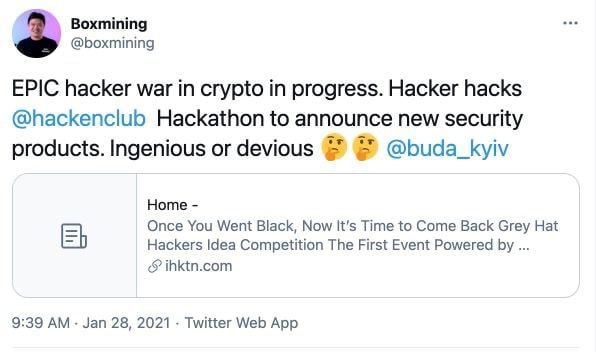
‼️The First Grey Hats Ideas Competition hackathon received hackers' attention. The event's website, organized by the members of Hacken community with support from Hacken team, was hacked.
Company reports that access has been restored and user data is not affected. It was discovered, however, that hackers left a message, announcing their plans to create a project focused on improving DeFi products' security.
Company's representative reached out to hackers, expressing their interest in this project.
Official satatement from Hacken: https://hacken.io/hacken-news/official-statement-regarding-the-hacking-of-the-first-grey-hats-ideas-competition-site/
Company reports that access has been restored and user data is not affected. It was discovered, however, that hackers left a message, announcing their plans to create a project focused on improving DeFi products' security.
Company's representative reached out to hackers, expressing their interest in this project.
Official satatement from Hacken: https://hacken.io/hacken-news/official-statement-regarding-the-hacking-of-the-first-grey-hats-ideas-competition-site/
Crypto Fans 'LOL' At BIS GM Claims that Bitcoin 'May Break Down'.
The crypto community has reacted with incredulity after a senior Mexican economist and the boss of the Bank for International Settlements (BIS) appeared to dismiss the notion of decentralized digital currencies such as bitcoin (BTC).
In a recent speech, Agustín Carstens, the General Manager of the BIS and the former Governor of the central Bank of Mexico, claimed that central bank digital currencies (CBDCs) would roll out in the next three years, and called BTC a risky investment – adding that the token might ultimately fail.
He said,
“Investors must be cognisant that Bitcoin may well break down altogether. Scarcity and cryptography alone do not suffice to guarantee exchange.”
Carstens added that “bitcoin is increasingly vulnerable” as “other tokens already have been majority attacked,” giving examples of smaller altcoin tokens that have been the target of attempted 51% attacks.
But his remarks have sparked a Twitter storm, with crypto fans rushing to the defense of the token.
As reported, as the world’s central banks are increasingly looking into CBDC projects, their focus is shifting into more advanced stages of CBDC engagement, with more banks moving from conceptual work to experimentation.
Meanwhile, popular Bitcoin podcaster Stephan Livera bristled, “Central banks, created and supported by the government, are antithetical to the very idea of sound money.”
Some agreed wholeheartedly with this sentiment, writing that it was “fascinating to see” the BIS talk about "sound money" in the “context of digital currencies.”
Saifedean Ammous, the author of The Bitcoin Standard, wrote that “sound money” was “still a completely nonsensical marketing buzzword” on the lips of the BIS, adding,
The crypto community has reacted with incredulity after a senior Mexican economist and the boss of the Bank for International Settlements (BIS) appeared to dismiss the notion of decentralized digital currencies such as bitcoin (BTC).
In a recent speech, Agustín Carstens, the General Manager of the BIS and the former Governor of the central Bank of Mexico, claimed that central bank digital currencies (CBDCs) would roll out in the next three years, and called BTC a risky investment – adding that the token might ultimately fail.
He said,
“Investors must be cognisant that Bitcoin may well break down altogether. Scarcity and cryptography alone do not suffice to guarantee exchange.”
Carstens added that “bitcoin is increasingly vulnerable” as “other tokens already have been majority attacked,” giving examples of smaller altcoin tokens that have been the target of attempted 51% attacks.
But his remarks have sparked a Twitter storm, with crypto fans rushing to the defense of the token.
As reported, as the world’s central banks are increasingly looking into CBDC projects, their focus is shifting into more advanced stages of CBDC engagement, with more banks moving from conceptual work to experimentation.
Meanwhile, popular Bitcoin podcaster Stephan Livera bristled, “Central banks, created and supported by the government, are antithetical to the very idea of sound money.”
Some agreed wholeheartedly with this sentiment, writing that it was “fascinating to see” the BIS talk about "sound money" in the “context of digital currencies.”
Saifedean Ammous, the author of The Bitcoin Standard, wrote that “sound money” was “still a completely nonsensical marketing buzzword” on the lips of the BIS, adding,

Global Uncertainty Drops But Is Still 50% Above Historical Average.
Global uncertainty reached unprecedented levels at the beginning of the COVID-19 outbreak and remains elevated. The World Uncertainty Index—a quarterly measure of global economic and policy uncertainty covering 143 countries—shows that although uncertainty has come down by about 60 percent from the peak observed at the onset of the COVID-19 pandemic in the first quarter of 2020, it remains about 50 percent above its historical average during the 1996–2010 period.
What drives global uncertainty?
Economic growth in key systemic economies, like those of the United States and European Union, is a key driver of economic activity in the rest of the world. Is this also true when it comes to global uncertainty? For example, given the higher interconnectedness across countries, should we expect that uncertainty from the US election, Brexit, or China-US trade tensions spill over and affect uncertainty in other countries?
To answer this question, we construct an index that measures the extent of “uncertainty spillovers” from key systemic economies—the Group of 7 (G7) countries plus China—to the rest of the world. In particular, we identify uncertainty spillovers from systemic economies by text mining the Economist Intelligence Unit country reports, covering 143 countries from the first quarter of 1996 to the fourth quarter of 2020.
Uncertainty spillovers from each of the systemic economies are measured by the frequency that the word “uncertainty” is mentioned in the reports in proximity to a word related to the respective systemic-economy country. Specifically, for each country and quarter, we search the country reports for the words “uncertain,” “uncertainty,” and “uncertainties” appearing near words related to each country. The country-specific words include country’s name, name of presidents, name of the central bank, name of central bank governors, and selected country’s major events (such as Brexit).
Global uncertainty reached unprecedented levels at the beginning of the COVID-19 outbreak and remains elevated. The World Uncertainty Index—a quarterly measure of global economic and policy uncertainty covering 143 countries—shows that although uncertainty has come down by about 60 percent from the peak observed at the onset of the COVID-19 pandemic in the first quarter of 2020, it remains about 50 percent above its historical average during the 1996–2010 period.
What drives global uncertainty?
Economic growth in key systemic economies, like those of the United States and European Union, is a key driver of economic activity in the rest of the world. Is this also true when it comes to global uncertainty? For example, given the higher interconnectedness across countries, should we expect that uncertainty from the US election, Brexit, or China-US trade tensions spill over and affect uncertainty in other countries?
To answer this question, we construct an index that measures the extent of “uncertainty spillovers” from key systemic economies—the Group of 7 (G7) countries plus China—to the rest of the world. In particular, we identify uncertainty spillovers from systemic economies by text mining the Economist Intelligence Unit country reports, covering 143 countries from the first quarter of 1996 to the fourth quarter of 2020.
Uncertainty spillovers from each of the systemic economies are measured by the frequency that the word “uncertainty” is mentioned in the reports in proximity to a word related to the respective systemic-economy country. Specifically, for each country and quarter, we search the country reports for the words “uncertain,” “uncertainty,” and “uncertainties” appearing near words related to each country. The country-specific words include country’s name, name of presidents, name of the central bank, name of central bank governors, and selected country’s major events (such as Brexit).

Ethereum Eyes USD 1,600, Bitcoin and Altcoins Could Keep Rising.
Bitcoin price remained well bid after it broke the USD 35,500 and USD 36,000 resistance levels. BTC even spiked towards USD 36,800 before correcting lower. It is currently (13:00 UTC) approaching USD 36,000, but there are chances of a fresh rise towards USD 37,000.
Similarly, most major altcoins are trading in a bullish zone. ETH/USD traded to a new all-time high near USD 1,570 before correcting to USD 1,540. XRP/USD seems to be facing a strong resistance near USD 0.392 and USD 0.400.
Bitcoin price
There was an upside extension in bitcoin price above the USD 36,000 resistance. BTC even made an attempt to surpass USD 37,000, but there was no follow through above USD 36,800. The price corrected lower and traded below USD 36,500. The first key support is near the USD 36,000 level, followed by the USD 35,500 pivot level.
As long as the price is above USD 35,500 and USD 35,500, it could continue to rise. The main resistance is now near USD 37,000, above which it could revisit the USD 38,000 hurdle.
Ethereum price
Ethereum price gained momentum above the USD 1,500 level and it even broke the USD 1,550 level. ETH traded to a new all-time high near USD 1,570 and it is currently correcting lower. An initial support is near the USD 1,520 level. The key support is now forming near the USD 1,500 level.
On the upside, the USD 1,565 and USD 1,570 levels are short-term hurdles. The bulls might test the USD 1,600 level in the near term.
Bitcoin cash, litecoin and XRP price
Bitcoin cash price is holding gains above USD 430, but it struggling to clear the USD 445 and USD 450 resistance levels. If there is a fresh bearish wave, the USD 425 level might provide support. Any more losses could lead the price towards the USD 405 support zone.
Litecoin (LTC) traded as high as USD 155 and it is consolidating gains near USD 150. If there is a downside correction, the previous resistance near USD 142 and USD 140 might provide support. On the upside, a clear break above the USD 155 resistance could open the doors for a move towards the USD 165 and USD 170 levels.
XRP price made an attempt to gain strength above the USD 0.492 resistance, but it failed. It is currently correcting lower towards the USD 0.465 support. As long as there is no close below USD 0.350, the price might make another attempt to surpass the USD 0.400 resistance zone.
Other altcoins market today
A few altcoins climbed over 8%, including FTM, UMA, SC, LUNA, MANA, OMG, SUSHI, NEAR, DASH, CHSB, AAVE, HEDG, and BTT. Out of these, SC is gaining momentum and it might test the USD 0.010 level.
To sum up, bitcoin price is trading in a bullish zone above USD 35,500 and USD 35,000. The overall price action suggests BTC could soon test USD 37,000.
Bitcoin price remained well bid after it broke the USD 35,500 and USD 36,000 resistance levels. BTC even spiked towards USD 36,800 before correcting lower. It is currently (13:00 UTC) approaching USD 36,000, but there are chances of a fresh rise towards USD 37,000.
Similarly, most major altcoins are trading in a bullish zone. ETH/USD traded to a new all-time high near USD 1,570 before correcting to USD 1,540. XRP/USD seems to be facing a strong resistance near USD 0.392 and USD 0.400.
Bitcoin price
There was an upside extension in bitcoin price above the USD 36,000 resistance. BTC even made an attempt to surpass USD 37,000, but there was no follow through above USD 36,800. The price corrected lower and traded below USD 36,500. The first key support is near the USD 36,000 level, followed by the USD 35,500 pivot level.
As long as the price is above USD 35,500 and USD 35,500, it could continue to rise. The main resistance is now near USD 37,000, above which it could revisit the USD 38,000 hurdle.
Ethereum price
Ethereum price gained momentum above the USD 1,500 level and it even broke the USD 1,550 level. ETH traded to a new all-time high near USD 1,570 and it is currently correcting lower. An initial support is near the USD 1,520 level. The key support is now forming near the USD 1,500 level.
On the upside, the USD 1,565 and USD 1,570 levels are short-term hurdles. The bulls might test the USD 1,600 level in the near term.
Bitcoin cash, litecoin and XRP price
Bitcoin cash price is holding gains above USD 430, but it struggling to clear the USD 445 and USD 450 resistance levels. If there is a fresh bearish wave, the USD 425 level might provide support. Any more losses could lead the price towards the USD 405 support zone.
Litecoin (LTC) traded as high as USD 155 and it is consolidating gains near USD 150. If there is a downside correction, the previous resistance near USD 142 and USD 140 might provide support. On the upside, a clear break above the USD 155 resistance could open the doors for a move towards the USD 165 and USD 170 levels.
XRP price made an attempt to gain strength above the USD 0.492 resistance, but it failed. It is currently correcting lower towards the USD 0.465 support. As long as there is no close below USD 0.350, the price might make another attempt to surpass the USD 0.400 resistance zone.
Other altcoins market today
A few altcoins climbed over 8%, including FTM, UMA, SC, LUNA, MANA, OMG, SUSHI, NEAR, DASH, CHSB, AAVE, HEDG, and BTT. Out of these, SC is gaining momentum and it might test the USD 0.010 level.
To sum up, bitcoin price is trading in a bullish zone above USD 35,500 and USD 35,000. The overall price action suggests BTC could soon test USD 37,000.
Bitcoin Returns Above USD 40,000 In Less Than A Month.
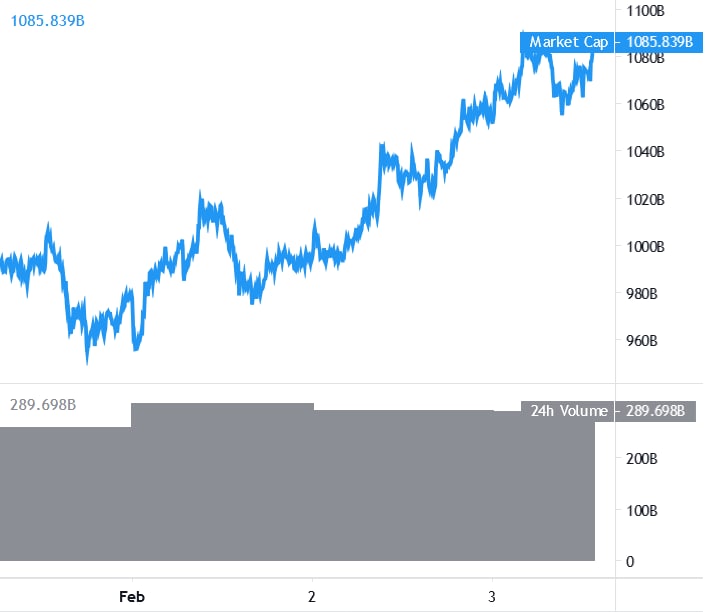
The most popular cryptocurrency, bitcoin (BTC), rallied on Saturday, moving back above the USD 40,000 level for the first time in almost a month.
At the same time, other major cryptoassets are showing mixed results. After its recent rally to its new all-time high of USD 1,754 reached yesterday, ethereum (ETH) is down by 1% in a day, trading at USD 1,694. However it outperformed BTC in a week, increasing by 22%. Binance coin (BNB) is the best performer today as its price rallied by 25%, and jumped 73% in a week.
"Bitcoin and ethereum inflows to exchanges have declined slightly, with 7 day average inflows below the 30 day average, reducing sell pressure. Trade intensity has also declined slightly, which typically suggests buy pressure is reducing. However, for bitcoin at least, it is still high relative to the past," Philip Gradwell, Chief Economist at Chainalysis, wrote in his weekly report on Friday.
According to him, people cashing out after making a 25% or more USD gain has also declined since the large increase in the first week of January, suggesting people continue to hold despite their potential gains, now that some profit was taken following the price gains over the holiday period.
The most popular cryptocurrency, bitcoin (BTC), rallied on Saturday, moving back above the USD 40,000 level for the first time in almost a month.
At the same time, other major cryptoassets are showing mixed results. After its recent rally to its new all-time high of USD 1,754 reached yesterday, ethereum (ETH) is down by 1% in a day, trading at USD 1,694. However it outperformed BTC in a week, increasing by 22%. Binance coin (BNB) is the best performer today as its price rallied by 25%, and jumped 73% in a week.
"Bitcoin and ethereum inflows to exchanges have declined slightly, with 7 day average inflows below the 30 day average, reducing sell pressure. Trade intensity has also declined slightly, which typically suggests buy pressure is reducing. However, for bitcoin at least, it is still high relative to the past," Philip Gradwell, Chief Economist at Chainalysis, wrote in his weekly report on Friday.
According to him, people cashing out after making a 25% or more USD gain has also declined since the large increase in the first week of January, suggesting people continue to hold despite their potential gains, now that some profit was taken following the price gains over the holiday period.

Fed-Published DeFi Study By a European Professor Boosts Industry Morale.
Decentralized Finance (DeFi) remains a niche market, but its efficiency, transparency, accessibility, and composability make for interesting characteristics, enabling it to potentially contribute to a more robust and transparent global financial infrastructure, according to a study published by the St. Louis branch of the US Federal Reserve (Fed).
However, it is written not by the Fed but by Fabian Schär, Professor of distributed ledger technologies and fintech and Managing Director of the Center for Innovative Finance at the Faculty of Business and Economics of Switzerland’s University of Basel.
“DeFi still is a niche market with relatively low volumes — however, these numbers are growing rapidly. The value of funds that are locked in DeFi-related smart contracts recently crossed 10 billion USD,” the author said.
“The spectacular growth of these assets alongside some truly innovative protocols suggests that DeFi may become relevant in a much broader context and has sparked interest among policymakers, researchers, and financial institutions.”
Also, in his research, Schär used a multi-layered framework to analyze DeFi’s architecture and building blocks. These include token standards, decentralized exchanges, decentralized debt markets, blockchain derivatives, as well as on-chain asset management protocols. The framework enabled him to highlight the opportunities and potential risks within the DeFi ecosystem.
“DeFi has unleashed a wave of innovation. On the one hand, developers are using smart contracts and the decentralized settlement layer to create trustless versions of traditional financial instruments. On the other hand, they are creating entirely new financial instruments that could not be realized without the underlying public blockchain,” according to the paper. “Atomic swaps, autonomous liquidity pools, decentralized stablecoins, and flash loans are just a few of many examples that show the great potential of this ecosystem.”
This said, the researcher recognized that, while “this technology has great potential, there are certain risks involved. Smart contracts can have security issues that may allow for unintended usage, and scalability issues limit the number of users.”
eanwhile, the paper is already echoing through the cryptosphere, triggering the enthusiasm of various industry representatives, including Jay Hao, CEO of crypto exchange OKEx who called the study “the gem of the day”. Others, such as a DeFi investor who tweets as Arthur, admitted they “didn't expect it to come this early”.
Some industry observers even claimed that the study’s publication could indicate a forthcoming re-orientation in the Fed’s conservative approach to DeFi.
“Someone at the Fed had to accept the article for publication. Someone at the Fed decided it was adequately reviewed. The St. Louis Fed is promoting the article through its Twitter feed. Don’t downplay it too much,” a user who goes by the name Notorious PtG, replied to a remark that the Fed is not the author of the report.
Decentralized Finance (DeFi) remains a niche market, but its efficiency, transparency, accessibility, and composability make for interesting characteristics, enabling it to potentially contribute to a more robust and transparent global financial infrastructure, according to a study published by the St. Louis branch of the US Federal Reserve (Fed).
However, it is written not by the Fed but by Fabian Schär, Professor of distributed ledger technologies and fintech and Managing Director of the Center for Innovative Finance at the Faculty of Business and Economics of Switzerland’s University of Basel.
“DeFi still is a niche market with relatively low volumes — however, these numbers are growing rapidly. The value of funds that are locked in DeFi-related smart contracts recently crossed 10 billion USD,” the author said.
“The spectacular growth of these assets alongside some truly innovative protocols suggests that DeFi may become relevant in a much broader context and has sparked interest among policymakers, researchers, and financial institutions.”
Also, in his research, Schär used a multi-layered framework to analyze DeFi’s architecture and building blocks. These include token standards, decentralized exchanges, decentralized debt markets, blockchain derivatives, as well as on-chain asset management protocols. The framework enabled him to highlight the opportunities and potential risks within the DeFi ecosystem.
“DeFi has unleashed a wave of innovation. On the one hand, developers are using smart contracts and the decentralized settlement layer to create trustless versions of traditional financial instruments. On the other hand, they are creating entirely new financial instruments that could not be realized without the underlying public blockchain,” according to the paper. “Atomic swaps, autonomous liquidity pools, decentralized stablecoins, and flash loans are just a few of many examples that show the great potential of this ecosystem.”
This said, the researcher recognized that, while “this technology has great potential, there are certain risks involved. Smart contracts can have security issues that may allow for unintended usage, and scalability issues limit the number of users.”
eanwhile, the paper is already echoing through the cryptosphere, triggering the enthusiasm of various industry representatives, including Jay Hao, CEO of crypto exchange OKEx who called the study “the gem of the day”. Others, such as a DeFi investor who tweets as Arthur, admitted they “didn't expect it to come this early”.
Some industry observers even claimed that the study’s publication could indicate a forthcoming re-orientation in the Fed’s conservative approach to DeFi.
“Someone at the Fed had to accept the article for publication. Someone at the Fed decided it was adequately reviewed. The St. Louis Fed is promoting the article through its Twitter feed. Don’t downplay it too much,” a user who goes by the name Notorious PtG, replied to a remark that the Fed is not the author of the report.

PwC Chief: Mexican Companies Want to Follow Tesla into Bitcoin Investment.
Mexican companies are developing an interest in following the lead of companies north of the border – and could seek to emulate the bitcoin (BTC)-buying leads of United States-based companies like Tesla.
These were the conclusions of a report from El Economista, which quoted Mauricio Hurtado, managing partner of PwC Mexico as stating that Mexican firms were now keen to climb aboard the bitcoin bandwagon.
Hurtado claimed that while in the past firms were concerned that a lack of regulatory oversight body made crypto too risky as an investment asset, things have changed in recent times – and added that many feel they simply cannot afford to stay out of “what is happening” around them.
He claimed that Mexican firms’ confidence in crypto investment has been “raised” by other players’ transactions, with MicroStrategy and Square also active in the bitcoin-buying field, while major international banks have also made their crypto intentions clear.
And the PwC executive added that “a significant number of players” see “these currencies” as a “reliable transaction mechanism.”
He said,
“Therefore, businesses are adjusting to market realities in order to prevail and gain an advantage over their competitors. We are seeing an important change in this regard.”
Hurtado also opined that “technological changes” have made many entrepreneurs, such as Tesla’s chief Elon Musk, develop “a greater acceptance of cryptocurrencies as a means of payment in commercial transactions.”
He concluded that the trend toward crypto was something that PwC, “as a firm” was “very” aware of “in terms of market consumption patterns.”
Mexican companies are developing an interest in following the lead of companies north of the border – and could seek to emulate the bitcoin (BTC)-buying leads of United States-based companies like Tesla.
These were the conclusions of a report from El Economista, which quoted Mauricio Hurtado, managing partner of PwC Mexico as stating that Mexican firms were now keen to climb aboard the bitcoin bandwagon.
Hurtado claimed that while in the past firms were concerned that a lack of regulatory oversight body made crypto too risky as an investment asset, things have changed in recent times – and added that many feel they simply cannot afford to stay out of “what is happening” around them.
He claimed that Mexican firms’ confidence in crypto investment has been “raised” by other players’ transactions, with MicroStrategy and Square also active in the bitcoin-buying field, while major international banks have also made their crypto intentions clear.
And the PwC executive added that “a significant number of players” see “these currencies” as a “reliable transaction mechanism.”
He said,
“Therefore, businesses are adjusting to market realities in order to prevail and gain an advantage over their competitors. We are seeing an important change in this regard.”
Hurtado also opined that “technological changes” have made many entrepreneurs, such as Tesla’s chief Elon Musk, develop “a greater acceptance of cryptocurrencies as a means of payment in commercial transactions.”
He concluded that the trend toward crypto was something that PwC, “as a firm” was “very” aware of “in terms of market consumption patterns.”

The Bond King Goes From 'Bitcoin Is A Lie' To BTC 'Maybe The Stimulus Asset'.
DoubleLine Capital LP chief Jeffrey Gundlach, known as the Bond King, now says that bitcoin (BTC) "maybe The Stimulus Asset" after claiming last October that it is "a lie." (Updated at 15:01 UTC with a comment from Anthony Pompliano and a video.)
"I am a long term dollar bear and gold bull but have been neutral on both for over six months. Lots of liquid poured into a funnel creates a torrent. Bitcoin maybe The Stimulus Asset. Doesn’t look like gold is," he tweeted today.
Indeed, gold dropped by 68% vs BTC in the past 3 months and by 79% in a year. Meanwhile, USD dropped by 66% in the past 3 months and by 81% in a year.
As reported, Gundlach made a name for himself in the investment community in his former role as the head of the USD 9.3bn TCW Total Return Bond Fund, and Forbes claimed in 2018 that he was worth a cool USD 2bn. In a recent video interview, Gundlach stated that he was “not at all a bitcoin hater.” However, in the same interview, he also dropped this pearl: "I don't believe in bitcoin. I think that it's a lie. I think that it’s very tracked and traceable. I don’t think it's anonymous.” Well, he's right about this - BTC is not really anonymous and its users can be traced. But let's see how the Taproot upgrade will change this.
"The question that I keep asking myself is "how long will gold bugs hang on to their gold while they watch the digital store of value gain market adoption?" The short answer is that no one actually knows. Some people are likely to bail in the short term because of the US dollar price of bitcoin. Some people will take time to critically think about their world view and then change their mind. And a few people are more focused on being "proven right" than actually "being right," Anthony ‘Pomp’ Pompliano of Morgan Creek Digital wrote in his newsletter today.
DoubleLine Capital LP chief Jeffrey Gundlach, known as the Bond King, now says that bitcoin (BTC) "maybe The Stimulus Asset" after claiming last October that it is "a lie." (Updated at 15:01 UTC with a comment from Anthony Pompliano and a video.)
"I am a long term dollar bear and gold bull but have been neutral on both for over six months. Lots of liquid poured into a funnel creates a torrent. Bitcoin maybe The Stimulus Asset. Doesn’t look like gold is," he tweeted today.
Indeed, gold dropped by 68% vs BTC in the past 3 months and by 79% in a year. Meanwhile, USD dropped by 66% in the past 3 months and by 81% in a year.
As reported, Gundlach made a name for himself in the investment community in his former role as the head of the USD 9.3bn TCW Total Return Bond Fund, and Forbes claimed in 2018 that he was worth a cool USD 2bn. In a recent video interview, Gundlach stated that he was “not at all a bitcoin hater.” However, in the same interview, he also dropped this pearl: "I don't believe in bitcoin. I think that it's a lie. I think that it’s very tracked and traceable. I don’t think it's anonymous.” Well, he's right about this - BTC is not really anonymous and its users can be traced. But let's see how the Taproot upgrade will change this.
"The question that I keep asking myself is "how long will gold bugs hang on to their gold while they watch the digital store of value gain market adoption?" The short answer is that no one actually knows. Some people are likely to bail in the short term because of the US dollar price of bitcoin. Some people will take time to critically think about their world view and then change their mind. And a few people are more focused on being "proven right" than actually "being right," Anthony ‘Pomp’ Pompliano of Morgan Creek Digital wrote in his newsletter today.