
Henry Ford’s Energy Standard: A 100-Year Old Bitcoin Prediction.
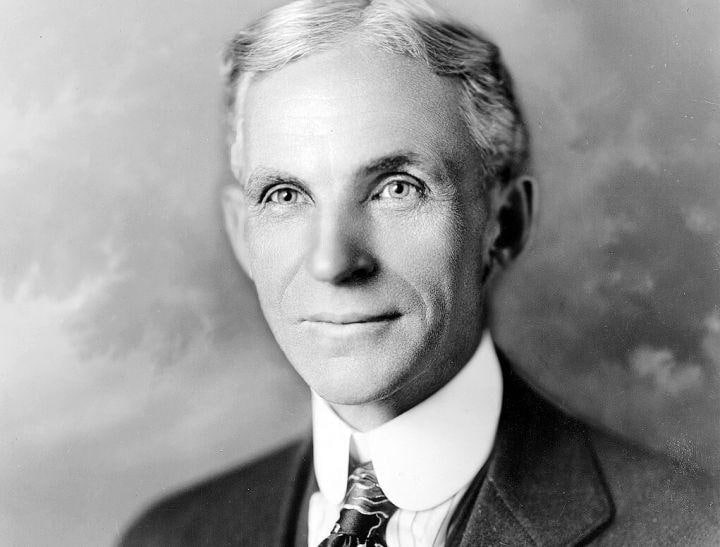
The New York Tribune published a story detailing a plan by inventor Henry Ford, founder of the Ford Motor Company, to replace the existing gold-backed currency system into one based on an “energy currency.”
This article delves into Ford’s ambitious plan and how Bitcoin (BTC) has come to be the embodiment of a 100-year-old ideal.
A historical background
The article headlined “Ford Would Replace Gold With Energy Currency And Stop Wars” detailed Ford's beliefs on a number of prevailing issues at the time, with a focus on international monetary policies and how they adversely affected the stability of the world.
Ford believed that gold was the basis of war, or rather played a major part in extending the length of wars. In 1921, the effects of the First World war were beginning to become painfully obvious across the globe. Dubbed ‘The War To End All Wars’, WW1 left over 9 million soldiers and 21 million civilians dead with many injured and others missing.
A currency backed by natural wealth?
Ford was attempting to usher in a new dispensation in global monetary policy, where countries would issue currencies backed against their natural wealth, like rivers and the like, instead of issuing currency backed by gold kept in reserves.
Ford outlined his idea at the Muscle Shoals Nitrate Plant in Tennessee. He was there to inspect it in the hope that he would be able to acquire it from the government to demonstrate the viability of his plan to the American public and the global community.
The premise behind the idea was simple, replace currency backed by gold to currency backed by natural wealth.
At the time the US government was planning to issue bonds to acquire the USD 30m needed to develop a dam. Ford, however, had an alternative idea. He proposed he would build the dam, effectively for free, if the state agreed to issue a currency backed by Muscle Shoals plant.
Muscle Shoals was built on the Wilson Dam. Ford argued that the resource would make for greater security for any currency, given its time-tested robustness. Additionally, the dam created energy, capable of furnishing a significant, if not infinite, amount of horsepower. It was this energy against which the value of the Muscle Shoals Currency would be determined.
Enter Bitcoin
Bitcoin is supported by a group of parties called miners. Miners input energy to mine new blocks on the Bitcoin blockchain. This is what gives BTC its intrinsic value and is referred to as bitcoin energy-value equivalence. In other words, the value of bitcoin can be derived or defined by the raw joules expended to create one.
Joules are a derived unit of energy and work measurement. Work is defined as the force applied to an object over a distance. 1 kWh is equivalent to 3.6 million joules. Given that we can ascertain the energy being utilized in the Bitcoin network, it is possible to compute the value in kWh of one BTC at a certain point in time, taking into account the supply growth rate at that time and the total joules expended. This is how to calculate the value of one bitcoin under this posit.
Additionally, it would also be true to say that one bitcoin is backed by the total amount of energy ever expended by the Bitcoin network. Given the fact that the network is still minting new units, this amount will keep growing until miners stop generating new coins. However, Bitcoiners hope that because of transaction fees, miners will always be incentivized to participate in the network, even after the last bitcoin is mined around 2140.
In this way, we can see that it is possible to derive the value of a bitcoin by measuring its energy input. It is also mathematically provable that one bitcoin is backed by total expended energy across the network. Additionally, its decentralized nature means that it can avoid concentrating power in a very small section of the global populace.
It looks like this makes Bitcoin the embodiment of Henry Ford’s visionary energy standard.
The New York Tribune published a story detailing a plan by inventor Henry Ford, founder of the Ford Motor Company, to replace the existing gold-backed currency system into one based on an “energy currency.”
This article delves into Ford’s ambitious plan and how Bitcoin (BTC) has come to be the embodiment of a 100-year-old ideal.
A historical background
The article headlined “Ford Would Replace Gold With Energy Currency And Stop Wars” detailed Ford's beliefs on a number of prevailing issues at the time, with a focus on international monetary policies and how they adversely affected the stability of the world.
Ford believed that gold was the basis of war, or rather played a major part in extending the length of wars. In 1921, the effects of the First World war were beginning to become painfully obvious across the globe. Dubbed ‘The War To End All Wars’, WW1 left over 9 million soldiers and 21 million civilians dead with many injured and others missing.
A currency backed by natural wealth?
Ford was attempting to usher in a new dispensation in global monetary policy, where countries would issue currencies backed against their natural wealth, like rivers and the like, instead of issuing currency backed by gold kept in reserves.
Ford outlined his idea at the Muscle Shoals Nitrate Plant in Tennessee. He was there to inspect it in the hope that he would be able to acquire it from the government to demonstrate the viability of his plan to the American public and the global community.
The premise behind the idea was simple, replace currency backed by gold to currency backed by natural wealth.
At the time the US government was planning to issue bonds to acquire the USD 30m needed to develop a dam. Ford, however, had an alternative idea. He proposed he would build the dam, effectively for free, if the state agreed to issue a currency backed by Muscle Shoals plant.
Muscle Shoals was built on the Wilson Dam. Ford argued that the resource would make for greater security for any currency, given its time-tested robustness. Additionally, the dam created energy, capable of furnishing a significant, if not infinite, amount of horsepower. It was this energy against which the value of the Muscle Shoals Currency would be determined.
Enter Bitcoin
Bitcoin is supported by a group of parties called miners. Miners input energy to mine new blocks on the Bitcoin blockchain. This is what gives BTC its intrinsic value and is referred to as bitcoin energy-value equivalence. In other words, the value of bitcoin can be derived or defined by the raw joules expended to create one.
Joules are a derived unit of energy and work measurement. Work is defined as the force applied to an object over a distance. 1 kWh is equivalent to 3.6 million joules. Given that we can ascertain the energy being utilized in the Bitcoin network, it is possible to compute the value in kWh of one BTC at a certain point in time, taking into account the supply growth rate at that time and the total joules expended. This is how to calculate the value of one bitcoin under this posit.
Additionally, it would also be true to say that one bitcoin is backed by the total amount of energy ever expended by the Bitcoin network. Given the fact that the network is still minting new units, this amount will keep growing until miners stop generating new coins. However, Bitcoiners hope that because of transaction fees, miners will always be incentivized to participate in the network, even after the last bitcoin is mined around 2140.
In this way, we can see that it is possible to derive the value of a bitcoin by measuring its energy input. It is also mathematically provable that one bitcoin is backed by total expended energy across the network. Additionally, its decentralized nature means that it can avoid concentrating power in a very small section of the global populace.
It looks like this makes Bitcoin the embodiment of Henry Ford’s visionary energy standard.
Mexican Billionaire and GOT Actress Buy Bitcoin – and Want the World to Know.
2020 looks to have been one of the best years yet for bitcoin (BTC) – with prices booming and an increasing number of high-profile investors and celebrities looking to get onboard as publically as possible – via the medium of Twitter.
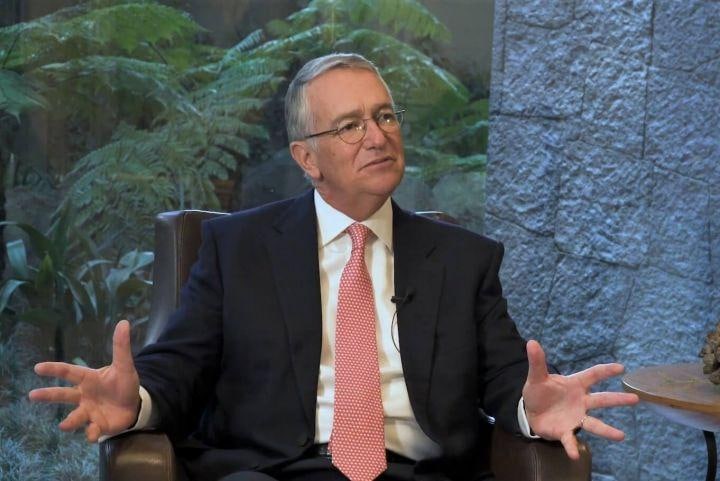
The latest to take to Twitter to announce they have boarded the crypto gravy train is Ricardo Salinas Pliego, the founder of the Grupo Salinas business empire, a close associate of the country’s president and the owner of an estimated USD 13.2bn fortune.
In a series of tweets, Salinas appears to have come out as a veritable bitcoin evangelist, stating to his more than 808,000 followers that he had invested 10% of his ‘liquid portfolio” in BTC.
In one tweet, which he has since pinned, he shared a video of a person in an unnamed Latin American nation apparently throwing away sacks full of cash. Salinas added,
“To start with bitcoin, I am sharing a video taken in a Latin [American] country where banks throw money away (paper money is worth nothing). That is why it is always good to diversify your investment portfolio.”
In another tweet, Salinas recommended a book about bitcoin named El Patron Bitcoin (subtitled The Decentralized Alternative to Central Banks) by Saifedean Ammous.
Meanwhile, there has been a thrilling plot twist in the crypto Game of Thrones sparked on Twitter by the actress Maisie Williams (who played Arya Stark in the drama series).
Yesterday Williams had asked her 2.7 million followers if they thought she should “go long on bitcoin.”
A total of 902,304 people voted in response to her question, with 53.4% voting “no” – and 46.6% advising her to take the plunge.
But subverting the audience’s expectations was always the name of the game for GOT. So Williams took a page out of the drama’s book – by flying in the face of public opinion and buying BTC anyway.
2020 looks to have been one of the best years yet for bitcoin (BTC) – with prices booming and an increasing number of high-profile investors and celebrities looking to get onboard as publically as possible – via the medium of Twitter.
The latest to take to Twitter to announce they have boarded the crypto gravy train is Ricardo Salinas Pliego, the founder of the Grupo Salinas business empire, a close associate of the country’s president and the owner of an estimated USD 13.2bn fortune.
In a series of tweets, Salinas appears to have come out as a veritable bitcoin evangelist, stating to his more than 808,000 followers that he had invested 10% of his ‘liquid portfolio” in BTC.
In one tweet, which he has since pinned, he shared a video of a person in an unnamed Latin American nation apparently throwing away sacks full of cash. Salinas added,
“To start with bitcoin, I am sharing a video taken in a Latin [American] country where banks throw money away (paper money is worth nothing). That is why it is always good to diversify your investment portfolio.”
In another tweet, Salinas recommended a book about bitcoin named El Patron Bitcoin (subtitled The Decentralized Alternative to Central Banks) by Saifedean Ammous.
Meanwhile, there has been a thrilling plot twist in the crypto Game of Thrones sparked on Twitter by the actress Maisie Williams (who played Arya Stark in the drama series).
Yesterday Williams had asked her 2.7 million followers if they thought she should “go long on bitcoin.”
A total of 902,304 people voted in response to her question, with 53.4% voting “no” – and 46.6% advising her to take the plunge.
But subverting the audience’s expectations was always the name of the game for GOT. So Williams took a page out of the drama’s book – by flying in the face of public opinion and buying BTC anyway.
3.4m Bitcoin Available As BlackRock's CIO Says BTC to Replace Gold.
3.4m bitcoin (BTC) are readily available to buyers as demand increases, blockchain analytics specialist Chainalysis said, noting that first-time BTC buyers and buyers looking to unload fiat currency for BTC as a hedge against worrisome macroeconomic trends are responsible for much of the current demand. Meanwhile, Rick Rieder, BlackRock's Chief Investment Officer of Global Fixed Income, said he thinks that BTC "could replace gold to a large extent."
According to Chainalysis, right now, the amount of liquid, or trader-held BTC is similar to what it was during the 2017 bull run. But the amount held in illiquid wallets, controlled by investors, is much higher, representing 77% of the 14.8m BTC mined that isn’t categorized as lost, meaning it hasn’t moved from its current address in five years or longer, they added.
On average, around BTC 1.715m changes hands on crypto exchanges per day in November, or slightly less than in October. Hover, compared to the first 19 days of November last year, when BTC dropped from above USD 9,000 to USD 8,000, the average trading volume decreased by 41%.
Meanwhile, this year, according to Chainalysis, demand is increasing as evidenced by rising inflows to exchanges and trade intensity on exchanges.
Also, the team of researchers said that, in 2017, most demand came from individual, retail investors buying with their own personal funds, many of whom had varying degrees of experience with and knowledge of cryptocurrency.
"As anyone who reads the news can tell you, 2020 is the year institutional dollars began flowing into bitcoin," they said, adding that this trend appears to be driven by a desire to hedge against macroeconomic uncertainty.
Today, BlackRock's Chief Investment Officer of Global Fixed Income told CNBC that BTC is "much more functional" than gold and the most popular cryptocurrency could replace the yellow metal. At the end of last year, BlackRock had USD 7.4 trillion in assets under management.
"Exchanges have sent 19% more transfers worth USD 1m or more in 2020 while bitcoin’s price has been over USD 10,000 as compared to 2017. That suggests that the individuals behind these transfers have more money to spend, as we would expect when bigger investors get involved," they said.
Today, Managing Director at major crypto asset management firm Grayscale, Michael Sonnenshein, said that their team "scoped up over USD 188m into Grayscale Bitcoin Trust alone, yesterday."
BTC trades at USD 18,719 (16:38 UTC) and is up by 4% in a day and 16% in a week. The price rallied by 46% in a month, 145% in a year and is 7% away from its all-time high of USD 20,000.
According to him, moving past USD 19,892 will in its turn be another step toward setting new historical highs at the 127.2% and 141.4% Fibonacci retracement levels sitting at USD 24,500 and USD 26,830, respectively.
3.4m bitcoin (BTC) are readily available to buyers as demand increases, blockchain analytics specialist Chainalysis said, noting that first-time BTC buyers and buyers looking to unload fiat currency for BTC as a hedge against worrisome macroeconomic trends are responsible for much of the current demand. Meanwhile, Rick Rieder, BlackRock's Chief Investment Officer of Global Fixed Income, said he thinks that BTC "could replace gold to a large extent."
According to Chainalysis, right now, the amount of liquid, or trader-held BTC is similar to what it was during the 2017 bull run. But the amount held in illiquid wallets, controlled by investors, is much higher, representing 77% of the 14.8m BTC mined that isn’t categorized as lost, meaning it hasn’t moved from its current address in five years or longer, they added.
On average, around BTC 1.715m changes hands on crypto exchanges per day in November, or slightly less than in October. Hover, compared to the first 19 days of November last year, when BTC dropped from above USD 9,000 to USD 8,000, the average trading volume decreased by 41%.
Meanwhile, this year, according to Chainalysis, demand is increasing as evidenced by rising inflows to exchanges and trade intensity on exchanges.
Also, the team of researchers said that, in 2017, most demand came from individual, retail investors buying with their own personal funds, many of whom had varying degrees of experience with and knowledge of cryptocurrency.
"As anyone who reads the news can tell you, 2020 is the year institutional dollars began flowing into bitcoin," they said, adding that this trend appears to be driven by a desire to hedge against macroeconomic uncertainty.
Today, BlackRock's Chief Investment Officer of Global Fixed Income told CNBC that BTC is "much more functional" than gold and the most popular cryptocurrency could replace the yellow metal. At the end of last year, BlackRock had USD 7.4 trillion in assets under management.
"Exchanges have sent 19% more transfers worth USD 1m or more in 2020 while bitcoin’s price has been over USD 10,000 as compared to 2017. That suggests that the individuals behind these transfers have more money to spend, as we would expect when bigger investors get involved," they said.
Today, Managing Director at major crypto asset management firm Grayscale, Michael Sonnenshein, said that their team "scoped up over USD 188m into Grayscale Bitcoin Trust alone, yesterday."
BTC trades at USD 18,719 (16:38 UTC) and is up by 4% in a day and 16% in a week. The price rallied by 46% in a month, 145% in a year and is 7% away from its all-time high of USD 20,000.
According to him, moving past USD 19,892 will in its turn be another step toward setting new historical highs at the 127.2% and 141.4% Fibonacci retracement levels sitting at USD 24,500 and USD 26,830, respectively.
Ripple Seeks New Hire to Bolster XRP and CBDC Ties.
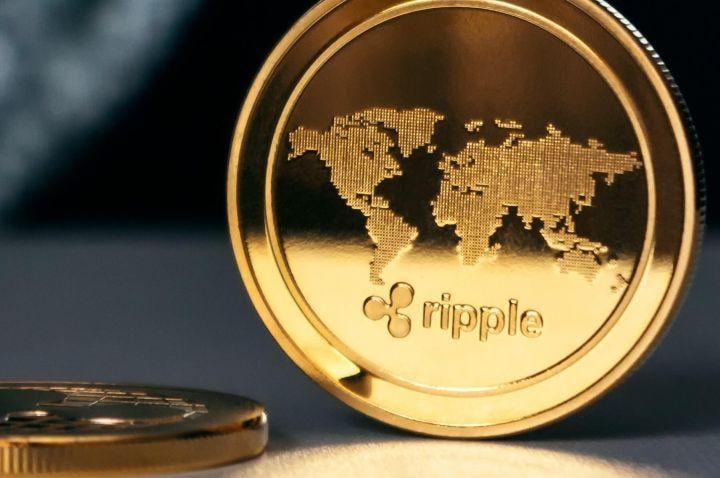
XRP-affiliated American blockchain giant Ripple has posted a job advertisement as it looks to recruit a Senior Director for Central Bank Engagements – the clearest indication yet that the company is planning to increase its focus on central bank digital currency (CBDC)-related initiatives on the XRP Ledger (XRPL) in the near future.
In the ad, the firm wrote that the ideal candidate would “define and lead Ripple’s strategy with central banks, build relationships with and educate central bankers around the world.”
The new hire will also “be responsible for securing and managing partnerships with central banks to build and deploy projects,” Ripple wrote, adding,
“You will serve as Ripple’s industry thought leader on the intersection of digital assets and blockchain technology and central banks, including the future of CBDCs.”
The California-based company said it wants to hire an individual with over 10 years of professional experience in enterprise technology sales or account management, and a track record of selling to major financial institutions or central banks.
The firm also added that global sales experience would be a plus, as would a strong network of central bank executives and influencers.
The new hire is set to act “as a spokesperson and thought leader on CBDCs” by “regularly speaking at conferences, with media, bylining blog posts, posting on social media” and engaging with other key stakeholders. The director will also lead “Ripple’s participation in prominent and influential industry groups on CBDCs,” the firm wrote.
It has been developing a keen interest in the ongoing development of CBDCs, and the role Ripple hopes to secure in their distribution. At least two fully fledged CBDCs have already been launched, one in the Bahamas and another in Cambodia, with larger economies such as China set to follow.
David Schwartz, Chief Technology Officer (CTO) of Ripple, recently shared the notes he had prepared for a talk on the subject given at an event in Berkeley, California.
In the notes, he wrote that while CBDCs can make domestic settlement faster, more reliable, and less costly, "you can't have good international payments without good domestic settlement."
And the CTO also noted that CBDC distribution will almost certainly have to happen through intermediaries (banks, wallets and fintech firms).
"And if there's one network at the hub, that network has to be built for that role with interoperability taking priority over "everyone do things our way". It has to be based on bridges, not on walls. XRP and the XRP Ledger were built specifically for this kind of role," he said.
According to him, XRPL was purpose built for transacting both in a native, neutral asset, XRP and also in "issued assets" to bridge to CBDCs, stablecoins, other payment networks, and other kinds of assets.
However, as many CBDC issuance models are still “lacking” when it comes to providing connectivity to consumers, he claimed, “CBDCs won’t solve the 'last mile' problem that has made modernizing international payments so difficult.”
"The XRP Ledger can't handle all the world's payments, and I'm not proposing a "one network" solution. That's totally unrealistic. People want different things and have different problems. But XRP can be the hub or backbone that provides the fast international settlement piece," the CTO said.
XRP-affiliated American blockchain giant Ripple has posted a job advertisement as it looks to recruit a Senior Director for Central Bank Engagements – the clearest indication yet that the company is planning to increase its focus on central bank digital currency (CBDC)-related initiatives on the XRP Ledger (XRPL) in the near future.
In the ad, the firm wrote that the ideal candidate would “define and lead Ripple’s strategy with central banks, build relationships with and educate central bankers around the world.”
The new hire will also “be responsible for securing and managing partnerships with central banks to build and deploy projects,” Ripple wrote, adding,
“You will serve as Ripple’s industry thought leader on the intersection of digital assets and blockchain technology and central banks, including the future of CBDCs.”
The California-based company said it wants to hire an individual with over 10 years of professional experience in enterprise technology sales or account management, and a track record of selling to major financial institutions or central banks.
The firm also added that global sales experience would be a plus, as would a strong network of central bank executives and influencers.
The new hire is set to act “as a spokesperson and thought leader on CBDCs” by “regularly speaking at conferences, with media, bylining blog posts, posting on social media” and engaging with other key stakeholders. The director will also lead “Ripple’s participation in prominent and influential industry groups on CBDCs,” the firm wrote.
It has been developing a keen interest in the ongoing development of CBDCs, and the role Ripple hopes to secure in their distribution. At least two fully fledged CBDCs have already been launched, one in the Bahamas and another in Cambodia, with larger economies such as China set to follow.
David Schwartz, Chief Technology Officer (CTO) of Ripple, recently shared the notes he had prepared for a talk on the subject given at an event in Berkeley, California.
In the notes, he wrote that while CBDCs can make domestic settlement faster, more reliable, and less costly, "you can't have good international payments without good domestic settlement."
And the CTO also noted that CBDC distribution will almost certainly have to happen through intermediaries (banks, wallets and fintech firms).
"And if there's one network at the hub, that network has to be built for that role with interoperability taking priority over "everyone do things our way". It has to be based on bridges, not on walls. XRP and the XRP Ledger were built specifically for this kind of role," he said.
According to him, XRPL was purpose built for transacting both in a native, neutral asset, XRP and also in "issued assets" to bridge to CBDCs, stablecoins, other payment networks, and other kinds of assets.
However, as many CBDC issuance models are still “lacking” when it comes to providing connectivity to consumers, he claimed, “CBDCs won’t solve the 'last mile' problem that has made modernizing international payments so difficult.”
"The XRP Ledger can't handle all the world's payments, and I'm not proposing a "one network" solution. That's totally unrealistic. People want different things and have different problems. But XRP can be the hub or backbone that provides the fast international settlement piece," the CTO said.
The USD 4.2bn Question: Has China ‘Dumped’ PlusToken Bitcoin, Ethereum & Co?
Crypto community members are wondering what has become of a huge stash of crypto worth a combined USD 4.2bn seized by the Chinese authorities who closed down the PlusToken crypto scam earlier this year – with some asking if the funds were already “dumped” onto the market months ago, and others suggesting the state may still be holding onto the funds.
Per a court report issued yesterday and posted online by The Block, the authorities claimed they had seized the following from seven of the scam’s masterminds in their raids:
Bitcoin: BTC 194,775 (USD 3.297bn)
Ethereum: ETH 833,083 (USD 425m)
Litecoin: LTC 1.4m (USD 95m)
EOS: EOS 27.6 million (USD 79m)
Dash: DASH 74,167 (USD 6.7m)
XRP: XRP 487m (USD 263m)
Dogecoin: DOGE 6bn (USD 19m)
Bitcoin Cash: BCH 79,581 (USD 21m)
Tether: USDT 213,724 (USD 214,217)
The court explained that it intended to “process” the crypto “according to the relevant laws,” with the “proceeds forfeited” to the Chinese treasury.
And internet-based Twitter sleuths believe that the tokens have indeed been sold, although mystery still surrounds exactly how, where and when Chinese authorities have managed to do so considering crypto exchanges have been outlawed in Mainland China since September 2017.
The Chinese police completed an 18-month international hunt for the scam operators earlier this year, and began sentencing convicted ringleaders back in September.
But some Twitter-based observers have stated that they believe the tokens were sold (or “dumped”, as one said) earlier in the year – with one opining that the news was possibly “stale“ by “six or more months.”
Another yet claimed that this was simply another demonstration that China’s policy on crypto is crystal clear: Beijing will continue to crack down hard on tokens unless it retains an iron grip over them. These thoughts echo the sentiments of a prominent Japanese China observer, who also claimed China was pursuing a centralized approach to digital finance.
But the possibility of a major state – particularly a superpower – becoming a major player in the crypto markets appears to have given some pause for thought.
Crypto community members are wondering what has become of a huge stash of crypto worth a combined USD 4.2bn seized by the Chinese authorities who closed down the PlusToken crypto scam earlier this year – with some asking if the funds were already “dumped” onto the market months ago, and others suggesting the state may still be holding onto the funds.
Per a court report issued yesterday and posted online by The Block, the authorities claimed they had seized the following from seven of the scam’s masterminds in their raids:
Bitcoin: BTC 194,775 (USD 3.297bn)
Ethereum: ETH 833,083 (USD 425m)
Litecoin: LTC 1.4m (USD 95m)
EOS: EOS 27.6 million (USD 79m)
Dash: DASH 74,167 (USD 6.7m)
XRP: XRP 487m (USD 263m)
Dogecoin: DOGE 6bn (USD 19m)
Bitcoin Cash: BCH 79,581 (USD 21m)
Tether: USDT 213,724 (USD 214,217)
The court explained that it intended to “process” the crypto “according to the relevant laws,” with the “proceeds forfeited” to the Chinese treasury.
And internet-based Twitter sleuths believe that the tokens have indeed been sold, although mystery still surrounds exactly how, where and when Chinese authorities have managed to do so considering crypto exchanges have been outlawed in Mainland China since September 2017.
The Chinese police completed an 18-month international hunt for the scam operators earlier this year, and began sentencing convicted ringleaders back in September.
But some Twitter-based observers have stated that they believe the tokens were sold (or “dumped”, as one said) earlier in the year – with one opining that the news was possibly “stale“ by “six or more months.”
Another yet claimed that this was simply another demonstration that China’s policy on crypto is crystal clear: Beijing will continue to crack down hard on tokens unless it retains an iron grip over them. These thoughts echo the sentiments of a prominent Japanese China observer, who also claimed China was pursuing a centralized approach to digital finance.
But the possibility of a major state – particularly a superpower – becoming a major player in the crypto markets appears to have given some pause for thought.

OMG Rallies as OMG Network Sold To a New Owner.
The OMG Network – operator of the Ethereum (ETH)-based OMG token (formerly OmiseGo) – has a new owner, news that has sent the token’s price up by almost 8% in the past 24 hours.
At pixel time (09:21 UTC), OMG, ranked 43rd by market capitalization on Coinpaprika, trades at USD 4.05 and is up by almost 8% in a day and 16% in a week. The price rallied by 44% in a month and 462% in a year.
In an announcement, GBV, which describes itself as a full-service investment company working with Genesis Block, claimed it had “acquired” the OMG Network, although it did not reveal how much it had paid to secure the deal.
The OMG Network was launched by the fintech app payment firm SYNQA as a subsidiary in 2017. It has since been working on Layer-2 scaling infrastructure for the Ethereum blockchain network. Layer 1 is the base protocol (the Ethereum blockchain), while Layer 2 is any protocol built on top of Ethereum.
The move is GBV’s first in the crypto market, a fact that appears to have worried some online commenters.
On Twitter in a thread responding to a post from the OMG Network, one investor claimed that they were “really worried to see that my investment is sold to a company I really don't know about.”
Another, however, claimed that Genesis Block was the “quiet giant of Asia” and had partnership deals in place with the likes of Binance and the FTX exchange.
And another still expressed no shortage of cynicism about the deal, claiming that SYNQA was “offloading OMG so it doesn't have to deal with tokenholders,” and adding that “as a holder, this doesn’t look great.”
Genesis Block describes itself as a “premier over-the-counter trading company for bitcoin and cryptocurrencies,” and has called GBV its “sister company” in a tweet. The former was established in 2017 and is headquartered in Hong Kong.
The OMG Network – operator of the Ethereum (ETH)-based OMG token (formerly OmiseGo) – has a new owner, news that has sent the token’s price up by almost 8% in the past 24 hours.
At pixel time (09:21 UTC), OMG, ranked 43rd by market capitalization on Coinpaprika, trades at USD 4.05 and is up by almost 8% in a day and 16% in a week. The price rallied by 44% in a month and 462% in a year.
In an announcement, GBV, which describes itself as a full-service investment company working with Genesis Block, claimed it had “acquired” the OMG Network, although it did not reveal how much it had paid to secure the deal.
The OMG Network was launched by the fintech app payment firm SYNQA as a subsidiary in 2017. It has since been working on Layer-2 scaling infrastructure for the Ethereum blockchain network. Layer 1 is the base protocol (the Ethereum blockchain), while Layer 2 is any protocol built on top of Ethereum.
The move is GBV’s first in the crypto market, a fact that appears to have worried some online commenters.
On Twitter in a thread responding to a post from the OMG Network, one investor claimed that they were “really worried to see that my investment is sold to a company I really don't know about.”
Another, however, claimed that Genesis Block was the “quiet giant of Asia” and had partnership deals in place with the likes of Binance and the FTX exchange.
And another still expressed no shortage of cynicism about the deal, claiming that SYNQA was “offloading OMG so it doesn't have to deal with tokenholders,” and adding that “as a holder, this doesn’t look great.”
Genesis Block describes itself as a “premier over-the-counter trading company for bitcoin and cryptocurrencies,” and has called GBV its “sister company” in a tweet. The former was established in 2017 and is headquartered in Hong Kong.

Joe Biden Admin Will Ultimately Support Crypto - Circle CEO.
Jeremy Allaire, CEO and Co-Founder of US-based major crypto company Circle, claims that crypto is misunderstood in Washington, D.C., but he offered an optimistic take on how the incoming Joe Biden administration might treat cryptoassets.
“I think that they will ultimately be supportive because this is an infrastructure change as big as the initial commercial internet. And they’re going to be focused on infrastructure changes that make America more competitive. And this is absolutely going to be a core building block in that,” the CEO said during an interview with CNBC today.
So far, however, the United States has not embraced that innovation. It lags other countries when it comes to a regulatory framework by which blockchain startups can operate, which has led major market players such as Ripple CEO Brad Garlinghouse to consider moving abroad.
Biden hasn’t tipped his hand to how he feels about bitcoin (BTC) or any other cryptoasset for that matter. But he has nominated former Federal Reserve Chair Janet Yellen to be Treasury Secretary, who is believed to be open to blockchain technology.
Allaire also pointed to a great deal of confusion surrounding the crypto industry across the aisle in Washington, D.C., saying that the view on “the very liberal end of the spectrum” is that crypto is damaging to people with less access to traditional financial services. The CEO defended the industry, including the stablecoin segment, where Circle’s USD Coin (USDC)’s market capitalization has ballooned some 500% year-to-date. He said,
“This technology, in particular stablecoins, holds the promise of opening up and widening access to the financial system more deeply than the existing banking system.”
Allaire, whose company Circle recently inked a partnership with card giant Visa for its stablecoin, also pointed to big banks that are lobbying in Congress and saying that crypto companies require “tighter rules around them,” comparing them to companies like PayPal and Square.
As reported, last week, the stablecoin regulation act was proposed in Congress, once again stressing an important difference between centralized and decentralized projects in terms of regulation.
Allaire also addressed the rise of central bank digital currencies (CBDCs) and whether they threaten to encroach on the territory of stablecoins.
“Right now, whether it’s the Federal Reserve, or the European Central Bank, or central banks around the world, there’s obviously a lot of interest in this topic...But the reality is that right now, leading companies in the private sector — whether it’s out of the crypto industry such as Circle and Coinbase or major firms like Visa or major internet technology firms — are racing ahead to implement stablecoins as...a fundamental innovation in how money moves around the world,” the CEO said, adding that, in the coming years, there could be a convergence between CBDCs and stablecoins, where the private sector and central banks strike a balance between innovation and “safeguards.”
Jeremy Allaire, CEO and Co-Founder of US-based major crypto company Circle, claims that crypto is misunderstood in Washington, D.C., but he offered an optimistic take on how the incoming Joe Biden administration might treat cryptoassets.
“I think that they will ultimately be supportive because this is an infrastructure change as big as the initial commercial internet. And they’re going to be focused on infrastructure changes that make America more competitive. And this is absolutely going to be a core building block in that,” the CEO said during an interview with CNBC today.
So far, however, the United States has not embraced that innovation. It lags other countries when it comes to a regulatory framework by which blockchain startups can operate, which has led major market players such as Ripple CEO Brad Garlinghouse to consider moving abroad.
Biden hasn’t tipped his hand to how he feels about bitcoin (BTC) or any other cryptoasset for that matter. But he has nominated former Federal Reserve Chair Janet Yellen to be Treasury Secretary, who is believed to be open to blockchain technology.
Allaire also pointed to a great deal of confusion surrounding the crypto industry across the aisle in Washington, D.C., saying that the view on “the very liberal end of the spectrum” is that crypto is damaging to people with less access to traditional financial services. The CEO defended the industry, including the stablecoin segment, where Circle’s USD Coin (USDC)’s market capitalization has ballooned some 500% year-to-date. He said,
“This technology, in particular stablecoins, holds the promise of opening up and widening access to the financial system more deeply than the existing banking system.”
Allaire, whose company Circle recently inked a partnership with card giant Visa for its stablecoin, also pointed to big banks that are lobbying in Congress and saying that crypto companies require “tighter rules around them,” comparing them to companies like PayPal and Square.
As reported, last week, the stablecoin regulation act was proposed in Congress, once again stressing an important difference between centralized and decentralized projects in terms of regulation.
Allaire also addressed the rise of central bank digital currencies (CBDCs) and whether they threaten to encroach on the territory of stablecoins.
“Right now, whether it’s the Federal Reserve, or the European Central Bank, or central banks around the world, there’s obviously a lot of interest in this topic...But the reality is that right now, leading companies in the private sector — whether it’s out of the crypto industry such as Circle and Coinbase or major firms like Visa or major internet technology firms — are racing ahead to implement stablecoins as...a fundamental innovation in how money moves around the world,” the CEO said, adding that, in the coming years, there could be a convergence between CBDCs and stablecoins, where the private sector and central banks strike a balance between innovation and “safeguards.”
DBS Makes it Official: Banking Giant Will Launch Crypto Exchange
The Singaporean banking giant DBS has finally confirmed reports circulating since October that it is set to launch a range of crypto-related operations – including a crypto exchange offering trading in bitcoin (BTC) and major altcoins. (Updated at 14:39 UTC: a quote from Piyush Gupta was added).
The news come just a matter of weeks after a web page explaining the functionality of the platform, named the DBS Digital Exchange, apparently went live on the DBS site by mistake – only to be seemingly pulled offline shortly after. But now the bank has issued a press release declaring that the digital exchange will indeed see the light of day after all.
The bank said its new platform would be a “full-service digital exchange” that will also provide “tokenization” offerings for non-stock market listed companies that are looking to digitize their assets, as well as “trading” and a “custody ecosystem for digital assets.”
“The time has come, the time is right for this industry to increasingly find partnership and sponsorship from the formal banking sector,” DBS Chief Executive Officer Piyush Gupta was quoted as saying by Bloomberg. According to him, trading will start as early as next week.
The DBS Digital Exchange, which one Twitter-based observer claimed back in October had been “in the works for two years” will allow clients to trade in four fiat currencies (the Singaporean dollar, the USD, the Hong Kong dollar and the Japanese yen), as well as four “of the most established cryptocurrencies:” bitcoin, ethereum (ETH), bitcoin cash (BCH) and Ripple’s XRP.
The tokenization efforts will involve allowing firms to launch Security Token Offerings (STOs), and will provide a “regulated platform for the issuance and trading of digital tokens backed by financial assets, such as shares in unlisted companies, bonds and private equity funds.”
The bank states that it has received “in-principle” regulatory approval for its new exchange from the Monetary Authority of Singapore, the country’s central bank and top financial regulator.
The bank also said it would provide clients with private key management and crypto custody-related services, and announced that the Singapore Exchange (SGX) would own a 10% stake in the DBS Digital Exchange.
In 2019, DBS had SGD 579bn (USD 426bn) in assets, while its income reached SGD 14.5bn and net profit stood at SGD 6.4bn. The bank claims it has over 240,000 institutional banking customers and almost 11m consumer banking/wealth management customers.
The Singaporean banking giant DBS has finally confirmed reports circulating since October that it is set to launch a range of crypto-related operations – including a crypto exchange offering trading in bitcoin (BTC) and major altcoins. (Updated at 14:39 UTC: a quote from Piyush Gupta was added).
The news come just a matter of weeks after a web page explaining the functionality of the platform, named the DBS Digital Exchange, apparently went live on the DBS site by mistake – only to be seemingly pulled offline shortly after. But now the bank has issued a press release declaring that the digital exchange will indeed see the light of day after all.
The bank said its new platform would be a “full-service digital exchange” that will also provide “tokenization” offerings for non-stock market listed companies that are looking to digitize their assets, as well as “trading” and a “custody ecosystem for digital assets.”
“The time has come, the time is right for this industry to increasingly find partnership and sponsorship from the formal banking sector,” DBS Chief Executive Officer Piyush Gupta was quoted as saying by Bloomberg. According to him, trading will start as early as next week.
The DBS Digital Exchange, which one Twitter-based observer claimed back in October had been “in the works for two years” will allow clients to trade in four fiat currencies (the Singaporean dollar, the USD, the Hong Kong dollar and the Japanese yen), as well as four “of the most established cryptocurrencies:” bitcoin, ethereum (ETH), bitcoin cash (BCH) and Ripple’s XRP.
The tokenization efforts will involve allowing firms to launch Security Token Offerings (STOs), and will provide a “regulated platform for the issuance and trading of digital tokens backed by financial assets, such as shares in unlisted companies, bonds and private equity funds.”
The bank states that it has received “in-principle” regulatory approval for its new exchange from the Monetary Authority of Singapore, the country’s central bank and top financial regulator.
The bank also said it would provide clients with private key management and crypto custody-related services, and announced that the Singapore Exchange (SGX) would own a 10% stake in the DBS Digital Exchange.
In 2019, DBS had SGD 579bn (USD 426bn) in assets, while its income reached SGD 14.5bn and net profit stood at SGD 6.4bn. The bank claims it has over 240,000 institutional banking customers and almost 11m consumer banking/wealth management customers.
Snapshot Done, XRP Holders Debate How Much Spark They'll Get and When.
XRP network snapshot for the spark (FLR) airdrop was taken and XRP price dropped, but the debates within the Cryptoverse are ongoing - when and how much are eligible holders getting?
On December 12, blockchain platform Flare Network, which is backed by Ripple's investment arm RippleX, took a snapshot of the entire XRP blockchain in search of the addresses that had XRP in eligible exchanges and wallets. Per the numbers, retweeted by Flare, 110,259 accounts set up the claim for the token, while some XRP 23.6bn were captured in the snapshot. Most of it was on exchanges, with Coinbase, Binance, and Bithumb coming on top. Still 30% of XRP was self-custodied at that moment.
Meanwhile, as people are curious 'how much Spark they'll be getting,' some argue that snapshot results can't be known. "This was to be expected: a lot of questions where people can see the Flare snapshot results. You can't!" said 'WietseWind'. "FlareNetworks just took a snapshot, they basically took a picture. ... Now we wait until they finish their own Flare blockchain tech., and distribute the tokens there, to be managed with a wallet that supports their new Flare network."
Indeed, as some users were apparently confused about, Bitrue announced that they would "be supporting trading for Spark FLR on the XRP pair before the end of the year," and that that they "will be working alongside the Flare Networks team to determine the exact amount of Spark that each user is entitled to." Given that the first distribution will be a fixed 15% of each user's total entitlement, the exchange said they'll be able to know the exact amount of Spark that each user will receive in the first distribution which is expected to happen in the first half of next year.
According to the website, 98 exchanges participated in the airdrop. Eight wallets are allowing the Spark token claim only, while six support the token as well.
Furthermore, "we are aware that some exchanges intend to issue an IOU (Future) of Spark FLR, this is their prerogative," tweeted the network. "Flare as an entity has zero involvement in this."
Meanwhile, given the increase in scams using non-existing FLR tokens as a bait, the network is warning the Cryptoverse that they haven't launched yet. Flare is creating 100bn spark tokens to be distributed when the network goes live, expected to happen in Q1-Q2 2021.
XRP network snapshot for the spark (FLR) airdrop was taken and XRP price dropped, but the debates within the Cryptoverse are ongoing - when and how much are eligible holders getting?
On December 12, blockchain platform Flare Network, which is backed by Ripple's investment arm RippleX, took a snapshot of the entire XRP blockchain in search of the addresses that had XRP in eligible exchanges and wallets. Per the numbers, retweeted by Flare, 110,259 accounts set up the claim for the token, while some XRP 23.6bn were captured in the snapshot. Most of it was on exchanges, with Coinbase, Binance, and Bithumb coming on top. Still 30% of XRP was self-custodied at that moment.
Meanwhile, as people are curious 'how much Spark they'll be getting,' some argue that snapshot results can't be known. "This was to be expected: a lot of questions where people can see the Flare snapshot results. You can't!" said 'WietseWind'. "FlareNetworks just took a snapshot, they basically took a picture. ... Now we wait until they finish their own Flare blockchain tech., and distribute the tokens there, to be managed with a wallet that supports their new Flare network."
Indeed, as some users were apparently confused about, Bitrue announced that they would "be supporting trading for Spark FLR on the XRP pair before the end of the year," and that that they "will be working alongside the Flare Networks team to determine the exact amount of Spark that each user is entitled to." Given that the first distribution will be a fixed 15% of each user's total entitlement, the exchange said they'll be able to know the exact amount of Spark that each user will receive in the first distribution which is expected to happen in the first half of next year.
According to the website, 98 exchanges participated in the airdrop. Eight wallets are allowing the Spark token claim only, while six support the token as well.
Furthermore, "we are aware that some exchanges intend to issue an IOU (Future) of Spark FLR, this is their prerogative," tweeted the network. "Flare as an entity has zero involvement in this."
Meanwhile, given the increase in scams using non-existing FLR tokens as a bait, the network is warning the Cryptoverse that they haven't launched yet. Flare is creating 100bn spark tokens to be distributed when the network goes live, expected to happen in Q1-Q2 2021.

"Ethereum Is (Not) Money" Trigger Tested Again And It Still Works.
As the two largest cryptoassets by market capitalization - bitcoin (BTC) and ethereum (ETH) (plus several thousand other coins) - are competing for new money in a crypto beauty contest, the resurfaced question whether ETH is money once again added fuel to the fire.
While the traditional financial world does not consider BTC to be money, many BTC fans are of the same opinion about ETH.
The debate surrounding ETH and its use case as money has been thrust into the spotlight once again, thanks to Ryan Selkis, founder of US-based major crypto researcher Messari. Selkis published a mega-report entitled Crypto Thesis for 2021, which has a whole section called “ETH Isn’t Money.” While some hardcore Ethereans were quick to react to this statement, even some members of Messari’s own team do not agree with their boss.
However, the CEO stressed that ETH “will likely prove to be a terrific investment anyway.”
“A commodity that secures transactions on the world’s most valuable computing platform (gas for throttling, staking for processing), and that can be ubiquitously leveraged as collateral within a burgeoning new financial system, is plenty valuable. I love ETH, and I own a bunch,” he said.
Also, Selkis pointed to Ryan Watkins and Wilson Withiam, senior research analysts at Messari, who “just wrote a BIBLE on Ethereum 2.0” and they “disagree” with his own report’s section on ETH “pretty much point for point.”
According to them, this combination will provide ETH with an unprecedented combination of attributes from each of the three asset superclasses: capital assets, commodities, and stores of value, respectively.
“And it may also create a constant tug of war for ETH demanded by each use case,” they said.
As the two largest cryptoassets by market capitalization - bitcoin (BTC) and ethereum (ETH) (plus several thousand other coins) - are competing for new money in a crypto beauty contest, the resurfaced question whether ETH is money once again added fuel to the fire.
While the traditional financial world does not consider BTC to be money, many BTC fans are of the same opinion about ETH.
The debate surrounding ETH and its use case as money has been thrust into the spotlight once again, thanks to Ryan Selkis, founder of US-based major crypto researcher Messari. Selkis published a mega-report entitled Crypto Thesis for 2021, which has a whole section called “ETH Isn’t Money.” While some hardcore Ethereans were quick to react to this statement, even some members of Messari’s own team do not agree with their boss.
However, the CEO stressed that ETH “will likely prove to be a terrific investment anyway.”
“A commodity that secures transactions on the world’s most valuable computing platform (gas for throttling, staking for processing), and that can be ubiquitously leveraged as collateral within a burgeoning new financial system, is plenty valuable. I love ETH, and I own a bunch,” he said.
Also, Selkis pointed to Ryan Watkins and Wilson Withiam, senior research analysts at Messari, who “just wrote a BIBLE on Ethereum 2.0” and they “disagree” with his own report’s section on ETH “pretty much point for point.”
According to them, this combination will provide ETH with an unprecedented combination of attributes from each of the three asset superclasses: capital assets, commodities, and stores of value, respectively.
“And it may also create a constant tug of war for ETH demanded by each use case,” they said.

Pre-Christmas Rally Brings Bitcoin to USD 24K, Litecoin Outshines Again
After cooling down for a couple of days, the most popular cryptocurrency, bitcoin (BTC), accelerated its pre-Christmas rally and for the first time in its history hit the USD 24,000 level. As is usual this week, the top cryptoasset was outperformed by its smaller peers.
At pixel time (17:16 UTC), BTC trades at USD 24,049 and is up by almost 6% in a day and 31% in a week. The price rallied by 33% in a month and 234% in a year.
BTC is now the second-best performer in the past seven days among the top 10 coins. Litecoin (LTC) rallied today by 12%, to USD 119%, and is now up by 58% in a week. And while it also outperformed BTC in the past month (+46%), it grew less in the past 12 months (194%). Moreover, the LTC 24-hour trading volume surpassed "only" USD 4bn, compared with BTC's almost USD 27bn.
Other coins from the top 10 club are up by 2%-10% today.
As reported, Philip Gradwell, the Chief Economist at blockchain analysis firm Chainalysis, said on Thursday that he expects to see “significant swings in the price over the next few days as the market tries to find a balance between demand and supply.”
"In 2020, bitcoin has matured as a financial asset that is well suited to our current macro environment and due to this large investors have purchased millions of bitcoin, significantly reducing the remaining supply available to buy,” he added.
Meanwhile, also as reported, Brian Armstrong, CEO of the Coinbase exchange, warned investors who may be focusing on short-term speculation and encourage customers to seek out resources and consult financial advisors to better understand the risks associated with investing in cryptocurrencies.
"For those who believe in the potential of crypto, we also all have to believe that we’re still in the very early stages and that there’s a lot more to come," he said.
After cooling down for a couple of days, the most popular cryptocurrency, bitcoin (BTC), accelerated its pre-Christmas rally and for the first time in its history hit the USD 24,000 level. As is usual this week, the top cryptoasset was outperformed by its smaller peers.
At pixel time (17:16 UTC), BTC trades at USD 24,049 and is up by almost 6% in a day and 31% in a week. The price rallied by 33% in a month and 234% in a year.
BTC is now the second-best performer in the past seven days among the top 10 coins. Litecoin (LTC) rallied today by 12%, to USD 119%, and is now up by 58% in a week. And while it also outperformed BTC in the past month (+46%), it grew less in the past 12 months (194%). Moreover, the LTC 24-hour trading volume surpassed "only" USD 4bn, compared with BTC's almost USD 27bn.
Other coins from the top 10 club are up by 2%-10% today.
As reported, Philip Gradwell, the Chief Economist at blockchain analysis firm Chainalysis, said on Thursday that he expects to see “significant swings in the price over the next few days as the market tries to find a balance between demand and supply.”
"In 2020, bitcoin has matured as a financial asset that is well suited to our current macro environment and due to this large investors have purchased millions of bitcoin, significantly reducing the remaining supply available to buy,” he added.
Meanwhile, also as reported, Brian Armstrong, CEO of the Coinbase exchange, warned investors who may be focusing on short-term speculation and encourage customers to seek out resources and consult financial advisors to better understand the risks associated with investing in cryptocurrencies.
"For those who believe in the potential of crypto, we also all have to believe that we’re still in the very early stages and that there’s a lot more to come," he said.
In Its Quest For Financial Inclusion Crypto Plays A Role In International Aid.
In December, the United Nations has warned that “2021 is literally going to be catastrophic,” largely as a result of the coronavirus pandemic, not to mention underlying economic and development issues.
Such forecasts are highly troubling, but until blockchain technology and cryptocurrency help increase and democratize financial inclusion on a much wider scale than it is now, it can already help with humanitarian aid and international development in a variety of ways.
According to industry figures and researchers working within the aid sector, blockchain can help increase the transparency and efficiency of charitable processes, potentially reducing the incidence of mismanagement and corruption. At the same time, the openness of the cryptocurrency sector also promises to increase financial inclusion and help people to take care of themselves better.
Growing numbers of projects
According to Dr Bernhard Reinsberg, a lecturer in international relations at the University of Glasgow, there are already many successful projects that have used either cryptocurrencies or blockchain for the purposes of aid or development.
“Some of them have completed the pilot phase and are being rolled out in several countries now. Key examples are Aid:Tech and WFP Building Blocks, which enable secure money transfer for humanitarian relief,” he told.
Reinsberg cited TruBudget as another example, an open-source blockchain-based platform developed by the KfW German Development Bank.
It “has increased transparency in aid projects by allowing donors to track real-time their money flows to recipients and the use of such funds by sub-contractors,” he said.
UNICEF
One of the biggest charitable organizations in the world is UNICEF, the United Nations Children’s Fund. According to its Blockchain Lead, Christina Lomazzo, and its Blockchain Developer, Mehran Hydary, it’s already exploring blockchain and cryptocurrency in a variety of ways.
“To stimulate and support the development of open-source digital public goods, UNICEF makes early-stage investments in blockchain startups in both USD and cryptocurrency through its Innovation Fund and CryptoFund,” they told.
UNICEF is also building a number of international prototypes based around blockchain tech with the support of UNICEF programmatic teams and country offices around the world.
“As an example of an internally built product, UNICEF Kazakhstan created a platform that digitized financial processes, leveraging blockchain technology, to simulate business rules and the release of funds in a streamlined and transparent way to partner organizations,” they said.
On top of this, a number of UNICEF National Committees are already accepting donations in the form of cryptocurrency, including UNICEF France, Australia, New Zealand, and the USA.
In December, the United Nations has warned that “2021 is literally going to be catastrophic,” largely as a result of the coronavirus pandemic, not to mention underlying economic and development issues.
Such forecasts are highly troubling, but until blockchain technology and cryptocurrency help increase and democratize financial inclusion on a much wider scale than it is now, it can already help with humanitarian aid and international development in a variety of ways.
According to industry figures and researchers working within the aid sector, blockchain can help increase the transparency and efficiency of charitable processes, potentially reducing the incidence of mismanagement and corruption. At the same time, the openness of the cryptocurrency sector also promises to increase financial inclusion and help people to take care of themselves better.
Growing numbers of projects
According to Dr Bernhard Reinsberg, a lecturer in international relations at the University of Glasgow, there are already many successful projects that have used either cryptocurrencies or blockchain for the purposes of aid or development.
“Some of them have completed the pilot phase and are being rolled out in several countries now. Key examples are Aid:Tech and WFP Building Blocks, which enable secure money transfer for humanitarian relief,” he told.
Reinsberg cited TruBudget as another example, an open-source blockchain-based platform developed by the KfW German Development Bank.
It “has increased transparency in aid projects by allowing donors to track real-time their money flows to recipients and the use of such funds by sub-contractors,” he said.
UNICEF
One of the biggest charitable organizations in the world is UNICEF, the United Nations Children’s Fund. According to its Blockchain Lead, Christina Lomazzo, and its Blockchain Developer, Mehran Hydary, it’s already exploring blockchain and cryptocurrency in a variety of ways.
“To stimulate and support the development of open-source digital public goods, UNICEF makes early-stage investments in blockchain startups in both USD and cryptocurrency through its Innovation Fund and CryptoFund,” they told.
UNICEF is also building a number of international prototypes based around blockchain tech with the support of UNICEF programmatic teams and country offices around the world.
“As an example of an internally built product, UNICEF Kazakhstan created a platform that digitized financial processes, leveraging blockchain technology, to simulate business rules and the release of funds in a streamlined and transparent way to partner organizations,” they said.
On top of this, a number of UNICEF National Committees are already accepting donations in the form of cryptocurrency, including UNICEF France, Australia, New Zealand, and the USA.

XRP Crashes as Coinbase to Suspend Trading In January.
The fourth-largest cryptoasset, XRP, crashed to September lows after US-based major exchange Coinbase said it will join other trading platforms in suspending trading in this coin in January due to a recent regulatory crackdown on XRP-affiliated Ripple.
XRP trades at USD 0.2248 and is down by almost 21% in a day and 53% in a week. The price dropped by 63% in a month, trimming its gains over the past 12 months to less than 16%.
"We strive to provide our customers with access to a broad set of assets, all of which are evaluated against our Digital Asset Framework to assess factors like security, compliance, and the project’s alignment with our mission of creating an open financial system for the world. We take seriously any decision to change our customers’ access to one of those assets," the company said.
Multiple trading plaftorms have already announced they're suspending XRP trading after the US Securities and Exchange Commission filed a lawsuit against Ripple.
OKCoin also announced that they will suspend XRP trading and deposits on January 4. "As the lawsuit proceedings take place, we have determined it is the best course of action," they added.
Also, Bitstamp announced it is going to halt all trading and deposits of XRP for their US customers on 8 January 2021 at 9 PM UTC.
Meanwhile, even major exchanges that do not offer trading services in the US market are keeping a close eye on the situation.
"The SEC's action against Ripple remains outside of our operating jurisdiction, but we are closely monitoring for new developments. As a brand rooted in trust, safety, and compliance, we respect and trust the due process of law. However, the safety of our users and their assets are of paramount importance so we will continue to assess the situation as the matter progresses," Ciara Sun, VP of Global Markets of Huobi Group.
As reported, the Huobi business group appears set to make a return to the United States a year after it hastily exited the country
The fourth-largest cryptoasset, XRP, crashed to September lows after US-based major exchange Coinbase said it will join other trading platforms in suspending trading in this coin in January due to a recent regulatory crackdown on XRP-affiliated Ripple.
XRP trades at USD 0.2248 and is down by almost 21% in a day and 53% in a week. The price dropped by 63% in a month, trimming its gains over the past 12 months to less than 16%.
"We strive to provide our customers with access to a broad set of assets, all of which are evaluated against our Digital Asset Framework to assess factors like security, compliance, and the project’s alignment with our mission of creating an open financial system for the world. We take seriously any decision to change our customers’ access to one of those assets," the company said.
Multiple trading plaftorms have already announced they're suspending XRP trading after the US Securities and Exchange Commission filed a lawsuit against Ripple.
OKCoin also announced that they will suspend XRP trading and deposits on January 4. "As the lawsuit proceedings take place, we have determined it is the best course of action," they added.
Also, Bitstamp announced it is going to halt all trading and deposits of XRP for their US customers on 8 January 2021 at 9 PM UTC.
Meanwhile, even major exchanges that do not offer trading services in the US market are keeping a close eye on the situation.
"The SEC's action against Ripple remains outside of our operating jurisdiction, but we are closely monitoring for new developments. As a brand rooted in trust, safety, and compliance, we respect and trust the due process of law. However, the safety of our users and their assets are of paramount importance so we will continue to assess the situation as the matter progresses," Ciara Sun, VP of Global Markets of Huobi Group.
As reported, the Huobi business group appears set to make a return to the United States a year after it hastily exited the country
Trezor December Sales Were 'Off the Charts'.
SatoshiLabs, the maker of the Trezor hardware wallet, saw a major increase in the popular wallet's sales in the last month of 2020, and one of the reasons for the boost in numbers was their competitor Ledger's ongoing data breach incident, according to the company's Chief Technology Officer (CTO).
"We have experienced a massive increase in our sales during the last two months of this year,"
The company declined to provide any numbers. In either case, per the CTO, there were three factors that contributed to this increase, but he emphasized that it's "almost impossible to isolate the distinct effect of any one." These are:
1) a strong Holiday season which started with Black Friday;
2) bitcoin (BTC) price rally, which eventually led to it crossing the previous all-time-high value set in 2017, and which brought an undeniable increase in demand for hardware wallets;
3) the publishing of Ledger’s customer data on a hackers forum.
"December is traditionally a peak season for most businesses," said Rusnák, and although the company doesn't share exact numbers, "we can say that this December sales are absolutely off the charts when compared to earlier months or previous years." The CTO added that:
"The only period that was similar to what we are experiencing now was December of 2017 when bitcoin crossed the [USD] 10000 value for the first time."
As reported, their main competitor, Ledger found itself in boiling hot waters when, following a data breach it had suffered in summer 2020, a database reportedly containing more than a million email addresses of Ledger users and more than 270,000 physical addresses and phone numbers, was dumped on Raidforums, a website for sharing hacked databases, in the second half of December. Also as reported, it seems that the scammers who got their hands on the Ledger users' information have also been trying to scam Trezor users.
Similarly to what Ledger is doing, SatoshiLabs is also educating people on how to protect their cryptoassets from phishing attacks. "We are doing everything possible to minimize the potential impact of such leaks by automatically scrubbing all personal data from Trezor e-shop after 90 days from purchase," said Rusnák.
Meanwhile, in September 2020, Swiss hardware wallet provider Shift Crypto said it had disclosed a vulnerability in Trezor, after which SatoshiLabs paid a bounty fee to Shift Crypto and claimed it had fixed the issue in their previously upgrades.
As for their other endeavors, a few weeks ago, a cryptoasset rate comparison tool that streamlines crypto purchase and exchange transactions. SatoshiLabs also established Tropic Square last spring, the intention of which is to create the first fully-auditable and transparent secure chip. After a period of market research, the company is moving onto the development phase and the prototype of the chip - tentatively named TASSIC - Transparent Authenticated Secure Storage Integrated Circuit - is estimated to be available at the end of 2021.
SatoshiLabs, the maker of the Trezor hardware wallet, saw a major increase in the popular wallet's sales in the last month of 2020, and one of the reasons for the boost in numbers was their competitor Ledger's ongoing data breach incident, according to the company's Chief Technology Officer (CTO).
"We have experienced a massive increase in our sales during the last two months of this year,"
The company declined to provide any numbers. In either case, per the CTO, there were three factors that contributed to this increase, but he emphasized that it's "almost impossible to isolate the distinct effect of any one." These are:
1) a strong Holiday season which started with Black Friday;
2) bitcoin (BTC) price rally, which eventually led to it crossing the previous all-time-high value set in 2017, and which brought an undeniable increase in demand for hardware wallets;
3) the publishing of Ledger’s customer data on a hackers forum.
"December is traditionally a peak season for most businesses," said Rusnák, and although the company doesn't share exact numbers, "we can say that this December sales are absolutely off the charts when compared to earlier months or previous years." The CTO added that:
"The only period that was similar to what we are experiencing now was December of 2017 when bitcoin crossed the [USD] 10000 value for the first time."
As reported, their main competitor, Ledger found itself in boiling hot waters when, following a data breach it had suffered in summer 2020, a database reportedly containing more than a million email addresses of Ledger users and more than 270,000 physical addresses and phone numbers, was dumped on Raidforums, a website for sharing hacked databases, in the second half of December. Also as reported, it seems that the scammers who got their hands on the Ledger users' information have also been trying to scam Trezor users.
Similarly to what Ledger is doing, SatoshiLabs is also educating people on how to protect their cryptoassets from phishing attacks. "We are doing everything possible to minimize the potential impact of such leaks by automatically scrubbing all personal data from Trezor e-shop after 90 days from purchase," said Rusnák.
Meanwhile, in September 2020, Swiss hardware wallet provider Shift Crypto said it had disclosed a vulnerability in Trezor, after which SatoshiLabs paid a bounty fee to Shift Crypto and claimed it had fixed the issue in their previously upgrades.
As for their other endeavors, a few weeks ago, a cryptoasset rate comparison tool that streamlines crypto purchase and exchange transactions. SatoshiLabs also established Tropic Square last spring, the intention of which is to create the first fully-auditable and transparent secure chip. After a period of market research, the company is moving onto the development phase and the prototype of the chip - tentatively named TASSIC - Transparent Authenticated Secure Storage Integrated Circuit - is estimated to be available at the end of 2021.

Strike Visa Cards To Launch in US, EU, and UK Within First Half of 2021.
Strike, a popular bitcoin (BTC) banking service by US-based Bitcoin Lightning startup Zap, aims to have their Strike Cards rolled out in countries on two continents in the first half of 2021.
Per the rollout plan as presented by Zap founder Jack Mallers, Strike will be issuing the Strike Card in the US already in Q1 2021. After that, they plan to issue Strike Cards in the EU and UK in Q2 2021. Also in the second quarter, more fiat currency pairs will be added to Strike.
The card is described by the website as "a real debit card with real rewards for the real world." In June, it was announced that Zap was admitted to Visa’s Fast Track Program and that it would be launching its card within a year. Per Forbes, Mallers said that he was working with Visa on several projects, but that only the credit card is public, and that the company is contractually obligated to launch a card within 12 months.
"So we’re coming out with the Strike card, traditional debit card tied to Strike. Strike will be interoperable with the Visa Direct network, and you get an account routing number. So Strike will act as a vertical bank," said Mallers in a recent The Investor’s Podcast Network's Bitcoin Fundamentals episode. "So we can do anything a traditional bank can do for you. And you just line up your direct deposit to Strike just like anything else. And within your settings, you can say, hey, of every paycheck, I’ll take 15% in bitcoin, I’ll take 20% in bitcoin, and you treat it like your savings account."
The founder further added that when it comes to the Visa partnership, "the vision for this is simple. Let’s say my local grocer doesn’t yet work in an interoperable fashion with the Lightning Network. I should still be able to spend that USD 5,000 balance that is my Strike balance. And so it’s our bridge to the rest of the world. They connect us to the rest of the world. And there’s a lot of cool things we could do with it, different rewards or whatever else."
He added that Strike has "no concrete plans of Bitcoin rewards."
In the same post in which Mallers discussed the cards, he announced Strike Global, stating that Strike has partnered with Bittrex Global and will be launching in over 200 countries. It has added support for tether (USDT), USD coin (USDC), EUR, GBP, and CHF, among other options, adding that all Bittrex users, more than a million of them, will be onboarded onto Strike and Lightning. All this is planned for the first quarter.
By the time the cards are issued in Europe, Stike aims to establish a Bitcoin-native neo-bank; partnerships with major exchanges and companies, including Bittrex, CMT, and Visa; instant and free international fund transfers; stablecoin support; Strike Payday, and others. "I have more partnerships and products to announce and release," Mallers wrote.
Strike, a popular bitcoin (BTC) banking service by US-based Bitcoin Lightning startup Zap, aims to have their Strike Cards rolled out in countries on two continents in the first half of 2021.
Per the rollout plan as presented by Zap founder Jack Mallers, Strike will be issuing the Strike Card in the US already in Q1 2021. After that, they plan to issue Strike Cards in the EU and UK in Q2 2021. Also in the second quarter, more fiat currency pairs will be added to Strike.
The card is described by the website as "a real debit card with real rewards for the real world." In June, it was announced that Zap was admitted to Visa’s Fast Track Program and that it would be launching its card within a year. Per Forbes, Mallers said that he was working with Visa on several projects, but that only the credit card is public, and that the company is contractually obligated to launch a card within 12 months.
"So we’re coming out with the Strike card, traditional debit card tied to Strike. Strike will be interoperable with the Visa Direct network, and you get an account routing number. So Strike will act as a vertical bank," said Mallers in a recent The Investor’s Podcast Network's Bitcoin Fundamentals episode. "So we can do anything a traditional bank can do for you. And you just line up your direct deposit to Strike just like anything else. And within your settings, you can say, hey, of every paycheck, I’ll take 15% in bitcoin, I’ll take 20% in bitcoin, and you treat it like your savings account."
The founder further added that when it comes to the Visa partnership, "the vision for this is simple. Let’s say my local grocer doesn’t yet work in an interoperable fashion with the Lightning Network. I should still be able to spend that USD 5,000 balance that is my Strike balance. And so it’s our bridge to the rest of the world. They connect us to the rest of the world. And there’s a lot of cool things we could do with it, different rewards or whatever else."
He added that Strike has "no concrete plans of Bitcoin rewards."
In the same post in which Mallers discussed the cards, he announced Strike Global, stating that Strike has partnered with Bittrex Global and will be launching in over 200 countries. It has added support for tether (USDT), USD coin (USDC), EUR, GBP, and CHF, among other options, adding that all Bittrex users, more than a million of them, will be onboarded onto Strike and Lightning. All this is planned for the first quarter.
By the time the cards are issued in Europe, Stike aims to establish a Bitcoin-native neo-bank; partnerships with major exchanges and companies, including Bittrex, CMT, and Visa; instant and free international fund transfers; stablecoin support; Strike Payday, and others. "I have more partnerships and products to announce and release," Mallers wrote.

Bitcoin Mining in 2021: Growth, Consolidation, Renewables, and Regulation.
Bitcoin (BTC) mining has had a couple of less profitable years. After the highs of late 2017 and early 2018, profitability declined by March 2020 to as little as USD 0.0693 per day for every 1 THash of mining power (having been USD 3.139 in January 2018).
However, with the bull market of late 2020, the price of bitcoin has risen strongly, and with it mining profitability has steadily crept up to USD 0.222, representing a rise of 200% since May’s Bitcoin halving. Given that analysts claim bitcoin’s price still has some way left to rise, this is obviously encouraging news for the mining industry, which looks set to have a consistently better 2021 than 2020.
This is what pretty much everyone within the mining industry estimates will happen, that they expect the sector to expand vigorously in 2021. They also expect to see a degree of market consolidation within the space, and while it’s unlikely that the new year will provide mining with technical innovations, it’s possible that we’ll witness a gradual shift to renewable energy sources, as well as the emergence of regulation that specifically addresses mining.
Bitcoin price growth = mining growth
The 200% rise in mining profitability since May is an instructive figure, given that the price of bitcoin rose by more than 230% over the same timeframe. This is pretty strong evidence that bitcoin price rises continue to drive mining profitability, despite 2020’s halving.
In other words, assuming that the price of bitcoin will rise to, say, USD 100,000 by the end of 2021, the mining industry will expand in parallel.
This is pretty much the consensus view among industry participants, although Tim Rainey, Chief Financial Officer of US-based powerplant-cryptomining hybrid Greenidge Generation, said we may see a temporary contraction at the beginning of 2020.
Bitcoin (BTC) mining has had a couple of less profitable years. After the highs of late 2017 and early 2018, profitability declined by March 2020 to as little as USD 0.0693 per day for every 1 THash of mining power (having been USD 3.139 in January 2018).
However, with the bull market of late 2020, the price of bitcoin has risen strongly, and with it mining profitability has steadily crept up to USD 0.222, representing a rise of 200% since May’s Bitcoin halving. Given that analysts claim bitcoin’s price still has some way left to rise, this is obviously encouraging news for the mining industry, which looks set to have a consistently better 2021 than 2020.
This is what pretty much everyone within the mining industry estimates will happen, that they expect the sector to expand vigorously in 2021. They also expect to see a degree of market consolidation within the space, and while it’s unlikely that the new year will provide mining with technical innovations, it’s possible that we’ll witness a gradual shift to renewable energy sources, as well as the emergence of regulation that specifically addresses mining.
Bitcoin price growth = mining growth
The 200% rise in mining profitability since May is an instructive figure, given that the price of bitcoin rose by more than 230% over the same timeframe. This is pretty strong evidence that bitcoin price rises continue to drive mining profitability, despite 2020’s halving.
In other words, assuming that the price of bitcoin will rise to, say, USD 100,000 by the end of 2021, the mining industry will expand in parallel.
This is pretty much the consensus view among industry participants, although Tim Rainey, Chief Financial Officer of US-based powerplant-cryptomining hybrid Greenidge Generation, said we may see a temporary contraction at the beginning of 2020.

ECB President Attacks Bitcoin Again As Digital Euro In Works.
After claiming that bitcoin (BTC) is highly volatile, illiquid and speculative, Christine Lagarde, President of the European Central bank, now called for global regulation of this most popular cryptocurrency.
“(Bitcoin) is a highly speculative asset, which has conducted some funny business and some interesting and totally reprehensible money laundering activity,” Lagarde said at the Reuters Next conference today, as reported by this news agency.
According to William Mougayar, an entrepreneur, investor, blockchain researcher, and advisor, these statements by Lagarde are an "ultimate display of misunderstanding cryptocurrencies potential."
"Bitcoin & crypto are already regulated by proxy. Anti-money laundering applies to everything, and while many financial instruments are speculative, none are more transformative than cryptocurrencies," he tweeted, while one of his followers replied that "they understand cryptos absolutely. They are just feared of it because they can't put the money in their own pocket like taxes or other donations."
In either case, as legendary investor and BTC bull Paul Tudor Jones warned recently, as cryptoassets fight a bloody battle for survival and the top, the authorities will, as they did before, lead their own fight against private cryptocurrencies.
Meanwhile, the ECB’s Governing Council is exploring the possibility of issuing a new central bank digital currency (CBDC), a digital euro, in an attempt to respond to the accelerating trend toward digitization in payments. Also, a recent paper authored by a group of economists and policymakers from the ECB stated that introducing “a CBDC sooner rather than later could give rise to a significant first-mover advantage to its issuer.”
After claiming that bitcoin (BTC) is highly volatile, illiquid and speculative, Christine Lagarde, President of the European Central bank, now called for global regulation of this most popular cryptocurrency.
“(Bitcoin) is a highly speculative asset, which has conducted some funny business and some interesting and totally reprehensible money laundering activity,” Lagarde said at the Reuters Next conference today, as reported by this news agency.
According to William Mougayar, an entrepreneur, investor, blockchain researcher, and advisor, these statements by Lagarde are an "ultimate display of misunderstanding cryptocurrencies potential."
"Bitcoin & crypto are already regulated by proxy. Anti-money laundering applies to everything, and while many financial instruments are speculative, none are more transformative than cryptocurrencies," he tweeted, while one of his followers replied that "they understand cryptos absolutely. They are just feared of it because they can't put the money in their own pocket like taxes or other donations."
In either case, as legendary investor and BTC bull Paul Tudor Jones warned recently, as cryptoassets fight a bloody battle for survival and the top, the authorities will, as they did before, lead their own fight against private cryptocurrencies.
Meanwhile, the ECB’s Governing Council is exploring the possibility of issuing a new central bank digital currency (CBDC), a digital euro, in an attempt to respond to the accelerating trend toward digitization in payments. Also, a recent paper authored by a group of economists and policymakers from the ECB stated that introducing “a CBDC sooner rather than later could give rise to a significant first-mover advantage to its issuer.”
Associated Gas Pilot Could Lead to Huge Boon for Russian Bitcoin Miners.
Russian Bitcoin (BTC) miners could be in for a massive, unexpected environmentally friendly windfall if a pilot leads the nation’s energy giants to embrace crypto mining en masse.
Further details have been unveiled about a plant operated by the oil arm of Gazprom, Gazprom Neft, which late last year invited miners to set up shop at an oilfield in the Khanty-Mansi region. The miners have been at work with a month-long Bitcoin mining effort.
Pumping oil from fields like these produces associate gas – not the intended target of the oil extraction.
Typically, such gas is flared – essentially just burned up – releasing pollutants into the atmosphere. But associated gas can also be converted on-site into electrical energy. And given the fact that the Khanty-Mansi region is located conveniently (from a mining perspective) in Western Siberia, famous for its icy winters, cooling costs are also low in the region.
The pilot, per Ugra-News, is seeing Gazprom Neft provide enough power to allow a setup of 150 Antminer ASIC S9 devices to mine a haul of BTC 1.8 (USD 64,000) in the space of a month, using power provided by 49,500 cubic meters of associate gas. The Gazprom subsidiary carried out the energy conversion process.
The media outlet says that “preliminary estimates” from 2020 show that in 2020 about 34 billion cubic meters of associated gas were produced in the region last year.
The miners at the oilfield paid “less than USD 0.04” per kW of energy. Businesses typically pay at least double that amount for electricity on average elsewhere in the country, according to Global Petrol Prices data.
But the ramifications of the pilot could be even bigger, as the pilot is in its early stages and there are at least nine such oilfields in the region. The media outlet quotes Natalya Komarova, the long-serving Governor of the Khanty-Mansiysk Autonomous Okrug, and a former MP, as stating,
“The region has several competitive advantages for hosting [crypto miners]. Among the favorable factors are low air temperature, which significantly reduces energy consumption, the availability of land plots that meet the basic requirements for the location of [mining] centers, a system of telecommunications and transport infrastructure.”
The pilot also has support in parliament from the likes of Pavel Zavalny the chairman of the parliamentary energy committee – a man who also happens to be the President of the Russian Gas Society. Zavalny was quoted as saying, albeit with several caveats about other potential uses of crypto and tokens’ legal status,
“Crypto mining is one of the ways to monetize cheap electricity where there is a surplus, or where the cost of electricity production is higher than market prices. In this case, it is economically more expedient to monetize bitcoin and exchange it for material goods in exchange. This is a competitive way to monetize the electricity generated.”
Russian Bitcoin (BTC) miners could be in for a massive, unexpected environmentally friendly windfall if a pilot leads the nation’s energy giants to embrace crypto mining en masse.
Further details have been unveiled about a plant operated by the oil arm of Gazprom, Gazprom Neft, which late last year invited miners to set up shop at an oilfield in the Khanty-Mansi region. The miners have been at work with a month-long Bitcoin mining effort.
Pumping oil from fields like these produces associate gas – not the intended target of the oil extraction.
Typically, such gas is flared – essentially just burned up – releasing pollutants into the atmosphere. But associated gas can also be converted on-site into electrical energy. And given the fact that the Khanty-Mansi region is located conveniently (from a mining perspective) in Western Siberia, famous for its icy winters, cooling costs are also low in the region.
The pilot, per Ugra-News, is seeing Gazprom Neft provide enough power to allow a setup of 150 Antminer ASIC S9 devices to mine a haul of BTC 1.8 (USD 64,000) in the space of a month, using power provided by 49,500 cubic meters of associate gas. The Gazprom subsidiary carried out the energy conversion process.
The media outlet says that “preliminary estimates” from 2020 show that in 2020 about 34 billion cubic meters of associated gas were produced in the region last year.
The miners at the oilfield paid “less than USD 0.04” per kW of energy. Businesses typically pay at least double that amount for electricity on average elsewhere in the country, according to Global Petrol Prices data.
But the ramifications of the pilot could be even bigger, as the pilot is in its early stages and there are at least nine such oilfields in the region. The media outlet quotes Natalya Komarova, the long-serving Governor of the Khanty-Mansiysk Autonomous Okrug, and a former MP, as stating,
“The region has several competitive advantages for hosting [crypto miners]. Among the favorable factors are low air temperature, which significantly reduces energy consumption, the availability of land plots that meet the basic requirements for the location of [mining] centers, a system of telecommunications and transport infrastructure.”
The pilot also has support in parliament from the likes of Pavel Zavalny the chairman of the parliamentary energy committee – a man who also happens to be the President of the Russian Gas Society. Zavalny was quoted as saying, albeit with several caveats about other potential uses of crypto and tokens’ legal status,
“Crypto mining is one of the ways to monetize cheap electricity where there is a surplus, or where the cost of electricity production is higher than market prices. In this case, it is economically more expedient to monetize bitcoin and exchange it for material goods in exchange. This is a competitive way to monetize the electricity generated.”

Hong Kong Crypto Robbers Strike Again: Gang Makes off with 450k Tether Haul.
Trading crypto in person is becoming increasingly risky in Hong Kong – with a second trader this month robbed by violent thugs after agreeing to swap cash for tokens offline.
Per the South China Morning Post and Apple Daily’s Hong Kong site, the latest victim was attempting to make an offline tether (USDT) transaction worth some USD 0.45m in the busy Chong Yip Street.
The media outlets stated that a female trader had sold a man USDT in two previous transactions worth around USD 77,000 and USD 90,000 each in previous transactions and had arranged for her uncle to wait outside an office building on the street while she conducted the third – much bigger – deal.
But instead, when she met the man for the third time, she received the nastiest of surprises, when she reportedly came face-to-face with a gang of three “20- to 30-year-old” thugs armed “with knives and sticks” who robbed her of the cash the man had given her in exchange for her USDT 450,000 transfer, as well as her mobile phone.
The man then forced her into an empty office room and locked her inside, although she was reportedly otherwise unharmed when police arrived on the scene.
The violent incident comes just days after a 37-year-old male bitcoin (BTC) seller in the equally busy Chai Wan district was locked into a car by a gang of men also led by a bogus buyer. The man was eventually bundled out of the car – but not before surrendering BTC 15 (around USD 558,000) and his mobile phone to the raiders.
Trading crypto in person is becoming increasingly risky in Hong Kong – with a second trader this month robbed by violent thugs after agreeing to swap cash for tokens offline.
Per the South China Morning Post and Apple Daily’s Hong Kong site, the latest victim was attempting to make an offline tether (USDT) transaction worth some USD 0.45m in the busy Chong Yip Street.
The media outlets stated that a female trader had sold a man USDT in two previous transactions worth around USD 77,000 and USD 90,000 each in previous transactions and had arranged for her uncle to wait outside an office building on the street while she conducted the third – much bigger – deal.
But instead, when she met the man for the third time, she received the nastiest of surprises, when she reportedly came face-to-face with a gang of three “20- to 30-year-old” thugs armed “with knives and sticks” who robbed her of the cash the man had given her in exchange for her USDT 450,000 transfer, as well as her mobile phone.
The man then forced her into an empty office room and locked her inside, although she was reportedly otherwise unharmed when police arrived on the scene.
The violent incident comes just days after a 37-year-old male bitcoin (BTC) seller in the equally busy Chai Wan district was locked into a car by a gang of men also led by a bogus buyer. The man was eventually bundled out of the car – but not before surrendering BTC 15 (around USD 558,000) and his mobile phone to the raiders.

First Grey Hat Hackers Ideas Competition 🚀🚀🚀
The high-profile event in 2021!🤩 Mr Leo Andreo leads the Hacken community in organizing the First Grey Hat Hackers Ideas Competition 🔥
🏆 The prize pool will be 35,000 USD.
The leading cybersecurity company Hacken will support the community’s initiative First Grey Hat Hackers Ideas Competition by providing 50% of the prize pool and applying its expertise at the ideas’ valuation stage.
Submit your product or service idea and get the attention you deserve by winning the competition! Who knows, maybe your project will become the next great sensation!
The high-profile event in 2021!🤩 Mr Leo Andreo leads the Hacken community in organizing the First Grey Hat Hackers Ideas Competition 🔥
🏆 The prize pool will be 35,000 USD.
The leading cybersecurity company Hacken will support the community’s initiative First Grey Hat Hackers Ideas Competition by providing 50% of the prize pool and applying its expertise at the ideas’ valuation stage.
Submit your product or service idea and get the attention you deserve by winning the competition! Who knows, maybe your project will become the next great sensation!

Bitcoin Spikes Above USD 32K as MicroStrategy Boosts Morale With a New Deal.
The world's number one crypto moved up and above USD 32,000 again as US-based business intelligence company MicroStrategy revealed its relatively small USD 10m bitcoin (BTC) deal.
On Friday afternoon, 14:37 UTC, bitcoin climbed from the USD 29,400 level to which it had dropped earlier in the day, and is trading at USD 32,565, after it appreciated almost 3% in the last day. It dropped 12% over the course of the past week, and went up nearly 37% in a month.
This rise comes as MicroStrategy’s CEO Michael Saylor announced that the company made an additional purchase of bitcoin: they bought approximately BTC 314 for USD 10m in cash in accordance with its Treasury Reserve Policy, at an average price of approximately USD 31,808 per bitcoin, said the CEO. BTC trading volume reached USD 62.77bn in the past 24 hours.
He added that MicroStrategy now holds approximately BTC 70,784, which at the current price translates to the value of USD 2.3bn.
In December last year, MicroStrategy confirmed it raised USD 650m by selling convertible senior notes due 2025 in order to buy more bitcoin. By that point, the company had already acquired approximately BTC 40,824. Meanwhile, in October, MicroStrategy’s CEO Michael Saylor revealed that he spent around USD 175m on his personal BTC stash.
The Cryptoverse was quick to comment on this major purchase. "Seems like a lot of people don't get it," argued popular BTC enthusiast and investor WhalePanda. "You keep selling your Bitcoin to large institutional investors on every dip hoping we'll go back down to USD 20k or lower. That's not going to happen. Make them all market buy."
The world's number one crypto moved up and above USD 32,000 again as US-based business intelligence company MicroStrategy revealed its relatively small USD 10m bitcoin (BTC) deal.
On Friday afternoon, 14:37 UTC, bitcoin climbed from the USD 29,400 level to which it had dropped earlier in the day, and is trading at USD 32,565, after it appreciated almost 3% in the last day. It dropped 12% over the course of the past week, and went up nearly 37% in a month.
This rise comes as MicroStrategy’s CEO Michael Saylor announced that the company made an additional purchase of bitcoin: they bought approximately BTC 314 for USD 10m in cash in accordance with its Treasury Reserve Policy, at an average price of approximately USD 31,808 per bitcoin, said the CEO. BTC trading volume reached USD 62.77bn in the past 24 hours.
He added that MicroStrategy now holds approximately BTC 70,784, which at the current price translates to the value of USD 2.3bn.
In December last year, MicroStrategy confirmed it raised USD 650m by selling convertible senior notes due 2025 in order to buy more bitcoin. By that point, the company had already acquired approximately BTC 40,824. Meanwhile, in October, MicroStrategy’s CEO Michael Saylor revealed that he spent around USD 175m on his personal BTC stash.
The Cryptoverse was quick to comment on this major purchase. "Seems like a lot of people don't get it," argued popular BTC enthusiast and investor WhalePanda. "You keep selling your Bitcoin to large institutional investors on every dip hoping we'll go back down to USD 20k or lower. That's not going to happen. Make them all market buy."