
Dapp for Diem blockchain partners with Polkadot infrastructure provider.
Pontem founder Boris Povod said the partnership was aimed at improving Polkadot’s current node infrastructure, with Pinknode providing “reliable and secure API endpoints.”
The decentralized application aiming to connect Facebook’s Diem blockchain with public networks is partnering with node infrastructure provider Pinknode.
In a Friday announcement, the Pontem Network said it would be working with Pinknode to provide node infrastructure through the Polkadot ecosystem. The network is aimed at allowing developers to use a Polkadot parachain as a testing ground for their ideas before submitting them to the Diem blockchain.
According to Pontem founder Boris Povod, the partnership will help improve Polkadot’s current infrastructure as Pinknode provides “reliable and secure API endpoints.” The network added that Pinknode’s code would allow Polkadot developers to connect their dApps through Kusama, while Pontem and Pinknodes teams could provide "critical infrastructure for Web 3.0 purposes."
Last month, Pontem raised $4.5 million in seed investments for the project to allow interoperable features developed in its ecosystem to be accessible through the Diem blockchain. The project also recently hired new staff, including former BlockFi employee Alejo Pinto for the role of chief growth officer.
Many reports have stated that the Facebook-backed project is planning to launch its Diem stablecoin pilot program sometime in 2021. The project was first introduced by Facebook in 2019 as Libra, but quickly faced backlash from international regulators. It was rebranded to Diem the following year.
Pontem founder Boris Povod said the partnership was aimed at improving Polkadot’s current node infrastructure, with Pinknode providing “reliable and secure API endpoints.”
The decentralized application aiming to connect Facebook’s Diem blockchain with public networks is partnering with node infrastructure provider Pinknode.
In a Friday announcement, the Pontem Network said it would be working with Pinknode to provide node infrastructure through the Polkadot ecosystem. The network is aimed at allowing developers to use a Polkadot parachain as a testing ground for their ideas before submitting them to the Diem blockchain.
According to Pontem founder Boris Povod, the partnership will help improve Polkadot’s current infrastructure as Pinknode provides “reliable and secure API endpoints.” The network added that Pinknode’s code would allow Polkadot developers to connect their dApps through Kusama, while Pontem and Pinknodes teams could provide "critical infrastructure for Web 3.0 purposes."
Last month, Pontem raised $4.5 million in seed investments for the project to allow interoperable features developed in its ecosystem to be accessible through the Diem blockchain. The project also recently hired new staff, including former BlockFi employee Alejo Pinto for the role of chief growth officer.
Many reports have stated that the Facebook-backed project is planning to launch its Diem stablecoin pilot program sometime in 2021. The project was first introduced by Facebook in 2019 as Libra, but quickly faced backlash from international regulators. It was rebranded to Diem the following year.

🔥Nimbus is the most attractive Staking opportunity in DeFi!🔥
Here's why we say that:
💠Rated by NewsBTC as one of the top 3 staking APYs in DeFi
💠Staking rewards up to 80% APY
💠Extreme Flexibility - Pick your Staking Conditions with six different options
💠Enjoy 15X gas optimization with Nimbus now on Binance Smart Chain
💠Stake and Swap in one single platform!
What are you waiting for – Nimbus Staking 2X ultra boosted rewards valid ONLY until July 27, 2021!
Make your assets work for you!😎
Get your NBU or GNBU tokens👉 Here!
Stake👉 Here!
Here's why we say that:
💠Rated by NewsBTC as one of the top 3 staking APYs in DeFi
💠Staking rewards up to 80% APY
💠Extreme Flexibility - Pick your Staking Conditions with six different options
💠Enjoy 15X gas optimization with Nimbus now on Binance Smart Chain
💠Stake and Swap in one single platform!
What are you waiting for – Nimbus Staking 2X ultra boosted rewards valid ONLY until July 27, 2021!
Make your assets work for you!😎
Get your NBU or GNBU tokens👉 Here!
Stake👉 Here!
Bitcoin security still a concern for some institutional investors.
Security of cryptocurrency custodial services is still among significant hurdles preventing institutional investors from buying crypto for the first time, new data suggests.
United Kingdom-based crypto fund Nickel Digital Asset Management released a survey of 100 wealth managers and global institutional investors to find out the biggest investor concerns associated with crypto.
The survey features respondents from the United States, France, Germany, the United Arab Emirates and the United Kingdom, who collectively own $275 billion in assets under management.
Conducted online from May to June 2021, the survey found low confidence among institutional investors in crypto security, with 76% of respondents citing concerns about the security of custodial services as one factor stopping them from investing in crypto.
Respondents also identified the regulatory environment as a significant hurdle. Other important concerns included a lack of transparency and volatility, and a perceived lack of reputable fund managers offering crypto investment.
Nickel Digital co-founder and CEO Anatoly Crachilov said that institutional concerns over crypto custody and security come despite the industry seeing “very strong progress on that front.” Crachilov stated that crypto service providers have been increasingly deploying sophisticated cryptographic solutions, such as distributed keys and multi-party computation vaults, while traditional financial institutions have been also moving into such services.
“We are now seeing Fidelity, BNY Mellon, and State Street entering the market, thus further reinforcing market infrastructure. All of this increases the confidence levels in the sector and lead to ever-growing allocations to this fast developing asset class,” Crachilov said.
The new survey comes shortly after the Australia Securities Exchange issued a warning related to custodial services on centralized cryptocurrency exchanges, cautioning investors against cybersecurity risks in the form of theft by hackers.
Security of cryptocurrency custodial services is still among significant hurdles preventing institutional investors from buying crypto for the first time, new data suggests.
United Kingdom-based crypto fund Nickel Digital Asset Management released a survey of 100 wealth managers and global institutional investors to find out the biggest investor concerns associated with crypto.
The survey features respondents from the United States, France, Germany, the United Arab Emirates and the United Kingdom, who collectively own $275 billion in assets under management.
Conducted online from May to June 2021, the survey found low confidence among institutional investors in crypto security, with 76% of respondents citing concerns about the security of custodial services as one factor stopping them from investing in crypto.
Respondents also identified the regulatory environment as a significant hurdle. Other important concerns included a lack of transparency and volatility, and a perceived lack of reputable fund managers offering crypto investment.
Nickel Digital co-founder and CEO Anatoly Crachilov said that institutional concerns over crypto custody and security come despite the industry seeing “very strong progress on that front.” Crachilov stated that crypto service providers have been increasingly deploying sophisticated cryptographic solutions, such as distributed keys and multi-party computation vaults, while traditional financial institutions have been also moving into such services.
“We are now seeing Fidelity, BNY Mellon, and State Street entering the market, thus further reinforcing market infrastructure. All of this increases the confidence levels in the sector and lead to ever-growing allocations to this fast developing asset class,” Crachilov said.
The new survey comes shortly after the Australia Securities Exchange issued a warning related to custodial services on centralized cryptocurrency exchanges, cautioning investors against cybersecurity risks in the form of theft by hackers.
Reddit deploys layer-2 solution aimed at scaling Ethereum-based community points.
“You’ll notice transactions happen much faster, and once you’ve created a Vault, you won’t have to keep claiming Moons every month,” said Reddit if the solution is migrated to the Ethereum mainnet.
Social media platform Reddit announced it would be using scaling solution Arbitrum to handle scaling its Ethereum-based Community Points system.
In a Thursday announcement, Reddit administrator jarins said the platform had launched its own layer-2 rollup using Arbitrum technology for its rewards points. Reddit said it had deployed the layer-2 solution on top of the Rinkeby testnet before it plans to migrate to the Ethereum mainnet.
The platform cited Arbitrum’s features of being decentralized, being developer-friendly, and having broad ecosystem support in its decision. Arbitrum essentially “rolls up” transactions on a gasless sidechain with a separate set of security and consensus protocols, then reports the batched transactions to Ethereum. The development team at Offchain Labs has touted the project for scaling solutions.
Users on the social media platform earn Community Points by posting certain content to earn rewards. In the r/Cryptocurrency subreddit, these come in the form of Moon tokens, and in r/FortNiteBR, the points are known as Bricks. Reddit said the integration of Arbitrum could potentially result in faster and cheaper transactions for the platform’s tokens.
“You’ll notice transactions happen much faster, and once you’ve created a Vault, you won’t have to keep claiming Moons every month,” said Reddit. “They’ll just show up in your Vault like magic!”
Though the tokens from Community Points are popular on the platform, there is seemingly no clear consensus among crypto analytics sites how many are currently in circulation. Data from Etherscan shows roughly 67 septillion — that’s 24 zeros at the end — MOONs have been distributed to more than 78,000 holders. However, CoinMarketCap claims there is a total supply of only 6,962,504 tokens.
“You’ll notice transactions happen much faster, and once you’ve created a Vault, you won’t have to keep claiming Moons every month,” said Reddit if the solution is migrated to the Ethereum mainnet.
Social media platform Reddit announced it would be using scaling solution Arbitrum to handle scaling its Ethereum-based Community Points system.
In a Thursday announcement, Reddit administrator jarins said the platform had launched its own layer-2 rollup using Arbitrum technology for its rewards points. Reddit said it had deployed the layer-2 solution on top of the Rinkeby testnet before it plans to migrate to the Ethereum mainnet.
The platform cited Arbitrum’s features of being decentralized, being developer-friendly, and having broad ecosystem support in its decision. Arbitrum essentially “rolls up” transactions on a gasless sidechain with a separate set of security and consensus protocols, then reports the batched transactions to Ethereum. The development team at Offchain Labs has touted the project for scaling solutions.
Users on the social media platform earn Community Points by posting certain content to earn rewards. In the r/Cryptocurrency subreddit, these come in the form of Moon tokens, and in r/FortNiteBR, the points are known as Bricks. Reddit said the integration of Arbitrum could potentially result in faster and cheaper transactions for the platform’s tokens.
“You’ll notice transactions happen much faster, and once you’ve created a Vault, you won’t have to keep claiming Moons every month,” said Reddit. “They’ll just show up in your Vault like magic!”
Though the tokens from Community Points are popular on the platform, there is seemingly no clear consensus among crypto analytics sites how many are currently in circulation. Data from Etherscan shows roughly 67 septillion — that’s 24 zeros at the end — MOONs have been distributed to more than 78,000 holders. However, CoinMarketCap claims there is a total supply of only 6,962,504 tokens.

Chicago Bulls team up with Shopify to launch NFT series.
The Chicago Bulls have launched an NFT drop via Shopify, with the e-commerce platform having recently integrated Sweet's NFT marketplace.
The NBA’s Chicago Bulls have launched NFTs depicting six championship wins from the 1990s via leading e-commerce platform Shopify.
Shopify is a multinational firm that provides website-based storefronts and payments infrastructure. Shopify president, Harley Finklestein, announced the NFT drop on Twitter earlier today.
According to Finklestein, the Chicago Bulls franchise is one Shopify's first partners to launch an NFT storefront on the platform, with Shopify's president noting the service will only be available to a “select few” in its formative stages.
Shopify integrated Sweet’s NFT marketplace in May, allowing its customers to issue and sell nonfungible tokens directly through the popular e-commerce interface. Sweet supports NFTs issued via Ethereum’s ERC-721 standard, Simple Ledger Protocol’s SLP token standard, and Dapper Labs’ Flow blockchain.
The Chicago Bulls’ NFTs were minted on Flow, which also hosts the officially licensed NBA Topshot tokenized highlight collectibles.
The “Bulls Legacy Collection” will be released over six drops, with each token celebrating the team’s six iconic championship wins between 1991 and 1998. The first NFT was launched on July 26 and has already sold out, with the second token slated for launch later today. The remaining four NFTs scheduled for launch over the next four days.
Despite the NFT sector recently cooling off, NFT sales surpassed $2.5 billion for the first half of 2021.
On July 21, Cointelegraph reported that popular NFT marketplace, OpenSea, had closed a $100 million Series B funding round led by venture capital firm Andreessen Horowitz at a valuation of $1.5 billion — indicating VC investors remain bullish on the nonfungible sector.
Retail investors still appear eager to get their hands on prized NFTs too, with Tyson Fury’s first NFT launch seeing a single token fetch almost $1 million in a July 16 auction, while more than 32,000 people signed up to participate in contemporary artist Damien Hirst’s latest NFT drop last week.
The Chicago Bulls have launched an NFT drop via Shopify, with the e-commerce platform having recently integrated Sweet's NFT marketplace.
The NBA’s Chicago Bulls have launched NFTs depicting six championship wins from the 1990s via leading e-commerce platform Shopify.
Shopify is a multinational firm that provides website-based storefronts and payments infrastructure. Shopify president, Harley Finklestein, announced the NFT drop on Twitter earlier today.
According to Finklestein, the Chicago Bulls franchise is one Shopify's first partners to launch an NFT storefront on the platform, with Shopify's president noting the service will only be available to a “select few” in its formative stages.
Shopify integrated Sweet’s NFT marketplace in May, allowing its customers to issue and sell nonfungible tokens directly through the popular e-commerce interface. Sweet supports NFTs issued via Ethereum’s ERC-721 standard, Simple Ledger Protocol’s SLP token standard, and Dapper Labs’ Flow blockchain.
The Chicago Bulls’ NFTs were minted on Flow, which also hosts the officially licensed NBA Topshot tokenized highlight collectibles.
The “Bulls Legacy Collection” will be released over six drops, with each token celebrating the team’s six iconic championship wins between 1991 and 1998. The first NFT was launched on July 26 and has already sold out, with the second token slated for launch later today. The remaining four NFTs scheduled for launch over the next four days.
Despite the NFT sector recently cooling off, NFT sales surpassed $2.5 billion for the first half of 2021.
On July 21, Cointelegraph reported that popular NFT marketplace, OpenSea, had closed a $100 million Series B funding round led by venture capital firm Andreessen Horowitz at a valuation of $1.5 billion — indicating VC investors remain bullish on the nonfungible sector.
Retail investors still appear eager to get their hands on prized NFTs too, with Tyson Fury’s first NFT launch seeing a single token fetch almost $1 million in a July 16 auction, while more than 32,000 people signed up to participate in contemporary artist Damien Hirst’s latest NFT drop last week.

1inch Foundation plans to distribute 10M tokens to compensate for gas costs
The non-profit arm of decentralized exchange aggregator 1inch plans to give away more than $23 million to users starting September 1.
In an announcement on Tuesday, the 1inch Foundation said it would begin distributing 10 million of its native 1INCH in an effort to refund gas costs for users who stake the tokens. The foundation intends to issue monthly refunds for those who stake the token anytime between the first swap in a given month and the day it distributes 1INCH.
At the time of publication, the price of 1INCH has risen more than 15% in the last 24 hours to reach $2.33, meaning the foundation would potentially be distributing more than $23 million in tokens.
However, only users who stake 100,000 1INCH or more will receive a full refund for their gas fees. The project also reported a minimum of 100 tokens is necessary to get a 25% gas refund for transactions that include “fast gas price” and a slipping tolerance greater than or equal to 1%.
According to the foundation, it will continue refunding gas fees for users under the terms mentioned above until it distributes 10 million 1INCH tokens. The project said the original idea for such a program came from community members via the 1inch Network’s governance forum.
https://apps.apple.com/app/apple-store/id1546049391?mt=8
The non-profit arm of decentralized exchange aggregator 1inch plans to give away more than $23 million to users starting September 1.
In an announcement on Tuesday, the 1inch Foundation said it would begin distributing 10 million of its native 1INCH in an effort to refund gas costs for users who stake the tokens. The foundation intends to issue monthly refunds for those who stake the token anytime between the first swap in a given month and the day it distributes 1INCH.
At the time of publication, the price of 1INCH has risen more than 15% in the last 24 hours to reach $2.33, meaning the foundation would potentially be distributing more than $23 million in tokens.
However, only users who stake 100,000 1INCH or more will receive a full refund for their gas fees. The project also reported a minimum of 100 tokens is necessary to get a 25% gas refund for transactions that include “fast gas price” and a slipping tolerance greater than or equal to 1%.
According to the foundation, it will continue refunding gas fees for users under the terms mentioned above until it distributes 10 million 1INCH tokens. The project said the original idea for such a program came from community members via the 1inch Network’s governance forum.
https://apps.apple.com/app/apple-store/id1546049391?mt=8

Chinese, Taiwanese Bitcoin Miners Eyeing Paraguay Move.
Chinese bitcoin (BTC) miners are reportedly preparing to flock to Paraguay in their droves – with reports claiming that there could be half a million rigs online in the nation in the next three years if regulators do not block miners’ progress, with some industrial players already setting up shop in the South American nation.
Per Criptonoticias, “at least eight” Chinese “financial entities” had expressed a strong interest in “transferring their mining operations to Paraguay,” according to the Paraguayan mining firm Digital Assets’ CEO Juanjo Benítez Rickmann.
In addition to Mainland Chinese miners, Rickmann claimed that “large consortiums from other regions” are also “interested in” relocating to Paraguay, with “some from Taiwan” particularly keen.
On June 23, Rickmann wrote on Twitter that he had had a “good chat” with Alfredo Shu, the Economic Advisor to the Taiwanese Embassy in Paraguay. He wrote that Shu and he had spoken about the “current situation of Bitcoin mining,” as well as a draft bill that has recently been put before parliament seeking to institutionalize and regulate crypto mining in Paraguay.
Although many international observers claim to have been underwhelmed by the bill, which was co-authored by Digital Assets, some in the Paraguay-based crypto community are cautiously optimistic that its relatively conservative nature might at least give policymakers pause for thought.
For its part, the Taiwanese Embassy in Paraguay wrote that it had been talking about BTC with Digital Assets and had spoken about “a new business strategy that will generate many opportunities” and “becoming more and more established” in Paraguay.
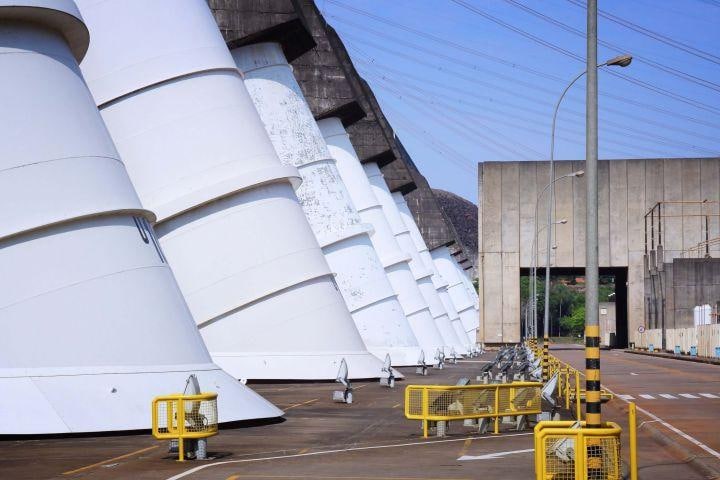
Miners have long been eyeing Paraguay’s huge hydroelectric dams: Itaipú and Yacyretá, both of which generate an estimated 8,500 MW of power. Much of this currently goes to waste, however, with the nation only consuming around 3,300 MW.
The media outlets stated that the mining firms, who chose not to reveal their identities, had been in contact with Paraguayan miners – many of whom helped shape the bill – in recent weeks. The Chinese firms are reportedly keen to learn how the draft bill is progressing in parliament.
Chinese bitcoin (BTC) miners are reportedly preparing to flock to Paraguay in their droves – with reports claiming that there could be half a million rigs online in the nation in the next three years if regulators do not block miners’ progress, with some industrial players already setting up shop in the South American nation.
Per Criptonoticias, “at least eight” Chinese “financial entities” had expressed a strong interest in “transferring their mining operations to Paraguay,” according to the Paraguayan mining firm Digital Assets’ CEO Juanjo Benítez Rickmann.
In addition to Mainland Chinese miners, Rickmann claimed that “large consortiums from other regions” are also “interested in” relocating to Paraguay, with “some from Taiwan” particularly keen.
On June 23, Rickmann wrote on Twitter that he had had a “good chat” with Alfredo Shu, the Economic Advisor to the Taiwanese Embassy in Paraguay. He wrote that Shu and he had spoken about the “current situation of Bitcoin mining,” as well as a draft bill that has recently been put before parliament seeking to institutionalize and regulate crypto mining in Paraguay.
Although many international observers claim to have been underwhelmed by the bill, which was co-authored by Digital Assets, some in the Paraguay-based crypto community are cautiously optimistic that its relatively conservative nature might at least give policymakers pause for thought.
For its part, the Taiwanese Embassy in Paraguay wrote that it had been talking about BTC with Digital Assets and had spoken about “a new business strategy that will generate many opportunities” and “becoming more and more established” in Paraguay.
Miners have long been eyeing Paraguay’s huge hydroelectric dams: Itaipú and Yacyretá, both of which generate an estimated 8,500 MW of power. Much of this currently goes to waste, however, with the nation only consuming around 3,300 MW.
The media outlets stated that the mining firms, who chose not to reveal their identities, had been in contact with Paraguayan miners – many of whom helped shape the bill – in recent weeks. The Chinese firms are reportedly keen to learn how the draft bill is progressing in parliament.
🎙AMA Announcement
Crypto LvL will host an AMA Session with ESP in Crypto LvL + ESP chat.
⏱START 4PM UTC 03.08.2021
Prepare your best questions and be ready to participate in time, see you soon.
Please make sure to follow Telegram group @espcoin_chat
🌐Website - http://www.espcoin.io
Crypto LvL will host an AMA Session with ESP in Crypto LvL + ESP chat.
⏱START 4PM UTC 03.08.2021
Prepare your best questions and be ready to participate in time, see you soon.
Please make sure to follow Telegram group @espcoin_chat
🌐Website - http://www.espcoin.io
This Is How Musk’s and Saylor’s Tweets Steer Bitcoin Price
As crypto influencers such as Tesla's chief Elon Musk and MicroStrategy’s boss Michael Saylor continue to tickle millions of their followers with crypto-related tweets, recent findings show that their social media activities exert opposing effects on the prices of cryptocurrencies such as bitcoin (BTC) and dogecoin (DOGE), according to digital asset data provider The TIE and multi-asset trading platform eToro.
Musk’s 57.7m followers on Twitter and Saylor’s 1.3m followers on the same platform put significant weight behind both entrepreneurs’ crypto-related comments, in some cases leading to price hikes or drops.
“Within a few hours after a simple change in Musk’s bio to a single word, 'Bitcoin,' sent the cost of the crypto asset soaring by over 20%,” reminded the report. On the other hand, Tesla’s decision to suspend bitcoin payments amid Musk’s concerns about miners’ energy use triggered a major selloff in the market.
“The price of Bitcoin dropped -13% within a few hours before consolidating and trending sideways. Over the next 24 hours, investor sentiment also decreased from 43 (low) to 21 (very low), while tweet volume increased by 150%, from 52k to 130k,” according to the analysis.
The study contains an analysis of Musk’s and Saylor’s tweets from the second quarter of 2021, using this data to chart how their comments impacted the price performance, sentiment scores, and tweet volume change between 6 hours before and 24 hours after they were published.
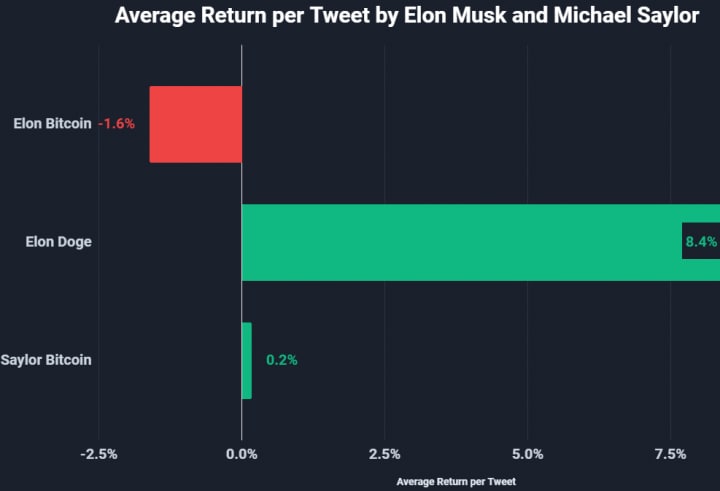
In the case of Tesla’s CEO, on average, “Musk’s tweets mentioning Bitcoin resulted in a -1.6% decrease in price 24 hours that followed,” according to the study.
In spite of an overall negative impact on bitcoin’s price, his “Bitcoin-focused tweets positively affected investor sentiment, +23.5%, and overall Bitcoin-Twitter volume +44.4%,” the report said.
In contrast, tweets by MicroStrategy’s chief have demonstrated a positive impact on bitcoin’s price.
On “average, bitcoin decreases by -1.6% return within the 24hr period after Musk tweets and an increase of +0.2% after Saylor’s,” according to the analysis.
This said, Musk’s Dogecoin-related tweets show a substantially more significant impact on the cryptocurrency’s price, contributing to an average increase in the price of +8.4%, per the researchers.
The two entrepreneurs exchange roles when it comes to how their tweets shape investors’ sentiment for bitcoin.
While Musk’s Twitter activity exerts a positive impact on investor sentiment for both bitcoin and dogecoin, in Saylor’s case, “the data tells a different story” as irrespectively of his “positive, forward-looking, informational-based tone, bitcoin has dropped by -0.8% on average after [Saylor’s] tweets.”
What Tesla’s and MicroStrategy’s chiefs have in common is their influence on the overall conversation on Twitter about bitcoin and dogecoin: typically, within 24 hours of sending tweets, Bitcoin volume increases by 44% and Dogecoin by 99.7%.
“Each exists as a market force and can serve as a leader or laggard in the market. While Saylor champions the role of Bitcoin as a new means to store value, Musk seems to lean into cryptoassets as a means to challenge the status quo. Above all, this information demonstrates the value of different points of view,” the report concluded.
As crypto influencers such as Tesla's chief Elon Musk and MicroStrategy’s boss Michael Saylor continue to tickle millions of their followers with crypto-related tweets, recent findings show that their social media activities exert opposing effects on the prices of cryptocurrencies such as bitcoin (BTC) and dogecoin (DOGE), according to digital asset data provider The TIE and multi-asset trading platform eToro.
Musk’s 57.7m followers on Twitter and Saylor’s 1.3m followers on the same platform put significant weight behind both entrepreneurs’ crypto-related comments, in some cases leading to price hikes or drops.
“Within a few hours after a simple change in Musk’s bio to a single word, 'Bitcoin,' sent the cost of the crypto asset soaring by over 20%,” reminded the report. On the other hand, Tesla’s decision to suspend bitcoin payments amid Musk’s concerns about miners’ energy use triggered a major selloff in the market.
“The price of Bitcoin dropped -13% within a few hours before consolidating and trending sideways. Over the next 24 hours, investor sentiment also decreased from 43 (low) to 21 (very low), while tweet volume increased by 150%, from 52k to 130k,” according to the analysis.
The study contains an analysis of Musk’s and Saylor’s tweets from the second quarter of 2021, using this data to chart how their comments impacted the price performance, sentiment scores, and tweet volume change between 6 hours before and 24 hours after they were published.
In the case of Tesla’s CEO, on average, “Musk’s tweets mentioning Bitcoin resulted in a -1.6% decrease in price 24 hours that followed,” according to the study.
In spite of an overall negative impact on bitcoin’s price, his “Bitcoin-focused tweets positively affected investor sentiment, +23.5%, and overall Bitcoin-Twitter volume +44.4%,” the report said.
In contrast, tweets by MicroStrategy’s chief have demonstrated a positive impact on bitcoin’s price.
On “average, bitcoin decreases by -1.6% return within the 24hr period after Musk tweets and an increase of +0.2% after Saylor’s,” according to the analysis.
This said, Musk’s Dogecoin-related tweets show a substantially more significant impact on the cryptocurrency’s price, contributing to an average increase in the price of +8.4%, per the researchers.
The two entrepreneurs exchange roles when it comes to how their tweets shape investors’ sentiment for bitcoin.
While Musk’s Twitter activity exerts a positive impact on investor sentiment for both bitcoin and dogecoin, in Saylor’s case, “the data tells a different story” as irrespectively of his “positive, forward-looking, informational-based tone, bitcoin has dropped by -0.8% on average after [Saylor’s] tweets.”
What Tesla’s and MicroStrategy’s chiefs have in common is their influence on the overall conversation on Twitter about bitcoin and dogecoin: typically, within 24 hours of sending tweets, Bitcoin volume increases by 44% and Dogecoin by 99.7%.
“Each exists as a market force and can serve as a leader or laggard in the market. While Saylor champions the role of Bitcoin as a new means to store value, Musk seems to lean into cryptoassets as a means to challenge the status quo. Above all, this information demonstrates the value of different points of view,” the report concluded.
SEC claims first enforcement action in $30M fraud case involving DeFi project.
"The labeling of the offering as decentralized and the securities as governance tokens did not hinder us from ensuring that DeFi Money Market was immediately shut down and that investors were paid back," said the SEC.
A Cayman Islands-based company and two individuals may be the first subjects in decentralized finance, or DeFi, to face enforcement action from the United States Securities and Exchange.
According to a Friday announcement, the Securities and Exchange Commission, or SEC, said that this is the first case involving securities using DeFi technology which resulted in an enforcement action. The agency said it charged the company Blockchain Credit Partners as well as Florida residents Gregory Keough and Derek Acree, alleging they were involved in offering and selling more than $30 million in unregistered securities from February 2020 to February 2021.
DeFi Money Market, according to the project’s white paper, was “a permissionless and fully decentralized protocol to earn interest on any Ethereum digital asset backed by real-world assets represented on-chain.” Billionaire Tim Draper also backed the project.
The SEC claimed that Keough and Acree misrepresented how the company was operating to investors and did not reveal that it would be unlikely to pay interest and profits from offering and selling mTokens as well as DeFi Money Market’s DMG governance tokens. Instead of purchasing car loans, as the project claimed, the SEC alleged the pair used personal funds as well as funds from Blockchain Credit Partners to make interest payments for mToken redemptions.
However, the DeFi project closed its doors in February, saying at the time it was the “result of regulatory inquiries.” The announcement led to a huge price drop in DMG, making it more unlikely that investors would be able to redeem their tokens.
“The federal securities laws apply with equal force to age-old frauds wrapped in today’s latest technology,” said Daniel Michael, chief of the SEC Enforcement Division’s Complex Financial Instruments Unit. “The labeling of the offering as decentralized and the securities as governance tokens did not hinder us from ensuring that DeFi Money Market was immediately shut down and that investors were paid back.”
"The labeling of the offering as decentralized and the securities as governance tokens did not hinder us from ensuring that DeFi Money Market was immediately shut down and that investors were paid back," said the SEC.
A Cayman Islands-based company and two individuals may be the first subjects in decentralized finance, or DeFi, to face enforcement action from the United States Securities and Exchange.
According to a Friday announcement, the Securities and Exchange Commission, or SEC, said that this is the first case involving securities using DeFi technology which resulted in an enforcement action. The agency said it charged the company Blockchain Credit Partners as well as Florida residents Gregory Keough and Derek Acree, alleging they were involved in offering and selling more than $30 million in unregistered securities from February 2020 to February 2021.
DeFi Money Market, according to the project’s white paper, was “a permissionless and fully decentralized protocol to earn interest on any Ethereum digital asset backed by real-world assets represented on-chain.” Billionaire Tim Draper also backed the project.
The SEC claimed that Keough and Acree misrepresented how the company was operating to investors and did not reveal that it would be unlikely to pay interest and profits from offering and selling mTokens as well as DeFi Money Market’s DMG governance tokens. Instead of purchasing car loans, as the project claimed, the SEC alleged the pair used personal funds as well as funds from Blockchain Credit Partners to make interest payments for mToken redemptions.
However, the DeFi project closed its doors in February, saying at the time it was the “result of regulatory inquiries.” The announcement led to a huge price drop in DMG, making it more unlikely that investors would be able to redeem their tokens.
“The federal securities laws apply with equal force to age-old frauds wrapped in today’s latest technology,” said Daniel Michael, chief of the SEC Enforcement Division’s Complex Financial Instruments Unit. “The labeling of the offering as decentralized and the securities as governance tokens did not hinder us from ensuring that DeFi Money Market was immediately shut down and that investors were paid back.”

Pre-sale in 10minutes, huge marketing campaign the one you've never seen before + a famous rapper is going to advertise our pre-sale shhh🤫!
Pre-Sale link : www.rodtoken.com/presale
✅ Website : https://rodtoken.com
✅ Telegram : https://t.me/rodtoken - beware of scammers.
♛ 2% Rewards to Holders💰
♛ 3% Marketing Contribution💎
♛ 7% Buy-Back Contracts🔥
♛ Long-term marketing strategy
♛ Transparent project🖼
♛ Total Supply: 1 Quadrilion🔥
Presale will be organized on DxSale Platform.
Pre-Sale link : www.rodtoken.com/presale
✅ Website : https://rodtoken.com
✅ Telegram : https://t.me/rodtoken - beware of scammers.
♛ 2% Rewards to Holders💰
♛ 3% Marketing Contribution💎
♛ 7% Buy-Back Contracts🔥
♛ Long-term marketing strategy
♛ Transparent project🖼
♛ Total Supply: 1 Quadrilion🔥
Presale will be organized on DxSale Platform.
Take Part in PrimeXBT’s $20,000 Giveaway!
PrimeXBT is excited to present an all-new giveaway designed to reward some of the platform’s users who interact with PrimeXBT on social media and community chanels.
Learn more https://primexbt.com/blog/take-part-in-primexbts-20000-giveaway/
PrimeXBT is excited to present an all-new giveaway designed to reward some of the platform’s users who interact with PrimeXBT on social media and community chanels.
Learn more https://primexbt.com/blog/take-part-in-primexbts-20000-giveaway/
Ethereum supply flips briefly into deflation as gas fees spike.
A spike in gas fees and ETH burn rates has produced almost 800 deflationary blocks so far.
The theoretical deflationary properties of Ethereum’s London upgrade last week have already been seen in action on the blockchain with almost 800 "deflationary blocks" produced.
A spike in the Ethereum transaction fee burn rate has resulted in at least two hours when the supply was deflationary. The network has come under heavy load over the past couple of days which has resulted in a lot more gas being burnt.
Around four hours ago (as of 22.00 UTC), the ‘ETH Burn Bot’ recorded an instance when 545 ETH was burnt within a one-hour period. With Ethereum issuance reported at 532 ETH per hour, it resulted in the asset seeing deflation of minus 13 ETH for that brief period.
A larger deflationary burn was detected by the ETH Burn Bot a couple of hours later in which 945 tokens were burnt within the hour resulting in a temporary negative issuance of -417 ETH. It calculated this as an annualized deflation rate of -3.12%.
When the amount of ETH burned is greater than the mining reward, deflationary blocks are produced and the supply temporarily decreases. This has been observed on a tracker from advisory firm Carbono which is currently reporting that there have been 791 deflationary blocks so far, which it defines as blocks where the burnt fee exceeded the mined ETH.
When the London hard fork was deployed on August 5, it introduced the highly anticipated EIP-1559 upgrade that adjusted the transaction fee calculation system. Part of that adjustment introduced a mechanism that burns a portion of the base fees collected.
The Ethereum economy is not expected to see sustained deflation until the fee burning is combined with the reduction in block reward issuance as a result of the merge to proof-of-stake at some stage in 2022.
The news is not all good for Ethereum users however, as gas prices have increased again. According to Bitinfocharts, the average transaction price has climbed to $20 from a low of around $4 in late July. Etherscan’s gas tracker is reporting as much as $28.60 for a token swap on Uniswap.
A spike in gas fees and ETH burn rates has produced almost 800 deflationary blocks so far.
The theoretical deflationary properties of Ethereum’s London upgrade last week have already been seen in action on the blockchain with almost 800 "deflationary blocks" produced.
A spike in the Ethereum transaction fee burn rate has resulted in at least two hours when the supply was deflationary. The network has come under heavy load over the past couple of days which has resulted in a lot more gas being burnt.
Around four hours ago (as of 22.00 UTC), the ‘ETH Burn Bot’ recorded an instance when 545 ETH was burnt within a one-hour period. With Ethereum issuance reported at 532 ETH per hour, it resulted in the asset seeing deflation of minus 13 ETH for that brief period.
A larger deflationary burn was detected by the ETH Burn Bot a couple of hours later in which 945 tokens were burnt within the hour resulting in a temporary negative issuance of -417 ETH. It calculated this as an annualized deflation rate of -3.12%.
When the amount of ETH burned is greater than the mining reward, deflationary blocks are produced and the supply temporarily decreases. This has been observed on a tracker from advisory firm Carbono which is currently reporting that there have been 791 deflationary blocks so far, which it defines as blocks where the burnt fee exceeded the mined ETH.
When the London hard fork was deployed on August 5, it introduced the highly anticipated EIP-1559 upgrade that adjusted the transaction fee calculation system. Part of that adjustment introduced a mechanism that burns a portion of the base fees collected.
The Ethereum economy is not expected to see sustained deflation until the fee burning is combined with the reduction in block reward issuance as a result of the merge to proof-of-stake at some stage in 2022.
The news is not all good for Ethereum users however, as gas prices have increased again. According to Bitinfocharts, the average transaction price has climbed to $20 from a low of around $4 in late July. Etherscan’s gas tracker is reporting as much as $28.60 for a token swap on Uniswap.
How ‘Bitcoin With Smart Contracts,’ Ethereum Classic, Outperformed ETH.
Ethereum Classic (ETC) has had as good a bull market as pretty much every other top-50 cryptoassets out there. Long neglected by virtue of its well-documented vulnerability to 51% attacks, it nonetheless outperformed Ethereum (ETH) on various days in May, while enjoying a nearly 2,900% rise in trading volume.
It continued to attract attention at the end of June, when it posted an 80% surge in just over a week, and capped off a 200% rise in one quarter. For those who’d grown used to disregarding the cryptoasset and its blockchain, such rises caused them to sit up and take notice, wondering what exactly was driving this growth.
Well, according to industry players, interest in ETC has been caused by a combination of Ethereum’s transition to proof-of-stake (PoS) and an increase in development work. As such, they expect Ethereum Classic to have long-term viability as a smart contract platform with a commitment to proof-of-work (PoW) and a supply cap.
Ethereum Classic and Ethereum 2.0
On January 1, ETC was priced at around USD 6. However, it rose to USD 167 by May 6, representing an increase of 2,847% in roughly five months.
At the time of writing, ETC, ranked 21st by market capitalization, trades at USD 64 and is up by 821% in a year, compared with ETH's 671%. (But ETH outperformed ETC in the past month.)
However, ETC is still far away from ETH when it comes to usage and adoption of this original Ethereum blockchain.
Ethereum Classic (ETC) has had as good a bull market as pretty much every other top-50 cryptoassets out there. Long neglected by virtue of its well-documented vulnerability to 51% attacks, it nonetheless outperformed Ethereum (ETH) on various days in May, while enjoying a nearly 2,900% rise in trading volume.
It continued to attract attention at the end of June, when it posted an 80% surge in just over a week, and capped off a 200% rise in one quarter. For those who’d grown used to disregarding the cryptoasset and its blockchain, such rises caused them to sit up and take notice, wondering what exactly was driving this growth.
Well, according to industry players, interest in ETC has been caused by a combination of Ethereum’s transition to proof-of-stake (PoS) and an increase in development work. As such, they expect Ethereum Classic to have long-term viability as a smart contract platform with a commitment to proof-of-work (PoW) and a supply cap.
Ethereum Classic and Ethereum 2.0
On January 1, ETC was priced at around USD 6. However, it rose to USD 167 by May 6, representing an increase of 2,847% in roughly five months.
At the time of writing, ETC, ranked 21st by market capitalization, trades at USD 64 and is up by 821% in a year, compared with ETH's 671%. (But ETH outperformed ETC in the past month.)
However, ETC is still far away from ETH when it comes to usage and adoption of this original Ethereum blockchain.

Eth2 staking contract ranks as single-largest Ether hodler with $21.5B.
The Eth2 staking contract is now the single-largest address by Ether holdings.
The staking contract for the Ethereum 2.0 blockchain is now the single-largest holder of Ether.
According to blockchain analytics provider Nansen, the Eth2 staking contract has surpassed Wrapped Ethereum (wETH) to become the single largest holder of ETH. Unlike Ether, Wrapped Ether adheres to the ERC-20 standard, making it the favored representation of ETH among DeFi protocols that use ERC-20 tokens.
The findings were posted to Twitter by Alex Svanevik, CEO of blockchain analytics firm, Nansen, on Aug. 17. The data shows that the Beacon Chain’s deposit contract holds 6.73 million ETH — worth roughly $21.5 billion at current prices.
By contrast, Nansen’s data suggests the Wrapped Ethereum contract holds 6.7 million ETH ($21.4 billion), followed by Binance with 2.29 million ETH ($7.3 billion).
The quantity of Ether locked staked on Eth2 currently represents 5.7% of Ethereum’s circulating supply, according to CoinMarketCap. There are now 210,000 validators for the Eth2 network according to Beaconcha.
Currently, Ether staked on Eth2 is locked up and cannot be withdrawn from the contract until Ethereum’s forthcoming chain-merge that will meld the Ethereum and Eth2 networks. The chain merge is currently expected to take place during the first half of 2022.
According to Staking Rewards, Eth2 is currently the third-largest Proof-of-Stake network by staked capitalization, ranking behind Cardano’s $49 billion and Solana’s $27.5 billion.
The news comes shortly after a major milestone for Ethereum’s Eth2 roadmap, with the network successfully deploying its London upgrades on August 5.
The hard fork contained the highly anticipated Ethereum Improvement Proposal 1559, which introduced a base transaction fee that is burned from supply into Ethereum’s fee market.
According to Ultrasound.Money, 54,916 ETH worth $175 million have been destroyed through transaction fees in the dozen days since London went live. At a current burn rate of 3.28 ETH, more than 140,000 ETH could be burned each month should network activity remain consistent.
At the time of writing, ETH prices had retreated 3.3% over the past 24 hours to trade at $3,180.
The Eth2 staking contract is now the single-largest address by Ether holdings.
The staking contract for the Ethereum 2.0 blockchain is now the single-largest holder of Ether.
According to blockchain analytics provider Nansen, the Eth2 staking contract has surpassed Wrapped Ethereum (wETH) to become the single largest holder of ETH. Unlike Ether, Wrapped Ether adheres to the ERC-20 standard, making it the favored representation of ETH among DeFi protocols that use ERC-20 tokens.
The findings were posted to Twitter by Alex Svanevik, CEO of blockchain analytics firm, Nansen, on Aug. 17. The data shows that the Beacon Chain’s deposit contract holds 6.73 million ETH — worth roughly $21.5 billion at current prices.
By contrast, Nansen’s data suggests the Wrapped Ethereum contract holds 6.7 million ETH ($21.4 billion), followed by Binance with 2.29 million ETH ($7.3 billion).
The quantity of Ether locked staked on Eth2 currently represents 5.7% of Ethereum’s circulating supply, according to CoinMarketCap. There are now 210,000 validators for the Eth2 network according to Beaconcha.
Currently, Ether staked on Eth2 is locked up and cannot be withdrawn from the contract until Ethereum’s forthcoming chain-merge that will meld the Ethereum and Eth2 networks. The chain merge is currently expected to take place during the first half of 2022.
According to Staking Rewards, Eth2 is currently the third-largest Proof-of-Stake network by staked capitalization, ranking behind Cardano’s $49 billion and Solana’s $27.5 billion.
The news comes shortly after a major milestone for Ethereum’s Eth2 roadmap, with the network successfully deploying its London upgrades on August 5.
The hard fork contained the highly anticipated Ethereum Improvement Proposal 1559, which introduced a base transaction fee that is burned from supply into Ethereum’s fee market.
According to Ultrasound.Money, 54,916 ETH worth $175 million have been destroyed through transaction fees in the dozen days since London went live. At a current burn rate of 3.28 ETH, more than 140,000 ETH could be burned each month should network activity remain consistent.
At the time of writing, ETH prices had retreated 3.3% over the past 24 hours to trade at $3,180.
South Korean Crypto Exchanges Plead for 6 Months of Regulatory Mercy
South Korean blockchain organizations have told regulators that it will be impossible for the nation’s crypto exchanges to meet a September 24 registration deadline and want six more months to prepare – although it looks like their pleas may have fallen on deaf ears.
As previously reported, none of the nation’s trading platforms currently have the required paperwork in place and only a few have obtained Information Security Management System (ISMS) certification. Additionally, a joint regulatory audit this week found that zero out of 33 leading exchanges had banking contracts in place, with anti-money laundering protocols, management and security issues also unresolved.
This state of play will essentially mean that barring a massive turnaround in the next four weeks, no crypto exchanges will be in a fit state to register with the Financial Services Commission (FSC)’s Financial Intelligence Unit.
And that would bring crypto trading to a screeching halt in a nation where investment has boomed this year: unregistered exchange operators will face hefty prison sentences and fines after the deadline passes.
Politicians have warned of a “shutdown crisis” coming in September, with many smaller exchanges already throwing in the towel.
At an official meeting between the Korea Fintech Industry Association, the opposition lawmaker Cho Myung-Hee and the FSC, the FIU, the Financial Supervisory Service and the Federation of Banks, the exchanges made their case.
Per TVChosun, one exchange CEO told the regulators that it was “physically impossible” for trading platforms to have the necessary protocols in place by next month.
A leading academic, Kim Hyung-Joong, a blockchain-specializing professor at Korea University, also stated, “There is a concern that the closure of exchanges will harm the public.”
But the regulators appeared unmoved by the appeal, and the FSC indicated it would not stay its hand.
An official was quoted as stating that “a year and four months” had already gone by since the National Assembly approved the legislation that will force the changes. The legislation promulgated in March this year, with a six-month grace period for adoption.
The same official stated that “giving” exchanges “an additional six months will not change anything.”
South Korean blockchain organizations have told regulators that it will be impossible for the nation’s crypto exchanges to meet a September 24 registration deadline and want six more months to prepare – although it looks like their pleas may have fallen on deaf ears.
As previously reported, none of the nation’s trading platforms currently have the required paperwork in place and only a few have obtained Information Security Management System (ISMS) certification. Additionally, a joint regulatory audit this week found that zero out of 33 leading exchanges had banking contracts in place, with anti-money laundering protocols, management and security issues also unresolved.
This state of play will essentially mean that barring a massive turnaround in the next four weeks, no crypto exchanges will be in a fit state to register with the Financial Services Commission (FSC)’s Financial Intelligence Unit.
And that would bring crypto trading to a screeching halt in a nation where investment has boomed this year: unregistered exchange operators will face hefty prison sentences and fines after the deadline passes.
Politicians have warned of a “shutdown crisis” coming in September, with many smaller exchanges already throwing in the towel.
At an official meeting between the Korea Fintech Industry Association, the opposition lawmaker Cho Myung-Hee and the FSC, the FIU, the Financial Supervisory Service and the Federation of Banks, the exchanges made their case.
Per TVChosun, one exchange CEO told the regulators that it was “physically impossible” for trading platforms to have the necessary protocols in place by next month.
A leading academic, Kim Hyung-Joong, a blockchain-specializing professor at Korea University, also stated, “There is a concern that the closure of exchanges will harm the public.”
But the regulators appeared unmoved by the appeal, and the FSC indicated it would not stay its hand.
An official was quoted as stating that “a year and four months” had already gone by since the National Assembly approved the legislation that will force the changes. The legislation promulgated in March this year, with a six-month grace period for adoption.
The same official stated that “giving” exchanges “an additional six months will not change anything.”

Starting August 26, 2021, FTX, Raydium and Apollo-X will host the sale of the highly anticipated tokens of the Solana-powered Star Atlas metaverse, ushering in the next era of play-to-earn enabled GameFi revolution. In the two IDOs, additional allocation of ATLAS and POLIS tokens will be available to holders of meta-posters.
FTX:
https://help.ftx.com/hc/en-us/articles/4405371380116-How-to-participate-in-the-Star-Atlas-Sale
Raydium:
https://raydium.medium.com/star-atlas-is-launching-on-acceleraytor-fa35cfe3291f
Appollo-X
https://apollox.paidnetwork.com/project/star-atlas
Official Websites:
* https://StarAtlas.com
* app: https://play.staratlas.com/
Telegram: https://t.me/staratlasgame
FTX:
https://help.ftx.com/hc/en-us/articles/4405371380116-How-to-participate-in-the-Star-Atlas-Sale
Raydium:
https://raydium.medium.com/star-atlas-is-launching-on-acceleraytor-fa35cfe3291f
Appollo-X
https://apollox.paidnetwork.com/project/star-atlas
Official Websites:
* https://StarAtlas.com
* app: https://play.staratlas.com/
Telegram: https://t.me/staratlasgame
Coinbase warns infrastructure bill's crypto provisions could impact 20% of US population.
Coinbase’s global tax VP has slammed Congress for the controversial crypto tax provisions rushed into the infrastructure deal, warning the bill could impact 60 million Americans.
Coinbase’s Global VP of tax, Lawrence Zlatkin, has taken aim at the rushed cryptocurrency provisions added to Congress’ bipartisan infrastructure bill “at the last minute,” slamming lawmakers for hastily inserting amendments that could impact “60 million Americans.”
In an Aug. 21 blog post taking aim at an Aug. 19 editorial article from Bloomberg that praised the infrastructure bill’s crypto provisions, Zlatkin criticized the lack of opportunity for public discourse regarding the legislation, estimating that 20% of the U.S. population are invested in digital assets:
“Today, around 60 million Americans own crypto — roughly one-fifth of the entire U.S. population. Those Americans, and the entire crypto ecosystem, deserve more dialogue than midnight provisions inserted at the last minute.”
Zlatkin notes that outrage over the bill’s language extended beyond the confines of the crypto industry, noting estimates that the popular “public outcry” saw senators contacted by nearly 80,000 people within “just a few days.”
In particular, the Coinbase executive highlighted the broad definition of digital asset “broker” included in the bill — which could impose strict reporting requirements on network validators and software developers who would be unable to comply with their obligations under the bill in its current form.
“As long as the statute says that software developers, miners, stakers must do the impossible, there is no lawyer who would advise them to risk operating in violation of laws whose penalties for non-compliance would easily bankrupt them,” he said, adding:
“This will harm innovation and stifle the potential of a hugely important technology at its earliest stages of development. Tax policy should be thoughtful and deliberate. Broad overreach is a regulatory mistake.”
Zlatkin added that digital asset brokers should be subjected to the same third-party reporting requirements as mainstream brokerage firms.
Coinbase’s global tax VP has slammed Congress for the controversial crypto tax provisions rushed into the infrastructure deal, warning the bill could impact 60 million Americans.
Coinbase’s Global VP of tax, Lawrence Zlatkin, has taken aim at the rushed cryptocurrency provisions added to Congress’ bipartisan infrastructure bill “at the last minute,” slamming lawmakers for hastily inserting amendments that could impact “60 million Americans.”
In an Aug. 21 blog post taking aim at an Aug. 19 editorial article from Bloomberg that praised the infrastructure bill’s crypto provisions, Zlatkin criticized the lack of opportunity for public discourse regarding the legislation, estimating that 20% of the U.S. population are invested in digital assets:
“Today, around 60 million Americans own crypto — roughly one-fifth of the entire U.S. population. Those Americans, and the entire crypto ecosystem, deserve more dialogue than midnight provisions inserted at the last minute.”
Zlatkin notes that outrage over the bill’s language extended beyond the confines of the crypto industry, noting estimates that the popular “public outcry” saw senators contacted by nearly 80,000 people within “just a few days.”
In particular, the Coinbase executive highlighted the broad definition of digital asset “broker” included in the bill — which could impose strict reporting requirements on network validators and software developers who would be unable to comply with their obligations under the bill in its current form.
“As long as the statute says that software developers, miners, stakers must do the impossible, there is no lawyer who would advise them to risk operating in violation of laws whose penalties for non-compliance would easily bankrupt them,” he said, adding:
“This will harm innovation and stifle the potential of a hugely important technology at its earliest stages of development. Tax policy should be thoughtful and deliberate. Broad overreach is a regulatory mistake.”
Zlatkin added that digital asset brokers should be subjected to the same third-party reporting requirements as mainstream brokerage firms.

🔥 Imagine Fair Launches 🚀 with x10 to x500 returns ! 💰
🌟 No scams, No presale, No VC !
It’s the goal of Crypto Factory 💰🚀
All the projects are only fair launches with
✅ verified teams 👱🏻♂️
✅ audited contracts 📃
✅ small market cap 💰
✅ locked liquidy 🔐
✅ transparent tokenomics 📈
JOIN NOW ➡️➡️ https://bit.ly/3mAaE2l
A new coin launched every week 🚀 x10 to x500 is possible each week !
JOIN NOW ➡️➡️ https://bit.ly/3mAaE2l
🌟 No scams, No presale, No VC !
It’s the goal of Crypto Factory 💰🚀
All the projects are only fair launches with
✅ verified teams 👱🏻♂️
✅ audited contracts 📃
✅ small market cap 💰
✅ locked liquidy 🔐
✅ transparent tokenomics 📈
JOIN NOW ➡️➡️ https://bit.ly/3mAaE2l
A new coin launched every week 🚀 x10 to x500 is possible each week !
JOIN NOW ➡️➡️ https://bit.ly/3mAaE2l
Telegram
Crypto Factory Incubator - New FAIR LAUNCH Every Week
Get an Early Access to a New BSC #FairLaunch every week
(Locked Liquidity, Audited Contract, Verified Teams, Transparent Tokenomics and $10k initial MC) -
This is NOT financial Advice.
Do Your Own Research.
(Locked Liquidity, Audited Contract, Verified Teams, Transparent Tokenomics and $10k initial MC) -
This is NOT financial Advice.
Do Your Own Research.
Binance incapable of effective supervision, British regulator states.
The world’s largest exchange has played regulatory hopscotch, moving from different jurisdictions without central offices.
The United Kingdom’s Financial Conduct Authority (FCA) released a supervisory notice on Wednesday, stating that prominent crypto exchange Binance is incapable of being effectively supervised and exposes users to financial risk.
The FCA notice — originally dated June 25 — was in relation to Binance’s “complex and high-risk financial products” that pose a significant risk to the investors. It read:
“Based upon the firm’s engagement to date, the FCA considers that the firm is not capable of being effectively supervised.”
In the notice addressed to Binance Markets Limited, the FCA required the crypto business to halt activities that were authorized back in April 2018 such as advising, safeguarding and dealing in crypto investments.
Additionally, the financial watchdog has asked Binance to display the FCA’s decision that reads, “Binance Markets Limited is not permitted to undertake any regulated activity in the UK.”
This means displaying the message prominently across Binance’s website and any other communication channels and social media. The exchange was also asked to take down the live advertisements and promotions and “provide written confirmation of the steps it has taken to meet the requirements.”
The FCA cited three main reasons for imposing restrictions on Binance, which include failing to carry out regulated activity, not satisfying the Effective Supervision Threshold Condition, and not securing an appropriate degree of protection for consumers.
According to the notice, Binance has also failed to share a final draft of its business plan and strategy that demonstrates prominent measures against money laundering and terror financing. In this regard, Binance told Cointelegraph:
“We are committed to working with regulators and policymakers to develop policies that protect consumers, encourage innovation, and move our industry forward.”
Binance has been at the receiving end of regulatory heat across the globe and has amped up efforts to comply. In this effort, the crypto exchange has imposed lower leverage options and strict Know Your Customer requirements for all Binance users.
The world’s largest exchange has played regulatory hopscotch, moving from different jurisdictions without central offices.
The United Kingdom’s Financial Conduct Authority (FCA) released a supervisory notice on Wednesday, stating that prominent crypto exchange Binance is incapable of being effectively supervised and exposes users to financial risk.
The FCA notice — originally dated June 25 — was in relation to Binance’s “complex and high-risk financial products” that pose a significant risk to the investors. It read:
“Based upon the firm’s engagement to date, the FCA considers that the firm is not capable of being effectively supervised.”
In the notice addressed to Binance Markets Limited, the FCA required the crypto business to halt activities that were authorized back in April 2018 such as advising, safeguarding and dealing in crypto investments.
Additionally, the financial watchdog has asked Binance to display the FCA’s decision that reads, “Binance Markets Limited is not permitted to undertake any regulated activity in the UK.”
This means displaying the message prominently across Binance’s website and any other communication channels and social media. The exchange was also asked to take down the live advertisements and promotions and “provide written confirmation of the steps it has taken to meet the requirements.”
The FCA cited three main reasons for imposing restrictions on Binance, which include failing to carry out regulated activity, not satisfying the Effective Supervision Threshold Condition, and not securing an appropriate degree of protection for consumers.
According to the notice, Binance has also failed to share a final draft of its business plan and strategy that demonstrates prominent measures against money laundering and terror financing. In this regard, Binance told Cointelegraph:
“We are committed to working with regulators and policymakers to develop policies that protect consumers, encourage innovation, and move our industry forward.”
Binance has been at the receiving end of regulatory heat across the globe and has amped up efforts to comply. In this effort, the crypto exchange has imposed lower leverage options and strict Know Your Customer requirements for all Binance users.
🚀 SAFENINJA LAUNCHING TOMORROW
➡️➡️ @safeninjabsc
🏆 ACHIEVEMENTS
- More than 5k members since marketing started YESTERDAY!!! (I see you all 👀)
- Pre-approved on CMC 😏😏😏
- Big Shoutouts coming from Influencers (hi voskcoin)😳
💎 Did you spot SafeNinja awesome features? 💎
💸💸Awesomeness #1 - Double Airdrops💸💸
- 1 Airdrop every 24h: 1% tax fees applied to Daily Airdrop => For new Holders 👶
- 1 Airdrop every week: 1% tax fees applied to Weekly Airdrop => Special “Diamond Hands” airdrop next Friday for those who never sell 💎
🔸Awesomeness #2 - Reward in BNB 🔸
5% Cake reward every 60min
🔥Awesomeness #3 - Daily Token Burn 🔥
1% of every transaction is used to buyback & burn to pump the charts!
⌛️ COMING SOON ⌛️
- Fast listing on Coingeko / CMC thanks to our network
- First Airdrop after launch
- Custom “Diamond Hands” Airdrop next Friday for Hodlers who never sold since launch
💎 ROADMAP: Great Things INCOMING! 💎
- Dashboard reward and airdrops in real time
- Ninja Farm (Earn BNB/BUSD with 1000%++ APR)
- Ninja Boost (earn BUSD while still earn GucciCake reflection rewards)
- Ninja Vault (auto-compound to earn GucciCake with 3000%++ APY)
- Mining Pool & Farm
- Ninjacake Swap
- NFTs
➡️➡️ @safeninjabsc
🚀 JOIN US NOW and Enjoy the ride! 🚀
➡️➡️ @safeninjabsc
🏆 ACHIEVEMENTS
- More than 5k members since marketing started YESTERDAY!!! (I see you all 👀)
- Pre-approved on CMC 😏😏😏
- Big Shoutouts coming from Influencers (hi voskcoin)😳
💎 Did you spot SafeNinja awesome features? 💎
💸💸Awesomeness #1 - Double Airdrops💸💸
- 1 Airdrop every 24h: 1% tax fees applied to Daily Airdrop => For new Holders 👶
- 1 Airdrop every week: 1% tax fees applied to Weekly Airdrop => Special “Diamond Hands” airdrop next Friday for those who never sell 💎
🔸Awesomeness #2 - Reward in BNB 🔸
5% Cake reward every 60min
🔥Awesomeness #3 - Daily Token Burn 🔥
1% of every transaction is used to buyback & burn to pump the charts!
⌛️ COMING SOON ⌛️
- Fast listing on Coingeko / CMC thanks to our network
- First Airdrop after launch
- Custom “Diamond Hands” Airdrop next Friday for Hodlers who never sold since launch
💎 ROADMAP: Great Things INCOMING! 💎
- Dashboard reward and airdrops in real time
- Ninja Farm (Earn BNB/BUSD with 1000%++ APR)
- Ninja Boost (earn BUSD while still earn GucciCake reflection rewards)
- Ninja Vault (auto-compound to earn GucciCake with 3000%++ APY)
- Mining Pool & Farm
- Ninjacake Swap
- NFTs
➡️➡️ @safeninjabsc
🚀 JOIN US NOW and Enjoy the ride! 🚀