
Verasity Launches One of the Largest PUBGm Tournaments.
Verasity’s Esports Fight Club is back with yet another ingenious invention by launching one of the largest Asian mobile PlayerUnknown’s Battlegrounds (PUBG) tournaments, "Ultimate Warrior Showdown" with leading gaming partners.
According to Newzoo esports survey, esports revenues rose above $1 billion in 2019, with many estimates projecting market growth around $2.5 billion by 2025. The growth of esports in recent years with games is indeed remarkable!
Verasity – a reward-based platform for esports, gaming, and video entertainment—is a leading company providing proprietary technology, uniquely rewarding gamers, viewers, and publishers. The game-changer—Verasity, is the first platform to provide user-generated esports and casual gaming jackpot tournaments supported by both Fiat and Digital Tokens, video gaming content monetized by Verasity Ad stack and Proof of view (PoV), enables tokenized rewards (VRA) and loyalty schemes within the video player VeraWallet, and also supports over 2 million video publishers with their SDK products to increase engagement and revenues by 35%.
Therefore, with the pace-setter platform—Verasity, the Ultimate Warrior Showdown is set to be one of the biggest tournaments in Asia. Moreso, the tournament is open to participants from South Asia and boasts some of the top Asian teams playing in the invitationals. The top 10 teams from the open qualifiers will face other teams in the Grand Finals for a combined prize pool of $1500.
In a big leap to gaming ingenuity, the Ultimate Warrior Showdown tournament has been created in partnership with Tencent Games, OKEx, Athena Gaming, and pro teams such as Onic Esports, T1, and NOVA Esports. While Verasity’s Esports Fight Club is the owner of all the content rights including broadcast rights and branding rights.
Verasity’s Esports Fight Club is back with yet another ingenious invention by launching one of the largest Asian mobile PlayerUnknown’s Battlegrounds (PUBG) tournaments, "Ultimate Warrior Showdown" with leading gaming partners.
According to Newzoo esports survey, esports revenues rose above $1 billion in 2019, with many estimates projecting market growth around $2.5 billion by 2025. The growth of esports in recent years with games is indeed remarkable!
Verasity – a reward-based platform for esports, gaming, and video entertainment—is a leading company providing proprietary technology, uniquely rewarding gamers, viewers, and publishers. The game-changer—Verasity, is the first platform to provide user-generated esports and casual gaming jackpot tournaments supported by both Fiat and Digital Tokens, video gaming content monetized by Verasity Ad stack and Proof of view (PoV), enables tokenized rewards (VRA) and loyalty schemes within the video player VeraWallet, and also supports over 2 million video publishers with their SDK products to increase engagement and revenues by 35%.
Therefore, with the pace-setter platform—Verasity, the Ultimate Warrior Showdown is set to be one of the biggest tournaments in Asia. Moreso, the tournament is open to participants from South Asia and boasts some of the top Asian teams playing in the invitationals. The top 10 teams from the open qualifiers will face other teams in the Grand Finals for a combined prize pool of $1500.
In a big leap to gaming ingenuity, the Ultimate Warrior Showdown tournament has been created in partnership with Tencent Games, OKEx, Athena Gaming, and pro teams such as Onic Esports, T1, and NOVA Esports. While Verasity’s Esports Fight Club is the owner of all the content rights including broadcast rights and branding rights.

Bitcoin Mining Legalized in Venezuela, Miners Must Join ‘National Pool’.
The government of Venezuela said that it has legalized bitcoin (BTC) and altcoin mining – but added that miners will have to obtain licenses and agree to be supervised by regulators.
According to media outlet Criptonoticias, the government has issued an official decree stating that all crypto mining rig manufacturers, crypto “farm” constructors and mining hardware importers will also be subject to spot inspections.
Citizens who want to mine bitcoin and other cryptoassets will have to apply for a license from the National Superintendency of Cryptoassets and Related Activities (SUNACRIP), which will police the nation’s miners.
SUNACRIP did not mention how much a license would cost, but added that pricing details would be made available via an online application system that is currently in construction.
The regulator added that it would be creating a “comprehensive registry of miners,” an online database that hosts details about individual miners, detailing what kind of mining activities they carry out, no matter whether they market, make, import, or make use of crypto mining equipment.
And the new regulations do not stop there: SUNACRIP has created what it terms the National Digital Mining Pool, insisting that membership is “mandatory” – and failure to comply will be punishable with “sanctions.”
SUNACRIP stated that its measures were part of an effort to “bring together all the miners of Venezuela.”
Per data released earlier this year by the University of Cambridge’s Cambridge Center for Alternative Finance, Venezuela is Latin America’s biggest bitcoin miner, and ranks in the global top ten.
The government of Venezuela said that it has legalized bitcoin (BTC) and altcoin mining – but added that miners will have to obtain licenses and agree to be supervised by regulators.
According to media outlet Criptonoticias, the government has issued an official decree stating that all crypto mining rig manufacturers, crypto “farm” constructors and mining hardware importers will also be subject to spot inspections.
Citizens who want to mine bitcoin and other cryptoassets will have to apply for a license from the National Superintendency of Cryptoassets and Related Activities (SUNACRIP), which will police the nation’s miners.
SUNACRIP did not mention how much a license would cost, but added that pricing details would be made available via an online application system that is currently in construction.
The regulator added that it would be creating a “comprehensive registry of miners,” an online database that hosts details about individual miners, detailing what kind of mining activities they carry out, no matter whether they market, make, import, or make use of crypto mining equipment.
And the new regulations do not stop there: SUNACRIP has created what it terms the National Digital Mining Pool, insisting that membership is “mandatory” – and failure to comply will be punishable with “sanctions.”
SUNACRIP stated that its measures were part of an effort to “bring together all the miners of Venezuela.”
Per data released earlier this year by the University of Cambridge’s Cambridge Center for Alternative Finance, Venezuela is Latin America’s biggest bitcoin miner, and ranks in the global top ten.
Stablecoins Seen as Most Important Development in Crypto.
Supported by rapid growth in the decentralized finance (DeFi) field this year, stablecoins are now seen by industry players as being the most significant area of development for the crypto industry, a new report on cryptoassets from the Cambridge Centre for Alternative Finance has found.
According to the report, titled the 3rd Global Cryptoasset Benchmarking Study, stablecoins are seen by service providers as important in Asia-Pacific, Europe, Middle East & Africa, North America, and Latin America & the Caribbean.
Meanwhile, decentralized finance more broadly was stated as the second or third most important area for future development in most regions, the same survey of cryptoasset service providers found.
‘Service providers’ were defined in the report as “entities active in one or more of the
payments, custody and exchange segments.”
Further, the report also looked at how views on what will be most important in the future varied between the small and large companies surveyed.
And judging from the findings, the smallest service providers place an even greater importance on the development of stablecoins than the larger companies do, although both groups overall ranked stablecoins as having the biggest impact, ahead of things like staking, central bank digital currencies (CBDCs), and security tokens.
Meanwhile, explaining why DeFi was ranked lower than other areas in terms of impact of future developments, the report called the DeFi space “still largely experimental,” while also adding that “most DeFi applications cannot be considered meaningfully decentralized by any measure.” (Learn more: Why DeFi Isn’t Always As Decentralized As You Might Think)
“The majority of these applications are still dependent on kill switches, centralised oracles, or some other centralised support or maintenance,” the report said, although it noted that a “stated core objective for many developer teams is to focus on increasing decentralization over time.” The report also pointed to the recent emergence of DeFi protocol governance tokens as a step towards making these protocols “less dependent on centralized control.”
Also, the recently hot field known as non-fungible tokens (NFTs) were in four out of the five regions surveyed considered to have the smallest future impact, with only companies in the Asia-Pacific region saying “other developments” had even less importance.
Supported by rapid growth in the decentralized finance (DeFi) field this year, stablecoins are now seen by industry players as being the most significant area of development for the crypto industry, a new report on cryptoassets from the Cambridge Centre for Alternative Finance has found.
According to the report, titled the 3rd Global Cryptoasset Benchmarking Study, stablecoins are seen by service providers as important in Asia-Pacific, Europe, Middle East & Africa, North America, and Latin America & the Caribbean.
Meanwhile, decentralized finance more broadly was stated as the second or third most important area for future development in most regions, the same survey of cryptoasset service providers found.
‘Service providers’ were defined in the report as “entities active in one or more of the
payments, custody and exchange segments.”
Further, the report also looked at how views on what will be most important in the future varied between the small and large companies surveyed.
And judging from the findings, the smallest service providers place an even greater importance on the development of stablecoins than the larger companies do, although both groups overall ranked stablecoins as having the biggest impact, ahead of things like staking, central bank digital currencies (CBDCs), and security tokens.
Meanwhile, explaining why DeFi was ranked lower than other areas in terms of impact of future developments, the report called the DeFi space “still largely experimental,” while also adding that “most DeFi applications cannot be considered meaningfully decentralized by any measure.” (Learn more: Why DeFi Isn’t Always As Decentralized As You Might Think)
“The majority of these applications are still dependent on kill switches, centralised oracles, or some other centralised support or maintenance,” the report said, although it noted that a “stated core objective for many developer teams is to focus on increasing decentralization over time.” The report also pointed to the recent emergence of DeFi protocol governance tokens as a step towards making these protocols “less dependent on centralized control.”
Also, the recently hot field known as non-fungible tokens (NFTs) were in four out of the five regions surveyed considered to have the smallest future impact, with only companies in the Asia-Pacific region saying “other developments” had even less importance.

Chinese Judges Begin Sentencing PlusToken Bitcoin, Ethereum Scam Chiefs.
Judges in China have been handing out penalties to some of the individuals charged with masterminding the PlusToken crypto scam – a Ponzi scheme that reportedly sucked in some 2 million investors.
Per the Chinese prosecution service’s news outlet, via Xinhuanet, 16 individuals of varying seniority within the PlusToken hierarchy were last week handed fixed-term jail terms, with the most senior PlusToken orchestrator set to serve at least 11 years behind bars. Other individuals, none of whom were named in full for legal reasons, were handed lesser terms, with one more junior member handed a two-year fixed-term jail sentence.
The court heard how the PlusToken leadership accrued some USD 7.3bn worth of crypto and cash funds, mainly in bitcoin (BTC) and ethereum (ETH).
Three individuals, referred to by the court and the media only by their surnames (Chen, Ding, and Peng), used investors’ stakes to fund their own spending sprees and pay for their own bills, prosecutors told the court.
They also explained that the three individuals pooled their individual expertise to create a powerful and highly convincing façade: Chen used his own business acumen to give PlusToken the look and feel of a multinational company. Peng, meanwhile, has experience of multi-level marketing (MLM) promotion and had previously been convicted of MLM-related fraud offenses. And Ding was described as having “resources in the blockchain sector” and a deep understanding of blockchain technology.
The court also heard how the PlusToken chiefs had promised investors that using BTC or ETH stakes of USD 500, they could expect to earn up to 18% in passive income per month. Bringing more recruits in would result in yet bigger payouts, the scammers had told investors.
Prosecutors explained how they were finally able to track down some of the masterminds – by following a trail that led to a wallet holding BTC 450 (USD 4.9m)
Ding refuted the charges, claiming that he was unaware that PlusToken was being run as a pyramid scheme. However, prosecutors convinced the court that the story was a fabrication, using WeChat chat app records of conversations between Ding and Chen as proof of his guilt.
The former was issued a jail term of almost nine years, as well as a fine of over USD 586,000.
Judges in China have been handing out penalties to some of the individuals charged with masterminding the PlusToken crypto scam – a Ponzi scheme that reportedly sucked in some 2 million investors.
Per the Chinese prosecution service’s news outlet, via Xinhuanet, 16 individuals of varying seniority within the PlusToken hierarchy were last week handed fixed-term jail terms, with the most senior PlusToken orchestrator set to serve at least 11 years behind bars. Other individuals, none of whom were named in full for legal reasons, were handed lesser terms, with one more junior member handed a two-year fixed-term jail sentence.
The court heard how the PlusToken leadership accrued some USD 7.3bn worth of crypto and cash funds, mainly in bitcoin (BTC) and ethereum (ETH).
Three individuals, referred to by the court and the media only by their surnames (Chen, Ding, and Peng), used investors’ stakes to fund their own spending sprees and pay for their own bills, prosecutors told the court.
They also explained that the three individuals pooled their individual expertise to create a powerful and highly convincing façade: Chen used his own business acumen to give PlusToken the look and feel of a multinational company. Peng, meanwhile, has experience of multi-level marketing (MLM) promotion and had previously been convicted of MLM-related fraud offenses. And Ding was described as having “resources in the blockchain sector” and a deep understanding of blockchain technology.
The court also heard how the PlusToken chiefs had promised investors that using BTC or ETH stakes of USD 500, they could expect to earn up to 18% in passive income per month. Bringing more recruits in would result in yet bigger payouts, the scammers had told investors.
Prosecutors explained how they were finally able to track down some of the masterminds – by following a trail that led to a wallet holding BTC 450 (USD 4.9m)
Ding refuted the charges, claiming that he was unaware that PlusToken was being run as a pyramid scheme. However, prosecutors convinced the court that the story was a fabrication, using WeChat chat app records of conversations between Ding and Chen as proof of his guilt.
The former was issued a jail term of almost nine years, as well as a fine of over USD 586,000.
Crypto 'Is Now Finally Being Taken Seriously' By Taxman - PwC.
The major consulting company, PwC said that the increased interest in cryptoassets from tax authorities and other regulators shows that this asset class is now finally being taken seriously. (Updated at 14:59 UTC: the new last paragraph has been added).
"What our research shows is that the guidance issued by many tax authorities is already getting dated. Yes – it is important that people know how to account for tax on the trading of bitcoin and other cryptocurrencies but that is really crypto tax 101," Peter Brewin, Tax Partner, PwC Hong Kong, was quoted as saying in a press release.
However, he stressed that in nearly all jurisdictions the crypto industry is still lacking principles-based guidance that is fit for the new decentralized economy.
Today, PwC released its first annual Global Crypto Tax Report that shows that few or none jurisdictions have issued guidance on crypto borrowing and lending, decentralized finance, non-fungible tokens, tokenized assets, and staking income.
"The PwC survey reveals that the most common treatment is to view cryptoassets as a type of property. Often this means that spending these for acquiring goods and services leads to a tax charge on disposal. This will continue to act as a major impediment to mass adoption of many crypto assets as a means of payment, unless technology solutions can be found to ease the administrative burden for users," the company said.
It also published the annual PwC Crypto Tax Index which ranks jurisdictions based on how comprehensive their crypto tax guidance is. Liechtenstein tops this year’s rankings.
"Having specific crypto tax guidance is an essential building block of the continuous institutionalization of the crypto ecosystem," Henri Arslanian, PwC Global Crypto Leader, concluded.
Meanwhile, as recently reported by The Wall Street Journal, the US Internal Revenue Service is making it a lot harder to pretend you don’t have bitcoin or other cryptoassets hidden away somewhere. They plan to alter the standard 1040 form by putting this question on the front page: At any time during 2020, did you sell, receive, send, exchange or otherwise acquire any financial interest in any virtual currency? The taxpayer must check the box "Yes" or "No."
At the same time, there was mixed news for the Japanese crypto industry as the regulatory Financial Services Agency (FCA), the body that polices the nation’s crypto companies, made no mention of the industry in its latest tax reform request submission. The FCA periodically passes tax reform requests on to the Ministry of Finance, which then has the power to recommend to parliament and the cabinet that these become enshrined in law. But per media outlet Coin Post, the FCA has made no mention of crypto tax reform – meaning that campaigners for more lenient crypto tax requirements could face frustration. However, on the plus side, the FCA’s silence on the matter could also indicate that crypto tax hikes are not on the horizon in the foreseeable future.
The major consulting company, PwC said that the increased interest in cryptoassets from tax authorities and other regulators shows that this asset class is now finally being taken seriously. (Updated at 14:59 UTC: the new last paragraph has been added).
"What our research shows is that the guidance issued by many tax authorities is already getting dated. Yes – it is important that people know how to account for tax on the trading of bitcoin and other cryptocurrencies but that is really crypto tax 101," Peter Brewin, Tax Partner, PwC Hong Kong, was quoted as saying in a press release.
However, he stressed that in nearly all jurisdictions the crypto industry is still lacking principles-based guidance that is fit for the new decentralized economy.
Today, PwC released its first annual Global Crypto Tax Report that shows that few or none jurisdictions have issued guidance on crypto borrowing and lending, decentralized finance, non-fungible tokens, tokenized assets, and staking income.
"The PwC survey reveals that the most common treatment is to view cryptoassets as a type of property. Often this means that spending these for acquiring goods and services leads to a tax charge on disposal. This will continue to act as a major impediment to mass adoption of many crypto assets as a means of payment, unless technology solutions can be found to ease the administrative burden for users," the company said.
It also published the annual PwC Crypto Tax Index which ranks jurisdictions based on how comprehensive their crypto tax guidance is. Liechtenstein tops this year’s rankings.
"Having specific crypto tax guidance is an essential building block of the continuous institutionalization of the crypto ecosystem," Henri Arslanian, PwC Global Crypto Leader, concluded.
Meanwhile, as recently reported by The Wall Street Journal, the US Internal Revenue Service is making it a lot harder to pretend you don’t have bitcoin or other cryptoassets hidden away somewhere. They plan to alter the standard 1040 form by putting this question on the front page: At any time during 2020, did you sell, receive, send, exchange or otherwise acquire any financial interest in any virtual currency? The taxpayer must check the box "Yes" or "No."
At the same time, there was mixed news for the Japanese crypto industry as the regulatory Financial Services Agency (FCA), the body that polices the nation’s crypto companies, made no mention of the industry in its latest tax reform request submission. The FCA periodically passes tax reform requests on to the Ministry of Finance, which then has the power to recommend to parliament and the cabinet that these become enshrined in law. But per media outlet Coin Post, the FCA has made no mention of crypto tax reform – meaning that campaigners for more lenient crypto tax requirements could face frustration. However, on the plus side, the FCA’s silence on the matter could also indicate that crypto tax hikes are not on the horizon in the foreseeable future.
Europe Has The Most Of Money Laundering-Friendly Crypto Exchanges.
Europe has the highest count of virtual asset service providers (VASPs) with deficient KYC procedures, followed by the strongest Asia-Pacific (APAC) region, and North America, claims CipherTrace, a developer of anti-money laundering, cryptocurrency forensics, and blockchain threat intelligence solutions.
Their 2020 Geographic Risk Report argued that "effective Know-Your-Customer (KYC) protocols are a vital part of any anti-money laundering (AML) regime." But in order to see how strongly implemented these protocols are, and to have geographical locations of where KYC could be "exploited by money launderers, criminals, and extremists," the researchers analyzed KYC processes of over 800 VASPs in over 80 countries. They assigned VASPs "Weak," "Porous," or "Strong" KYC score, based on how easy it would be to launder money after opening an account.
What they found is that many countries continue to host VASPs with deficient KYC - 56% of VASPs globally have weak or porous KYC in 2020. Compared to last year's result that said that two-thirds (c. 65%) of the 120 most popular crypto exchanges had weak or porous KYC practices, this year's result is an improvement - but CipherTrace warned there is still a long way to go. "The high percentage of KYC-deficient VASPs make it easy for criminals to exploit these institutions and launder their funds," they added.
Despite the 5th Anti-Money Laundering Directive (AMLD5), Europe has the highest count of VASPs with deficient KYC procedures - 60% of European VASPs have weak or porous KYC. Yet, per the chart below, it's in second place when it comes to the count of VASPs with strong KYC as well.
"The number two spot is an outlier," said the report. APAC is the region with the second-highest count of weak KYC VASPs, but at the same time, it leads as the region with the largest count of VASPs with strong KYC, as well as the region with the lowest percentage of weak and porous VASPs, according to the researchers.
North America sits in the third spot when it comes to the count of all three types of KYC that VASPs utilize. Per the chart, its weak and strong types are neck to neck.
Furthermore, the US, UK, and Russia lead as countries with the highest count of VASPs with weak KYC. Per the report, "while 44% of US and 40% of UK exchanges were found to have weak KYC practices, these KYC deficiencies characterize 80% of Russian exchanges."
The US and UK, this time with Singapore, take the lead again when looking at the countries with the highest count of combined weak and porous VASPs in the world. However, these have equally large count of strong-KYC VASPs, so their KYC averages are all still in the porous range.
"The next two closest countries with large numbers of KYC-deficient VASPS are China and Russia, yet these two countries have between 31%-44% fewer VASPs with weak or porous KYC than any of the three leading countries," the report added.
The researchers concluded that 60% of the top 10 worst KYC countries in the world are in Europe, 20% are in Latin American and Caribbean countries, and 20% are in APAC countries.
Lastly, there are VASPs that do not publicly disclose the country they are registered in, many of which hide it, even though it's clear that they are serving clients in a given country. The report found that 85% of VASPs without a clear domiciled country have weak or porous KYC. CipherTrase concluded that "the fact that these VASPs lean heavily on having little to no KYC highlights their intention to circumvent AML regulations. The lack of a clear domicile should be considered an AML red flag, especially when coupled with a poor KYC score."
Europe has the highest count of virtual asset service providers (VASPs) with deficient KYC procedures, followed by the strongest Asia-Pacific (APAC) region, and North America, claims CipherTrace, a developer of anti-money laundering, cryptocurrency forensics, and blockchain threat intelligence solutions.
Their 2020 Geographic Risk Report argued that "effective Know-Your-Customer (KYC) protocols are a vital part of any anti-money laundering (AML) regime." But in order to see how strongly implemented these protocols are, and to have geographical locations of where KYC could be "exploited by money launderers, criminals, and extremists," the researchers analyzed KYC processes of over 800 VASPs in over 80 countries. They assigned VASPs "Weak," "Porous," or "Strong" KYC score, based on how easy it would be to launder money after opening an account.
What they found is that many countries continue to host VASPs with deficient KYC - 56% of VASPs globally have weak or porous KYC in 2020. Compared to last year's result that said that two-thirds (c. 65%) of the 120 most popular crypto exchanges had weak or porous KYC practices, this year's result is an improvement - but CipherTrace warned there is still a long way to go. "The high percentage of KYC-deficient VASPs make it easy for criminals to exploit these institutions and launder their funds," they added.
Despite the 5th Anti-Money Laundering Directive (AMLD5), Europe has the highest count of VASPs with deficient KYC procedures - 60% of European VASPs have weak or porous KYC. Yet, per the chart below, it's in second place when it comes to the count of VASPs with strong KYC as well.
"The number two spot is an outlier," said the report. APAC is the region with the second-highest count of weak KYC VASPs, but at the same time, it leads as the region with the largest count of VASPs with strong KYC, as well as the region with the lowest percentage of weak and porous VASPs, according to the researchers.
North America sits in the third spot when it comes to the count of all three types of KYC that VASPs utilize. Per the chart, its weak and strong types are neck to neck.
Furthermore, the US, UK, and Russia lead as countries with the highest count of VASPs with weak KYC. Per the report, "while 44% of US and 40% of UK exchanges were found to have weak KYC practices, these KYC deficiencies characterize 80% of Russian exchanges."
The US and UK, this time with Singapore, take the lead again when looking at the countries with the highest count of combined weak and porous VASPs in the world. However, these have equally large count of strong-KYC VASPs, so their KYC averages are all still in the porous range.
"The next two closest countries with large numbers of KYC-deficient VASPS are China and Russia, yet these two countries have between 31%-44% fewer VASPs with weak or porous KYC than any of the three leading countries," the report added.
The researchers concluded that 60% of the top 10 worst KYC countries in the world are in Europe, 20% are in Latin American and Caribbean countries, and 20% are in APAC countries.
Lastly, there are VASPs that do not publicly disclose the country they are registered in, many of which hide it, even though it's clear that they are serving clients in a given country. The report found that 85% of VASPs without a clear domiciled country have weak or porous KYC. CipherTrase concluded that "the fact that these VASPs lean heavily on having little to no KYC highlights their intention to circumvent AML regulations. The lack of a clear domicile should be considered an AML red flag, especially when coupled with a poor KYC score."

Stocks ‘May Very Well’ Become Tokenized - SEC Chairman.
The US Securities and Exchange Commission (SEC) invited innovators in the crypto space, saying that “our door is wide open” and that publicly traded stocks “may very well” become tokenized in the future.
The positive stance from the SEC was ushered by Chairman Jay Clayton, who on Friday participated in a virtual conference on innovation & regulation of digital assets, hosted by the Chamber of Digital Commerce.
Further commenting on the issue of tokenization of existing financial assets, Clayton said that in addition to single stocks, even exchange-traded funds (ETFs) could end up in tokenized form if it “adds efficiency”:
“We're willing to try that; our door is wide open,” the SEC Chairman said, adding “If you want to show how to tokenize the ETF product in a way that adds efficiency, we want to meet with you, we want to facilitate that.”
Also participating in the virtual conference was Brian Brooks, Acting Comptroller of the Currency, who noted that even just the fact that the heads of both the Office of the Comptroller of the Currency (OCC) and the SEC were participating in a conference on crypto innovation and regulation, “tells you a lot about the maturation” of the crypto industry.
In September, the OCC said that US banks can provide “services in support of a stablecoin project,” and in July, they allowed all federally chartered banks in the US to provide cryptoasset custody services to their customers.
Brooks, Coinbase’s former general counsel, further explained that his agency has spent time thinking about crypto and what it’s really about.
“I think that anybody who’s worked in the field knows that the original concept of bitcoin and all of these other innovations was not supposed to be to create some made-up investment asset,” Brooks said, adding that there are already “plenty of things to invest in.”
“We think at the OCC what’s going on is something more fundamental, and it may be challenging to the existing bank regulations, which is why we need to clarify them,” Brooks said.
According to him, networks are fundamentally more resilient and efficient than vertically integrated “controlled towers.” This is contrary to how banks have traditionally operated, with central control functions that become “single points of failure” in the system, Brooks added.
“If a bank went down, really bad things happened,” he said, noting that “networks don’t behave that way.”
“We see this crypto as more of an infrastructure issue than an investment asset issue – in its maturity,” the US regulator said, noting that one reason many crypto-related businesses have gotten into trouble with regulators is because “we haven’t reached maturity yet.”
The US Securities and Exchange Commission (SEC) invited innovators in the crypto space, saying that “our door is wide open” and that publicly traded stocks “may very well” become tokenized in the future.
The positive stance from the SEC was ushered by Chairman Jay Clayton, who on Friday participated in a virtual conference on innovation & regulation of digital assets, hosted by the Chamber of Digital Commerce.
Further commenting on the issue of tokenization of existing financial assets, Clayton said that in addition to single stocks, even exchange-traded funds (ETFs) could end up in tokenized form if it “adds efficiency”:
“We're willing to try that; our door is wide open,” the SEC Chairman said, adding “If you want to show how to tokenize the ETF product in a way that adds efficiency, we want to meet with you, we want to facilitate that.”
Also participating in the virtual conference was Brian Brooks, Acting Comptroller of the Currency, who noted that even just the fact that the heads of both the Office of the Comptroller of the Currency (OCC) and the SEC were participating in a conference on crypto innovation and regulation, “tells you a lot about the maturation” of the crypto industry.
In September, the OCC said that US banks can provide “services in support of a stablecoin project,” and in July, they allowed all federally chartered banks in the US to provide cryptoasset custody services to their customers.
Brooks, Coinbase’s former general counsel, further explained that his agency has spent time thinking about crypto and what it’s really about.
“I think that anybody who’s worked in the field knows that the original concept of bitcoin and all of these other innovations was not supposed to be to create some made-up investment asset,” Brooks said, adding that there are already “plenty of things to invest in.”
“We think at the OCC what’s going on is something more fundamental, and it may be challenging to the existing bank regulations, which is why we need to clarify them,” Brooks said.
According to him, networks are fundamentally more resilient and efficient than vertically integrated “controlled towers.” This is contrary to how banks have traditionally operated, with central control functions that become “single points of failure” in the system, Brooks added.
“If a bank went down, really bad things happened,” he said, noting that “networks don’t behave that way.”
“We see this crypto as more of an infrastructure issue than an investment asset issue – in its maturity,” the US regulator said, noting that one reason many crypto-related businesses have gotten into trouble with regulators is because “we haven’t reached maturity yet.”

South Korean Central Bank to Launch CBDC Pilot in 2021.
The South Korean central bank, the Bank of Korea (BOK) has announced that it is to begin a central bank digital currency (CBDC) pilot next year, in conjunction with major firms and domestic banks.
Per Seoul Shinmun and the Fourth Journal, the BOK has stated that it has completed the design and “technical checks" on the digital won and is currently on the “second phase” of its project, a stringent analysis of processes and “external consulting” with private-sector firms.
The BOK stated that the token would be distributed “through financial institutions” such as banks in the “same way” that cash is circulated.
The BOK is yet to announce an exact timeline for its pilot, but explained that it will create a public-private collaborative testbed environment for the digital won, with “private institutions” charged with distributing the tokens, and a small number of companies set to accept payments in the new currency.
A number of South Korean banks have already begun to develop products and services that would be compatible with a digital fiat, including wallets and advanced banking apps capable of processing digital fiat transactions.
The South Korean central bank, the Bank of Korea (BOK) has announced that it is to begin a central bank digital currency (CBDC) pilot next year, in conjunction with major firms and domestic banks.
Per Seoul Shinmun and the Fourth Journal, the BOK has stated that it has completed the design and “technical checks" on the digital won and is currently on the “second phase” of its project, a stringent analysis of processes and “external consulting” with private-sector firms.
The BOK stated that the token would be distributed “through financial institutions” such as banks in the “same way” that cash is circulated.
The BOK is yet to announce an exact timeline for its pilot, but explained that it will create a public-private collaborative testbed environment for the digital won, with “private institutions” charged with distributing the tokens, and a small number of companies set to accept payments in the new currency.
A number of South Korean banks have already begun to develop products and services that would be compatible with a digital fiat, including wallets and advanced banking apps capable of processing digital fiat transactions.

Japanese Banking Giant Exec Says Blockchain Is Making ‘a B2B Shift’.
A senior executive at one of Japan’s biggest banking groups, the Sumitomo Mitsui Banking Corporation (SMBC), has talked up the role of blockchain technology in the world of finance – and claims that businesses are now shifting away from business-to-consumer (B2C) offerings in favor of business-to-business (B2B) alternatives.
SMBC, which has assets worth over USD 2tn, per last year’s financial report, is the only Japanese bank to join the Marco Polo Network blockchain initiative, a trade financing platform that also comprises the likes of the Bank of America, BNP Paribas, Commerzbank and ING.
Japanese media outlet SBB+IT quoted SMBC’s Deputy President and Head of Global Business Masahiko Oshima as stating that while cryptoasset-related activities constituted B2C business, “in recent years, blockchain has steadily expanded into the field of B2B transactions.”
The executive was speaking at a blockchain event co-organized by the regulatory Financial Services Agency and the Nikkei media group.
He stated that blockchain adoption would help banks provide better services, and could be used to boost the efficacy of internal operations.
Oshima said,
“IT has brought about major changes to the way we live and do business in a number of business sectors. In the financial industry, we will add new value for our customers by actively incorporating new technologies such as blockchain. We are focusing on improving productivity by improving the efficiency of the way we work.”
Oshima added that “enterprise blockchain” initiatives had the power to transform a number of business sectors, “especially in the world of finance.” He concluded that the full effect of banks’ blockchain-related moves would likely be felt a decade from now, as banks tend to take a long-term view when it comes to business development.
A senior executive at one of Japan’s biggest banking groups, the Sumitomo Mitsui Banking Corporation (SMBC), has talked up the role of blockchain technology in the world of finance – and claims that businesses are now shifting away from business-to-consumer (B2C) offerings in favor of business-to-business (B2B) alternatives.
SMBC, which has assets worth over USD 2tn, per last year’s financial report, is the only Japanese bank to join the Marco Polo Network blockchain initiative, a trade financing platform that also comprises the likes of the Bank of America, BNP Paribas, Commerzbank and ING.
Japanese media outlet SBB+IT quoted SMBC’s Deputy President and Head of Global Business Masahiko Oshima as stating that while cryptoasset-related activities constituted B2C business, “in recent years, blockchain has steadily expanded into the field of B2B transactions.”
The executive was speaking at a blockchain event co-organized by the regulatory Financial Services Agency and the Nikkei media group.
He stated that blockchain adoption would help banks provide better services, and could be used to boost the efficacy of internal operations.
Oshima said,
“IT has brought about major changes to the way we live and do business in a number of business sectors. In the financial industry, we will add new value for our customers by actively incorporating new technologies such as blockchain. We are focusing on improving productivity by improving the efficiency of the way we work.”
Oshima added that “enterprise blockchain” initiatives had the power to transform a number of business sectors, “especially in the world of finance.” He concluded that the full effect of banks’ blockchain-related moves would likely be felt a decade from now, as banks tend to take a long-term view when it comes to business development.
The OECD Wants to Tax Your Crypto to Pay for COVID-19 Recovery Efforts.
The Organization for Economic Cooperation and Development (OECD) is looking to push its members to adopt crypto tax frameworks.
Per a new OECD report, the organization said it wants to promote transparency in all transactions involving cryptoassets, ensuring revenues generated from trading are taxed in the world’s biggest economies.
Intended for the attention of G20 finance ministers and central bank governors, the document stated that, in the aftermath of the ongoing coronavirus pandemic crisis, the global public’s “tolerance for tax evasion and tax avoidance is expected to reach historic lows.”
And this, said the OECD is necessitating a set of measures to “tackle increasingly sophisticated, non-compliant taxpayers and aggressive tax planning, to collect missing and much-needed tax revenues.”
The organization said the new tax reporting framework will use the G20/OECD’s Common Reporting Standard (CRS) as its starting point. It described the CRS as the “global benchmark for ensuring tax transparency with respect to financial assets and income”.
The G20 is a global forum comprising central bank governors from the world’s 19 major economies and the European Union.
The report’s authors wrote,
“Building on the existing framework for the exchange of financial account information will help ensure consistency between the reporting on traditional financial assets and cryptoassets, as well as the income derived from such assets.”
The new information flows will use the same architecture used by the CRS.
The collected data “will be reported by intermediaries to the tax authorities in their jurisdiction of residence. The tax authorities will then automatically exchange the information with the jurisdictions in which the relevant taxpayers are resident,” the OECD wrote.
Given the “dynamic and highly mobile nature of the cryptoasset market,” the OECD said that its objective was to “design the international exchange framework in such a manner that all jurisdictions hosting intermediaries can fully participate.”
And the organization warned that it would not stop at simply making vague-sounding recommendations, concluding,
“We will continue to work on the detailed technical proposals for the new tax reporting framework for cryptoassets, with a view to presenting a comprehensive implementation package to the G20 in 2021.”
The Organization for Economic Cooperation and Development (OECD) is looking to push its members to adopt crypto tax frameworks.
Per a new OECD report, the organization said it wants to promote transparency in all transactions involving cryptoassets, ensuring revenues generated from trading are taxed in the world’s biggest economies.
Intended for the attention of G20 finance ministers and central bank governors, the document stated that, in the aftermath of the ongoing coronavirus pandemic crisis, the global public’s “tolerance for tax evasion and tax avoidance is expected to reach historic lows.”
And this, said the OECD is necessitating a set of measures to “tackle increasingly sophisticated, non-compliant taxpayers and aggressive tax planning, to collect missing and much-needed tax revenues.”
The organization said the new tax reporting framework will use the G20/OECD’s Common Reporting Standard (CRS) as its starting point. It described the CRS as the “global benchmark for ensuring tax transparency with respect to financial assets and income”.
The G20 is a global forum comprising central bank governors from the world’s 19 major economies and the European Union.
The report’s authors wrote,
“Building on the existing framework for the exchange of financial account information will help ensure consistency between the reporting on traditional financial assets and cryptoassets, as well as the income derived from such assets.”
The new information flows will use the same architecture used by the CRS.
The collected data “will be reported by intermediaries to the tax authorities in their jurisdiction of residence. The tax authorities will then automatically exchange the information with the jurisdictions in which the relevant taxpayers are resident,” the OECD wrote.
Given the “dynamic and highly mobile nature of the cryptoasset market,” the OECD said that its objective was to “design the international exchange framework in such a manner that all jurisdictions hosting intermediaries can fully participate.”
And the organization warned that it would not stop at simply making vague-sounding recommendations, concluding,
“We will continue to work on the detailed technical proposals for the new tax reporting framework for cryptoassets, with a view to presenting a comprehensive implementation package to the G20 in 2021.”
OKEx Suspends Withdrawals As Private Key Holder Unavailable.
Major crypto exchange OKEx said it had to suspend cryptoasset withdrawals as one of their private key holders "is currently cooperating with a public security bureau in investigations" and the company is "out of touch" with the holder.
"We will resume digital assets/cryptocurrencies withdrawals immediately once the concerned private key holder is able to authorize the transaction," OKEx said.
"The decision to pause withdrawals temporarily was taken to be able to maintain our rigorous security standards. All funds are secure and all other features are available on the platform. We aim to restore a full service as quickly as possible".
However, at this stage, they "cannot provide an exact timeframe" when withdrawals might be resumed. Also, the company said that they have contingency plans in case a private key holder is not available "for an extended period of time." OKEx declined to specify on these plans.
Earlier today, Jay Hao, CEO of OKEx, also tweeted that all other operations on OKEx "remain unaffected" and "all your funds and assets are safe."
The founder of OKEx, Star Xu (real name Xu Mingxing) was taken in for questioning by police a week ago, Caixin reported, citing two undisclosed sources.
OKEx declined to comment on this report, saying that they "are unable to reveal any information that may put our users' funds at risk."
Star Xu had some sort of contact with the Chinese police already in 2018. According to conflicting reports back then, Xu was held for a full 24 hours at police, while others claimed that Star Xu’s arrest was "fake news" and "that Xu, in fact, was seeking assistance from police."
Also, responding to claims that the company was "continuously" changing the time of the suspension of withdrawal, the exchange said that "pausing withdrawals was not a decision taken lightly."
"We are aware that it greatly affects the user experience. This is why it was finally decided as a last resort," they added.
On-chain balance of bitcoin (BTC) on OKEx stands at 276,185 (USD 3.14bn) and is the fourth largest among exchanges. It decreased by more than 2% in the past 24 hours, while other exchanges saw smaller changes, except Bitstamp (+6.9%).
Major crypto exchange OKEx said it had to suspend cryptoasset withdrawals as one of their private key holders "is currently cooperating with a public security bureau in investigations" and the company is "out of touch" with the holder.
"We will resume digital assets/cryptocurrencies withdrawals immediately once the concerned private key holder is able to authorize the transaction," OKEx said.
"The decision to pause withdrawals temporarily was taken to be able to maintain our rigorous security standards. All funds are secure and all other features are available on the platform. We aim to restore a full service as quickly as possible".
However, at this stage, they "cannot provide an exact timeframe" when withdrawals might be resumed. Also, the company said that they have contingency plans in case a private key holder is not available "for an extended period of time." OKEx declined to specify on these plans.
Earlier today, Jay Hao, CEO of OKEx, also tweeted that all other operations on OKEx "remain unaffected" and "all your funds and assets are safe."
The founder of OKEx, Star Xu (real name Xu Mingxing) was taken in for questioning by police a week ago, Caixin reported, citing two undisclosed sources.
OKEx declined to comment on this report, saying that they "are unable to reveal any information that may put our users' funds at risk."
Star Xu had some sort of contact with the Chinese police already in 2018. According to conflicting reports back then, Xu was held for a full 24 hours at police, while others claimed that Star Xu’s arrest was "fake news" and "that Xu, in fact, was seeking assistance from police."
Also, responding to claims that the company was "continuously" changing the time of the suspension of withdrawal, the exchange said that "pausing withdrawals was not a decision taken lightly."
"We are aware that it greatly affects the user experience. This is why it was finally decided as a last resort," they added.
On-chain balance of bitcoin (BTC) on OKEx stands at 276,185 (USD 3.14bn) and is the fourth largest among exchanges. It decreased by more than 2% in the past 24 hours, while other exchanges saw smaller changes, except Bitstamp (+6.9%).
Dash Rallies On A DeFi Bridge.
Dash (DASH), one of the most widely adopted cryptocurrencies in the market, outperformed 98 largest coins by market capitalization today, rallying on a decentralized finance (DeFi)-related partnership news.
DASH is trading at a price of almost USD 74, jumping up 10% in the past 24 hours, ranking it 30th amongst the top contenders. The price is also up by 1% in a week and almost 3% in a month.
Yesterday, Dash said it has partnered with StakeHound, a project that aims to “bring staking and DeFi together,” in a bid to bring a suite of DeFi services and applications to its users. Dash users will now have a DeFi ‘bridge’ between DASH and the ever-expanding Ethereum (ETH) DeFi ecosystem. In order to access the DeFi pool, Dash users are required to send their DASH to StakeHound, which then creates and sends back stakedDASH, which is a wrapped token that is now an ERC-20 representation of the original crypto.
Having one of the most dedicated communities backing it, DASH users are now granted access to the swathes of DeFi products and applications that are modernising the digital currency economy, including Uniswap, Curve, Synthetix and so on.
Also, StakedDASH is somewhat of a double earner as not only can it be used on DeFi protocols that yield passive income once stakes, for example on borrowing and lending platforms such as dYdX, but also simply depositing DASH to StakeHound will also allow users to earn network rewards through the Dash masternode.
This latest partnership may prove fruitful for both parties, as now Dash can experiment further with the potential of Dash within DeFi protocols, as well as developing and integrating DeFi into the upcoming Dash Platform.
”With Dash extending into DeFi as a result of this partnership, new doors and use cases will be available to Dash users as well as ERC-20 blockchain users. This functionality provides the ability for one to explore the world of DeFi or from the other side, the world of Dash while continuing to see returns through staked Dash,” Ryan Taylor, CEO of Dash Core Group, said.
Dash (DASH), one of the most widely adopted cryptocurrencies in the market, outperformed 98 largest coins by market capitalization today, rallying on a decentralized finance (DeFi)-related partnership news.
DASH is trading at a price of almost USD 74, jumping up 10% in the past 24 hours, ranking it 30th amongst the top contenders. The price is also up by 1% in a week and almost 3% in a month.
Yesterday, Dash said it has partnered with StakeHound, a project that aims to “bring staking and DeFi together,” in a bid to bring a suite of DeFi services and applications to its users. Dash users will now have a DeFi ‘bridge’ between DASH and the ever-expanding Ethereum (ETH) DeFi ecosystem. In order to access the DeFi pool, Dash users are required to send their DASH to StakeHound, which then creates and sends back stakedDASH, which is a wrapped token that is now an ERC-20 representation of the original crypto.
Having one of the most dedicated communities backing it, DASH users are now granted access to the swathes of DeFi products and applications that are modernising the digital currency economy, including Uniswap, Curve, Synthetix and so on.
Also, StakedDASH is somewhat of a double earner as not only can it be used on DeFi protocols that yield passive income once stakes, for example on borrowing and lending platforms such as dYdX, but also simply depositing DASH to StakeHound will also allow users to earn network rewards through the Dash masternode.
This latest partnership may prove fruitful for both parties, as now Dash can experiment further with the potential of Dash within DeFi protocols, as well as developing and integrating DeFi into the upcoming Dash Platform.
”With Dash extending into DeFi as a result of this partnership, new doors and use cases will be available to Dash users as well as ERC-20 blockchain users. This functionality provides the ability for one to explore the world of DeFi or from the other side, the world of Dash while continuing to see returns through staked Dash,” Ryan Taylor, CEO of Dash Core Group, said.
Ripple Has Three Favorite Countries In Case it Leaves US.
California-based liquidity provider Ripple is considering leaving the US, and some of the potential destinations to which the company could move include countries in Asia and Europe. Brad Garlinghouse, CEO of Ripple, named Japan, Singapore, and the UK as countries with preferential crypto regulations.
With “the regulatory environment on a global basis, you see countries like Japan, and countries like the UK and Singapore that have really clear regulatory dynamics as relates to cryptocurrencies. And it helps the investments, it helps companies who with certainty know how to invest, and how to build their company,” Garlinghouse told Bloomberg TV.
The US regulatory system lacks clarity and cohesion, according to Garlinghouse.
“In the United States, you have competing and, frankly, different regulatory environments. You got some that would say cryptocurrency is a commodity, some would say it’s a currency. Others would say it’s a property, and you also have some that would say cryptocurrencies are securities,” he said. “That makes it hard. Regulation shouldn’t be a guessing game.”
Ripple would like to keep its headquarters in the US “if that was possible,” but the company was also in need of “regulatory clarity in order for us to invest and grow the business” and “a level playing field” to further develop, according to the CEO.
The US government has not managed to provide such conditions to crypto businesses, as opposed to the authorities in Japan and the UK, Garlinghouse said.
“Japan is one of the countries where we think there is clarity, and there has been specificity regarding crypto regulation,” the firm’s CEO said, adding that the country's SBI Group is a major investor in Ripple, and the Japanese market was one of the liquidity provider's strongest markets.
California-based liquidity provider Ripple is considering leaving the US, and some of the potential destinations to which the company could move include countries in Asia and Europe. Brad Garlinghouse, CEO of Ripple, named Japan, Singapore, and the UK as countries with preferential crypto regulations.
With “the regulatory environment on a global basis, you see countries like Japan, and countries like the UK and Singapore that have really clear regulatory dynamics as relates to cryptocurrencies. And it helps the investments, it helps companies who with certainty know how to invest, and how to build their company,” Garlinghouse told Bloomberg TV.
The US regulatory system lacks clarity and cohesion, according to Garlinghouse.
“In the United States, you have competing and, frankly, different regulatory environments. You got some that would say cryptocurrency is a commodity, some would say it’s a currency. Others would say it’s a property, and you also have some that would say cryptocurrencies are securities,” he said. “That makes it hard. Regulation shouldn’t be a guessing game.”
Ripple would like to keep its headquarters in the US “if that was possible,” but the company was also in need of “regulatory clarity in order for us to invest and grow the business” and “a level playing field” to further develop, according to the CEO.
The US government has not managed to provide such conditions to crypto businesses, as opposed to the authorities in Japan and the UK, Garlinghouse said.
“Japan is one of the countries where we think there is clarity, and there has been specificity regarding crypto regulation,” the firm’s CEO said, adding that the country's SBI Group is a major investor in Ripple, and the Japanese market was one of the liquidity provider's strongest markets.

Governments Can't Cancel Pandemic Debt By Printing More Money.
With the government borrowing heavily to fund its pandemic response and recovery, it has been suggested it could simply cancel its debt by printing more money. That sounds like an attractive idea, but it is one that would have seriously adverse consequences.
Derived from “modern monetary theory” (MMT), the suggestion is that expansionary monetary policy (i.e. money creation by the central bank) be used to finance government spending.
According to proponents of MMT, a country that issues its own currency can never run out and can never become insolvent in its own currency. It can make all payments as they come due. Therefore, there is no risk of defaulting on its debt.
According to proponents of MMT, a country that issues its own currency can never run out and can never become insolvent in its own currency. It can make all payments as they come due. Therefore, there is no risk of defaulting on its debt.
This is a flawed idea based on economic misconceptions. It has been opposed by economists, liberal and conservative, including Nobel laureate and New York Times columnist Paul Krugman and Harvard University’s Greg Mankiw.
So, what does happen when the government wants to spend more than it raises in tax revenue? It needs to borrow money (known as deficit financing), and so instructs the Treasury to issue debt.
There are three major types of debt: treasury bills, treasury notes and treasury bonds.. Treasury bills have the shortest maturity (less than a year) while treasury bonds have maturities of ten years or more. They all must be paid back in the future.
The debt is typically held by banks, institutional investors and managed funds (such as Kiwisaver accounts). Because the government is not expected to default on the loans, the debt is considered to be secure. So, these bonds can typically be issued at lower interest rates than bonds from other financial entities.
Where government debt goes
When the Reserve Bank of New Zealand (RBNZ) engages in “quantitative easing” it essentially buys up these government issued bonds. To do this, it prints currency to pay for the bonds and this currency goes into circulation, increasing the money supply.
Quantitative easing floods the system with liquidity — the amount of money readily available for investment and spending. In turn, this should put downward pressure on interest rates because money is cheaper to borrow when there is more of it.
The RBNZ can also lower the official cash rate (OCR) to push retail interest rates (on mortgages and savings deposits) down. The aim in both cases is to make borrowing cheaper in the hope that businesses will borrow money to invest, in turn creating more jobs.
If the RBNZ is buying government bonds from the banks and investors who had bought them earlier, it follows that the creditors have been paid off. So why can’t the government simply write off this debt?
With the government borrowing heavily to fund its pandemic response and recovery, it has been suggested it could simply cancel its debt by printing more money. That sounds like an attractive idea, but it is one that would have seriously adverse consequences.
Derived from “modern monetary theory” (MMT), the suggestion is that expansionary monetary policy (i.e. money creation by the central bank) be used to finance government spending.
According to proponents of MMT, a country that issues its own currency can never run out and can never become insolvent in its own currency. It can make all payments as they come due. Therefore, there is no risk of defaulting on its debt.
According to proponents of MMT, a country that issues its own currency can never run out and can never become insolvent in its own currency. It can make all payments as they come due. Therefore, there is no risk of defaulting on its debt.
This is a flawed idea based on economic misconceptions. It has been opposed by economists, liberal and conservative, including Nobel laureate and New York Times columnist Paul Krugman and Harvard University’s Greg Mankiw.
So, what does happen when the government wants to spend more than it raises in tax revenue? It needs to borrow money (known as deficit financing), and so instructs the Treasury to issue debt.
There are three major types of debt: treasury bills, treasury notes and treasury bonds.. Treasury bills have the shortest maturity (less than a year) while treasury bonds have maturities of ten years or more. They all must be paid back in the future.
The debt is typically held by banks, institutional investors and managed funds (such as Kiwisaver accounts). Because the government is not expected to default on the loans, the debt is considered to be secure. So, these bonds can typically be issued at lower interest rates than bonds from other financial entities.
Where government debt goes
When the Reserve Bank of New Zealand (RBNZ) engages in “quantitative easing” it essentially buys up these government issued bonds. To do this, it prints currency to pay for the bonds and this currency goes into circulation, increasing the money supply.
Quantitative easing floods the system with liquidity — the amount of money readily available for investment and spending. In turn, this should put downward pressure on interest rates because money is cheaper to borrow when there is more of it.
The RBNZ can also lower the official cash rate (OCR) to push retail interest rates (on mortgages and savings deposits) down. The aim in both cases is to make borrowing cheaper in the hope that businesses will borrow money to invest, in turn creating more jobs.
If the RBNZ is buying government bonds from the banks and investors who had bought them earlier, it follows that the creditors have been paid off. So why can’t the government simply write off this debt?

Corporate Treasuries Caught Between an Inflation Rock and Bitcoin.
Bitcoin (BTC) is gradually becoming acceptable among mainstream investors and corporations. Nowhere has this been made more evident than with MicroStrategy’s adoption of the most popular cryptocurrency as its main reserve asset.
The Virginia-based tech consultancy converted over USD 400m of its cash reserves into bitcoin, with co-founder Michael Saylor declaring that he expects other companies to follow suit out of a “fiduciary obligation” to avoid inflation.
Figures within the cryptocurrency investment and custodial industry agree with Saylor,
that bitcoin investments have increased from corporations in the wake of the MicroStrategy move. They also suggested that BTC’s growing use as a store of value among corporations and investors alike will help it gain traction as a means of exchange.
Corporate BTC investment is growing
MicroStrategy’s investment in bitcoin had an almost immediate effect on other firms.
Within a couple of weeks of MicroStrategy’s initial announcement, Canadian software and design firm Snappa announced that it had moved 40% of its cash reserves into bitcoin. More recently, payments company Square revealed that it had converted USD 50m of its reserves.
Industry figures believe that more companies will follow in the near- to mid-term. In fact, Blockstream Chief Strategy Officer Samson Mow told that an increase is already happening right now.
“Michael Saylor's move is going to have a profound impact on company financial decision making in the years to come. Some industry contacts have already told me that they are seeing an uptick in corporate bitcoin buys — Bitcoin Reserve is one Bitcoin brokerage that has disclosed this publicly,” he said.
It’s also worth noting that a number of crypto companies have launched custodial services in order to accommodate a rise in corporate demand. Unchained Capital launched a business account service for bitcoin in late September, while French startup Multis raised USD 2.2m for a business bank account solely for cryptocurrencies.
Nabeel Qadri, the managing partner at Protocol Ventures, is another industry figure who estimates that holding bitcoin as a reserve asset will become common.
“I believe bitcoin's main attraction as a reserve asset for corporate treasuries is as an inflationary hedge on the heels of unprecedented coronavirus-induced stimulus measures by central banks globally”.
This mention of inflation touches on the main reason why MicroStrategy and other companies are becoming increasingly interested in bitcoin. Because with the US Federal Reserve printing USD 3tn in a few months, and with its chairman Jerome Powell announcing a new ‘relaxed’ approach to inflation in August, it’s likely that the US dollar will witness higher than average inflation over the next few years.
“I think the appeal of holding bitcoin as a reserve asset would be the same appeal that Michael Saylor and the MicroStrategy team saw: sound money. If your cash is becoming worthless, what else can you do except for buying bitcoin?” said Samson Mow.
Bitcoin (BTC) is gradually becoming acceptable among mainstream investors and corporations. Nowhere has this been made more evident than with MicroStrategy’s adoption of the most popular cryptocurrency as its main reserve asset.
The Virginia-based tech consultancy converted over USD 400m of its cash reserves into bitcoin, with co-founder Michael Saylor declaring that he expects other companies to follow suit out of a “fiduciary obligation” to avoid inflation.
Figures within the cryptocurrency investment and custodial industry agree with Saylor,
that bitcoin investments have increased from corporations in the wake of the MicroStrategy move. They also suggested that BTC’s growing use as a store of value among corporations and investors alike will help it gain traction as a means of exchange.
Corporate BTC investment is growing
MicroStrategy’s investment in bitcoin had an almost immediate effect on other firms.
Within a couple of weeks of MicroStrategy’s initial announcement, Canadian software and design firm Snappa announced that it had moved 40% of its cash reserves into bitcoin. More recently, payments company Square revealed that it had converted USD 50m of its reserves.
Industry figures believe that more companies will follow in the near- to mid-term. In fact, Blockstream Chief Strategy Officer Samson Mow told that an increase is already happening right now.
“Michael Saylor's move is going to have a profound impact on company financial decision making in the years to come. Some industry contacts have already told me that they are seeing an uptick in corporate bitcoin buys — Bitcoin Reserve is one Bitcoin brokerage that has disclosed this publicly,” he said.
It’s also worth noting that a number of crypto companies have launched custodial services in order to accommodate a rise in corporate demand. Unchained Capital launched a business account service for bitcoin in late September, while French startup Multis raised USD 2.2m for a business bank account solely for cryptocurrencies.
Nabeel Qadri, the managing partner at Protocol Ventures, is another industry figure who estimates that holding bitcoin as a reserve asset will become common.
“I believe bitcoin's main attraction as a reserve asset for corporate treasuries is as an inflationary hedge on the heels of unprecedented coronavirus-induced stimulus measures by central banks globally”.
This mention of inflation touches on the main reason why MicroStrategy and other companies are becoming increasingly interested in bitcoin. Because with the US Federal Reserve printing USD 3tn in a few months, and with its chairman Jerome Powell announcing a new ‘relaxed’ approach to inflation in August, it’s likely that the US dollar will witness higher than average inflation over the next few years.
“I think the appeal of holding bitcoin as a reserve asset would be the same appeal that Michael Saylor and the MicroStrategy team saw: sound money. If your cash is becoming worthless, what else can you do except for buying bitcoin?” said Samson Mow.
Peruvian Regulator Says COVID-19 Won’t Delay Crypto Regulation Plans.
A leading Peruvian regulator has stated that the coronavirus pandemic will not derail the government’s plans to regulate the nation’s crypto industry – and has claimed “monitoring” of Peru-based crypto exchanges has already begun.
Per Gestión, Sergio Espinosa, the head of the top financial regulatory body, the Superintendencia de Banca, Seguros y AFP (SBS)’s Financial Intelligence Unit, said that the virus would not delay his organization’s work.
The unit has been preparing a diagnostic “on the use and the existence of cryptoassets in Peru,” with bitcoin (BTC) singled out for mention.
Espinosa said the move would help “regulate cryptoassets,” claiming that this was currently “one of SBS’ current goals.”
The newspaper quoted Espinosa as stating,
“One of the topics that we have not halted progress on is a diagnostic analysis – which is currently ongoing – on the presence and scope in Peru of so-called virtual assets, including bitcoin and other virtual assets that are not proper currencies. As they are traded and in circulation here, there is a need to develop regulation on the matter.”
He said,
“The first thing we need to do is fully understand this sector, especially in terms of what is happening in Peru in terms of virtual assets. We need to know where they are being accepted and other key data. Deeper knowledge is required in order to fully regulate it.”
A leading Peruvian regulator has stated that the coronavirus pandemic will not derail the government’s plans to regulate the nation’s crypto industry – and has claimed “monitoring” of Peru-based crypto exchanges has already begun.
Per Gestión, Sergio Espinosa, the head of the top financial regulatory body, the Superintendencia de Banca, Seguros y AFP (SBS)’s Financial Intelligence Unit, said that the virus would not delay his organization’s work.
The unit has been preparing a diagnostic “on the use and the existence of cryptoassets in Peru,” with bitcoin (BTC) singled out for mention.
Espinosa said the move would help “regulate cryptoassets,” claiming that this was currently “one of SBS’ current goals.”
The newspaper quoted Espinosa as stating,
“One of the topics that we have not halted progress on is a diagnostic analysis – which is currently ongoing – on the presence and scope in Peru of so-called virtual assets, including bitcoin and other virtual assets that are not proper currencies. As they are traded and in circulation here, there is a need to develop regulation on the matter.”
He said,
“The first thing we need to do is fully understand this sector, especially in terms of what is happening in Peru in terms of virtual assets. We need to know where they are being accepted and other key data. Deeper knowledge is required in order to fully regulate it.”

Russian Central Bank Says CBDC Will Wipe Out Need for Crypto.
The Russian Central Bank has been banging the drum again on what has become its favorite subject – regulating crypto, and has apparently responded to criticism of its plans to issue a digital ruble by claiming a central bank-issued token could eliminate out the need for people to use crypto.
In an op-ed piece for Plusworld, Alexei Guznov, the head of the Central Bank (CB)’s Legal Department, stated that the central bank digital currency (CBDC) that the CB hopes to pilot next year can function as a “response to the challenges being shaped by cryptoassets.”
The CB is by far and away the most vocal opponent of crypto in the Russian governmental system, and has repeatedly come out in favor of issuing nationwide bans or enacting a China-style crypto crackdown.
However, after stating that it had no interest in issuing a digital fiat a year ago, the CB has since pulled off a u-turn, joining many advanced and developing economies the world over in the race to issue a token.
Despite the sea change, the CB is refusing to budge on its anti-crypto stance.
Although Guznov conceded that “crypto is a definite challenge for national payment systems and for the stability of national financial systems in general” due in part to their speed and adoption rate, he opined,
“There is undoubtedly a problem with [cryptoassets] being used part of a system that comprises money laundering, drug trafficking and the financing of terrorism.”
(However, as reported in September, documents uncovered by an investigation conducted by 110 news organizations appear to show global banking giants moving trillions of dollars for clients allegedly involved in fraud, embezzlement, money laundering, and more.)
This led him to a refrain that will be all-too-familiar for Russian crypto advocates.
Guznov wrote,
“Therefore, we believe that cryptoasset circulation should be strictly regulated – either in the form of a ban on the circulation of cryptoassets, or in the form of restrictions.”
And rather than help crypto’s cause, Guzov believes that CBDCs – in Russia and abroad – will effectively wipe out the need for bitcoin (BTC) and altcoins. He stated that CBDCs could be a “worth alternative” to crypto, and concluded,
“We see that countries are now experimenting with projects to create national digital currencies. These can certainly be a clear alternative.”
However, as many crypto advocates have already stressed, a CBDC would help governments to increase their control over finances of its citizens, in contrast to decentralized cryptocurrencies such as BTC.
The Russian Central Bank has been banging the drum again on what has become its favorite subject – regulating crypto, and has apparently responded to criticism of its plans to issue a digital ruble by claiming a central bank-issued token could eliminate out the need for people to use crypto.
In an op-ed piece for Plusworld, Alexei Guznov, the head of the Central Bank (CB)’s Legal Department, stated that the central bank digital currency (CBDC) that the CB hopes to pilot next year can function as a “response to the challenges being shaped by cryptoassets.”
The CB is by far and away the most vocal opponent of crypto in the Russian governmental system, and has repeatedly come out in favor of issuing nationwide bans or enacting a China-style crypto crackdown.
However, after stating that it had no interest in issuing a digital fiat a year ago, the CB has since pulled off a u-turn, joining many advanced and developing economies the world over in the race to issue a token.
Despite the sea change, the CB is refusing to budge on its anti-crypto stance.
Although Guznov conceded that “crypto is a definite challenge for national payment systems and for the stability of national financial systems in general” due in part to their speed and adoption rate, he opined,
“There is undoubtedly a problem with [cryptoassets] being used part of a system that comprises money laundering, drug trafficking and the financing of terrorism.”
(However, as reported in September, documents uncovered by an investigation conducted by 110 news organizations appear to show global banking giants moving trillions of dollars for clients allegedly involved in fraud, embezzlement, money laundering, and more.)
This led him to a refrain that will be all-too-familiar for Russian crypto advocates.
Guznov wrote,
“Therefore, we believe that cryptoasset circulation should be strictly regulated – either in the form of a ban on the circulation of cryptoassets, or in the form of restrictions.”
And rather than help crypto’s cause, Guzov believes that CBDCs – in Russia and abroad – will effectively wipe out the need for bitcoin (BTC) and altcoins. He stated that CBDCs could be a “worth alternative” to crypto, and concluded,
“We see that countries are now experimenting with projects to create national digital currencies. These can certainly be a clear alternative.”
However, as many crypto advocates have already stressed, a CBDC would help governments to increase their control over finances of its citizens, in contrast to decentralized cryptocurrencies such as BTC.
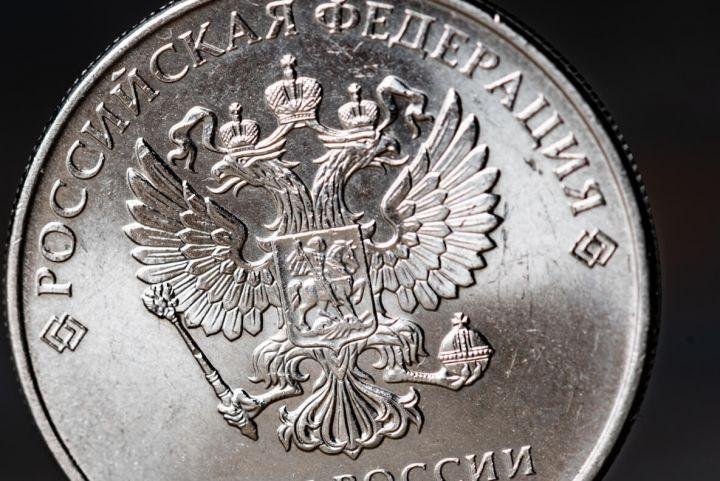
The SmartKey Pre-Sale round is ending. There is only 2% Skey left.
The project is a combination of Blockchain of Things II technology with Oracle.
SmartKey project so far:
- Over 1 200 investors from all over the world
- Over 20 000 subscribers on telegram
- Strong and active community over 2000 messages on telegram chats daily.
- Growing social media and YT presence
For more reasons to join our project read the article “Why Ethereum need SmartKey, and Not the Other Way Around”
🌐 Website — Visit Site
📑 Whitepaper — Read Whitepaper
📧 Telegram — Join Channel
🕊 Twitter — View Twitter Account
✔️YouTube — View YouTube
The project is a combination of Blockchain of Things II technology with Oracle.
SmartKey project so far:
- Over 1 200 investors from all over the world
- Over 20 000 subscribers on telegram
- Strong and active community over 2000 messages on telegram chats daily.
- Growing social media and YT presence
For more reasons to join our project read the article “Why Ethereum need SmartKey, and Not the Other Way Around”
🌐 Website — Visit Site
📑 Whitepaper — Read Whitepaper
📧 Telegram — Join Channel
🕊 Twitter — View Twitter Account
✔️YouTube — View YouTube
Bitcoin and Altcoins Trim Gains, Key Supports Intact.
Bitcoin price failed to continue higher above the USD 13,800 resistance. As a result, BTC started a downside correction and traded below the USD 13,500 support. The price is currently (13:00 UTC) down over 2% and it is now approaching the USD 13,200 and USD 13,000 support levels.
Similarly, there was a fresh decline in most major altcoins, including ethereum, XRP, litecoin, EOS, XLM, LINK, BNB, TRX, bitcoin cash, and ADA. ETH/USD struggled to settle above the USD 400 resistance and declined below the USD 392 support zone. XRP/USD also failed to clear the USD 0.242 resistance and declined sharply below USD 0.235.
Bitcoin price
After a failed attempt above USD 13,750, bitcoin price corrected lower. BTC broke the USD 13,650 and USD 13,500 support levels to move into a bearish zone. The price even broke the USD 13,350 support and it might find bids near USD 13,200. The next major uptrend support is near the USD 13,000 level.
If there is a fresh upward move, the USD 13,500 level might act as a resistance. The next key resistance is near USD 13,650, above which the price could test USD 13,800.
Ethereum price
Ethereum price failed to gain traction above the USD 400 resistance and started a fresh decline below USD 395. ETH even broke the USD 392 support and tested the USD 382 level. The next major support is near USD 378, below which the price could revisit the USD 372 support.
If there is a fresh increase, the USD 388 and USD 392 levels might prevent upsides. The main hurdle is still near the USD 400 level.
Bitcoin cash, chainlink and XRP price
Bitcoin cash price declined below the USD 262 and USD 260 levels. BCH is down around 1% and it is holding the USD 255 support. The next key support is near the USD 250 level. On the upside, the USD 260 level is a short-term resistance, followed by the USD 265 pivot level.
Chainlink (LINK) failed to clear the USD 11.80 resistance and reacted to the downside. There was a sharp decline below the USD 11.50 and USD 11.20 support levels. The price is now trading below USD 11.00 and it seems like the bears are aiming for a retest of the USD 10.20 support level. On the upside, the USD 11.20 level is a key breakout zone.
XRP price topped near the USD 0.245 and it failed to settle above the USD 0.242 support. As a result, the price declined below USD 0.240 and even broke the USD 0.235 level. However, the bulls are now protecting the USD 0.233 and USD 0.232 levels.
Other altcoins market today
In the past few hours, a few altcoins declined over 5%, including HT, ABBC, DASH, EWT, SNX, XMR, OXT, ZEC, OKB, FTT, and FIL. Conversely, AMPL remained well bid and it gained nearly 8% to surpass USD 1.00.
To sum up, bitcoin price is correcting gains after a strong rejection near USD 14,000 and USD 13,800. Having said that, the USD 13,000 level is a strong support, below which the bears might aim for a larger downside correction.
Bitcoin price failed to continue higher above the USD 13,800 resistance. As a result, BTC started a downside correction and traded below the USD 13,500 support. The price is currently (13:00 UTC) down over 2% and it is now approaching the USD 13,200 and USD 13,000 support levels.
Similarly, there was a fresh decline in most major altcoins, including ethereum, XRP, litecoin, EOS, XLM, LINK, BNB, TRX, bitcoin cash, and ADA. ETH/USD struggled to settle above the USD 400 resistance and declined below the USD 392 support zone. XRP/USD also failed to clear the USD 0.242 resistance and declined sharply below USD 0.235.
Bitcoin price
After a failed attempt above USD 13,750, bitcoin price corrected lower. BTC broke the USD 13,650 and USD 13,500 support levels to move into a bearish zone. The price even broke the USD 13,350 support and it might find bids near USD 13,200. The next major uptrend support is near the USD 13,000 level.
If there is a fresh upward move, the USD 13,500 level might act as a resistance. The next key resistance is near USD 13,650, above which the price could test USD 13,800.
Ethereum price
Ethereum price failed to gain traction above the USD 400 resistance and started a fresh decline below USD 395. ETH even broke the USD 392 support and tested the USD 382 level. The next major support is near USD 378, below which the price could revisit the USD 372 support.
If there is a fresh increase, the USD 388 and USD 392 levels might prevent upsides. The main hurdle is still near the USD 400 level.
Bitcoin cash, chainlink and XRP price
Bitcoin cash price declined below the USD 262 and USD 260 levels. BCH is down around 1% and it is holding the USD 255 support. The next key support is near the USD 250 level. On the upside, the USD 260 level is a short-term resistance, followed by the USD 265 pivot level.
Chainlink (LINK) failed to clear the USD 11.80 resistance and reacted to the downside. There was a sharp decline below the USD 11.50 and USD 11.20 support levels. The price is now trading below USD 11.00 and it seems like the bears are aiming for a retest of the USD 10.20 support level. On the upside, the USD 11.20 level is a key breakout zone.
XRP price topped near the USD 0.245 and it failed to settle above the USD 0.242 support. As a result, the price declined below USD 0.240 and even broke the USD 0.235 level. However, the bulls are now protecting the USD 0.233 and USD 0.232 levels.
Other altcoins market today
In the past few hours, a few altcoins declined over 5%, including HT, ABBC, DASH, EWT, SNX, XMR, OXT, ZEC, OKB, FTT, and FIL. Conversely, AMPL remained well bid and it gained nearly 8% to surpass USD 1.00.
To sum up, bitcoin price is correcting gains after a strong rejection near USD 14,000 and USD 13,800. Having said that, the USD 13,000 level is a strong support, below which the bears might aim for a larger downside correction.
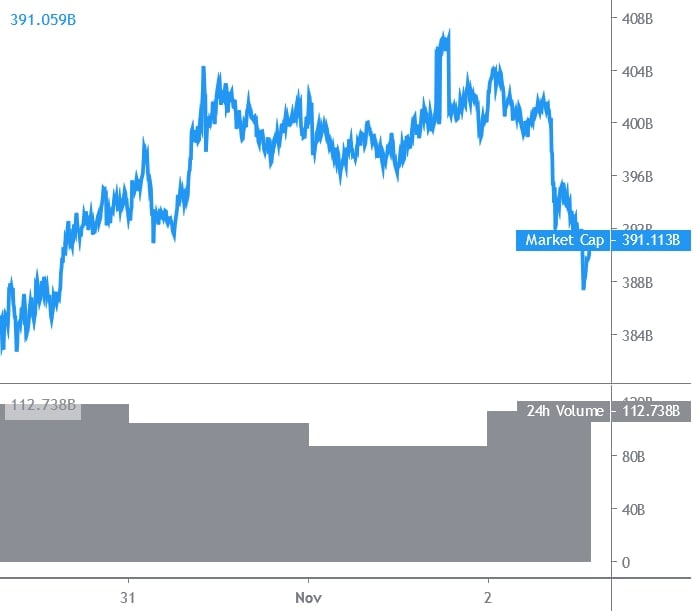
Bitcoin Moves Towards USD 16,000, Altcoins Pick Up Pace.
Bitcoin bulls gained strength after there was a clear break above the USD 15,000 resistance. As a result, BTC gained over 10% and it surged above USD 15,500. The price traded to a new multi-month high close to USD 15,950 and it is currently (06:00 UTC) correcting gains below USD 15,750.
After consolidating in a range, most major altcoins started a strong increase, including ethereum, XRP, litecoin, EOS, XLM, LINK, BNB, TRX, bitcoin cash, and ADA. ETH/USD gained more than 5% and it cleared the USD 425 resistance level. XRP/USD also gained bullish momentum and it broke the USD 0.245 and USD 0.250 resistance levels.
Bitcoin price
After a follow-through move above USD 14,500, bitcoin price rallied by more than USD 1,200. BTC broke many hurdles near USD 15,000 and USD 15,500. It traded close to the USD 16,000 resistance level and recently started a downside correction. There was a break below USD 15,750 level and the price is now consolidating near USD 15,500.
An initial support on the downside is near the USD 15,350 level. The main support is now forming near the USD 15,050 and USD 15,000 levels. On the upside, the USD 15,750 level is an immediate hurdle, above which the bulls might aim a break above USD 16,000.
Ethereum price
Ethereum price finally started following bitcoin price rally and it broke the USD 425 resistance. ETH even cleared the USD 435 resistance and spiked above the USD 440 level. The price is currently correcting lower, but dips might remain limited below USD 420.
If there is a fresh increase, the USD 435 and USD 440 resistance levels might act as hurdles. A clear break above USD 440 may perhaps push the price above USD 450 and USD 452.
Bitcoin cash, chainlink and XRP price
Bitcoin cash price is up 3% and it surpassed the USD 245 and USD 250 resistance levels. BCH is approaching the USD 255 resistance, above which it could aim a test of the USD 265 resistance. Any further gains could lead the price towards the USD 280 level. On the downside, the price might find bids near the USD 240 level.
Chainlink (LINK) formed a strong support base near USD 9.80 and USD 10.00. As a result, there was a fresh increase above the USD 10.50 resistance level. The bulls had an upper hand and they managed to clear the USD 11.00 resistance. The price is now trading above USD 11.00 and it seems like there are chances of a move towards USD 12.00.
XRP price spiked above the USD 0.245 resistance level to move into a positive zone. The price even climbed above USD 0.250, but it is struggling to gain pace above the USD 0.252 and USD 0.254 levels. The main resistance is near USD 0.255. If there is a downside correction, the USD 0.245 level is a decent support zone.
Other altcoins market today
In the past few hours, many altcoins rallied over 10%, including UNI, MANA, AAVE, SNX, CVT, RSR, CEL, XEM, GNT, SNT, ZRX, KNC, THETA, EWT, and LTC. Out of these, UNI gained over 25%.
Overall, bitcoin price is trading in a strong uptrend above USD 15,000 and USD 15,350. There could be range moves or even a downside correction, but the current price action suggests more possible gains in BTC in the near term.
Bitcoin bulls gained strength after there was a clear break above the USD 15,000 resistance. As a result, BTC gained over 10% and it surged above USD 15,500. The price traded to a new multi-month high close to USD 15,950 and it is currently (06:00 UTC) correcting gains below USD 15,750.
After consolidating in a range, most major altcoins started a strong increase, including ethereum, XRP, litecoin, EOS, XLM, LINK, BNB, TRX, bitcoin cash, and ADA. ETH/USD gained more than 5% and it cleared the USD 425 resistance level. XRP/USD also gained bullish momentum and it broke the USD 0.245 and USD 0.250 resistance levels.
Bitcoin price
After a follow-through move above USD 14,500, bitcoin price rallied by more than USD 1,200. BTC broke many hurdles near USD 15,000 and USD 15,500. It traded close to the USD 16,000 resistance level and recently started a downside correction. There was a break below USD 15,750 level and the price is now consolidating near USD 15,500.
An initial support on the downside is near the USD 15,350 level. The main support is now forming near the USD 15,050 and USD 15,000 levels. On the upside, the USD 15,750 level is an immediate hurdle, above which the bulls might aim a break above USD 16,000.
Ethereum price
Ethereum price finally started following bitcoin price rally and it broke the USD 425 resistance. ETH even cleared the USD 435 resistance and spiked above the USD 440 level. The price is currently correcting lower, but dips might remain limited below USD 420.
If there is a fresh increase, the USD 435 and USD 440 resistance levels might act as hurdles. A clear break above USD 440 may perhaps push the price above USD 450 and USD 452.
Bitcoin cash, chainlink and XRP price
Bitcoin cash price is up 3% and it surpassed the USD 245 and USD 250 resistance levels. BCH is approaching the USD 255 resistance, above which it could aim a test of the USD 265 resistance. Any further gains could lead the price towards the USD 280 level. On the downside, the price might find bids near the USD 240 level.
Chainlink (LINK) formed a strong support base near USD 9.80 and USD 10.00. As a result, there was a fresh increase above the USD 10.50 resistance level. The bulls had an upper hand and they managed to clear the USD 11.00 resistance. The price is now trading above USD 11.00 and it seems like there are chances of a move towards USD 12.00.
XRP price spiked above the USD 0.245 resistance level to move into a positive zone. The price even climbed above USD 0.250, but it is struggling to gain pace above the USD 0.252 and USD 0.254 levels. The main resistance is near USD 0.255. If there is a downside correction, the USD 0.245 level is a decent support zone.
Other altcoins market today
In the past few hours, many altcoins rallied over 10%, including UNI, MANA, AAVE, SNX, CVT, RSR, CEL, XEM, GNT, SNT, ZRX, KNC, THETA, EWT, and LTC. Out of these, UNI gained over 25%.
Overall, bitcoin price is trading in a strong uptrend above USD 15,000 and USD 15,350. There could be range moves or even a downside correction, but the current price action suggests more possible gains in BTC in the near term.
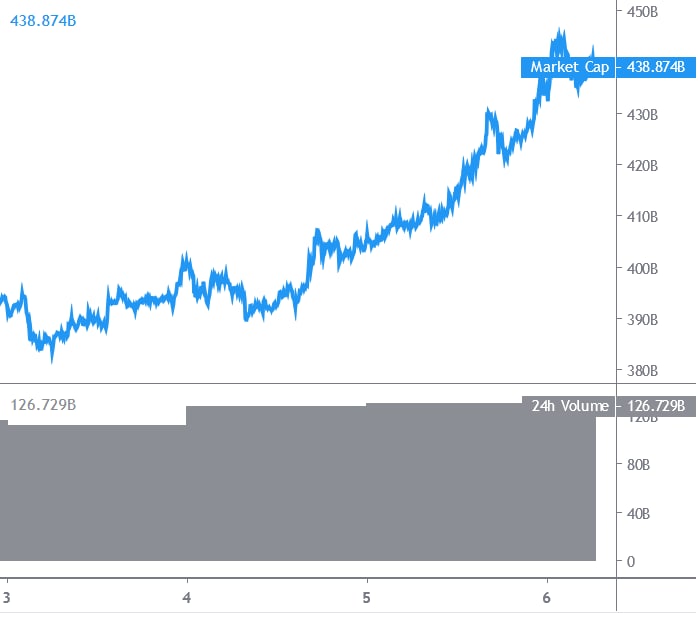
3 Ways Troubled Cred Aims To Repay Millions to Thousands of its Customers.
The troubled American crypto lending service Cred has suggested three ways the company could refund thousands of its customers after it filed for bankruptcy in Delaware this weekend.
In a Telegram post on its official channel, the firm wrote, that they "have come to the conclusion that it is in the best interest of our customers and all stakeholders for Cred to file for Chapter 11 of the United States Bankruptcy Code.”
Per the filling, the company estimates that there are 5,001-10,000 creditors and Cred owns them USD 100m - USD 500m, but has only USD 50m - USD 100m in assets.
In the same Telegram post, Cred hinted that it may be hoping for a hero to emerge – in the form of a crypto-keen buyer. The firm stated that it had appointed the MACCO Restructuring Group “as a financial advisor to evaluate M&A and other restructuring opportunities.”
However, it looks like many Cred customers are already starting to fear a long, drawn-out and nervous wait, with the Cred team writing,
“Chapter 11 has a well-established set of processes, and we expect to come to a resolution within a few months.”
One Twitter user claiming to be from Russia wrote that they had even sold their house and feared they had lost “all of my money with Cred.”
Autumn had begun so promisingly for Cred: In September, the firm announced it had joined the Visa-run Fast Track Program, but worrying signs were ahead when trading platform Uphold dropped its partnership deal with Cred in October – with the latter now threatening legal action against Cred in the wake of the bankruptcy claim.
Meanwhile, as reported, full-service crypto prime broker Genesis said that its lending business added over USD 5.2bn in new originations in Q3, "marking its largest quarter ever by a landslide."
The troubled American crypto lending service Cred has suggested three ways the company could refund thousands of its customers after it filed for bankruptcy in Delaware this weekend.
In a Telegram post on its official channel, the firm wrote, that they "have come to the conclusion that it is in the best interest of our customers and all stakeholders for Cred to file for Chapter 11 of the United States Bankruptcy Code.”
Per the filling, the company estimates that there are 5,001-10,000 creditors and Cred owns them USD 100m - USD 500m, but has only USD 50m - USD 100m in assets.
In the same Telegram post, Cred hinted that it may be hoping for a hero to emerge – in the form of a crypto-keen buyer. The firm stated that it had appointed the MACCO Restructuring Group “as a financial advisor to evaluate M&A and other restructuring opportunities.”
However, it looks like many Cred customers are already starting to fear a long, drawn-out and nervous wait, with the Cred team writing,
“Chapter 11 has a well-established set of processes, and we expect to come to a resolution within a few months.”
One Twitter user claiming to be from Russia wrote that they had even sold their house and feared they had lost “all of my money with Cred.”
Autumn had begun so promisingly for Cred: In September, the firm announced it had joined the Visa-run Fast Track Program, but worrying signs were ahead when trading platform Uphold dropped its partnership deal with Cred in October – with the latter now threatening legal action against Cred in the wake of the bankruptcy claim.
Meanwhile, as reported, full-service crypto prime broker Genesis said that its lending business added over USD 5.2bn in new originations in Q3, "marking its largest quarter ever by a landslide."