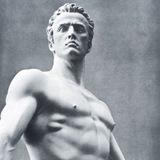
قد تودّ قراءة هذه الكتابات للفيلسوف الألماني الكلاسيكي فرانسوا هيمسترهويس في علم الاستطيقا؛ إذ نثر المؤلّف أفكاره في مقالات موجزة تناولت شتّى الفنون، عن النحت والرسم والأحجار الكريمة وفن العِمارة وموضوع الرغبة الفنية، ذلك بعد تأمّل طويل في الأعمال الفنيّة وتشربٍ عميق لانطباعاتها، حتى تبلورت لديه تصوّرات دقيقة عن ماهيّة الجميل. وقد كُتبت هذه المقالات بلغة أدبيّة بديعة، بعيدة عن جفاف التعبير الذي يطبع كثيرًا من أعمال الفلسفة الكلاسيكيّة، ليغدو هيمسترهويس أقرب إلى شاعريّة أفلاطون أو ماكس بيكارد، أي إلى نموذج الفيلسوف-الفنّان.
ومن يُقبل على قراءة الكتب الفلسفيّة في القرنين الثامن عشر والتاسع عشر، سواء كان ذلك عن طريق جهد شخصي أو بتتبّع الهوامش، يعثر غالبًا على ما هو أحقّ بالقراءة ممّا يفيض به حاضرنا من رداءة، بل يزداد ذلك كلّما توغّل في الماضي.
ومن يُقبل على قراءة الكتب الفلسفيّة في القرنين الثامن عشر والتاسع عشر، سواء كان ذلك عن طريق جهد شخصي أو بتتبّع الهوامش، يعثر غالبًا على ما هو أحقّ بالقراءة ممّا يفيض به حاضرنا من رداءة، بل يزداد ذلك كلّما توغّل في الماضي.
There exists a certain class of people so decrepit in spirit, so mediocre, sterile, vulgar, and thoughtless, that one suffers an actual loss of energy in their presence. They are bored with themselves, and thus transmit an invisible force that penetrates the skin and assassinates vitality. It is their inner poverty that kills, even when they are the richest on earth. By contrast, there are cheerful, vital, and thoughtful people who, out of their inner richness, overflow outwardly. They impart something like a divine mania, an inspiration, to those who accompany them. One must therefore be wary of whom one chooses to be close to, for another’s moods and passions are contagious, like a disease, like a plague.
The passion of love as ennobling. — In loving, one is shaped in the image of what one loves. Through interiorization, one absorbs the beloved’s qualities and may even come, without intention, to imitate them. In this way, one is ennobled or diminished in proportion to the sublimity of the object loved. Love moves outward from the self and returns, transfigured, as the self remade.
Conatus
The passion of love as ennobling. — In loving, one is shaped in the image of what one loves. Through interiorization, one absorbs the beloved’s qualities and may even come, without intention, to imitate them. In this way, one is ennobled or diminished in proportion…
"The more a soul loves, the more it realizes its own sins."
The delight of attaining a comprehensive sentimental and intellectual haven within the interior of another language, as though one were a native speaker, born into words and raised alongside them, amounts to acquiring a second home. It is the possibility of establishing a second inward conscious life, complete with its own depth and experiences, standing in contrast to the naively given world of our original tongue. One tears through the web and walls of a language circumscribed by the mother tongue and travels into another, whose intellectual and experiential possibilities are unfathomable. This journey is akin to traveling to another country: one comes to inhabit two parallel worlds, each capable of greatly enriching the other.
The history of a language, the enigmatic life of its words, words that grow and possess layers as deep as those of the earth, yet never reach stasis, continuing instead to grow like children beside the human being who imparts to them ever new meanings, the lived experience and history of a people, the geographical landscape reflected within it as if upon the surface of the sea, its strata of semantics, and consequently the Weltanschauung of its speakers: all of these are, as it were, telepathically transmitted to the learner. His horizon is expanded, and only thus does one become capable of truly absorbing the fruits of another culture, a language must be interiorized: not merely learned, but lived from within, mere memorizing is insufficient from the point of view of linguistic sensibility.
The history of a language, the enigmatic life of its words, words that grow and possess layers as deep as those of the earth, yet never reach stasis, continuing instead to grow like children beside the human being who imparts to them ever new meanings, the lived experience and history of a people, the geographical landscape reflected within it as if upon the surface of the sea, its strata of semantics, and consequently the Weltanschauung of its speakers: all of these are, as it were, telepathically transmitted to the learner. His horizon is expanded, and only thus does one become capable of truly absorbing the fruits of another culture, a language must be interiorized: not merely learned, but lived from within, mere memorizing is insufficient from the point of view of linguistic sensibility.
عادة وضع الموسيقى المؤثّرة في خلفيّة الڤيديوهات هدفها التأثير العاطفي وعرقلة قدرة المشاهد على التفكير القويم الخالي من العواطف والتأثيرات الخارجيّة؛ النسخة القديمة من هذه الممارسة نجدها في نصوص الكتب المقدّسة والطلاسم السحريّة، حيث نجد السجع الشعري بارز بهدف التأثير على المستمع وبث الرهبة في جوفه وإثارة مشاعره، وبجملة واحدة : منعه من التفكير بصورة عقلانيّة. والسبب وراء تأثير الموسيقى هذا قد يعود لحقيقة أنّ النَغَمة قد سبقت الكلمة، أي أنّ الإنسان ألِفَ الموسيقى وأصوات الطيور والحيوانات عامّةً قبل إبتكار اللغة، وهي الحُقبة الأطول من تاريخ الإنسان، لذلك ترتبط الأصوات عامّةً والموسيقى خاصّةً بالقسم اللاعقلاني من الإنسان وبالحقبة الزمنيّة الّتي نشطت بها الحواس والعضلات أكثر من العقل الّذي خطا خطوة كبيرة نحو إجلاء ماهيّته عندما إبتكرَ اللغة.
ما الفنّ إن لم يكن تَرنيمةً وأغنيةً مُدوِّية، تُعلي من شأن الحواس وتُمجّدها؟ ينبغي للفنون أن تُصنَّف وفق الحواس: فثمّة فنٌّ للعَيْن، كالرسم والعمارة والتصوير الفوتوغرافي والسينما؛ وثمّة فنٌّ لّلَمس، كالنحت؛ وثمّة فنٌّ للأذن، كالموسيقى والغناء؛ وثمّة فنٌّ للسان، كفنون الطهي وثمّة فنٌّ للأنف، كصناعة العطور. وهناك فنونٌ تجمع أكثر من حاسّة، كالشعر والخطابة وكذلك النحت، وأخرى تُشرك الجسد كلَّه، كالرَقص. حتى أبسط أشكال الفن، التي حلت محلها الفنون الراقية، نشأت من الرغبة في التلذذ بالعالم الّذي تُقدمه الحواس. للعالم الحسّي فنونه، كما للعالم العقلي علومه، وهذان القطبان هما ما تتراقص حوله كينونة الإنسان في سموها.
Conatus
ما الفنّ إن لم يكن تَرنيمةً وأغنيةً مُدوِّية، تُعلي من شأن الحواس وتُمجّدها؟ ينبغي للفنون أن تُصنَّف وفق الحواس: فثمّة فنٌّ للعَيْن، كالرسم والعمارة والتصوير الفوتوغرافي والسينما؛ وثمّة فنٌّ لّلَمس، كالنحت؛ وثمّة فنٌّ للأذن، كالموسيقى والغناء؛ وثمّة فنٌّ للسان،…
كتبتُ أيضًا؛ في عام ٢٠٢٠، من ضمن تأملات ما زالت مستمرة عن الفن: تكمن أهمية الفن في أنه العزاء الذي لن يقدمه لك أحد، تجربة لمس شعور الفنان تشبه الوقوع، صدفةً، في صدرٍ واسع يرحِّب بالنحيب الذي كنت تخفيه عن العالم، لكنك ترعاه وتحميه كطفلٍ أنجبتَه عن طريق الخطأ.
“The crimes of extreme civilization are certainly more atrocious than those of extreme barbarity because of their refinement, the corruption they presuppose, and their superior degree of intellectuality.”
— Jules Barbey d’Aurevilly, Les Diaboliques (1874), translated from the original french text.
— Jules Barbey d’Aurevilly, Les Diaboliques (1874), translated from the original french text.
"Analysis again. But where? How? Well, everywhere possible. Where unskirtable contradictions come to the surface. Where disturbing breaches of meaning trip us up amidst daily banalities, impossible yet perfectly viable loves, all kinds of constructivist passions that mine the edifices of morbid rationality... It can be individual, for those who tend to lead their lives as if it were a work of art; dual in all possible ways, including, why not, a psychoanalytic couch, as long as it has been dusted off; multiple, trough group, network, institutional, and collective practices; and finally, micropolitical by virtue of other social practices, other forms of auto valorizations and militant actions, leading, through a systematic decentering of social desire, to soft subversions and imperceptible revolutions that will eventually change the face of the world, making it happier. Let's face it: it is long overdue."
(Guattari, "Entering the Post Media Era," p.306)
(Guattari, "Entering the Post Media Era," p.306)