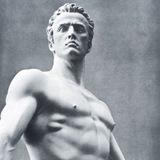
إن بين الإنسان الخلّاق، سواء أكان شاعرًا أو فنانًا أو مهندسًا أو طبيبًا، وبين بعضٍ من أعضائه صلةً خفيّةً باطنة، تُضفي على ذلك العضو منزلة وجودية، ويصيرُ محلًا لمعنى كيانه بأسره، حتى ليغدو ذلك العضو هو محور الذات، وأساس تصوّرنا له كفردٍ فريدٍ لا يُتصوّر سواه، إذ به تُنسَج ذاته، وبه تدور عوالمه، وحوله تنتظم سائر جوارحه. فما سواه من الأعضاء يصير دون رتبته، وتُقسَّم الأدوار ويُرسم الحدّ، وتُمنح الحياة لكلّ عضو بمقدار ما يُنسب إلى ذلك الأصل الأوّل، ولا نرى في هذا تهميشاً أو إقصاء، بل هي معمارٌ إلهيٌّ ذو مراتب، تتجلّى فيه وحدة الجسد على نسق روحاني متناسق، تتدرّج فيه الأعضاء من المركز إلى الأطراف. فذلك العضو الأوّل هو مظهر الروح وتجسيد الوجود الأرضي، وبه تُفصح الذات عن أخصّ ما فيها، وفق الصورة التي تراها هي لنفسها، ولا يظهر هذا المعنى إلا في أفعال مخصوصة، تتجلّى فيها وظيفة ذلك العضو على أكمل وجه، وكأنما خُلق لذلك العمل وحده، لا يتعدّاه ولا يتجاوزه.
ففي الشاعر والكاتب، هي اليد الهادئة الصامتة، التي تنطق بكلّ ما في الإنسان من عمقٍ وتأمل، ترسم لنا صورة الحياة المتأملة التي تحملها دون أن تفصح، وكأنها تُعلن، في صمتها، اكتمال وجوده، وتُظهر ما فيه من تفرد، فينتقل من ظلمة الوجود الخامل إلى نور الفكر والإبداع والحياة النشطة. وأما في العازف، فهي اليد المتحركة، اللاهبة، المتفجرة بالنغمة، تُفصح في كلّ حركة دقيقة عن جوهر النفس الحارّة الملتهبة، وتصل اللحظة العابرة من الأداء، بزمن الإنسان كلّه، فتصير اليد جسرًا بين آنٍ فانٍ ووجود دائم. وأما في الفيلسوف، فقد صار كلّه روحاً، فإذا بالحياة الصامتة للفكر تنبض في كل أعضائه، ويُصبح جسده تجسيدًا للفكرة ذاتها. وإنّا إذا تخيّلنا فقدان ذلك العضو، كأنّما نتخيل فقدان الإنسان بأسره، فهو إن فُقِدَ، فُقِدَتْ معه فرديّته، واندثرت ذاته، وصار كأن لم يكن شيئًا مذكورًا.
ففي الشاعر والكاتب، هي اليد الهادئة الصامتة، التي تنطق بكلّ ما في الإنسان من عمقٍ وتأمل، ترسم لنا صورة الحياة المتأملة التي تحملها دون أن تفصح، وكأنها تُعلن، في صمتها، اكتمال وجوده، وتُظهر ما فيه من تفرد، فينتقل من ظلمة الوجود الخامل إلى نور الفكر والإبداع والحياة النشطة. وأما في العازف، فهي اليد المتحركة، اللاهبة، المتفجرة بالنغمة، تُفصح في كلّ حركة دقيقة عن جوهر النفس الحارّة الملتهبة، وتصل اللحظة العابرة من الأداء، بزمن الإنسان كلّه، فتصير اليد جسرًا بين آنٍ فانٍ ووجود دائم. وأما في الفيلسوف، فقد صار كلّه روحاً، فإذا بالحياة الصامتة للفكر تنبض في كل أعضائه، ويُصبح جسده تجسيدًا للفكرة ذاتها. وإنّا إذا تخيّلنا فقدان ذلك العضو، كأنّما نتخيل فقدان الإنسان بأسره، فهو إن فُقِدَ، فُقِدَتْ معه فرديّته، واندثرت ذاته، وصار كأن لم يكن شيئًا مذكورًا.
Conatus
Photo
On Man Ray’s Surrealist Photography
The female face, with its vast range of expression, is an ideal subject for photography. Ordinary as it may appear to the casual observer, such ordinariness matters little to the artist. His task is to fashion images that return the gaze to unfamiliar territory, to renew perception rather than accept what is merely habitual, to transmute the familiar into the unfamiliar by a certain angle of seeing.
And what object holds more fascination for the artist than the human face? Nothing approximates its living animation, its continual becoming in the world, the source of its enduring allure. In the surrealist vision, the face becomes a site where the natural is overturned, suspended, or inverted, objects torn from the very tissue of space and made to float in a field where neither time nor distance carries weight. What matters is not the empirical world but the face’s relation to the category of objectivity itself, a presence simultaneously real and unmoored, at once intimate and estranged, It is, as well, an excavation of the mind by way of the object rather than the subject, a discovery of the subject through outrospection rather than introspection, revealed not by turning inward but by observing the powers it exerts over objects, and the infinite transformations those objects undergo under its gaze.
The female face, with its vast range of expression, is an ideal subject for photography. Ordinary as it may appear to the casual observer, such ordinariness matters little to the artist. His task is to fashion images that return the gaze to unfamiliar territory, to renew perception rather than accept what is merely habitual, to transmute the familiar into the unfamiliar by a certain angle of seeing.
And what object holds more fascination for the artist than the human face? Nothing approximates its living animation, its continual becoming in the world, the source of its enduring allure. In the surrealist vision, the face becomes a site where the natural is overturned, suspended, or inverted, objects torn from the very tissue of space and made to float in a field where neither time nor distance carries weight. What matters is not the empirical world but the face’s relation to the category of objectivity itself, a presence simultaneously real and unmoored, at once intimate and estranged, It is, as well, an excavation of the mind by way of the object rather than the subject, a discovery of the subject through outrospection rather than introspection, revealed not by turning inward but by observing the powers it exerts over objects, and the infinite transformations those objects undergo under its gaze.
Insanity is nothing less than an absolute sinking into oneself: a total immersion, as though seized by a storm or lost within a maze whose paths fold endlessly inward. In such a state, imagination is released from all bounds. And should one, by some chance, attempt escape, no exit presents itself; for one has been locked within oneself, an excess of interiority from which there is no outward passage, mundane consciousness, by contrast, does not sink into itself. It moves outward; it cruises, externalizes itself, and remains oriented toward its surroundings, yet it does so without truly internalizing what it encounters. It registers, names, and navigates, but it does not descend. In the insane, however, it is the inner world that becomes law. Objects and things cease to appear as independent realities and are reduced instead to images, accessories, and reflections, mere extensions of an interior world.
Thus the self, having withdrawn into its own abyss, loses its anchor in the world. What emerges is an excessive overflow of imagination turned back upon itself, no longer regulated by the principles of understanding, and yet this self was not formed in isolation, It was shaped within the whirlwind of the world itself, only to fracture at a certain point in its development, severing its bond with exteriority, having turned inward beyond measure, the insane subject no longer receives the world as given but works upon it as it has received it, and begins to transfigure it, and bends it toward a further becoming of the mind, that of the insane mind, one no longer constrained by shared reality, but governed by the inexhaustible depths of its own interior life, thus the inner world becomes an object for the mind of the insane.
Thus the self, having withdrawn into its own abyss, loses its anchor in the world. What emerges is an excessive overflow of imagination turned back upon itself, no longer regulated by the principles of understanding, and yet this self was not formed in isolation, It was shaped within the whirlwind of the world itself, only to fracture at a certain point in its development, severing its bond with exteriority, having turned inward beyond measure, the insane subject no longer receives the world as given but works upon it as it has received it, and begins to transfigure it, and bends it toward a further becoming of the mind, that of the insane mind, one no longer constrained by shared reality, but governed by the inexhaustible depths of its own interior life, thus the inner world becomes an object for the mind of the insane.
"لا دوامَ لشيء، حقًّا، ولا يُعتدّ من الزمن إلا باللحظات؛ غير أنّ اللحظة لا تفصح عن بهائها إلا لمن تخيّلها أبدية. وليس جديرًا بالاعتبار إلا الزائلُ الذي يتلبّس هيئة الخلود".
— نيكولاس غوميز داڤيلا؛ ترجمة شخصية من النص الإسباني الأصلي.
— نيكولاس غوميز داڤيلا؛ ترجمة شخصية من النص الإسباني الأصلي.
يكون المرء فنانًا بقدر ما يرى كلَّ ما يسمّيه الناس غيرُ الفنيّين «شكلًا» هو الجوهر الحقيقي، وهو الأمر «الأساسي» بعينه. وبهذه الرؤية ينتمي الإنسان، بلا ريب، إلى عالمٍ مقلوب؛ إذ يغدو الجوهر، منذ ذلك الحين، شيئًا شكليًّا محضًا في نظره، بل إنّ خطّ حياته نفسه لا يخرج عن هذا الحكم، بوصفها موضوعًا فنّيًّا. وقد يشرق له عندئذٍ إدراك مفاده أنّ كلَّ جوهرٍ ممكن أو متخيَّل يمكن أن يُتَّخذ موضوعًا للفن، ما دام قادرًا على أن يضفي عليه شكلًا، ومن ثم يتولد لديه تصورٌ عن الإمكانات اللامحدودة لفنونٍ لم تولد بعد، طالما ينجح خياله في إضفاء الأشكال مع ما يتناسب مع المادة الخام.
Conatus
for the new year.
For the New Year, one might read Proclus’ Hymn to the Sun, as a token of gratitude to that luminous source. The New Year itself marks the completion of one cycle of the Earth around this exquisite star, which in its daily labor never grows weary, never exhausts itself. The Sun remains ever generous, always abundant, bestowing anew through the turning of the seasons. Humanity may be fickle, changeable in its desires and attentions, but not the eternal bodies, not the Sun, whose constancy surpasses the frailty of men.
http://lases.blogspot.com/2012/06/june-21st-summer-solstice-proclus-hymn.html
من أجل فهم أعمق لهذه الترنيمة، لا بد من الاطلاع على بعض فلسفة بروكلوس النيوافلاطونية، لفهم السياق الذي نُظمت فيه. ومع ذلك، فإن القصيدة بذاتها غنية بالمعاني وجميلة في ألفاظها، فيمكن أن تُستمتع بها وتُقرأ لذاتها دون حاجة لأي خلفية فلسفية.
من أجل فهم أعمق لهذه الترنيمة، لا بد من الاطلاع على بعض فلسفة بروكلوس النيوافلاطونية، لفهم السياق الذي نُظمت فيه. ومع ذلك، فإن القصيدة بذاتها غنية بالمعاني وجميلة في ألفاظها، فيمكن أن تُستمتع بها وتُقرأ لذاتها دون حاجة لأي خلفية فلسفية.
On Naming —
To name human beings or things is an exceedingly laborious task. For it lies in the very essence of names, at least insofar as they claim legitimacy, that they are meant to encompass and encapsulate within themselves not only the essential but also the accidental attributes of a thing. In a cryptic and abbreviated sign, a name is presumed to contain all that a thing is, and not merely that, but also how it will unfold, how it will become; which is to say, how it will contradict itself indefinitely, how it will fracture its identity innumerable times, each fracture either consuming, birthing, and growing out of the other, or annihilating it entirely, only to erect and reform it again from the ground up. A name, therefore, is the fixation of knowledge at a particular phase in the life of a thing. It implicitly ossifies the whole process of becoming by seizing upon a single moment, whether out of laziness or haste, and generalizing it into a universal and exhaustive image. At best, it projects itself forward as a compulsive imposition: a foreign and incongruous image that touches the thing neither from near nor from afar. In this way, names inflict innumerable injuries and injustices upon both the thing itself and its knowledge.
If one takes seriously the biblical adage according to which the name of a thing is the vessel of its entire identity and nature, then one must also be granted the courtesy of altering one's name innumerable times within a single lifetime, each alteration corresponding to a violent transformation of essence. Only the total constellation of these names, taken together, would constitute the man himself. Herein lies, as well, the reason one changes one's friends in correspondence with one's own growth and transformation: both names and friendships function as mirrors of former selves. One ought not, therefore, acquiesce to the common, supposedly objective semantics of a name; rather, one should saturate it with meanings drawn from one's own interiority, so as to christen each phase of one's life with a name that gathers within itself the sum of its highest possibilities.
To name human beings or things is an exceedingly laborious task. For it lies in the very essence of names, at least insofar as they claim legitimacy, that they are meant to encompass and encapsulate within themselves not only the essential but also the accidental attributes of a thing. In a cryptic and abbreviated sign, a name is presumed to contain all that a thing is, and not merely that, but also how it will unfold, how it will become; which is to say, how it will contradict itself indefinitely, how it will fracture its identity innumerable times, each fracture either consuming, birthing, and growing out of the other, or annihilating it entirely, only to erect and reform it again from the ground up. A name, therefore, is the fixation of knowledge at a particular phase in the life of a thing. It implicitly ossifies the whole process of becoming by seizing upon a single moment, whether out of laziness or haste, and generalizing it into a universal and exhaustive image. At best, it projects itself forward as a compulsive imposition: a foreign and incongruous image that touches the thing neither from near nor from afar. In this way, names inflict innumerable injuries and injustices upon both the thing itself and its knowledge.
If one takes seriously the biblical adage according to which the name of a thing is the vessel of its entire identity and nature, then one must also be granted the courtesy of altering one's name innumerable times within a single lifetime, each alteration corresponding to a violent transformation of essence. Only the total constellation of these names, taken together, would constitute the man himself. Herein lies, as well, the reason one changes one's friends in correspondence with one's own growth and transformation: both names and friendships function as mirrors of former selves. One ought not, therefore, acquiesce to the common, supposedly objective semantics of a name; rather, one should saturate it with meanings drawn from one's own interiority, so as to christen each phase of one's life with a name that gathers within itself the sum of its highest possibilities.
Conatus
On Naming — To name human beings or things is an exceedingly laborious task. For it lies in the very essence of names, at least insofar as they claim legitimacy, that they are meant to encompass and encapsulate within themselves not only the essential but…
I had published this text on my previous channel, but I am republishing it here after adding to and modifying some of its sections.