
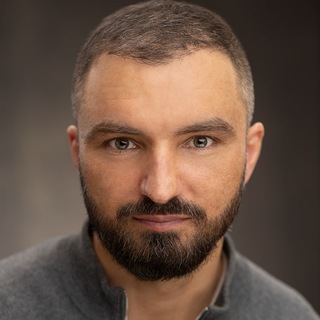
Hi, I'm Alex.
I make films. Invest in crypto. Build with AI.
Vancouver-based indie film producer. Making commercial genres. Two films out so far (Apr 2026). 35+ countries and growing. Investors returned.
In crypto since 2017. Watched the cycles. Lost money, made money, learned what actually matters. Right now I'm more interested in DeFi and blockchain as a technology, not in whatever's pumping this week.
I use AI daily - in development, in pre-production, in how I think through decisions. Infrastructure, not gimmick.
This channel is where I think out loud:
Film business mechanics nobody explains
What I actually see in Web3 right now
How AI is changing production from the inside
Occasionally something from my life worth sharing
No frameworks. No guru takes. Just what I'm doing and what I think.
If that sounds useful - you're in the right place.
Alex Bogomolov | Unscripted
I make films. Invest in crypto. Build with AI.
Vancouver-based indie film producer. Making commercial genres. Two films out so far (Apr 2026). 35+ countries and growing. Investors returned.
In crypto since 2017. Watched the cycles. Lost money, made money, learned what actually matters. Right now I'm more interested in DeFi and blockchain as a technology, not in whatever's pumping this week.
I use AI daily - in development, in pre-production, in how I think through decisions. Infrastructure, not gimmick.
This channel is where I think out loud:
Film business mechanics nobody explains
What I actually see in Web3 right now
How AI is changing production from the inside
Occasionally something from my life worth sharing
No frameworks. No guru takes. Just what I'm doing and what I think.
If that sounds useful - you're in the right place.
Alex Bogomolov | Unscripted
Alex Bogomolov | Unscripted pinned «Hi, I'm Alex. I make films. Invest in crypto. Build with AI. Vancouver-based indie film producer. Making commercial genres. Two films out so far (Apr 2026). 35+ countries and growing. Investors returned. In crypto since 2017. Watched the cycles. Lost money…»
Sony is laying off hundreds of people.
While everyone was watching the Bad Robot news, a bigger story quietly landed. Sony Pictures - global restructuring. Pixomondo VFX studio closed. TV divisions merged. Hundreds of people out.
The irony is Sony spent years looking like the smartest studio in Hollywood. While Disney, Warner, and Paramount burned billions on loss-making streamers, Sony just sold content to everyone and stayed profitable.
Then Peak TV collapsed. Streamers started cutting orders. And now even the smartest seller in Hollywood is tightening the belt.
For indie producer I see two ways:
Scary - big studios retreating to maximum safety. Franchises, remakes, game IP. Less original film.
Opportunity - when the system contracts and stops taking risks, people still want real stories. Not another Spider-Man sequel.
Sony isn't going anywhere. Spider-Man, The Last of Us, one of the biggest libraries in the business. But a studio that knew how to make money off other people's content now doesn't know what to produce itself.
While everyone was watching the Bad Robot news, a bigger story quietly landed. Sony Pictures - global restructuring. Pixomondo VFX studio closed. TV divisions merged. Hundreds of people out.
The irony is Sony spent years looking like the smartest studio in Hollywood. While Disney, Warner, and Paramount burned billions on loss-making streamers, Sony just sold content to everyone and stayed profitable.
Then Peak TV collapsed. Streamers started cutting orders. And now even the smartest seller in Hollywood is tightening the belt.
For indie producer I see two ways:
Scary - big studios retreating to maximum safety. Franchises, remakes, game IP. Less original film.
Opportunity - when the system contracts and stops taking risks, people still want real stories. Not another Spider-Man sequel.
Sony isn't going anywhere. Spider-Man, The Last of Us, one of the biggest libraries in the business. But a studio that knew how to make money off other people's content now doesn't know what to produce itself.
I'm done explaining why I use AI.
AI is the BEST thing that ever happened to independent filmmaking. Prove me wrong.
Every new technology in history had people fighting against it. The argument was always the same: this will ruin everything, this isn't real craft, this doesn't belong here, blah, blah
I use AI and AI agents every day: morning briefs, scheduling, budgeting, accounting, research, meeting prep and notes, habit tracking, etc.
Moreover, last week I got two quotes from the same VFX vendor: one is with traditional VFX labor, the other with AI handling some of the shots where it could be used without losing control. And no surprise - the second quote was significantly cheaper.
The VFX artist who prepared them told me something honest: "Yes, it does sting that I spent years mastering VFX craft and now anyone with a single prompt can approximate it. But I'll still be using it, because it lets me do more."
That's how people who are actually GOOD at their craft respond to new tools.
There are scripts and ideas I've passed on for years because the visuals they required were impossible on an indie budget. That ceiling moved. Whatever you can imagine, you can create now. Thanks to AI.
So yes, I use AI. I'm going to keep using it. And I can't wait to see what this technology brings next.
AI is the BEST thing that ever happened to independent filmmaking. Prove me wrong.
Every new technology in history had people fighting against it. The argument was always the same: this will ruin everything, this isn't real craft, this doesn't belong here, blah, blah
I use AI and AI agents every day: morning briefs, scheduling, budgeting, accounting, research, meeting prep and notes, habit tracking, etc.
Moreover, last week I got two quotes from the same VFX vendor: one is with traditional VFX labor, the other with AI handling some of the shots where it could be used without losing control. And no surprise - the second quote was significantly cheaper.
The VFX artist who prepared them told me something honest: "Yes, it does sting that I spent years mastering VFX craft and now anyone with a single prompt can approximate it. But I'll still be using it, because it lets me do more."
That's how people who are actually GOOD at their craft respond to new tools.
There are scripts and ideas I've passed on for years because the visuals they required were impossible on an indie budget. That ceiling moved. Whatever you can imagine, you can create now. Thanks to AI.
So yes, I use AI. I'm going to keep using it. And I can't wait to see what this technology brings next.
Michael Jackson is coming to the big screen.
The producers cast Jaafar Jackson (Jermaine's son, Michael's nephew) to play his uncle. Smart casting decision: not just a lookalike, but someone with real memories and real lived experience.
Antoine Fuqua is directing (Training Day). Graham King is producing, he did Bohemian Rhapsody, so he's already got a track record with music legend biopics.
The numbers:
Bohemian Rhapsody made $900M on a $50M budget. Phenomenal ROI. Audiences wanted to feel Queen again.
Michael's fanbase is significantly larger, but so are the expectations. And his story isn't just about music and dancing. It's accusations, contradictions, eccentricity, genius, and tragedy all at once.
The real question: will they show the dark side, or just deliver a polished two-hour legend?
We find out April 24.
The producers cast Jaafar Jackson (Jermaine's son, Michael's nephew) to play his uncle. Smart casting decision: not just a lookalike, but someone with real memories and real lived experience.
Antoine Fuqua is directing (Training Day). Graham King is producing, he did Bohemian Rhapsody, so he's already got a track record with music legend biopics.
The numbers:
Bohemian Rhapsody made $900M on a $50M budget. Phenomenal ROI. Audiences wanted to feel Queen again.
Michael's fanbase is significantly larger, but so are the expectations. And his story isn't just about music and dancing. It's accusations, contradictions, eccentricity, genius, and tragedy all at once.
The real question: will they show the dark side, or just deliver a polished two-hour legend?
We find out April 24.
California’s $750M film tax credit expansion is doing exactly what it was designed to do.
The upcoming "Baywatch" reboot is a clear example: $52.6M budget. About $21M in tax credits.
At the same time, 17 newly approved TV projects are expected to generate $1.2B in economic activity.
This didn’t happen by accident.
Gavin Newsom (the governor of California) doubled the incentive pool from $330M to $750M to address a very real issue: production leaving California for more competitive jurisdictions. But the real question is: will it be enough to reverse the flow, or just slow it down?
For anyone looking at film investment right now, this is the key takeaway: 40% is the new California benchmark for qualifying projects.
That fundamentally changes the math. And it’s still widely misunderstood outside of production finance.
I’ll break down how this actually works in practice in the next posts.
The upcoming "Baywatch" reboot is a clear example: $52.6M budget. About $21M in tax credits.
At the same time, 17 newly approved TV projects are expected to generate $1.2B in economic activity.
This didn’t happen by accident.
Gavin Newsom (the governor of California) doubled the incentive pool from $330M to $750M to address a very real issue: production leaving California for more competitive jurisdictions. But the real question is: will it be enough to reverse the flow, or just slow it down?
For anyone looking at film investment right now, this is the key takeaway: 40% is the new California benchmark for qualifying projects.
That fundamentally changes the math. And it’s still widely misunderstood outside of production finance.
I’ll break down how this actually works in practice in the next posts.
❤1
Soft Money - Part 1 of 5
The Misconception
"Tax credit" means you pay less tax on your profit. That's what most people think. That's wrong.
A film tax credit is not a tax instrument. It's production capital. Government money that goes into the budget - not against your tax bill.
The film industry term is "soft money": tax credits, rebates, grants, co-production incentives, etc. None of it touches your income tax. All of it touches your production budget.
Here's the actual mechanism: the government agrees to pay back a percentage of your qualified spending. On a $10M Canadian production, that can be $3-4M from the province and another $1-2M from the federal program. Combined: 35-50% of your eligible budget is government-committed before you shoot a single frame.
That misconception matters because it changes how investors should evaluate film investment entirely.
If you think a tax credit means "producers pay less tax," you think it's irrelevant to your investment decision. If you understand it's a governme
The Misconception
"Tax credit" means you pay less tax on your profit. That's what most people think. That's wrong.
A film tax credit is not a tax instrument. It's production capital. Government money that goes into the budget - not against your tax bill.
The film industry term is "soft money": tax credits, rebates, grants, co-production incentives, etc. None of it touches your income tax. All of it touches your production budget.
Here's the actual mechanism: the government agrees to pay back a percentage of your qualified spending. On a $10M Canadian production, that can be $3-4M from the province and another $1-2M from the federal program. Combined: 35-50% of your eligible budget is government-committed before you shoot a single frame.
That misconception matters because it changes how investors should evaluate film investment entirely.
If you think a tax credit means "producers pay less tax," you think it's irrelevant to your investment decision. If you understand it's a governme
Screen Daily sat down with six Gen Z cinemagoers aged 17 to 26 across the UK to figure out what's actually going on with the generation everyone's either panicking about or writing off.
Here's what the data actually shows.
The good news
Gen Z is not done with cinema. They drive 80 minutes for IMAX. They stay up until 3am for the Oscars. They have Letterboxd accounts and follow film journalists on TikTok. Several go 15+ times a year.
TikTok is now the discovery engine. Not trailers, not billboards. One panelist found out a sequel existed because of TikTok. That's where the audience lives now.
Re-releases are working. Two of the six cited re-releases as recent cinema trips. The appetite for the theatrical experience is real when the product justifies it.
The problems
Release windows are invisible to them. Multiple panelists missed films they wanted to see because they were already gone. Nobody told them the window existed.
Pricing is eroding casual attendance. When your "saver" ticket no longer feels like saving, you've lost the spontaneous trip.
Netflix is accidentally poisoning its own films. Two panelists assumed Frankenstein was bad because it left theaters fast. Both said they would have gone if it had a longer run. Self-inflicted damage.
Fake celebrity marketing is dead. Staged chemistry, gimmick interviews - it actively puts them off the film. Authentic press still works. Manufactured press backfires.
The AI note
One panelist said he'd never watch a fully AI-made film. The emotional contract audiences have with cinema is built on human effort. That contract still matters.
Conclusion
Cautiously optimistic. The audience is there and they genuinely love film. But the industry keeps making it harder to show up: invisible release windows, pricing that doesn't flex, marketing that insults their intelligence.
Fix the infrastructure. The demand is already there.
Here's what the data actually shows.
The good news
Gen Z is not done with cinema. They drive 80 minutes for IMAX. They stay up until 3am for the Oscars. They have Letterboxd accounts and follow film journalists on TikTok. Several go 15+ times a year.
TikTok is now the discovery engine. Not trailers, not billboards. One panelist found out a sequel existed because of TikTok. That's where the audience lives now.
Re-releases are working. Two of the six cited re-releases as recent cinema trips. The appetite for the theatrical experience is real when the product justifies it.
The problems
Release windows are invisible to them. Multiple panelists missed films they wanted to see because they were already gone. Nobody told them the window existed.
Pricing is eroding casual attendance. When your "saver" ticket no longer feels like saving, you've lost the spontaneous trip.
Netflix is accidentally poisoning its own films. Two panelists assumed Frankenstein was bad because it left theaters fast. Both said they would have gone if it had a longer run. Self-inflicted damage.
Fake celebrity marketing is dead. Staged chemistry, gimmick interviews - it actively puts them off the film. Authentic press still works. Manufactured press backfires.
The AI note
One panelist said he'd never watch a fully AI-made film. The emotional contract audiences have with cinema is built on human effort. That contract still matters.
Conclusion
Cautiously optimistic. The audience is there and they genuinely love film. But the industry keeps making it harder to show up: invisible release windows, pricing that doesn't flex, marketing that insults their intelligence.
Fix the infrastructure. The demand is already there.
Soft Money - Part 2 of 5
The Transfer
Most producers treat the film tax credit as money that arrives later. It doesn't have to.
The credit is transferable. You can sell it to a tax credit broker at 85-92 cents on the dollar and receive cash at greenlight, not when the tax year closes, not 18 months after delivery. At greenlight.
On a $2M credit, that's $1.8M in upfront liquidity from the government before you shoot a frame.
For the financing structure, this is significant. The transferable credit functions like a partial presale: committed, government-backed revenue that reduces the equity gap from day one.
The discount - 8-15 cents on the dollar - is the cost of certainty. You trade a small percentage of the credit's face value to know your floor at greenlight instead of guessing it twelve months after delivery.
Producers who know this build it into the financing stack from the first budget draft. Producers who don't treat it as a backend bonus and carry liquidity risk they don't need to carry. Don Rein
The Transfer
Most producers treat the film tax credit as money that arrives later. It doesn't have to.
The credit is transferable. You can sell it to a tax credit broker at 85-92 cents on the dollar and receive cash at greenlight, not when the tax year closes, not 18 months after delivery. At greenlight.
On a $2M credit, that's $1.8M in upfront liquidity from the government before you shoot a frame.
For the financing structure, this is significant. The transferable credit functions like a partial presale: committed, government-backed revenue that reduces the equity gap from day one.
The discount - 8-15 cents on the dollar - is the cost of certainty. You trade a small percentage of the credit's face value to know your floor at greenlight instead of guessing it twelve months after delivery.
Producers who know this build it into the financing stack from the first budget draft. Producers who don't treat it as a backend bonus and carry liquidity risk they don't need to carry. Don Rein
Soft Money - Part 3 of 5
The Loan
You don't have to sell the credit. You can borrow against it.
Once the government commits to paying you a tax credit, that commitment is a receivable. An asset. And like any receivable, you can use it as collateral.
In Canada RBC, National Bank and BMO all have production lending programs. They lend against the expected credit at low interest rates - because the risk profile is near-zero. The government owes you the money. The bank is lending against a government obligation.
Typical structure: 90-95% of the expected credit value as a loan at closing. You deploy it during production. When the credit comes in - usually 12-18 months - you repay the loan.
Cost of money: 6-8% depending on structure and lender.
Compare that to equity, which costs you 20-25% of the back end at minimum. Plus teh 10-20% premium. Bank debt against a government receivable is cheap capital.
The paperwork is more involved than a standard business loan. But once you're through it, you have cash in th
The Loan
You don't have to sell the credit. You can borrow against it.
Once the government commits to paying you a tax credit, that commitment is a receivable. An asset. And like any receivable, you can use it as collateral.
In Canada RBC, National Bank and BMO all have production lending programs. They lend against the expected credit at low interest rates - because the risk profile is near-zero. The government owes you the money. The bank is lending against a government obligation.
Typical structure: 90-95% of the expected credit value as a loan at closing. You deploy it during production. When the credit comes in - usually 12-18 months - you repay the loan.
Cost of money: 6-8% depending on structure and lender.
Compare that to equity, which costs you 20-25% of the back end at minimum. Plus teh 10-20% premium. Bank debt against a government receivable is cheap capital.
The paperwork is more involved than a standard business loan. But once you're through it, you have cash in th
Soft Money - Part 4 of 5
Stacking
In British Columbia, a production can access:
- Federal CPTC (Canadian Film or Video Production Tax Credit): 25% of eligible Canadian labor, and
- Provincial FIBC (Film Incentive BC): 40-60% of eligible BC labor
If you qualify as Canadian content - both, simultaneously
The calculation is quite tricky, but on a $5M production with $3M in eligible BC labor: $2-2.5M (35-50% of the budget) before a dollar of private financing enters the picture.
Most investors don't know this is legal. It is. It's designed this way. Governments use these programs to keep production local, employ local crews, and build industry infrastructure. The producer's job is to capture as much of it as possible.
The investor's job is to understand where their capital sits in that stack. That position is more protected than most traditional investment structures.
Stacking
In British Columbia, a production can access:
- Federal CPTC (Canadian Film or Video Production Tax Credit): 25% of eligible Canadian labor, and
- Provincial FIBC (Film Incentive BC): 40-60% of eligible BC labor
If you qualify as Canadian content - both, simultaneously
The calculation is quite tricky, but on a $5M production with $3M in eligible BC labor: $2-2.5M (35-50% of the budget) before a dollar of private financing enters the picture.
Most investors don't know this is legal. It is. It's designed this way. Governments use these programs to keep production local, employ local crews, and build industry infrastructure. The producer's job is to capture as much of it as possible.
The investor's job is to understand where their capital sits in that stack. That position is more protected than most traditional investment structures.
Soft Money - Part 5 of 5
The Full Picture for Investors
Let me summarize and put this together for anyone looking at film investment and trying to understand the actual risk structure.
The common assumption: you put in money, the production spends it, you hope the film earns it back. Speculative. Dependent entirely on market performance.
The reality when soft money is structured correctly:
- Government commits 35-50% of the production budget as a receivable before cameras roll.
- Bank lends against that receivable at 6-8%.
Private equity and pre-sales fill the remaining gap.
The investor isn't funding 100% of a speculative production. They're funding the portion that government programs and distributors don't cover.
The government doesn't take equity. They don't participate in upside. They pay a fixed incentive and exit. The equity investor keeps the full upside on the private capital portion.
That's a different structure than most people imagine when they hear "film investment."
The risk isn't zero.
The Full Picture for Investors
Let me summarize and put this together for anyone looking at film investment and trying to understand the actual risk structure.
The common assumption: you put in money, the production spends it, you hope the film earns it back. Speculative. Dependent entirely on market performance.
The reality when soft money is structured correctly:
- Government commits 35-50% of the production budget as a receivable before cameras roll.
- Bank lends against that receivable at 6-8%.
Private equity and pre-sales fill the remaining gap.
The investor isn't funding 100% of a speculative production. They're funding the portion that government programs and distributors don't cover.
The government doesn't take equity. They don't participate in upside. They pay a fixed incentive and exit. The equity investor keeps the full upside on the private capital portion.
That's a different structure than most people imagine when they hear "film investment."
The risk isn't zero.
The safe-biopic playbook just took another casualty.
"Michael" opened at 26% on Rotten Tomatoes and 39 on Metacritic.
The choice was obvious going in: show the contradictions or give audiences a clean legend for two hours. Producers picked clean. Reviews came back exactly how you'd expect - hollow, disconnected, every biopic cliché landing in the same frame. Jaafar Jackson's performance is the only thing holding it together.
Compare to "Bohemian Rhapsody": $900M on a $50M budget. They softened plenty, but they kept the conflict, the drugs, the HIV diagnosis, the band breaking apart. The audience walked out having met a human being.
Michael Jackson without the allegations, contradictions and weirdness is not Michael Jackson. It's a Madame Tussauds wax figure in motion.
I have skin in this. I'm developing projects where the pressure to sanitize the protagonist will be enormous. Investors, lawyers, estates, families - everyone wants "something beautiful." And every time, that instinct kills the film.
Ugly truth hits harder than a pretty lie.
"Michael" opened at 26% on Rotten Tomatoes and 39 on Metacritic.
The choice was obvious going in: show the contradictions or give audiences a clean legend for two hours. Producers picked clean. Reviews came back exactly how you'd expect - hollow, disconnected, every biopic cliché landing in the same frame. Jaafar Jackson's performance is the only thing holding it together.
Compare to "Bohemian Rhapsody": $900M on a $50M budget. They softened plenty, but they kept the conflict, the drugs, the HIV diagnosis, the band breaking apart. The audience walked out having met a human being.
Michael Jackson without the allegations, contradictions and weirdness is not Michael Jackson. It's a Madame Tussauds wax figure in motion.
I have skin in this. I'm developing projects where the pressure to sanitize the protagonist will be enormous. Investors, lawyers, estates, families - everyone wants "something beautiful." And every time, that instinct kills the film.
Ugly truth hits harder than a pretty lie.
🔥2
Park Chan-Wook is bringing "The Brigands of Rattlecreek" to Cannes with McConaughey, Butler, Pascal, and Tang Wei attached.
A Korean auteur doing a western with that cast is the most interesting market package of the year.
The territory math is the part worth looking at:
- McConaughey opens North American theatrical
- Pascal pulls every streamer to the table
- Butler hits the 25-to-35 demo
- Tang Wei makes Asia a primary pre-sale, not a side market
Six different sales pitches out of one package.
The ceiling effect matters more than the lineup. A deal of this size doesn't exist in isolation. Every other pre-sale at Cannes 2026 gets measured against whatever this lands at. One package sets the year's reference price.
Park Chan-Wook crossing into western is the kind of bet you only get to make once in a career. Whether the film hits or misses, the assembly itself rewires what buyers think is possible at this budget level.
That's the deal under the deal.
A Korean auteur doing a western with that cast is the most interesting market package of the year.
The territory math is the part worth looking at:
- McConaughey opens North American theatrical
- Pascal pulls every streamer to the table
- Butler hits the 25-to-35 demo
- Tang Wei makes Asia a primary pre-sale, not a side market
Six different sales pitches out of one package.
The ceiling effect matters more than the lineup. A deal of this size doesn't exist in isolation. Every other pre-sale at Cannes 2026 gets measured against whatever this lands at. One package sets the year's reference price.
Park Chan-Wook crossing into western is the kind of bet you only get to make once in a career. Whether the film hits or misses, the assembly itself rewires what buyers think is possible at this budget level.
That's the deal under the deal.
👏2
25.6M views on a film WB wrote off
"Coyote vs. Acme" just hit 25.6M trailer views in 24 hours. Warner Bros. shelved this film for a tax write-off. Ketchup Entertainment bought it and built the biggest independent family-film trailer launch on record.
This is what indie arbitrage looks like.
Studios shelve films for reasons that aren't always about quality. Tax math, regime change, distribution thesis flips, mid-tier theatrical pessimism. The film exists. The audience exists. The major just decided it doesn't fit the slate.
Then someone else picks it up and finds the audience the studio walked away from.
The numbers are clean:
- "Coyote vs. Acme" trailer: 25.6M views in 24 hours
Looney Tunes IP, family appetite, nostalgia layer. None of it changed when the asset moved between owners. Only the conviction did.
What a major calls dead inventory, an indie sometimes calls a release schedule.
That's the trade.
https://www.youtube.com/watch?v=w4tjvbLn8Xs
"Coyote vs. Acme" just hit 25.6M trailer views in 24 hours. Warner Bros. shelved this film for a tax write-off. Ketchup Entertainment bought it and built the biggest independent family-film trailer launch on record.
This is what indie arbitrage looks like.
Studios shelve films for reasons that aren't always about quality. Tax math, regime change, distribution thesis flips, mid-tier theatrical pessimism. The film exists. The audience exists. The major just decided it doesn't fit the slate.
Then someone else picks it up and finds the audience the studio walked away from.
The numbers are clean:
- "Coyote vs. Acme" trailer: 25.6M views in 24 hours
Looney Tunes IP, family appetite, nostalgia layer. None of it changed when the asset moved between owners. Only the conviction did.
What a major calls dead inventory, an indie sometimes calls a release schedule.
That's the trade.
https://www.youtube.com/watch?v=w4tjvbLn8Xs
Trailer "Resident Evil" from Zach Cregger - must watch
YouTube
RESIDENT EVIL – Official Teaser Trailer (4K)
𝙰 𝚗𝚎𝚠 𝚎𝚛𝚊 𝚘𝚏 𝚎𝚟𝚒𝚕.
From the mind of Zach Cregger, director of Weapons and Barbarian. Watch the new teaser trailer for Resident Evil. Filmed for IMAX – in theatres 9.18.
https://www.instagram.com/residentevil/
https://twitter.com/ResidentEvil
https://…
From the mind of Zach Cregger, director of Weapons and Barbarian. Watch the new teaser trailer for Resident Evil. Filmed for IMAX – in theatres 9.18.
https://www.instagram.com/residentevil/
https://twitter.com/ResidentEvil
https://…
Next episode of the Warner Bros. + Paramount soap opera.
In 24 hours:
1. Paramount subscribers filed a class action in California federal court to block the deal.
2. Congressman Liccardo asked the FCC to deny the deal on foreign-ownership grounds.
3. Deadline reported Saudi capital pulling back after the "Desert Warrior" $150M flop.
In 24 hours:
1. Paramount subscribers filed a class action in California federal court to block the deal.
2. Congressman Liccardo asked the FCC to deny the deal on foreign-ownership grounds.
3. Deadline reported Saudi capital pulling back after the "Desert Warrior" $150M flop.
Christopher Nolan has reached the rare tier where A-listers and Oscar winners take background roles just to be in the room. That's not a budget. That's gravity.
https://www.youtube.com/watch?v=f_bKjZeJBBI
https://www.youtube.com/watch?v=f_bKjZeJBBI
YouTube
The Odyssey | Official New Trailer
The Odyssey - In Theaters 7 17 26
Christopher Nolan’s next film, The Odyssey, is a mythic action epic shot across the world using brand new IMAX® film technology. The film brings Homer’s foundational saga to IMAX® film screens for the first time and opens…
Christopher Nolan’s next film, The Odyssey, is a mythic action epic shot across the world using brand new IMAX® film technology. The film brings Homer’s foundational saga to IMAX® film screens for the first time and opens…