
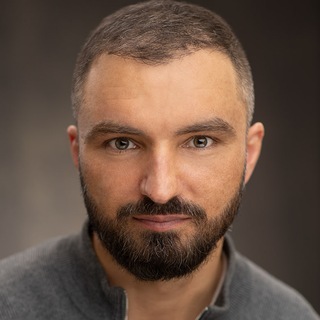
Hi, I'm Alex.
I make films. Invest in crypto. Build with AI.
Vancouver-based indie film producer. Making commercial genres. Two films out so far (Apr 2026). 35+ countries and growing. Investors returned.
In crypto since 2017. Watched the cycles. Lost money, made money, learned what actually matters. Right now I'm more interested in DeFi and blockchain as a technology, not in whatever's pumping this week.
I use AI daily - in development, in pre-production, in how I think through decisions. Infrastructure, not gimmick.
This channel is where I think out loud:
Film business mechanics nobody explains
What I actually see in Web3 right now
How AI is changing production from the inside
Occasionally something from my life worth sharing
No frameworks. No guru takes. Just what I'm doing and what I think.
If that sounds useful - you're in the right place.
Alex Bogomolov | Unscripted
I make films. Invest in crypto. Build with AI.
Vancouver-based indie film producer. Making commercial genres. Two films out so far (Apr 2026). 35+ countries and growing. Investors returned.
In crypto since 2017. Watched the cycles. Lost money, made money, learned what actually matters. Right now I'm more interested in DeFi and blockchain as a technology, not in whatever's pumping this week.
I use AI daily - in development, in pre-production, in how I think through decisions. Infrastructure, not gimmick.
This channel is where I think out loud:
Film business mechanics nobody explains
What I actually see in Web3 right now
How AI is changing production from the inside
Occasionally something from my life worth sharing
No frameworks. No guru takes. Just what I'm doing and what I think.
If that sounds useful - you're in the right place.
Alex Bogomolov | Unscripted
Alex Bogomolov | Unscripted pinned «Hi, I'm Alex. I make films. Invest in crypto. Build with AI. Vancouver-based indie film producer. Making commercial genres. Two films out so far (Apr 2026). 35+ countries and growing. Investors returned. In crypto since 2017. Watched the cycles. Lost money…»
Sony is laying off hundreds of people.
While everyone was watching the Bad Robot news, a bigger story quietly landed. Sony Pictures - global restructuring. Pixomondo VFX studio closed. TV divisions merged. Hundreds of people out.
The irony is Sony spent years looking like the smartest studio in Hollywood. While Disney, Warner, and Paramount burned billions on loss-making streamers, Sony just sold content to everyone and stayed profitable.
Then Peak TV collapsed. Streamers started cutting orders. And now even the smartest seller in Hollywood is tightening the belt.
For indie producer I see two ways:
Scary - big studios retreating to maximum safety. Franchises, remakes, game IP. Less original film.
Opportunity - when the system contracts and stops taking risks, people still want real stories. Not another Spider-Man sequel.
Sony isn't going anywhere. Spider-Man, The Last of Us, one of the biggest libraries in the business. But a studio that knew how to make money off other people's content now doesn't know what to produce itself.
While everyone was watching the Bad Robot news, a bigger story quietly landed. Sony Pictures - global restructuring. Pixomondo VFX studio closed. TV divisions merged. Hundreds of people out.
The irony is Sony spent years looking like the smartest studio in Hollywood. While Disney, Warner, and Paramount burned billions on loss-making streamers, Sony just sold content to everyone and stayed profitable.
Then Peak TV collapsed. Streamers started cutting orders. And now even the smartest seller in Hollywood is tightening the belt.
For indie producer I see two ways:
Scary - big studios retreating to maximum safety. Franchises, remakes, game IP. Less original film.
Opportunity - when the system contracts and stops taking risks, people still want real stories. Not another Spider-Man sequel.
Sony isn't going anywhere. Spider-Man, The Last of Us, one of the biggest libraries in the business. But a studio that knew how to make money off other people's content now doesn't know what to produce itself.
I'm done explaining why I use AI.
AI is the BEST thing that ever happened to independent filmmaking. Prove me wrong.
Every new technology in history had people fighting against it. The argument was always the same: this will ruin everything, this isn't real craft, this doesn't belong here, blah, blah
I use AI and AI agents every day: morning briefs, scheduling, budgeting, accounting, research, meeting prep and notes, habit tracking, etc.
Moreover, last week I got two quotes from the same VFX vendor: one is with traditional VFX labor, the other with AI handling some of the shots where it could be used without losing control. And no surprise - the second quote was significantly cheaper.
The VFX artist who prepared them told me something honest: "Yes, it does sting that I spent years mastering VFX craft and now anyone with a single prompt can approximate it. But I'll still be using it, because it lets me do more."
That's how people who are actually GOOD at their craft respond to new tools.
There are scripts and ideas I've passed on for years because the visuals they required were impossible on an indie budget. That ceiling moved. Whatever you can imagine, you can create now. Thanks to AI.
So yes, I use AI. I'm going to keep using it. And I can't wait to see what this technology brings next.
AI is the BEST thing that ever happened to independent filmmaking. Prove me wrong.
Every new technology in history had people fighting against it. The argument was always the same: this will ruin everything, this isn't real craft, this doesn't belong here, blah, blah
I use AI and AI agents every day: morning briefs, scheduling, budgeting, accounting, research, meeting prep and notes, habit tracking, etc.
Moreover, last week I got two quotes from the same VFX vendor: one is with traditional VFX labor, the other with AI handling some of the shots where it could be used without losing control. And no surprise - the second quote was significantly cheaper.
The VFX artist who prepared them told me something honest: "Yes, it does sting that I spent years mastering VFX craft and now anyone with a single prompt can approximate it. But I'll still be using it, because it lets me do more."
That's how people who are actually GOOD at their craft respond to new tools.
There are scripts and ideas I've passed on for years because the visuals they required were impossible on an indie budget. That ceiling moved. Whatever you can imagine, you can create now. Thanks to AI.
So yes, I use AI. I'm going to keep using it. And I can't wait to see what this technology brings next.
Michael Jackson is coming to the big screen.
The producers cast Jaafar Jackson (Jermaine's son, Michael's nephew) to play his uncle. Smart casting decision: not just a lookalike, but someone with real memories and real lived experience.
Antoine Fuqua is directing (Training Day). Graham King is producing, he did Bohemian Rhapsody, so he's already got a track record with music legend biopics.
The numbers:
Bohemian Rhapsody made $900M on a $50M budget. Phenomenal ROI. Audiences wanted to feel Queen again.
Michael's fanbase is significantly larger, but so are the expectations. And his story isn't just about music and dancing. It's accusations, contradictions, eccentricity, genius, and tragedy all at once.
The real question: will they show the dark side, or just deliver a polished two-hour legend?
We find out April 24.
The producers cast Jaafar Jackson (Jermaine's son, Michael's nephew) to play his uncle. Smart casting decision: not just a lookalike, but someone with real memories and real lived experience.
Antoine Fuqua is directing (Training Day). Graham King is producing, he did Bohemian Rhapsody, so he's already got a track record with music legend biopics.
The numbers:
Bohemian Rhapsody made $900M on a $50M budget. Phenomenal ROI. Audiences wanted to feel Queen again.
Michael's fanbase is significantly larger, but so are the expectations. And his story isn't just about music and dancing. It's accusations, contradictions, eccentricity, genius, and tragedy all at once.
The real question: will they show the dark side, or just deliver a polished two-hour legend?
We find out April 24.
California’s $750M film tax credit expansion is doing exactly what it was designed to do.
The upcoming "Baywatch" reboot is a clear example: $52.6M budget. About $21M in tax credits.
At the same time, 17 newly approved TV projects are expected to generate $1.2B in economic activity.
This didn’t happen by accident.
Gavin Newsom (the governor of California) doubled the incentive pool from $330M to $750M to address a very real issue: production leaving California for more competitive jurisdictions. But the real question is: will it be enough to reverse the flow, or just slow it down?
For anyone looking at film investment right now, this is the key takeaway: 40% is the new California benchmark for qualifying projects.
That fundamentally changes the math. And it’s still widely misunderstood outside of production finance.
I’ll break down how this actually works in practice in the next posts.
The upcoming "Baywatch" reboot is a clear example: $52.6M budget. About $21M in tax credits.
At the same time, 17 newly approved TV projects are expected to generate $1.2B in economic activity.
This didn’t happen by accident.
Gavin Newsom (the governor of California) doubled the incentive pool from $330M to $750M to address a very real issue: production leaving California for more competitive jurisdictions. But the real question is: will it be enough to reverse the flow, or just slow it down?
For anyone looking at film investment right now, this is the key takeaway: 40% is the new California benchmark for qualifying projects.
That fundamentally changes the math. And it’s still widely misunderstood outside of production finance.
I’ll break down how this actually works in practice in the next posts.
❤1
Soft Money - Part 1 of 5
The Misconception
"Tax credit" means you pay less tax on your profit. That's what most people think. That's wrong.
A film tax credit is not a tax instrument. It's production capital. Government money that goes into the budget - not against your tax bill.
The film industry term is "soft money": tax credits, rebates, grants, co-production incentives, etc. None of it touches your income tax. All of it touches your production budget.
Here's the actual mechanism: the government agrees to pay back a percentage of your qualified spending. On a $10M Canadian production, that can be $3-4M from the province and another $1-2M from the federal program. Combined: 35-50% of your eligible budget is government-committed before you shoot a single frame.
That misconception matters because it changes how investors should evaluate film investment entirely.
If you think a tax credit means "producers pay less tax," you think it's irrelevant to your investment decision. If you understand it's a governme
The Misconception
"Tax credit" means you pay less tax on your profit. That's what most people think. That's wrong.
A film tax credit is not a tax instrument. It's production capital. Government money that goes into the budget - not against your tax bill.
The film industry term is "soft money": tax credits, rebates, grants, co-production incentives, etc. None of it touches your income tax. All of it touches your production budget.
Here's the actual mechanism: the government agrees to pay back a percentage of your qualified spending. On a $10M Canadian production, that can be $3-4M from the province and another $1-2M from the federal program. Combined: 35-50% of your eligible budget is government-committed before you shoot a single frame.
That misconception matters because it changes how investors should evaluate film investment entirely.
If you think a tax credit means "producers pay less tax," you think it's irrelevant to your investment decision. If you understand it's a governme
Screen Daily sat down with six Gen Z cinemagoers aged 17 to 26 across the UK to figure out what's actually going on with the generation everyone's either panicking about or writing off.
Here's what the data actually shows.
The good news
Gen Z is not done with cinema. They drive 80 minutes for IMAX. They stay up until 3am for the Oscars. They have Letterboxd accounts and follow film journalists on TikTok. Several go 15+ times a year.
TikTok is now the discovery engine. Not trailers, not billboards. One panelist found out a sequel existed because of TikTok. That's where the audience lives now.
Re-releases are working. Two of the six cited re-releases as recent cinema trips. The appetite for the theatrical experience is real when the product justifies it.
The problems
Release windows are invisible to them. Multiple panelists missed films they wanted to see because they were already gone. Nobody told them the window existed.
Pricing is eroding casual attendance. When your "saver" ticket no longer feels like saving, you've lost the spontaneous trip.
Netflix is accidentally poisoning its own films. Two panelists assumed Frankenstein was bad because it left theaters fast. Both said they would have gone if it had a longer run. Self-inflicted damage.
Fake celebrity marketing is dead. Staged chemistry, gimmick interviews - it actively puts them off the film. Authentic press still works. Manufactured press backfires.
The AI note
One panelist said he'd never watch a fully AI-made film. The emotional contract audiences have with cinema is built on human effort. That contract still matters.
Conclusion
Cautiously optimistic. The audience is there and they genuinely love film. But the industry keeps making it harder to show up: invisible release windows, pricing that doesn't flex, marketing that insults their intelligence.
Fix the infrastructure. The demand is already there.
Here's what the data actually shows.
The good news
Gen Z is not done with cinema. They drive 80 minutes for IMAX. They stay up until 3am for the Oscars. They have Letterboxd accounts and follow film journalists on TikTok. Several go 15+ times a year.
TikTok is now the discovery engine. Not trailers, not billboards. One panelist found out a sequel existed because of TikTok. That's where the audience lives now.
Re-releases are working. Two of the six cited re-releases as recent cinema trips. The appetite for the theatrical experience is real when the product justifies it.
The problems
Release windows are invisible to them. Multiple panelists missed films they wanted to see because they were already gone. Nobody told them the window existed.
Pricing is eroding casual attendance. When your "saver" ticket no longer feels like saving, you've lost the spontaneous trip.
Netflix is accidentally poisoning its own films. Two panelists assumed Frankenstein was bad because it left theaters fast. Both said they would have gone if it had a longer run. Self-inflicted damage.
Fake celebrity marketing is dead. Staged chemistry, gimmick interviews - it actively puts them off the film. Authentic press still works. Manufactured press backfires.
The AI note
One panelist said he'd never watch a fully AI-made film. The emotional contract audiences have with cinema is built on human effort. That contract still matters.
Conclusion
Cautiously optimistic. The audience is there and they genuinely love film. But the industry keeps making it harder to show up: invisible release windows, pricing that doesn't flex, marketing that insults their intelligence.
Fix the infrastructure. The demand is already there.
Soft Money - Part 2 of 5
The Transfer
Most producers treat the film tax credit as money that arrives later. It doesn't have to.
The credit is transferable. You can sell it to a tax credit broker at 85-92 cents on the dollar and receive cash at greenlight, not when the tax year closes, not 18 months after delivery. At greenlight.
On a $2M credit, that's $1.8M in upfront liquidity from the government before you shoot a frame.
For the financing structure, this is significant. The transferable credit functions like a partial presale: committed, government-backed revenue that reduces the equity gap from day one.
The discount - 8-15 cents on the dollar - is the cost of certainty. You trade a small percentage of the credit's face value to know your floor at greenlight instead of guessing it twelve months after delivery.
Producers who know this build it into the financing stack from the first budget draft. Producers who don't treat it as a backend bonus and carry liquidity risk they don't need to carry. Don Rein
The Transfer
Most producers treat the film tax credit as money that arrives later. It doesn't have to.
The credit is transferable. You can sell it to a tax credit broker at 85-92 cents on the dollar and receive cash at greenlight, not when the tax year closes, not 18 months after delivery. At greenlight.
On a $2M credit, that's $1.8M in upfront liquidity from the government before you shoot a frame.
For the financing structure, this is significant. The transferable credit functions like a partial presale: committed, government-backed revenue that reduces the equity gap from day one.
The discount - 8-15 cents on the dollar - is the cost of certainty. You trade a small percentage of the credit's face value to know your floor at greenlight instead of guessing it twelve months after delivery.
Producers who know this build it into the financing stack from the first budget draft. Producers who don't treat it as a backend bonus and carry liquidity risk they don't need to carry. Don Rein