Billionaire Mark Cuban Warns of Next Crypto Implosion Coming From Wash Trades
Mark Cuban, a Shark Tank star and the owner of the NBA team Dallas Mavericks, has warned that the next crypto implosion could come from “the discovery and removal of wash trades” on centralized exchanges. The billionaire’s comments followed the collapse of crypto exchange FTX which wiped out billions of dollars of customer funds.
Shark Tank star and the owner of the NBA team Dallas Mavericks, Mark Cuban, shared his thoughts on the next crypto implosion with The Street, published Friday. The billionaire said:
I think the next possible implosion is the discovery and removal of wash trades on central exchanges.
“There are supposedly tens of millions of dollars in trades and liquidity for tokens that have very little utilization,” Cuban emphasized. “I don’t see how they can be that liquid.”
However, the Shark Tank star admitted: “I don’t have any specifics to offer to support my guess.”
Wash trading has long been a concern with cryptocurrency exchanges attempting to inflate their trading volumes. Wash trades are among the manipulative practices prohibited by the Securities and Exchange Commission (SEC), and regulators worldwide are increasingly cracking down on wash trading involving cryptocurrencies.
Kim Grauer, director of research at blockchain analytics firm Chainalysis, said in September last year that wash trading in the crypto space is currently “a legal gray area that we’re all trying to figure out how this should be regulated and what’s illegal.”
The crypto industry is also suffering from the aftermath of the collapse of crypto exchange FTX, which filed for bankruptcy in November. Former FTX CEO Sam Bankman-Fried (SBF) has been charged with multiple counts of fraud. However, he has pleaded not guilty to those charges.
Cuban said in November that if he were Bankman-Fried, he would “be afraid of going to jail for a long time.” He stressed: “It sure sounds bad.” The billionaire owner of the Dallas Mavericks previously explained that recent blowups in the crypto space, including the FTX implosion, were “banking blowups,” rather than “crypto blowups.”
The Shark Tank star believes that bitcoin is a good investment; he called gold investors “dumb.” He also revealed that he invests in crypto because he expects smart contracts to “have a significant impact in creating valuable applications.”
Mark Cuban, a Shark Tank star and the owner of the NBA team Dallas Mavericks, has warned that the next crypto implosion could come from “the discovery and removal of wash trades” on centralized exchanges. The billionaire’s comments followed the collapse of crypto exchange FTX which wiped out billions of dollars of customer funds.
Shark Tank star and the owner of the NBA team Dallas Mavericks, Mark Cuban, shared his thoughts on the next crypto implosion with The Street, published Friday. The billionaire said:
I think the next possible implosion is the discovery and removal of wash trades on central exchanges.
“There are supposedly tens of millions of dollars in trades and liquidity for tokens that have very little utilization,” Cuban emphasized. “I don’t see how they can be that liquid.”
However, the Shark Tank star admitted: “I don’t have any specifics to offer to support my guess.”
Wash trading has long been a concern with cryptocurrency exchanges attempting to inflate their trading volumes. Wash trades are among the manipulative practices prohibited by the Securities and Exchange Commission (SEC), and regulators worldwide are increasingly cracking down on wash trading involving cryptocurrencies.
Kim Grauer, director of research at blockchain analytics firm Chainalysis, said in September last year that wash trading in the crypto space is currently “a legal gray area that we’re all trying to figure out how this should be regulated and what’s illegal.”
The crypto industry is also suffering from the aftermath of the collapse of crypto exchange FTX, which filed for bankruptcy in November. Former FTX CEO Sam Bankman-Fried (SBF) has been charged with multiple counts of fraud. However, he has pleaded not guilty to those charges.
Cuban said in November that if he were Bankman-Fried, he would “be afraid of going to jail for a long time.” He stressed: “It sure sounds bad.” The billionaire owner of the Dallas Mavericks previously explained that recent blowups in the crypto space, including the FTX implosion, were “banking blowups,” rather than “crypto blowups.”
The Shark Tank star believes that bitcoin is a good investment; he called gold investors “dumb.” He also revealed that he invests in crypto because he expects smart contracts to “have a significant impact in creating valuable applications.”

🔥2🤩2😁1🤔1💩1
The fate of the Panamanian crypto bill project, which was approved by the Panamanian National Assembly last year, now depends on the decision of the supreme court of the country. The sanction of the project, which was vetoed by President Laurentino Cortizo, is now in the hands of the court after Congress rejected the veto measure.
https://news.bitcoin.com/panamanian-crypto-bill-might-get-a-second-wind-in-the-highest-court-of-the-country/
https://news.bitcoin.com/panamanian-crypto-bill-might-get-a-second-wind-in-the-highest-court-of-the-country/
👏3🙏2❤1👍1😱1
Germany’s 2022 Inflation Rate the Worst in More Than 30 Years
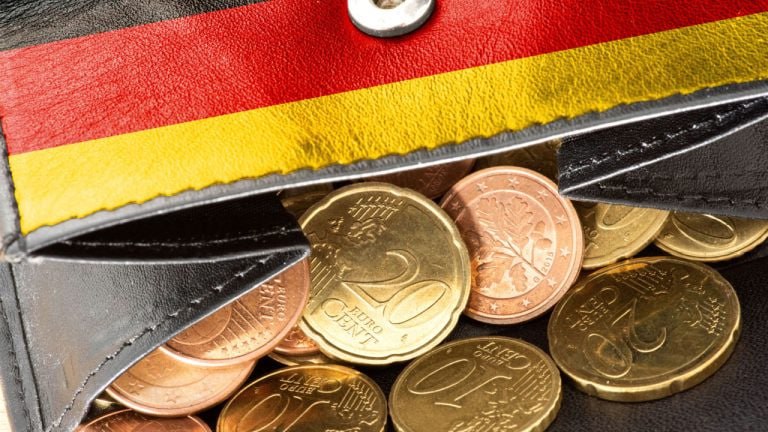
In a year that was characterized by surging energy and food prices, Germany’s average inflation rate in 2022 rose to 7.9% up from the 3.1% seen in 2021. Russia’s invasion of Ukraine, as well as the supply bottlenecks resulting from the war, are said to be among the factors that helped to drive up prices.
In 2022, Germany’s average inflation rate topped 7.9%, its highest since the 1990 reunification, the country’s statistical office has said. As per the German press agency’s Jan. 3 report, the 2022 rate is more than double the 3.1% seen in 2021.
According to the report, rising energy and food prices were among the main drivers of inflation for several months. As expected, the German Federal Statistical Office (FSO) reportedly identified Russia’s invasion of Ukraine, as well as the ensuing supply bottlenecks, as two key factors that led to the record inflation rate.
“Consumers in Germany had to pay 24.4% more for energy in December than a year earlier. Food prices rose by 20.7% within a year,” the agency’s report explained.
Despite recording what has been described as the country’s worst overall inflation rate since the 7.6% seen in 1951, the FSO data suggest that the monthly rate had dropped to 8.6% in December 2022. Before that, the rate had averaged 10.4% and 10%, in October and November, respectively.
To minimize the impact of rising prices on the population, the German government is reportedly planning to pour out “billions in aid.” It also aims to achieve this by using “price brakes for electricity and gas.” According to the report, some economists are optimistic that such steps will help tame inflation in 2023.
In a year that was characterized by surging energy and food prices, Germany’s average inflation rate in 2022 rose to 7.9% up from the 3.1% seen in 2021. Russia’s invasion of Ukraine, as well as the supply bottlenecks resulting from the war, are said to be among the factors that helped to drive up prices.
In 2022, Germany’s average inflation rate topped 7.9%, its highest since the 1990 reunification, the country’s statistical office has said. As per the German press agency’s Jan. 3 report, the 2022 rate is more than double the 3.1% seen in 2021.
According to the report, rising energy and food prices were among the main drivers of inflation for several months. As expected, the German Federal Statistical Office (FSO) reportedly identified Russia’s invasion of Ukraine, as well as the ensuing supply bottlenecks, as two key factors that led to the record inflation rate.
“Consumers in Germany had to pay 24.4% more for energy in December than a year earlier. Food prices rose by 20.7% within a year,” the agency’s report explained.
Despite recording what has been described as the country’s worst overall inflation rate since the 7.6% seen in 1951, the FSO data suggest that the monthly rate had dropped to 8.6% in December 2022. Before that, the rate had averaged 10.4% and 10%, in October and November, respectively.
To minimize the impact of rising prices on the population, the German government is reportedly planning to pour out “billions in aid.” It also aims to achieve this by using “price brakes for electricity and gas.” According to the report, some economists are optimistic that such steps will help tame inflation in 2023.
👍2🔥2🤯2🥰1🤔1
Leading crypto exchange Binance and credit card giant Mastercard have partnered to launch a prepaid crypto-linked card in Brazil as part of Binance’s expansion plans in Latam. The Binance card features 8% cashback for eligible purchases and supports on-the-fly conversion of 13 cryptocurrencies to make payments to local merchants.
https://news.bitcoin.com/binance-and-mastercard-launch-crypto-prepaid-card-in-brazil-as-part-of-latam-expansion/
https://news.bitcoin.com/binance-and-mastercard-launch-crypto-prepaid-card-in-brazil-as-part-of-latam-expansion/
🤔2🙏2🤯1😱1💩1
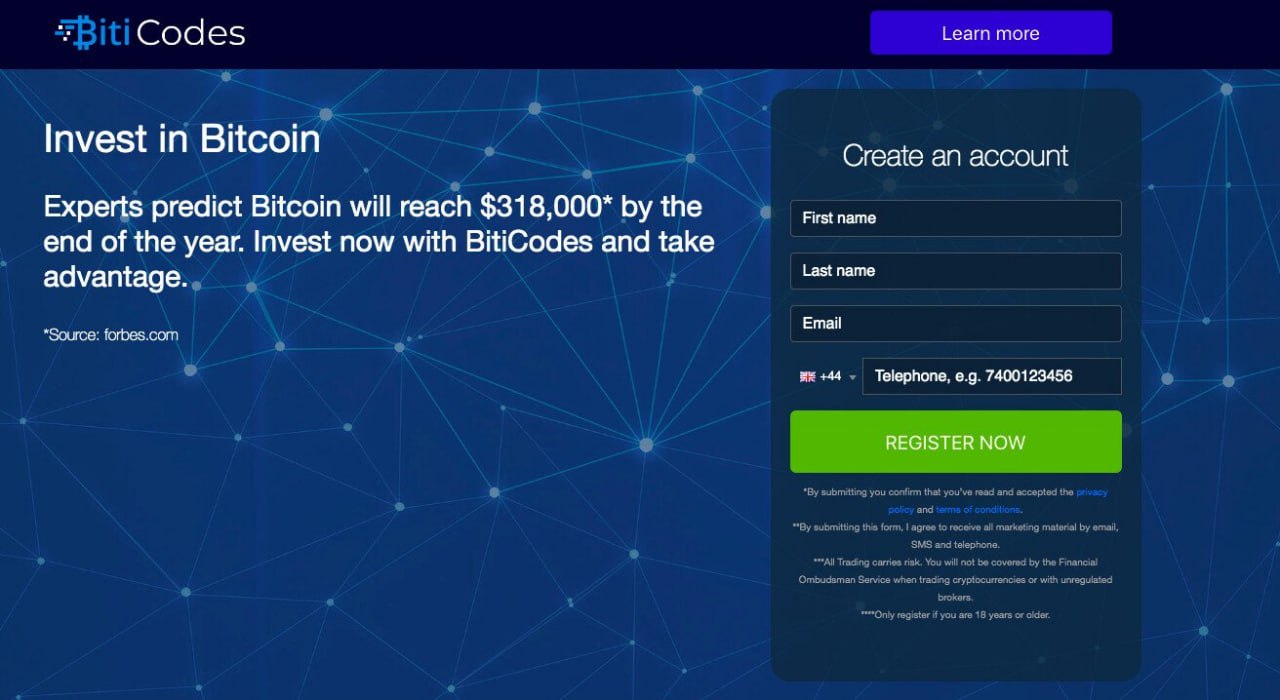
BitiCodes Review - Scam or Legitimate Trading Software.
BitiCodes claims to offer its trading platform to those looking to enter the digital assets space. The BitiCodes website states that one can sell Bitcoin, Ethereum, Dash, and other popular cryptos. Our BitiCodes review will analyze the available features, payment methods, available tokens, and pros and cons of BitiCodes in this review.
Keep reading to determine whether BitiCodes is a legit or a scam trading platform.
Before investing in any trading platform, it is essential to analyze the basic features such as supported cryptocurrencies, withdrawal speed, minimum deposits, and more. The table below provides some key information on BitiCodes, after examining the claims made by this platform.
While there is no guarantee of making a profit when trading cryptocurrencies, BitiCodes claims to support crypto trading after users create a free account. Afterwards, each member must make a $250 minimum deposit before they can supposedly begin trading with BitiCodes.
According to the BitiCodes website, investors can trade multiple tokens, including Bitcoin (BTC), Ethereum (ETH), Ethereum Classic (ETC), Dash (DASH), and Cardano (ADA).
BitiCodes also claims to offer demo trading services and customer support. While there are rumors of many celebrities and influential individuals linked to this platform, there is little known about the BitiCodes founders.
Other BitiCodes reviews and customer testimonials offer little insight into this trading platform. Thus, we recommend all readers properly go through the platform website and read all the terms and conditions before making any purchase or investment.
BitiCodes claims to offer its trading platform to those looking to enter the digital assets space. The BitiCodes website states that one can sell Bitcoin, Ethereum, Dash, and other popular cryptos. Our BitiCodes review will analyze the available features, payment methods, available tokens, and pros and cons of BitiCodes in this review.
Keep reading to determine whether BitiCodes is a legit or a scam trading platform.
Before investing in any trading platform, it is essential to analyze the basic features such as supported cryptocurrencies, withdrawal speed, minimum deposits, and more. The table below provides some key information on BitiCodes, after examining the claims made by this platform.
While there is no guarantee of making a profit when trading cryptocurrencies, BitiCodes claims to support crypto trading after users create a free account. Afterwards, each member must make a $250 minimum deposit before they can supposedly begin trading with BitiCodes.
According to the BitiCodes website, investors can trade multiple tokens, including Bitcoin (BTC), Ethereum (ETH), Ethereum Classic (ETC), Dash (DASH), and Cardano (ADA).
BitiCodes also claims to offer demo trading services and customer support. While there are rumors of many celebrities and influential individuals linked to this platform, there is little known about the BitiCodes founders.
Other BitiCodes reviews and customer testimonials offer little insight into this trading platform. Thus, we recommend all readers properly go through the platform website and read all the terms and conditions before making any purchase or investment.
❤2🤩2👍1🔥1🤔1
82% of Millionaires Ask About Putting Crypto in Their Portfolios, Survey Shows
Asset management firm Devere Group says that 82% of millionaires surveyed have asked their financial advisors about adding cryptocurrencies, such as bitcoin, to their portfolios despite the crypto winter. “Wealthy investors understand that digital currencies are the future of money, and they don’t want to be left in the past,” the firm’s chief executive said.
Devere Group, a global financial advisory and asset management firm with $12 billion in assets under management (AUM) worldwide, published the results of its crypto survey Monday. Devere found that among its millionaire clients with between $1 million and $5 million of investable assets, 82% have sought advice about investing in cryptocurrencies. Without providing additional details, the asset management firm wrote:
Eight out of 10 high net worth (HNW) individuals have asked their financial advisers about including cryptocurrencies, such as bitcoin, into their portfolios over the last 12 months — despite the market experiencing a difficult year in 2022.
“In 2022, the crypto market delivered its worst performance since 2018, with bitcoin, the headline-grabbing market leader, falling about 75% during the year,” Devere Group CEO Nigel Green commented. He explained that the crypto price drops resulted from investors reducing “their exposure to risk-on assets, including stocks and crypto, due to heightened concerns about inflation and slower economic growth.”
However, the executive pointed out that despite the crypto winter, high net worth investors “were consistently seeking advice from their financial advisers about including digital currencies into their portfolios.” Green stressed: “Interestingly, this typically more conservative group was not deterred by the bear market and adverse market conditions. Instead, they were looking to either start including or increasing their exposure to crypto.”
The Devere executive opined:
This suggests that these high net worth clients are increasingly aware of the inherent characteristics of cryptocurrencies like bitcoin, which has the core values of being digital, global, borderless, decentralized and tamper-proof.
“Wealthy investors understand that digital currencies are the future of money, and they don’t want to be left in the past,” he further said.
“Bitcoin is on track for its best January since 2013 based on hopes that inflation has peaked, monetary policies become more favorable, and the various crypto-sector crises, including high-profile bankruptcies, are now in the rear-view mirror,” the Devere executive continued.
Noting that BTC is up about 40% so far this year, Green said the crypto’s performance “will not go unnoticed” by high net worth clients and “others who want to build wealth for the future.” He concluded:
If HNWs were expressing such huge interest in the 2022 bear market, as market conditions steadily improve, they’re going to be amongst the first to capitalise in the forthcoming bull run.
Green and Devere Group’s survey participants are not the only ones bullish about bitcoin. A recent survey published by Nickel Digital Asset Management found that institutional investors expect “a strong year ahead for bitcoin” and 65% of the institutional investors surveyed agree that BTC could reach $100,000.
A different survey by Bitwise and Vettafi similarly found that “financial advisors remain highly engaged in crypto markets, with 15% allocating in client accounts and 90% receiving inbound questions from clients about the space.” Last month, global investment bank Goldman Sachs ranked bitcoin the best-performing asset this year.
Asset management firm Devere Group says that 82% of millionaires surveyed have asked their financial advisors about adding cryptocurrencies, such as bitcoin, to their portfolios despite the crypto winter. “Wealthy investors understand that digital currencies are the future of money, and they don’t want to be left in the past,” the firm’s chief executive said.
Devere Group, a global financial advisory and asset management firm with $12 billion in assets under management (AUM) worldwide, published the results of its crypto survey Monday. Devere found that among its millionaire clients with between $1 million and $5 million of investable assets, 82% have sought advice about investing in cryptocurrencies. Without providing additional details, the asset management firm wrote:
Eight out of 10 high net worth (HNW) individuals have asked their financial advisers about including cryptocurrencies, such as bitcoin, into their portfolios over the last 12 months — despite the market experiencing a difficult year in 2022.
“In 2022, the crypto market delivered its worst performance since 2018, with bitcoin, the headline-grabbing market leader, falling about 75% during the year,” Devere Group CEO Nigel Green commented. He explained that the crypto price drops resulted from investors reducing “their exposure to risk-on assets, including stocks and crypto, due to heightened concerns about inflation and slower economic growth.”
However, the executive pointed out that despite the crypto winter, high net worth investors “were consistently seeking advice from their financial advisers about including digital currencies into their portfolios.” Green stressed: “Interestingly, this typically more conservative group was not deterred by the bear market and adverse market conditions. Instead, they were looking to either start including or increasing their exposure to crypto.”
The Devere executive opined:
This suggests that these high net worth clients are increasingly aware of the inherent characteristics of cryptocurrencies like bitcoin, which has the core values of being digital, global, borderless, decentralized and tamper-proof.
“Wealthy investors understand that digital currencies are the future of money, and they don’t want to be left in the past,” he further said.
“Bitcoin is on track for its best January since 2013 based on hopes that inflation has peaked, monetary policies become more favorable, and the various crypto-sector crises, including high-profile bankruptcies, are now in the rear-view mirror,” the Devere executive continued.
Noting that BTC is up about 40% so far this year, Green said the crypto’s performance “will not go unnoticed” by high net worth clients and “others who want to build wealth for the future.” He concluded:
If HNWs were expressing such huge interest in the 2022 bear market, as market conditions steadily improve, they’re going to be amongst the first to capitalise in the forthcoming bull run.
Green and Devere Group’s survey participants are not the only ones bullish about bitcoin. A recent survey published by Nickel Digital Asset Management found that institutional investors expect “a strong year ahead for bitcoin” and 65% of the institutional investors surveyed agree that BTC could reach $100,000.
A different survey by Bitwise and Vettafi similarly found that “financial advisors remain highly engaged in crypto markets, with 15% allocating in client accounts and 90% receiving inbound questions from clients about the space.” Last month, global investment bank Goldman Sachs ranked bitcoin the best-performing asset this year.

👍2🔥2👏1🤔1💩1
Year of Bitcoin miners’ merge? Analysts predict key mining trends for 2023.
Public Bitcoin miners will actively work to minimize costs in 2023 by going private or merging with other firms, Hash Rate Index analysts predicted.
After a shocking year for Bitcoin, public miners will focus on strengthening balance sheets and minimizing costs this year, according to industry analysts.
Bitcoin mining cost minimization will likely lead public miners to either go private or merge with other companies in 2023, Hash Rate Index’s Bitcoin analysts Jaran Mellerud and Colin Harper predicted.
In a blog post titled “10 Bitcoin mining predictions for 2023,” the analysts pointed out that public miners are burdened with strict reporting requirements, such as spending millions of dollars on annual reporting.
After many Bitcoin mining stocks plummeted 90% in 2022, public miners could significantly reduce administrative costs by going private or merging with others to share the costs.
Alongside predicting that 2023 will become the year of Bitcoin miners’ merge, Hash Rate Index also forecasted a massive restructuring year in the Bitcoin mining industry. The analysts are confident that strengthening balance sheets will be a top priority for Bitcoin miners in 2023 as they fight to avoid bankruptcy.
The analysts noted that the unsustainable debt levels of some Bitcoin miners will force them to proceed with debt restructuring as the only option. Debt restructuring can imply negotiating lower interest rates or extending the due dates of the debt, the authors added.
According to the analysts, Bitcoin miners will also increasingly hedge risks in 2023 by utilizing Bitcoin mining derivatives, including those allowing miners to sell their future hash rate for a specific hash price. “We will see a trend commencing of miners seeking to hedge everything that can be hedged, just like what is expected in more mature commodity-producing industries,” Mellerud and Harper stated.
As for broader industry predictions, Hash Rate Index also predicted that the ongoing Bitcoin bear market will likely come to an end in 2023, referring to historical BTC price cycles.
Public Bitcoin miners will actively work to minimize costs in 2023 by going private or merging with other firms, Hash Rate Index analysts predicted.
After a shocking year for Bitcoin, public miners will focus on strengthening balance sheets and minimizing costs this year, according to industry analysts.
Bitcoin mining cost minimization will likely lead public miners to either go private or merge with other companies in 2023, Hash Rate Index’s Bitcoin analysts Jaran Mellerud and Colin Harper predicted.
In a blog post titled “10 Bitcoin mining predictions for 2023,” the analysts pointed out that public miners are burdened with strict reporting requirements, such as spending millions of dollars on annual reporting.
After many Bitcoin mining stocks plummeted 90% in 2022, public miners could significantly reduce administrative costs by going private or merging with others to share the costs.
Alongside predicting that 2023 will become the year of Bitcoin miners’ merge, Hash Rate Index also forecasted a massive restructuring year in the Bitcoin mining industry. The analysts are confident that strengthening balance sheets will be a top priority for Bitcoin miners in 2023 as they fight to avoid bankruptcy.
The analysts noted that the unsustainable debt levels of some Bitcoin miners will force them to proceed with debt restructuring as the only option. Debt restructuring can imply negotiating lower interest rates or extending the due dates of the debt, the authors added.
According to the analysts, Bitcoin miners will also increasingly hedge risks in 2023 by utilizing Bitcoin mining derivatives, including those allowing miners to sell their future hash rate for a specific hash price. “We will see a trend commencing of miners seeking to hedge everything that can be hedged, just like what is expected in more mature commodity-producing industries,” Mellerud and Harper stated.
As for broader industry predictions, Hash Rate Index also predicted that the ongoing Bitcoin bear market will likely come to an end in 2023, referring to historical BTC price cycles.
❤2🤯2🥰1👏1🤔1
Samsung Is Investing More Than $35 Million in Latam-Focused Metaverse Initiatives
Samsung, the Korean electronics behemoth, has revealed it is currently investing more than $35 million dollars in metaverse initiatives for the Latam audience. The objective behind this move is to help the brand attract and connect with younger audiences, as part of its digital push and growth marketing strategy.
Many companies have started to put their products and their brands in the metaverse, considering it an important part of their marketing strategy. Samsung, one of the biggest electronics companies in the world, has recently revealed it is investing more than $35 million in metaverse initiatives directed at Latam customers.
In an article published on Dec. 20, Anita Caerols, director of marketing and corporate citizenship of Samsung Electronics Chile, explains the motivations behind this virtual reality push for the company. She stated:
At Samsung we believe that the metaverse is a concrete commitment to connect with young consumers. That is why we are investing more than US$35 million in initiatives that cover all of Latam.
Furthermore, Caerols believes that fully immersive platforms are part of the future of marketing and that for digital natives, the current metaverse is a natural extension of social media platforms, making it a sensible field for Samsung to explore.
The focus Samsung is putting on the metaverse, and the amount of funds invested in this area, are justified by the marketing vision presented by the company. On this, Caerols explained:
If a business needs to speak and connect with young audiences, prospect current and future potential consumers, and engage with new influencers, it is imperative that it be in the metaverse starting now.
It is Gen Z and Gen Alpha, audiences that are more accustomed to these platforms, which are the ones Samsung wants to attract to its proposal and its products. According to a Linkedin study, 400 million users are currently dwelling on metaverse platforms every month, with 51% of them being 13 years old or less.
Samsung’s interest in the virtual world is not new, and the company has already made different moves in order to be a part of some metaverse platforms.
In October, the company launched its “House of Sam” experience in Decentraland, allowing users to interact virtually with products of the company.
In July, Samsung also launched another metaverse experience on Roblox, called “Space Tycoon,” allowing users to be part of a space station where they can build Samsung products with raw materials.
Samsung, the Korean electronics behemoth, has revealed it is currently investing more than $35 million dollars in metaverse initiatives for the Latam audience. The objective behind this move is to help the brand attract and connect with younger audiences, as part of its digital push and growth marketing strategy.
Many companies have started to put their products and their brands in the metaverse, considering it an important part of their marketing strategy. Samsung, one of the biggest electronics companies in the world, has recently revealed it is investing more than $35 million in metaverse initiatives directed at Latam customers.
In an article published on Dec. 20, Anita Caerols, director of marketing and corporate citizenship of Samsung Electronics Chile, explains the motivations behind this virtual reality push for the company. She stated:
At Samsung we believe that the metaverse is a concrete commitment to connect with young consumers. That is why we are investing more than US$35 million in initiatives that cover all of Latam.
Furthermore, Caerols believes that fully immersive platforms are part of the future of marketing and that for digital natives, the current metaverse is a natural extension of social media platforms, making it a sensible field for Samsung to explore.
The focus Samsung is putting on the metaverse, and the amount of funds invested in this area, are justified by the marketing vision presented by the company. On this, Caerols explained:
If a business needs to speak and connect with young audiences, prospect current and future potential consumers, and engage with new influencers, it is imperative that it be in the metaverse starting now.
It is Gen Z and Gen Alpha, audiences that are more accustomed to these platforms, which are the ones Samsung wants to attract to its proposal and its products. According to a Linkedin study, 400 million users are currently dwelling on metaverse platforms every month, with 51% of them being 13 years old or less.
Samsung’s interest in the virtual world is not new, and the company has already made different moves in order to be a part of some metaverse platforms.
In October, the company launched its “House of Sam” experience in Decentraland, allowing users to interact virtually with products of the company.
In July, Samsung also launched another metaverse experience on Roblox, called “Space Tycoon,” allowing users to be part of a space station where they can build Samsung products with raw materials.
🎉2🤩2👍1💩1🙏1
The smart contract token economy rose 5.6% against the U.S. dollar on Thursday, reaching $332 billion. Additionally, the value locked in decentralized finance (defi) increased to nearly $50 billion, a record high not seen since the collapse of FTX.
https://news.bitcoin.com/smart-contract-token-market-soars-to-332-billion-defi-value-reaches-high-not-seen-since-ftx-collapse/
https://news.bitcoin.com/smart-contract-token-market-soars-to-332-billion-defi-value-reaches-high-not-seen-since-ftx-collapse/
❤2👍2🔥1🤔1🤯1
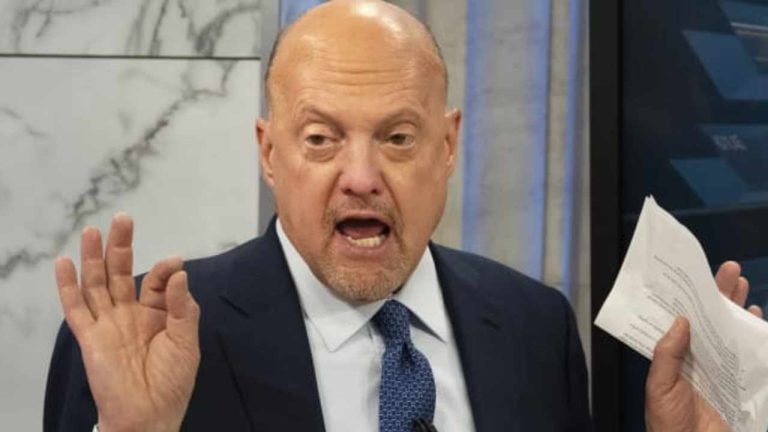
Mad Money’s Jim Cramer: I Trust My Money More in Draftkings Than I Would Binance
The host of Mad Money, Jim Cramer, has cast doubt on the trustworthiness of crypto exchange Binance. “Why can’t people in charge just admit that Binance has no real legitimacy after what happened to FTX?” he asked, adding: “I would trust my money more in Draftkings than I would Binance.”
The host of CNBC’s Mad Money show, Jim Cramer, cast doubt on the trustworthiness of cryptocurrency exchange Binance in a series of tweets this week. Cramer is a former hedge fund manager who co-founded Thestreet, a financial news and literacy website. He tweeted Friday:
Why are there no strategists who say that most crypto are worthless so sell them? Why can’t people in charge just admit that Binance has no real legitimacy after what happened to FTX?
The crypto exchange founded by Sam Bankman-Fried (SBF) filed for Chapter 11 bankruptcy on Nov. 11, and an estimated one million customers and investors lost billions of dollars from its collapse. Bankman-Fried has been arrested in the Bahamas and the U.S. government and several regulators have brought fraud charges against SBF and the crypto exchange.
The Mad Money host also compared Binance to the fantasy sports betting platform Draftkings, which is banned as illegal gambling in many countries and U.S. states. Cramer tweeted:
I would trust my money more in Draftkings than I would Binance.
Only two days prior, Cramer cryptically asked his Twitter followers: “Do you feel as reassured by Binance as I do?” Many users on the social media platform responded to the Mad Money host, taunting that whatever company Cramer is against is likely to be a good buy.
Bitcoin developer and podcaster Matt Odell commented on Cramer’s Draftkings comparison: “I do not have to trust either company. Unlike you, I hold my wealth myself without trust. It is called bitcoin. Binance. Draftkings. Chase Bank. All require trust. As trust erodes throughout our institutions, the value prop of trust minimized money will become obvious to many.”
Cramer said on CNBC Thursday: “I think you should be negative on crypto. I’m negative on XRP, LTC, and DOGE because I haven’t been able to find anyone that takes them … It’s like $80 billion worth of non-Bitcoin that’s destined to be wiped out.” Last week, he advised investors to get out of crypto, emphasizing that “it’s never to too late to sell an awful position.” Following the FTX meltdown, Cramer called Bankman-Fried a pathological liar, a conman, and a clueless idiot.
The Mad Money host used to invest in bitcoin, ether, and non-fungible tokens (NFTs) but sold all his crypto holdings last year. “I told you I sold my bitcoin and ethereum a long time ago … and used the proceeds to buy a very nice farm,” he recently shared. Cramer has been advising investors to avoid investing in speculative assets, including crypto, while the Federal Reserve continues to tighten the economy.
The host of Mad Money, Jim Cramer, has cast doubt on the trustworthiness of crypto exchange Binance. “Why can’t people in charge just admit that Binance has no real legitimacy after what happened to FTX?” he asked, adding: “I would trust my money more in Draftkings than I would Binance.”
The host of CNBC’s Mad Money show, Jim Cramer, cast doubt on the trustworthiness of cryptocurrency exchange Binance in a series of tweets this week. Cramer is a former hedge fund manager who co-founded Thestreet, a financial news and literacy website. He tweeted Friday:
Why are there no strategists who say that most crypto are worthless so sell them? Why can’t people in charge just admit that Binance has no real legitimacy after what happened to FTX?
The crypto exchange founded by Sam Bankman-Fried (SBF) filed for Chapter 11 bankruptcy on Nov. 11, and an estimated one million customers and investors lost billions of dollars from its collapse. Bankman-Fried has been arrested in the Bahamas and the U.S. government and several regulators have brought fraud charges against SBF and the crypto exchange.
The Mad Money host also compared Binance to the fantasy sports betting platform Draftkings, which is banned as illegal gambling in many countries and U.S. states. Cramer tweeted:
I would trust my money more in Draftkings than I would Binance.
Only two days prior, Cramer cryptically asked his Twitter followers: “Do you feel as reassured by Binance as I do?” Many users on the social media platform responded to the Mad Money host, taunting that whatever company Cramer is against is likely to be a good buy.
Bitcoin developer and podcaster Matt Odell commented on Cramer’s Draftkings comparison: “I do not have to trust either company. Unlike you, I hold my wealth myself without trust. It is called bitcoin. Binance. Draftkings. Chase Bank. All require trust. As trust erodes throughout our institutions, the value prop of trust minimized money will become obvious to many.”
Cramer said on CNBC Thursday: “I think you should be negative on crypto. I’m negative on XRP, LTC, and DOGE because I haven’t been able to find anyone that takes them … It’s like $80 billion worth of non-Bitcoin that’s destined to be wiped out.” Last week, he advised investors to get out of crypto, emphasizing that “it’s never to too late to sell an awful position.” Following the FTX meltdown, Cramer called Bankman-Fried a pathological liar, a conman, and a clueless idiot.
The Mad Money host used to invest in bitcoin, ether, and non-fungible tokens (NFTs) but sold all his crypto holdings last year. “I told you I sold my bitcoin and ethereum a long time ago … and used the proceeds to buy a very nice farm,” he recently shared. Cramer has been advising investors to avoid investing in speculative assets, including crypto, while the Federal Reserve continues to tighten the economy.
👏2🤔2👎1💩1🙏1
Pick n Pay, one of South Africa’s leading retailers, reportedly now accepts bitcoin as payment at all its stores across the country. Using the bitcoin lightning network, Pick n Pay’s customers can now buy items such as groceries, airtime and electricity tokens.
https://news.bitcoin.com/south-african-retailer-pick-n-pay-now-accepting-payments-via-btc-at-all-its-stores/
https://news.bitcoin.com/south-african-retailer-pick-n-pay-now-accepting-payments-via-btc-at-all-its-stores/
👍2🔥2🤩2👏1🤔1
Here’s what SBF’s fake electronics outlet ‘North Dimension’ looks like.
A shop with obscure brand partners and generic texts, where you can't really buy anything.
As the malpractices of the FTX continue to pop up and be uncovered by prosecutors, it turns out the disgraced crypto exchange’s customers were sending money to a fake electronic online shop, which was reportedly opened by Sam “SBF” Bankman-Fried.
In a complaint filed on Dec. 13, the United States Securities and Exchange Commission (SEC) mentioned North Dimension Inc., an Alameda subsidiary that was a vital part of the FTX financial malpractice. According to the complaint, Bankman-Fried directed FTX to have customers send funds to North Dimension bank accounts in an effort to hide the fact that the funds were being sent to an account controlled by Alameda.
But the most peculiar fact about the company, which was registered at the same address in California as FTX US, was its fake website. Now only available through the Wayback Machine, the site appears to be an electronics outlet. However, there’s no evidence that one could actually buy anything from North Dimension.
Clicking on any item — for example, a $1,199 MacBook Pro with a 13-inch display — leads to a “Get a Quote” page where one can leave a message and contact information. As the text on the page reads, “We collaborate with ambitious brands and people; we’d love to build something great together.”
The site also claimed to be in collaboration with the “world’s premium brands,” but the logos displayed in the partner section are hardly familiar to anyon who’d like to buy a laptop or a smartphone.
The cherry on the cake is surely the website’s “About Us” section, whose texts look like they may have been written by a not-too-smart artificial intelligence.
After being released on a $250 million bail, SBF has reportedly been cashing out large amounts of cryptocurrency. According to an on-chain investigation by decentralized finance educator BowTiedIguana, SBF has cashed out $684,000 in crypto from an exchange in Seychelles.
A shop with obscure brand partners and generic texts, where you can't really buy anything.
As the malpractices of the FTX continue to pop up and be uncovered by prosecutors, it turns out the disgraced crypto exchange’s customers were sending money to a fake electronic online shop, which was reportedly opened by Sam “SBF” Bankman-Fried.
In a complaint filed on Dec. 13, the United States Securities and Exchange Commission (SEC) mentioned North Dimension Inc., an Alameda subsidiary that was a vital part of the FTX financial malpractice. According to the complaint, Bankman-Fried directed FTX to have customers send funds to North Dimension bank accounts in an effort to hide the fact that the funds were being sent to an account controlled by Alameda.
But the most peculiar fact about the company, which was registered at the same address in California as FTX US, was its fake website. Now only available through the Wayback Machine, the site appears to be an electronics outlet. However, there’s no evidence that one could actually buy anything from North Dimension.
Clicking on any item — for example, a $1,199 MacBook Pro with a 13-inch display — leads to a “Get a Quote” page where one can leave a message and contact information. As the text on the page reads, “We collaborate with ambitious brands and people; we’d love to build something great together.”
The site also claimed to be in collaboration with the “world’s premium brands,” but the logos displayed in the partner section are hardly familiar to anyon who’d like to buy a laptop or a smartphone.
The cherry on the cake is surely the website’s “About Us” section, whose texts look like they may have been written by a not-too-smart artificial intelligence.
After being released on a $250 million bail, SBF has reportedly been cashing out large amounts of cryptocurrency. According to an on-chain investigation by decentralized finance educator BowTiedIguana, SBF has cashed out $684,000 in crypto from an exchange in Seychelles.
❤2🤯2🎉2💩1🙏1
Sango Coin listing postponed by Central African Republic.
As the first country to adopt Bitcoin as legal tender in Africa, the Central African Republic appears to be struggling with its investor-oriented token, Sango Coin.
The Central African Republic has announced it will delay the listing of cryptocurrency, Sango Coin, on crypto exchanges due to current market conditions and marketing reasons. The update was revealed in Sango’s Telegram group.
Sango Coin was launched in July with the aim of raising nearly $1 billion over the next year. So far, however, only $1.66 million worth of the coin has been sold, according to the Sango website.
In April of this year, the Central African Republic made Bitcoin legal tender, becoming the first African state to do so. The country had also previously announced a plan to allow foreign investors to buy citizenship for $60,000 worth of Sango Coins. However, this initiative was blocked as unconstitutional by the country's top court in August.
Cointelegraph recently sat down with Mamadou Moustapha Ly, the Central African technician who oversaw the development of Sango Coin while attending a conference in Senegal, West Africa. A payments expert, Ly also runs the Fintech startup Kete Cash. Ly shed light on the creation of what he called a “token–not a currency,” labeled Sango. Sango is the token that would accompany the country’s plans to adopt Bitcoin as a legal tender.
First, Ly stressed that the Bitcoin as legal tender law clearly states that the country will adopt Bitcoin: There is no mention of other cryptocurrencies or even Sango Coin. He painted a clear divide between Sango and Bitcoin:
“The law states that the digital currency that is legal tender is bitcoin. We recognize this as our official currency. Sango coin is a project for the Central African Republic state.”
His comments are backed by the President of the CAR, Faustin-Archange Touadéra. The mathematician has been vocal in his support of Bitcoin, and Bitcoin only. However, the President showed solidarity with the creation of the Sango token, as the country would move toward a “Brighter Future” via blockchain technology.
As the first country to adopt Bitcoin as legal tender in Africa, the Central African Republic appears to be struggling with its investor-oriented token, Sango Coin.
The Central African Republic has announced it will delay the listing of cryptocurrency, Sango Coin, on crypto exchanges due to current market conditions and marketing reasons. The update was revealed in Sango’s Telegram group.
Sango Coin was launched in July with the aim of raising nearly $1 billion over the next year. So far, however, only $1.66 million worth of the coin has been sold, according to the Sango website.
In April of this year, the Central African Republic made Bitcoin legal tender, becoming the first African state to do so. The country had also previously announced a plan to allow foreign investors to buy citizenship for $60,000 worth of Sango Coins. However, this initiative was blocked as unconstitutional by the country's top court in August.
Cointelegraph recently sat down with Mamadou Moustapha Ly, the Central African technician who oversaw the development of Sango Coin while attending a conference in Senegal, West Africa. A payments expert, Ly also runs the Fintech startup Kete Cash. Ly shed light on the creation of what he called a “token–not a currency,” labeled Sango. Sango is the token that would accompany the country’s plans to adopt Bitcoin as a legal tender.
First, Ly stressed that the Bitcoin as legal tender law clearly states that the country will adopt Bitcoin: There is no mention of other cryptocurrencies or even Sango Coin. He painted a clear divide between Sango and Bitcoin:
“The law states that the digital currency that is legal tender is bitcoin. We recognize this as our official currency. Sango coin is a project for the Central African Republic state.”
His comments are backed by the President of the CAR, Faustin-Archange Touadéra. The mathematician has been vocal in his support of Bitcoin, and Bitcoin only. However, the President showed solidarity with the creation of the Sango token, as the country would move toward a “Brighter Future” via blockchain technology.

👍3🤯2🤔1🤬1💩1
Egyptian fintech MNT-Halan announced on Feb. 1 that it had raised over $340 million via debt and equity and it expects to raise an additional $60 million from leading international investors. The latest funding round sees MNT-Halan’s valuation rise to over $1 billion which reportedly makes it the country’s “only private billion-dollar company.
https://news.bitcoin.com/egyptian-fintech-mnt-halan-secures-400-million-in-funding-valuation-rises-to-over-1-billion/
https://news.bitcoin.com/egyptian-fintech-mnt-halan-secures-400-million-in-funding-valuation-rises-to-over-1-billion/
🔥2👏2❤1🥰1🤩1
🇪🇺 Europe’s big bet on crypto regulation
EU policymakers hope that a new comprehensive framework to regulate digital assets will give the bloc a first-mover advantage. As governments scramble to figure out how to regulate crypto markets, the European Union has produced one of the most comprehensive crypto frameworks to date.
EU policymakers designed the Markets in Crypto-Assets laws to be a “global standard-setter,” with the hope that greater regulatory certainty will act as a magnet for the digital asset industry. The bill awaits a final vote in the European Parliament in April. Europe’s bet has divided crypto policy experts, with some arguing that the EU’s action is net-positive for the continent. They have also raised concerns, especially around the bill’s effect on stablecoins.
EU policymakers hope that a new comprehensive framework to regulate digital assets will give the bloc a first-mover advantage. As governments scramble to figure out how to regulate crypto markets, the European Union has produced one of the most comprehensive crypto frameworks to date.
EU policymakers designed the Markets in Crypto-Assets laws to be a “global standard-setter,” with the hope that greater regulatory certainty will act as a magnet for the digital asset industry. The bill awaits a final vote in the European Parliament in April. Europe’s bet has divided crypto policy experts, with some arguing that the EU’s action is net-positive for the continent. They have also raised concerns, especially around the bill’s effect on stablecoins.
👍2🔥2🤔2🎉1💩1
🇪🇺 EU banks face stricter rules for crypto holdings
EU policymakers align high-risk provisions for banks holding crypto with a framework for global supervision. Banks holding crypto will need to follow strict laws to ensure capital requirements, lawmakers decided in a European Parliament committee vote on Tuesday.
Reuters reported on Monday, to a bill covering financial capital requirements for traditional institutions. This means that, when the rules would come into effect, banks will need to be able to cover a complete with capital reserves and not be able to gain leverage. The proposed percentage is the highest level of securitization proposed by Basel III reforms set by the Basel Committee on Banking Supervision, which sets international banking standards.
EU policymakers align high-risk provisions for banks holding crypto with a framework for global supervision. Banks holding crypto will need to follow strict laws to ensure capital requirements, lawmakers decided in a European Parliament committee vote on Tuesday.
Reuters reported on Monday, to a bill covering financial capital requirements for traditional institutions. This means that, when the rules would come into effect, banks will need to be able to cover a complete with capital reserves and not be able to gain leverage. The proposed percentage is the highest level of securitization proposed by Basel III reforms set by the Basel Committee on Banking Supervision, which sets international banking standards.
👏2🤔2👎1😱1🙏1
Sango Coin listing postponed by Central African Republic.
As the first country to adopt Bitcoin as legal tender in Africa, the Central African Republic appears to be struggling with its investor-oriented token, Sango Coin.
The Central African Republic has announced it will delay the listing of cryptocurrency, Sango Coin, on crypto exchanges due to current market conditions and marketing reasons. The update was revealed in Sango’s Telegram group.
Sango Coin was launched in July with the aim of raising nearly $1 billion over the next year. So far, however, only $1.66 million worth of the coin has been sold, according to the Sango website.
In April of this year, the Central African Republic made Bitcoin legal tender, becoming the first African state to do so. The country had also previously announced a plan to allow foreign investors to buy citizenship for $60,000 worth of Sango Coins. However, this initiative was blocked as unconstitutional by the country's top court in August.
Cointelegraph recently sat down with Mamadou Moustapha Ly, the Central African technician who oversaw the development of Sango Coin while attending a conference in Senegal, West Africa. A payments expert, Ly also runs the Fintech startup Kete Cash. Ly shed light on the creation of what he called a “token–not a currency,” labeled Sango. Sango is the token that would accompany the country’s plans to adopt Bitcoin as a legal tender.
First, Ly stressed that the Bitcoin as legal tender law clearly states that the country will adopt Bitcoin: There is no mention of other cryptocurrencies or even Sango Coin. He painted a clear divide between Sango and Bitcoin:
“The law states that the digital currency that is legal tender is bitcoin. We recognize this as our official currency. Sango coin is a project for the Central African Republic state.”
His comments are backed by the President of the CAR, Faustin-Archange Touadéra. The mathematician has been vocal in his support of Bitcoin, and Bitcoin only. However, the President showed solidarity with the creation of the Sango token, as the country would move toward a “Brighter Future” via blockchain technology.
As the first country to adopt Bitcoin as legal tender in Africa, the Central African Republic appears to be struggling with its investor-oriented token, Sango Coin.
The Central African Republic has announced it will delay the listing of cryptocurrency, Sango Coin, on crypto exchanges due to current market conditions and marketing reasons. The update was revealed in Sango’s Telegram group.
Sango Coin was launched in July with the aim of raising nearly $1 billion over the next year. So far, however, only $1.66 million worth of the coin has been sold, according to the Sango website.
In April of this year, the Central African Republic made Bitcoin legal tender, becoming the first African state to do so. The country had also previously announced a plan to allow foreign investors to buy citizenship for $60,000 worth of Sango Coins. However, this initiative was blocked as unconstitutional by the country's top court in August.
Cointelegraph recently sat down with Mamadou Moustapha Ly, the Central African technician who oversaw the development of Sango Coin while attending a conference in Senegal, West Africa. A payments expert, Ly also runs the Fintech startup Kete Cash. Ly shed light on the creation of what he called a “token–not a currency,” labeled Sango. Sango is the token that would accompany the country’s plans to adopt Bitcoin as a legal tender.
First, Ly stressed that the Bitcoin as legal tender law clearly states that the country will adopt Bitcoin: There is no mention of other cryptocurrencies or even Sango Coin. He painted a clear divide between Sango and Bitcoin:
“The law states that the digital currency that is legal tender is bitcoin. We recognize this as our official currency. Sango coin is a project for the Central African Republic state.”
His comments are backed by the President of the CAR, Faustin-Archange Touadéra. The mathematician has been vocal in his support of Bitcoin, and Bitcoin only. However, the President showed solidarity with the creation of the Sango token, as the country would move toward a “Brighter Future” via blockchain technology.
🤔2🤩2🔥1🤯1💩1
Alfa-Bank, one of the major Russian banking institutions, has established its own platform for digital financial assets. The launch became possible after Russia’s monetary authority added Alfa-Bank to its register of digital asset issuers this week.
https://news.bitcoin.com/russias-largest-private-bank-launches-digital-asset-platform/
https://news.bitcoin.com/russias-largest-private-bank-launches-digital-asset-platform/
🤔3👍2❤1🥰1🙏1
🇭🇰 Hong Kong Aspires To Become A Crypto Powerhouse Despite An Industry Crisis In 2022
Hong Kong is doing its utmost to offer enough supervision to the crypto market in order to unlock the potential of technologies like Web3. The new regulatory framework aims to provide bitcoin exchanges with the same market recognition that established financial institutions already have.
According to Paul Chan, the financial secretary, the local government and regulators are open to working with crypto and fintech businesses in 2023. On Radio Television Hong Kong (RTHK), Chan remarked at an event held by the state-run incubator Cyberport that Hong Kong has become a foundation connecting high-quality virtual asset enterprises. Despite the current business crisis caused by the FTX crash, the Hong Kong government remains dedicated to the development of cryptocurrency infrastructure.
Hong Kong is doing its utmost to offer enough supervision to the crypto market in order to unlock the potential of technologies like Web3. The new regulatory framework aims to provide bitcoin exchanges with the same market recognition that established financial institutions already have.
According to Paul Chan, the financial secretary, the local government and regulators are open to working with crypto and fintech businesses in 2023. On Radio Television Hong Kong (RTHK), Chan remarked at an event held by the state-run incubator Cyberport that Hong Kong has become a foundation connecting high-quality virtual asset enterprises. Despite the current business crisis caused by the FTX crash, the Hong Kong government remains dedicated to the development of cryptocurrency infrastructure.
👍2🤔2❤1🔥1🎉1
Uzbekistan Collects Over $300,000 From Crypto Sector
While operations with digital assets are not taxed in Uzbekistan, the government is receiving a growing amount of revenues from the industry. The increase in budget receipts has been attributed to the licensing regime and the introduction of fees for crypto companies.
Licensed crypto firms have paid 3.5 billion Uzbekistani som (more than $310,000) to the budget in the course of 2022, Uzbekistan’s regulatory authority responsible for the oversight in the sector revealed during a press conference, quoted by the crypto news outlet Forklog.
At the briefing, the National Agency of Perspective Projects (NAPP), a body subordinated to the president, announced the results of its activities. Officials said that the government has been able to collect the money thanks to the revamped licensing system and the imposing of fees for businesses working with digital assets.
Five crypto platforms are currently authorized to legally operate in the country and they have paid the said total. These are the state-controlled exchange Uznex and four smaller exchanges – Crypto Trade NET, Crypto Market, Crypto Express, and Coinpay.
Since October, crypto service providers in Uzbekistan are required to pay fixed monthly fees for their activities. These range between over $10,000 for cryptocurrency exchanges like Uznex and around $500 for the smaller trading platforms, also referred to as “crypto shops.”
At the same time, operations of individuals and organizations related to crypto transactions are subject to taxation in the Central Asian nation, even when carried out by non-residents and companies based in other jurisdictions, according to the current law.
However, the government in Tashkent has previously warned Uzbekistan’s citizens to avoid unlicensed exchange services. In August 2022, it tried to restrict access to online trading sites based outside the country. Uzbekistanis were allowed to buy and sell coins on domestic exchanges in November, 2021.
The NAPP also noted that 80% of the fees paid by the licensed crypto firms go to the state budget, while the remaining 20% are transferred to its own accounts. In late June, 2022, the agency presented registration requirements for miners who are relieved from taxation as well. Cryptocurrencies, mining and trading were regulated with a presidential decree issued two months earlier.
https://t.me/bitcoin_day
While operations with digital assets are not taxed in Uzbekistan, the government is receiving a growing amount of revenues from the industry. The increase in budget receipts has been attributed to the licensing regime and the introduction of fees for crypto companies.
Licensed crypto firms have paid 3.5 billion Uzbekistani som (more than $310,000) to the budget in the course of 2022, Uzbekistan’s regulatory authority responsible for the oversight in the sector revealed during a press conference, quoted by the crypto news outlet Forklog.
At the briefing, the National Agency of Perspective Projects (NAPP), a body subordinated to the president, announced the results of its activities. Officials said that the government has been able to collect the money thanks to the revamped licensing system and the imposing of fees for businesses working with digital assets.
Five crypto platforms are currently authorized to legally operate in the country and they have paid the said total. These are the state-controlled exchange Uznex and four smaller exchanges – Crypto Trade NET, Crypto Market, Crypto Express, and Coinpay.
Since October, crypto service providers in Uzbekistan are required to pay fixed monthly fees for their activities. These range between over $10,000 for cryptocurrency exchanges like Uznex and around $500 for the smaller trading platforms, also referred to as “crypto shops.”
At the same time, operations of individuals and organizations related to crypto transactions are subject to taxation in the Central Asian nation, even when carried out by non-residents and companies based in other jurisdictions, according to the current law.
However, the government in Tashkent has previously warned Uzbekistan’s citizens to avoid unlicensed exchange services. In August 2022, it tried to restrict access to online trading sites based outside the country. Uzbekistanis were allowed to buy and sell coins on domestic exchanges in November, 2021.
The NAPP also noted that 80% of the fees paid by the licensed crypto firms go to the state budget, while the remaining 20% are transferred to its own accounts. In late June, 2022, the agency presented registration requirements for miners who are relieved from taxation as well. Cryptocurrencies, mining and trading were regulated with a presidential decree issued two months earlier.
https://t.me/bitcoin_day
Telegram
$BTC daily
Daily source of news in the industry.
Admin: @typencrypt
Admin: @typencrypt
👏2🤩2🥰1🤯1🙏1
Ordinals inscriptions, viewed as a kind of Bitcoin-native NFTs, are picking up steam among some Bitcoin circles, even though the procedures to issue them are far from user-friendly. The protocol, which was unveiled in January, has already served to bring more than 7,000 inscriptions directly to the Bitcoin chain, with some collections already present.
https://news.bitcoin.com/more-than-7000-ordinals-inscription-have-already-been-included-on-the-bitcoin-blockchain/
https://news.bitcoin.com/more-than-7000-ordinals-inscription-have-already-been-included-on-the-bitcoin-blockchain/
🔥2🤔2❤1👏1💩1