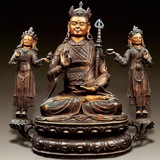
Фонд «Сохраним Тибет» приглашает вас на онлайн-лекцию известного буддийского учителя традиций бон и дзогчен Тендзина Вангьяла Ринпоче «Йога сновидений».
Лекция состоится 17 февраля в 22:00 (мск).
Организатор встречи – досточтимый Тензин Приядарши.
Перевод: ачарья Бем Митруев.
РЕГИСТРАЦИЯ: https://savetibet.timepad.ru/event/1557477/
После регистрации вы получите информацию для подключения к конференции на платформе Zoom.
Просим вас не выкладывать ссылку в открытый доступ, а также не заходить одновременно с двух устройств (например, компьютер и смартфон). Это поможет исключить вредоносные вторжения при проведении трансляции.
_______________________________________
Подношение учителю можно сделать, перейдя по ссылке: https://www.paypal.com/us/fundraiser/charity/1404897
Поддержать наши трансляции можно, отправив пожертвования на счет фонда по указанным ниже реквизитам или на карточку Сбербанка (4276 1609 0822 6500). Спасибо!
Реквизиты фонда для пожертвований:
Расчетный счет в ОАО АКБ «АВАНГАРД»: 40703810600030001521
Получатель: Фонд содействия сохранению культурных и философских традиций тибетского буддизма «Сохраним Тибет»
Назначение платежа: «Добровольное пожертвование на ведение уставной деятельности. Сумма …, НДС не облагается» (за иные формулировки Фонд обязан платить налоги с переводов)
ИНН: 7731005448
КПП: 773101001
Реквизиты банка:
ОАО АКБ «АВАНГАРД»
БИК 044525201
К/с 30101810000000000201
Лекция состоится 17 февраля в 22:00 (мск).
Организатор встречи – досточтимый Тензин Приядарши.
Перевод: ачарья Бем Митруев.
РЕГИСТРАЦИЯ: https://savetibet.timepad.ru/event/1557477/
После регистрации вы получите информацию для подключения к конференции на платформе Zoom.
Просим вас не выкладывать ссылку в открытый доступ, а также не заходить одновременно с двух устройств (например, компьютер и смартфон). Это поможет исключить вредоносные вторжения при проведении трансляции.
_______________________________________
Подношение учителю можно сделать, перейдя по ссылке: https://www.paypal.com/us/fundraiser/charity/1404897
Поддержать наши трансляции можно, отправив пожертвования на счет фонда по указанным ниже реквизитам или на карточку Сбербанка (4276 1609 0822 6500). Спасибо!
Реквизиты фонда для пожертвований:
Расчетный счет в ОАО АКБ «АВАНГАРД»: 40703810600030001521
Получатель: Фонд содействия сохранению культурных и философских традиций тибетского буддизма «Сохраним Тибет»
Назначение платежа: «Добровольное пожертвование на ведение уставной деятельности. Сумма …, НДС не облагается» (за иные формулировки Фонд обязан платить налоги с переводов)
ИНН: 7731005448
КПП: 773101001
Реквизиты банка:
ОАО АКБ «АВАНГАРД»
БИК 044525201
К/с 30101810000000000201
savetibet.timepad.ru
Тендзин Вангьял Ринпоче. «Йога сновидений» / События на TimePad.ru
Фонд «Сохраним Тибет» приглашает вас на онлайн-лекцию известного буддийского учителя традиций бон и дзогчен Тендзина Вангьяла Ринпоче «Йога сновидений».
19 ФЕВРАЛЯ 2021
༄
УЧЕНИЕ ДЗОНГСАРА КХЬЕНЦЕ РИНПОЧЕ
🌍 После учения пройдет всемирная он-лайн практика садханы ТРИРАТНА АНУСМРИТИ («Памятование о Трех Драгоценностях»)
▪Время: 15:30
▪Трансляция: https://youtu.be/7BlaI6LDQfo
⚠️ Информация о переводе на русский язык вскоре появится
«По мере того, как мы отходим от пандемии, мы постоянно будем сталкиваться с рядом эмоций, многие из которых воспринимаются нами как негативные: страх, потеря цели, потеря уверенности, отсутствие ясности, незащищенность, агрессия, неудачи, цепляние и многое другое. А с применением этой садханы, мы можем создать общее пространство для дисциплинированной групповой практики, где люди из разных слоев общества объединяются в усилиях успокоить наши внутренние потрясения.» - Дзонгсар Кхьенце Ринпоче
Вы можете интегрировать эту прекрасную садхану в нашу повседневную жизнь как средство систематического и искреннего управления своим умом и его тренировки. Приглашаем всех присоединиться!
▪▪▪
Сайт проекта и больше информации (англ): https://triratnasadhana.org/
༄
УЧЕНИЕ ДЗОНГСАРА КХЬЕНЦЕ РИНПОЧЕ
🌍 После учения пройдет всемирная он-лайн практика садханы ТРИРАТНА АНУСМРИТИ («Памятование о Трех Драгоценностях»)
▪Время: 15:30
▪Трансляция: https://youtu.be/7BlaI6LDQfo
⚠️ Информация о переводе на русский язык вскоре появится
«По мере того, как мы отходим от пандемии, мы постоянно будем сталкиваться с рядом эмоций, многие из которых воспринимаются нами как негативные: страх, потеря цели, потеря уверенности, отсутствие ясности, незащищенность, агрессия, неудачи, цепляние и многое другое. А с применением этой садханы, мы можем создать общее пространство для дисциплинированной групповой практики, где люди из разных слоев общества объединяются в усилиях успокоить наши внутренние потрясения.» - Дзонгсар Кхьенце Ринпоче
Вы можете интегрировать эту прекрасную садхану в нашу повседневную жизнь как средство систематического и искреннего управления своим умом и его тренировки. Приглашаем всех присоединиться!
▪▪▪
Сайт проекта и больше информации (англ): https://triratnasadhana.org/
YouTube
Tri Ratna Anusmriti Sadhana Talk with Dzongsar Khyentse Rinpoche
Rinpoche’s talk about “The Sutra of the Recollection of the Noble Three Jewels,” inaugurating the Tri Ratna Anusmṛiti Sādhanā project, February 19, 2020
https://triratnasadhana.org
https://triratnasadhana.org
One can be in retreat and yet the mind wandering around the town,
One can be wandering around the town , and yet the mind in retreat .
~H.H. Dudjom Rinpoche (words to Semo Lhanzey when she was admiring someone in retreat)
有人可以虽在闭关中但心游荡在城镇里,
有人可以在城镇里游荡,但心却在闭关中。
~敦珠仁波切
One can be wandering around the town , and yet the mind in retreat .
~H.H. Dudjom Rinpoche (words to Semo Lhanzey when she was admiring someone in retreat)
有人可以虽在闭关中但心游荡在城镇里,
有人可以在城镇里游荡,但心却在闭关中。
~敦珠仁波切
19 ФЕВРАЛЯ 2021
༄
УЧЕНИЕ ДЗОНГСАРА КХЬЕНЦЕ РИНПОЧЕ
🌍 После учения пройдет всемирная он-лайн практика садханы ТРИРАТНА АНУСМРИТИ («Памятование о Трех Драгоценностях»)
▪Время: 15:30
▪Трансляция: https://youtu.be/7BlaI6LDQfo
⚠ во время учения будет организован перевод на русский язык, для того, чтобы присоединиться к трансляции перевода необходимо зарегистрироваться на событие на странице https://siddharthasintent.timepad.ru/eve…
«По мере того, как мы отходим от пандемии, мы постоянно будем сталкиваться с рядом эмоций, многие из которых воспринимаются нами как негативные: страх, потеря цели, потеря уверенности, отсутствие ясности, незащищенность, агрессия, неудачи, цепляние и многое другое. А с применением этой садханы, мы можем создать общее пространство для дисциплинированной групповой практики, где люди из разных слоев общества объединяются в усилиях успокоить наши внутренние потрясения.» - Дзонгсар Кхьенце Ринпоче
Вы можете интегрировать эту прекрасную садхану в нашу повседневную жизнь как средство систематического и искреннего управления своим умом и его тренировки. Приглашаем всех присоединиться!
▪▪▪
Сайт проекта и больше информации (англ): https://triratnasadhana.org/
#ДзонгсарДжамьянгКхьенцеНорбуРинпоче
༄
УЧЕНИЕ ДЗОНГСАРА КХЬЕНЦЕ РИНПОЧЕ
🌍 После учения пройдет всемирная он-лайн практика садханы ТРИРАТНА АНУСМРИТИ («Памятование о Трех Драгоценностях»)
▪Время: 15:30
▪Трансляция: https://youtu.be/7BlaI6LDQfo
⚠ во время учения будет организован перевод на русский язык, для того, чтобы присоединиться к трансляции перевода необходимо зарегистрироваться на событие на странице https://siddharthasintent.timepad.ru/eve…
«По мере того, как мы отходим от пандемии, мы постоянно будем сталкиваться с рядом эмоций, многие из которых воспринимаются нами как негативные: страх, потеря цели, потеря уверенности, отсутствие ясности, незащищенность, агрессия, неудачи, цепляние и многое другое. А с применением этой садханы, мы можем создать общее пространство для дисциплинированной групповой практики, где люди из разных слоев общества объединяются в усилиях успокоить наши внутренние потрясения.» - Дзонгсар Кхьенце Ринпоче
Вы можете интегрировать эту прекрасную садхану в нашу повседневную жизнь как средство систематического и искреннего управления своим умом и его тренировки. Приглашаем всех присоединиться!
▪▪▪
Сайт проекта и больше информации (англ): https://triratnasadhana.org/
#ДзонгсарДжамьянгКхьенцеНорбуРинпоче
YouTube
Tri Ratna Anusmriti Sadhana Talk with Dzongsar Khyentse Rinpoche
Rinpoche’s talk about “The Sutra of the Recollection of the Noble Three Jewels,” inaugurating the Tri Ratna Anusmṛiti Sādhanā project, February 19, 2020
https://triratnasadhana.org
https://triratnasadhana.org
Твое собственное состояние и бытие внешнего, встретившись, объединяются. Если же этого не понять, возникает двойственность восприятия своего внутреннего и внешних явлений. Таково это единое тайное наставление о прямом самоосвобождении...
Поскольку Ригпа находится в гармонии со всем множеством феноменов, они самоосвобждаются благодаря полноте присущей им от природы силы, а потому не требуется никакого иного противоядия.
...если знаешь свою собственную суть, все соединено в едином моменте в силу присутствия первичного осознания (ye-shes), которое не превосходит знания этой единой сути. Это подобно тому, как любящие друг друга мужчина и женщина встречаются в уединенном месте для любви.
Хотя явления мира многообразны, все их различия освобождаются самим их различием в силу присутствия этого первичного осознания, подобно тому, как разрубание главного узла на веревке освобождает сотни нитей, из которых она состоит. Самоявленное, это единое в себе состояние может быть найдено лишь в нем самом;
Переживание опыта освобождения порождает несомненную уверенность, которая подобна растворению пространства в пространстве. Самоосвобождение в изначально чистое, незагрязненное состояние Дхармата поистине подобно растворению пространства в пространстве или растворению облаков в небе.
Гараб Дордже "Золотые письмена"
Поскольку Ригпа находится в гармонии со всем множеством феноменов, они самоосвобждаются благодаря полноте присущей им от природы силы, а потому не требуется никакого иного противоядия.
...если знаешь свою собственную суть, все соединено в едином моменте в силу присутствия первичного осознания (ye-shes), которое не превосходит знания этой единой сути. Это подобно тому, как любящие друг друга мужчина и женщина встречаются в уединенном месте для любви.
Хотя явления мира многообразны, все их различия освобождаются самим их различием в силу присутствия этого первичного осознания, подобно тому, как разрубание главного узла на веревке освобождает сотни нитей, из которых она состоит. Самоявленное, это единое в себе состояние может быть найдено лишь в нем самом;
Переживание опыта освобождения порождает несомненную уверенность, которая подобна растворению пространства в пространстве. Самоосвобождение в изначально чистое, незагрязненное состояние Дхармата поистине подобно растворению пространства в пространстве или растворению облаков в небе.
Гараб Дордже "Золотые письмена"
Завтра
Tomorrow @ 4pm IST on ZOOM, we’re happy to host Jetsunma Tenzin Palmo who will be answering questions following the showing of the documentary film, “Cave in the Snow”, about her extraordinary life. We will stream it on our Facebook page at 2pm.
.
Jetsunma Tenzin Palmo was born in England in 1943, sailed to India in 1964 to pursue her spiritual path and soon after met her guru and became one of the first Westerners to be ordained as a Tibetan Buddhist nun.
.
From the age of 33 to 45 she lived for 12 years in a remote Himalayan Cave, developing the profound store of wisdom and compassion that she expresses in her teachings.
.
Register on our site: http://tushita.info/events/the-days-of-miracles-2021/
Tomorrow @ 4pm IST on ZOOM, we’re happy to host Jetsunma Tenzin Palmo who will be answering questions following the showing of the documentary film, “Cave in the Snow”, about her extraordinary life. We will stream it on our Facebook page at 2pm.
.
Jetsunma Tenzin Palmo was born in England in 1943, sailed to India in 1964 to pursue her spiritual path and soon after met her guru and became one of the first Westerners to be ordained as a Tibetan Buddhist nun.
.
From the age of 33 to 45 she lived for 12 years in a remote Himalayan Cave, developing the profound store of wisdom and compassion that she expresses in her teachings.
.
Register on our site: http://tushita.info/events/the-days-of-miracles-2021/
We had heard that Rinpoche sometimes, though not always, gave teachings after having consumed goodly quantities of alcohol.
He was in fact, drunk this time. At least in the quiet room where speakers waited before giving their talks, he’d greeted Suzuki Roshi a few moments earlier, with the words “Hi Roshi! I’m drunk!” The two teachers were close friends by this point, but this pre-talk meeting was apparently a short one, ending when Trungpa Rinpoche, fairly dismissed Roshi saying,“You can go now, Roshi. I’ll be in in a moment.”
Now Trungpa Rinpoche sat on the couch, looking at the audience, who, astonished, looked back at him. They also looked at Suzuki Roshi a few feet away from him. Trungpa Rinpoche sat there a long time. Finally he said, “Dopa way.” At least this is what I heard, and I racked my brain for what it could mean. We were not long past the psychedelic era, and hippies galore were in the room; perhaps he was addressing them? No! it finally dawned on me - he’d said “The open way.” But in thinking this through, I’d missed the next several sentences he’d said.
In any case, the talk seemed short, and very different from the zen talks I’d heard from Suzuki Roshi. Those talks struck me to be crystal clear, even if the words didn’t always track in grammatical English. Roshi’s meaning, conveyed also with hand and facial gesture, got through. But now I was having trouble understanding Trungpa Rinpoche’s inflected English, and there were pauses and new starts… it seemed halting. At one point he crossed his legs, pulling a foot up onto his knee, but it slipped off again. His students whispered to one another.
The atmosphere in the room became increasingly electric. Something was happening, but no one – at least no one in the audience – was quite sure what. It was very provocative to see two enlightened masters – and there was little question for anyone present that both were enlightened – to be manifesting in such extremely different ways: Suzuki Roshi, still, proper, arranged, looking for all the world like a statue; and Trungpa Rinpoche, weaving, drinking, somewhat lounged on the sofa, and now lighting a cigarette! This performance distracted as well from the words of his talk. Shortly after, the talk stopped in any case, and he called for questions.
With the first question, an extraordinary transformation took place. Trungpa Rinpoche sat up, slightly forward, and energy seemed to flow into him. One had the feeling of seeing an image come from hazy into sharp, clear focus. I recall my impression that his body had become a sword or spear. He answered question after question brilliantly and with humor, often skewering the questioners with their own arrogance. One fellow called out from his perch on a table at the back of the room:
“Hey, it’s said that you drink alcohol. You do, don’t you?”
Rinpoche picked up his glass, and drank, and looked at the fellow, and nodded yes.
“And you smoke cigarettes too, don’t you?”
Rinpoche took a puff, and said, “Sure,” and smiled.
“Well, you know that it’s no good for you, don’t you? It’s no good for your health.”
Rinpoche said nothing but kept looking at the fellow, all the way across the room.
“Well, I do something that’s good for my health.”
“Mmmm hmmmm…”
“I do kundalini yoga!”
This last phrase came out with great pride, as if simply by associating himself with the practice, the young man had earned a credential.
Trungpa Rinpoche looked at him a while, standing there on the table, and asked, slowly, with a smile, “You…do… kundalini… yoga…?”
“I do.”
Trungpa Rinpoche began to chuckle, first quietly to himself, and then with more and more energy, breaking at last to a real laugh. As his laughter built, the audience joined it, and soon the whole room was howling. The questioner looked around in bewilderment and finally sat down, visibly deflated. As the laughter calmed down, Rinpoche took another sip, and looked out over the rim of his glass for the next questioner, the next challenger. I put up my hand…
*********
He was in fact, drunk this time. At least in the quiet room where speakers waited before giving their talks, he’d greeted Suzuki Roshi a few moments earlier, with the words “Hi Roshi! I’m drunk!” The two teachers were close friends by this point, but this pre-talk meeting was apparently a short one, ending when Trungpa Rinpoche, fairly dismissed Roshi saying,“You can go now, Roshi. I’ll be in in a moment.”
Now Trungpa Rinpoche sat on the couch, looking at the audience, who, astonished, looked back at him. They also looked at Suzuki Roshi a few feet away from him. Trungpa Rinpoche sat there a long time. Finally he said, “Dopa way.” At least this is what I heard, and I racked my brain for what it could mean. We were not long past the psychedelic era, and hippies galore were in the room; perhaps he was addressing them? No! it finally dawned on me - he’d said “The open way.” But in thinking this through, I’d missed the next several sentences he’d said.
In any case, the talk seemed short, and very different from the zen talks I’d heard from Suzuki Roshi. Those talks struck me to be crystal clear, even if the words didn’t always track in grammatical English. Roshi’s meaning, conveyed also with hand and facial gesture, got through. But now I was having trouble understanding Trungpa Rinpoche’s inflected English, and there were pauses and new starts… it seemed halting. At one point he crossed his legs, pulling a foot up onto his knee, but it slipped off again. His students whispered to one another.
The atmosphere in the room became increasingly electric. Something was happening, but no one – at least no one in the audience – was quite sure what. It was very provocative to see two enlightened masters – and there was little question for anyone present that both were enlightened – to be manifesting in such extremely different ways: Suzuki Roshi, still, proper, arranged, looking for all the world like a statue; and Trungpa Rinpoche, weaving, drinking, somewhat lounged on the sofa, and now lighting a cigarette! This performance distracted as well from the words of his talk. Shortly after, the talk stopped in any case, and he called for questions.
With the first question, an extraordinary transformation took place. Trungpa Rinpoche sat up, slightly forward, and energy seemed to flow into him. One had the feeling of seeing an image come from hazy into sharp, clear focus. I recall my impression that his body had become a sword or spear. He answered question after question brilliantly and with humor, often skewering the questioners with their own arrogance. One fellow called out from his perch on a table at the back of the room:
“Hey, it’s said that you drink alcohol. You do, don’t you?”
Rinpoche picked up his glass, and drank, and looked at the fellow, and nodded yes.
“And you smoke cigarettes too, don’t you?”
Rinpoche took a puff, and said, “Sure,” and smiled.
“Well, you know that it’s no good for you, don’t you? It’s no good for your health.”
Rinpoche said nothing but kept looking at the fellow, all the way across the room.
“Well, I do something that’s good for my health.”
“Mmmm hmmmm…”
“I do kundalini yoga!”
This last phrase came out with great pride, as if simply by associating himself with the practice, the young man had earned a credential.
Trungpa Rinpoche looked at him a while, standing there on the table, and asked, slowly, with a smile, “You…do… kundalini… yoga…?”
“I do.”
Trungpa Rinpoche began to chuckle, first quietly to himself, and then with more and more energy, breaking at last to a real laugh. As his laughter built, the audience joined it, and soon the whole room was howling. The questioner looked around in bewilderment and finally sat down, visibly deflated. As the laughter calmed down, Rinpoche took another sip, and looked out over the rim of his glass for the next questioner, the next challenger. I put up my hand…
*********
Of the many zen teachers that Trungpa Rinpoche would meet during his 17 years in North America, the first and most significant encounter was with Suzuki Roshi, founding abbot of the San Francisco Zen Center.
Suzuki Roshi, his wife Suzuki Sensei (mostly known simply as Okusan,) Trungpa Rinpoche and his wife Diana Mukpo, were all introduced in May of 1970 by Rinpoche’s publisher, Sam Bercholz. During a visit to Zen Center, an immediate affinity – what everyone who saw it called a “heart connection” – sprang up between the two teachers. Trungpa Rinpoche later confided to his wife that Suzuki Roshi was the first person he’d met in America who reminded him of his root guru in Tibet, Jamgön Kongtrül. He went on to say that in Roshi he’d found his first spiritual friend in the West.
If the two masters clicked on an inner level, it may have been that they recognized one another as lonely spiritual voyagers. In poet Allen Ginburg’s words they both had “burned their bridges. They gave all their energy to trying to enlighten America, rather than depending on their older companions and monasteries. They both gave themselves completely to American karma.”
Suzuki Roshi and Trungpa Rinpoche shared between them the disappointments and loneliness they felt in walking through that jungle, and in leading others through it.
Perhaps because he could intuit what Rinpoche was going through, Roshi accepted his drinking– an acceptance that upset some of his own students. “He drinks because he’s suffering,” Roshi explained with some sharpness once. “When I saw Alan Watts, I couldn’t accept his drinking, but when I met Trungpa Rinpoche, …” Roshi threw up his hands, palms forward, “I gave up.”
Later that year Roshi, speaking after
a serious operation, warned his students not to fix in any way only on what they could see. Discussing emptiness he told them, “…The way you can struggle with this is to be supported by something, something you don’t know. As we are human beings, there must be that kind of feeling. You must feel it in this city or building or community. So whatever community it may be, it is necessary for it to have this kind of spiritual support.
“That is why I respect Trungpa Rinpoche. He is supporting us. You may criticize him because he drinks alcohol like I drink water, but that is a minor problem. He trusts you completely. He knows that if he is always supporting you in a true sense you will not criticize him, whatever he does. And he doesn’t mind whatever you say. That is not the point, you know. This kind of big spirit, without clinging to some special religion or form of practice, is necessary for human beings.”
for Suzuki Roshi referred to Trungpa Rinpoche as being “like my son.”
in December of 1971. Roshi died after painful months in bed with stomach cancer. When Trungpa heard only the diagnosis, he wept so intensely that a blood vessel in his eye burst, and blood-reddened tears flowed down his cheeks. After the death, Rinpoche went to see Roshi in the funeral home where he lay. In the small chamber where Roshi’s body was Rinpoche meditated, chanted liturgies and performed mudras.
Trungpa Rinpoche’s presence at Suzuki Roshi’s funeral was also dramatic. The event was enormous and lengthy, and when it came time for the dignitaries in attendance to contribute Rinpoche was invited to step forward. He stood for several moments before the coffin silently weeping, and then tore the air with a passionate shout. At the same time, he threw open a long white silk scarf that arced down across the coffin.
As the ceremony wore on, Mrs. Suzuki took Rinpoche into a side room, and gave him Suzuki Roshi’s walking stick – something Roshi had requested. One would be hard-pressed to imagine a more appropriate gift for a teacher treading the path, especially with the hobbling gait Rinpoche had, the result of a car accident some years earlier. If there were a more symbolic gift however, it might be the oryoki set (ritual eating bowls) that Rinpoche also inherited from Suzuki Roshi.
Suzuki Roshi, his wife Suzuki Sensei (mostly known simply as Okusan,) Trungpa Rinpoche and his wife Diana Mukpo, were all introduced in May of 1970 by Rinpoche’s publisher, Sam Bercholz. During a visit to Zen Center, an immediate affinity – what everyone who saw it called a “heart connection” – sprang up between the two teachers. Trungpa Rinpoche later confided to his wife that Suzuki Roshi was the first person he’d met in America who reminded him of his root guru in Tibet, Jamgön Kongtrül. He went on to say that in Roshi he’d found his first spiritual friend in the West.
If the two masters clicked on an inner level, it may have been that they recognized one another as lonely spiritual voyagers. In poet Allen Ginburg’s words they both had “burned their bridges. They gave all their energy to trying to enlighten America, rather than depending on their older companions and monasteries. They both gave themselves completely to American karma.”
Suzuki Roshi and Trungpa Rinpoche shared between them the disappointments and loneliness they felt in walking through that jungle, and in leading others through it.
Perhaps because he could intuit what Rinpoche was going through, Roshi accepted his drinking– an acceptance that upset some of his own students. “He drinks because he’s suffering,” Roshi explained with some sharpness once. “When I saw Alan Watts, I couldn’t accept his drinking, but when I met Trungpa Rinpoche, …” Roshi threw up his hands, palms forward, “I gave up.”
Later that year Roshi, speaking after
a serious operation, warned his students not to fix in any way only on what they could see. Discussing emptiness he told them, “…The way you can struggle with this is to be supported by something, something you don’t know. As we are human beings, there must be that kind of feeling. You must feel it in this city or building or community. So whatever community it may be, it is necessary for it to have this kind of spiritual support.
“That is why I respect Trungpa Rinpoche. He is supporting us. You may criticize him because he drinks alcohol like I drink water, but that is a minor problem. He trusts you completely. He knows that if he is always supporting you in a true sense you will not criticize him, whatever he does. And he doesn’t mind whatever you say. That is not the point, you know. This kind of big spirit, without clinging to some special religion or form of practice, is necessary for human beings.”
for Suzuki Roshi referred to Trungpa Rinpoche as being “like my son.”
in December of 1971. Roshi died after painful months in bed with stomach cancer. When Trungpa heard only the diagnosis, he wept so intensely that a blood vessel in his eye burst, and blood-reddened tears flowed down his cheeks. After the death, Rinpoche went to see Roshi in the funeral home where he lay. In the small chamber where Roshi’s body was Rinpoche meditated, chanted liturgies and performed mudras.
Trungpa Rinpoche’s presence at Suzuki Roshi’s funeral was also dramatic. The event was enormous and lengthy, and when it came time for the dignitaries in attendance to contribute Rinpoche was invited to step forward. He stood for several moments before the coffin silently weeping, and then tore the air with a passionate shout. At the same time, he threw open a long white silk scarf that arced down across the coffin.
As the ceremony wore on, Mrs. Suzuki took Rinpoche into a side room, and gave him Suzuki Roshi’s walking stick – something Roshi had requested. One would be hard-pressed to imagine a more appropriate gift for a teacher treading the path, especially with the hobbling gait Rinpoche had, the result of a car accident some years earlier. If there were a more symbolic gift however, it might be the oryoki set (ritual eating bowls) that Rinpoche also inherited from Suzuki Roshi.
In the early days of Chinese zen, transmission of the lineage was symbolized either by the gift of a text from master to student, or the passing on of the master’s robe and bowl. The walking stick, regarded as the legs of the buddha, and the bowls, seen as buddha’s body, together with other ritual implements, have continued until the present to be instruments of transmission. This is not to say that Suzuki Roshi’s lineage went to Trungpa Rinpoche alone, instead of to Richard Baker Roshi. Suzuki Roshi installed Baker as his successor at Zen Center with proper pomp and ceremony – and with great bravery as well, for Roshi was at death’s door when he did the ceremony. But something did indeed flow from Suzuki Roshi to Trungpa Rinpoche, something more than the gifts, the pictures, the hints, the smiles, the invitations, accommodation and protection. Something even more than the many students who, with Suzuki Roshi’s explicit permission, left Zen Center to study with Trunpa Rinpoche.
http://www.cuke.com/Cucumber%20Project/reflections/trungpa-zen.htm
http://www.cuke.com/Cucumber%20Project/reflections/trungpa-zen.htm
༄ Принятие прибежища издалека
Подробная инструкция на сайте https://garchen.ru/index.php/refugefromafar
Для тех, кто не получал обеты прибежища у Гарчена Ринпоче по время его приездов в Россию появилась возможность сделать это удалённо (онлайн). Эта программа будет действовать на постоянной основе.
Если вы получили Прибежище в прямом эфире 12 февраля 2021 года, эта инструкция также для вас.
Если у вас уже есть обеты прибежища и имя, которое вы получали у Гарчена Ринпоче или другого Учителя, вам не нужно делать это ещё раз.
Кьябдже Гарчен Ринпоче о Прибежище издалека
Каждый, кто хочет получить Прибежище на расстоянии, может это сделать. Если мы принимаем прибежище издалека, то в этом даже больше пользы, чем реально присутствовать физически, потому что это действительно показывает, что у вас есть очень сильное намерение. Вы можете принять обеты прибежища на расстоянии, потому что природа Трёх Драгоценностей на самом деле является всепроникающей дхармакаей. Моё тело всего лишь физическое представление — вы действительно ищете и получаете прибежище только от Трёх Драгоценностей: Будды, Дхармы и Сангхи. Три Драгоценности охватывают все и, следовательно, всегда присутствуют.
Подробная инструкция на сайте https://garchen.ru/index.php/refugefromafar
Подробная инструкция на сайте https://garchen.ru/index.php/refugefromafar
Для тех, кто не получал обеты прибежища у Гарчена Ринпоче по время его приездов в Россию появилась возможность сделать это удалённо (онлайн). Эта программа будет действовать на постоянной основе.
Если вы получили Прибежище в прямом эфире 12 февраля 2021 года, эта инструкция также для вас.
Если у вас уже есть обеты прибежища и имя, которое вы получали у Гарчена Ринпоче или другого Учителя, вам не нужно делать это ещё раз.
Кьябдже Гарчен Ринпоче о Прибежище издалека
Каждый, кто хочет получить Прибежище на расстоянии, может это сделать. Если мы принимаем прибежище издалека, то в этом даже больше пользы, чем реально присутствовать физически, потому что это действительно показывает, что у вас есть очень сильное намерение. Вы можете принять обеты прибежища на расстоянии, потому что природа Трёх Драгоценностей на самом деле является всепроникающей дхармакаей. Моё тело всего лишь физическое представление — вы действительно ищете и получаете прибежище только от Трёх Драгоценностей: Будды, Дхармы и Сангхи. Три Драгоценности охватывают все и, следовательно, всегда присутствуют.
Подробная инструкция на сайте https://garchen.ru/index.php/refugefromafar
garchen.ru
Принятие прибежища издалека
Tonglen the Practice of Giving and Taking
by Jetsunma Tenzin Palmo
Tonglen is a very interesting practice! In most spiritual traditions, including New Age ones, there are meditations which involve breathing in light, love, and bliss. We visualise these qualities coming into the heart and transforming the body. Then we breathe out all our negativities. This seems like a very logical practice to do. But tonglen practise flips our mind and our preconceptions upside down because it does the exact opposite. We actually breathe in all the negativities and the darkness and breathe out all the love, purity, and light. This idea can be alarming for some people when they first encounter it. The negativities come into us as dark light and are absorbed into a small dark pearl at the centre of our chest. This pearl is our self-cherishing concept. It is the thing which says, “I am so important. Other people may be important, too, but they’re much less important than I am. I am basically the centre around which the rest of the universe revolves.”
When we do this practice, we are chipping away at that little black pearl, which cringes with every blow, because it absolutely does not want other people’s suffering, misery, and sickness. But the little pearl takes all this negativity in and it disappears into the emptiness of the Dharmadhatu, or ultimate reality. Then we breathe out all the joy, goodness, and light we have accumulated over aeons. We give this out to take the place of the suffering endured by all sentient beings. This reverses our usual concept of how things should be. People say, “I already have more than enough suffering. I don’t want other people’s suffering as well.”
In brief, the usual Tonglen practice is to visualise another person’s sickness or suffering in the form of dark light being drawn into oneself along with the inhalation. This dark light strikes back at the black pearl-like seed of self-cherishing at our heart centre. This pearl instantly radiates out, along with the exhalation, the bright light of all our good qualities and merits. This radiance then absorbs into the suffering person to help them.
Sometimes instead of a black pearl, it is taught that we can visualise a crystal vajra which represents our innate Dharmakaya mind. The dark light absorbs into this and is instantly transformed into radiance since no darkness exists within the pristine nature of the mind.
I’m going to tell you a true story. When I was about nine years old, I caught on fire. I was wearing a nylon dress at the time, and I went near an electric fire which was not turned on but was plugged in. My dress brushed against the fire and it burst into flames because it was nylon. Fortunately for me, at that time my mother was very sick in bed with kidney trouble, so she hadn’t gone out to work in our shop. I ran screaming up the stairs and crossed the landing to her bedroom. She later told me that she heard me screaming while she was in bed. The next moment, the door crashed open, and I burst into her room, engulfed in sheets of flames. She quickly wrapped me in a blanket, put the flames out and then rubbed me with penicillin and wrapped me in a clean sheet. Apparently, my whole back was just one big blister. The entire skin of my back was burned right off along with part of my face. And at that time, I remember being in extraordinary pain. You can imagine.
Then I had an out-of-body experience. I was up above, looking down on my body, surrounded by all these beings of light who were saying to me, “Come with us. Come with us.” You know, the usual thing. And I thought to myself, “Oh good, now I’m going to die. That will be interesting.” I actually did not want to go back into that body. I was looking down at that body which was all burnt, and I didn’t want anything more to do with it. It was like looking down the wrong end of the telescope. The appearances of this world began to recede as I travelled further and further upwards towards the light.
by Jetsunma Tenzin Palmo
Tonglen is a very interesting practice! In most spiritual traditions, including New Age ones, there are meditations which involve breathing in light, love, and bliss. We visualise these qualities coming into the heart and transforming the body. Then we breathe out all our negativities. This seems like a very logical practice to do. But tonglen practise flips our mind and our preconceptions upside down because it does the exact opposite. We actually breathe in all the negativities and the darkness and breathe out all the love, purity, and light. This idea can be alarming for some people when they first encounter it. The negativities come into us as dark light and are absorbed into a small dark pearl at the centre of our chest. This pearl is our self-cherishing concept. It is the thing which says, “I am so important. Other people may be important, too, but they’re much less important than I am. I am basically the centre around which the rest of the universe revolves.”
When we do this practice, we are chipping away at that little black pearl, which cringes with every blow, because it absolutely does not want other people’s suffering, misery, and sickness. But the little pearl takes all this negativity in and it disappears into the emptiness of the Dharmadhatu, or ultimate reality. Then we breathe out all the joy, goodness, and light we have accumulated over aeons. We give this out to take the place of the suffering endured by all sentient beings. This reverses our usual concept of how things should be. People say, “I already have more than enough suffering. I don’t want other people’s suffering as well.”
In brief, the usual Tonglen practice is to visualise another person’s sickness or suffering in the form of dark light being drawn into oneself along with the inhalation. This dark light strikes back at the black pearl-like seed of self-cherishing at our heart centre. This pearl instantly radiates out, along with the exhalation, the bright light of all our good qualities and merits. This radiance then absorbs into the suffering person to help them.
Sometimes instead of a black pearl, it is taught that we can visualise a crystal vajra which represents our innate Dharmakaya mind. The dark light absorbs into this and is instantly transformed into radiance since no darkness exists within the pristine nature of the mind.
I’m going to tell you a true story. When I was about nine years old, I caught on fire. I was wearing a nylon dress at the time, and I went near an electric fire which was not turned on but was plugged in. My dress brushed against the fire and it burst into flames because it was nylon. Fortunately for me, at that time my mother was very sick in bed with kidney trouble, so she hadn’t gone out to work in our shop. I ran screaming up the stairs and crossed the landing to her bedroom. She later told me that she heard me screaming while she was in bed. The next moment, the door crashed open, and I burst into her room, engulfed in sheets of flames. She quickly wrapped me in a blanket, put the flames out and then rubbed me with penicillin and wrapped me in a clean sheet. Apparently, my whole back was just one big blister. The entire skin of my back was burned right off along with part of my face. And at that time, I remember being in extraordinary pain. You can imagine.
Then I had an out-of-body experience. I was up above, looking down on my body, surrounded by all these beings of light who were saying to me, “Come with us. Come with us.” You know, the usual thing. And I thought to myself, “Oh good, now I’m going to die. That will be interesting.” I actually did not want to go back into that body. I was looking down at that body which was all burnt, and I didn’t want anything more to do with it. It was like looking down the wrong end of the telescope. The appearances of this world began to recede as I travelled further and further upwards towards the light.
Great! Then suddenly the neighbours started coming in because they’d heard my screams, and I was brought down into this body again.
I remember that they took me to the hospital, and I remember lying on a trolley. The doctor said to me, “You’re a very brave little girl. You must be in tremendous pain.” And I said, “No, there’s no pain.” And there was no pain. When I came back down into my body, I felt no pain at all, despite the fact that my whole back was burned. No problem! I stayed in the hospital for about two months. I had a great time. At no time did I experience any pain. Although I had to lie in bed, I wasn’t sick. I was too young to understand that I might be scarred, so I wasn’t worried. As it turned out, I wasn’t scarred at all. Some years later I talked about this with my mother. She told me that when I was lying there, I lost consciousness and she thought I was going to die. She was a spiritualist, so she prayed to the spirit guides, “Please don’t let her die. And please don’t let her suffer. She’s too young to bear that sort of pain. Give all her pain to me. Let me have her pain.” Now she was already in agony with kidney trouble, but if she could have taken on my pain as well, she would have done so gladly. And I’m quite sure it was because of her prayer that when I came back into the body again I had no pain. What other explanation could there be?
Fortunately, she didn’t get my pain, either. But the point is, not only did she pray from her heart to take my pain away, but she would have been overjoyed to have my pain transferred to her if that would spare me. This is the kind of love we’re talking about in tonglen practice, the kind of intense love which unselfconsciously places more importance on healing the other person than on our own well-being. Now, this was relatively easy for my mother. Not easy, exactly, except that it is in the nature of a mother to love her child like that. What the Dharma asks is that we treasure all beings without exception in the same way. As the Buddha himself said, just as a mother loves her only child, so must we extend love to all beings.
One of the advantages of being a mother is that you learn from real life what this means. You can use this experience as a basis to extend this kind of love outwards to all beings. This is what we are called upon to do in the tonglen practice. Some people say, “Oh, tonglen is very easy.” I can only gasp at their level of bodhisattva attainment. I don’t think it’s at all easy to sit and absorb the pain and suffering of others. It’s very interesting to watch the mind and the levels of deception we can clothe ourselves in. Because of our enormous capacity for self-deception, we must try to be as honest as possible with ourselves. Only by fearless honesty can we identify and peel away the levels of resistance to opening up the heart.
A lot of practices can be done by rote. If we just do tonglen practice automatically, it’s very easy to sit and think of all sentient beings as this kind of blurry mass outside and send out light and love to them and absorb all this darkness. We can even come away feeling very expansive and bodhisattva like. But when we get to actual individuals, when we are faced with someone who is genuinely sick or depressed, are we still prepared to take on their suffering and give out our well-being in return? This is a mind-transforming practice, so the only way we can know whether we are making progress or not is by observing our reactions in everyday situations. When we meet people in everyday life who are suffering, how do we relate to them? Is our heart genuinely open to them? Are we kind? Are we getting progressively kinder?
Let us think about the way the practice works. All this negativity comes into us and attacks the self-cherishing concept. What does this actually mean? Sometimes it’s easier for us just to get caught up in the mechanics of the visualisation and forget what it is all about.
I remember that they took me to the hospital, and I remember lying on a trolley. The doctor said to me, “You’re a very brave little girl. You must be in tremendous pain.” And I said, “No, there’s no pain.” And there was no pain. When I came back down into my body, I felt no pain at all, despite the fact that my whole back was burned. No problem! I stayed in the hospital for about two months. I had a great time. At no time did I experience any pain. Although I had to lie in bed, I wasn’t sick. I was too young to understand that I might be scarred, so I wasn’t worried. As it turned out, I wasn’t scarred at all. Some years later I talked about this with my mother. She told me that when I was lying there, I lost consciousness and she thought I was going to die. She was a spiritualist, so she prayed to the spirit guides, “Please don’t let her die. And please don’t let her suffer. She’s too young to bear that sort of pain. Give all her pain to me. Let me have her pain.” Now she was already in agony with kidney trouble, but if she could have taken on my pain as well, she would have done so gladly. And I’m quite sure it was because of her prayer that when I came back into the body again I had no pain. What other explanation could there be?
Fortunately, she didn’t get my pain, either. But the point is, not only did she pray from her heart to take my pain away, but she would have been overjoyed to have my pain transferred to her if that would spare me. This is the kind of love we’re talking about in tonglen practice, the kind of intense love which unselfconsciously places more importance on healing the other person than on our own well-being. Now, this was relatively easy for my mother. Not easy, exactly, except that it is in the nature of a mother to love her child like that. What the Dharma asks is that we treasure all beings without exception in the same way. As the Buddha himself said, just as a mother loves her only child, so must we extend love to all beings.
One of the advantages of being a mother is that you learn from real life what this means. You can use this experience as a basis to extend this kind of love outwards to all beings. This is what we are called upon to do in the tonglen practice. Some people say, “Oh, tonglen is very easy.” I can only gasp at their level of bodhisattva attainment. I don’t think it’s at all easy to sit and absorb the pain and suffering of others. It’s very interesting to watch the mind and the levels of deception we can clothe ourselves in. Because of our enormous capacity for self-deception, we must try to be as honest as possible with ourselves. Only by fearless honesty can we identify and peel away the levels of resistance to opening up the heart.
A lot of practices can be done by rote. If we just do tonglen practice automatically, it’s very easy to sit and think of all sentient beings as this kind of blurry mass outside and send out light and love to them and absorb all this darkness. We can even come away feeling very expansive and bodhisattva like. But when we get to actual individuals, when we are faced with someone who is genuinely sick or depressed, are we still prepared to take on their suffering and give out our well-being in return? This is a mind-transforming practice, so the only way we can know whether we are making progress or not is by observing our reactions in everyday situations. When we meet people in everyday life who are suffering, how do we relate to them? Is our heart genuinely open to them? Are we kind? Are we getting progressively kinder?
Let us think about the way the practice works. All this negativity comes into us and attacks the self-cherishing concept. What does this actually mean? Sometimes it’s easier for us just to get caught up in the mechanics of the visualisation and forget what it is all about.
You know, we have this dark little thing in the heart and then the dark lights start hitting it, and it all transforms into bright light. It’s a very nice visualisation if we get into it. But as we practice, we must really remember what this is all about. We must ask ourselves if this were really happening, what kind of resistance would the ego put up. If somebody came here right now and said, “You can have all the sickness and misery from that person over there, and I can promise you I will free him from it. In exchange, he will have all your good health. How’s that?” Would you really say, “Okay, I’ll do it”? Maybe so, if it was somebody you loved — your husband, your child, or even a parent or a beloved teacher — but just a man on the street?
These are not easy practices. They are not for the foolhardy nor are they for the timid. They are intended for bodhisattvas. On no account should we take these practices lightly. We should understand what we are doing and what this training is all about. At least this is how it seems to me. Whenever I read the tonglen practices, I am astounded at what they’re actually asking of us. Other people don’t seem to be struck like that and I don’t know why. This seems to me to be the utmost frontal attack on our ego-clinging. Doesn’t it seem like that to you? And it’s very interesting to try to be vividly alive and to bring specific situations into our mind while we are practising. These can be real or hypothetical cases. How does the mind react?
Finally, of course, we dissolve everything into primordial space. This is very important. We don’t keep the negativities sitting in our heart. We have to dissolve the negativities into this ego-clinging, ego-cherishing entity which thinks, “I am so important and others are naturally much less important than I,” which we all have. We dissolve that and everything else into open space. Then we really feel light and joy going out to all beings. Not just in our visualisations, but also in our everyday life, we should be able to give something to beings we meet who are suffering. Even by just being kind and friendly.
If we remain just as closed off from other beings as ever, still preoccupied with our own pleasure, happiness, and comfort, and still seeing other people as separate, remaining unaffected by their happiness or their sorrow, then, even if we have been doing tonglen for twelve years, it hasn’t worked! It doesn’t matter how long we do it. The important thing is to break this separation between ourselves and others. We all have this separation, and it is our primary delusion. It’s a very radical practice, and if we do it from our heart, it transforms us. So I think we should do it now. I don’t think there’s anything more to be said about it.
These are not easy practices. They are not for the foolhardy nor are they for the timid. They are intended for bodhisattvas. On no account should we take these practices lightly. We should understand what we are doing and what this training is all about. At least this is how it seems to me. Whenever I read the tonglen practices, I am astounded at what they’re actually asking of us. Other people don’t seem to be struck like that and I don’t know why. This seems to me to be the utmost frontal attack on our ego-clinging. Doesn’t it seem like that to you? And it’s very interesting to try to be vividly alive and to bring specific situations into our mind while we are practising. These can be real or hypothetical cases. How does the mind react?
Finally, of course, we dissolve everything into primordial space. This is very important. We don’t keep the negativities sitting in our heart. We have to dissolve the negativities into this ego-clinging, ego-cherishing entity which thinks, “I am so important and others are naturally much less important than I,” which we all have. We dissolve that and everything else into open space. Then we really feel light and joy going out to all beings. Not just in our visualisations, but also in our everyday life, we should be able to give something to beings we meet who are suffering. Even by just being kind and friendly.
If we remain just as closed off from other beings as ever, still preoccupied with our own pleasure, happiness, and comfort, and still seeing other people as separate, remaining unaffected by their happiness or their sorrow, then, even if we have been doing tonglen for twelve years, it hasn’t worked! It doesn’t matter how long we do it. The important thing is to break this separation between ourselves and others. We all have this separation, and it is our primary delusion. It’s a very radical practice, and if we do it from our heart, it transforms us. So I think we should do it now. I don’t think there’s anything more to be said about it.