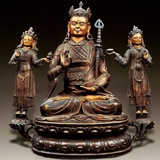
ОНЛАЙН-УЧЕНИЕ ДЗОНГСАРА КХЬЕНЦЕ РИНПОЧЕ
Молитва-устремление Еше Цогьял к Маха-Гуру
Терма Пема Лингпы
Данное учение по решению Ринпоче предназначено для его учеников из Бутана, поэтому перевода на другие языки, в том числе русский, в реальном времени не предусмотрено. Между тем в установленном порядке запись учения будет размещена на официальном международном канале "Намерения Сиддхартхи" и русские субтитры появятся как только они будут подготовлены переводчиками.
Учение пройдёт в день Гуру Ринпоче восьмого лунного месяца: 16 сентября.
Первая сессия: 14:00-15:30 (мск)
Вторая сессия: 15:45-17:15 (мск)
Учение пройдёт на английском языке. Чтобы зарегистрироваться и получить ссылку на Zoom-конференцию, нужно написать письмо на электронную почту peling.lochod@gmail.com
Мы будем держать вас в курсе любых обновлений. Ознакомиться с английским переводом молитвы можно на сайте Lotsawa House: https://www.lotsawahouse.org/tibetan-mas…
Молитва-устремление Еше Цогьял к Маха-Гуру
Терма Пема Лингпы
Данное учение по решению Ринпоче предназначено для его учеников из Бутана, поэтому перевода на другие языки, в том числе русский, в реальном времени не предусмотрено. Между тем в установленном порядке запись учения будет размещена на официальном международном канале "Намерения Сиддхартхи" и русские субтитры появятся как только они будут подготовлены переводчиками.
Учение пройдёт в день Гуру Ринпоче восьмого лунного месяца: 16 сентября.
Первая сессия: 14:00-15:30 (мск)
Вторая сессия: 15:45-17:15 (мск)
Учение пройдёт на английском языке. Чтобы зарегистрироваться и получить ссылку на Zoom-конференцию, нужно написать письмо на электронную почту peling.lochod@gmail.com
Мы будем держать вас в курсе любых обновлений. Ознакомиться с английским переводом молитвы можно на сайте Lotsawa House: https://www.lotsawahouse.org/tibetan-mas…
И напоминалочка!
8–9 сентября 2021 г. Его Святейшество Далай-лама дарует учения по трактату Чандракирти «Введение в мадхьямаку» (ума джукпа) и по автокомментарию к нему (ума джукпа рангдрел тхок ней). Учения организованы по просьбе группы буддистов из Азии. После основной части учений духовный лидер ответит на вопросы участников видеоконференции.
Приблизительное время трансляции: 6:30–7:30 утра (мск).
Прямая трансляция из Дхарамсалы будет сопровождаться синхронным переводом на русский язык.
Страницы трансляции: https://ru.dalailama.com/live и http://savetibet.ru/2021/08/30/dalai-lama-livestream.html
8–9 сентября 2021 г. Его Святейшество Далай-лама дарует учения по трактату Чандракирти «Введение в мадхьямаку» (ума джукпа) и по автокомментарию к нему (ума джукпа рангдрел тхок ней). Учения организованы по просьбе группы буддистов из Азии. После основной части учений духовный лидер ответит на вопросы участников видеоконференции.
Приблизительное время трансляции: 6:30–7:30 утра (мск).
Прямая трансляция из Дхарамсалы будет сопровождаться синхронным переводом на русский язык.
Страницы трансляции: https://ru.dalailama.com/live и http://savetibet.ru/2021/08/30/dalai-lama-livestream.html
The 14th Dalai Lama
The Office of His Holiness The Dalai Lama | The 14th Dalai Lama
The Official Website of The Office of His Holiness the 14th Dalai Lama
Longchen, Longchenpa & the Dzogchen Path to Ultimate Realisation - Afternoon Session, https://www.youtube.com/watch?v=EdkeoeR8LbE
❤️Remove Tube Ads With This Simple Tool #PureTuber ⬇️⬇️⬇️
https://www.puretuber.com/?subpub=ptrshare&f=telegram
❤️Remove Tube Ads With This Simple Tool #PureTuber ⬇️⬇️⬇️
https://www.puretuber.com/?subpub=ptrshare&f=telegram
YouTube
Longchen, Longchenpa & the Dzogchen Path to Ultimate Realisation - Afternoon Session
Part 2 of Rigdzin Shikpo's Heart of Buddha talk
Forwarded from Ретритный центр Самтенлин (Arya }{om ★ Илья Orlove)
Друзья!
Ближайшая в России «Шравасти Випашьяна» с Игорем Лопатиным состоится под Краснодаром в ретритном центре Самье с 24 сентября по 3 октября.
Если вы хотите принять участие, пишите организатору в Краснодаре Ксюше Киселевой.
https://www.facebook.com/oxi.kiseleva
Ближайшая в России «Шравасти Випашьяна» с Игорем Лопатиным состоится под Краснодаром в ретритном центре Самье с 24 сентября по 3 октября.
Если вы хотите принять участие, пишите организатору в Краснодаре Ксюше Киселевой.
https://www.facebook.com/oxi.kiseleva
~CHÖGYAM TRUNGPA RINPOCHE✨🌺
THE SPIRITUAL PATH IS NOT FUN - BETTER NOT BEGIN IT.
If you must begin then go all the way because if you begin and quit, the unfinished business you have left behind begins to haunt you all the time .
The path as Suzuki Roshi mentions in 'Zen Mind , Beginner's Mind' , is like getting on to a train that you cannot get off ; you ride it on and on and on .
.
From the book :
"The Myth of Freedom"
THE SPIRITUAL PATH IS NOT FUN - BETTER NOT BEGIN IT.
If you must begin then go all the way because if you begin and quit, the unfinished business you have left behind begins to haunt you all the time .
The path as Suzuki Roshi mentions in 'Zen Mind , Beginner's Mind' , is like getting on to a train that you cannot get off ; you ride it on and on and on .
.
From the book :
"The Myth of Freedom"
В действительности всё, что обычно считается ненадёжным, непредсказуемым, опасным и даже враждебным миром - включая сюда и наши неконтролируемые эмоции и внутренние ощущения, - это и есть мы сами. И даже чувство, что это не так, в свою очередь является частью того, что это так.
~ Алан Уотс
~ Алан Уотс
Как мы предаём себя в детстве и что с этим делать, https://www.youtube.com/watch?v=XWm4b0EGFcs
❤️Remove Tube Ads With This Simple Tool #PureTuber ⬇️⬇️⬇️
https://www.puretuber.com/?subpub=ptrshare&f=telegram
❤️Remove Tube Ads With This Simple Tool #PureTuber ⬇️⬇️⬇️
https://www.puretuber.com/?subpub=ptrshare&f=telegram
YouTube
Как мы предаём себя в детстве и что с этим делать
Нижняя и верхняя динамики, как можно из них выйти. Теория привязанности, работа над собой и дети.
Forwarded from Манджушри
Не выходите за пределы своих личных возможностей.
Медитация — это не соревнование. Пятнадцать минут, проведённые в непринуждённой медитативной практике, в итоге могут принести больше пользы, чем часы, которые люди тратят на то, чтобы вымученно практиковать как можно дольше. На самом деле лучшее правило — медитировать меньше, чем, как вам кажется, вы можете. Если вы думаете, что можете практиковать четыре минуты, остановитесь на трёх; если вам кажется, что вы можете медитировать пять минут, ограничьтесь четырьмя. Практикуя таким образом, вы будете с нетерпением ждать, когда снова сможете заняться практикой. Вместо того чтобы думать, что вы уже выполнили свою задачу, оставляйте себе шанс желать большего.
Мингьюр Ринпоче «Будда, мозг и нейрофизиология счастья»
Медитация — это не соревнование. Пятнадцать минут, проведённые в непринуждённой медитативной практике, в итоге могут принести больше пользы, чем часы, которые люди тратят на то, чтобы вымученно практиковать как можно дольше. На самом деле лучшее правило — медитировать меньше, чем, как вам кажется, вы можете. Если вы думаете, что можете практиковать четыре минуты, остановитесь на трёх; если вам кажется, что вы можете медитировать пять минут, ограничьтесь четырьмя. Практикуя таким образом, вы будете с нетерпением ждать, когда снова сможете заняться практикой. Вместо того чтобы думать, что вы уже выполнили свою задачу, оставляйте себе шанс желать большего.
Мингьюр Ринпоче «Будда, мозг и нейрофизиология счастья»
"Истинное счастье не достигается - оно открывается. Сам путь человека есть счастье, вот почему он так стремится его найти. Что не даёт человеку счастья в жизни, так это закрытие дверей своего сердца, а когда сердце не живёт, счастье не живёт в нём."
"Сегодня мир нуждается не в учении, а в том, чтобы быть тактичными друг с другом, деликатными, участливыми. Попытаться открыть, каким образом можно принести счастье, и через это реализовать тот покой, который есть чаяние каждой души; и передать его другим, тем самым достигнуть цели жизни, ее величия." Хазрат Инайят Хан
"Сегодня мир нуждается не в учении, а в том, чтобы быть тактичными друг с другом, деликатными, участливыми. Попытаться открыть, каким образом можно принести счастье, и через это реализовать тот покой, который есть чаяние каждой души; и передать его другим, тем самым достигнуть цели жизни, ее величия." Хазрат Инайят Хан
Seven Line Prayer to Guru Rinpoche in Sanskrit ( 27 Times ) - Anup Panthi, https://www.youtube.com/watch?v=91rv2cccolI
❤️Remove Tube Ads With This Simple Tool #PureTuber ⬇️⬇️⬇️
https://www.puretuber.com/?subpub=ptrshare&f=telegram
❤️Remove Tube Ads With This Simple Tool #PureTuber ⬇️⬇️⬇️
https://www.puretuber.com/?subpub=ptrshare&f=telegram
YouTube
Seven Line Prayer to Guru Rinpoche in Sanskrit ( 27 Times ) - Anup Panthi
I pray to you: Come, inspire me with your blessing!
Padmasambhava "Born from a Lotus"), also known as Guru Rinpoche (Precious Guru) and the Lotus from Oḍḍiyāna, was a tantric Buddhist Vajra master from India who may have taught Vajrayana in Tibet (circa…
Padmasambhava "Born from a Lotus"), also known as Guru Rinpoche (Precious Guru) and the Lotus from Oḍḍiyāna, was a tantric Buddhist Vajra master from India who may have taught Vajrayana in Tibet (circa…
Farewell Jack Niland
The Chronicles of Chögyam Trungpa Rinpoche
An interview with
Jack Niland
Jack Niland discusses thangka painting under the direction of Chögyam Trungpa Rinpoche✨🌺
in the Summer of 1971.
Jeff Wigman, interviewer
"If you want to rule a kingdom, you have to have a kingdom, and a kingdom is a culture, and a culture is art."-CTR 1971
JW: Why did the Vidyadhara create a new way of making thangkas?
JN: Because we live in the West, and he wanted to make thangkas that sort of fit into the Western look-fit into the Western mind. When you look at something like a Tibetan thangka, you see it as a cultural artifact--something that belongs in a museum rather than something that is living. Rinpoche was trying to develop a whole look for Buddhism in the West, because the West has a different scale and different materials. So he wanted to use Western scale and Western materials and a whole Western look to do that. So, he wanted it to be contemporary, living.
JW: Was it just an East / West thing or did he see this going back, like...
JN: Yeah, he said that the thangkas in Tibet had really lost it [laughter]. But he really totally admired Gandharan style, which was happening in India around the time of emperor Ashoka. He loved how simple and powerful the geometry was, of not just the shapes, but the forms, the volumes, and the sculptures, and the volumes in the temples. He loved the monumental scale of the sculptures. He also loved the fact that the Gandharan style was developed by Greek sculptors living in India that became Buddhists--or at least were hired to do the Buddhist thing. They knew a lot about the geometry, called the thigses (thig tshad), and Rinpoche loved the monumental scale of their work.
There were certain classic eras in thangka painting that he just loved. There was a time when things had been sort of simple and monumental. When you looked at a representation of the Buddha, it felt like it was 10,000 miles high. It just had a certain sense of scale to it, and simplicity and power. So he actually was wanting to return to that era. He thought the Tibetan approach had become too lyrical, too flowery, too pretty, too sentimental, and that wasn't the way he was [laughter]. So I think he wanted to have thangkas that were like him, come to think of it--powerful and gorgeous and simple, but really pure, like going back to the pure teachings and getting rid of all the unnecessary ornamentation.
Dakini thangka by Jack Niland, 1971, Acrylic on canvas, 4x6 ft.
Photograph by Marvin Moore
JW: What do these thangkas do that traditional thangkas couldn't do?
Previously on the Chronicles from Jack Niland
Being Tara, a visual dharma slide show. In this slide show, Jack draws from his collection of the Vidyadhara's own sketches and diagrams to illuminate the visual dharma principles and training he received.
Solid Stories -excerpts from a talk at the New York Shambhala Center, March 11, 2005
The entrance to dharma in the West -the story of painting the door at Tail of the Tiger (KCL) in 1970.
JN: Well, the really early traditional thangkas could do it. But the paintings we were doing--since the geometry was so pure, and he understood perception so well--sort of fit into your eye, like a key into a lock, in a way that was much more powerful than all the thangkas that were being done in Tibet. In Tibet there was a tradition of this kind of geometry, but people had forgotten what it all meant, and what it was supposed to do, and they just imitated it. So it still kind of worked.
Trungpa was going back to perception--how perception worked. He was designing these thangkas to fit into your eyeball. He even said at the time that the Buddhist symbols are actually woven into the retina of your eye--like the eight sacred symbols are actually woven in.
I actually remember asking him, "Uh, well, there were human beings around before Buddha and the eight sacred symbols, so how does that work?"
The Chronicles of Chögyam Trungpa Rinpoche
An interview with
Jack Niland
Jack Niland discusses thangka painting under the direction of Chögyam Trungpa Rinpoche✨🌺
in the Summer of 1971.
Jeff Wigman, interviewer
"If you want to rule a kingdom, you have to have a kingdom, and a kingdom is a culture, and a culture is art."-CTR 1971
JW: Why did the Vidyadhara create a new way of making thangkas?
JN: Because we live in the West, and he wanted to make thangkas that sort of fit into the Western look-fit into the Western mind. When you look at something like a Tibetan thangka, you see it as a cultural artifact--something that belongs in a museum rather than something that is living. Rinpoche was trying to develop a whole look for Buddhism in the West, because the West has a different scale and different materials. So he wanted to use Western scale and Western materials and a whole Western look to do that. So, he wanted it to be contemporary, living.
JW: Was it just an East / West thing or did he see this going back, like...
JN: Yeah, he said that the thangkas in Tibet had really lost it [laughter]. But he really totally admired Gandharan style, which was happening in India around the time of emperor Ashoka. He loved how simple and powerful the geometry was, of not just the shapes, but the forms, the volumes, and the sculptures, and the volumes in the temples. He loved the monumental scale of the sculptures. He also loved the fact that the Gandharan style was developed by Greek sculptors living in India that became Buddhists--or at least were hired to do the Buddhist thing. They knew a lot about the geometry, called the thigses (thig tshad), and Rinpoche loved the monumental scale of their work.
There were certain classic eras in thangka painting that he just loved. There was a time when things had been sort of simple and monumental. When you looked at a representation of the Buddha, it felt like it was 10,000 miles high. It just had a certain sense of scale to it, and simplicity and power. So he actually was wanting to return to that era. He thought the Tibetan approach had become too lyrical, too flowery, too pretty, too sentimental, and that wasn't the way he was [laughter]. So I think he wanted to have thangkas that were like him, come to think of it--powerful and gorgeous and simple, but really pure, like going back to the pure teachings and getting rid of all the unnecessary ornamentation.
Dakini thangka by Jack Niland, 1971, Acrylic on canvas, 4x6 ft.
Photograph by Marvin Moore
JW: What do these thangkas do that traditional thangkas couldn't do?
Previously on the Chronicles from Jack Niland
Being Tara, a visual dharma slide show. In this slide show, Jack draws from his collection of the Vidyadhara's own sketches and diagrams to illuminate the visual dharma principles and training he received.
Solid Stories -excerpts from a talk at the New York Shambhala Center, March 11, 2005
The entrance to dharma in the West -the story of painting the door at Tail of the Tiger (KCL) in 1970.
JN: Well, the really early traditional thangkas could do it. But the paintings we were doing--since the geometry was so pure, and he understood perception so well--sort of fit into your eye, like a key into a lock, in a way that was much more powerful than all the thangkas that were being done in Tibet. In Tibet there was a tradition of this kind of geometry, but people had forgotten what it all meant, and what it was supposed to do, and they just imitated it. So it still kind of worked.
Trungpa was going back to perception--how perception worked. He was designing these thangkas to fit into your eyeball. He even said at the time that the Buddhist symbols are actually woven into the retina of your eye--like the eight sacred symbols are actually woven in.
I actually remember asking him, "Uh, well, there were human beings around before Buddha and the eight sacred symbols, so how does that work?"
He said, "Well, Buddha traveled backwards in time and wove it in [laughter]." You know . . . you can see these things every now and then if you smoke the right thing or drop the right thing.
So we talked a lot about how perception works, how the rods and cones of your eyes are put together. He wanted these thangkas to fit in really cleanly, so they really connect with you on a neurological level, beyond thinking. It would just go right into your brain and sort of bypass the whole conceptual process. That's how you could say they're different. But again, using Western scale. In the past, thangka painters really knew how perception worked. The yogis had techniques to experience it, like pulsing blood across their eyelids with their eyes closed facing the sun so they could see the geometry of their eyes.
Tara by Jack Niland, 1971, Acrylic on canvas, 4x6 ft.
But those thangkas don't work anymore either because we have a different scale. Our buildings are at a different scale; our bodies are at a different scale. You know, everything around us has our sense of scale, so those old thangkas don't fit in either, even if they are very pure. It's like we're speaking a different language. So you have to constantly keep it fresh and invent it new. And that's another reason why Rinpoche wanted to use Western materials, like acrylic paint and staining canvas--something nobody would ever dream of in Tibet. We're used to looking at certain materials and then when you put the thangka up in a room, it's going to be a Western room. And he wanted the scale and materials to match the room, to vibrate harmonically with the room, whereas a Tibetan type of paint and Tibetan scale wouldn't. It's always going to be other, always going to be cultural artifacts on the wall. OK?
JW: Could you describe the major differences in technique?
Detail from Tara thangka by Jack Niland, 1971, Acrylic on canvas.
JN: OK, he did it by really making it into sort of a pure dharma, but all dharma in the end is talking about your mind. So the thangkas that he came up with are reflections of how our minds actually are constructed. So for instance, starting out by staining the canvas all one color-not gessoing it at all, but actually taking raw canvas and staining it with this chemical we had that you can add to acrylic paint so it can penetrate the fibers--that created the dharmakaya, which is the emptiness aspect of our minds--that our minds are essentially made up of emptiness. So, there's Buddhist teaching there. And in visual dharma, staining the canvas would be the equivalent of dharmakaya or the emptiness aspect. Then the second stage would be putting the outlines of the deity on in a contrasting color. And the outlines would be completely classical. You don't mess with the outlines. You don't mess with the deity. You don't change any implements. You want the scale to be exactly according to the thigses that were worked out. And the outline of the deity is like the sambhogakaya, the energy level, the speech level that arises spontaneously out of the emptiness. And so just having this kind of electric outline in this very contrasting color--the first one we did had a deep blue background and then a reddish orange outline, so it's very electric, like an energy, like sambhogakaya--it's not real, it's not a solid thing, it's an electric-field-energy deity.
Then the next stage would be to add variations on the color of the background and variations on the color of the outline, but then making really contrasting colors to both of those colors. By doing all that, it made everything more solid, and things become more differentiated in the forms and the backgrounds. And then we'd even put in some shading and everything. And that was like the nirmanakaya. It was like joining the two together--joining the dharmakaya emptiness and the sambhogakaya display of luminosity, which is the union stage. So all of this is dzogchen, I now realize--even as I'm speaking, I'm sort of realizing this. After you do the outline, that's what you do.
So we talked a lot about how perception works, how the rods and cones of your eyes are put together. He wanted these thangkas to fit in really cleanly, so they really connect with you on a neurological level, beyond thinking. It would just go right into your brain and sort of bypass the whole conceptual process. That's how you could say they're different. But again, using Western scale. In the past, thangka painters really knew how perception worked. The yogis had techniques to experience it, like pulsing blood across their eyelids with their eyes closed facing the sun so they could see the geometry of their eyes.
Tara by Jack Niland, 1971, Acrylic on canvas, 4x6 ft.
But those thangkas don't work anymore either because we have a different scale. Our buildings are at a different scale; our bodies are at a different scale. You know, everything around us has our sense of scale, so those old thangkas don't fit in either, even if they are very pure. It's like we're speaking a different language. So you have to constantly keep it fresh and invent it new. And that's another reason why Rinpoche wanted to use Western materials, like acrylic paint and staining canvas--something nobody would ever dream of in Tibet. We're used to looking at certain materials and then when you put the thangka up in a room, it's going to be a Western room. And he wanted the scale and materials to match the room, to vibrate harmonically with the room, whereas a Tibetan type of paint and Tibetan scale wouldn't. It's always going to be other, always going to be cultural artifacts on the wall. OK?
JW: Could you describe the major differences in technique?
Detail from Tara thangka by Jack Niland, 1971, Acrylic on canvas.
JN: OK, he did it by really making it into sort of a pure dharma, but all dharma in the end is talking about your mind. So the thangkas that he came up with are reflections of how our minds actually are constructed. So for instance, starting out by staining the canvas all one color-not gessoing it at all, but actually taking raw canvas and staining it with this chemical we had that you can add to acrylic paint so it can penetrate the fibers--that created the dharmakaya, which is the emptiness aspect of our minds--that our minds are essentially made up of emptiness. So, there's Buddhist teaching there. And in visual dharma, staining the canvas would be the equivalent of dharmakaya or the emptiness aspect. Then the second stage would be putting the outlines of the deity on in a contrasting color. And the outlines would be completely classical. You don't mess with the outlines. You don't mess with the deity. You don't change any implements. You want the scale to be exactly according to the thigses that were worked out. And the outline of the deity is like the sambhogakaya, the energy level, the speech level that arises spontaneously out of the emptiness. And so just having this kind of electric outline in this very contrasting color--the first one we did had a deep blue background and then a reddish orange outline, so it's very electric, like an energy, like sambhogakaya--it's not real, it's not a solid thing, it's an electric-field-energy deity.
Then the next stage would be to add variations on the color of the background and variations on the color of the outline, but then making really contrasting colors to both of those colors. By doing all that, it made everything more solid, and things become more differentiated in the forms and the backgrounds. And then we'd even put in some shading and everything. And that was like the nirmanakaya. It was like joining the two together--joining the dharmakaya emptiness and the sambhogakaya display of luminosity, which is the union stage. So all of this is dzogchen, I now realize--even as I'm speaking, I'm sort of realizing this. After you do the outline, that's what you do.
He said, "Put in variations of the blue," let's say. And then variations of that reddish orange and then put in completely contrasting colors like some greens, you know. Red, blue, yellow, green. And that brought it down to earth and made it look like a full-blown image that you could totally relate to. So he was not only invoking--the thangka is like a portrait of your mind; that's the way your mind works. The emptiness, the luminosity, and then they're joined together to create the world, the nirmanakaya. So he was actually creating a style of painting that was a reflection of your mind. That's how they're different. Was that the question?
JW: Could you describe the approach to drawing the figures--what the figures were meant to do differently than the other paintings we were looking at?
Mahakala by Jack Niland, 1971, Acrylic on canvas, 4x4 ft.
If anyone knows the whereabouts of this thangka, please let us know. chronicles@chronicleproject.com
JN: He wanted the figures to be the thing you see when you look at it. He wanted you to see a deity that basically seemed to be a real form--a three-dimensional form. And deities are supposed to be forms that are hollow and filled with light. So he didn't want them to be anatomically correct, with muscles and sort of illustration-style. It was supposed to be pure volumes--spheres and cylinders and cones--that kind of thing. The figure would seem to be made of these pure three-dimensional shapes that are joined together as I said, as opposed to a real human being with wrinkles and muscles and sinews. So the Buddhist deities are stylized or idealized volumes in space, because the volumes of course relate to shapes, and the shapes go into your eye. When it gets translated in your brain it has to go back to being volumes. Because the idea was to picture a deity. That's what these practices are about. You visualize a deity in front of you, then you visualize yourself as the deity, and the deity is always supposed to be seen as hollow. You know, a hole in space. And again this gets back to Trungpa's teaching that space is solid and forms are hollow. So when you saw the deity in a thangka, he wanted you to have a real instant sense of three-dimensional hollow form so you could visualize that in front of you and visualize yourself as that. And the Tibetan thangkas had degenerated into a bunch of gestures, and learned language, and you certainly didn't have any sense of form in a lot of them. And on the other hand he certainly didn't want it to look like anatomy lessons.
JW: You were describing that some of the forms were simplified. I was wondering what was dispensed with-what he saw as inessential.
JN; Well, when you have a fluttering scarf, how many flutters do you need in it to invoke the idea that it's fluttering? You really only need one or two little twists and flutters there. But the Tibetans had just heaped flutter upon flutter upon flutter. Part of this problem with the thangkas is that thangka painters weren't always religious monk types. They were these bands of gypsies that went from monastery to monastery. And they got paid by the deity [laughter]. And the longer it took, the more money they got. So that's why thangkas are sometimes crowded with tons and tons of deities--because the painters are getting paid by the deity. And the other way of paying them was that you had to constantly have parties for them and give them cool presents to inspire them, and give them lots of chang. So, the thangka painters weren't real practitioners. Every now and then a famous guru would have some vision or get into thangka painting. One of the early Karmapas came up with a certain school of thangka painting. There were always things like that, but by and large they were more like gypsies. So people wanted lots of brocades and gold and wanted the thangkas to look a certain way. They didn't really care if it looked like a deity. They weren't really concerned with "Can you visualize it?" because they weren't doing the practice. They were craftsmen.
JW: Could you describe the approach to drawing the figures--what the figures were meant to do differently than the other paintings we were looking at?
Mahakala by Jack Niland, 1971, Acrylic on canvas, 4x4 ft.
If anyone knows the whereabouts of this thangka, please let us know. chronicles@chronicleproject.com
JN: He wanted the figures to be the thing you see when you look at it. He wanted you to see a deity that basically seemed to be a real form--a three-dimensional form. And deities are supposed to be forms that are hollow and filled with light. So he didn't want them to be anatomically correct, with muscles and sort of illustration-style. It was supposed to be pure volumes--spheres and cylinders and cones--that kind of thing. The figure would seem to be made of these pure three-dimensional shapes that are joined together as I said, as opposed to a real human being with wrinkles and muscles and sinews. So the Buddhist deities are stylized or idealized volumes in space, because the volumes of course relate to shapes, and the shapes go into your eye. When it gets translated in your brain it has to go back to being volumes. Because the idea was to picture a deity. That's what these practices are about. You visualize a deity in front of you, then you visualize yourself as the deity, and the deity is always supposed to be seen as hollow. You know, a hole in space. And again this gets back to Trungpa's teaching that space is solid and forms are hollow. So when you saw the deity in a thangka, he wanted you to have a real instant sense of three-dimensional hollow form so you could visualize that in front of you and visualize yourself as that. And the Tibetan thangkas had degenerated into a bunch of gestures, and learned language, and you certainly didn't have any sense of form in a lot of them. And on the other hand he certainly didn't want it to look like anatomy lessons.
JW: You were describing that some of the forms were simplified. I was wondering what was dispensed with-what he saw as inessential.
JN; Well, when you have a fluttering scarf, how many flutters do you need in it to invoke the idea that it's fluttering? You really only need one or two little twists and flutters there. But the Tibetans had just heaped flutter upon flutter upon flutter. Part of this problem with the thangkas is that thangka painters weren't always religious monk types. They were these bands of gypsies that went from monastery to monastery. And they got paid by the deity [laughter]. And the longer it took, the more money they got. So that's why thangkas are sometimes crowded with tons and tons of deities--because the painters are getting paid by the deity. And the other way of paying them was that you had to constantly have parties for them and give them cool presents to inspire them, and give them lots of chang. So, the thangka painters weren't real practitioners. Every now and then a famous guru would have some vision or get into thangka painting. One of the early Karmapas came up with a certain school of thangka painting. There were always things like that, but by and large they were more like gypsies. So people wanted lots of brocades and gold and wanted the thangkas to look a certain way. They didn't really care if it looked like a deity. They weren't really concerned with "Can you visualize it?" because they weren't doing the practice. They were craftsmen.