
Media is too big
VIEW IN TELEGRAM
IELTS speaking test band score 9 with feedback
https://t.me/JamshidBEC
https://t.me/JamshidBEC
Media is too big
VIEW IN TELEGRAM
IELTS Simon👨💼: Speaking
Lesson 6: Part 2 - "Describe an event..".
✅ Specific Vocabulary with some expressions, practice questions with some tips.
⚡https://t.me/JamshidBEC 👈 #simon
Lesson 6: Part 2 - "Describe an event..".
✅ Specific Vocabulary with some expressions, practice questions with some tips.
⚡https://t.me/JamshidBEC 👈 #simon
📖 Dars #203 Ingliz tilidagi ko'makchi qatnashgan birikmalar (L)
✅ leave sth OUT (ph.v) - tashlab ketmoq
✅ leave sth WITH sb - birovga tashlab ketmoq
✅ lesson (IN/AT the) - darsda
✅ let sb DOWN (ph.v) - hafsalasini pir qilmoq
✅ liable FOR sth/sb -…ga javobgar
✅ liable TO sth/gerund -…moyil
✅ listen TO sb/sth -…ni tinglamoq
✅ live ON sth -…bilan kun koʻrmoq
✅ live TO the age -…yoshgacha yashamoq
✅ located IN smwh -…ga joylashgan
✅ long AFTER - ancha keyin
✅ long FOR sth – juda xohlamoq
✅ long run (IN the) - oxiri, borib-borib
✅ look AFTER sb/sth -…ga g'amxoʻrlik qilmoq
✅ look ALIKE -oʻxshamoq
✅ look AROUND - yon taraflarga qaramoq
✅ look AT sth/sb -…ga qaramoq
✅ look BACK ON sth (ph.v) - oʻtmishni xotirlamoq
✅ look FOR sth (ph.v) -...ni qidirmoq
✅ look FORWARD TO sth/gerund - intiqlik bilan kutmoq
✅ look INTO sth (ph.v) - oʻrganib chiqmoq
✅ look LIKE sb/sth -…ga oʻxshamoq
✅ look ON sth (ph.v) - qarab turmoq
✅ look OUT (ph.v) - ehtiyot boʻl (undov gap)
✅ look sth UP IN a dictionary (ph.v) - qidirmoq
✅ look THROUGH sth (ph.v) - koʻrib chiqmoq
✅ look UP AT sth - tepaga qaramoq
✅ look UPON sb AS sth (ph.v) - sifatida koʻrmoq
✅ lunch (AT) - tushlikda
✅ lunch (FOR) - tushlikka (ovqat)
✅ lured BY sth - qiziqib, biror narsaga ega bo'lishga uchib
⚠️ Ro'yxat yangi birikmalar bilan yangilanib boradi.
https://t.me/JamshidBEC
⚡️Тезкор хабар
ССВ: КАРАНТИН ТАРТИБ ВА ЧЕКЛОВЛАРИГА ҚЎШИМЧАЛАР КИРИТИЛДИ
Сўнгги кунларда мамлакатимизда коронавирус инфекцияси билан касалланиш ҳолатлари ортиб бораётганлигини инобатга олиб, Соғлиқни сақлаш вазирлигининг таклифига биноан, бугунги кунга қадар Республика махсус комиссиясининг қарорлари билан жорий этилган тартиб ва чекловларга қўшимчалар киритилди:
📌 жорий йилнинг 28 июнидан
12 июлига қадар Тошкент шаҳрига қўшни вилоятлардан автотранспорт (автобус, автомобиль) воситалари орқали ўта зарурат бўлмаган ҳолларда кириш бўйича чекловлар ўрнатилди;
📌хавф ости гуруҳига мансуб аҳоли қатламлари билан биргаликда Тошкент шаҳри аҳолисининг 18 ёшдан катта бўлган барча қатламини ўзлари бириктирилган оилавий поликлиникаларда коронавирус инфекциясига қарши Давлат бюджети маблағлари ҳисобидан иҳтиёрий тарзда оммавий эмланиши белгиланди;
📌 жорий йилнинг 28 июнидан бошлаб республика бўйлаб кўнгилочар объектлар – ресторан, тунги клублар, дискотека, караоке, бильярд заллари ва компьютер ўйинлари марказлари ҳамда умумий овқатланиш объектлари – кафе, ошхона, чойхоналарни ишлашига соат 8:00 дан 20:00 гача рухсат берилади;
📌 кўнгилочар ва умумий овқатланиш объектларида ташриф буюрувчиларга ушбу муассасаларнинг умумий сиғимининг 50 фоизидан қатъий оширмаган ҳолда хизмат кўрсатиш белгиланди.
Соғлиқни сақлаш вазирлиги
Матбуот хизмати.
▶️@ssvuz
▶️@ssvmatbuotkotibi
⚡️Тезкор хабар
ССВ: ТОШКЕНТ ШАҲРИГА КИРИШГА ЧЕКЛОВЛАР ҚАНДАЙ ҲОЛАТЛАРГА ТАТБИҚ ЭТИЛМАСЛИГИ БЕЛГИЛАНДИ
Жорий йилнинг 28 июнидан
12 июлига қадар Тошкент шаҳрига қўшни вилоятлардан автотранспорт (автобус, автомобиль) воситалари орқали ўта зарурат бўлмаган ҳолларда кириш бўйича чекловлар ўрнатилди. Ушбу чеклов қуйидаги ҳолатларга татбиқ этилмаслиги белгиланди:
📌Тошкент шаҳрида доимий яшовчи (рўйхатдан ўтган) шахсларга;
📌Тошкент шаҳрида доимий яшовчи (рўйхатдан ўтган) чет эл фуқароларига;
📌даволаниш учун ташриф буюраётган шахсларга;
📌Тошкент шаҳрида доимий фаолият кўрсатувчи ҳудудлардан келувчи шахсларга (иш жойи тўғрисида тасдиқловчи ҳужжат бўлган тақдирда);
📌Тошкент халқаро аэропорти орқали хорижий мамлакатга учиб кетувчи шахсларга (авиачипта бўлган тақдирда);
📌Ўзбекистон Республикасига турист бўлиб келган чет эл фуқароларига ва уларни олиб келаётган автотранспорт воситасининг ҳайдовчиси ҳамда агар гуруҳли жамоа бўлса, таржимон ёки туристик фирма вакилига;
📌барча турдаги юк ташиш, шунингдек, қурилиш материаллари (қум, шағал ва бошқалар) билан боғлиқ ҳолларга, етиштирилган қишлоқ хўжалиги маҳсулотларини ҳар қандай автотранспорт воситаларида ҳамда “Ўзбекистон почтаси” АЖнинг почта жўнатмаларини ташиш билан боғлиқ ҳолларга;
📌соғлиқни сақлаш тизими ва санитария-эпидемиология хизмати ходимларига.
Соғлиқни сақлаш вазирлиги мамлакатимизда коронавирус пандемиясининг кейинги тўлқини юзага келишини олдини олиш мақсадида аҳолидан белгиланган санитария-эпидемиологик талабларга риоя этишлари ва вакцинация тадбирларида фаол қатнашишларини сўраб қолади.
Соғлиқни сақлаш вазирлиги
Матбуот хизмати.
▶️@ssvuz
▶️@ssvmatbuotkotibi
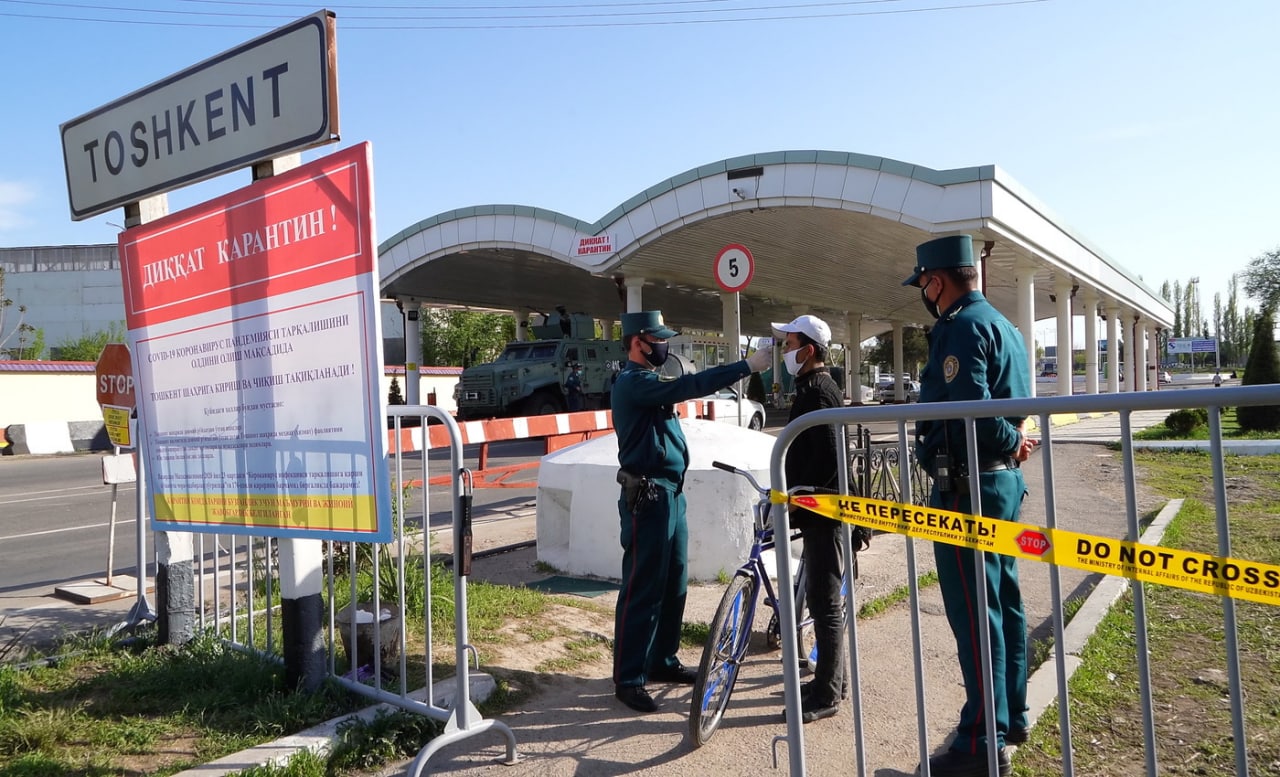
ССВ: ТОШКЕНТ ШАҲРИ “ҚИЗИЛ” ТОИФАДАГИ ҲУДУД ДЕБ БЕЛГИЛАНДИ
Коронавирус инфекцияси тарқалиш ҳолатининг ҳудудлар кесимидаги таҳлили, касаллик аниқланган беморларнинг соғайиш динамикаси ҳолатидан келиб чиқиб, ҳудудларни “яшил”, “сариқ” ва “қизил” тоифаларга ажратиш тартибига мувофиқ:
📌 “Қизил” тоифадаги ҳудудга – Тошкент шаҳри;
📌 “Сариқ” тоифадаги ҳудудларга – Самарқанд ва Тошкент вилоятлари кириши белгиланди.
Ҳудудларни тоифаларга ажратиш ва кенг жамоатчиликка етказиш бўйича Санитария-эпидемиологик осойишталик ва жамоат саломатлиги хизмати масъул ҳисобланади ва ушбу хизмат эпидемиологик вазиятдан келиб чиқиб, тартиб асосида ўзгариш бўлган ҳудудлар тўғрисидаги маълумотларларни доимий равишда кенг жамоатчиликка эълон қилиб боради.
Соғлиқни сақлаш вазирлиги
Матбуот хизмати.
▶️@ssvuz
▶️@ssvmatbuotkotib
CCВ: ИБОДАТ АМАЛЛАРИНИ ОЧИҚ ҲАВОДА ТАШКИЛ ЭТИШ ТАВСИЯ ҚИЛИНДИ
Юртимиздаги мавжуд эпидемиологик ҳолатдан келиб чиқиб, масъул идораларнинг таклифлари инобатга олинган ҳолда Республика махсус комиссияси томонидан:
📌кунлик ва жума намозларини фақат масжиднинг очиқ ҳаводаги майдонлари(очиқ айвонлар, масжид ҳовлиси, масжидга туташ ички кўчалар)да тиббий ниқобда ва оралиқ масофани сақлаган ҳолда ташкил этилиши;
📌65 ёш ва ундан катта ёшдаги фуқаролар ҳамда сурункали касаллиги мавжуд шахсларга улар томонидан диний тадбирларни имкон қадар уй шароитида амалга ошириш;
📌Республикада фаолият юритаётган бошқа диний конфессияларга мансуб диний ташкилотларда ҳам жамоавий ибодатларни юқоридаги тартиблар асосида амалга ошириш тавсия этилди.
Соғлиқни сақлаш вазирлиги
Матбуот хизмати.
▶️@ssvuz
▶️@ssvmatbuotkotibi
✳️Bilib qo'ygan yaxshi 👌
✳️ Bugungi postimizda 'effective' so'zi bilan qo'llaniladigan collocationlarni va uning 'efficient' so'zi bilan farqini o'rganamiz.
✅ extremely/highly effective - juda yaxshi natija beradigan, samarali
🔸The company launched a highly effective advertising campaign.
✅ an effective way - samarali yo'l
🔸What’s the most effective way to control crime?
✅ an effective method - samarali usul, metod
🔸Exams are not the most effective method of assessing students’ abilities.
✅an effective means - samarali vosita
🔸Is reducing the speed limit an effective means of reducing accidents?
✅ effective action - samarali tadbir
🔸The police must take effective action to protect the public.
✅ an effective solution - samarali yechim
🔸The most effective solution to traffic congestion is to build more roads.
✅ an effective treatment - samarali muolaja
🔸Antibiotics are still the most effective treatment for this disease.
✅ an effective system - samalari tizim
🔸The country has a simple but effective welfare system.
💡 Ko'pchilik ingliz tilidagi 'efficient' va 'effective' so'zlarining farqini bilishda qiynalishadi. Demak, ularning farqi quyidagicha:
1️⃣ effective - ta'siri yaxshi, ta'sirchan, samarali degan ma'noda odatda usul, vosita, harakat, muolaja va dorilarga nisbatan ishlatiladi va o'zimiz xohlagan natijani beradigan degan ma'noda ishlatiladi.
🔸Taking this tablet is a very effective cure for travel sickness.
🔸In this light, the camera is more effective if you use the flash.
2️⃣ efficient - samalari, tezkor, ishchan degan ma'noda odatda predmetlarga yoki shaxslarga nisbatan ishlatiladi.
🔸The new online banking system offers a convenient and efficient way to check your account.
🔸I have always known James to be highly competent and efficient in all aspects of his job.
https://t.me/JamshidBEC
✳️Bilib qo'ygan yaxshi 👌
✳️ Bugungi postimizda ingliz tilia eng mashhur so'zlardan biri bo'lgan 'fast' so'zining ma'nolarini va bilan ishlatiladigan iboralarni o'rganib olamiz. Demak, 'fast' so'zi quyidagi ma'nolarda ishlatiladi.
1️⃣ fast - (sifat) tez, epchil
🔸He’s one of the fastest runners in the world.
🔸The subway is the fastest way to get downtown.
✅ fast friends - qadrdon, qalin do'stlar
🔸Ishmael and Queequeg become fast friends.
✅ fast - (sifat) (soatga nisbatan) oldinda, tez yurayotgan
🔸That can’t be the time – my watch must be fast.
2️⃣ fast - (ravish) tez, tezlik bilan
🔸Slow down – you’re driving too fast.
🔸Kids grow up fast these days.
✅ fast asleep - qattiq uyquda
🔸Nick was lying on the sofa, fast asleep.
3️⃣ fast - (fe'l) ro'za tutmoq
🔸Muslims fast during Ramadan.
🔸They fasted for a further 2 hours, after which they were allowed normal food and fluid intake.
4️⃣ fast - (ot) ro'za payti
🔸Gandhi drank some orange juice to break (=end) his three-week fast.
✅ to break fast - iftorlik qilmoq, o'giz ochmoq
🔸The breaking of the fast, called iftar, usually begins with a snack of dates and milk or water.
https://t.me/JamshidBEC
Vocabulary for family 👨👩👧👦and friends🫂
🔸A lifelong friend – A friend that you have had for most of your life
🔸A relationship of trust – a connection with another in which you have faith and confidence
🔸Arrange a dinner date – Plan to share an evening meal
🔸A shoulder to cry on – Someone to sympathize with you
🔸Close knit family – A close family with common interests
🔸Dear to my heart – Someone that I care about
🔸Distant cousins – People who share a common ancestor but are not closely related
🔸Extend the hand of friendship – Reach out to someone in a friendly manner
🔸Extended family – Uncles, aunts and cousins form part of the extended family
🔸Get to know one another – Learning different aspects of each other
🔸Get together – Meet up
🔸Immediate family – Spouse, parents, children, grandparents
🔸Long lost friend – A friend that you have lost contact with
🔸Long-term relationships – A committed relationship between partners
🔸Professional relationships – The relationships that we have in the workplace
🔸Share a common background – The share a similar heritage or culture
🔸Stand the test of time – To last a long time
🔸Struck up a friendship – To make friends
🔸To enjoy someone’s company – To enjoy spending time with someone
🔸To have a good working relationship – To work together well
🔸To have a lot in common – To have shared interests
🔸To hit it off – To like each other straight away
To keep in touch with – To keep in contact
To lose touch with – To lose contact
https://t.me/JamshidBEC
Relative clause
✳️ Ingliz tilida relative clause deb gapning biror boʻlagini izohlab kelgan gapga aytiladi. Bunday gaplar oʻzlari mustaqil mazmunni ifodalay olmaydi, lekin gapdagi biror boʻlakka aniqlik kiritadi.
✳️ Relative clauseda qoʻllaniladigan olmoshlar asosan quyidagilar:
✅ who, whom - shaxslarga nisbatan qoʻllanilib, ularni izohlab keladi.
✅ which - predmet (narsa)larga nisbatan qoʻllanilib, ularni izohlab keladi.
✅ that - shaxslar va predmetlarni izohlab keladi.
✅ whose - shaxslar va predmetlarga qaratqich kelishigi qoʻshimchasini qoʻshib izohlaydi.
✅ where - oʻrin-joy otlaridan keyin kelib joyni izohlab keladi.
⚠️ Relative clause qoʻllanilgan bitta gapni tahlil qilamiz.
🔸 The man who lives next door is very kind. (Qoʻshni uyda yashovchi kishi juda mehribon)
💡Yuqoridagi gapda who lives next door gapi izohlovchi gap hisoblanadi va the man soʻzini izohlab, qaysi kishi nazarda tutilayotganini aniqlashtirib kelmoqda. Ko’pincha izohlovchi gap oʻzi izohlab kelgan gap boʻlagidan keyin keladi. Yana bir misol:
🔸We know a lot of people who live in the country. (relative clause people soʻzini izohlab, undan keyin kelyapti.)
✳️ Gapning egasini izohlab kelgan relative clauselar, agar gapning egasi shaxs boʻlsa, who olmoshi bilan bilan boshlanadi.
🔸We know a lot of people. They live in the country. (ikkita gap...ikkinchi gapda they olmoshi gapning egasi)
🔸We know a lot of people who live in the country. (bitta gap...who olmoshi they olmoshi oʻrnida kelmoqda)
✳️Misollar:
🔸A teetotaller is someone who doesn't drink alcohol.
🔸What was the name of the man who phoned you last night?
💡Yuqoridagi gaplarda who olmoshi oʻrniga that olmoshini qoʻyish qoʻllasa ham boʻladi.
🔸What was the name of the man that phoned you last night?
✳️ Agarda gapning egasi predmet (jonsiz narsa) boʻlsa, relative clause which olmoshi bilan boshlanadi.
🔸Where is the cheese? It was in the fridge. (ikkita gap...ikkinchi gapda it olmoshi gapning egasi)
🔸Where is the cheese which was in the fridge? (bitta gap... which olmoshi it olmoshi oʻrnida kelmoqda)
✳️ Misollar:
🔸I don't like stories which have unhappy endings.
🔸 Barbara works for a company which makes furniture.
💡Yuqoridagi gaplarda which olmoshi oʻrniga that olmoshini qoʻysa ham boʻladi.
🔸I don't like stories that have unhappy endings.
✳️ Oʻzbek tiliga tarjima qilganda relative clause oʻzi izohlab kelgan gap boʻlagining aniqlovchisiga aylanadi.
🔸 I don't like stories which have unhappy endings. (Men fojea bilan tugaydigan hikoyalarni yoqtirmayman)
🔸The man who lives next door is very kind. (Qoʻshni uyda yashovchi kishi juda mehribon)
⚠️ Yuqoridagi misollarda who va which olmoshlari oʻrnida that olmoshi kelishi mumkinligini koʻrib oʻtdik, lekin ba'zi vaziyatlarda faqat who va which olmoshlarini qoʻllashimiz shart boʻladi. Bunday holatlarni keyingi mavzularda koʻrib chiqamiz.
https://t.me/JamshidBEC
Relative clause II qism
✳️ Avvalgi darsda biz gapda egani izohlab kelgan relative clause haqida soʻz yuritgan edik. Endi gapda toʻldiruvchini izohlab kelgan relative clauselarni koʻrib chiqamiz.
🔸The man was away on holiday. I wanted to see him. (... ikkita gap, ikkinchi gapdagi him olmoshi toʻldiruvchi)
💡 Yuqoridagi ikkinchi gapni relative clause ga aylantiramiz va bitta gap qilib yozamiz. Toʻldiruvchi shaxs (inson) boʻlganligi uchun whom/that olmoshi qoʻllaniladi.
🔸The man whom (that) I wanted to see was away on holiday. (whom I wanted to see gapi relative clause hisoblanadi va oʻzi izohlab kelgan boʻlak (The man) dan keyin joylashgan.)
🔸Most of the people whom I invited to the party couldn't come. (whom I invited to the party gapi relative clause hisoblanadi va oʻzi izohlab kelgan boʻlak (most of the people) dan keyin joylashgan.)
✳️ Toʻldiruvchi predmet (jonsiz narsa) boʻlgan holatda which/that olmoshini qoʻllaymiz.
🔸Have you found the keys? You lost them. (...ikkita gap, ikkinchi gapda them olmoshi toʻldiruvchi.)
💡Yuqoridagi ikkinchi gapni relative clause ga aylantiramiz va bitta gap qilib yozamiz.
🔸Have you found the keys which(that) you lost? (which you lost gapi relative clause hisoblanadi va oʻzi izohlab kelgan boʻlak (the keys) soʻzidan keyin joylashgan)
🔸The dress which (that) Ann bought doesn't fit her very well. (which (that) Ann bought gapi relative clause hisoblanadi va oʻzi izohlab kelgan boʻlak (the dress) soʻzidan keyin joylashgan.)
⚠️ Yuqorida koʻrsatib oʻtilgan gaplarda relative clause toʻldiruvchini izohlab kelganligi tufayli whom/which/that olmoshlarini tushirib qoldirishimiz ham mumkin.
🔸The man I wanted to see was away on holiday. (=whom (that) I wanted to see)
🔸Most of the people I invited to the party couldn't come.(=whom I invited to the party)
🔸Have you found the keys you lost? (=which(that) you lost?)
🔸The dress Ann bought doesn't fit her very well. (=which (that) Ann bought)
⚠️ Agar toʻldiruvchi oldida predlog boʻlsa, predlog whom/which soʻzlaridan oldin qoʻllaniladi.
🔸The girl with whom he fell in love left him after a few weeks.
🔸The bed in which I slept last night wasn't very comfortable
https://t.me/JamshidBEC
Relative clause III qism
✳️ what olmoshi gapda ba'zan nima/nimaiki degan ma'noda qoʻllaniladi.
🔸What happened was my fault. (Nimaiki sodir boʻlgan boʻlsa - mening aybim)
🔸What caused the accident, nobody knows. (Falokatga nima sabab bo'ldi, hech kim bilmaydi)
⚠️Yuqoridagi gapni relative clause bilan ham qoʻllashimiz mumkin. Unda what o'rnida everything that qo'llash mumkin.
🔸Everything that happened was my fault. (Sodir boʻlgan hamma narsa - mening aybim...everything what emas.)
⚠️ Quyidagi gaplarga e'tibor bering:
🔸I gave her all the money (that) I had. (...what I had emas.)
🔸I'll do the best that I can. (...what I can emas.)
🔸 This is an awful film. It's the worst that I've ever seen. (...what I've ever seen emas.)
🔸 Tell me what you want and I'll try to help you. (...that you want emas.)
🔸 I don't agree with what you have just said. (...that you have just said emas.)
✳️ whose olmoshi relative clauseda egalik sifatlari (his/her/their/its) oʻrnida qoʻllaniladi.
🔸We saw some people. Their car had broken down. (...ikkita gap, ikkinchi gapda their olmoshi qoʻllanilgan.)
🔸We saw some people whose car had broken down. (...bitta gap, their olmoshi oʻrnida whose olmoshi qoʻllanilgan.)
🔸A widow is a woman whose husband is dead. (...her husband is dead.)
🔸What is the name of the girl whose car you borrowed? (...you borrowed her car.)
✳️ where olmoshi relative clauseda oʻrin-joyni bildiruvchi otlarni izohlab keladi.
🔸 The hotel wasn't very clean. We stayed there. (...ikkita gap, there soʻzi mehmonxonani nazarda tutyapti.)
🔸The hotel where we stayed wasn't very clean. (...bitta gap, where we stayed gapi relative clause hisoblanadi va the hotel soʻzini izohlab kelyapti.)
🔸 I recently went back to the town where I was born.
🔸I would like to live in a country where there is a lot of sunshine.
✳️ Paytni bildiruvchi soʻzlarni izohlash uchun relative clauseda the day/the year/the time (etc.) that something happened qurilmasi qoʻllaniladi.
🔸Do you still remember the day that we first met?
🔸The last time that I saw her, she looked very well.
🔸I haven't seen them since the year (that) they got married.
✳️ Sababni bildirish uchun relative clauseda the reason why/that something happens qurilmasi qoʻllaniladi.
🔸The reason why I am phoning you is to invite you to a party.
🔸The reason that they haven't got a car is that they can't afford one.
💡 Yuqoridagi gaplardan xulosa qilsak, insonlar uchun ega oʻrnida who, toʻldiruvchi oʻrnida whom, egalik sifati oʻrnida whose, narsalar uchun which, oʻrin-joy otlari uchun where olmoshlari qoʻllaniladi.
Qo'shimcha ma'lumot beruvchi relative clause
✳️ Avvalgi mavzularda gapning biror boʻlagini izohlab keladigan relative clause haqida soʻz yuritgan edik. Bu holatlarda ular qaysi shaxs, narsa, joy haqida gap ketayotganligini aniqlash uchun xizmat qiladi.
🔸The man who lives next door is very kind. (...who lives next door gapi relative clause va qaysi kishi nazarda tutilganini aniqlab keladi.)
🔸Garry works for a company which makes typewriters. (...which makes typewriters gapi relative clause hisoblanadi va qanday kompaniya nazarda tutilganini aniqlab kelmoqda.)
✳️ Endi boshqa turdagi relative clause koʻrib chiqamiz. Bu holatda relative clause bizga ma'lum boʻlgan shaxs, narsa, joylar haqida qoʻshimcha ma'lumot beradi va vergul bilan ajratiladi.
🔸Tom's father, who is 78, goes swimming every day.
🔸The house at the end of the street, which has been empty for two years, has just been sold.
🔸Martin, whose mother is Spanish, speaks both Spanish and English fluently.
🔸Mr. Hogg is going to Canada, where his son has been living for five years.
🔸My sister, whom you once met, is visiting me next week.
✳️ Qoʻshimcha ma'lumot beradigan relative clauselarda predloglar which/whom olmoshlaridan oldin qoʻllaniladi.
🔸Mr. Lee, to whom I spoke at the meeting, is very interested in our proposal.
🔸Fortunately we had a map, without which we would have got lost.
✳️ all of/most of etc.+ whom/which qurilmasining qoʻllanishiga e'tibor bering.
🔸Mary has three brothers. All of them are married. (...ikkita gap)
🔸Mary has three brothers, all of whom are married. (...bitta gap)
🔸They asked me a lot of questions. I couldn't answer most of them. (...ikkita gap)
🔸They asked me a lot of questions, most of which I couldn't answer. (... bitta gap)
🔸Martin tried on three jackets, none of which fitted him.
🔸Two men, neither of whom I had seen before, came into the office.
🔸They have got three cars, two of which they rarely use.
🔸Sue has a lot of friends, many of whom she was at school with.
✳️ Shuningdek, predmetlar uchun qaratqich kelishigi qoʻshimchasini bildirish uchun the cause of which/the name of which qurilmasi qoʻllaniladi.
🔸The building was destroyed in a fire, the cause of which was never established.
🔸We stayed in a beautiful hotel, the name of which I can't remember now.
✳️ Avvalgi mavzularda which olmoshining biror bir gap boʻlagini izohlab kelishini koʻrib oʻtgan edik. Quyidagi qurilmada esa which olmoshi butun bir gapni oʻrnini bosib keladi.
🔸Joe got the job. This surprised everybody. (...ikkita gap, this Joening ishga kirishi)
🔸Joe got the job, which surprised everybody. (...bitta gap)
💡 Yuqoridagi gapda which olmoshi Joening ishga qabul qilingani degan mazmunni ifodalab kelmoqda.
🔸Sarah couldn't meet us, which was a pity. (...which=Saraning biz bilan uchrasholmagani)
🔸The weather was good, which we hadn't expected. (...which=ob-havoning yaxshiligi)
https://t.me/JamshidBEC
English_Collocations_In_Use_Intermediate_McCarthy_M_,_O'Dell_F_2017.PDF
17.4 MB
One of the key methods of improving speaking skill is through learning english collocations. When you use "right" collocations in your speech, it sounds more natural, like native speakers
https://t.me/JamshidBEC
https://t.me/JamshidBEC
IELTS va boshqa ingliz tili imtihonlarining insholar (writing) qismida tez-tez yo'l qo'yiladigan xatolar.
✍✍✍
❗️ Memorized sentences [yodlab olingan, tayyor gaplar]
❌ In this essay, I will discuss both opinions and give my own thoughts towards this matter.
❌ This essay will discuss both sides and give my opinion.
❌ I will show both sides of the question and end with my opinion on the topic.
👆👆 Shu va shu kabi tayyor gaplardan foydalanmaslik tavsiya etiladi.
Imtihonlar uchun insholar bu ijodiy hisoblanib, sizning muayyan mavzuda shaxsiy fikrlaringizni ingliz tilida yozma bayon qila olish mahoratingizni tekshiradi.
Bu turdagi gaplar insholarimizni tekshiruvchi ekspertlar tomonidan yodlangan, shunchaki 250ta so'z yozish shartini bajarish uchun gaplar qo'shish deb topiladi.
Bu turdagi gaplar inshoga mazmun bermaydi!
❗️ Word order - ko'pchilik imtihon topshiruvchilar ingliz tili gaplarida so'z tartibini yaxshi bilmaydilar. Bunday gaplar ham nima demoqchi ekanimizni aniq ifoda qilib bera olmaydi.
Grammatika darslar yordamida so'z tartibini yaxshi o'zlashtirish muhim.
The government the roads should repair. ❌
The government should repair the roads. ✅
❗️L1 impact - Insho yozganda va shuningdek, og'zaki nutqda ko'pchilik avval o'z tillarida o'ylab, keyin buni ingliz tiliga tarjima qiladilar.
Bu juda ham katta va qo'pol xato hisoblanadi.
Students do a lot of mistakes. ❌
Students make a lot of mistakes. ✅
O'zbek tilida biz xato qilmoq deymiz, va ko'pchilik qilmoq ma'nosidagi so'zlarni do bilan berishadi.
Qanday qilib inglizcha fikrlashni o'rganish mumkin?
● Learn collocations - ingliz tilida tabiiy qo'llanuvchi so'z birikmalarni muntazam o'rganib boring.
● Listen to podcasts and watch English shows - ingliz tilida ko'proq eshiting va ko'rsatuvlar ko'ring.
❗️Avoid informal language - norasmiy va ko'cha so'zlari, qisqartmalar inshoda yozilmasligi kerak.
Insho bu rasmiy uslubda yoziladi.
Ko'pchilik imtihon topshiruvchilar isn't, don't, aren't, gonna, wanna ❌ kabi norasmiy so'zlardan foydalanishadi va bu xato hisoblanadi.
To'liq holatda yo'zing!
Practice makes perfect - Har kuni ingliz tilida nimadir yozishga odatlaning.
Masalan, kundalik tuting (keep a diary) 📒🖊
Har kuni shu kundalikka ingliz tilida nimadir yozishga odatlaning.
https://t.me/JamshidBEC
Media is too big
VIEW IN TELEGRAM
IELTS speaking test band score 9 with feedback
IELTS Speaking Part 1 sample answers 🔗
• How well do you know your next-door neighbours?
I know my neighbours quite well. They're really nice people, and I always stop to talk whenever I see them. I think it's important to get on well with the people who live next door.
• How often do you see them?
I see my neighbours at least a few times a week. We usually see each other when we're leaving for work in the morning or coming home in the evening.
• What problems do people sometimes have with their neighbours?
I think the most common problem is probably noise. It's difficult to live next to people who have a dog that barks at night, or who play loud music or have too many parties.
- SIMON
⚡️ https://t.me/JamshidBEC👈
1.) By the way - Aytgancha
2.) Take a seat - o'tiring
3.) Catch up - yetib olish
4.) for what? - Nimaga
5.) Get down - tushir
6.) Hold іt - ushlab tur
7.) knock off -To'xtat(yo'q qil)
1.) It depends on - Vaziyatga qarab.
2.) Thіѕ аnd thаt - u, bu..
3.) Yes, please! - ha, iltimos
4.) Certainly! - Albatta
5.) Right you are! - Mutlaqo xaqsiz
6.) How muсh (is it)? Buni narxi qancha
7.) Here you аrе.-Marhamat
1) What it takes to - Aynan mana shu
2.) What about - Buchi
3.) That is why - Shunga ko'ra 4.) Such as - Misol uchun
5.) That's the whole story - Xullas mana shunaqa gaplar
6.) Suсh аnd ѕuсh - Shunaqa shunaqa7.) So... аѕ tо - shunchalikki...
1) And how! - Mutlaqo xaqsiz
2.) Anything but - Faqat shu emas
3.) Exactly! - Aniq
4.) Far frоm іt - Umuman bunaqa emas.
5.) For сеrtаin /For sure - to'g'ri 6.) Have had enough – yetarli
7.) Have something against - qarshi bo'lmoq
#Vocabulary
Cambridge_Advanced @IELTS_8.rar
503.7 MB
Cambridge Advanced Learner's Dictionary - (For PC 💻)
The most popular dictionary
✅ Over 140,000 words & phrases
✅ Smart thesaurus and examples
✅ UK & US pronunciations
✅ Collocations & transcripts
⚡️ https://t.me/JamshidBEC👈
The most popular dictionary
✅ Over 140,000 words & phrases
✅ Smart thesaurus and examples
✅ UK & US pronunciations
✅ Collocations & transcripts
⚡️ https://t.me/JamshidBEC👈