UGANDA
❝INVITING Business and early adopters, new customers too, of our most recommended software solution to help cleanup and tighten management of excellence and [academic] performance in our national education system (2026 and beyond...) long-term.❞ — H.B. President…
Business_Proposal_PSMP_Primary_School_Management_Platform.pdf
864.4 KB
IN BRIEF: https://doi.org/10.6084/m9.figshare.29424710
"We are formally proposing to offer to your school a robust, time-tested Software Platform for operating and managing the school at all levels: the PSMP: Primary School Management Platform, specifically and originally designed and tailor-made to suit the special needs of operating and managing a fast-paced, highly performant primary school utilizing the Standard Uganda National Curriculum for Primary Schools."
---[THE CALL]:
Dear Community,
Please find the proposal here attached, and kindly respond directly to me if you have a customer or yourself can use the presented solution. Terms and Conditions included.
God Bless you as you extend a helping hand.
Thanks. Regards
Joseph W.L.
Nuchwezi Research
"We are formally proposing to offer to your school a robust, time-tested Software Platform for operating and managing the school at all levels: the PSMP: Primary School Management Platform, specifically and originally designed and tailor-made to suit the special needs of operating and managing a fast-paced, highly performant primary school utilizing the Standard Uganda National Curriculum for Primary Schools."
---[THE CALL]:
Dear Community,
Please find the proposal here attached, and kindly respond directly to me if you have a customer or yourself can use the presented solution. Terms and Conditions included.
God Bless you as you extend a helping hand.
Thanks. Regards
Joseph W.L.
Nuchwezi Research
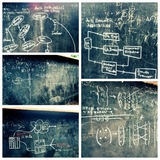
Blackboard Computing Adventures 💡
Introducing ADT: Anagram Distance Theory #research & necessary #activism
ADMT and the extra information transformation measures and operations possible.
Blackboard Computing Adventures 💡
Photo
### From GTNC to Anagram Distance Theory... The On-going Work in Mathematics by Joseph at NUCHWEZI:
What He Said Concerning his recent work:
---[Many People and Government Institutions Are Instead Investing in Short-term Science and Knowledge that Shall Undoubtedly Eventually Expire!]
Joseph is also currently continuing to build this Mathematical Theory and more measures and other ways to quantify Entropy are being developed at his lab at NUCHWEZI as we speak, as entirely independent and mostly voluntary work.
GO FOLLOW & SUPPORT Building A Better FUTURE: https://bit.ly/profjwl
GO READ First ADT PAPER: https://bit.ly/anagrampaper
#future #mathematics #informationprocessing #foundationaltheories #entropy #measures #intelligent #systems
What He Said Concerning his recent work:
Mathematics isn't like Art or Programming. A mathematical theory is timeless and can never expire even for 1 million years. I have decided to invest in building new, better mathematics for the future of humanity. GTNC, theory of Number Cardinality and Anagram Distance Theory are my first contributions thus far. Only a fool or the blind can say we are wasting time.

Further research has just revealed that ADT can be applied to any two sequences of symbols or information even though they aren't of the same length.

This shall have applications in biology (like genetic engineering), in physics, statistics, computer science, economics and more...
---[Many People and Government Institutions Are Instead Investing in Short-term Science and Knowledge that Shall Undoubtedly Eventually Expire!]
Joseph is also currently continuing to build this Mathematical Theory and more measures and other ways to quantify Entropy are being developed at his lab at NUCHWEZI as we speak, as entirely independent and mostly voluntary work.
GO FOLLOW & SUPPORT Building A Better FUTURE: https://bit.ly/profjwl
GO READ First ADT PAPER: https://bit.ly/anagrampaper
#future #mathematics #informationprocessing #foundationaltheories #entropy #measures #intelligent #systems
Academia.edu
Joseph Willrich Lutalo - Profile on Academia.edu
I’m currently conducting research in computing at a fundamental level, mostly spanning interactive and intelligent systems, languages and methods.
Blackboard Computing Adventures 💡
Photo
Okay.. wait. Seems like we have discovered a new branch of mathematics. But.. fingers crossed. The next paper after introducing Anagram Distance Theory is loading...
#research #foundations #stastistics #informationtheory #informationtransformations #tealanguage #entropy #measures #jwl #phd #nuchwezi @bclectures
#research #foundations #stastistics #informationtheory #informationtransformations #tealanguage #entropy #measures #jwl #phd #nuchwezi @bclectures
Blackboard Computing Adventures 💡
Photo
CHEERS TO ALL MY TEACHERS
Today, I wish to celebrate and commemorate some of my unforgettable teachers and mentors at my higher levels in the not so far past. Some doctors and Professors during those formative years while at #MakerereUniversity. I promise not to disappoint any one of you as I carry forward the work you started in me... 🤞😁📜✍️📚✨✨
#progress #jwl #phd #postgrad #research
Today, I wish to celebrate and commemorate some of my unforgettable teachers and mentors at my higher levels in the not so far past. Some doctors and Professors during those formative years while at #MakerereUniversity. I promise not to disappoint any one of you as I carry forward the work you started in me... 🤞😁📜✍️📚✨✨
#progress #jwl #phd #postgrad #research
Blackboard Computing Adventures 💡
Photo
---[ACM Preprint]: The Theory of Sequence Transformers & their Statistics: The 3 Information Sequence Transformer Families (Anagrammatizers, Protractors, Compressors) and 4 New and Relevant Statistical Measures Applicable to Them: Anagram Distance, Modal Sequence Statistic, Transformation Compression Ratio and Piecemeal Compression Ratio
---[ACM Author]: Joseph Willrich Lutalo, PHd. MSc. BSc. CS,(Phy,Mat) | jwl@nuchwezi.com, joewillrich@gmail.com
---[Preprint Date]: 8 July, 2025
---[Abstract]:
In a recent paper, a new mathematical statistics theory concerning how to quantify changes in entropy across transformations of ordered information expression sequences was introduced, defined and its potential applications across several mathematical science fields illustrated. That measure, the Anagram Distance measure or statistic (ADM), $\tilde{A}(\cdot)$, has since been studied further, and in the process, its inventor has developed three other measures also applicable to the quantification, study and analysis of sequence transformations; the modal sequence statistic (MSS), the transformation compression ratio (TCR) and the piecemeal compression ratio (PCR). These four measures, all of them statistical in nature, have been found to be relevant in the analysis of three families of sequence transformers: anagrammatizers, which only change a sequence's order of members; protractors, which can either increase the cardinality of the post-trasform sequence symbol set or the frequency of some of the members in that set and then compressors, which either eliminate some elements from the post-transform sequence symbol set or reduce their frequency in the resultant sequence --- basically, reversing or the opposite of protraction transforms, and these last two, possibly also involving aspects of the first transform family --- meaning, the order of members in the resultant sequence might likewise be different from that of the input/source sequence. This paper offers the essential introductions to those three transformer families, and the associated entropy and transformation analysis measures and methods proposed for their analysis, with less focus on ADM since it was already well treated in the earlier paper, but otherwise, all this work mostly being developed from scratch --- meaning, there is less reference to any related work or theory there might be concerning this field of inquiry other than the author's, and this paper instead attempts to present original thought and mathematics by the author concerning the matter. These ideas, the mathematics and associated theory, like the earlier work on ADM, would possibly find use in not just mathematical statistics, but also applied statistics such as in bioinformatics, statistical mechanics, artificial intelligence and more. This work is a first attempt at unifying much of the author's work and interests in a kind of basic artificial intelligence founded on the analysis, generation and processing of basic information expressions or rather symbol sequences.
---[ACM Keywords]: Foundations, Ordered Sequences, Entropy Measures, Information Transform Analysis, Statistical Measures, Intelligent Systems, String Processing, Cardinality Measure, Anagram Distance Measure
---[DRAFT-Version]: 1.0.1
---[DRAFT-URI]: https://doi.org/10.6084/m9.figshare.29505824.v1
---[CITE]:
#preprints #acm #acmcs #acmstat #sigstat #sigtrans #mathematicalstastics #transformatics #rngs #phds #universityofoxford
---[ACM Author]: Joseph Willrich Lutalo, PHd. MSc. BSc. CS,(Phy,Mat) | jwl@nuchwezi.com, joewillrich@gmail.com
---[Preprint Date]: 8 July, 2025
---[Abstract]:
In a recent paper, a new mathematical statistics theory concerning how to quantify changes in entropy across transformations of ordered information expression sequences was introduced, defined and its potential applications across several mathematical science fields illustrated. That measure, the Anagram Distance measure or statistic (ADM), $\tilde{A}(\cdot)$, has since been studied further, and in the process, its inventor has developed three other measures also applicable to the quantification, study and analysis of sequence transformations; the modal sequence statistic (MSS), the transformation compression ratio (TCR) and the piecemeal compression ratio (PCR). These four measures, all of them statistical in nature, have been found to be relevant in the analysis of three families of sequence transformers: anagrammatizers, which only change a sequence's order of members; protractors, which can either increase the cardinality of the post-trasform sequence symbol set or the frequency of some of the members in that set and then compressors, which either eliminate some elements from the post-transform sequence symbol set or reduce their frequency in the resultant sequence --- basically, reversing or the opposite of protraction transforms, and these last two, possibly also involving aspects of the first transform family --- meaning, the order of members in the resultant sequence might likewise be different from that of the input/source sequence. This paper offers the essential introductions to those three transformer families, and the associated entropy and transformation analysis measures and methods proposed for their analysis, with less focus on ADM since it was already well treated in the earlier paper, but otherwise, all this work mostly being developed from scratch --- meaning, there is less reference to any related work or theory there might be concerning this field of inquiry other than the author's, and this paper instead attempts to present original thought and mathematics by the author concerning the matter. These ideas, the mathematics and associated theory, like the earlier work on ADM, would possibly find use in not just mathematical statistics, but also applied statistics such as in bioinformatics, statistical mechanics, artificial intelligence and more. This work is a first attempt at unifying much of the author's work and interests in a kind of basic artificial intelligence founded on the analysis, generation and processing of basic information expressions or rather symbol sequences.
---[ACM Keywords]: Foundations, Ordered Sequences, Entropy Measures, Information Transform Analysis, Statistical Measures, Intelligent Systems, String Processing, Cardinality Measure, Anagram Distance Measure
---[DRAFT-Version]: 1.0.1
---[DRAFT-URI]: https://doi.org/10.6084/m9.figshare.29505824.v1
---[CITE]:
Lutalo, Joseph Willrich (2025). The Theory of Sequence Transformers & their Statistics: The 3 Information Sequence Transformer Families (Anagrammatizers, Protractors, Compressors) and 4 New and Relevant Statistical Measures Applicable to Them: Anagram Distance, Modal Sequence Statistic, Transformation Compression Ratio and Piecemeal Compression Ratio. figshare. Online resource. https://doi.org/10.6084/m9.figshare.29505824.v1
#preprints #acm #acmcs #acmstat #sigstat #sigtrans #mathematicalstastics #transformatics #rngs #phds #universityofoxford
figshare
The Theory of Sequence Transformers & their Statistics: The 3 Information Sequence Transformer Families (Anagrammatizers, Protractors…
---[ACM Preprint]: The Theory of Sequence Transformers & their Statistics: The 3 Information Sequence Transformer Families (Anagrammatizers, Protractors, Compressors) and 4 New and Relevant Statistical Measures Applicable to Them: Anagram Distance, Modal…
Blackboard Computing Adventures 💡
Photo
POINT of CORRECTION: it is "TRANSFORMERS"
an "R" was missing, but no one noticed 🤷🏻🤦
an "R" was missing, but no one noticed 🤷🏻🤦
Blackboard Computing Adventures 💡
---[ACM Preprint]: The Theory of Sequence Transformers & their Statistics: The 3 Information Sequence Transformer Families (Anagrammatizers, Protractors, Compressors) and 4 New and Relevant Statistical Measures Applicable to Them: Anagram Distance, Modal Sequence…
TRANSFORMATICS_Theory_Of_Sequence_Transformers_10JUL2025_JWL_NuchweziResearch.pdf
4.8 MB
---[ACM Preprint]: The Theory of Sequence Transformers & their Statistics: The 3 Information Sequence Transformer Families (Anagrammatizers, Protractors, Compressors) and 4 New and Relevant Statistical Measures Applicable to Them: Anagram Distance, Modal Sequence Statistic, Transformation Compression Ratio and Piecemeal Compression Ratio
---[ACM Author]: Joseph Willrich Lutalo, PHd. MSc. BSc. CS,(Phy,Mat) | jwl@nuchwezi.com, joewillrich@gmail.com
---[Preprint Date]: 10 July, 2025
---[ACM Author]: Joseph Willrich Lutalo, PHd. MSc. BSc. CS,(Phy,Mat) | jwl@nuchwezi.com, joewillrich@gmail.com
---[Preprint Date]: 10 July, 2025
Blackboard Computing Adventures 💡
TRANSFORMATICS_Theory_Of_Sequence_Transformers_10JUL2025_JWL_NuchweziResearch.pdf
---[ABSTRACT]:
In a recent paper, a new mathematical statistics theory concerning how to quantify changes in entropy across transformations of ordered information expression sequences was introduced, defined and its potential applications across several mathematical science fields illustrated. That measure, the Anagram Distance measure or statistic (ADM), Ã(•), has since been studied further, and in the process, its inventor has developed three other measures also applicable to the quantification, study and analysis of sequence transformations; the modal sequence statistic (MSS), the transformation compression ratio (TCR) and the piecemeal compression ratio (PCR). These four measures, all of them statistical in nature, have been found to be relevant in the analysis of three families of sequence transformers: anagrammatizers, which only change a sequence's order of members; protractors, which can either increase the cardinality of the post-trasform sequence symbol set or the frequency of some of the members in that set and then compressors, which either eliminate some elements from the post-transform sequence symbol set or reduce their frequency in the resultant sequence --- basically, reversing or the opposite of protraction transforms, and these last two, possibly also involving aspects of the first transform family --- meaning, the order of members in the resultant sequence might likewise be different from that of the input/source sequence. This paper offers the essential introductions to those three transformer families, and the associated entropy and transformation analysis measures and methods proposed for their appreciation, with lesser focus on ADM though, since it was already well treated in the earlier paper, but otherwise, all this work mostly being developed from scratch --- meaning, there is less reference to any related work or theory there might be concerning this field of inquiry other than the author's, and this paper instead attempts to present original thought and mathematics by the author concerning the matter. These ideas, the mathematics and associated theory, like the earlier work on ADM, would possibly find use in not just pure mathematical statistics, but also applied statistics such as in bioinformatics, statistical mechanics, statistical artificial intelligence and more. This work is the second (also predominantly mathematical) attempt at unifying much of the author's work and interests in a kind of basic general artificial intelligence platform founded on the generation, processing and analysis of basic information expressions or rather symbol sequences natural or not.
---[Keywords]: Foundations, Transformatics, Artificial Statistical Intelligence, Information Processing, Ordered Sequences, Strings, Symbol Sets, Cardinality, Statistics, Entropy Measures, Sequence Transformer Analysis
---[DRAFT-Version]: 1.1.1
---[DRAFT-URI]: https://doi.org/10.6084/m9.figshare.29505824.v3
---[CITE]:
In a recent paper, a new mathematical statistics theory concerning how to quantify changes in entropy across transformations of ordered information expression sequences was introduced, defined and its potential applications across several mathematical science fields illustrated. That measure, the Anagram Distance measure or statistic (ADM), Ã(•), has since been studied further, and in the process, its inventor has developed three other measures also applicable to the quantification, study and analysis of sequence transformations; the modal sequence statistic (MSS), the transformation compression ratio (TCR) and the piecemeal compression ratio (PCR). These four measures, all of them statistical in nature, have been found to be relevant in the analysis of three families of sequence transformers: anagrammatizers, which only change a sequence's order of members; protractors, which can either increase the cardinality of the post-trasform sequence symbol set or the frequency of some of the members in that set and then compressors, which either eliminate some elements from the post-transform sequence symbol set or reduce their frequency in the resultant sequence --- basically, reversing or the opposite of protraction transforms, and these last two, possibly also involving aspects of the first transform family --- meaning, the order of members in the resultant sequence might likewise be different from that of the input/source sequence. This paper offers the essential introductions to those three transformer families, and the associated entropy and transformation analysis measures and methods proposed for their appreciation, with lesser focus on ADM though, since it was already well treated in the earlier paper, but otherwise, all this work mostly being developed from scratch --- meaning, there is less reference to any related work or theory there might be concerning this field of inquiry other than the author's, and this paper instead attempts to present original thought and mathematics by the author concerning the matter. These ideas, the mathematics and associated theory, like the earlier work on ADM, would possibly find use in not just pure mathematical statistics, but also applied statistics such as in bioinformatics, statistical mechanics, statistical artificial intelligence and more. This work is the second (also predominantly mathematical) attempt at unifying much of the author's work and interests in a kind of basic general artificial intelligence platform founded on the generation, processing and analysis of basic information expressions or rather symbol sequences natural or not.
---[Keywords]: Foundations, Transformatics, Artificial Statistical Intelligence, Information Processing, Ordered Sequences, Strings, Symbol Sets, Cardinality, Statistics, Entropy Measures, Sequence Transformer Analysis
---[DRAFT-Version]: 1.1.1
---[DRAFT-URI]: https://doi.org/10.6084/m9.figshare.29505824.v3
---[CITE]:
Lutalo, Joseph Willrich (2025). The Theory of Sequence Transformers & their Statistics: The 3 Information Sequence Transformer Families (Anagrammatizers, Protractors, Compressors) and 4 New and Relevant Statistical Measures Applicable to Them: Anagram Distance, Modal Sequence Statistic, Transformation Compression Ratio and Piecemeal Compression Ratio. figshare. Online resource. https://doi.org/10.6084/m9.figshare.29505824.v3
figshare
The Theory of Sequence Transformers & their Statistics: The 3 Information Sequence Transformer Families (Anagrammatizers, Protractors…
---[ACM Preprint]: The Theory of Sequence Transformers & their Statistics: The 3 Information Sequence Transformer Families (Anagrammatizers, Protractors, Compressors) and 4 New and Relevant Statistical Measures Applicable to Them: Anagram Distance, Modal…