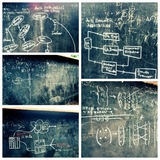
Blackboard Computing Adventures 💡
Go Read The Paper: http://bit.ly/lubasecalculus
Some more clarification on the relevance of this on-going work
In Informal Proceedings of Meta Mathematics Research: Lu-Numbers:
———l Fut. Prof. JWL C.M.R.W | jwl@nuchwezi.com | Research _+_*_ _*_{{}_{{}{}{{}}{}{}{{{{}}}}}
#MetaMathematics #Foundations #Systems #LuNumbers
———l Fut. Prof. JWL C.M.R.W | jwl@nuchwezi.com | Research _+_*_ _*_{{}_{{}{}{{}}{}{}{{{{}}}}}
#MetaMathematics #Foundations #Systems #LuNumbers
Blackboard Computing Adventures 💡
In Informal Proceedings of Meta Mathematics Research: Lu-Numbers: ———l Fut. Prof. JWL C.M.R.W | jwl@nuchwezi.com | Research _+_*_ _*_{{}_{{}{}{{}}{}{}{{{{}}}}} #MetaMathematics #Foundations #Systems #LuNumbers
In Informal Proceedings of Meta Mathematics Research: Lu-Numbers:
❝A number system in which numbers are both identifiers and quantifiers. The [number] processors [that can produce such numbers --- a Lu-Number Processor], when presented with either an empty set or a set of sets with the empty set as their only member or other sets only containing the empty set or other non empty sets etc., returns with either 0 or some natural number N, where N is related to any non empty set it was presented with. The later are signal; a measure of some process, the nested set structure encoding or expressing an absolute property describing/about it, such as a count or a class/category. The former are merely results of mere replication or [re]encoding; presented with an empty set, present an empty set in a different or similar form anything else perhaps being a terminal result; nothing is returned, itself then being the signal that a process terminated perhaps; identity and quantifier generators; neurons; brains, sensors, processors,... in essence.❞
———l Fut. Prof. JWL C.M.R.W | jwl@nuchwezi.com | Research _+_*_ _*_{{}_{{}{}{{}}{}{}{{{{}}}}}
#MetaMathematics #Foundations #Systems #LuNumbers
❝A number system in which numbers are both identifiers and quantifiers. The [number] processors [that can produce such numbers --- a Lu-Number Processor], when presented with either an empty set or a set of sets with the empty set as their only member or other sets only containing the empty set or other non empty sets etc., returns with either 0 or some natural number N, where N is related to any non empty set it was presented with. The later are signal; a measure of some process, the nested set structure encoding or expressing an absolute property describing/about it, such as a count or a class/category. The former are merely results of mere replication or [re]encoding; presented with an empty set, present an empty set in a different or similar form anything else perhaps being a terminal result; nothing is returned, itself then being the signal that a process terminated perhaps; identity and quantifier generators; neurons; brains, sensors, processors,... in essence.❞
———l Fut. Prof. JWL C.M.R.W | jwl@nuchwezi.com | Research _+_*_ _*_{{}_{{}{}{{}}{}{}{{{{}}}}}
#MetaMathematics #Foundations #Systems #LuNumbers
Blackboard Computing Adventures 💡
Photo
The things we live to work on...
applying #mathematics #computerscience #softwareengineering #programming #design #hacking #systems #thinking and lots more.. especially with ICs ⚙️✨✨
applying #mathematics #computerscience #softwareengineering #programming #design #hacking #systems #thinking and lots more.. especially with ICs ⚙️✨✨
Blackboard Computing Adventures 💡
The things we live to work on... applying #mathematics #computerscience #softwareengineering #programming #design #hacking #systems #thinking and lots more.. especially with ICs ⚙️✨✨
Those with computers, please install & test our special research project result; ZHA, but also provide feedback:
#linux #windowssubsystemforlinux #unix #tealanguage #personalassistants #qagi #artificialintelligence #chatbots #humansupport #systems
curl -Ls https://bit.ly/installtea | bash
#linux #windowssubsystemforlinux #unix #tealanguage #personalassistants #qagi #artificialintelligence #chatbots #humansupport #systems
Blackboard Computing Adventures 💡
Meanwhile, talking of making progress with mathematical research.. Lately I have made a habit of waking up to test myself on important Mathematical Facts. Of course, my current focus is on preparing for that RNG paper and the theory I'm steadily building…
So, I came across these difficult mathematicians;
✓ Smirnov (no, nothing to do with Smirnoff the alcohol 😆) ~1940s
✓ Kolmogorov (he became a very important authority on Probability Theory during World War)~1930s
✓ Li-Chien (among Chinese to later pick up and advance A.K's ideas and theories)~1950s
Currently engrossed in difficult reading like [1][2][3] and more... Trying to wrap my head around their vital ideas. PhD work (without a supervisor). It is tough! So, wish me well...
#jwl #studygroup #research #rngs #oxford #acm #nuchwezi thanks!
----[REFERENCES]:
1. Cui, Elvis Han, Yihao Li, and Zhuang Liu. "The Kolmogorov-Smirnov Statistic Revisited." arXiv preprint arXiv:2503.11673 (2025).
2. Massey Jr, Frank J. "The Kolmogorov-Smirnov test for goodness of fit." Journal of the American statistical Association 46.253 (1951): 68-78.
3. Stephens, Michael A. "An appreciation of kolmogorov’s 1933 paper." Department of Statistics–Stanford University (1992).
✓ Smirnov (no, nothing to do with Smirnoff the alcohol 😆) ~1940s
✓ Kolmogorov (he became a very important authority on Probability Theory during World War)~1930s
✓ Li-Chien (among Chinese to later pick up and advance A.K's ideas and theories)~1950s
Currently engrossed in difficult reading like [1][2][3] and more... Trying to wrap my head around their vital ideas. PhD work (without a supervisor). It is tough! So, wish me well...
#jwl #studygroup #research #rngs #oxford #acm #nuchwezi thanks!
----[REFERENCES]:
1. Cui, Elvis Han, Yihao Li, and Zhuang Liu. "The Kolmogorov-Smirnov Statistic Revisited." arXiv preprint arXiv:2503.11673 (2025).
2. Massey Jr, Frank J. "The Kolmogorov-Smirnov test for goodness of fit." Journal of the American statistical Association 46.253 (1951): 68-78.
3. Stephens, Michael A. "An appreciation of kolmogorov’s 1933 paper." Department of Statistics–Stanford University (1992).
Blackboard Computing Adventures 💡
So, I came across these difficult mathematicians; ✓ Smirnov (no, nothing to do with Smirnoff the alcohol 😆) ~1940s ✓ Kolmogorov (he became a very important authority on Probability Theory during World War)~1930s ✓ Li-Chien (among Chinese to later pick up…
❝But, Spirit of the Omniscient One guiding and supporting us, and despite having to do this important research on empty stomachs and sometimes sacrificing meals to purchase data and so download books and papers as well as keep research records well or educate the less privileged, I trust, deep down, we shall eventually accomplish the true worths of this hardwork, with or without the help of our in-the-know colleagues in UGANDA's public universities, the Ministry of Education or the Central Government. So Help us dear Lord. For God and My Country.❞
— Joseph Willrich Lutalo, still without his master's degree because of a school fees balance and no salary, but otherwise pushing on, serving Uganda and Mankind, as well as working towards his PhD under a very unfair and harsh society.
#memos #progress #research #nuchwezi
— Joseph Willrich Lutalo, still without his master's degree because of a school fees balance and no salary, but otherwise pushing on, serving Uganda and Mankind, as well as working towards his PhD under a very unfair and harsh society.
#memos #progress #research #nuchwezi
Forwarded from UGANDA
❝INVITING Business and early adopters, new customers too, of our most recommended software solution to help cleanup and tighten management of excellence and [academic] performance in our national education system (2026 and beyond...) long-term.❞
— H.B. President at Nuchwezi, Willrich J.L. talking of the amazing software solution and product for schools, NPSP, proven best fit for effective school management in today's era. You're invited to contact and support them in this very laudable, necessary undertaking since circa 2018 A.D: sales@nuchwezi.com, joewillrich@gmail.com (quicker route).
// THANKS --crew=|cvmacm.abc|
— H.B. President at Nuchwezi, Willrich J.L. talking of the amazing software solution and product for schools, NPSP, proven best fit for effective school management in today's era. You're invited to contact and support them in this very laudable, necessary undertaking since circa 2018 A.D: sales@nuchwezi.com, joewillrich@gmail.com (quicker route).
// THANKS --crew=|cvmacm.abc|
Blackboard Computing Adventures 💡
1. Cortes, Corinna, Kathleen Fisher, Daryl Pregibon, Anne Rogers, and Frederick Smith. "Hancock: A language for analyzing transactional data streams." ACM Transactions on Programming Languages and Systems (TOPLAS) 26, no. 2 (2004): 301-338. 2. https://re…
### JWL's Paper Reviews continue..
---[INTRO]:
Today's review concerns an ACM SLE paper from 2015 by a team of researchers from Vienna University of Technology (TU Wien), Austria. The paper, titled ❝XMLText: From XML Schema to Xtext❞[1] introduces us to the helpful idea of evolving old or existing languages to newer, more modern syntax and editor/language support environments with easier to use tools such as good language workbenches, and this done via automation and not manually.
---[INTRO]:
Today's review concerns an ACM SLE paper from 2015 by a team of researchers from Vienna University of Technology (TU Wien), Austria. The paper, titled ❝XMLText: From XML Schema to Xtext❞[1] introduces us to the helpful idea of evolving old or existing languages to newer, more modern syntax and editor/language support environments with easier to use tools such as good language workbenches, and this done via automation and not manually.
Blackboard Computing Adventures 💡
Photo
---[BRIEF BIO]:
The lead author, Patrick Neubauer is a researcher (sometimes referred to as a "research associate") affiliated with the Business Informatics Group at Vienna University of Technology (TU Wien), Austria. His work focuses on model-driven engineering, domain-specific languages (DSLs), and software modernization. He has contributed to projects like ARTIST, which aims to modernize legacy software for cloud environments[2]. He has published research on topics such as:
- XMLText, a framework for transforming XML Schema into Xtext-based editors[1].
- Automated modeling assistance, integrating heterogeneous information sources[3].
- Consistency-achieving model editors, improving software development workflows[3].
The lead author, Patrick Neubauer is a researcher (sometimes referred to as a "research associate") affiliated with the Business Informatics Group at Vienna University of Technology (TU Wien), Austria. His work focuses on model-driven engineering, domain-specific languages (DSLs), and software modernization. He has contributed to projects like ARTIST, which aims to modernize legacy software for cloud environments[2]. He has published research on topics such as:
- XMLText, a framework for transforming XML Schema into Xtext-based editors[1].
- Automated modeling assistance, integrating heterogeneous information sources[3].
- Consistency-achieving model editors, improving software development workflows[3].
Blackboard Computing Adventures 💡
---[BRIEF BIO]: The lead author, Patrick Neubauer is a researcher (sometimes referred to as a "research associate") affiliated with the Business Informatics Group at Vienna University of Technology (TU Wien), Austria. His work focuses on model-driven engineering…
---[ABOUT PAPER]:
The core idea in this paper is to take an existing [syntactically problematic] Software Language such as the case of a machine-targeting XML-based/XML-Schema-based TOSCA (used in defining cloud deployments) and revamp it/create a mapping to it via a more human-friendly software language and syntax (also with better Language support tools) [1]. In this paper, the proposed method for making this happen is using a "bridge" technology that is aware of the original language structures (XML-aware), but also of more modern language aspects (Modelaware, Grammaraware,..), and particularly leverages XText editors and tools, these generated from XSDs of the target/original languages. A tool/framework for automating this transformation, XMLText, is likewise presented.
---[REFS]:
1. Neubauer, Patrick, Alexander Bergmayr, Tanja Mayerhofer, Javier Troya, and Manuel Wimmer. "XMLText: from XML schema to Xtext." In Proceedings of the 2015 ACM SIGPLAN International Conference on Software Language Engineering, pp. 71-76. 2015. URL: https://www.researchgate.net/profile/Patrick-Neubauer/publication/309099204_XMLText_from_XML_schema_to_xtext/links/59f353da458515547c205066/XMLText-from-XML-schema-to-xtext.pdf
2. https://conf.researchr.org/profile/gpce2015/patrickneubauer?citationMarker=43dcd9a7-70db-4a1f-b0ae-981daa162054
3. https://scholar.google.com/citations?user=J3vxsDQAAAAJ&hl=en
#review #notes #acm #sle #jwl #phd
The core idea in this paper is to take an existing [syntactically problematic] Software Language such as the case of a machine-targeting XML-based/XML-Schema-based TOSCA (used in defining cloud deployments) and revamp it/create a mapping to it via a more human-friendly software language and syntax (also with better Language support tools) [1]. In this paper, the proposed method for making this happen is using a "bridge" technology that is aware of the original language structures (XML-aware), but also of more modern language aspects (Modelaware, Grammaraware,..), and particularly leverages XText editors and tools, these generated from XSDs of the target/original languages. A tool/framework for automating this transformation, XMLText, is likewise presented.
---[REFS]:
1. Neubauer, Patrick, Alexander Bergmayr, Tanja Mayerhofer, Javier Troya, and Manuel Wimmer. "XMLText: from XML schema to Xtext." In Proceedings of the 2015 ACM SIGPLAN International Conference on Software Language Engineering, pp. 71-76. 2015. URL: https://www.researchgate.net/profile/Patrick-Neubauer/publication/309099204_XMLText_from_XML_schema_to_xtext/links/59f353da458515547c205066/XMLText-from-XML-schema-to-xtext.pdf
2. https://conf.researchr.org/profile/gpce2015/patrickneubauer?citationMarker=43dcd9a7-70db-4a1f-b0ae-981daa162054
3. https://scholar.google.com/citations?user=J3vxsDQAAAAJ&hl=en
#review #notes #acm #sle #jwl #phd
PROPOSED_DOCTORAL_THESIS_A_Theory_of_Entropy_Sources_and_Random.pdf
170.2 KB
PROPOSED DOCTORAL THESIS: A Theory of Entropy Sources and Random Number Generators
DPhil Computer Science, Oxford University, Joseph Willrich Lutalo
DPhil Computer Science, Oxford University, Joseph Willrich Lutalo
Blackboard Computing Adventures 💡
PROPOSED_DOCTORAL_THESIS_A_Theory_of_Entropy_Sources_and_Random.pdf
Uganda, we've formally applied to Oxford. It is an International Transaction. On behalf of Nuchwezi, and a sincere compassion for our country's global heritage and our place in the story of mankind, this transaction and correspondence has been made public. For God and My Country.
Those interested or concerned, go read the manuscript.
---[REF]:
Lutalo, J. W. (2025). PROPOSED DOCTORAL THESIS: A Theory of Entropy Sources & Random Number Generators: DPhil Computer Science, Oxford University, Joseph Willrich Lutalo MSc. BSc. alumni Makerere University. Nuchwezi. https://doi.org/10.6084/m9.figshare.29209706
#physics #computing #platforms #entropy #intelligence #phds #jwl #thesissketch
figshare
PROPOSED DOCTORAL THESIS: A Theory of Entropy Sources & Random Number Generators: DPhil Computer Science, Oxford University, Joseph…
This manuscript and the presentation, is my formal application to University of Oxford - for a Doctor of Philosophy Degree. For God and My Country.
Blackboard Computing Adventures 💡
Uganda, we've formally applied to Oxford. It is an International Transaction. On behalf of Nuchwezi, and a sincere compassion for our country's global heritage and our place in the story of mankind, this transaction and correspondence has been made public.…
OMG... So much happening, but grateful we have a holiday in the middle of the week 🙏 more sleep... Allowed 🤞😆
Also, note to self:
Haha till next time ✓
#jwl #phd #research #numbers #sorting
Also, note to self:
-> The Cwa Sorting algorithm concept did present itself much earlier on than recent work --- was among ideas conceived in early grad school circa 2019/2020.. but still remains merely in the notes and hasn't ever been fully developed or presented yet. Focus was on sorting things (numbers actually) in-place, in either descending or ascending order, and efficiently so.

-> The new sorting algorithm though (a recent development during work on Lu-Numbers, Lu-Base and RNGs, isn't that related to that earlier Cwa Sorting method; like, instead of sorting things in place, we can sort at a distance (or rather by indices), and instead of sorting in ascending or descending order, can sort order into chaos order! No, haven't given that algorithm a proper name yet...
Haha till next time ✓
#jwl #phd #research #numbers #sorting
Forwarded from UGANDA
Godly Advisory[1] As We Prepare Ourselves Further For Whatever is to Come, Members of The Internet Party[2] (TIP):
The Spirit [of God] expressly says..
[Let us sufficiently prepare ourselves]
..bodily training is of some value, godliness is of value in every way...
[So, don't let yourselves fall into the trap of not being able to fight for your lives both in body and in spirit --- Let us empower ourselves both physically, in spirit and in all other ways necessary.]
[This] is trustworthy and deserving of full acceptance...
[Let us] have our hope set on the living God, who is the Savior ... especially of those who believe.
[So, no matter what, know, trust and believe that God is Alive at any moment, and is able to Take Necessary Action when Necessary]
[We are called upon to] Command and teach these things.
[So, dear Netizens, wherever you are, be the commanders and examples of the Change and Transformation we wish to see become manifest]
Let no one despise you for your youth, but set ...an example in speech, in conduct, in love, in faith, in purity.
[Be active]
Until I come...
[And meanwhile]
Do not neglect the [gifts and special abilities] you have..
[The Internet President has offered extensive advice in writing [1] and speech [2] concerning this, so ensure to consult/leverage that too]
Practice these things, devote yourself to them, so that [you attain] progress.
[Lastly]
Keep a close watch on yourself and on [this] teaching. Persist in this, for by so doing you will save both yourself and your [dear ones].
[A certain, undeniable victory is Ours, but we surely ought take action so as to earn and keep it]
----[REFERENCES]:
1. 1 Timothy, Chapter 4.
2. May 2025, Internet President Call to Prepare Ourselves [in writing]: https://bit.ly/ipspeechprepcall
3. The Original IP Call in Full, as a Speech: https://youtu.be/A2B27xCCf1Y
#advisory #globalinternetparty #theinternetparty #uic #message #jwl #official #speeches
The Spirit [of God] expressly says..
[Let us sufficiently prepare ourselves]
..bodily training is of some value, godliness is of value in every way...
[So, don't let yourselves fall into the trap of not being able to fight for your lives both in body and in spirit --- Let us empower ourselves both physically, in spirit and in all other ways necessary.]
[This] is trustworthy and deserving of full acceptance...
[Let us] have our hope set on the living God, who is the Savior ... especially of those who believe.
[So, no matter what, know, trust and believe that God is Alive at any moment, and is able to Take Necessary Action when Necessary]
[We are called upon to] Command and teach these things.
[So, dear Netizens, wherever you are, be the commanders and examples of the Change and Transformation we wish to see become manifest]
Let no one despise you for your youth, but set ...an example in speech, in conduct, in love, in faith, in purity.
[Be active]
Until I come...
[And meanwhile]
Do not neglect the [gifts and special abilities] you have..
[The Internet President has offered extensive advice in writing [1] and speech [2] concerning this, so ensure to consult/leverage that too]
Practice these things, devote yourself to them, so that [you attain] progress.
[Lastly]
Keep a close watch on yourself and on [this] teaching. Persist in this, for by so doing you will save both yourself and your [dear ones].
[A certain, undeniable victory is Ours, but we surely ought take action so as to earn and keep it]
----[REFERENCES]:
1. 1 Timothy, Chapter 4.
2. May 2025, Internet President Call to Prepare Ourselves [in writing]: https://bit.ly/ipspeechprepcall
3. The Original IP Call in Full, as a Speech: https://youtu.be/A2B27xCCf1Y
#advisory #globalinternetparty #theinternetparty #uic #message #jwl #official #speeches
www.academia.edu
Internet President Speech: A CALL to Prepare Ourselves
First Delivered on 21 MAY, 2025, written and presented by His Bytes Joseph Willrich Lutalo Cwa Mukama Rwemera Weira, to the core UGANDA Internet Community (UIC) first of all, but also to the Global and Universal Internet Community (GUIC). The purpose
Blackboard Computing Adventures 💡
■■■■■■▪︎● 8649137520 👆🏼👀 introducing NUMBER OF THE DAY ●︎▪■■■■■■ ⚡ Introducing Number of The Day... Interesting excursions into basic numeric analysis for the young and adults interested in keeping tabs on what interesting numbers jump out of important research...…
# The o-SSI RNG
1. Psi_10 has 9! possible ways it can be shuffleed, true or false?
2. If any of possible shuffles of Psi_10 were chosen at random, and such a shuffle is itself a base-10 o-SSI, how could we use that o-SSI to readily obtain a random element from the new o-SSI algebraically?
- assume the first element of the o-SSI is e1, we could just return that as the result.
- we could decide to always pick the nth element from any shuffled o-SSI as the result, where n<=(base - 1)
the problem with the above two methods though is that they might not properly reflect the overall shuffled structure of the o-SSI.
so, instead, we might prefer to resort to a method that works as such:
1. compute a measure, D € [0,1] that tells is how much shuffled or chaotic the [new] o-SSI is from normal (Psi_10): basically, D is 0 when the o-SSI exactly the same/= Psi_10, meaning there is totally 0 disorder, or no deviation from normal, while it is at 1 when there is total chaos from normal (o-SSI # Psi_10), and a value of 0.5*(1- 0.5*|D|) close to 0.5 is maximum deviation, while close to 0 is minimum deviation.
2. So, given a value of D, merely return result as max[D*(base-1)] so that, D=1 returns 9, D=0 returns 0, D=0.5 returns 5, etc.
To implement such an o-SSI RNG, simply find a random process (perhaps using nature), that can always do something and result in some information that encodes an o-SSI in some random order. Use that signal as the entropy source for the o-SSI RNG, and obtain a random digit from it via the above method, or a longer sequence using the obtained digit as seed to a longer sequence generator.
----[Interesting Problems]
- Is D a kind of probability distribution? Which?
- Is D a probability mass function?
- Is D a cumulative probability function?
- Is D related to Kolmogorov-Smirnov statistic? How?
- Is D a kind of measure?
- D is a ratio of what to what?
- D is a percentage of What?
- Given a D, can we compute some o-SSI for which its D*=D? How?
- Given an o-SSI, can we compute a D for it? How?
is d a good approximation for D? if not, how can we modify it so it correctly implements D?
What happens when we graph d? What of D? Can we develop a graphical way to chart or demonstrate how much D and d varies as the chaos or entropy on an o-SSI varies? How?
- We definitely can use the base-10 o-SSI RNG to generate numbers in any base, how?
#rngs #research #ossi #phd #jwl #combinatorics #sequences #sequencegenerators #measures #distancemeasures #statistics #papersketch
#CREATED:Jun 05, 2025 23:34:18
1. Psi_10 has 9! possible ways it can be shuffleed, true or false?
2. If any of possible shuffles of Psi_10 were chosen at random, and such a shuffle is itself a base-10 o-SSI, how could we use that o-SSI to readily obtain a random element from the new o-SSI algebraically?
- assume the first element of the o-SSI is e1, we could just return that as the result.
- we could decide to always pick the nth element from any shuffled o-SSI as the result, where n<=(base - 1)
the problem with the above two methods though is that they might not properly reflect the overall shuffled structure of the o-SSI.
so, instead, we might prefer to resort to a method that works as such:
1. compute a measure, D € [0,1] that tells is how much shuffled or chaotic the [new] o-SSI is from normal (Psi_10): basically, D is 0 when the o-SSI exactly the same/= Psi_10, meaning there is totally 0 disorder, or no deviation from normal, while it is at 1 when there is total chaos from normal (o-SSI # Psi_10), and a value of 0.5*(1- 0.5*|D|) close to 0.5 is maximum deviation, while close to 0 is minimum deviation.
2. So, given a value of D, merely return result as max[D*(base-1)] so that, D=1 returns 9, D=0 returns 0, D=0.5 returns 5, etc.
To implement such an o-SSI RNG, simply find a random process (perhaps using nature), that can always do something and result in some information that encodes an o-SSI in some random order. Use that signal as the entropy source for the o-SSI RNG, and obtain a random digit from it via the above method, or a longer sequence using the obtained digit as seed to a longer sequence generator.
----[Interesting Problems]
- Is D a kind of probability distribution? Which?
- Is D a probability mass function?
- Is D a cumulative probability function?
- Is D related to Kolmogorov-Smirnov statistic? How?
- Is D a kind of measure?
- D is a ratio of what to what?
- D is a percentage of What?
- Given a D, can we compute some o-SSI for which its D*=D? How?
- Given an o-SSI, can we compute a D for it? How?
d = max([absolute(index(i,Psi_10) - index(i,o-SSI)) for i in range(0,|o-SSI|)]) - average ([absolute(index(i,Psi_10) - index(i,o-SSI)) for i in range(0,|o-SSI|)])
is d a good approximation for D? if not, how can we modify it so it correctly implements D?
What happens when we graph d? What of D? Can we develop a graphical way to chart or demonstrate how much D and d varies as the chaos or entropy on an o-SSI varies? How?
- We definitely can use the base-10 o-SSI RNG to generate numbers in any base, how?
#rngs #research #ossi #phd #jwl #combinatorics #sequences #sequencegenerators #measures #distancemeasures #statistics #papersketch
#CREATED:Jun 05, 2025 23:34:18
JWL // literature
The_Symbol_Set_Identity_paper_Joseph_Willrich_Lutalo_25APR2025.pdf
Media is too big
VIEW IN TELEGRAM
What's coming next??
- Currently exploring options for the rightful home of my PhD, Oxford seems like it.
- Almost done reviewing ACM SLE papers, but not just yet 🤦
- Been working at building my own theory concerning RNGs, that's now almost with.. . In fact, that's our next paper!!
- There might follow more papers RNG related (o-SSI RNG, random collections/the random sort algorithm, a multi-RNG Architecture, etc. )
- The ACM SLE review paper...
- Research paper about Metaverses
- yes, Blackboard Adventures!
- and lots of other ground breaking work from my private research lab.. NOTD, NML, OIP, IPOW,.. etc.
More work is being done than can be directly observed here, however, like our tradition is here on @bclectures, once tis ready, new #research shall be packaged well into a written work and I'll let you know once it's published somewhere 🤞😉
#nuchwezi #universityofoxford #phd #jwl #randomnumbers
- Currently exploring options for the rightful home of my PhD, Oxford seems like it.
- Almost done reviewing ACM SLE papers, but not just yet 🤦
- Been working at building my own theory concerning RNGs, that's now almost with.. . In fact, that's our next paper!!
- There might follow more papers RNG related (o-SSI RNG, random collections/the random sort algorithm, a multi-RNG Architecture, etc. )
- The ACM SLE review paper...
- Research paper about Metaverses
- yes, Blackboard Adventures!
- and lots of other ground breaking work from my private research lab.. NOTD, NML, OIP, IPOW,.. etc.
More work is being done than can be directly observed here, however, like our tradition is here on @bclectures, once tis ready, new #research shall be packaged well into a written work and I'll let you know once it's published somewhere 🤞😉
#nuchwezi #universityofoxford #phd #jwl #randomnumbers
Blackboard Computing Adventures 💡
What's coming next?? - Currently exploring options for the rightful home of my PhD, Oxford seems like it. - Almost done reviewing ACM SLE papers, but not just yet 🤦 - Been working at building my own theory concerning RNGs, that's now almost with.. . In fact…
Foundations_of_Any_Number_Generating_System_and_The_Lu_Number_System.pdf
160.5 KB
PAPER TITLE: Philosophical and Mathematical Foundations of Any Number Generating System and The Lu-Number System
(REVISION: 9 JUNE, 2025)
TAGS: #Research #Physics #InformationTheory #RandomNumbers #InformationGenerators #ProfJWL #Nuchwezi #ComputerScience
(REVISION: 9 JUNE, 2025)
TAGS: #Research #Physics #InformationTheory #RandomNumbers #InformationGenerators #ProfJWL #Nuchwezi #ComputerScience
Blackboard Computing Adventures 💡
Foundations_of_Any_Number_Generating_System_and_The_Lu_Number_System.pdf
PAPER TITLE: Philosophical and Mathematical Foundations of Any Number Generating System and The Lu-Number System
ABSTRACT:
This work sets out to theoretically construct a platform for allowing for the systematic generation of numbers (in any base) from physical (natural or artificial) or non-physical (virtual, conceptual or artificial for example) entropy sources --- ultimately, the purpose is to support the generation of numbers conforming to some preferable distribution, especially the uniform distribution, and thus random numbers. The core of this platform is based on a means of reading raw information from the source of entropy, and then encoding it using an abstract number system we call the Lu-Number System (LNS). Then, starting from that basic LNS number generator --- which shall produce numbers in the LNS base --- lu-Base, more sophisticated generators can then be built atop that --- like those meant to generate higher-order numbers or numbers in common bases such as binary, decimal or base-36. We can then be able to leverage LNS to implement more useful generators such as Random Bit Generators (RBGs), True Random Number Generators (TRNGs) as well as Cryptographically Secure RNGs (CSRNGs) among others. At the moment, this is the condensed edition of that work; thus prepared so it can readily be applicable/usable in theoretical and practical contexts across mathematics, philosophy, but also in various sciences and mathematical disciplines --- especially in Computer Science, its originally intended audience.
TAGS: #Research #Physics #InformationTheory #RandomNumbers #InformationGenerators #ProfJWL #Nuchwezi #ComputerScience
TO CITE:
Lutalo, Joseph Willrich. “Philosophical and Mathematical Foundations of Any Number Generating System and The Lu-Number System” Academia, 2025. https://doi.org/10.6084/m9.figshare.29262749
ABSTRACT:
This work sets out to theoretically construct a platform for allowing for the systematic generation of numbers (in any base) from physical (natural or artificial) or non-physical (virtual, conceptual or artificial for example) entropy sources --- ultimately, the purpose is to support the generation of numbers conforming to some preferable distribution, especially the uniform distribution, and thus random numbers. The core of this platform is based on a means of reading raw information from the source of entropy, and then encoding it using an abstract number system we call the Lu-Number System (LNS). Then, starting from that basic LNS number generator --- which shall produce numbers in the LNS base --- lu-Base, more sophisticated generators can then be built atop that --- like those meant to generate higher-order numbers or numbers in common bases such as binary, decimal or base-36. We can then be able to leverage LNS to implement more useful generators such as Random Bit Generators (RBGs), True Random Number Generators (TRNGs) as well as Cryptographically Secure RNGs (CSRNGs) among others. At the moment, this is the condensed edition of that work; thus prepared so it can readily be applicable/usable in theoretical and practical contexts across mathematics, philosophy, but also in various sciences and mathematical disciplines --- especially in Computer Science, its originally intended audience.
TAGS: #Research #Physics #InformationTheory #RandomNumbers #InformationGenerators #ProfJWL #Nuchwezi #ComputerScience
TO CITE:
Lutalo, Joseph Willrich. “Philosophical and Mathematical Foundations of Any Number Generating System and The Lu-Number System” Academia, 2025. https://doi.org/10.6084/m9.figshare.29262749
figshare
Philosophical and Mathematical Foundations of A Number Generating System: The Lu-Number System
This work sets out to theoretically construct a platform for allowing for the systematic generation of numbers (in any base) from physical or non-physical entropy sources --- ultimately, the purpose is to support the generation of numbers conforming to some…