Forwarded from UGANDA
UGANDA
Surely sounds like a great win for UGANDA here..
Prof. Cimini (University of Massachusetts) is funny but laudably so... Kind of guy who'll write a paper with strange maths just to prove that division by 0 is not allowed.
UGANDA
Prof. Cimini (University of Massachusetts) is funny but laudably so... Kind of guy who'll write a paper with strange maths just to prove that division by 0 is not allowed.
In his paper on his Language Workbench alternative, the meta-language for Language Engineering, LANG-N-PLAY[1], we come across Prof. M. Cimini's idea of creating a GPL inside of which one can create, import or extend multiple (programming) languages at run-time, and as ordinary host-language first-class citizens [2]. In his usual style.. this time using ML-code not obscure mathematics, he shows weird things such as passing languages around as function arguments, and implementing BNF and language semantics using ML-code that compiles "user-defined languages into the logic programming language lambda-prolog"[2] In a way, this paper also serves as a mini-review on Language Workbenches, and touches on the GLL concept that we recently came across.
REFS:
1. https://github.com/mcimini/lang-n-play
2. Cimini, M. (2018, October). Languages as first-class citizens (vision paper). In Proceedings of the 11th ACM SIGPLAN International Conference on Software Language Engineering (pp. 65-69).
REFS:
1. https://github.com/mcimini/lang-n-play
2. Cimini, M. (2018, October). Languages as first-class citizens (vision paper). In Proceedings of the 11th ACM SIGPLAN International Conference on Software Language Engineering (pp. 65-69).
For a moment, consider that researchers in the SLE field love style... (no, nothing about stylesheets even though it relates ;).
Today, we meet Professor Michael Coblenz
---[Brief Bio]:
Michael Coblenz is an Asst. Prof. in the Computer Science and Engineering department at the University of California, San Diego (UCSD)[1]. He completed his Ph.D. at Carnegie Mellon University, where he was advised by Professors Jonathan Aldrich and Brad A. Myers[2]. His research focuses on **programming languages, software engineering, and human-computer interaction.
Before his academic career, Coblenz worked as a senior software engineer at Apple, Inc., where he contributed to the iWork suite, particularly the Numbers application[2]. He has also been involved in various projects aimed at making programming languages safer and more user-friendly[1].
---[REFS]:
1. https://cseweb.ucsd.edu/~mcoblenz/?
2. https://cseweb.ucsd.edu/~mcoblenz/assets/pdf/CV.pdf
Today, we meet Professor Michael Coblenz
---[Brief Bio]:
Michael Coblenz is an Asst. Prof. in the Computer Science and Engineering department at the University of California, San Diego (UCSD)[1]. He completed his Ph.D. at Carnegie Mellon University, where he was advised by Professors Jonathan Aldrich and Brad A. Myers[2]. His research focuses on **programming languages, software engineering, and human-computer interaction.
Before his academic career, Coblenz worked as a senior software engineer at Apple, Inc., where he contributed to the iWork suite, particularly the Numbers application[2]. He has also been involved in various projects aimed at making programming languages safer and more user-friendly[1].
---[REFS]:
1. https://cseweb.ucsd.edu/~mcoblenz/?
2. https://cseweb.ucsd.edu/~mcoblenz/assets/pdf/CV.pdf
Blackboard Computing Adventures 💡
For a moment, consider that researchers in the SLE field love style... (no, nothing about stylesheets even though it relates ;). Today, we meet Professor Michael Coblenz ---[Brief Bio]: Michael Coblenz is an Asst. Prof. in the Computer Science and Engineering…
---[About The Paper]:
So, apart from appealing to the famous Chaka Demus & Pliers 🤭, this very serious language engineering research project presents a powerful pragmatic language design process abbreviated "PLIERS"[1]. Coblenz & team used it to evolve 2 new OOP PLs; Obsidian & Glacier, via mostly user/dev-oriented studies. Many useful ideas in that paper that could help guide innovative research projects beyond just SLE.
---[REFS]:
1. Coblenz, Michael, Gauri Kambhatla, Paulette Koronkevich, Jenna L. Wise, Celeste Barnaby, Joshua Sunshine, Jonathan Aldrich, and Brad A. Myers. "PLIERS: a process that integrates user-centered methods into programming language design." ACM Transactions on Computer-Human Interaction (TOCHI) 28, no. 4 (2021): 1-53. https://doi.org/10.1145/3452379
So, apart from appealing to the famous Chaka Demus & Pliers 🤭, this very serious language engineering research project presents a powerful pragmatic language design process abbreviated "PLIERS"[1]. Coblenz & team used it to evolve 2 new OOP PLs; Obsidian & Glacier, via mostly user/dev-oriented studies. Many useful ideas in that paper that could help guide innovative research projects beyond just SLE.
---[REFS]:
1. Coblenz, Michael, Gauri Kambhatla, Paulette Koronkevich, Jenna L. Wise, Celeste Barnaby, Joshua Sunshine, Jonathan Aldrich, and Brad A. Myers. "PLIERS: a process that integrates user-centered methods into programming language design." ACM Transactions on Computer-Human Interaction (TOCHI) 28, no. 4 (2021): 1-53. https://doi.org/10.1145/3452379
Blackboard Computing Adventures 💡
https://youtu.be/tqitFtcWzOM?feature=shared 👋⚙️💋👉🏻 If you have followed the previous lecture introducing Alphabetical Cryptanalysis by JWL: https://youtu.be/3VeCKBE-GBk We now build from those ideas to explore practically, how Alphabetical Cryptanalysis…
https://youtube.com/shorts/8BMBFwxf1BA?feature=shared
👋⚙️💋👉🏻 If you have followed the previous lecture introducing Alphabetical Cryptanalysis by JWL as well as followed other research works shared via Blackboard Adventures, then you'll very well follow in today's class:
Titled "Mini-Lecture: Modern Code Matrix Analysis (software language research)", J. Willrich Lutalo Bsc. Msc. (Ph.D candidate at Makerere University) demonstrates with a simple 10 × 6 stochastic matrix of symbols from the English alphabet, how actual computer programs can be automatically randomly generated using machine vision, language parsers and some artificial intelligence.
This is part of on-going fundamental research in computer science and platform engineering at Nuchwezi, Makerere University and in the SLE Community worldwide.
#jwl #sle #tealang #phd #executablealphabets #modern #languages #ai #research
## Another JWL Alphabetical Cryptanalysis Mini-Lecture
#research #nuchwezi #jwl #tea #infosec #advanced #computing
👋⚙️💋👉🏻 If you have followed the previous lecture introducing Alphabetical Cryptanalysis by JWL as well as followed other research works shared via Blackboard Adventures, then you'll very well follow in today's class:
Titled "Mini-Lecture: Modern Code Matrix Analysis (software language research)", J. Willrich Lutalo Bsc. Msc. (Ph.D candidate at Makerere University) demonstrates with a simple 10 × 6 stochastic matrix of symbols from the English alphabet, how actual computer programs can be automatically randomly generated using machine vision, language parsers and some artificial intelligence.
This is part of on-going fundamental research in computer science and platform engineering at Nuchwezi, Makerere University and in the SLE Community worldwide.
#jwl #sle #tealang #phd #executablealphabets #modern #languages #ai #research
## Another JWL Alphabetical Cryptanalysis Mini-Lecture
#research #nuchwezi #jwl #tea #infosec #advanced #computing
We continue with our thorough review of important works across the Software Language Engineering (SLE) field over the years, and today, we come across a paper that made some very big claims touching on most of contemporary SLE; the "DSLTrans" paper[2].
Meet Professor Bruno Barroca!
---[Brief Bio]:
Professor Bruno Barroca is an architect and urban engineer at the Paris-Est University[1]. He is also a member of the urban engineering team at the LEESU laboratory (Water, Environment, and Urban Systems Laboratory)[1]. His research focuses on urban resilience, vulnerability assessment, and the integration of resilience objectives in urban projects, especially in areas prone to natural and technological risks[1].
He has contributed to the field of urban risk management and resilience, aiming to design towns that can better withstand various risks[1]. His work is interdisciplinary, linking geography, town planning, and regional development[1].
Meet Professor Bruno Barroca!
---[Brief Bio]:
Professor Bruno Barroca is an architect and urban engineer at the Paris-Est University[1]. He is also a member of the urban engineering team at the LEESU laboratory (Water, Environment, and Urban Systems Laboratory)[1]. His research focuses on urban resilience, vulnerability assessment, and the integration of resilience objectives in urban projects, especially in areas prone to natural and technological risks[1].
He has contributed to the field of urban risk management and resilience, aiming to design towns that can better withstand various risks[1]. His work is interdisciplinary, linking geography, town planning, and regional development[1].
Blackboard Computing Adventures 💡
Photo
---[About The Paper]:
First, though Prof. Bruno appears as the first author, and with some background interest in models & visual systems [4], perhaps it's more correct to place the burden of the SLE-related science in this paper [2] on his co-author, Levi Lúcio (who has a deeper background in software engineering and has also worked as a software architect [3]).
The paper does make some useful contributions in the form of attempting to express and prove important results concerning re-write systems (of which visual transformation languages such as DSLTrans are a subset); using Graph theory formalisms, however, a lack of thorough development of the mathematical basis of the claims made in the paper imply that this work still needs be taken with a grain of salt despite looking rigorous enough by typical SLE paper standards. Definitions were written in a rush, and (informal) proofs (to formal claims) were left in sketch form.
It still is an interesting paper to read and we'll perhaps help evolve this work further...
---[REFS]:
1. https://www.routledge.com/Resilience-and-Urban-Risk-Management/Serre-Barroca-Laganier/p/book/9780415621472
2. Barroca, Bruno, Levi Lúcio, Vasco Amaral, Roberto Félix, and Vasco Sousa. "Dsltrans: A turing incomplete transformation language." In Software Language Engineering: Third International Conference, SLE 2010, Eindhoven, The Netherlands, October 12-13, 2010, Revised Selected Papers 3, pp. 296-305. Springer Berlin Heidelberg, 2011. url:https://www.academia.edu/download/90614869/paper_sle2010.pdf
3. https://www.linkedin.com/in/levi-l%C3%BAcio-b3ab433
4. https://www.researchgate.net/profile/Bruno-Barroca-2
First, though Prof. Bruno appears as the first author, and with some background interest in models & visual systems [4], perhaps it's more correct to place the burden of the SLE-related science in this paper [2] on his co-author, Levi Lúcio (who has a deeper background in software engineering and has also worked as a software architect [3]).
The paper does make some useful contributions in the form of attempting to express and prove important results concerning re-write systems (of which visual transformation languages such as DSLTrans are a subset); using Graph theory formalisms, however, a lack of thorough development of the mathematical basis of the claims made in the paper imply that this work still needs be taken with a grain of salt despite looking rigorous enough by typical SLE paper standards. Definitions were written in a rush, and (informal) proofs (to formal claims) were left in sketch form.
It still is an interesting paper to read and we'll perhaps help evolve this work further...
---[REFS]:
1. https://www.routledge.com/Resilience-and-Urban-Risk-Management/Serre-Barroca-Laganier/p/book/9780415621472
2. Barroca, Bruno, Levi Lúcio, Vasco Amaral, Roberto Félix, and Vasco Sousa. "Dsltrans: A turing incomplete transformation language." In Software Language Engineering: Third International Conference, SLE 2010, Eindhoven, The Netherlands, October 12-13, 2010, Revised Selected Papers 3, pp. 296-305. Springer Berlin Heidelberg, 2011. url:https://www.academia.edu/download/90614869/paper_sle2010.pdf
3. https://www.linkedin.com/in/levi-l%C3%BAcio-b3ab433
4. https://www.researchgate.net/profile/Bruno-Barroca-2
Routledge & CRC Press
Resilience and Urban Risk Management
Resilience and Urban Risk Management presents the latest progress made in designing resilient towns, and identifies leads to be explored for attaining the objective of systematically integrating risks into urban environments The aim of the book is to provide…
Blackboard Computing Adventures 💡
---[About The Paper]: First, though Prof. Bruno appears as the first author, and with some background interest in models & visual systems [4], perhaps it's more correct to place the burden of the SLE-related science in this paper [2] on his co-author, Levi…
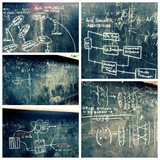
👆🏻😖 Some highlights of our review of the DSLTrans paper...
Blackboard Computing Adventures 💡
Glad to see more students and researchers picking interest in our work here 👏
At our private research lab, we continue to define the next generation of computing and info-sec technologies and formalisms.. Esp. for the greater good 👓🎩💻⚡⚡👉🏻💶💷✨🌐
Blackboard Computing Adventures 💡
At our private research lab, we continue to define the next generation of computing and info-sec technologies and formalisms.. Esp. for the greater good 👓🎩💻⚡⚡👉🏻💶💷✨🌐
Memories of Joseph W. Lutalo with classmates (L-R; Ssegawa, Stephen, Maurice, and JWL himself) back in their undergraduate days at Makerere.. circa 2009. That's one example of a very successful and productive study group we formed to see us to the finals with flying colours.. 🤞😁
Blackboard Computing Adventures 💡
Memories of Joseph W. Lutalo with classmates (L-R; Ssegawa, Stephen, Maurice, and JWL himself) back in their undergraduate days at Makerere.. circa 2009. That's one example of a very successful and productive study group we formed to see us to the finals…
More school/study memories from that era
So, today, after about 3 days of hard reading work, we've finished reviewing the smaller (21 pages) version of Dr. Tom Ridge's epic, foundational 2014 ACM SLE paper [3].