https://bit.ly/projtea
☝️🤠😊🤸🔆🇺🇬✨✨
Despite lack of supervision, support and any meaningful assistance, I've managed to fully implemented yet another ground breaking scientific project in form of a whole new computer programming language ready to install, test and apply on all major operating systems. It's a shame that despite all this, some key people in the school of computing at Makerere University, my university, are still pretending to turn a blind eye on me and my work or contributions to the field of Computer Science and Software Engineering, but my work speaks for itself and time shall tell who's lying or playing stupid, hiding their heads in the sand while the whole truth is out in the open.
☝️🤠😊🤸🔆🇺🇬✨✨
Despite lack of supervision, support and any meaningful assistance, I've managed to fully implemented yet another ground breaking scientific project in form of a whole new computer programming language ready to install, test and apply on all major operating systems. It's a shame that despite all this, some key people in the school of computing at Makerere University, my university, are still pretending to turn a blind eye on me and my work or contributions to the field of Computer Science and Software Engineering, but my work speaks for itself and time shall tell who's lying or playing stupid, hiding their heads in the sand while the whole truth is out in the open.
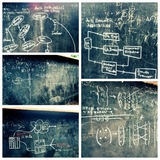
Blackboard Computing Adventures 💡
Photo
We've applied to an Ivy League in North America for starters. Of course, that should also mean, any interested peers in the immediate neighbourhood with similar interests, please get in touch---because u can!
Blackboard Computing Adventures 💡
We've applied to an Ivy League in North America for starters. Of course, that should also mean, any interested peers in the immediate neighbourhood with similar interests, please get in touch---because u can!
Currently reading Raymond S. and the Arabic Number System. Thanks Nuchwezi 🙏 for this opportunity. /LJW
Blackboard Computing Adventures 💡
Photo
In the current (1.0.3)[0] TEA language implementation [1] and design [2], interactivity wasn't yet properly implemented. In particular, only two methods of passing input into a TEA program were possible;
1. For the TTTT TEA interpreter environment [1], the user gets to specify initial input to the target TEA Program using the "-i" command line parameter at invocation time.
2. Or, within the source code of the TEA program itself, input is set (writing the AI) via the i: command for example, but never to allow such setting of the input, directly from whatever the user of the running program wants to specify or enter while the program is actively running.
This last point in the list above, is solvable readily, if we allow to alter or rather revise the TEA standard [2], by adjusting the command "i:" from being inert when invoked without parameters, to being the standard way to prompt for user input at runtime. Essentially, in the following example TEA program:
i!:B
x:
v:vD
i:
v:vN
G*:--:vD:vN
would return "BB--Velma", if the 4th instruction in that program, "i:" --- which would block processing until the user provides some input at runtime, has the value "Velma" specified by the user. Otherwise would return whatever the user provides at runtime, prefixed by the string "BB--".
## Introducing Interactivity into TEA
REFS:
0. https://github.com/mcnemesis/cli_tttt/releases/tag/tttt-1.0.3
1. https://github.com/mcnemesis/cli_tttt
2. https://www.academia.edu/122871672/TEA_TAZ_Transforming_Executable_Alphabet_A_to_Z_COMMAND_SPACE_SPECIFICATION
#tea #language #research #design #tea-applications #philosophy #plan #postdoc #bookplan #jwl #nuchwezi
#CREATED:Sept 06, 2024 09:21:25
1. For the TTTT TEA interpreter environment [1], the user gets to specify initial input to the target TEA Program using the "-i" command line parameter at invocation time.
2. Or, within the source code of the TEA program itself, input is set (writing the AI) via the i: command for example, but never to allow such setting of the input, directly from whatever the user of the running program wants to specify or enter while the program is actively running.
This last point in the list above, is solvable readily, if we allow to alter or rather revise the TEA standard [2], by adjusting the command "i:" from being inert when invoked without parameters, to being the standard way to prompt for user input at runtime. Essentially, in the following example TEA program:
i!:B
x:
v:vD
i:
v:vN
G*:--:vD:vN
would return "BB--Velma", if the 4th instruction in that program, "i:" --- which would block processing until the user provides some input at runtime, has the value "Velma" specified by the user. Otherwise would return whatever the user provides at runtime, prefixed by the string "BB--".
## Introducing Interactivity into TEA
REFS:
0. https://github.com/mcnemesis/cli_tttt/releases/tag/tttt-1.0.3
1. https://github.com/mcnemesis/cli_tttt
2. https://www.academia.edu/122871672/TEA_TAZ_Transforming_Executable_Alphabet_A_to_Z_COMMAND_SPACE_SPECIFICATION
#tea #language #research #design #tea-applications #philosophy #plan #postdoc #bookplan #jwl #nuchwezi
#CREATED:Sept 06, 2024 09:21:25
GitHub
Release TTTT v1.0.3 · mcnemesis/cli_tttt
This release brings TTTT 1.0.3, with a fully functional implementation of TEA, the Transforming Executable Alphabet computer programming language.
TEA is now fully implemented, with all 26 TEA pri...
TEA is now fully implemented, with all 26 TEA pri...
Blackboard Computing Adventures 💡
In the current (1.0.3)[0] TEA language implementation [1] and design [2], interactivity wasn't yet properly implemented. In particular, only two methods of passing input into a TEA program were possible; 1. For the TTTT TEA interpreter environment [1], the…
🌿🍃☕
*TEA version v1.0.4*
is ready to install. Instructions at the RI
bit.ly/projtea
Ideas suggested have been incorporated into this latest release. Thanks Active TEAists!
*TEA version v1.0.4*
is ready to install. Instructions at the RI
bit.ly/projtea
Ideas suggested have been incorporated into this latest release. Thanks Active TEAists!
GitHub
GitHub - mcnemesis/cli_tttt: The Reference Implementation of TEA (Transforming Executable Alphabet) computer programming language
The Reference Implementation of TEA (Transforming Executable Alphabet) computer programming language - mcnemesis/cli_tttt
Blackboard Computing Adventures 💡
Photo
However, these suggestions for modifying or rather redesigning the X-command space though interesting and surely plausible, might need some further study and research, or perhaps justification, before being included into the main TEA standard. Fingers crossed.. it is a formidable idea still.
Forwarded from JWL // literature
Numbers_from_Arbitrary_Text_Mapping_Human_Readable_Text_to_Numbers.pdf
256.8 KB
https://www.academia.edu/resource/work/123296302
☝️😌 Building upon my work on the General Theory of Number Cardinality and Text Processing with the new TEA programming language. This paper introduces a method for mining numbers from ordinary text or words such as English or any language. Also contains some interesting problems for interested students/readers.
Inviting readers, collaboration, and your support.
--- Joseph @ Nuchwezi.
☝️😌 Building upon my work on the General Theory of Number Cardinality and Text Processing with the new TEA programming language. This paper introduces a method for mining numbers from ordinary text or words such as English or any language. Also contains some interesting problems for interested students/readers.
Inviting readers, collaboration, and your support.
--- Joseph @ Nuchwezi.
JWL // literature
Numbers_from_Arbitrary_Text_Mapping_Human_Readable_Text_to_Numbers.pdf
https://t.me/wwwrite/145
👆🏻🤠 Those who've read my paper treating of Base-36 [1] and the GTNC [3], shall also want to familiarise themselves with these interesting, related ideas put forward by a formidable author from the psychology research community, Raymond S. in his paper on the evolution of counting and number systems since ancient days[2].
REFS:
[1] Lutalo, J. W. (2024c). Numbers from Arbitrary Text: Mapping Human Readable Text to Numbers in Base-36. Mak. Retrieved from https://www.academia.edu/resource/work/123296302
[2] Nickerson, R.S., 1988. Counting, computing, and the representation of numbers. Human factors, 30(2), pp.181-199.
[3] Lutalo, J. W. (2024b). (GTNC) A general theory of number cardinality. Mak. Retrieved from https://www.academia.edu/resource/work/43197243
👆🏻🤠 Those who've read my paper treating of Base-36 [1] and the GTNC [3], shall also want to familiarise themselves with these interesting, related ideas put forward by a formidable author from the psychology research community, Raymond S. in his paper on the evolution of counting and number systems since ancient days[2].
REFS:
[1] Lutalo, J. W. (2024c). Numbers from Arbitrary Text: Mapping Human Readable Text to Numbers in Base-36. Mak. Retrieved from https://www.academia.edu/resource/work/123296302
[2] Nickerson, R.S., 1988. Counting, computing, and the representation of numbers. Human factors, 30(2), pp.181-199.
[3] Lutalo, J. W. (2024b). (GTNC) A general theory of number cardinality. Mak. Retrieved from https://www.academia.edu/resource/work/43197243