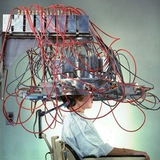
Elon Musk’s Neuralink prepares to test microchips in human brains | World | The Times
https://www.thetimes.co.uk/article/elon-musks-neuralink-to-start-clinical-trials-to-implant-microchips-into-human-brains-38q5hql0n
https://www.thetimes.co.uk/article/elon-musks-neuralink-to-start-clinical-trials-to-implant-microchips-into-human-brains-38q5hql0n
www.thetimes.co.uk
Elon Musk’s Neuralink prepares to test microchips in human brains
Firm says device will help paralysed people control limbs with their mind
What is best (noninvasive) headset?
Anonymous Poll
59%
OpenBCI
24%
Neurosky
12%
Neurosity
6%
Other (reply to comments)
callaghan-innovation-infographic-artificial-intelligence.pdf
177.2 KB
callaghan-innovation-infographic-artificial-intelligence.pdf
1-s2.0-S2667325822000425-main.pdf
1.4 MB
Stretchable graded multichannel self-powered respiratory sensor inspired by shark gill
Real-time dialogue between experimenters and dreamers during REM sleep: Current Biology
https://www.cell.com/current-biology/fulltext/S0960-9822(21)00059-2?utm_source=EA#secsectitle0020
https://www.cell.com/current-biology/fulltext/S0960-9822(21)00059-2?utm_source=EA#secsectitle0020
Check out Arabs in Neuroscience (AiN) on Twitter.
Community for Arabic speakers interested in Neuroscience, Cognitive Science, and Psychology https://twitter.com/ArabsInNeuro?s=20&t=4Uu6J5X8SOxXoP-pjnJ1bg
Community for Arabic speakers interested in Neuroscience, Cognitive Science, and Psychology https://twitter.com/ArabsInNeuro?s=20&t=4Uu6J5X8SOxXoP-pjnJ1bg
Twitter
Arabs in Neuroscience (AiN) (@ArabsInNeuro) / Twitter
Community for Arabic speakers interested in Neuroscience, Cognitive Science, and Psychology
EEG Data Processing and Classification with g.BSanalyze Under MATLAB - MATLAB & Simulink
https://www.mathworks.com/company/newsletters/articles/eeg-data-processing-and-classification-with-gbsanalyze-under-matlab.html
https://www.mathworks.com/company/newsletters/articles/eeg-data-processing-and-classification-with-gbsanalyze-under-matlab.html
Mathworks
EEG Data Processing and Classification with g.BSanalyze Under MATLAB
Advances in the acquisition and analysis of biosignals such as electroencephalograms (EEGs) and electrocorticograms (ECoGs) are profoundly improving brain wave research.
GitHub - zabir-nabil/eeg-rsenet: Motor Imagery EEG Signal Classification Using Random Subspace Ensemble Network
https://github.com/zabir-nabil/eeg-rsenet
https://github.com/zabir-nabil/eeg-rsenet
GitHub
GitHub - zabir-nabil/eeg-rsenet: Motor Imagery EEG Signal Classification Using Random Subspace Ensemble Network
Motor Imagery EEG Signal Classification Using Random Subspace Ensemble Network - GitHub - zabir-nabil/eeg-rsenet: Motor Imagery EEG Signal Classification Using Random Subspace Ensemble Network
Forwarded from Deleted Account
🧠🧠🧠
*How AI can be Applied to Brain Signals to read our Minds?*
Interested in knowing?
Join in for a talk on this topic at Saturday, 7PM IST
Calendar Invite: https://bit.ly/DLonEEG
-------- More Details -----------
Topic : *Challenges and opportunities for Deep learning and EEG*
*Abstract*:
Deep learning has revolutionized many research and application domains in the last decade, pushing the boundaries of automated handling of modalities such as images, text and speech. The fields of neuroscience and neuroimaging, though slower in their adoption, also increasingly rely on deep learning for brain data analysis. Over the last few years, deep neural networks have become a valuable tool for processing electroencephalography (EEG) data across domains such as sleep monitoring, clinical diagnosis and brain-computer interfacing. In this talk, speaker will give a brief overview of how deep learning has been applied to EEG data, focusing on domain-specific challenges deep learning is particularly well positioned to help with. Specifically, speaker will present recent examples showing (1) how self-supervised learning can help train deep neural networks on EEG data in the absence of costly expert-provided labels and (2) how attention mechanisms can be designed to improve the handling of real-world EEG in challenging noise conditions.
*About the Speaker*:
Hubert Banville is a research scientist at InteraXon Inc. in Toronto, Canada. His work focuses on developing machine learning methodology to extract insights from biosignals and generate new real-world applications of neurotechnology. During his PhD at Inria and Université Paris-Saclay, Hubert developed novel deep learning algorithms to leverage the vast amounts of unlabelled and noisy brain activity data generated by out-of-the-lab electroencephalography applications. With a background in biomedical engineering (Polytechnique Montréal), he also previously conducted research on hybrid brain-computer interfaces (INRS, Université du Québec).
Join us in this exciting discussion forum! Tune in at 7 pm IST on Saturday, August 06.
register here: https://bit.ly/NTXIndia
*How AI can be Applied to Brain Signals to read our Minds?*
Interested in knowing?
Join in for a talk on this topic at Saturday, 7PM IST
Calendar Invite: https://bit.ly/DLonEEG
-------- More Details -----------
Topic : *Challenges and opportunities for Deep learning and EEG*
*Abstract*:
Deep learning has revolutionized many research and application domains in the last decade, pushing the boundaries of automated handling of modalities such as images, text and speech. The fields of neuroscience and neuroimaging, though slower in their adoption, also increasingly rely on deep learning for brain data analysis. Over the last few years, deep neural networks have become a valuable tool for processing electroencephalography (EEG) data across domains such as sleep monitoring, clinical diagnosis and brain-computer interfacing. In this talk, speaker will give a brief overview of how deep learning has been applied to EEG data, focusing on domain-specific challenges deep learning is particularly well positioned to help with. Specifically, speaker will present recent examples showing (1) how self-supervised learning can help train deep neural networks on EEG data in the absence of costly expert-provided labels and (2) how attention mechanisms can be designed to improve the handling of real-world EEG in challenging noise conditions.
*About the Speaker*:
Hubert Banville is a research scientist at InteraXon Inc. in Toronto, Canada. His work focuses on developing machine learning methodology to extract insights from biosignals and generate new real-world applications of neurotechnology. During his PhD at Inria and Université Paris-Saclay, Hubert developed novel deep learning algorithms to leverage the vast amounts of unlabelled and noisy brain activity data generated by out-of-the-lab electroencephalography applications. With a background in biomedical engineering (Polytechnique Montréal), he also previously conducted research on hybrid brain-computer interfaces (INRS, Université du Québec).
Join us in this exciting discussion forum! Tune in at 7 pm IST on Saturday, August 06.
register here: https://bit.ly/NTXIndia
👍1