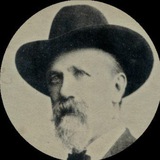
"There were fairies in Ireland then, and I grew up there, thinking that fairy life was something that was inseparable from Irish life. Fairy stories would be told that were to me and to those around me as much realities of Irish life as are the stories that I now read in books called 'Realities of Irish Life.' I grew up a boy, believing that there were 'good people' in this world, and I grew up in manhood, or grow down, believing there are bad people in it, too. When in was in Ireland lately the population wasn't half what it was when I was a boy. I asked if the fairies had been exterminated, too, for there seemed to be none of the life around that abounded in my time. Yes, English tyranny had killed out the 'good people' as well as the living people."
(Rossa's Recollections 1838 - 1898)
(Rossa's Recollections 1838 - 1898)
"A political lesson was graven on my mind by the Irish magpies that had their nests in the big skehory tree on the ditch opposite the kitchen door. I had permission to go through the tree to pick the skehories, but I was strictly ordered not to go near the magpies' nest, or to touch a twig or thorn belonging to it.
If the magpies' nest was robbed; if their young ones were taken away from them, they would kill every chicken and gosling that was to be found around the farmyard. That is the way my grandfather's magpies would have their vengeance for having their homes and their families destroyed; and it made every one in my grandfather's house 'keep the peace' toward them. I have often thought of my grandfather's magpies in connection with the destruction of the houses and families of the Irish people by the English landlords of Ireland. Those magpies seemed to have more manly Irish spirit than the Irish people themselves."
(Rossa's Recollections 1838 - 1898)
If the magpies' nest was robbed; if their young ones were taken away from them, they would kill every chicken and gosling that was to be found around the farmyard. That is the way my grandfather's magpies would have their vengeance for having their homes and their families destroyed; and it made every one in my grandfather's house 'keep the peace' toward them. I have often thought of my grandfather's magpies in connection with the destruction of the houses and families of the Irish people by the English landlords of Ireland. Those magpies seemed to have more manly Irish spirit than the Irish people themselves."
(Rossa's Recollections 1838 - 1898)
"I cannot get conceive how any Irishman can be considered an Irish patriot who will sing out to his people, either in prose or verse, that it is impossible to free Ireland from English rule...
That is what England wants the Irish people to learn. That is what she wants taught to them. And that is what she is willing to pay teachers of all kinds for teaching them - teaching them it is better to forget the evils they can never heal - better forget all about Irish freedom as they can never obtain it."
(Rossa's Recollections 1838 - 1898)
That is what England wants the Irish people to learn. That is what she wants taught to them. And that is what she is willing to pay teachers of all kinds for teaching them - teaching them it is better to forget the evils they can never heal - better forget all about Irish freedom as they can never obtain it."
(Rossa's Recollections 1838 - 1898)
"...he'd tell me those fields and grounds belonged to my people once; but they belonged to strangers now, who had no right to them, that they ought to be mine...
Sane or insane, he spoke the truth. He was called a madman...I'd regard him as a victim of England's plunder, who embraced the mission of preaching the true faith to the children of his plundered race."
(Rossa's Recollections 1838 - 1898)
Sane or insane, he spoke the truth. He was called a madman...I'd regard him as a victim of England's plunder, who embraced the mission of preaching the true faith to the children of his plundered race."
(Rossa's Recollections 1838 - 1898)
"I know how men get a bad name, and are called madmen, for speaking and acting in the true faith regarding Ireland's rights. I have myself been called a madman, because I was acting in a way that was not pleasing to England. The longer I live the more I come to believe that Irishmen will have to go a little mad my way, before they go the right way to get any freedom for Ireland."
(Rossa's Recollections 1838 - 1898)
(Rossa's Recollections 1838 - 1898)
"And why shouldn't an Irishman be mad; when he grows up face to face with the plunderers of his land and race, and sees them looking down upon him as if he were a mere thing of loathing and contempt! They strip him of all that belongs to him, and make him a pauper, and not only that, but they teach him to look upon the robbers as gentlemen, as beings entirety superior to him."
(Rossa's Recollections 1838 - 1898)
(Rossa's Recollections 1838 - 1898)
"the Irishman who is proud of his name and his family and his race, will rarely or never do anything to bring shame and disgrace upon himself or upon any one belonging to him."
(Rossa's Recollections 1838 - 1898)
(Rossa's Recollections 1838 - 1898)
"The priest had no other consolation to give, but the consolation of religion, and, very likely, it was through religion my father and mother learned - and tried - to lighten the load of life, by telling us that the poorer you are the nearer you are to God, and that the more your sufferings in this world the greater will be your reward in the next.
If that be the gospel of truth, and I hope it is, there are no people on earth nearer to heaven than the Irish people."
(Rossa's Recollections 1838 - 1898)
If that be the gospel of truth, and I hope it is, there are no people on earth nearer to heaven than the Irish people."
(Rossa's Recollections 1838 - 1898)
"Some of my friends may say: ' To Jericho with your genealogy; what do we care about it! We are here in America, where one man is as good as another.' That's all right, for any one who wants to have done with Ireland; all right for the man who can say... 'What is Ireland to me now? Sure I'm an American citizen!" All right for him who wants to be the Adam and Eve of his name and race , but it is otherwise for men who are no way ashamed of those who have gone before them, and who do not want to bury in the grave of American citizenship, all the duties they owe to their motherland, while it remains a land enslaved."
(Rossa's Recollections 1838 - 1898)
(Rossa's Recollections 1838 - 1898)
Any man who is proud of belonging to the old blood of Ireland, will never do anything to bring disgrace upon any one belonging him. I don't mind how poor he is; the poorer he is, the nearer he is to God; the nearer he is to sanctification through suffering, and the more marks and signs he has of the hand of the English enemy having been heavily laid upon him.
That hand has been heavily laid upon my race. I, even to-day, feel the weight of it on myself. "
(Rossa's Recollections 1838 - 1898)
That hand has been heavily laid upon my race. I, even to-day, feel the weight of it on myself. "
(Rossa's Recollections 1838 - 1898)
"The Irish tongue and the Irish language are not the only things that suffer by the effort to turn everything Irish into English."
(Rossa's Recollections 1838 - 1898)
(Rossa's Recollections 1838 - 1898)