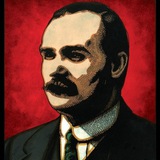
"What Is A Free Nation?
We are moved to ask this question because of the extraordinary confusion of thought upon the subject which prevails in this country, due principally to the pernicious and misleading newspaper garbage upon which the Irish public has been fed for the past twenty-five years.
Our Irish daily newspapers have done all that human agencies could do to confuse the public mind upon the question of what the essentials of a free nation are, what a free nation must be, and what a nation cannot submit to lose without losing its title to be free."
#nation
We are moved to ask this question because of the extraordinary confusion of thought upon the subject which prevails in this country, due principally to the pernicious and misleading newspaper garbage upon which the Irish public has been fed for the past twenty-five years.
Our Irish daily newspapers have done all that human agencies could do to confuse the public mind upon the question of what the essentials of a free nation are, what a free nation must be, and what a nation cannot submit to lose without losing its title to be free."
#nation
"Betrayed and deserted by all but a faithful few, Ireland was attacked by every poisonous agency ever brought to bear upon the mind and soul of a people. Her religion, her love of nationality, her strict sexual morality, her natural affection for the weak, her sympathy for suffering and distress – every high and noble instinct implanted in her by ages of suffering, was appealed to that her children might deny the past of their country, and surrender their hopes of moulding its future. Ireland was asked, nay, was ordered, to deny all that her martyrs had affirmed, to affirm all that her martyrs had denied. And this assault upon the soul of the country was planned and carried out in all its minutes and most revolting details by the men whom a cruel fate had allowed to become the leaders and guides of Irish public opinion."
#nation #martyrs #country #history #future
#nation #martyrs #country #history #future
Forwarded from Based James Connolly
James Connolly's Last Statement (1916)
Given to his daughter Nora Connolly on eve of his murder by the British
To the Field General Court Martial, held at Dublin Castle, on May 9th, 1916:
I do not wish to make any defence except against charges of wanton cruelty to prisoners. These trifling allegations that have been made, if they record facts that really happened deal only with the almost unavoidable incidents of a hurried uprising against long established authority, and nowhere show evidence of set purpose to wantonly injure unarmed persons.
We went out to break the connection between this country and the British Empire, and to establish an Irish Republic. We believed that the call we then issued to the people of Ireland, was a nobler call, in a holier cause, than any call issued to them during this war, having any connection with the war. We succeeded in proving that Irishmen are ready to die endeavouring to win for Ireland those national rights which the British Government has been asking them to die to win for Belgium. As long as that remains the case, the cause of Irish freedom is safe.
Believing that the British Government has no right in Ireland, never had any right in Ireland, and never can have any right in Ireland, the presence, in any one generation of Irishmen, of even a respectable minority, ready to die to affirm that truth, makes that Government for ever a usurpation and a crime against human progress.
I personally thank God that I have lived to see the day when thousands of Irish men and boys, and hundreds of Irish women and girls, were ready to affirm that truth, and to attest it with their lives if need be.
JAMES CONNOLLY,
Commandant-General, Dublin Division,
Army of the Irish Republic
Given to his daughter Nora Connolly on eve of his murder by the British
To the Field General Court Martial, held at Dublin Castle, on May 9th, 1916:
I do not wish to make any defence except against charges of wanton cruelty to prisoners. These trifling allegations that have been made, if they record facts that really happened deal only with the almost unavoidable incidents of a hurried uprising against long established authority, and nowhere show evidence of set purpose to wantonly injure unarmed persons.
We went out to break the connection between this country and the British Empire, and to establish an Irish Republic. We believed that the call we then issued to the people of Ireland, was a nobler call, in a holier cause, than any call issued to them during this war, having any connection with the war. We succeeded in proving that Irishmen are ready to die endeavouring to win for Ireland those national rights which the British Government has been asking them to die to win for Belgium. As long as that remains the case, the cause of Irish freedom is safe.
Believing that the British Government has no right in Ireland, never had any right in Ireland, and never can have any right in Ireland, the presence, in any one generation of Irishmen, of even a respectable minority, ready to die to affirm that truth, makes that Government for ever a usurpation and a crime against human progress.
I personally thank God that I have lived to see the day when thousands of Irish men and boys, and hundreds of Irish women and girls, were ready to affirm that truth, and to attest it with their lives if need be.
JAMES CONNOLLY,
Commandant-General, Dublin Division,
Army of the Irish Republic
Forwarded from Celtic Folk and Culture
Founding members of the Irish Women's Workers Union. Outside Liberty Hall in Dublin, 1914.
Forwarded from Archiving Irish Diversity Stuff (AIDS)
This media is not supported in your browser
VIEW IN TELEGRAM
Soldiers of Cumann na mBan - Brian O'Higgins
Cumann na mBan is an Irish nationalist women's organisation formed in 1914 to assist the Irish Volunteers in the struggle for Irish freedom. To this end they fundraised, provided medical care, carried out scouting operations and, at times, engaged in gunfights. Around the time of the Easter Rising, this song was written to commemorate the efforts made by this valiant organisation.
All honour to Óhlaigh na hÉreann
All praise to the men of our race
Who in days of betrayal and slavery
Saved Éireann from shame and disgrace
But do not forget in your praising
Of them and the deeds they have done
Their loyal and true-hearted comrades
The soldiers of Cumann na mBan!
https://www.youtube.com/watch?v=Sgp56f_IRkE
Cumann na mBan is an Irish nationalist women's organisation formed in 1914 to assist the Irish Volunteers in the struggle for Irish freedom. To this end they fundraised, provided medical care, carried out scouting operations and, at times, engaged in gunfights. Around the time of the Easter Rising, this song was written to commemorate the efforts made by this valiant organisation.
All honour to Óhlaigh na hÉreann
All praise to the men of our race
Who in days of betrayal and slavery
Saved Éireann from shame and disgrace
But do not forget in your praising
Of them and the deeds they have done
Their loyal and true-hearted comrades
The soldiers of Cumann na mBan!
https://www.youtube.com/watch?v=Sgp56f_IRkE
Forwarded from Heroes of Ireland
Connolly Language Movement 1&2.mp3
14.9 MB
Forwarded from Heroes of Ireland
I
Talking of Gaelic scholars brings me by an easy and natural transition to speak of the great Celtic renascence of late years. I think it has its bad and its good points. Its bad points are, in my opinion, only accidental to the movement and were well got rid of.
They consist in the attempt to exclude all other methods of culture, to deny the value of all other literature and the worth of all other peoples and, in general, to make our Irish youths and maidens too self-centred. I believe the Gaelic movement has great promise of life in it, but that promise will only be properly fulfilled when it naturally works its way into the life of the nation, side by side with every other agency making for a regenerated people.
The chief enemy of a Celtic revival today is the crushing force of capitalism which irresistibly destroys all national or racial characteristics, and by sheer stress of its economic preponderance reduces a Galway or a Dublin, a Lithuania or a Warsaw to the level of a mere second-hand imitation of Manchester or Glasgow. In the words of Karl Marx, “Capitalism creates a world after its own image,” and the image of Capitalism is to be found in the industrial centres of Great Britain. A very filthy image indeed.
You cannot teach starving men Gaelic; and the treasury of our national literature will and must remain lost forever to the poor wage-slaves who are contented by our system of society to toil from early morning to late at night for a mere starvation wage. Therefore, I say to our friends of the Gaelic movement – your proper place is in the ranks of the Socialist Republican Party, fighting for the abolition of this accursed social system which grinds us down in such a manner; which debases the character and lowers the ideals of our people to such a fearful degree, that to the majority of our workers the most priceless manuscript of ancient Celtic lore would hold but a secondary place in their esteem beside a rasher of bacon.
Help us to secure to all our fellow-countrymen, a free, full, and happy life; secure in possession of a rational, human existence, neither brutalised by toil nor debilitated by hunger, and then all the noble characteristics of our race will have full opportunity to expand and develop. And when all that is good in literature, art and science is recognised as the property of all – and not the heritage of the few – your ideals will receive the unquestioned adhesion of all true Irishmen.
I do not ask you to cease for a moment your endeavours on your present lines of education, but only to recognise in us your natural allies, as you should recognise that those who, under any pretext, however specious, would ask you to help them to perpetuate that British capitalism – which now thwarts you at every turn – is your enemy and the enemy of your cause. The success of our cause is certain – sooner or later. But the welcome light of the sun of freedom may, at any moment, flash upon our eyes and with your help we would not fear the storm which may precede the dawn.
II
I do believe in the necessity, and indeed in the inevitability of an universal language; but I do not believe it will be brought about, or even hastened, by smaller races or nations consenting to the extinction of their language. Such a course of action, or rather of slavish inaction, would not hasten the day of a universal language, but would rather lead to the intensification of the struggle for mastery between the languages of the greater powers.
On the other hand, a large number of small communities, speaking different tongues, are more likely to agree upon a common language as a common means of communication than a small number of great empires, each jealous of its own power and seeking its own supremacy. I have heard some doctrinaire Socialists arguing that Socialists should not sympathise with oppressed nationalities or with nationalities resisting conquest. They argue that the sooner these nationalities are suppressed the better, as it will be easier to conquer political power in a few big empires than in a number of small
Talking of Gaelic scholars brings me by an easy and natural transition to speak of the great Celtic renascence of late years. I think it has its bad and its good points. Its bad points are, in my opinion, only accidental to the movement and were well got rid of.
They consist in the attempt to exclude all other methods of culture, to deny the value of all other literature and the worth of all other peoples and, in general, to make our Irish youths and maidens too self-centred. I believe the Gaelic movement has great promise of life in it, but that promise will only be properly fulfilled when it naturally works its way into the life of the nation, side by side with every other agency making for a regenerated people.
The chief enemy of a Celtic revival today is the crushing force of capitalism which irresistibly destroys all national or racial characteristics, and by sheer stress of its economic preponderance reduces a Galway or a Dublin, a Lithuania or a Warsaw to the level of a mere second-hand imitation of Manchester or Glasgow. In the words of Karl Marx, “Capitalism creates a world after its own image,” and the image of Capitalism is to be found in the industrial centres of Great Britain. A very filthy image indeed.
You cannot teach starving men Gaelic; and the treasury of our national literature will and must remain lost forever to the poor wage-slaves who are contented by our system of society to toil from early morning to late at night for a mere starvation wage. Therefore, I say to our friends of the Gaelic movement – your proper place is in the ranks of the Socialist Republican Party, fighting for the abolition of this accursed social system which grinds us down in such a manner; which debases the character and lowers the ideals of our people to such a fearful degree, that to the majority of our workers the most priceless manuscript of ancient Celtic lore would hold but a secondary place in their esteem beside a rasher of bacon.
Help us to secure to all our fellow-countrymen, a free, full, and happy life; secure in possession of a rational, human existence, neither brutalised by toil nor debilitated by hunger, and then all the noble characteristics of our race will have full opportunity to expand and develop. And when all that is good in literature, art and science is recognised as the property of all – and not the heritage of the few – your ideals will receive the unquestioned adhesion of all true Irishmen.
I do not ask you to cease for a moment your endeavours on your present lines of education, but only to recognise in us your natural allies, as you should recognise that those who, under any pretext, however specious, would ask you to help them to perpetuate that British capitalism – which now thwarts you at every turn – is your enemy and the enemy of your cause. The success of our cause is certain – sooner or later. But the welcome light of the sun of freedom may, at any moment, flash upon our eyes and with your help we would not fear the storm which may precede the dawn.
II
I do believe in the necessity, and indeed in the inevitability of an universal language; but I do not believe it will be brought about, or even hastened, by smaller races or nations consenting to the extinction of their language. Such a course of action, or rather of slavish inaction, would not hasten the day of a universal language, but would rather lead to the intensification of the struggle for mastery between the languages of the greater powers.
On the other hand, a large number of small communities, speaking different tongues, are more likely to agree upon a common language as a common means of communication than a small number of great empires, each jealous of its own power and seeking its own supremacy. I have heard some doctrinaire Socialists arguing that Socialists should not sympathise with oppressed nationalities or with nationalities resisting conquest. They argue that the sooner these nationalities are suppressed the better, as it will be easier to conquer political power in a few big empires than in a number of small
Forwarded from Heroes of Ireland
states. This is the language argument over again.
It is fallacious in both cases. It is even more fallacious in the case of nationalities than in the case of languages, because the emancipation of the working-class will function more through the economic power than through the political state. The first act of the workers will be through their economic organisations seizing the organised industries; the last act the conquest of political power.
In this the working class will, as they needs must follow in the lines traversed by the capitalist revolutions of Cromwellian England, of Colonial and Revolutionary America, of Republican France, in each of whom the capitalist class had developed their economic power before they raised the banner of political revolt. The working class in their turn must perfect their organisations, land when such organisations are in a position to control, seize and operate the industries they will find their political power equal to the task.
But the preparatory work of the revolutionary campaign must lie in the daily and hourly struggles in the workshop, the daily and hourly perfectioning of the industrial organisation. And these two factors for freedom take no heed to political frontiers, nor to the demarcations of political states. They march side by side with the capitalist; where capitalism brings its machinery it brings the rebels against itself, and all its governments and all its armies can establish no frontier the revolutionary idea cannot pass.
Let the great truth be firmly fixed in your mind that the struggle for the conquest of the political state of the capitalist is not the battle, it is only the echo of the battle. The real battle is being fought out, and will be fought out, on the industrial field. Because of this and other reasons the doctrinaire Socialists are wrong in this as in the rest of their arguments. It is not necessary that Irish Socialists should hostilise those who are working for the Gaelic language, nor whoop it up for territorial aggrandisement of any nation. Therefore, in this, we can wish the Sinn Feiners, good luck.
Besides, it is well to remember that nations which submit to conquest or races which abandon their language in favour of that of an oppressor do so, not because of the altruistic motives, or because of a love of brotherhood of man, but from a slavish and cringing spirit. From a spirit which cannot exist side by side with the revolutionary idea. This was amply evidenced in Ireland by the attitude of the Irish people towards their language. For six hundred years the English strove to suppress that mark of the distinct character of the Gael – their language, and failed. But in one generation the politicians did what England had failed to do.
The great Daniel O’Connell, the so-called liberator, conducted his meetings entirely in English. When addressing meetings in Connaught where, in his time, everybody spoke Gaelic and over 75 per cent of the people nothing else but Gaelic, O’Connell spoke exclusively in English. He thus conveyed to the simple people the impression that Gaelic was something to be ashamed of – something fit for only ignorant people. He pursued the same course all over Ireland.
As a result of this and similar actions the simple people turned their backs upon their own language and began to ape ‘the gentry.’ It was the beginning of the reign of the toady and the crawler, the seoinín and the slave. The agitator for revenue came into power in the land.
It is not ancient history, but the history of yesterday that old Irish men and women would speak Irish to each other in the presence of their children, but if they caught son or daughter using the language the unfortunate child would receive a cuff on the ear accompanied with the adjuration:
“Speak English, you rascal; speak English like a gintleman!”
It is freely stated in Ireland that when the Protestant evangelisers, soupers they call them at home, issued tracts and Bibles in Irish in order to help the work of proselytising, the Catholic priesthood took advantage of the incident
It is fallacious in both cases. It is even more fallacious in the case of nationalities than in the case of languages, because the emancipation of the working-class will function more through the economic power than through the political state. The first act of the workers will be through their economic organisations seizing the organised industries; the last act the conquest of political power.
In this the working class will, as they needs must follow in the lines traversed by the capitalist revolutions of Cromwellian England, of Colonial and Revolutionary America, of Republican France, in each of whom the capitalist class had developed their economic power before they raised the banner of political revolt. The working class in their turn must perfect their organisations, land when such organisations are in a position to control, seize and operate the industries they will find their political power equal to the task.
But the preparatory work of the revolutionary campaign must lie in the daily and hourly struggles in the workshop, the daily and hourly perfectioning of the industrial organisation. And these two factors for freedom take no heed to political frontiers, nor to the demarcations of political states. They march side by side with the capitalist; where capitalism brings its machinery it brings the rebels against itself, and all its governments and all its armies can establish no frontier the revolutionary idea cannot pass.
Let the great truth be firmly fixed in your mind that the struggle for the conquest of the political state of the capitalist is not the battle, it is only the echo of the battle. The real battle is being fought out, and will be fought out, on the industrial field. Because of this and other reasons the doctrinaire Socialists are wrong in this as in the rest of their arguments. It is not necessary that Irish Socialists should hostilise those who are working for the Gaelic language, nor whoop it up for territorial aggrandisement of any nation. Therefore, in this, we can wish the Sinn Feiners, good luck.
Besides, it is well to remember that nations which submit to conquest or races which abandon their language in favour of that of an oppressor do so, not because of the altruistic motives, or because of a love of brotherhood of man, but from a slavish and cringing spirit. From a spirit which cannot exist side by side with the revolutionary idea. This was amply evidenced in Ireland by the attitude of the Irish people towards their language. For six hundred years the English strove to suppress that mark of the distinct character of the Gael – their language, and failed. But in one generation the politicians did what England had failed to do.
The great Daniel O’Connell, the so-called liberator, conducted his meetings entirely in English. When addressing meetings in Connaught where, in his time, everybody spoke Gaelic and over 75 per cent of the people nothing else but Gaelic, O’Connell spoke exclusively in English. He thus conveyed to the simple people the impression that Gaelic was something to be ashamed of – something fit for only ignorant people. He pursued the same course all over Ireland.
As a result of this and similar actions the simple people turned their backs upon their own language and began to ape ‘the gentry.’ It was the beginning of the reign of the toady and the crawler, the seoinín and the slave. The agitator for revenue came into power in the land.
It is not ancient history, but the history of yesterday that old Irish men and women would speak Irish to each other in the presence of their children, but if they caught son or daughter using the language the unfortunate child would receive a cuff on the ear accompanied with the adjuration:
“Speak English, you rascal; speak English like a gintleman!”
It is freely stated in Ireland that when the Protestant evangelisers, soupers they call them at home, issued tracts and Bibles in Irish in order to help the work of proselytising, the Catholic priesthood took advantage of the incident
Forwarded from Heroes of Ireland
to warn their flocks against reading all literature in Gaelic. Thus still further discrediting the language.
I cannot conceive of a Socialist hesitating in his choice between a policy resulting in such self-abasement and a policy of defiant self-reliance and confident trust in a people’s own power of self-emanciaption by a people.
I cannot conceive of a Socialist hesitating in his choice between a policy resulting in such self-abasement and a policy of defiant self-reliance and confident trust in a people’s own power of self-emanciaption by a people.
Forwarded from Heroes of Ireland
Connolly-Language-Movement-12.mp4
16.2 MB
Forwarded from Celtic Folk and Culture
A Poster for the Irish Citizen Army. The group was formed in 1913 to protect workers from the Dublin police. They also collaborated with the Irish Republican Brotherhood
"There is a tale told of an inmate of a lunatic asylum who was asked by a visitor to the institution how he came to be there. “Well,” he replied, “I thought the people outside were mad, and they thought I was mad. They were in the majority, and, here I am.” This tale often occurs to my mind when I run up against things in our movement contrary to my own views of Socialism and the essentials of Socialist propaganda. I find myself in complete accord with the S.L.P. (of which I am proud to be a member) on all questions of policy and of discipline and of revolutionary procedure. When it comes down to holding our position as against an opponent, no matter how well equipped, I am not aware of any case in any country in which the comrades found fault with my defence or attack, or my exposition of our principles. And yet I have found in the party, speakers and writers, and comrades who professed to be neither, who held and gave expression to views on policy, and conceptions of Socialism with which I would not for a moment agree. And the thought occurs to me: Which of us is mad? To settle this question, I am here setting down some of the points on which I find myself in disagreement with numbers of the comrades, and hope to see in The Weekly People – the only one of our organs available for me – an earnest discussion thereon.
[...]
Again, when touring this country in 1902, I met in Indianapolis an esteemed comrade who almost lost his temper with me because I expressed my belief in monogamic marriage, and because I said, as I still hold, that the tendency of civilisation is towards its perfection and completion, instead of towards its destruction. My comrade’s views, especially since the publication in The People of Bebel’s Women, are held by a very large number of members, but I hold, nevertheless, that they are wrong, and, furthermore, that such works and such publications are an excrescence upon the movement."
Link for Connolly's back and forth with De Leon regarding Wages, Marriage and Religion.
[...]
Again, when touring this country in 1902, I met in Indianapolis an esteemed comrade who almost lost his temper with me because I expressed my belief in monogamic marriage, and because I said, as I still hold, that the tendency of civilisation is towards its perfection and completion, instead of towards its destruction. My comrade’s views, especially since the publication in The People of Bebel’s Women, are held by a very large number of members, but I hold, nevertheless, that they are wrong, and, furthermore, that such works and such publications are an excrescence upon the movement."
Link for Connolly's back and forth with De Leon regarding Wages, Marriage and Religion.
www.marxists.org
The Connolly-DeLeon Controversy (1904)
James Connolly, Daniel DeLeon: The Connolly-DeLeon Controversy (1904)
Forwarded from Archiving Irish Diversity Stuff (AIDS)
'Triumph of Labour' 1878 cartoon about the nativist efforts of largely Irish-American labourers to restrict immigration from China.