"The problem is a grave and difficult one, alike from the general ignorance of its controlling conditions and because of the multiplicity of vested interests which must be attacked and overthrown at every forward step towards its solution. The solution herein set forth is therefore not guaranteed to be absolutely perfect in all its details, but only to furnish a rough draft of a scheme of reform by means of which the ground may be prepared for that revolutionary change in the structure of society which can alone establish an approximation to an ideally just social system.
The agriculture of Ireland can no longer compete with the scientifically equipped farmers of America, therefore the only hope that now remains is to abandon competition altogether as a rule of life, to organise agriculture as a public service under the control of boards of management elected by the agricultural population (no longer composed of farmers and labourers, but of free citizens with equal responsibility and equal honour), and responsible to them and the nation at large, and with all the mechanical and scientific aids to agriculture the entire resources of the nation can place at their disposal. Let the produce of Irish soil go first to feed the Irish people, and after a sufficient store has been retained to insure of that being accomplished, let the surplus be exchanged with other countries in return for those manufactured goods Ireland needs but does not herself produce.
Thus we will abolish at one stroke the dread of foreign competition and render perfectly needless any attempt to create an industrial hell in Ireland under the specious pretext of ‘developing our resources’.
Apply to manufacture the same social principle, let the co-operative organisation of the workers replace the war of classes under capitalism and transform the capitalist himself from an irresponsible hunter after profit into a public servant fulfilling a public function and under public control. Recognise the right of all to an equal opportunity to develop to their fullest capacity all the powers and capabilities inherent in them by guaranteeing to all our countrymen and women, the weak as well as the strong, the simple as well as the cunning, the honest equally with the unscrupulous, the fullest, freest, and most abundant human life intelligently organised society can confer upon any of its members."
The agriculture of Ireland can no longer compete with the scientifically equipped farmers of America, therefore the only hope that now remains is to abandon competition altogether as a rule of life, to organise agriculture as a public service under the control of boards of management elected by the agricultural population (no longer composed of farmers and labourers, but of free citizens with equal responsibility and equal honour), and responsible to them and the nation at large, and with all the mechanical and scientific aids to agriculture the entire resources of the nation can place at their disposal. Let the produce of Irish soil go first to feed the Irish people, and after a sufficient store has been retained to insure of that being accomplished, let the surplus be exchanged with other countries in return for those manufactured goods Ireland needs but does not herself produce.
Thus we will abolish at one stroke the dread of foreign competition and render perfectly needless any attempt to create an industrial hell in Ireland under the specious pretext of ‘developing our resources’.
Apply to manufacture the same social principle, let the co-operative organisation of the workers replace the war of classes under capitalism and transform the capitalist himself from an irresponsible hunter after profit into a public servant fulfilling a public function and under public control. Recognise the right of all to an equal opportunity to develop to their fullest capacity all the powers and capabilities inherent in them by guaranteeing to all our countrymen and women, the weak as well as the strong, the simple as well as the cunning, the honest equally with the unscrupulous, the fullest, freest, and most abundant human life intelligently organised society can confer upon any of its members."
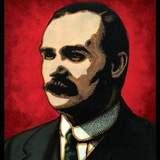
The above passage is taken from Erin's Hope (linked above). This is an interesting insight into Connolly's theoretical solutions to Ireland's problems. Despite being branded as a Marxist, you can see here that his thoughts were not to eliminate classes or level the playing field, so to speak. There is an acknowledgement of inherent differences in character and ability between individuals, not the false notion of blank slate equality.
The solutions outlined here are essentially insular, a rejection of global market competition and the reorganisation of society around the common good of the Nation as the foundation that the proposed system is built. Connolly paints a very different picture here than what we are led to believe by the modern day socialists. This is more akin to economic nationalism/isolationism than the modern interpretation of internationalism, which we have shown previously meant something different to Connolly also.
The solutions outlined here are essentially insular, a rejection of global market competition and the reorganisation of society around the common good of the Nation as the foundation that the proposed system is built. Connolly paints a very different picture here than what we are led to believe by the modern day socialists. This is more akin to economic nationalism/isolationism than the modern interpretation of internationalism, which we have shown previously meant something different to Connolly also.
It's worth breaking the above paragraph down as its use of the dreaded word "diversity" means it is open to being twisted through semantics to mean something Connolly did not intend, particularly if the last sentence is taken in isolation from the previous which makes it abundantly clear that he was talking about "the separate identity of the Irish race".
Saint Patrick used the three leaves of the Shamrock to explain the concept of the Holy Trinity; that God the Father, God the Son and God the Holy Spirit are each separate elements of just one being. The unity Connolly is referring to is the Irish Race, the collective, the diversity being the individual Irish who make up this collective whole.
Here, "diversity" is not being used in the modern politically weaponised sense, that Irish is merely an idea that any given person can adopt. It is not a universal identity, but a distinct and unique one made from the sum it's parts, the Irish people. To argue otherwise would miss the basic truth that a shamrock has three of the same leaves growing from one root and stem. If you were to pick a shamrock, pull off two of the leaves and replace them with those of two different flowers you will get the type of diversity as is understood in the modern sense of the word. It is artificial and destructive. You would no longer have a shamrock, or even a naturally occurring entity.
Irish Race = Irish People = Ethnic Irish = Irish Nation
Saint Patrick used the three leaves of the Shamrock to explain the concept of the Holy Trinity; that God the Father, God the Son and God the Holy Spirit are each separate elements of just one being. The unity Connolly is referring to is the Irish Race, the collective, the diversity being the individual Irish who make up this collective whole.
Here, "diversity" is not being used in the modern politically weaponised sense, that Irish is merely an idea that any given person can adopt. It is not a universal identity, but a distinct and unique one made from the sum it's parts, the Irish people. To argue otherwise would miss the basic truth that a shamrock has three of the same leaves growing from one root and stem. If you were to pick a shamrock, pull off two of the leaves and replace them with those of two different flowers you will get the type of diversity as is understood in the modern sense of the word. It is artificial and destructive. You would no longer have a shamrock, or even a naturally occurring entity.
Irish Race = Irish People = Ethnic Irish = Irish Nation
Connolly's views on homogeneity (unity) vs heterogeneity (diversity):
"The German Empire is a homogeneous Empire of self-governing peoples; the British Empire is a heterogeneous collection in which a very small number of self-governing communities connive at the subjugation, by force, of a vast number of despotically ruled subject populations.
We do not wish to be ruled by either empire, but we certainly believe that the first named contains in germ more of the possibilities of freedom and civilisation than the latter."
"The German Empire is a homogeneous Empire of self-governing peoples; the British Empire is a heterogeneous collection in which a very small number of self-governing communities connive at the subjugation, by force, of a vast number of despotically ruled subject populations.
We do not wish to be ruled by either empire, but we certainly believe that the first named contains in germ more of the possibilities of freedom and civilisation than the latter."
Irish Fashwave Art
https://t.me/jam_myjames
https://t.me/jam_myjames
Telegram
JammyJames
Irish Fashwave Art
"Socialism will not make us angels upon earth; it will only put a premium upon our better qualities instead of upon our baser, as is done by capitalism today. And that itself would be worth a revolution to realize, or a thousand revolutions."
"The Irish situation is two-fold, political and economic. Politically the people of Ireland are under the rule of another country, and even if the Irish were to resolve to effect important economic changes, they could not, because of the political domination of this other country ...
No person can be economically free who is not politically free and no person can be politically free who is not economically free...
...political dependence destroys the racial and other characteristics of the Irish, economic dependence destroys the people themselves."
- James Connolly, Speech in New York 1902
(James Connolly and the United States: The Road to the 1916 Irish Rebellion, pg. 28-29)
The above quote is in reference to Daniel De Leon of the SLP, who had put all his resources and manpower to work undermining the election campaign of another Socialist candidate, Morris Hillquit of the SPA. Hillquit was targeted because he was openly and repeatedly opposed to immigration on the grounds "that workingmen of backwards races (Chinese, Negroes, etc.) are often imported by capitalists in order to keep down the native workingmen by means of cheap labor".
'In a letter written to Matheson November 8, 1908, Connolly at some length criticized De Leon's activities in the current election campaign...
...he answered Matheson's questions about Hillquit's candidacy for the Socialist Party: "You ask me about the probable effect of Dan's campaign upon Hillquit...Dan's whole campaign was directed at Hillquit. I am informed that he scarcely ever referred to the capitalist candidate."
The SLP vote fell off in the 1908 election. "How could it be otherwise when the very few men they did have were withdrawn from the work of attacking capitalism to work on knifing Hillquit. Let Hillquit be what he may, and I do not know him at all, he was at least the representative of Socialism fighting capitalism."
...Connolly, who had suffered unfair political blows at the hands of De Leon, now was moved to deal one of his own: "The belief is slowly forming in my mind that Dan has fooled me all along and that he really is purposely doing the work of the capitalist class".'
(James Connolly and the United States: The Road to the 1916 Irish Rebellion, pg. 102-103)
This is not to suggest that Connolly was a racist or that he held any animosity to immigrants on a personal level. However, it does highlight that even while in America, where much of the labour force was made up of immigrants who Connolly fought to help, he understood that the greater cause of Socialism/Anti-Capitalism was more important than denying that in immediate practical terms immigration harms the native working class, as Hillquit pointed out. His view was the priority should have been with supporting an anti-immigration socialist rather than fighting against him, essentially dying on the hill of solidarity with the international proletariat before admitting distinction or accepting division.
'In a letter written to Matheson November 8, 1908, Connolly at some length criticized De Leon's activities in the current election campaign...
...he answered Matheson's questions about Hillquit's candidacy for the Socialist Party: "You ask me about the probable effect of Dan's campaign upon Hillquit...Dan's whole campaign was directed at Hillquit. I am informed that he scarcely ever referred to the capitalist candidate."
The SLP vote fell off in the 1908 election. "How could it be otherwise when the very few men they did have were withdrawn from the work of attacking capitalism to work on knifing Hillquit. Let Hillquit be what he may, and I do not know him at all, he was at least the representative of Socialism fighting capitalism."
...Connolly, who had suffered unfair political blows at the hands of De Leon, now was moved to deal one of his own: "The belief is slowly forming in my mind that Dan has fooled me all along and that he really is purposely doing the work of the capitalist class".'
(James Connolly and the United States: The Road to the 1916 Irish Rebellion, pg. 102-103)
This is not to suggest that Connolly was a racist or that he held any animosity to immigrants on a personal level. However, it does highlight that even while in America, where much of the labour force was made up of immigrants who Connolly fought to help, he understood that the greater cause of Socialism/Anti-Capitalism was more important than denying that in immediate practical terms immigration harms the native working class, as Hillquit pointed out. His view was the priority should have been with supporting an anti-immigration socialist rather than fighting against him, essentially dying on the hill of solidarity with the international proletariat before admitting distinction or accepting division.
"If Nationalism means that the people shall own the land of the country, as they formerly did, [under an early Irish primitive communist society] and also the factories, machines, railways, shipping and all else necessary to the carrying on and maintenance of social welfare and an Irish civilization, then Socialism is not opposed to Nationalism. If Nationalism means the cultivation of national characteristics merely, such as language, literature, history... then though Socialism is not by any means opposed to these, it is opposed to such a shallow understanding of the national idea, excluding as it does, the conception of an economically free people.”
Connolly’s writings were often illuminated by trenchant and dramatically simple expressions of his concepts. His next sentence was a case in point, “In the world of action and thought,” he wrote, “there is no good cause that has not a friendly relation to Socialism — there is no good cause it will not assist.”
Connolly’s writings were often illuminated by trenchant and dramatically simple expressions of his concepts. His next sentence was a case in point, “In the world of action and thought,” he wrote, “there is no good cause that has not a friendly relation to Socialism — there is no good cause it will not assist.”
In this article, he remarked: “Some innocent people cannot see what the rise of a modern labor movement in Ireland has to do with the question of freedom for Ireland. Poor souls, they never paused to consider what is meant by the word, ‘Ireland.’ They never paused to ask themselves which of the classes in Ireland were interested in freeing the country; which is keeping it in subjection... a class that is interested in having a plentiful supply of Irish cheap labor cannot be expected to do anything to abolish the cheapness of that labor...the oppression of Ireland keeps labor plentiful and cheap. The Irish capitalist and the English government are in entire agreement upon the proposition that the Irish worker should be skinned; they only disagree as to which of them should have the biggest piece of skin.”
He described socialism, in July, 1909, as leading to “the highest, the purest, the holiest form of nationality.” To obtain it -- political action (the ballot). But “if they fail,” he admonished, again demonstrating the flexibility of his approach, “they must resort to the methods of the men of 98 and ‘67.” [Insurrectionary force, used by Wolfe Tone and the Fenians.]
“Nationality,” he said, “is reflected in our music, in our language, in our literature, in our customs, in our games and pastimes...”. Under capitalism, he noted, only the rich have the opportunity to cultivate the arts; under socialism, it would be vastly different. “Our nationality is not even half developed. Only under socialism, will Irish culture be developed to its fullest extent.”
...Several years later, Connolly’s daughter, Ina, had an experience which exemplified the respect held for Connolly and the acceptance by a number of leading militant middle-class nationalists of his theories. A few came close to understanding his politics.
Ina, out of work in Belfast, received an invitation to stay with Countess Markievicz in Dublin. She was met at the station by the legendary Sir Roger Casement (later hanged by the British). He shook her hand and asked: “Is this the little Northern warrior that is going to set Ulster ablaze? What is it you want?”
Ina answered: “An Irish Republic.” Casement gazed at her. “I don’t think that would satisfy your father, ” he said. As Ina recalled: “At once I corrected myself and said: ‘An Irish Workers’ Republic.”
(James Connolly and the United States: The Road to the 1916 Irish Rebellion, pg. 266-268)
He described socialism, in July, 1909, as leading to “the highest, the purest, the holiest form of nationality.” To obtain it -- political action (the ballot). But “if they fail,” he admonished, again demonstrating the flexibility of his approach, “they must resort to the methods of the men of 98 and ‘67.” [Insurrectionary force, used by Wolfe Tone and the Fenians.]
“Nationality,” he said, “is reflected in our music, in our language, in our literature, in our customs, in our games and pastimes...”. Under capitalism, he noted, only the rich have the opportunity to cultivate the arts; under socialism, it would be vastly different. “Our nationality is not even half developed. Only under socialism, will Irish culture be developed to its fullest extent.”
...Several years later, Connolly’s daughter, Ina, had an experience which exemplified the respect held for Connolly and the acceptance by a number of leading militant middle-class nationalists of his theories. A few came close to understanding his politics.
Ina, out of work in Belfast, received an invitation to stay with Countess Markievicz in Dublin. She was met at the station by the legendary Sir Roger Casement (later hanged by the British). He shook her hand and asked: “Is this the little Northern warrior that is going to set Ulster ablaze? What is it you want?”
Ina answered: “An Irish Republic.” Casement gazed at her. “I don’t think that would satisfy your father, ” he said. As Ina recalled: “At once I corrected myself and said: ‘An Irish Workers’ Republic.”
(James Connolly and the United States: The Road to the 1916 Irish Rebellion, pg. 266-268)
At midnight, on May 11th, a military motor drove up to the O’Brien home, where they were staying. The family was informed, according to the affidavit: “The prisoner, James Connolly, was very weak and wished to see his wife and eldest daughter.”
They were driven to Dublin Castle and directed up a flight of stairs. At the landing, and at the top of the stairs stood soldiers, with fixed bayonets. Soldiers, with fixed bayonets, too, guarded the door through which they entered to see James Connolly.
“My father was lying in the bed with his head turned to the door.” As soon as he saw them, he said:
“Well, I suppose you know what this means.”
Lillie said: “Not that, James, not that.”
Nora continued her narrative: “My father said, ‘Yes, for the first time, I dropped off to sleep and they wakened me to tell me that I was to be shot at dawn.’
“My mother cried out: ‘Your life, James. Your beautiful life.’ “
‘Well, Lillie,’ he answered, ‘Hasn’t it been a full life, and isn’t this a good end?’
“I told him of the execution of Padraic Pearse, Thomas MacDonagh and all the others. He was silent for a while. I think he thought he was the first to be executed. Then he said: ‘Well, I am glad that I am going with them’.” Before they left him, he took Nora’s hand and secretly slipped a paper into it.
(“Affadavit of Discovery, Statement by Nora Connolly." Signed by Nora and Lillie Connolly)
They were driven to Dublin Castle and directed up a flight of stairs. At the landing, and at the top of the stairs stood soldiers, with fixed bayonets. Soldiers, with fixed bayonets, too, guarded the door through which they entered to see James Connolly.
“My father was lying in the bed with his head turned to the door.” As soon as he saw them, he said:
“Well, I suppose you know what this means.”
Lillie said: “Not that, James, not that.”
Nora continued her narrative: “My father said, ‘Yes, for the first time, I dropped off to sleep and they wakened me to tell me that I was to be shot at dawn.’
“My mother cried out: ‘Your life, James. Your beautiful life.’ “
‘Well, Lillie,’ he answered, ‘Hasn’t it been a full life, and isn’t this a good end?’
“I told him of the execution of Padraic Pearse, Thomas MacDonagh and all the others. He was silent for a while. I think he thought he was the first to be executed. Then he said: ‘Well, I am glad that I am going with them’.” Before they left him, he took Nora’s hand and secretly slipped a paper into it.
(“Affadavit of Discovery, Statement by Nora Connolly." Signed by Nora and Lillie Connolly)