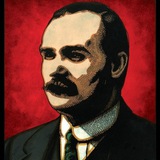
"Judged by the record of its Parliamentary Party, its public press, its capitalist class, this generation of Irish men and women has sunk to a lower depth than has yet been reached by any white race under the sun. Judged by the marvellous fight they have made to save the Irish cause in all its integrity and historic purity, those who have stood for an independent Ireland have climbed higher against greater odds than ever before were brought to bear against the soul of a people."
#irishrace #soul
#irishrace #soul
These two quotes are taken from The Days of March (1916).
www.marxists.org
James Connolly: Days of March (1916)
James Connolly: The Days of March (1916)
"The German Empire is a homogeneous Empire of self-governing peoples; the British Empire is a heterogeneous collection in which a very small number of self-governing communities connive at the subjugation, by force, of a vast number of despotically ruled subject populations.
We do not wish to be ruled by either empire, but we certainly believe that the first named contains in germ more of the possibilities of freedom and civilisation than the latter."
#homogenous #heterogeneous
We do not wish to be ruled by either empire, but we certainly believe that the first named contains in germ more of the possibilities of freedom and civilisation than the latter."
#homogenous #heterogeneous
The question often arises: Why do Irishmen celebrate the festival of their national saint, in view of the recently re-discovered truth that he was by no means the first missionary to preach Christianity to the people of Ireland? It is known now beyond the shadow of a doubt that the Christian religion had been preached and practised in Ireland long before St. Patrick, that Christian churches had been established, and it is probable that the legend about the shamrock was invented in some later generation than that of the saint. Certainly the shamrock bears no place of any importance in early Celtic literature, and the first time we read of it as having any reference to or bearing on religion in Ireland occurs in the work of a foreigner – an English monk.
But all that notwithstanding there is good reason why Irish men and women should celebrate St. Patrick’s Day. They should celebrate it for the same reason as they should honour the green flag of Ireland, despite the fact that there is no historical proof that the Irish, in the days of Ireland’s freedom from foreign rule, ever had a green flag as a national standard, or indeed ever had a national flag at all.
The claim of the 17th of March to be Ireland’s national festival, the claim of St. Patrick to be Ireland’s national saint, the claim of the shamrock to be Ireland’s national plant, the claim of the green flag to be Ireland’s national flag rests not on the musty pages of half-forgotten history but on the affections and will of the Irish people.
Sentiment it may be. But the man or woman who scoffs at sentiment is a fool. We on this paper respect facts, and have a holy hatred of all movements and causes not built upon truth. But sentiment is often greater than facts, because it is an idealised expression of fact – a mind picture of truth as it is seen by the soul, unhampered by the grosser dirt of the world and the flesh.
The Irish people, denied comfort in the present, seek solace in the past of their country; the Irish mind, unable because of the serfdom or bondage of the Irish race to give body and material existence to its noblest thoughts, creates an emblem to typify that spiritual conception for which the Irish race laboured in vain. If that spiritual conception of religion, of freedom, of nationality exists or existed nowhere save in the Irish mind, it is nevertheless as much a great historical reality as if it were embodied in a statute book, or had a material existence vouched for by all the pages of history.
It is not the will of the majority which ultimately prevails; that which ultimately prevails is the ideal of the noblest of each generation. Happy indeed that race and generation in which the ideal of the noblest and the will of the majority unite.
In this hour of her trial Ireland cannot afford to sacrifice any one of the things the world has accepted as peculiarly Irish. She must hold to her highest thoughts, and cleave to her noblest sentiments. Her sons and daughters must hold life itself as of little value when weighed against the preservation of even the least important work of her separate individuality as a nation.
Therefore we honour St. Patrick’s Day (and its allied legend of the shamrock) because in it we see the spiritual conception of the separate identity of the Irish race – an ideal of unity in diversity, of diversity not conflicting with unity.
Magnificent must have been the intellect that conceived such a thought; great must have been the genius of the people that received such a conception and made it their own.
On this Festival then our prayer is: Honour to St. Patrick the Irish Apostle, and Freedom to his people.
But all that notwithstanding there is good reason why Irish men and women should celebrate St. Patrick’s Day. They should celebrate it for the same reason as they should honour the green flag of Ireland, despite the fact that there is no historical proof that the Irish, in the days of Ireland’s freedom from foreign rule, ever had a green flag as a national standard, or indeed ever had a national flag at all.
The claim of the 17th of March to be Ireland’s national festival, the claim of St. Patrick to be Ireland’s national saint, the claim of the shamrock to be Ireland’s national plant, the claim of the green flag to be Ireland’s national flag rests not on the musty pages of half-forgotten history but on the affections and will of the Irish people.
Sentiment it may be. But the man or woman who scoffs at sentiment is a fool. We on this paper respect facts, and have a holy hatred of all movements and causes not built upon truth. But sentiment is often greater than facts, because it is an idealised expression of fact – a mind picture of truth as it is seen by the soul, unhampered by the grosser dirt of the world and the flesh.
The Irish people, denied comfort in the present, seek solace in the past of their country; the Irish mind, unable because of the serfdom or bondage of the Irish race to give body and material existence to its noblest thoughts, creates an emblem to typify that spiritual conception for which the Irish race laboured in vain. If that spiritual conception of religion, of freedom, of nationality exists or existed nowhere save in the Irish mind, it is nevertheless as much a great historical reality as if it were embodied in a statute book, or had a material existence vouched for by all the pages of history.
It is not the will of the majority which ultimately prevails; that which ultimately prevails is the ideal of the noblest of each generation. Happy indeed that race and generation in which the ideal of the noblest and the will of the majority unite.
In this hour of her trial Ireland cannot afford to sacrifice any one of the things the world has accepted as peculiarly Irish. She must hold to her highest thoughts, and cleave to her noblest sentiments. Her sons and daughters must hold life itself as of little value when weighed against the preservation of even the least important work of her separate individuality as a nation.
Therefore we honour St. Patrick’s Day (and its allied legend of the shamrock) because in it we see the spiritual conception of the separate identity of the Irish race – an ideal of unity in diversity, of diversity not conflicting with unity.
Magnificent must have been the intellect that conceived such a thought; great must have been the genius of the people that received such a conception and made it their own.
On this Festival then our prayer is: Honour to St. Patrick the Irish Apostle, and Freedom to his people.
"The Council of the Irish Citizen Army has resolved, after grave and earnest deliberation, to hoist the green flag of Ireland over Liberty Hall, as over a fortress held for Ireland by the arms of Irishmen.
This is a momentous decision in the most serious crisis Ireland has witnessed in our day and generation. It will, we are sure, send a thrill through the hearts of every true Irish man and woman, and send the red blood coursing fiercely along the veins of every lover of the race.
It means that in the midst of and despite the treasons and backslidings of leaders and guides, in the midst of and despite all the weaknesses, corruption and moral cowardice of a section of the people, in the midst of and despite all this there still remains in Ireland a spot where a body of true men and women are ready to hoist, gather round, and to defend the flag made sacred by all the sufferings of all the martyrs of the past."
This is a momentous decision in the most serious crisis Ireland has witnessed in our day and generation. It will, we are sure, send a thrill through the hearts of every true Irish man and woman, and send the red blood coursing fiercely along the veins of every lover of the race.
It means that in the midst of and despite the treasons and backslidings of leaders and guides, in the midst of and despite all the weaknesses, corruption and moral cowardice of a section of the people, in the midst of and despite all this there still remains in Ireland a spot where a body of true men and women are ready to hoist, gather round, and to defend the flag made sacred by all the sufferings of all the martyrs of the past."
"We are out for Ireland for the Irish. But who are the Irish? Not the rack-renting, slum-owning landlord; not the sweating, profit-grinding capitalist; not the sleek and oily lawyer; not the prostitute pressman – the hired liars of the enemy. Not these are the Irish upon whom the future depends. Not these, but the Irish working class, the only secure foundation upon which a free nation can be reared."
""The cause of labour is the cause of Ireland, the cause of Ireland is the cause of labour. They cannot be dissevered. Ireland seeks freedom. Labour seeks that an Ireland free should be the sole mistress of her own destiny, supreme owner of all material things within and upon her soil. Labour seeks to make the free Irish nation the guardian of the interests of the people of Ireland, and to secure that end would vest in that free Irish nation all property rights as against the claims of the individual, with the end in view that the individual may be enriched by the nation, and not by the spoiling of his fellows."
"Having in view such a high and holy function for the nation to perform, is it not well and fitting that we of the working class should fight for the freedom of the nation from foreign rule, as the first requisite for the free development of the national powers needed for our class? It is so fitting. Therefore on Sunday, 16 April 1916 the green flag of Ireland will be solemnly hoisted over Liberty Hall as the symbol of our faith in freedom, and as a token to all the world that the working class of Dublin stands for the cause of Ireland, and the cause of Ireland is the cause of a separate and distinct nationality.
In these days of doubt, despair, and resurgent hope we fling our banner to the breeze, the flag of our fathers, the symbol of our national redemption, the sunburst shining over an Ireland re-born."
In these days of doubt, despair, and resurgent hope we fling our banner to the breeze, the flag of our fathers, the symbol of our national redemption, the sunburst shining over an Ireland re-born."
The above quotes are taken from The Irish Flag (1916).
www.marxists.org
James Connolly: Irish Flag (1916)
James Connolly: The Irish Flag (1916)
"That brilliant revolutionist, Tom Mann...and that other trade union leader, Ben Tillett... These two men were before the war the greatest of internationalists, and rather despised our Irish love for our own nationality, as being mere sentimental slop and entirely out of date."
#nationalism
#nationalism
James Connolly's Last Statement (1916)
Given to his daughter Nora Connolly on eve of his murder by the British
To the Field General Court Martial, held at Dublin Castle, on May 9th, 1916:
I do not wish to make any defence except against charges of wanton cruelty to prisoners. These trifling allegations that have been made, if they record facts that really happened deal only with the almost unavoidable incidents of a hurried uprising against long established authority, and nowhere show evidence of set purpose to wantonly injure unarmed persons.
We went out to break the connection between this country and the British Empire, and to establish an Irish Republic. We believed that the call we then issued to the people of Ireland, was a nobler call, in a holier cause, than any call issued to them during this war, having any connection with the war. We succeeded in proving that Irishmen are ready to die endeavouring to win for Ireland those national rights which the British Government has been asking them to die to win for Belgium. As long as that remains the case, the cause of Irish freedom is safe.
Believing that the British Government has no right in Ireland, never had any right in Ireland, and never can have any right in Ireland, the presence, in any one generation of Irishmen, of even a respectable minority, ready to die to affirm that truth, makes that Government for ever a usurpation and a crime against human progress.
I personally thank God that I have lived to see the day when thousands of Irish men and boys, and hundreds of Irish women and girls, were ready to affirm that truth, and to attest it with their lives if need be.
JAMES CONNOLLY,
Commandant-General, Dublin Division,
Army of the Irish Republic
Given to his daughter Nora Connolly on eve of his murder by the British
To the Field General Court Martial, held at Dublin Castle, on May 9th, 1916:
I do not wish to make any defence except against charges of wanton cruelty to prisoners. These trifling allegations that have been made, if they record facts that really happened deal only with the almost unavoidable incidents of a hurried uprising against long established authority, and nowhere show evidence of set purpose to wantonly injure unarmed persons.
We went out to break the connection between this country and the British Empire, and to establish an Irish Republic. We believed that the call we then issued to the people of Ireland, was a nobler call, in a holier cause, than any call issued to them during this war, having any connection with the war. We succeeded in proving that Irishmen are ready to die endeavouring to win for Ireland those national rights which the British Government has been asking them to die to win for Belgium. As long as that remains the case, the cause of Irish freedom is safe.
Believing that the British Government has no right in Ireland, never had any right in Ireland, and never can have any right in Ireland, the presence, in any one generation of Irishmen, of even a respectable minority, ready to die to affirm that truth, makes that Government for ever a usurpation and a crime against human progress.
I personally thank God that I have lived to see the day when thousands of Irish men and boys, and hundreds of Irish women and girls, were ready to affirm that truth, and to attest it with their lives if need be.
JAMES CONNOLLY,
Commandant-General, Dublin Division,
Army of the Irish Republic
When the Irish Socialist Federation was first founded the action of its originators evoked a great deal of adverse criticism. We believe the launching of our journal will evoke still more. It is fitting, therefore, that we should devote some little space to explaining the central idea of this new venture in the fields of Socialist activity. We do so in no apologetic mood (our course is marked and mapped, and we shall resolutely pursue it), but in the belief that the more our purpose is understood the more will our methods be appreciated and endorsed.
The editor of this paper, the present writer, has been in the Socialist movement more years than he cares to enumerate, and in several countries as well as his own, and in each of the former he has noted with regret the adoption by Irishmen as soon as they became Socialists of a line of conduct fatal to the best interests of the Socialist cause amongst our people. To illustrate this, let us ask the reader to conjecture what should be the first result of the winning to Socialism of a worker of the Irish race. Obviously the first result should be that he should become a medium for, so to speak, translating Socialist ideas into terms of Irish thought, and a channel for conveying the Socialist message to others of his race.
But this he could only do as long as his Socialism did not cause him to raise barriers betwixt him and his fellow countrymen and women, to renounce his connection with, or to abjure all the ties of kinship and tradition that throughout the world make the heart of one Celt go out to another, no matter how unknown. Yet this is precisely what their adoption of Socialism has caused in the great majority of cases amongst Irishmen. Led away by a foolishly sentimental misinterpretation of the Socialist doctrine of Universal Brotherhood, or Internationalism, they generally began by dropping out of all Irish societies they were affiliated with, no matter how righteous their objects were, and ended by ceasing to mix in Irish gatherings or to maintain Irish connections. The result upon the minds of their fellow countrymen and women was as might be expected. At home and abroad the Irish Celt has had to keep up a perpetual watch and ward against insidious and relentless foes; for hundreds of years England has had the ear of the world, pouring into it calumnies and hatred of the Irish until the latter had become an Ishmael among the nations, and nowhere more so than in America. The bitter words of our poet –
Aye, bitter hate and cold neglect,
Or lukewarm love at best,
Is all we’ve had or can expect,
We aliens of the West.
simply chronicled truthfully the international status of our race.
The editor of this paper, the present writer, has been in the Socialist movement more years than he cares to enumerate, and in several countries as well as his own, and in each of the former he has noted with regret the adoption by Irishmen as soon as they became Socialists of a line of conduct fatal to the best interests of the Socialist cause amongst our people. To illustrate this, let us ask the reader to conjecture what should be the first result of the winning to Socialism of a worker of the Irish race. Obviously the first result should be that he should become a medium for, so to speak, translating Socialist ideas into terms of Irish thought, and a channel for conveying the Socialist message to others of his race.
But this he could only do as long as his Socialism did not cause him to raise barriers betwixt him and his fellow countrymen and women, to renounce his connection with, or to abjure all the ties of kinship and tradition that throughout the world make the heart of one Celt go out to another, no matter how unknown. Yet this is precisely what their adoption of Socialism has caused in the great majority of cases amongst Irishmen. Led away by a foolishly sentimental misinterpretation of the Socialist doctrine of Universal Brotherhood, or Internationalism, they generally began by dropping out of all Irish societies they were affiliated with, no matter how righteous their objects were, and ended by ceasing to mix in Irish gatherings or to maintain Irish connections. The result upon the minds of their fellow countrymen and women was as might be expected. At home and abroad the Irish Celt has had to keep up a perpetual watch and ward against insidious and relentless foes; for hundreds of years England has had the ear of the world, pouring into it calumnies and hatred of the Irish until the latter had become an Ishmael among the nations, and nowhere more so than in America. The bitter words of our poet –
Aye, bitter hate and cold neglect,
Or lukewarm love at best,
Is all we’ve had or can expect,
We aliens of the West.
simply chronicled truthfully the international status of our race.
Under such circumstances, and we repeat those were and are the normal conditions of our existence as Irish – under such circumstances the man or woman who broke away from and kept aloof from contact with things Irish and with an Irish environment became, in the eyes of their fellow countrymen and women, deserters from the weaker side in a fight, and therefore objects of opprobrium and of hatred. In the case of those who became Socialists this was invariably the course of events; the dislike and hatred did not precede, but followed the breaking away from Irish associations. Had the convert to Socialism showed that his conversion did not operate to make him hold aloof from his fellow countrymen, or to decry their cause, he would have become a medium for attracting the Irish, instead of repelling them, and each fresh Irish recruit to our cause would have meant an added power of convincing the Irish worker that Socialism made its devotees better equipped mentally and morally to combat oppression than any scheme evolved by the invertebrate Irish middle class politicians; but this is just what the Federation and its organ proposes to do. We propose to show all the workers of our fighting race that Socialism will make them better fighters for freedom without being less Irish; we propose to advise the Irish who are Socialists now to organize their forces as Irish and get again in touch with the organized bodies of literary, educational and revolutionary Irish; we propose to make a campaign amongst our countrymen, and to rely for our method mainly upon imparting to them a correct interpretation of the facts of Irish history, past and present; we propose to take the control of the Irish vote out of the hands of the slimy seoiníní who use it to boost their political and business interests to the undoing of the Irish as well as the American toiler; we propose to challenge all the other federations and nationalities in this country to a generous rivalry in the work of our common emancipation; and we propose, finally, to show the world that after seven hundred years battling against a mighty oppressor we are still, as a race, lusty and vigorous for the fight, and that abreast with the march of the intellect of the world we raise the ideal of the legions of our unforgotten dead, “Ireland for the Irish”, on to the plane of the higher, nobler and all comprehending “World for the workers”.
Thus all may see and learn that
Ireland has no leper sores
Her eye is clear, her stature strong,
Still thro’ her veins the life blood pours
In mighty tides of speech and song.
She watches by eternal shores
The birth of Right, the death of Wrong.
Thus all may see and learn that
Ireland has no leper sores
Her eye is clear, her stature strong,
Still thro’ her veins the life blood pours
In mighty tides of speech and song.
She watches by eternal shores
The birth of Right, the death of Wrong.
This whole piece is an example of how Connolly's socialism did not simply reduce all workers of the world into one indistinct unit based on class. He did not believe that the class struggle necessitated the denial of ethnic distinction or for a socialist to become a deracinated individual for the sake of a misinterpretation of internationalism.
This is the issue we are facing today. "Solidarity" with the working class of other nations being used to justify the erosion of national boundaries and the removal of the natural identity of diverse groups of peoples. Viewing the world solely through the lens of class struggle destroys the very idea of diversity by turning separate groups into one nondescript mass, ironically exactly what liberal capitalism also does.
This is the issue we are facing today. "Solidarity" with the working class of other nations being used to justify the erosion of national boundaries and the removal of the natural identity of diverse groups of peoples. Viewing the world solely through the lens of class struggle destroys the very idea of diversity by turning separate groups into one nondescript mass, ironically exactly what liberal capitalism also does.
"...the uncompromising attitude of the Dublin Socialists on the national question made it clear that Socialism meant on the political side of Ireland an absolute revolutionary change which would make the people of Ireland complete rulers of their own country, as the economic change would thus logically make them owners of the country they would politically rule.
In other words, the Socialists of Ireland had to recognise that the world for the workers can only be realised by the people of each country seizing upon their own country and wresting it by one means or another from the hands of the present rulers or proprietors and restoring it with all its powers and potentialities to the people who inhabit it and labour upon it."
#nationalism #nation #country #irishpeople
In other words, the Socialists of Ireland had to recognise that the world for the workers can only be realised by the people of each country seizing upon their own country and wresting it by one means or another from the hands of the present rulers or proprietors and restoring it with all its powers and potentialities to the people who inhabit it and labour upon it."
#nationalism #nation #country #irishpeople
This quote, taken from Socialism in Ireland (1908), compliments the previous article and plainly states that Connolly's conception of socialism did not interfere with the separation of individual nations, but rather it could only work within distinct countries for the people of those countries.
www.marxists.org
James Connolly: Socialism in Ireland (1908)
James Connolly: Irish Socialist Republic - To the Irish People (1896 + 1908)