Astronomers and scientists
Erwin Rudolf Josef Alexander Schrödinger German: 12 August 1887 – 4 January 1961), sometimes written as Erwin Schrodinger or Erwin Schroedinger, was a Nobel Prize-winning Austrian-Irish physicist who developed a number of fundamental results in quantum theory:…
DAY AFTER TOMMOROW A QUESTION ON THIS
READ CAREFULLYMESSIER 27 IS THE____
Anonymous Quiz
16%
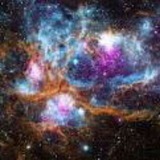
Jellyfish Nebula
26%
Orion Nebula
32%
Dumbell nebula
15%
Helix Nebula
9%
Eagle Nebula
👍2
Following the discovery of the planet Neptune in 1846, there was considerable speculation that another planet might exist beyond its orbit. The search began in the mid-19th century and continued at the start of the 20th with Percival Lowell's quest for Planet X. Lowell proposed the Planet X hypothesis to explain apparent discrepancies in the orbits of the giant planets, particularly Uranus and Neptune,speculating that the gravity of a large unseen ninth planet could have perturbed Uranus enough to account for the irregularities.
List of most massive black holes - Wikipedia_1.pdf
70.1 KB
List of most massive black holes - Wikipedia_1.pdf
WHICH IS THE 4TH MOST MASSIVE BLACK HOLE?{PLEASE REFER THE PDF SENT BEFORE....}
Anonymous Quiz
19%
TON 618
49%
HOLMBERG 15-A
21%
IC 1101
11%
NGC 1600
Astronomers and scientists pinned «WHICH IS THE 4TH MOST MASSIVE BLACK HOLE?{PLEASE REFER THE PDF SENT BEFORE....}»
ff97d8015ebfd5f9dac29db52324b470.jpg
55.4 KB
MARS OUR FRIEND😁
“Imagination is more important than knowledge. For knowledge is limited, whereas imagination embraces the entire world, stimulating progress, giving birth to evolution.” – Albert Einstein
Wave function illustrated by :
Anonymous Quiz
20%
Planck
19%
Maxwell
10%
Hawking
11%
Heisenberg
27%
Shrödinger
13%
Einstein
@astronomersgrp join our discuss group and
-make friends
-know more about astronomy
-and discuss astronomy together.
Have fun
Merry Christmas ❤️❤️ to you and your family.
We wish you good day
Team astronomy
@astronomers2021
-make friends
-know more about astronomy
-and discuss astronomy together.
Have fun
Merry Christmas ❤️❤️ to you and your family.
We wish you good day
Team astronomy
@astronomers2021
Spot the stellar snowflakes on the cosmic Christmas tree
About 2,500 light-years from Earth, stars are being born in a region of space known as the Christmas Tree Cluster. Seen in the infrared (just beyond the range of visible light) by NASA's Spitzer Space Telescope, these infant stars (less than 100,000 years old) appear as pink and red specks near the center of this photo, evenly-spaced in a spoke-like pattern that gives them the name of the Snowflake Cluster.
About 2,500 light-years from Earth, stars are being born in a region of space known as the Christmas Tree Cluster. Seen in the infrared (just beyond the range of visible light) by NASA's Spitzer Space Telescope, these infant stars (less than 100,000 years old) appear as pink and red specks near the center of this photo, evenly-spaced in a spoke-like pattern that gives them the name of the Snowflake Cluster.
❤1