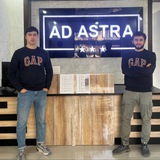
Forwarded from Alisher&Mukhammadali posts (Mukhammadali)
❓❓Need help with exam registration❓❓
No worries. We got your back💪
Contact us at @ieltsregister to sign up for your IELTS exam (IDP/BC) with few clicks.
Here's what to expect:
✅Free & hassle-free exam registration help service
✅Reliable: you will make the payment at your bank 🏦 or online directly to the test center🏫
✅Get to have a FREE 10-minute counseling session (a video/audio call) with a double NINER🤯🤯
✅Confidential: No disclosure of personal and confidential information
‼️ONLY CONFIRMED registrations will be eligible for an interview‼️
⚡️@alisherposts⚡️
No worries. We got your back💪
Contact us at @ieltsregister to sign up for your IELTS exam (IDP/BC) with few clicks.
Here's what to expect:
✅Free & hassle-free exam registration help service
✅Reliable: you will make the payment at your bank 🏦 or online directly to the test center🏫
✅Get to have a FREE 10-minute counseling session (a video/audio call) with a double NINER🤯🤯
✅Confidential: No disclosure of personal and confidential information
‼️ONLY CONFIRMED registrations will be eligible for an interview‼️
⚡️@alisherposts⚡️
👍77❤12😁10❤🔥9⚡3🆒3🔥2💔2✍1👏1🍌1
Some people think that children can learn about history by visiting museums, while others feel that there are better ways to learn about history.
Discuss both views and give your opinion.
Paying a visit to museums is thought by some to be a good way for children to learn about history, whereas others believe that there are other more effective ways to do so. In my view, history is best learnt by combining museum trips with other sources of information.
There are a number of reasons why going to museums is shown to be a good way of studying the past. One of these is that children can experience relics of the past in real life. When they go any museum, be it about nature, engineering or culture, children have an opportunity to see exhibits with information labels attached that allow them to read and find out more about the history. This approach is arguably better than just reading bland facts and boring explanations provided by a teacher. Secondly, museums have guides available for hire and means of media, such as audio descriptions accessible by QR codes, that provide children with a chance to learn history in an interactive and engaging fashion. Descriptions given by these two sources are also likely to be more thorough and in-depth than those in shortened and edited school textbooks or on the internet.
Nevertheless, I would argue that other means of learning about history can be as effective as going to museums. The view that school textbooks are dull and not able to draw learners' interest is overrated, as they often feature such exercises as matching, gap filling and multiple choices both as classwork and homework. The part played by these activities is essential in instructing and consolidating acquired history knowledge. Another common, albeit no less important, source of information is YouTube, which houses large collections of documentary playlists. These are real treasure troves for young learners of history, as they portray vivid and intriguing media accompanied by beautiful narrations. For example, my schoolboy cousin has been assigned to find out more about World War II, and a YouTube documentary by BBC served as a useful and effective educational tool to this end.
In conclusion, museums are for sure great sources of information about the past for children. But this shouldn't mean that other channels of history knowledge - like school textbooks and YouTube - suffer in comparison, because they are also able to help young learners significantly. Therefore, I am of the view that both of these are equally crucial for children.
#task2 #classwork #alisher_types #discussion
⚡️@alisherposts⚡️
Discuss both views and give your opinion.
Paying a visit to museums is thought by some to be a good way for children to learn about history, whereas others believe that there are other more effective ways to do so. In my view, history is best learnt by combining museum trips with other sources of information.
There are a number of reasons why going to museums is shown to be a good way of studying the past. One of these is that children can experience relics of the past in real life. When they go any museum, be it about nature, engineering or culture, children have an opportunity to see exhibits with information labels attached that allow them to read and find out more about the history. This approach is arguably better than just reading bland facts and boring explanations provided by a teacher. Secondly, museums have guides available for hire and means of media, such as audio descriptions accessible by QR codes, that provide children with a chance to learn history in an interactive and engaging fashion. Descriptions given by these two sources are also likely to be more thorough and in-depth than those in shortened and edited school textbooks or on the internet.
Nevertheless, I would argue that other means of learning about history can be as effective as going to museums. The view that school textbooks are dull and not able to draw learners' interest is overrated, as they often feature such exercises as matching, gap filling and multiple choices both as classwork and homework. The part played by these activities is essential in instructing and consolidating acquired history knowledge. Another common, albeit no less important, source of information is YouTube, which houses large collections of documentary playlists. These are real treasure troves for young learners of history, as they portray vivid and intriguing media accompanied by beautiful narrations. For example, my schoolboy cousin has been assigned to find out more about World War II, and a YouTube documentary by BBC served as a useful and effective educational tool to this end.
In conclusion, museums are for sure great sources of information about the past for children. But this shouldn't mean that other channels of history knowledge - like school textbooks and YouTube - suffer in comparison, because they are also able to help young learners significantly. Therefore, I am of the view that both of these are equally crucial for children.
#task2 #classwork #alisher_types #discussion
⚡️@alisherposts⚡️
👍196❤29🔥17⚡13🍌12❤🔥8🤯8🆒8👏6🌭3🥰2
People are using a lot of online language translation apps.
Are there more advantages than disadvantages to such services?
Translation applications on the Internet are in widespread use these days. While there are some downsides to this trend, I believe its upsides are more significant.
Admittedly, online translation apps are not without their shortcomings. The most significant one is inaccuracies in interpretation. Because human languages are complex in nature, both from cultural and technical aspects, online translation tools often fail to account for cultural and linguistic nuances such as slang terms, jargon, and other similar culture-specific expressions. As a result, users many experience misunderstandings and possibly cause offence. Another negative implication is overdependence among language learners. Instant access to online translation applications such as Google Translate tempts the language learner to over-rely on them for learning purposes. This, in turn, creates a sense of complacency, creating a generation of incompetent language learners.
Despite the possible issues with frequent use of online translation apps, I share the view that these tools are beneficial. Convenience is the most immediate benefit of translation apps seeing as they save the user time and money. Google Translate, for instance, allows people to translate into over hundred languages instantly and at no cost. Thanks to this interpretation tool, people from all walks of life are more productive in their day-to-day business. From a cultural standpoint, translation apps on the web help overcome language barriers. Gone are the days when people avoided interaction with foreigners when travelling or at conferences for fear and embarrassment of poor language skills. Eliminating language barriers, translation apps enabled greater mutual understanding among people of different language backgrounds. Finally, translation apps can serve as a useful educational tool when used wisely. They can provide instant aid to foreign language learners, allowing them to develop better language skills.
In conclusion, the demerits of using online translation apps pale in comparison to their advantages such as convenience, a heightened sense of mutual understanding among people, and an educational help to the language learner.
#task2
320 words, #classwork
#Mukhammadali_Issues
⚡️@alisherposts⚡️
Are there more advantages than disadvantages to such services?
Translation applications on the Internet are in widespread use these days. While there are some downsides to this trend, I believe its upsides are more significant.
Admittedly, online translation apps are not without their shortcomings. The most significant one is inaccuracies in interpretation. Because human languages are complex in nature, both from cultural and technical aspects, online translation tools often fail to account for cultural and linguistic nuances such as slang terms, jargon, and other similar culture-specific expressions. As a result, users many experience misunderstandings and possibly cause offence. Another negative implication is overdependence among language learners. Instant access to online translation applications such as Google Translate tempts the language learner to over-rely on them for learning purposes. This, in turn, creates a sense of complacency, creating a generation of incompetent language learners.
Despite the possible issues with frequent use of online translation apps, I share the view that these tools are beneficial. Convenience is the most immediate benefit of translation apps seeing as they save the user time and money. Google Translate, for instance, allows people to translate into over hundred languages instantly and at no cost. Thanks to this interpretation tool, people from all walks of life are more productive in their day-to-day business. From a cultural standpoint, translation apps on the web help overcome language barriers. Gone are the days when people avoided interaction with foreigners when travelling or at conferences for fear and embarrassment of poor language skills. Eliminating language barriers, translation apps enabled greater mutual understanding among people of different language backgrounds. Finally, translation apps can serve as a useful educational tool when used wisely. They can provide instant aid to foreign language learners, allowing them to develop better language skills.
In conclusion, the demerits of using online translation apps pale in comparison to their advantages such as convenience, a heightened sense of mutual understanding among people, and an educational help to the language learner.
#task2
320 words, #classwork
#Mukhammadali_Issues
⚡️@alisherposts⚡️
⚡105👍77🆒16❤12🔥8💔4💋4👏3😁3💊3👎1
Alisher&Mukhammadali posts
Not cooking today Time to break some sweat Feels great to be back after a minor injury
#reflection_post
Virtue-signalling at its peak
OR there's more to it than meets the eye?
In this post, I'm gonna be taking you down a journey of mental adventures I've been on since March 3 events as well as providing some context for the shot above (it was a completely heartbeat decision, btw). This post is UNFILTERED reflective writing meant to help me tidy up my thoughts, give you a glimpse into the mind of a random guy on social media, and hopefully share some unsolicited insights for those who can relate to my story. Without further ado, LET'S DIVE IN!
It all started with my initial public exposure back in March when my results and reaction video went viral and all of a sudden, I found myself in the brightest spotlight ever, or at least, it seemed that way at the time. In retrospect, it was just another day for media outlets and millions of other people who know there's more to life than IELTS. I'd always wondered what it would be like being in the public eye, but little did I know that it would take a big toll on personal mental health and focus.
Fame is not necessarily a mentally crippling experience unless you're always trying to match up to external expectations and maintain your public image. But being the immature me, I did exactly that. It backfired instantly. I started making bad decisions in terms of my work, personal life and pretty much everything. Lucky me, my ability to rationalize bad choices and fixed daily routine kept my life from sliding into a chaotic mess. But it all came at a cost...
My self-imposed restrictive lifestyle proved unsustainable. Every day went by, I was getting swamped within immovable blocks I set myself, cutting down all the room for any sort of creative endeavor or simply new experiences. Makes one feel like an non-player character (NPC) in a video game.
Those feelings weren't really alien to me as I'd always felt somewhat stuck in a rut for few years back then. But when you compound it with extreme obsession for repetition and consistency to stay at the top of your game, well, that is a different level of challenge. The only way out of this vicious cycle was to sit the test again not realizing I was simply restarting the cycle. Sat the test, no change.
I figured I needed a more radical solution, so it was time for critical self-reflection. To my luck, it worked. The reason behind all this mental mess was LACK OF SELF-AWARENESS.
Time to grow serious self-awareness and maturity. But how? Talk to a shrink? I doubt any shrink in my hometown speaks English. Better solution - WRITE. Hence, this post. Reflecting on my personal experiences and inner thoughts, here's what I came up with
Coping mechanism protocol X
- Maintain a positive frame of mind irrespective of your circumstances
- Disempower negative thoughts by ignoring them
- Practice stoicism (mental endurance)
- Practice being mindful (be in the moment, curb outside distractions, and create personal space)
- Have a moment of reflection (identity reinforcement)
- Start over (go back to the drawing board)
Another solution seems to be more public exposure so that I can get over this ordeal sooner, hence the photo above.
In a nutshell, past few months were a real wild rollercoaster. But I'm grateful to have had all those experiences. All this self-discovery and enlightenment wouldn't have happened were it not for those experiences.
#Mukhammadali_Issues
Peace
⚡️@alisherposts⚡️
Virtue-signalling at its peak
OR there's more to it than meets the eye?
In this post, I'm gonna be taking you down a journey of mental adventures I've been on since March 3 events as well as providing some context for the shot above (it was a completely heartbeat decision, btw). This post is UNFILTERED reflective writing meant to help me tidy up my thoughts, give you a glimpse into the mind of a random guy on social media, and hopefully share some unsolicited insights for those who can relate to my story. Without further ado, LET'S DIVE IN!
It all started with my initial public exposure back in March when my results and reaction video went viral and all of a sudden, I found myself in the brightest spotlight ever, or at least, it seemed that way at the time. In retrospect, it was just another day for media outlets and millions of other people who know there's more to life than IELTS. I'd always wondered what it would be like being in the public eye, but little did I know that it would take a big toll on personal mental health and focus.
Fame is not necessarily a mentally crippling experience unless you're always trying to match up to external expectations and maintain your public image. But being the immature me, I did exactly that. It backfired instantly. I started making bad decisions in terms of my work, personal life and pretty much everything. Lucky me, my ability to rationalize bad choices and fixed daily routine kept my life from sliding into a chaotic mess. But it all came at a cost...
My self-imposed restrictive lifestyle proved unsustainable. Every day went by, I was getting swamped within immovable blocks I set myself, cutting down all the room for any sort of creative endeavor or simply new experiences. Makes one feel like an non-player character (NPC) in a video game.
Those feelings weren't really alien to me as I'd always felt somewhat stuck in a rut for few years back then. But when you compound it with extreme obsession for repetition and consistency to stay at the top of your game, well, that is a different level of challenge. The only way out of this vicious cycle was to sit the test again not realizing I was simply restarting the cycle. Sat the test, no change.
I figured I needed a more radical solution, so it was time for critical self-reflection. To my luck, it worked. The reason behind all this mental mess was LACK OF SELF-AWARENESS.
Time to grow serious self-awareness and maturity. But how? Talk to a shrink? I doubt any shrink in my hometown speaks English. Better solution - WRITE. Hence, this post. Reflecting on my personal experiences and inner thoughts, here's what I came up with
Coping mechanism protocol X
- Maintain a positive frame of mind irrespective of your circumstances
- Disempower negative thoughts by ignoring them
- Practice stoicism (mental endurance)
- Practice being mindful (be in the moment, curb outside distractions, and create personal space)
- Have a moment of reflection (identity reinforcement)
- Start over (go back to the drawing board)
Another solution seems to be more public exposure so that I can get over this ordeal sooner, hence the photo above.
In a nutshell, past few months were a real wild rollercoaster. But I'm grateful to have had all those experiences. All this self-discovery and enlightenment wouldn't have happened were it not for those experiences.
#Mukhammadali_Issues
Peace
⚡️@alisherposts⚡️
❤113👍95🆒18⚡11💋11💘5❤🔥4🐳4🍌4👎3👏3
The image depicts how ceramic pots are made.
Overall, the production of ceramic pots is a complex process involving both human and machine input; the process starts with digging clay from the ground and culminates with firing colored ceramic pots.
The first step is to excavate clay from the ground and load it onto a truck, which delivers the raw material to a factory. Upon arrival, clay is crushed thoroughly in two stages. While at the first stage clay is broken down into smaller pieces, it is finely ground to powder at the second. Powdered clay is then mixed with water before it is poured into molds before it is dried for 4-6 hours in a separate section.
Once dried, pots are assembled and transferred to an oven for initial firing, where they are heated at 1,000 degrees Celsius. After the initial firing, pots are colored manually. Finally, colored ceramic pots go through a second round of firing before they are ready.
#task1
162 words, #classwork
#Mukhammadali_Issues
⚡️@alisherposts⚡️
Overall, the production of ceramic pots is a complex process involving both human and machine input; the process starts with digging clay from the ground and culminates with firing colored ceramic pots.
The first step is to excavate clay from the ground and load it onto a truck, which delivers the raw material to a factory. Upon arrival, clay is crushed thoroughly in two stages. While at the first stage clay is broken down into smaller pieces, it is finely ground to powder at the second. Powdered clay is then mixed with water before it is poured into molds before it is dried for 4-6 hours in a separate section.
Once dried, pots are assembled and transferred to an oven for initial firing, where they are heated at 1,000 degrees Celsius. After the initial firing, pots are colored manually. Finally, colored ceramic pots go through a second round of firing before they are ready.
#task1
162 words, #classwork
#Mukhammadali_Issues
⚡️@alisherposts⚡️
👍137✍19⚡14🆒7❤6💋6💊6💘5❤🔥2🕊2🤗1
Wanna see these two get in the octagon?
Street fighter vs. Powerlifter
Pick your contender
#ufc
#bring_it_on
⚡️@alisherposts⚡️
Street fighter vs. Powerlifter
Pick your contender
#ufc
#bring_it_on
⚡️@alisherposts⚡️
😁498🤣183👍57🔥19🍌19❤14⚡11🤩10💋9🆒9🐳4
Alisher&Mukhammadali posts
Photo
Your boy has no chances LMAO😂
Please open Telegram to view this post
VIEW IN TELEGRAM
😁209🤣61👍13⚡12🐳5💘5❤4🍌3❤🔥2
The image illustrates the steps by which chocolate is made. Overall, the production of chocolate takes 10 steps, one half of which take place on a farm while the other half at a factory.
Chocolate is made from cocoa beans grown in countries like S. America, Africa and Indonesia. At the first stage of the production, ripe cocoa pods containing cocoa beans are harvested. Having been harvested, pods are cracked open manually with a machete to extract white cocoa beans. These beans are then wrapped with large leaves to be fermented. Once fermented, beans are spread over a flat surface and left in the open to dry in the sun. Only after being dried are beans placed in large sacks of 64 kg and loaded onto a lorry or train for delivery to a factory.
Upon reaching the factory, beans are roasted in an oven at a temperature of 350 degrees Celsius. Roasted beans can then be crushed inside a grinder where beans’ outer shell is removed and inner part is kept. Finally, the inner part of chocolate beans is pressed in a pressing machine to obtain liquid chocolate.
#task1
189 words, #classwork
#Mukhammadali_Issues
⚡️@alisherposts⚡️
Chocolate is made from cocoa beans grown in countries like S. America, Africa and Indonesia. At the first stage of the production, ripe cocoa pods containing cocoa beans are harvested. Having been harvested, pods are cracked open manually with a machete to extract white cocoa beans. These beans are then wrapped with large leaves to be fermented. Once fermented, beans are spread over a flat surface and left in the open to dry in the sun. Only after being dried are beans placed in large sacks of 64 kg and loaded onto a lorry or train for delivery to a factory.
Upon reaching the factory, beans are roasted in an oven at a temperature of 350 degrees Celsius. Roasted beans can then be crushed inside a grinder where beans’ outer shell is removed and inner part is kept. Finally, the inner part of chocolate beans is pressed in a pressing machine to obtain liquid chocolate.
#task1
189 words, #classwork
#Mukhammadali_Issues
⚡️@alisherposts⚡️
👍170❤14❤🔥12🆒12👏9🤪6⚡5🔥5🐳3💋3💘3
The movement of people from villages to cities for work can cause serious problems in both places.
What are the serious problems associated with this?
What measures can be taken to solve these problems?
Rural-to-urban migration in search of job opportunities has some negative implications for the countryside as well as cities. These problems primarily concern changing employment patterns in both areas, and they require government intervention to be solved.
The main consequence of rural migration for cities is increased competition in the labor market. An exodus of rural dwellers to urban areas for work creates a pool of cheap workforce in cities. Availability of cheap labor, in turn, means lower income and limited job opportunities for urban dwellers. Take the transportation sector as an example. Pay for drivers tend to drop when rural drivers willing to work for low wages move to cities, working to the detriment of urban citizens. This problem can be ameliorated by creating a dynamic job market in the countryside. This solution entails rural expansion of urban businesses and companies through tax exemptions. In doing so, the government manages to facilitate a broader range of job opportunities in rural areas, hence curbing rural migration.
Similarly, rural migration is followed by a change in the job market in the countryside. Movement of rural dwellers to cities mainly leads to shortage of labor in the agricultural sector. As a result of labor crisis in the countryside, countries are sure to experience major setbacks in food production seeing as most produce is produced in rural areas. The role of government in addressing this issue is once again pivotal. More precisely, it should offer laborers in the countryside financial incentives to prioritize farm work over other possible job options. Such incentives range from substantial pay rises to interest-free loans. Having secured a decent livelihood in the countryside, rural citizens are less likely to migrate to cities in pursuit of work.
In conclusion, while the main side-effects of rural migration are increased competition in the job market in cities and workforce shortage in rural areas, solutions require government intervention in forms of incentives to urban businesses to branch out in rural areas and to farm workers to stay in the countryside.
#task2
337 words, #classwork
#Mukhammadali_Issues
⚡️@alisherposts⚡️
What are the serious problems associated with this?
What measures can be taken to solve these problems?
Rural-to-urban migration in search of job opportunities has some negative implications for the countryside as well as cities. These problems primarily concern changing employment patterns in both areas, and they require government intervention to be solved.
The main consequence of rural migration for cities is increased competition in the labor market. An exodus of rural dwellers to urban areas for work creates a pool of cheap workforce in cities. Availability of cheap labor, in turn, means lower income and limited job opportunities for urban dwellers. Take the transportation sector as an example. Pay for drivers tend to drop when rural drivers willing to work for low wages move to cities, working to the detriment of urban citizens. This problem can be ameliorated by creating a dynamic job market in the countryside. This solution entails rural expansion of urban businesses and companies through tax exemptions. In doing so, the government manages to facilitate a broader range of job opportunities in rural areas, hence curbing rural migration.
Similarly, rural migration is followed by a change in the job market in the countryside. Movement of rural dwellers to cities mainly leads to shortage of labor in the agricultural sector. As a result of labor crisis in the countryside, countries are sure to experience major setbacks in food production seeing as most produce is produced in rural areas. The role of government in addressing this issue is once again pivotal. More precisely, it should offer laborers in the countryside financial incentives to prioritize farm work over other possible job options. Such incentives range from substantial pay rises to interest-free loans. Having secured a decent livelihood in the countryside, rural citizens are less likely to migrate to cities in pursuit of work.
In conclusion, while the main side-effects of rural migration are increased competition in the job market in cities and workforce shortage in rural areas, solutions require government intervention in forms of incentives to urban businesses to branch out in rural areas and to farm workers to stay in the countryside.
#task2
337 words, #classwork
#Mukhammadali_Issues
⚡️@alisherposts⚡️
⚡113👍91❤11🦄11🤪9💊7👎6🐳6🍾4💘4💋2
Hi everyone, I'd like to tell you about a very interesting situation.
I sat the test on June 11 with the British Council in Bukhara. It was a typical exam, and I got my results within 5 days. But, I was really surprised to see the speaking score I was given, which was 7.5... I appealed of course, and I'm still waiting for the outcome.
Also, I've recently got my score breakdown for that same exam, and I was even more surprised. It's crazy. See it for yourself and leave your possible explanations in the comments section guys.
⚡️@alisherposts⚡️
I sat the test on June 11 with the British Council in Bukhara. It was a typical exam, and I got my results within 5 days. But, I was really surprised to see the speaking score I was given, which was 7.5... I appealed of course, and I'm still waiting for the outcome.
Also, I've recently got my score breakdown for that same exam, and I was even more surprised. It's crazy. See it for yourself and leave your possible explanations in the comments section guys.
⚡️@alisherposts⚡️
👍101👀41⚡11🗿9❤7🕊4🆒3👎2🍌1💔1💘1
The only explanation/theory I have is that they have sent me my appeal outcome before the official appeal letter...
👍118🤣87🗿20👀19👎4🤷♂3🍌3💘3❤🔥2⚡1❤1
The bar chart provides information about how much tea and coffee is imported by four different countries.
Focusing on the importation of tea first, the UK is dominant with 160,000 tons, which is closely followed by the USA with around 110,000 tons. The other two nations, by contrast, import significantly lower amounts of tea. For example, Germany purchases four times less tea than the leader country in the chart, and Canada closes the list with just under 20,000 tons.
As regards the figures for coffee imports, the difference between the four countries becomes smaller. Germany tops the chart with slightly over 40,000 tons, while Canada and the USA each imports 40,000 tons sharp. The UK, meanwhile, purchases about twice as less coffee as the other countries and ranks last.
Overall, the UK and the USA import more tea than coffee, whereas the reverse is true for Canada and Germany. It is also clear that the UK is the biggest importer of tea among the four nations, but in terms of coffee imports Germany takes the lead. However, the lowest figures for the imports of tea and coffee belong to Canada and the UK, respectively.
#task1 #classwork #bar #aGoodOne #alisher_types
⚡️@alisherposts⚡️
Focusing on the importation of tea first, the UK is dominant with 160,000 tons, which is closely followed by the USA with around 110,000 tons. The other two nations, by contrast, import significantly lower amounts of tea. For example, Germany purchases four times less tea than the leader country in the chart, and Canada closes the list with just under 20,000 tons.
As regards the figures for coffee imports, the difference between the four countries becomes smaller. Germany tops the chart with slightly over 40,000 tons, while Canada and the USA each imports 40,000 tons sharp. The UK, meanwhile, purchases about twice as less coffee as the other countries and ranks last.
Overall, the UK and the USA import more tea than coffee, whereas the reverse is true for Canada and Germany. It is also clear that the UK is the biggest importer of tea among the four nations, but in terms of coffee imports Germany takes the lead. However, the lowest figures for the imports of tea and coffee belong to Canada and the UK, respectively.
#task1 #classwork #bar #aGoodOne #alisher_types
⚡️@alisherposts⚡️
👍212🔥20❤16✍11⚡7🌚6🆒6👏5🐳5🍌5❤🔥4
Forwarded from Alisher&Mukhammadali posts (Mukhammadali)
❓❓Need help with exam registration❓❓
No worries. We got your back💪
Contact us at @ieltsregister to sign up for your IELTS exam (IDP/BC) with few clicks.
Here's what to expect:
✅Free & hassle-free exam registration help service
✅Reliable: you will make the payment at your bank 🏦 or online directly to the test center🏫
✅Get to have a FREE 10-minute counseling session (a video/audio call) with a double NINER🤯🤯
✅Confidential: No disclosure of personal and confidential information
‼️ONLY CONFIRMED registrations will be eligible for an interview‼️
⚡️@alisherposts⚡️
No worries. We got your back💪
Contact us at @ieltsregister to sign up for your IELTS exam (IDP/BC) with few clicks.
Here's what to expect:
✅Free & hassle-free exam registration help service
✅Reliable: you will make the payment at your bank 🏦 or online directly to the test center🏫
✅Get to have a FREE 10-minute counseling session (a video/audio call) with a double NINER🤯🤯
✅Confidential: No disclosure of personal and confidential information
‼️ONLY CONFIRMED registrations will be eligible for an interview‼️
⚡️@alisherposts⚡️
👍87❤11⚡9😁5🍌5🗿5❤🔥4🆒4💊4🦄2🌭1
This media is not supported in your browser
VIEW IN TELEGRAM
🤣193❤182👍30🔥29🏆12⚡9😁8🆒8🌭7💘6👏5
A&M admission for Fall 2023 is here🥳🥳
Admission test date: August 6, Sunday
Program launch date: August 20, Sunday
‼️A quick UPDATE on our admission test‼️
Our admission will be carried out in TWO stages:
Stage I - A reading&listening test (IELTS format; passing score 6.5+)
Stage II - A 5-10-minute-long freestyle interview (we'll shortlist students based on their test results)
(generated from an earlier post)
Here's a little on what to expect from the course:
👉a 5-month-long comprehensive program featuring pre-IELTS and IELTS classes
👉medium-sized groups (about 10-12 students)
👉8 classes a week, each lasting about 2 hours
👉a bi-weekly complimentary mock test(Reading&Listening) session and free all-inclusive mock test sessions few weeks leading up to your main exam
👉all classes taught by Alisher (IELTS Band 8.5(x8) | W8.0(x3)) and Mukhammadali (IELTS Band 9.0(x2) | S9.0(x3) | W8.5(x2))
👉a dedicated essay check teacher service
👉exam registration help
👉 free textbooks
The tuition fee is 800,000 soums/month
(advance payment)
Class timing: 18:00-20:00 (1 hour delay time)
‼️REGISTRATION DEADLINE: August 3, Thursday‼️
Once again, since our group size is LIMITED to 10-12 students, we will be selecting top 10-12 applicants on the basis of a mock test held on August 6 and interviews few days afterwards at Ad Astra school (Bukhara)[@ad_astra_school].
https://forms.gle/ewMpAZEY2MMhmdmE8
✨@ad_astra_school ✨
⚡️@alisherposts⚡️
Admission test date: August 6, Sunday
Program launch date: August 20, Sunday
‼️A quick UPDATE on our admission test‼️
Our admission will be carried out in TWO stages:
Stage I - A reading&listening test (IELTS format; passing score 6.5+)
Stage II - A 5-10-minute-long freestyle interview (we'll shortlist students based on their test results)
(generated from an earlier post)
Here's a little on what to expect from the course:
👉a 5-month-long comprehensive program featuring pre-IELTS and IELTS classes
👉medium-sized groups (about 10-12 students)
👉8 classes a week, each lasting about 2 hours
👉a bi-weekly complimentary mock test(Reading&Listening) session and free all-inclusive mock test sessions few weeks leading up to your main exam
👉all classes taught by Alisher (IELTS Band 8.5(x8) | W8.0(x3)) and Mukhammadali (IELTS Band 9.0(x2) | S9.0(x3) | W8.5(x2))
👉a dedicated essay check teacher service
👉exam registration help
👉 free textbooks
The tuition fee is 800,000 soums/month
(advance payment)
Class timing: 18:00-20:00 (1 hour delay time)
‼️REGISTRATION DEADLINE: August 3, Thursday‼️
Once again, since our group size is LIMITED to 10-12 students, we will be selecting top 10-12 applicants on the basis of a mock test held on August 6 and interviews few days afterwards at Ad Astra school (Bukhara)[@ad_astra_school].
https://forms.gle/ewMpAZEY2MMhmdmE8
✨@ad_astra_school ✨
⚡️@alisherposts⚡️
Google Docs
Fall Admission 2023
A&M admission for Fall 2023 is here🥳🥳
Admission test date: August 6, Sunday
Program launch date: August 20, Monday
‼️A quick update on our admission test‼️
Our admission will be carried out in TWO stages:
Stage I - A reading&listening test (IELTS format;…
Admission test date: August 6, Sunday
Program launch date: August 20, Monday
‼️A quick update on our admission test‼️
Our admission will be carried out in TWO stages:
Stage I - A reading&listening test (IELTS format;…
👍181❤16⚡13✍10🍌9🍓6🕊4🐳4🆒3👏2👌2