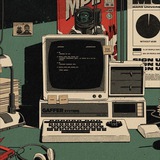
Having your code run error-free on the first try is basically the same thing as a girl you just met telling you she loves you.
You want to believe it; you want it to be true, but deep down you know it isn't because that's just not how the world operates 😂
You want to believe it; you want it to be true, but deep down you know it isn't because that's just not how the world operates 😂
mogn
https://youtu.be/0FGlsuTnt_U
Confirmation bias is when your brain ignores evidence that doesn't support your beliefs. And then it cherry-picks the evidence that does. And, generally, when people hear this term, they think it's a broken unscientific way for our brains to approach the world. And this is true. But you could judo-flip it to your advantage. The trick is to positively apply confirmation bias to your relationships. If you assume good intentions on the part of your friends and family, and you tell yourself you're lucky to have them, your brain will naturally work to find evidence to support that. That's just how our brains work. If you tell yourself that your fellow humans are inherently good, your brain will find examples of it everywhere. And that will reinforce your outlook. The opposite, unfortunately, is also true. Basically, whether you think the world and everyone in it is out to hurt you or help you, you're right.
- Mark Rober
(from his 2023 MIT commencement speech)
- Mark Rober
(from his 2023 MIT commencement speech)
mogn
Confirmation bias is when your brain ignores evidence that doesn't support your beliefs. And then it cherry-picks the evidence that does. And, generally, when people hear this term, they think it's a broken unscientific way for our brains to approach the world.…
An ironic last name for someone that exposes robbers 😂
Bugs are essentially text-based puzzles that you inadvertently create for your future self. However, unlike any other puzzle:
1. You are unaware that you are creating them.
2. You are also unaware of how to solve them as you create them.
1. You are unaware that you are creating them.
2. You are also unaware of how to solve them as you create them.
What makes a great programmer in your opinion?
Anonymous Poll
80%
Being good at solving these puzzles.
27%
Being skilled at avoiding creating them in the first place.
Now that the Stack Overflow developer survey results are out...
https://youtu.be/75Ju0eM5T2c
https://youtu.be/75Ju0eM5T2c
YouTube
Donald Knuth - My advice to young people (93/97)
To listen to more of Donald Knuth’s stories, go to the playlist: https://www.youtube.com/playlist?list=PLVV0r6CmEsFzeNLngr1JqyQki3wdoGrCn
Donald Knuth (b. 1938), American computing pioneer, is known for his greatly influential multi-volume work, 'The Art…
Donald Knuth (b. 1938), American computing pioneer, is known for his greatly influential multi-volume work, 'The Art…
While the phrase “Artificial Intelligence” was coined in 1956, it was first conceptualized in the 1600s by Gottfried Wilhelm Leibniz, a German mathematician and philosopher.
He theorized that human thoughts, in any capacity, are all quantifiable and hence could be replicated by a machine - a theoretical mechanism he named "the great instrument of reason"
Cool, huh?
From NAB Newsletter
He theorized that human thoughts, in any capacity, are all quantifiable and hence could be replicated by a machine - a theoretical mechanism he named "the great instrument of reason"
Cool, huh?
From NAB Newsletter
As a species, we possess only the senses that are necessary for our survival. If our survival required additional senses, we would have evolved to possess them.
Given the initial state of a coin, if we can somehow monitor all the forces acting on it, we can determine its final state—whether it will land as heads or tails.
Can the same be said about us, human beings?
Given our initial state, are we similar to the coin in that our final state can be determined by accounting for all the forces influencing us? Do we possess free will to shape our actions and choices, or are we destined to exist in a predetermined state based on all the changes that have occurred in our lives?
Can the same be said about us, human beings?
Given our initial state, are we similar to the coin in that our final state can be determined by accounting for all the forces influencing us? Do we possess free will to shape our actions and choices, or are we destined to exist in a predetermined state based on all the changes that have occurred in our lives?
I'd like to see the day where conceptual telepathy is a reality
https://youtu.be/qssbbzS3lbM
https://youtu.be/qssbbzS3lbM
YouTube
Tim Urban: I don’t want to die. I want to be a cyborg. | Heretics
We interviewed Tim Urban at Hereticon. Here’s what he had to say about transhumanism.
Subscribe to Freethink on YouTube ► https://freeth.ink/youtube-subscribe
Watch our Heretics playlist ► https://youtube.com/playlist?list=PLXthoedLVIdIi7Ihyp9-qGbodDMPbzFIp…
Subscribe to Freethink on YouTube ► https://freeth.ink/youtube-subscribe
Watch our Heretics playlist ► https://youtube.com/playlist?list=PLXthoedLVIdIi7Ihyp9-qGbodDMPbzFIp…
If we can build and control superintelligence, we can quickly go from being limited by our own stupidity to being limited by the laws of physics
- Max Tegmark, an AI researcher at the MIT
- Max Tegmark, an AI researcher at the MIT
Photo editing tools use matrix transformations to do all sorts of things like...
Rotations
- Clockwise
- Anti-clockwise
Flips
- Horizontal
- Vertical
Rotations
- Clockwise
- Anti-clockwise
Flips
- Horizontal
- Vertical
Have you ever noticed how some ATMs give you the money first, followed by the card, while others do it the other way around?
It's actually the newer ATMs that give you your card first, and there's a reason they were designed that way. We're more likely to forget the card if we receive our money first.
We often feel like there's nothing left for us to do once we've done what we set out to do.
It's actually the newer ATMs that give you your card first, and there's a reason they were designed that way. We're more likely to forget the card if we receive our money first.
We often feel like there's nothing left for us to do once we've done what we set out to do.
There is the truth and then there is our perception of it. These are two separate things.
There is how a person lived his or her own life; there is how people close to this person think this person lived his or her life. And then there is some writer who makes money telling stories.
I'm not trying to devalue biographies; I'm just telling you my perception of them.
There is how a person lived his or her own life; there is how people close to this person think this person lived his or her life. And then there is some writer who makes money telling stories.
I'm not trying to devalue biographies; I'm just telling you my perception of them.