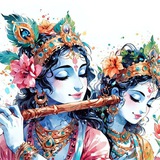
Some people who call themselves as Kashmir Shavite differentiate between different deities like Shiva and Vishnu. Some even claim that Bhakti of Vishnu can't give liberation. So here are some references from their major book Tantrāloka written by Abhinavagupta.
Just like Adi Shankracharya spread Advait Vedant, Abhinavgupta spread Kashmir Shaivism.
In Tantrāloka, Abhinavagupta elaborates on the non-dualistic philosophy of Kashmiri Shaivism, where all deities, including Shiva and Vishnu, are seen as manifestations of the same supreme reality. Here are some relevant references:
These references collectively indicate Abhinavagupta's view that Shiva and Vishnu, though perceived as distinct by devotees, are ultimately one in their essence as manifestations of the same supreme reality in the non-dualistic philosophy of Kashmir Shaivism.
Just like Adi Shankracharya spread Advait Vedant, Abhinavgupta spread Kashmir Shaivism.
In Tantrāloka, Abhinavagupta elaborates on the non-dualistic philosophy of Kashmiri Shaivism, where all deities, including Shiva and Vishnu, are seen as manifestations of the same supreme reality. Here are some relevant references:
1. Tantrāloka, Chapter 1, Verse 6-7: Abhinavagupta speaks about the supreme reality, which manifests in various forms, such as Shiva, Vishnu, Brahma, and others. He emphasizes that these different forms are merely expressions of the one ultimate reality (Parama Śiva).
2. Tantrāloka, Chapter 4, Verse 42: In this verse, Abhinavagupta discusses the concept of Paramaśiva (the supreme Shiva), stating that the same consciousness assumes different forms and functions, including those of Vishnu and Shiva. This illustrates the unity between these deities in his non-dualistic framework.
3. Tantrāloka, Chapter 29, Verse 36-38: Here, Abhinavagupta explains that worship of any deity, whether it be Shiva, Vishnu, or any other, ultimately leads to the realization of the one supreme reality. He affirms that all divine forms are expressions of the same ultimate consciousness.
These references collectively indicate Abhinavagupta's view that Shiva and Vishnu, though perceived as distinct by devotees, are ultimately one in their essence as manifestations of the same supreme reality in the non-dualistic philosophy of Kashmir Shaivism.
Those who want to understand the terminologies related to Advait Vedant like Jiva, Ishvar, Brahm, Maya, 3 types of bodies, what happens during maha pralay, how to get liberation, karma etc. then watch these 2 video lecture series. You may watch any one of them based on your preference. You don't need to watch both of them. Just pick one. These playlists are beginner friendly.
Tattva Bodha Lecture Series
1. Option 1
https://youtube.com/playlist?list=PLXE0ny857B-oDuJeCZhkXrWhGXZUALRRw&si=0kRsqXWd2ks0_fZG
2. Option 2
https://youtube.com/playlist?list=PLjHWThc-6fiaTUG0O0TgXxwHlKTu2BGav&si=N06F7tfh22c1CUNW
Notes
https://chinfo.org/wp-content/uploads/2024/05/02_Tattva_Bodha-bc9a717f-a221-4247-9065-7e1783f36d88.pdf
Advaitik references
(Part 1/5) Science of Sadhna Aparokshanubhuti (written by Adi Shankracharya) verse 140-141 शास्त्रों में आता है की मनुष्य जिस भाव का चिंतन करता है वैसा ही स्वरूप हो जाता है। इसलिए शास्त्र हमे अपने आत्मस्वरूप का चिंतन करने को कहते हैं।
(Part 2/5)
Srimad Bhagvatam (Bhagvat Puran) 11.9.22-23 Gita Press
यहां आदि शंकराचार्य जो wasp और worm वाला example लिए हैं वही example भागवत पुराण में भी दिया हुआ है।
Srimad Bhagvatam (Bhagvat Puran) 11.9.22-23 Gita Press
यहां आदि शंकराचार्य जो wasp और worm वाला example लिए हैं वही example भागवत पुराण में भी दिया हुआ है।
(Part 3/5)
इसलिए भागवत गीता 8.5 - 8.8 में भगवान कहते हैं।
इसलिए भागवत गीता 8.5 - 8.8 में भगवान कहते हैं।
अन्तकाले च मामेव स्मरन्मुक्त्वा कलेवरम्।
यः प्रयाति स मद्भावं याति नास्त्यत्र संशयः॥ (8.5)
जो व्यक्ति मृत्यु के समय केवल मेरा स्मरण करते हुए अपना शरीर त्यागता है, वह निश्चित रूप से मेरे स्वरूप को प्राप्त करता है—इसमें कोई संदेह नहीं है।
यं यं वापि स्मरन्भावं त्यजत्यन्ते कलेवरम्।
तं तमेवैति कौन्तेय सदा तद्भावभावितः॥ (8.6)
हे कौन्तेय (अर्जुन)! जो भी व्यक्ति मृत्यु के समय जिस भी भाव का स्मरण करता है, वह उसी को प्राप्त करता है, क्योंकि वह जीवनभर उसी का चिंतन करता रहा होता है।
तस्मात्सर्वेषु कालेषु मामनुस्मर युध्य च।
मय्यर्पितमनोबुद्धिर्मामेवैष्यस्यसंशयम्॥ (8.7)
इसलिए, हर समय मेरा स्मरण करो और युद्ध करो। यदि तुम्हारा मन और बुद्धि मुझमें समर्पित होगी, तो तुम निःसंदेह मुझे ही प्राप्त करोगे।
अभ्यासयोगयुक्तेन चेतसा नान्यगामिना।
परमं पुरुषं दिव्यं याति पार्थानुचिन्तयन्॥ (8.8)
हे पार्थ (अर्जुन)! जो व्यक्ति अभ्यासयोग द्वारा निरंतर मेरा स्मरण करता है और जिसका चित्त अन्य किसी ओर नहीं जाता, वह उस दिव्य परम पुरुष को प्राप्त करता है।
(Part 4/5)
इसलिए भक्ति योग द्वारा भी भगवान का चिंतन करते करते साधक खुद को भागवत स्वरूप ही अनुभव कर लेता है। जैसा कि विष्णु पुराण में बताया गया है की प्रह्लाद खुद को भगवान विष्णु से अभिन्न चिंतन करते करते खुद को भी भगवान विष्णु के रूप में ही अनुभव किया।
इसलिए भक्ति योग द्वारा भी भगवान का चिंतन करते करते साधक खुद को भागवत स्वरूप ही अनुभव कर लेता है। जैसा कि विष्णु पुराण में बताया गया है की प्रह्लाद खुद को भगवान विष्णु से अभिन्न चिंतन करते करते खुद को भी भगवान विष्णु के रूप में ही अनुभव किया।
रुद्रस्य पूजनाद्द्रष्टा विष्णुः स्यात् विष्णुपूजनात्।यह श्लोक दर्शाता है कि जिसका ध्यान, पूजन या उपासना की जाती है, व्यक्ति उसी के समान हो जाता है।
सूर्यः स्यात् सूर्यपूजातः शक्त्यादिः शक्तिपूजनात्॥
हिंदी अनुवाद:
रुद्र की पूजा करने से जीव स्वयं रुद्रस्वरूप हो जाता है। विष्णु की पूजा करने से वह विष्णुस्वरूप हो जाता है। सूर्य की पूजा करने वाला स्वयं सूर्यस्वरूप हो जाता है। शक्ति की उपासना करने वाला शक्ति स्वरूप हो जाता है।
- Agni Puran, Chapter 327, verse 13
(Part 5/5)
Vishnu Puran 1.19.83-1.20.2 Gita Press
भक्ति योग द्वारा भी भगवान का चिंतन करते करते साधक खुद को भागवत स्वरूप ही अनुभव कर लेता है। जैसा कि विष्णु पुराण में बताया गया है की प्रह्लाद खुद को भगवान विष्णु से अभिन्न चिंतन करते करते खुद को भी भगवान विष्णु के रूप में ही अनुभव किया।
ये वही प्रहलाद हैं जिनका कथा आपने बचपन मे सुना होगा। हिरण्यकश्यप वाला। जिनके लिए भगवान विष्णु ने नरसिंह अवतार लिया था।
Vishnu Puran 1.19.83-1.20.2 Gita Press
भक्ति योग द्वारा भी भगवान का चिंतन करते करते साधक खुद को भागवत स्वरूप ही अनुभव कर लेता है। जैसा कि विष्णु पुराण में बताया गया है की प्रह्लाद खुद को भगवान विष्णु से अभिन्न चिंतन करते करते खुद को भी भगवान विष्णु के रूप में ही अनुभव किया।
ये वही प्रहलाद हैं जिनका कथा आपने बचपन मे सुना होगा। हिरण्यकश्यप वाला। जिनके लिए भगवान विष्णु ने नरसिंह अवतार लिया था।
Forwarded from 𝐒𝐩𝐢𝐫𝐢𝐭𝐮𝐚𝐥 𝐉𝐨𝐮𝐫𝐧𝐞𝐲
स्मार्त्ताचार्य दशनामी सन्यांसी परम् कृष्ण भक्त चैतन्य महाप्रभु (श्री कृष्ण चैतन्य भारती ) के प्राकट्योत्सव की हार्दिक शुभकामनाएं 🙏
जयतु हरिहर सदाशिव
जयतु हरिहर सदाशिव
Advaitik references
(Part 4/6) Chhandogya Upanishad 6.1.4 to 6.1.6 अब आप यह देखिए कि छांदोग्य उपनिषद (साम वेद) जगत के बारे में क्या कहता है। इसमें मिट्टी और मिट्टी से बने हुए पदार्थ जैसे कि घड़ा, बर्तन, ग्लास, कप—इन सबका उदाहरण दिया हुआ है। उपनिषद कहता है कि मिट्टी और…
This media is not supported in your browser
VIEW IN TELEGRAM
Imagine a pot made of clay. The pot has a distinct shape and form, & we might refer to it as an individual object. However, on closer inspection, we realize that the essence of the pot is nothing but clay. The pot's form may come & go (it could break, be reshaped, or even discarded), but the clay remains the same & unchanged.
There is nothing in this world apart from you, but it appears as if there is a lot. You see various names and forms, sometimes a glass, sometimes a vessel, sometimes a pot, sometimes a pitcher. But everything is just clay. Everything is Brahman. The Upanishads declare that names and forms are not real. Due to Maya, we perceive names and forms, but in reality, they have no independent existence. We have merely assigned names to clay. In truth, everything is only clay.
Thus, the apparent differences between individuals & objects are illusory. Exactly what the young one says in the movie scene.
- from The Matrix (1999), a movie scene
There is nothing in this world apart from you, but it appears as if there is a lot. You see various names and forms, sometimes a glass, sometimes a vessel, sometimes a pot, sometimes a pitcher. But everything is just clay. Everything is Brahman. The Upanishads declare that names and forms are not real. Due to Maya, we perceive names and forms, but in reality, they have no independent existence. We have merely assigned names to clay. In truth, everything is only clay.
Thus, the apparent differences between individuals & objects are illusory. Exactly what the young one says in the movie scene.
- from The Matrix (1999), a movie scene
This media is not supported in your browser
VIEW IN TELEGRAM
Everything is merely a description. Not the real myself. Everything is simply a shape, a form, an identifier to let others recognize me as me. But then what am I? Is this me? My true self, my fake self? What is that I am? What Am I?
- Neon Genesis Evangelion (A scene from Anime)
- Neon Genesis Evangelion (A scene from Anime)
Bhai log mai telegram se 1 week ka break lena chahta hu. Isliye 1 week koi post nahi aayegi. Panchadashi bhi nahi aayegi. Aur group ka dhyan admins rakh lena.
"सदाशिवसमारम्भां /नारायणसमारम्भां शङ्कराचार्यमध्यमाम्।
अस्मदाचार्यपर्यन्तां वन्दे गुरुपरम्पराम्॥"
Meaning:
सदाशिवसमारम्भां /नारायणसमारम्भां → Beginning from Sadashiva or Narayan (who is considered the ultimate Guru in Advaita tradition).
शङ्कराचार्यमध्यमाम् → With Shankaracharya in the middle of the lineage.
अस्मदाचार्यपर्यन्ताम् → Up to our own Guru.
वन्दे गुरुपरम्पराम् → I bow to the lineage of Gurus.
This verse acknowledges the unbroken tradition of spiritual knowledge being passed down from the divine source (Sadashiva or Narayana) through Adi Shankaracharya and successive teachers to the present-day Guru.
Advaitik references
Photo
"नारायणं पद्मभुवं वशिष्ठं
शक्तिं च तत्पुत्रं पराशरं च।
व्यासं शुकं गौडपदं महान्तं
गोविन्दयोगीन्द्रं अथास्य शिष्यं॥
श्री शंकराचार्यं अथास्य पद्मपादं च हस्तामलकं च शिष्यं।
तं तोटकं वार्त्तिककारमन्यान्
अस्मद्गुरून् संततमानतोऽस्मि॥"
Meaning:
"I bow continuously to the lineage of Gurus, starting from:
Nārāyaṇaṁ → Lord Narayana (Vishnu), the original Guru.
Padmabhavam → Brahmā (born from the lotus of Vishnu).
Vasiṣṭhaṁ → The great sage Vasiṣṭha, son of Brahmā.
Śaktiṁ → Śakti Maharshi, the son of Vasiṣṭha.
Paraśaraṁ → Paraśara Rishi, son of Śakti and father of Vyāsa.
Vyāsaṁ → Vedavyāsa, the compiler of the Vedas and the author of the Mahābhārata.
Śukaṁ → Śuka Maharshi, son of Vyāsa, a great renunciant and teacher of the Bhāgavata Purāṇa.
Gauḍapadaṁ Mahāntaṁ → Gauḍapāda, a great Advaita philosopher and author of the Māṇḍūkya Kārikā.
Govindayogīndraṁ → Govinda Bhagavatpāda, the disciple of Gauḍapāda and Guru of Śaṅkarācārya.
Śrī Śaṅkarācāryaṁ → Ādi Śaṅkarācārya, the great Advaita philosopher and reformer.
Padmapādaṁ, Hastāmalakaṁ, Toṭakaṁ, and Vārtikakāraṁ → The main disciples of Śaṅkarācārya (Padmapāda, Hastāmalaka, Toṭaka, and Sureśvarācārya).
[Sureśvarācārya was Mandan Mishra, the disciple of Kumaril bhatt and was a Purva Mimanshak. Later Adi Shankracharya defeated him in debate and he became the disciple of Shri Adi Shankracharya]
Asmadvigurūn → Up to my own Guru, in this unbroken lineage.
"I bow to this entire Guru-Paramparā (lineage of teachers) who have transmitted the knowledge of Advaita Vedanta."
This verse is often chanted before studying Vedantic texts as a mark of respect to the tradition.
"That which exists here (in the body and senses) is the same as that which exists elsewhere (beyond the body, etc.), and that which exists elsewhere is the same as what is present here. Whoever perceives diversity in this Reality goes from death to death (i.e., undergoes repeated birth and death)."
- Kath Upanishad 2.1.10-11, Krishna Yajur Veda
[It explains that the Individual self is none other than the Universal self.]
- Kath Upanishad 2.1.10-11, Krishna Yajur Veda
[It explains that the Individual self is none other than the Universal self.]
Mandukya Upanishad
मांडूक्य उपनिषद सबसे छोटा उपनिषद है। इसमें बस 12 श्लोक है लेकिन यह ज्ञान में अद्वैत वेदांत के कई concepts को इन्ही 12 श्लोकों में समाए हुए है। माण्डूक्य उपनिषद् अकेला ही मोक्ष दिला पाने में सक्षम है। इसके बारे में मुक्तिका उपनिषद् में एक कथा मिलती है ।
हनुमान भगवान राम से मोक्ष (मुक्ति) प्राप्त करने के सर्वोच्च साधन के बारे में पूछते हैं। इसके उत्तर में, भगवान राम कहते हैं कि उपनिषदों का ज्ञान ही मोक्ष का सर्वोत्तम मार्ग है। तब हनुमान पूछते हैं कि कौन सा उपनिषद सबसे महत्वपूर्ण है। इस पर राम उत्तर देते हैं कि केवल माण्डूक्य उपनिषद ही मोक्ष के लिए पर्याप्त है—(माण्डूक्यमेकमेवालं मुमुक्षूणां विमुक्तये)। वे कहते हैं कि यदि कोई इस उपनिषद को गहराई से समझ ले, तो आत्म-साक्षात्कार के लिए किसी अन्य ग्रंथ की आवश्यकता नहीं होती।
Mandukya Upanishad Verses Explanation
Verse 1
Verse 2
Verse 3
#Episodes@advaitikreference
मांडूक्य उपनिषद सबसे छोटा उपनिषद है। इसमें बस 12 श्लोक है लेकिन यह ज्ञान में अद्वैत वेदांत के कई concepts को इन्ही 12 श्लोकों में समाए हुए है। माण्डूक्य उपनिषद् अकेला ही मोक्ष दिला पाने में सक्षम है। इसके बारे में मुक्तिका उपनिषद् में एक कथा मिलती है ।
हनुमान भगवान राम से मोक्ष (मुक्ति) प्राप्त करने के सर्वोच्च साधन के बारे में पूछते हैं। इसके उत्तर में, भगवान राम कहते हैं कि उपनिषदों का ज्ञान ही मोक्ष का सर्वोत्तम मार्ग है। तब हनुमान पूछते हैं कि कौन सा उपनिषद सबसे महत्वपूर्ण है। इस पर राम उत्तर देते हैं कि केवल माण्डूक्य उपनिषद ही मोक्ष के लिए पर्याप्त है—(माण्डूक्यमेकमेवालं मुमुक्षूणां विमुक्तये)। वे कहते हैं कि यदि कोई इस उपनिषद को गहराई से समझ ले, तो आत्म-साक्षात्कार के लिए किसी अन्य ग्रंथ की आवश्यकता नहीं होती।
Mandukya Upanishad Verses Explanation
Verse 1
Verse 2
Verse 3
#Episodes@advaitikreference
Mandukya Upanishad Verse 1
Translation:
'ॐ', यह शाश्वत अक्षर ही सब कुछ है जो अस्तित्व में है। इसकी विस्तृत व्याख्या यह है कि जो था, है और होगा - यह सब वास्तव में 'ॐ' है। और जो कुछ भी त्रिकाल से परे है, वह भी वास्तव में 'ॐ' है।
Explanation:
- ॐ केवल एक ध्वनि नही है बल्कि ये पूरे reality को दर्शाता है।
- सबकुछ ब्रह्म ही है। जो कुछ भी अतीत में हो चुका है, जो वर्तमान में है, और जो कुछ भविष्य में होने वाला है सबकुछ ब्रह्म ही है और ॐ उसका symbol है।
- यहा तक की जो समय से परे है वह भी ब्रह्म ही है और उसे भी ॐ से ही दर्शाया जाता है।
- [ब्रह्म समय से भी परे है, समय भी बाद में आया यह modern science भी मानता है Einstein's General Relativity, Space time fabric.]
- [क्योंकि समय भी बाद में आया इसलिए कहा जाता है की अविद्या अनादि है यानी शुरू से ही है।, समय को experience तो जीव ही करता है। और समय भी relative है। (time dilation, general and special relativity)]
- [ब्रह्म को ही भगवान या परमात्मा भी कहते हैं। ब्रह्म, परमात्मा और भगवान् ये सभी पर्यायवाची शब्द हैं। ]
Translation:
'ॐ', यह शाश्वत अक्षर ही सब कुछ है जो अस्तित्व में है। इसकी विस्तृत व्याख्या यह है कि जो था, है और होगा - यह सब वास्तव में 'ॐ' है। और जो कुछ भी त्रिकाल से परे है, वह भी वास्तव में 'ॐ' है।
Explanation:
- ॐ केवल एक ध्वनि नही है बल्कि ये पूरे reality को दर्शाता है।
- सबकुछ ब्रह्म ही है। जो कुछ भी अतीत में हो चुका है, जो वर्तमान में है, और जो कुछ भविष्य में होने वाला है सबकुछ ब्रह्म ही है और ॐ उसका symbol है।
- यहा तक की जो समय से परे है वह भी ब्रह्म ही है और उसे भी ॐ से ही दर्शाया जाता है।
- [ब्रह्म समय से भी परे है, समय भी बाद में आया यह modern science भी मानता है Einstein's General Relativity, Space time fabric.]
- [क्योंकि समय भी बाद में आया इसलिए कहा जाता है की अविद्या अनादि है यानी शुरू से ही है।, समय को experience तो जीव ही करता है। और समय भी relative है। (time dilation, general and special relativity)]
- [ब्रह्म को ही भगवान या परमात्मा भी कहते हैं। ब्रह्म, परमात्मा और भगवान् ये सभी पर्यायवाची शब्द हैं। ]
Mandukya Upanishad Verse 2
Translation:
सब कुछ ब्रह्म है; यह आत्मा ही ब्रह्म है। इस आत्मा के चार अवस्था हैं।
Explanation:
- यह सबकुछ ब्रह्म (भगवान) है। यह आत्मा ब्रह्म है। आत्मा शब्द हमारे आत्मस्वरुप को दर्शाने के लिए इस्तेमाल होता है। आत्मा यानी self। जैसे Self respect आत्मसम्मान। इसमें भी आत्म शब्द ही है। यहां कहा गया है की हमारा आत्मस्वरुप ब्रह्म है। यानी वास्तव में हम ब्रह्म है। और ब्रह्म सबकुछ है।
-आपको लग रहा है की आप बस यह शरीर हो लेकिन आप सबकुछ हो। समस्त संसार आप ही हो। जो कुछ भी दिखाई दे रहा है वह आप ही हो। भूत, वर्तमान, भविष्य भी आप ही हो और आप इन तीनो से परे भी हो।
- यह श्लोक इस बात को दर्शाता है की जीव (individual consciousness/embodied consciousness) ही ब्रह्म (universal consciousness/ultimate consciousness) है।
- इस आत्मा के चार अवस्था होते हैं।
1. जागृत
2. स्वप्न
3. सुषुप्ती
4. तुरिया
Translation:
सब कुछ ब्रह्म है; यह आत्मा ही ब्रह्म है। इस आत्मा के चार अवस्था हैं।
Explanation:
- यह सबकुछ ब्रह्म (भगवान) है। यह आत्मा ब्रह्म है। आत्मा शब्द हमारे आत्मस्वरुप को दर्शाने के लिए इस्तेमाल होता है। आत्मा यानी self। जैसे Self respect आत्मसम्मान। इसमें भी आत्म शब्द ही है। यहां कहा गया है की हमारा आत्मस्वरुप ब्रह्म है। यानी वास्तव में हम ब्रह्म है। और ब्रह्म सबकुछ है।
-आपको लग रहा है की आप बस यह शरीर हो लेकिन आप सबकुछ हो। समस्त संसार आप ही हो। जो कुछ भी दिखाई दे रहा है वह आप ही हो। भूत, वर्तमान, भविष्य भी आप ही हो और आप इन तीनो से परे भी हो।
- यह श्लोक इस बात को दर्शाता है की जीव (individual consciousness/embodied consciousness) ही ब्रह्म (universal consciousness/ultimate consciousness) है।
- इस आत्मा के चार अवस्था होते हैं।
1. जागृत
2. स्वप्न
3. सुषुप्ती
4. तुरिया