Forwarded from 📖 Ancient Restoration
The Kilnasaggart Pillar Stone in Co Armagh - Ireland's oldest Christian stone monument, dated to c. 700 AD.
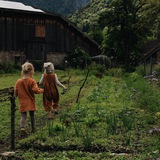
Natural Park Fragas do Eume, A Coruña, Galicia, Spain
Fragas do Eume is one of the best-preserved riverside Atlantic forests in Europe. Fewer than 500 people live within its 9,000 hectares, which gives an idea of the untouched state of these lush forests that follow the course of the River Eume. The park is shaped like a triangle whose corners and borders would Pontes, Pontedeume and Monfero.
The best way to discover the park is on foot. Oak, poplar, ash and alder trees, and more than 20 species of lichens and 200 species of ferns live here.
Sometimes the vegetation is so dense it hardly lets any light pass. But this shady and secret forest is as generous as its waters, springs and waterfalls.
There's no green here; what there are, are landscapes of a thousand greens. And hidden in the heart of the forest, the monastery of Caaveiro, ancient – with more than 10 centuries of history – and spectacular views of this magical "fraga" (forest).
Fragas do Eume is one of the best-preserved riverside Atlantic forests in Europe. Fewer than 500 people live within its 9,000 hectares, which gives an idea of the untouched state of these lush forests that follow the course of the River Eume. The park is shaped like a triangle whose corners and borders would Pontes, Pontedeume and Monfero.
The best way to discover the park is on foot. Oak, poplar, ash and alder trees, and more than 20 species of lichens and 200 species of ferns live here.
Sometimes the vegetation is so dense it hardly lets any light pass. But this shady and secret forest is as generous as its waters, springs and waterfalls.
There's no green here; what there are, are landscapes of a thousand greens. And hidden in the heart of the forest, the monastery of Caaveiro, ancient – with more than 10 centuries of history – and spectacular views of this magical "fraga" (forest).
Roman bronze parade cavalry helmet (Crosby Garrett helmet), 1st-2nd century AD
A rare cavalry helmet thought to have been produced between the late first and the third century AD is on display for the first time in Cumbria.
Hailed by experts as 'one of the great masterpieces of Roman metalwork', the helmet was discovered on farmland near Penrith three years ago by a person using a metal detector.
Named after the hamlet in which it was found, it is one of only three such helmets to have been unearthed in Britain.
The item is a copper alloy two-piece face mask visor helmet, consisting of a male face framed by a ring of curls and topped with an extremely rare Phrygian cap which is decorated with a griffin.
Identified as a bronze ceremonial parade helmet, it was made for sporting events rather than battle and the fine detail of its craftsmanship make it a remarkable example of Roman technical achievement.
The mask was found intact and the helmet in 67 fragments which have been cleaned and restored by experts.
A rare cavalry helmet thought to have been produced between the late first and the third century AD is on display for the first time in Cumbria.
Hailed by experts as 'one of the great masterpieces of Roman metalwork', the helmet was discovered on farmland near Penrith three years ago by a person using a metal detector.
Named after the hamlet in which it was found, it is one of only three such helmets to have been unearthed in Britain.
The item is a copper alloy two-piece face mask visor helmet, consisting of a male face framed by a ring of curls and topped with an extremely rare Phrygian cap which is decorated with a griffin.
Identified as a bronze ceremonial parade helmet, it was made for sporting events rather than battle and the fine detail of its craftsmanship make it a remarkable example of Roman technical achievement.
The mask was found intact and the helmet in 67 fragments which have been cleaned and restored by experts.
Golden Horns of Gallehus
In 1639 a peasant girl named Kirsten Svendsdatter near Møgeltønder, Denmark discovered a golden horn sticking out of the ground near her home.
Made of gold, the horn was a fifth century artifact with one of the earliest examples of a full sentence written in Elder Futhark.
In 1734 another horn was found in the same field as the first.
Unfortunately, the original horns were stolen and melted down in 1820, but copies have been made from illustrations.
In 1639 a peasant girl named Kirsten Svendsdatter near Møgeltønder, Denmark discovered a golden horn sticking out of the ground near her home.
Made of gold, the horn was a fifth century artifact with one of the earliest examples of a full sentence written in Elder Futhark.
In 1734 another horn was found in the same field as the first.
Unfortunately, the original horns were stolen and melted down in 1820, but copies have been made from illustrations.